Granite, Mist and Alvarinho: A Vinho Verde Route Through Four Estates
AT A GLANCE
Key Grapes & Style: Alvarinho, Loureiro, and Arinto, Portugal’s northwestern coastal region producing vibrant, low-ABV, refreshing white wines marked by sharp citrus, green apple, crisp mineral acidity, and slight effervescence.
Ideal Visiting Months: May to June or September to October (enjoying mild Atlantic breezes, lush green vine landscapes across the Minho valley, and comfortable outdoor tasting weather).
Must-Try Pairing: Chilled young Vinho Verde or oak-aged Alvarinho paired with traditional Portuguese garlic-and-cilantro grilled octopus (Polvo à Gato) or fresh Atlantic sardines.
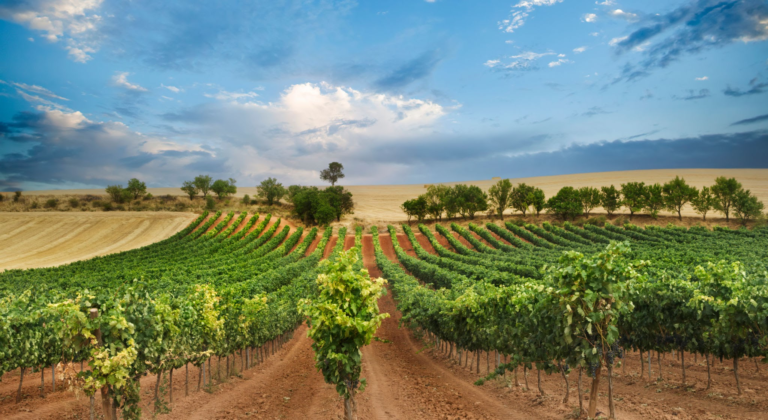
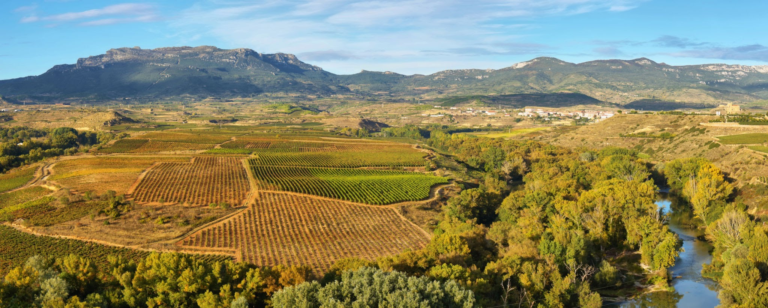
Most people meet Vinho Verde in a glass of something pale, cold and lightly prickly on a summer terrace, and most of them stop there. That is a pity, because the north-western corner of Portugal that produces it is one of the more interesting white wine regions in Europe. It is green in every sense. Rain falls often, the hillsides are thick with chestnut, oak and maize, and the vines grow in a landscape that looks more like Galicia or the west of Ireland than the sunburnt Portugal of postcards.
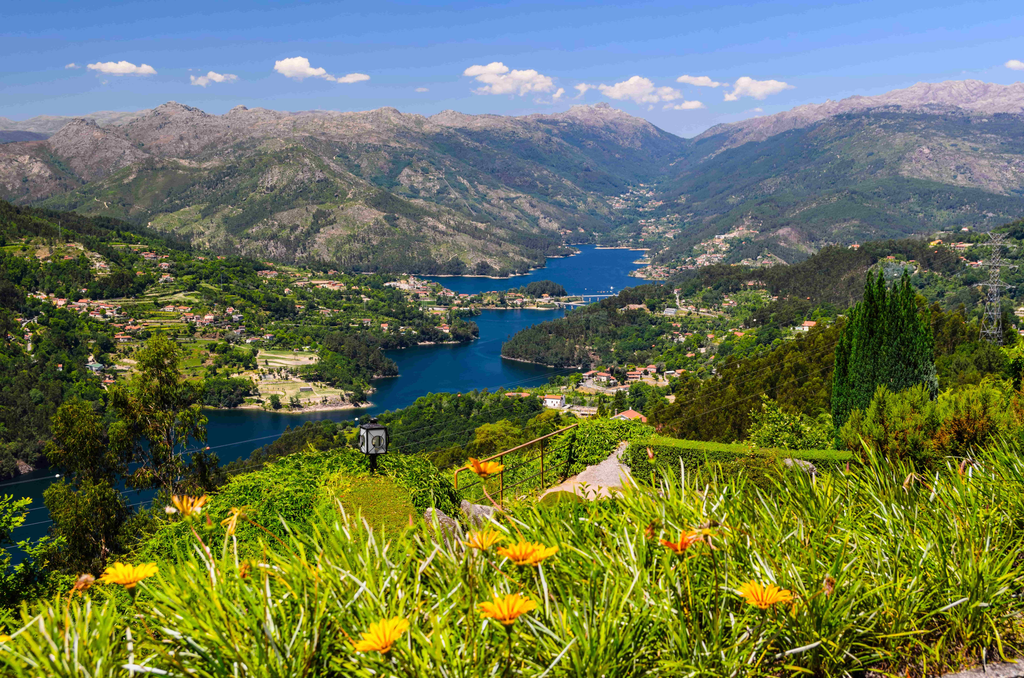
Look closer, and the picture changes again. In the far north, along the Minho River that marks the Spanish border, a single variety called Alvarinho produces whites with real texture, mineral grip and the ability to age. Further south, Loureiro, Avesso and Arinto make wines that range from delicate and floral to broad and saline. A handful of producers now ferment on skins, bottle pet-nats, age wines in barrel and make serious reds from the local Vinhão grape.
This guide is written for readers who already know the basics and want to understand how the region actually works. It covers the sub-regions and what separates them, the grapes worth knowing, how the label system operates, and how winemaking has shifted over the past generation. It then profiles four estates that make good anchors for a trip: Soalheiro and Anselmo Mendes in Monção e Melgaço, Quinta da Aveleda near Penafiel, and Quinta da Torre as an extension, before turning to the practical side of planning the route. Contact details and opening arrangements were checked against estate and tourism sources in October 2026, and where we could not confirm something, we say so.
Geography and Terroir of Vinho Verde
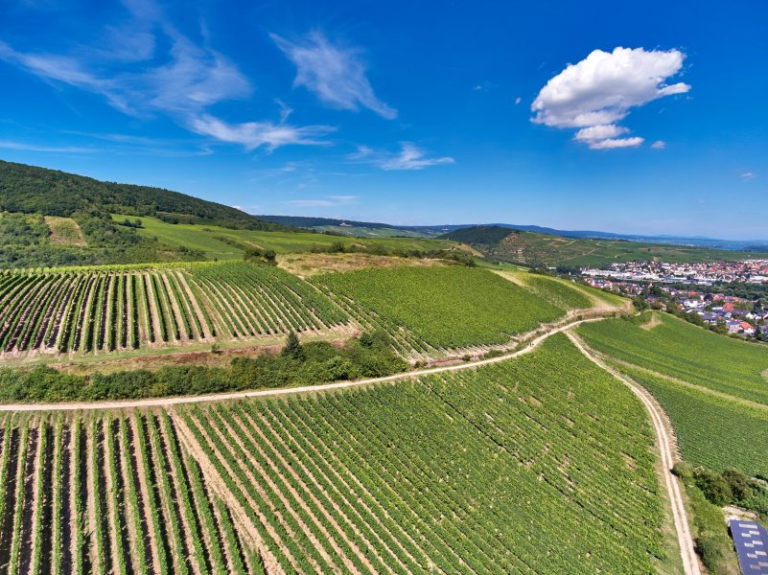
Vinho Verde covers the north-west corner of Portugal, running from the Minho River on the Spanish border south to the Douro, and inland from the Atlantic coast to the mountains. It is one of the largest demarcated regions in the country, and it is divided into nine sub-regions: Monção e Melgaço, Lima, Cávado, Ave, Basto, Sousa, Amarante, Baião and Paiva. The name means green wine, but the green refers to youth and the lush landscape, not to the colour in the glass.
Climate
The Atlantic dominates. Rainfall is high, often well above a thousand millimetres a year in the western sub-regions, and the summers are mild and humid compared with the rest of Portugal. That creates real viticultural challenges. Mildew and rot are constant risks, and the best growers spend as much effort on canopy management and drainage as on anything that happens in the cellar. The reward is freshness. Grapes ripen slowly, retain high acidity and reach moderate alcohol levels with relatively little effort.
The interior is different. As you move east and north, the mountains of Peneda-Gerês and Alvão start to filter the maritime influence. Monção e Melgaço, in the far north, are warmer and drier than the coastal sub-regions, and the Minho valley creates a sheltered pocket in which Alvarinho ripens more fully than almost anywhere else in the region.
Soils
Granite underpins most of Vinho Verde. The soils are sandy, acidic and shallow, with low natural fertility and good drainage. Those qualities suit white grapes that need to ripen slowly, and they give the wines a saline, stony edge that is hard to mistake for anything else. Pockets of schist appear in the south and east, close to the Douro, and some producers pay close attention to the differences. Luis Seabra, for example, makes a cru-style Alvarinho that is marketed on its slate soil rather than the usual granite.
Vine Training
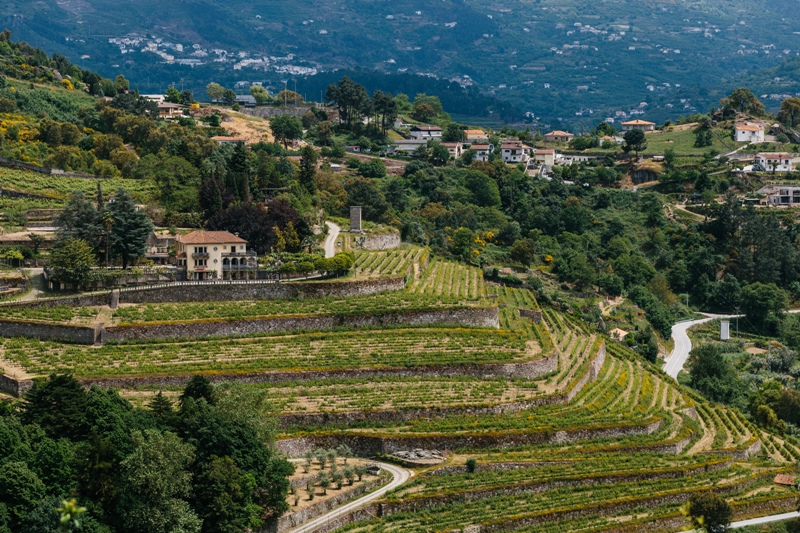
The traditional training systems tell you a good deal about the history of the region. Vines were once grown up trees and along the edges of fields, a system known as enforcados, so that the land underneath could be used for maize, beans and vegetables. Overhead pergolas called uveiras raised the fruit away from damp ground. Both kept yields high and fruit exposed to air, which helped in a wet climate but made quality control difficult. Today, many producers have moved to cordon and Guyot training on wires, which gives more control over yields and ripeness, though pergolas still dominate in some sub-regions.
Sub-Regions Worth Knowing
You do not need to memorise all nine sub-regions, but a handful matter more than the rest.
Monção e Melgaço
The northernmost sub-region follows the Minho River along the border with Galicia, and it is the home of Alvarinho. The grape is the same as Spain’s Albariño, which grows across the river in Rías Baixas. Mountains block much of the Atlantic rain, so Monção e Melgaço is warmer and drier than the rest of Vinho Verde. Wines from here are more concentrated, more textured and more age-worthy than the regional norm, and many of the producers most admired by international critics are based here. Soalheiro and Anselmo Mendes both belong to this sub-region.
Lima
South of the Minho, the Lima valley is known for Loureiro, an aromatic white grape that gives floral, citrus, and herbal wines with a lively acidity. It is more delicate than Alvarinho and generally less age-worthy, though some producers are beginning to challenge that assumption.
Baião and Amarante
At the southern edge of the region, where Vinho Verde meets the Douro valley, warmer conditions and higher altitudes suit Avesso, a late-ripening white grape that produces fuller, more structured wines. Anselmo Mendes, for one, makes a dedicated Avesso from Baião, which gives you a sense of how much variety the denomination contains.
Sousa, Ave, Cávado, Basto and Paiva
The central and western sub-regions produce most of the volume. This is where Arinto, Trajadura, Azal and Loureiro are blended into the light, fresh, often slightly spritzy wines that built the region’s export reputation. Quinta da Aveleda, outside Penafiel in the Sousa sub-region, is the best-known example of a large, family-owned producer working at this scale.
How Vinho Verde Became What It Is
Vinho Verde is an old wine region, and its character was shaped as much by economics as by climate. For centuries, small farmers grew grapes on trees and pergolas alongside food crops, making simple wines for local consumption. The wines were low in alcohol, high in acidity, and often a little fizzy from malolactic fermentation that happened in the bottle. Exporters, especially British importers, favoured that fresh, light style, and it became the template for the denomination when the region was formally demarcated in the early twentieth century.
That template served the region well commercially but held back quality. Yields were high, the focus was on volume, and a slight sparkle was often introduced artificially in the cellar to ensure consistency. Alvarinho was grown in Monção e Melgaço, but until the 1970s it was scattered among other crops and rarely treated as a serious wine grape.
The turning point in Monção e Melgaço came with Soalheiro. According to the estate and to importer descriptions, the Cerdeira family planted the first continuous vineyard of Alvarinho in Melgaço in 1974, at a time when planting in a single block was not what local farmers did. The first Alvarinho wine from the estate followed in 1982. Soalheiro later made the first sparkling Alvarinho in 1995, and it has been certified organic since 2006.
A second wave came in the late 1990s. Anselmo Mendes, born in Monção and trained in oenology, released his first own-label wines in 1998 and quickly became known in Portugal as Mr. Alvarinho. His dry, mineral, still style offered an alternative to the fizzy model that had defined Vinho Verde. Revista de Vinhos named him Winemaker of the Year, and the recognition helped shift attention toward Monção e Melgaço as a serious source of fine white wine.
Since then, outside investment has arrived. The Symington family, better known for Port, bought Casa de Rodas in Monção e Melgaço in late 2022 and formed a distribution joint venture with Anselmo Mendes the following year, as reported by The Drinks Business. Aveleda, one of the region’s largest producers, has expanded beyond Vinho Verde into the Douro, where it bought Quinta Vale D. Maria in 2017. These moves signal confidence in the quality ceiling of the region, and they have attracted a new generation of winemakers.
Grape Varieties of Vinho Verde
The Vinho Verde palette is built around native varieties, and it is much more varied than the single-grape reputation of Alvarinho suggests.
White Varieties
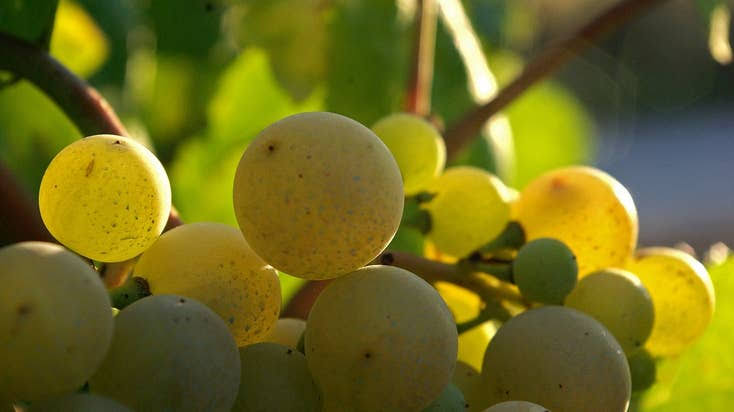
- Alvarinho: The star of Monção e Melgaço. Thick-skinned, aromatic and high in acidity, it gives wines with peach, citrus and saline notes. In the best examples, it develops texture and complexity with age, and some producers ferment or age it on lees or in neutral oak to build body.
- Loureiro: Floral, fresh and often marked by bay leaf and citrus. It performs best in the Lima Valley and the western sub-regions and gives lighter, more immediate wines.
- Avesso: A later-ripening grape from the southern end of the region. It gives broader, more textured wines with notes of stone fruit and herbs, and it pairs well with food.
- Arinto: Known locally as Pedernã, it brings high acidity and a lemony character that helps keep blends lively.
- Trajadura and Azal: Common blending partners that contribute softness and freshness. Azal is one of the most acidic grapes in the region and is often used to sharpen lighter blends.
Red Varieties
- Vinhão: A dark-skinned grape with very deep colour, high acidity and tannin. Traditional Vinho Verde reds made from it are tart, inky and often served slightly cool, but modern producers are making more polished versions.
- Espadeiro, Padeiro and Alvarelhão: Lighter-coloured local varieties. Alvarelhão in particular has attracted interest recently, and Anselmo Mendes has been working with it, according to a Jancis Robinson report on the estate.
How Vinho Verde Is Classified and Labelled
The region is administered by the Comissão de Viticultura da Região dos Vinhos Verdes, which oversees the Vinho Verde DOC. The DOC covers all nine sub-regions, and wines can carry a sub-region name on the label when they meet the specific rules for it. For a wine labelled Monção e Melgaço, for example, the rules restrict the permitted grapes to Alvarinho and a small number of authorised blending partners.
Wines made from the same area but outside the DOC rules, or using non-authorised varieties, can be labelled with the broader Minho indication, which is a geographical indication similar to the French IGP. Producers who want to experiment with grapes, techniques or blends that the DOC does not allow often use this route.
Reading a Vinho Verde Label
A few details help when you are choosing a bottle.
Sub-region name. Monção e Melgaço signals Alvarinho from the north. Lima suggests Loureiro. Baião often means Avesso. A wine with no sub-region is likely to be a blend from across the denomination.
Vintage and age. The traditional rule was to drink Vinho Verde within a year. That still holds for entry-level wines, but top Alvarinhos, especially old-vine bottlings such as Soalheiro’s Primeiras Vinhas, are designed to age for several years.
Alcohol. Standard Vinho Verde sits around 9 to 11.5 percent. Alvarinho from Monção e Melgaço often reaches 12.5 percent or more.
Style terms. Look for words such as Reserva, Escolha, Parcela, Curtimenta (for skin contact), and Pet Nat. They indicate a more ambitious or experimental approach than the entry-level cuvées
Four Estates for a Vinho Verde Trip
Three estates anchor the route, and a fourth works as an extension. They sit at two ends of the region, with Aveleda in the south near Penafiel and Soalheiro and Anselmo Mendes in the far north, so the practical sections that follow explain how to link them. Quinta da Torre is treated as an optional extra because its visitor facilities are newer and some practical details are still unconfirmed.
Soalheiro, Melgaço
Soalheiro is the natural first visit for anyone interested in Alvarinho. The estate sits in the village of Alvaredo, a few kilometres from Melgaço town, on the sloping granite terraces where the Cerdeira family planted their first vines in 1974. It is still run by the family: António Luís and Maria João Cerdeira manage the estate with their mother, Palmira, after the founder, João António Cerdeira. The family farms about 14 hectares of its own organic vineyards, including some of the highest Alvarinho plots in Portugal, near the Peneda-Gerês National Park, and it buys fruit from a network of roughly 150 local growers who follow shared sustainability practices.
The range shows how far the grape can travel. The flagship Primeiras Vinhas comes from the original 1974 planting and is built for ageing. The Granit bottling emphasises mineral tension, and the Cota 27 shows a more textured side of the grape. The estate also makes sparkling wines, pet-nats, a Loureiro and Alvarinho blend and even an experimental red. If you want to taste before you travel, the Primeiras Vinhas is available from Decántalo, which also lists other bottlings from the estate.
The visitor offer is among the most developed in Vinho Verde. Tastings last around an hour and a half and include a walk through the first vineyard and the herbal tea fields, a tour of the winery and the sparkling and innovation cellars, and a tasting of between five and seven wines. Three lines of tasting are offered: a patchwork tasting that works across the estate’s range, a sparkling tasting, and an innovation tasting built around experimental wines. Tasting prices start at around 18 euros per person according to a wine tourism listing. The estate also offers accommodation in a cottage on the tea plantation and dinners at its smokehouse, Quinta de Folga, where the menu draws on organic vegetables and cured meats from the estate’s Bísaro pigs.
Visit details
- Address: Quinta de Soalheiro, Charneca, Alvaredo, 4960-010 Melgaço, Portugal
- Opening: The World’s Best Vineyards listing gives 09:30 to 18:30, every day of the week
- Languages: English, French, Portuguese and Spanish, according to a wine tourism directory
- Booking, phone and email: we could not confirm a current phone number or booking email. Use the booking form on the estate’s website and confirm your slot in writing before you travel.
Anselmo Mendes, Monção
Few winemakers are as closely tied to a single grape as Anselmo Mendes. Born and raised in Monção, he studied agro-industrial engineering and oenology, released his first own-label wine in 1998, and went on to become the person most responsible for the dry, mineral, serious style of Alvarinho that critics now associate with the sub-region. His Alvarinhos include the Contacto, the Muros de Melgaço, the Parcela Única, and a skin-contact Curtimenta. He also makes Loureiro from the Lima valley and Avesso from Baião, which means a tasting here is a useful way of comparing the sub-regions side by side.
According to a Jancis Robinson report, the family owns three properties in Monção e Melgaço totalling about 60 hectares of Alvarinho. The largest, Quinta da Torre, is described as the biggest single viticultural area in the sub-region, and it was close to opening a visitor centre, tasting room and accommodation when the writer visited. The estate also works with Symington on Casa de Rodas, which gives the family a presence in a historic Monção property. His wines are well distributed. Decántalo, for example, lists Alvarinhos from Mendes, including the Pardusco Private, so it is easy to taste before you go.
Visit details
- Location: Quinta da Torre and related properties, Monção, Portugal
Quinta da Aveleda, Penafiel
Aveleda is the best place to see Vinho Verde as a long-established, large-scale family enterprise. The Guedes family has owned the property for five generations, and the estate produced its first white wine in 1870. Today, Aveleda is the largest producer of Vinho Verde and is also active in the Douro, Bairrada, Lisboa, and the Algarve. Its most widely exported label, Casal Garcia, is probably the best-known Vinho Verde in the world, and the estate also makes more ambitious bottlings of Loureiro and Alvarinho.
The visit is as much about the grounds as the wine. The gardens cover about eight hectares and contain more than a hundred species of plants and trees, including a eucalyptus that is over 300 years old according to a travel listing, along with fountains, a lake, a tea house and a window in the Manueline style that is classified as a National Monument. The cellar dates from 1850. Tours generally last around 45 minutes, followed by tastings on a verandah with cheese made on the farm. For a deeper session, the estate runs private tastings and master classes, and meals matched with Minho cuisine can be booked in advance.
Aveleda also connects the two articles in this series. The estate owns Quinta Vale D. Maria in the Douro, which we cover in our guide to the Douro wine region, so a trip that links the two regions allows you to compare the same family’s approach to granite and schist.
Visit details
- Address: Rua da Aveleda 2, 4560-570 Penafiel, Portugal
- Phone: +351 255 718 200, as listed by Wines of Portugal
- Email for bookings: enoturismo@aveleda.pt, as given in the estate’s TAP stopover listing
- Opening: 09:00 to 18:00 every day according to the World’s Best Vineyards listing, though one booking platform for a garden tour with tasting lists specific days and asks for 72 hours’ notice. Confirm before you travel.
- Prices: the stopover listing quotes from 11 to 70 euros per person depending on the tasting, with a reduced rate for children aged six to twelve.
Quinta da Torre as an Optional Extension
If your route takes you to Monção, the larger Quinta da Torre is worth asking about as a second Anselmo Mendes stop, because the terraces above the Minho are where the estate’s flagship parcels sit. As noted above, treat the details as unconfirmed until the estate gives you a firm booking.
Tasting Vinho Verde at Home Before You Go
You do not need to be in Melgaço to understand the difference between the sub-regions. A short home tasting works well as preparation. Pour a standard blended Vinho Verde from the western sub-regions next to a Monção e Melgaço Alvarinho from the same vintage, and the difference in weight and texture is immediately obvious. Add a Loureiro from Lima and an Avesso from Baião, and you have a four-glass map of the denomination.
A few practical tips help. Serve the lighter wines at around 8 degrees Celsius and Alvarinho slightly warmer, at 10 to 12 degrees, so the texture is not muted. Open top Alvarinhos an hour ahead if the wine seems closed, since young examples can be shy. And buy one older vintage if you can, because a three- to five-year-old Primeiras Vinhas shows more about the potential of the grape than any fresh bottling.
Pairing Vinho Verde With Food
The region’s cooking evolved alongside its wine, and the pairings are straightforward once you understand the style.
Fresh, light blends with shellfish and fried fish. The lower-alcohol, high-acid wines of the western sub-regions are made for sardines, fried small fish, clams and raw oysters. The slight spritz cleanses the palate between bites.
Loureiro with vegetables and goat’s cheese. The floral, herbal character suits salads, grilled vegetables and fresh cheeses. It is also a good match for Asian dishes with lime and coriander.
Alvarinho with riverine fish and cured meats. The Minho River provides lamprey and shad in season, and the local cooking uses them in rich, slow-cooked dishes. The wine’s acidity and texture cut through both. Alvarinho also handles smoked and cured pork very well, which explains why estates such as Soalheiro pair their wines with Bísaro pork.
Avesso with roast chicken and creamy dishes. Its broader structure matches richer food without overwhelming it.
Aged Alvarinho with salt cod. Bacalhau, cooked with cream and potatoes or baked with olive oil, is the classic Portuguese match for a textured white. A three- to five-year-old Primeiras Vinhas has the weight to stand up to it.
Vinhão with grilled sausages and rustic stews. The grape’s acidity and tannin cut through fat. Serve it cool, and expect it to need food.
Planning a Vinho Verde Trip
Getting There
Porto’s airport is the main gateway and has direct connections from several northern European cities. Quinta da Aveleda is roughly half an hour from the airport according to the World’s Best Vineyards listing, which makes it an easy first or last stop. Soalheiro is further away, about one hour and forty-five minutes from Porto airport, or around forty-five minutes from Vigo airport in Spain, according to the same source. A car is essential. Public transport in the interior is limited, and the estates are on rural roads.
A Four-Day Route
Because the estates sit at opposite ends of the region, a driving route works best.
- Day 1, Porto and Penafiel: Collect a car at Porto airport and drive to Quinta da Aveleda for a garden tour and tasting, then continue north.
- Day 2, Ponte de Lima and the Lima valley: Stop in Ponte de Lima, one of the oldest towns in Portugal, and try Loureiro wines from the valley. The roads here are slow and scenic, and the sub-region gives context for the contrast with Alvarinho.
- Day 3, Melgaço: Spend the day at Soalheiro, with a tasting and lunch, and walk the vineyards above the Minho. If you can, book dinner at the Quinta de Folga smokehouse.
- Day 4, Monção and the border: Visit Anselmo Mendes if you have confirmed a tasting, then spend time in Monção town and cross the Minho to taste Albariño in Rías Baixas for comparison before the return drive.
Where to Stay
Monção and Melgaço make the most practical bases for the north, and both have spas and small hotels. Staying on an estate adds to the experience, and Soalheiro offers a cottage on its tea plantation. Ponte de Lima is a good midpoint for the Lima valley. Because the region is rural, book early in the harvest season.
When to Go
The harvest usually takes place from late August through September, with Alvarinho picked earlier than the later-ripening varieties. Spring brings fresh green vineyards and waterfalls, but it is also the wettest period. Summer is the most reliable for sunshine, with warm days and cool evenings. Pack a waterproof jacket in any season. The region is called green for a reason, and an afternoon of rain is not unusual even in summer.
Frequently Asked Questions
Is Vinho Verde always sparkling?
No. Many entry-level wines have a slight spritz, but the best Alvarinhos and Avessos are fully still. Producers such as Anselmo Mendes helped establish a dry, still style that has become the standard for quality wines from Monção e Melgaço.
Is Alvarinho the same as Albariño?
Yes. It is the same grape, grown on both sides of the Minho River. In Portugal, it is called Alvarinho and in Galicia, Spain, Albariño. Differences in wine style come from climate, soils and winemaking choices rather than the grape itself.
Can Vinho Verde age?
Some can. Simple blends are best within a year or two, but old-vine Alvarinho from Monção e Melgaço, such as Soalheiro’s Primeiras Vinhas, has the acidity and structure to develop for several years.
Which sub-region should I visit first?
Monção e Melgaço is the best starting point for anyone interested in quality. It has the most developed wine tourism, the highest concentration of respected producers and a clear identity built around Alvarinho.
Do I need to book estate visits in Vinho Verde?
Yes. Even large visitor-focused estates such as Aveleda ask for bookings by email, and smaller family properties may only receive visitors by arrangement. Confirm opening hours and tasting formats in advance.