Barolo Wine Region Guide: Vineyards, Villages and Wines to Know
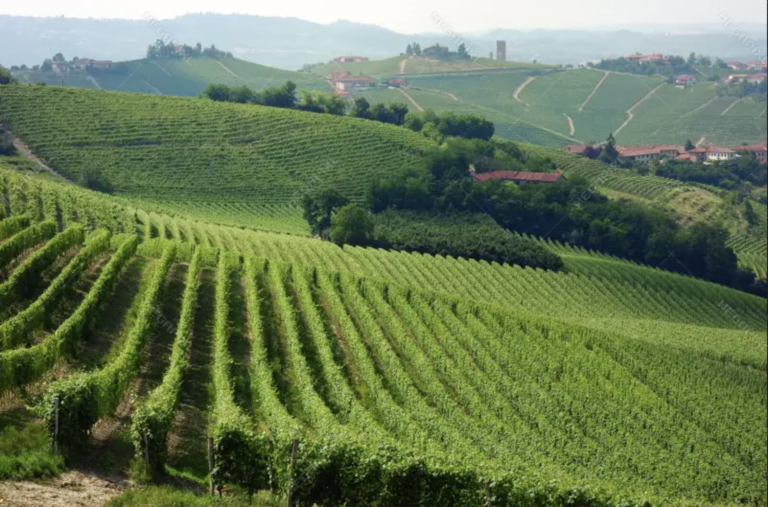
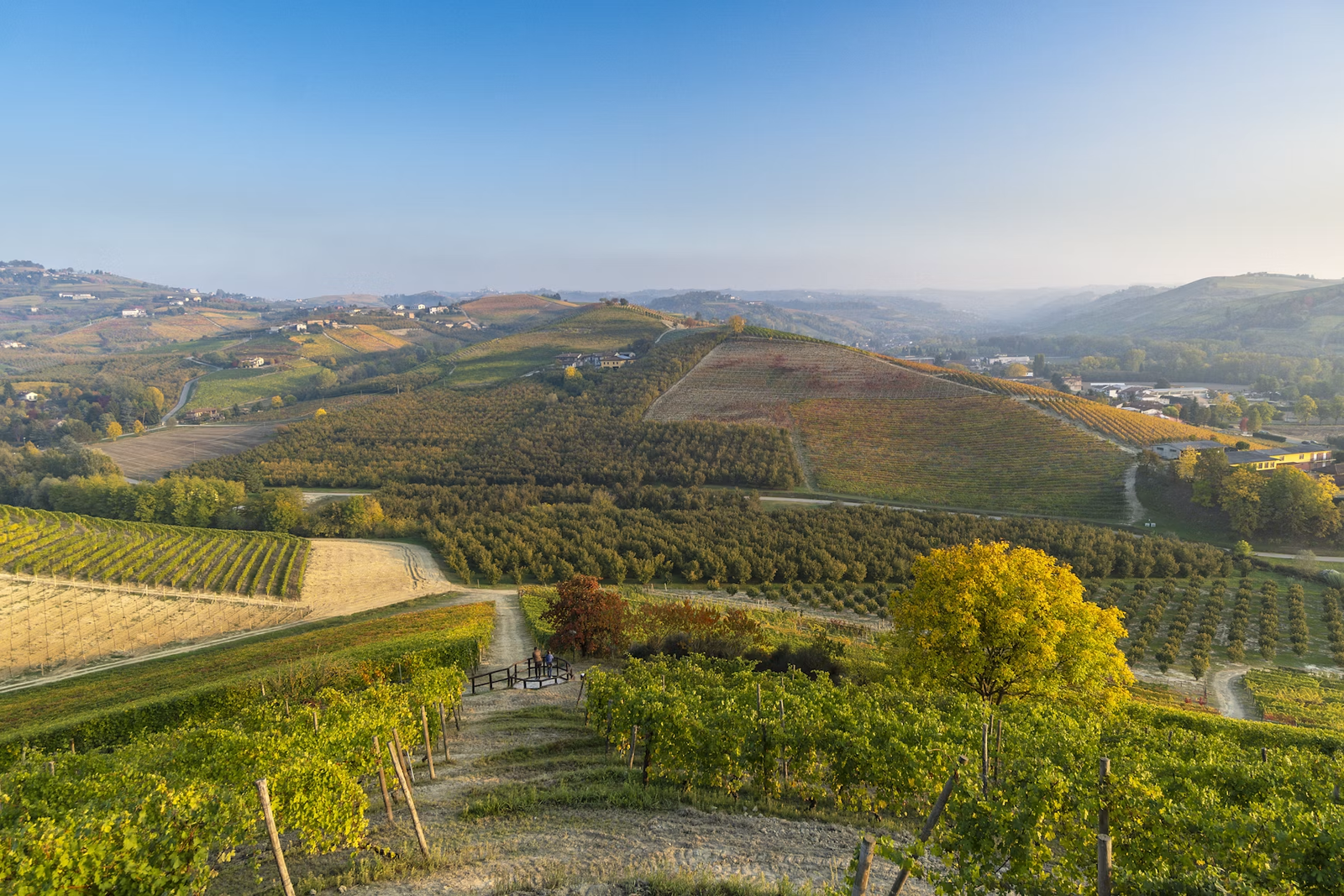
There are wine regions you visit for the scenery, and there are wine regions you visit because the wine itself demands a pilgrimage. Barolo, tucked into the Langhe hills of Piedmont in northwestern Italy, manages to be both at once. Rows of Nebbiolo climb over hills the color of ochre and rust in autumn, medieval villages sit on top of them like crowns, and inside every third cellar door is a producer who has been farming the same slope since before the DOCG designation existed at all.
For anyone who already knows their Serralunga from their Verduno, Barolo isn’t a checklist destination. It’s a region that rewards a slower, more deliberate approach: understanding why a wine from La Morra tastes nothing like one from Monforte d’Alba grown three kilometers away, learning which crus are worth seeking out at retail, and knowing which small, family-run estates still open their doors to visitors without a corporate tasting menu attached.
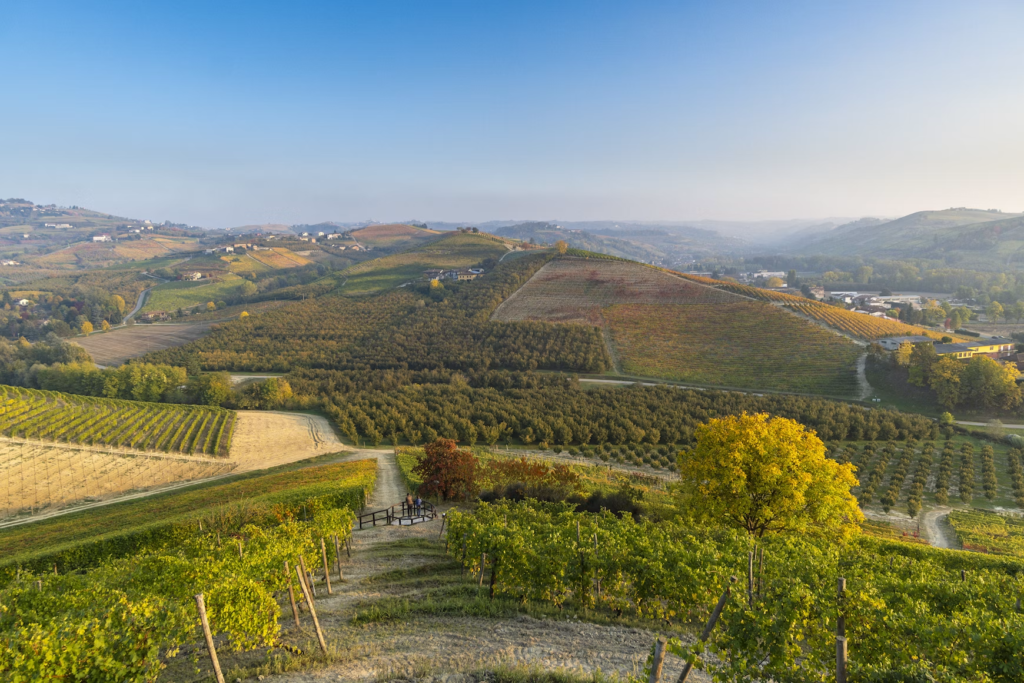
This guide walks through what actually defines the Barolo wine region, breaks down its key villages and soils, and recommends four vineyards worth building a trip around, including Diego Morra, whose Monvigliero bottlings have quietly become some of the most sought-after in the appellation. We’ll also point you toward a handful of bottles worth ordering if a trip to Piedmont isn’t on the calendar yet.
What Makes the Barolo Wine Region Different
Barolo DOCG sits in the province of Cuneo, roughly forty minutes south of Turin and just a short drive from the town of Alba, itself famous for white truffles every autumn. The appellation is small by international standards, covering only around 2,000 hectares of vineyard spread across eleven communes: Barolo, La Morra, Castiglione Falletto, Serralunga d’Alba, Monforte d’Alba, Verduno, Novello, Grinzane Cavour, Diano d’Alba, Cherasco and Roddi. Only the first five of those produce the bulk of what reaches international markets, and each has its own personality.
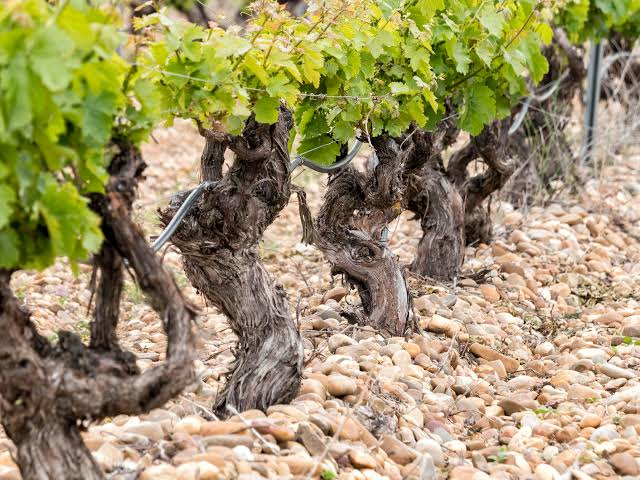
The wine itself must be made from 100% Nebbiolo, a thin-skinned, late-ripening grape that is notoriously difficult to farm and even harder to get right in the cellar. It buds early and ripens late, usually into October, which means it needs a long, steady growing season and just the right exposure to avoid rot or under-ripeness. When it works, Nebbiolo produces wines with pale color but ferocious structure: high acidity, substantial tannin, and aromatics that run from rose petal and dried cherry to tar, licorice, and white pepper. This contradiction between a light, garnet-red glass and a wine with the backbone to age for decades is part of what makes Barolo so compelling to serious drinkers.
Two soil types largely explain the stylistic split within the region. The western communes (La Morra and the town of Barolo itself) sit on Tortonian soil: bluish, calcareous marl that is younger and more fertile. Wines from here tend to be more aromatic and approachable earlier, with softer tannins. The eastern communes (Serralunga d’Alba, Monforte d’Alba and much of Castiglione Falletto) sit on older Helvetian sandstone, which is leaner and less fertile. These wines are typically more structured, tannic and built for long cellaring. Castiglione Falletto sits almost exactly on the fault line between the two, which is part of why its wines are often described as the most balanced expression of the appellation.
By law, Barolo must age for a minimum of thirty-eight months before release, eighteen of them in wood, and a Riserva must age for at least sixty-two months. That’s a long runway for a wine to develop, and it’s one reason a bottle bought on release often needs another five to ten years in a cellar before it shows its best side.
A Short History of How Barolo Became Barolo
Barolo’s modern identity is younger than the vines themselves. For much of the nineteenth century, Nebbiolo from the Langhe was often left off-dry or lightly sweet, since fermentation at the region’s cooler autumn temperatures tended to stall before all the sugar converted. The shift toward the dry, tannic, age-worthy style we know today is usually credited to the mid-1800s, when the Marchesa Giulia Falletti of Barolo, working with French oenologist Louis Oudart, applied techniques borrowed from Bordeaux to push fermentation through to completion. The resulting wine impressed the royal court of the House of Savoy enough that Barolo earned the nickname “the wine of kings, the king of wines,” and cellars in the region still use some version of that line today.
The DOCG designation, Italy’s highest classification for wine, arrived in 1980, formalizing rules around yield, aging and permitted communes that had developed informally over the preceding century. The 1980s and 1990s then brought a genuine stylistic divide within the region: so-called traditionalists continued aging in large old Slavonian oak botti for extended periods, favoring wines that took a decade or more to soften, while a group of modernist producers began using smaller French barriques and shorter macerations to produce riper, more immediately approachable wines. That debate has cooled considerably since, and most estates today, including several featured in this guide, draw on techniques from both camps depending on the vineyard and vintage. What hasn’t changed is the underlying ambition: Nebbiolo grown here is still meant to reflect a specific hillside rather than a house style stamped uniformly across every bottle.
In 2014, UNESCO added the vineyard landscapes of Langhe-Roero and Monferrato, Barolo included, to its World Heritage list, recognizing not just the wine but the cultural landscape built around centuries of viticulture on these particular hills.
The Villages of the Langhe: A Quick Orientation
If you only remember one thing before visiting, remember that “Barolo” is a region built from very different neighborhoods, not a single style stamped across the map.
| Village | Character | Wine Style | Worth Knowing For |
|---|---|---|---|
| La Morra | The highest and most panoramic of the villages, with sweeping views over the whole zone | Perfumed, elegant, softer tannins, approachable earlier | Belvedere viewpoint, enotecas, easy walking access between cellars |
| Castiglione Falletto | A small, fortified medieval hilltop cluster around a round tower | Balanced: structure and perfume in equal measure | Considered by many collectors the most well-rounded style in the appellation |
| Serralunga d’Alba | Steep, dramatic ridgeline dominated by a slender medieval castle | Powerful, tannic, built for long aging | Fontanafredda and other historic estates with deep cellars |
| Monforte d’Alba | One of the prettiest hill towns in the Langhe, with a summer concert season in its amphitheater | Structured, dark-fruited, age-worthy | A quieter alternative to La Morra with excellent restaurants |
| Verduno | The northernmost commune, cooled by air currents off the Tanaro river | Aromatic, spiced, high-toned, elegant despite its more structured neighbors nearby | Home to the Monvigliero cru, one of the appellation’s most prized sites |
Understanding this map matters even if you never leave the tasting room. It’s the reason two Barolos from the same vintage, both entirely well made, can taste like they came from different countries.
When to Visit the Barolo Wine Region
Late September through October is harvest season, and it’s the most atmospheric time to be in the Langhe, with the hills turning gold and copper and the smell of fermenting must drifting out of every open cellar door. It’s also when the region is busiest, so book tastings well in advance. Truffle season overlaps with this window, running roughly from October into December, which is reason enough on its own to plan an autumn trip. You can read more about our own trip to Barolo here.
Late spring (May and June) offers a quieter alternative, with green hillsides, milder weather and far easier restaurant reservations. Winter is genuinely beautiful too, with fog settling into the valleys most mornings (fittingly, “Nebbiolo” likely takes its name from nebbia, the Italian word for fog), though many smaller producers close their tasting rooms outside the main season, so appointments become essential rather than optional.
Four Vineyards Worth Visiting
The Barolo wine region is dense with producers, from major historic houses with polished visitor centers to two-hectare family plots where the person pouring your glass is also the one who pruned the vines that morning. These four cover a useful range of styles, villages and visiting experiences.
Diego Morra (Verduno)
Diego Morra farms in Verduno, the northernmost and coolest commune in the appellation, and holds some of the largest private parcels within Monvigliero, widely regarded as one of Barolo’s finest crus. The estate is now run by its third generation, and the vineyards, most of which the family owns outright rather than rents, wrap around the hills on all sides, giving Diego close control over exposure, pruning and yield. The winery follows organic fertilization and integrated pest management, with pruning specifically aimed at limiting yield in favor of concentration.
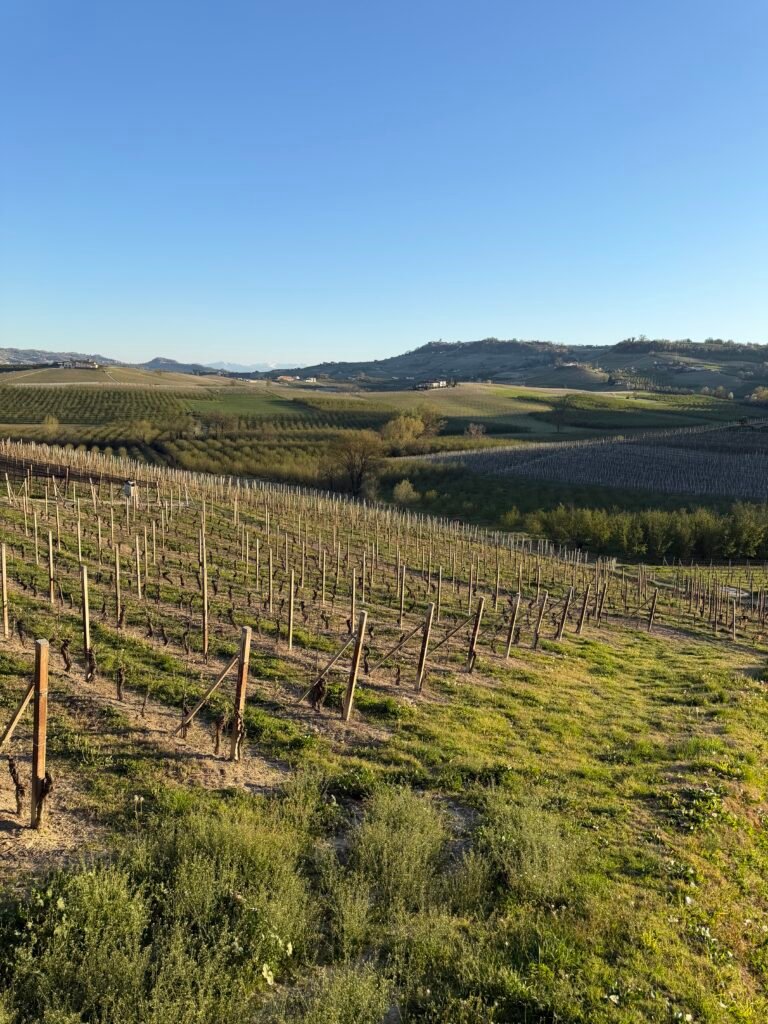
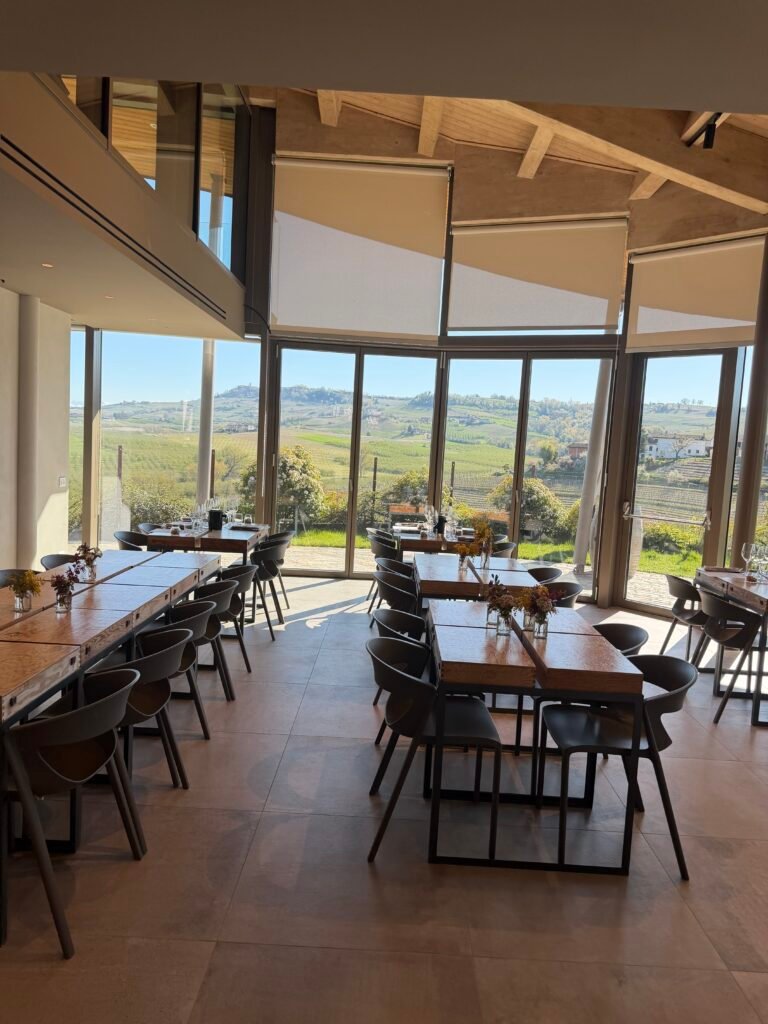
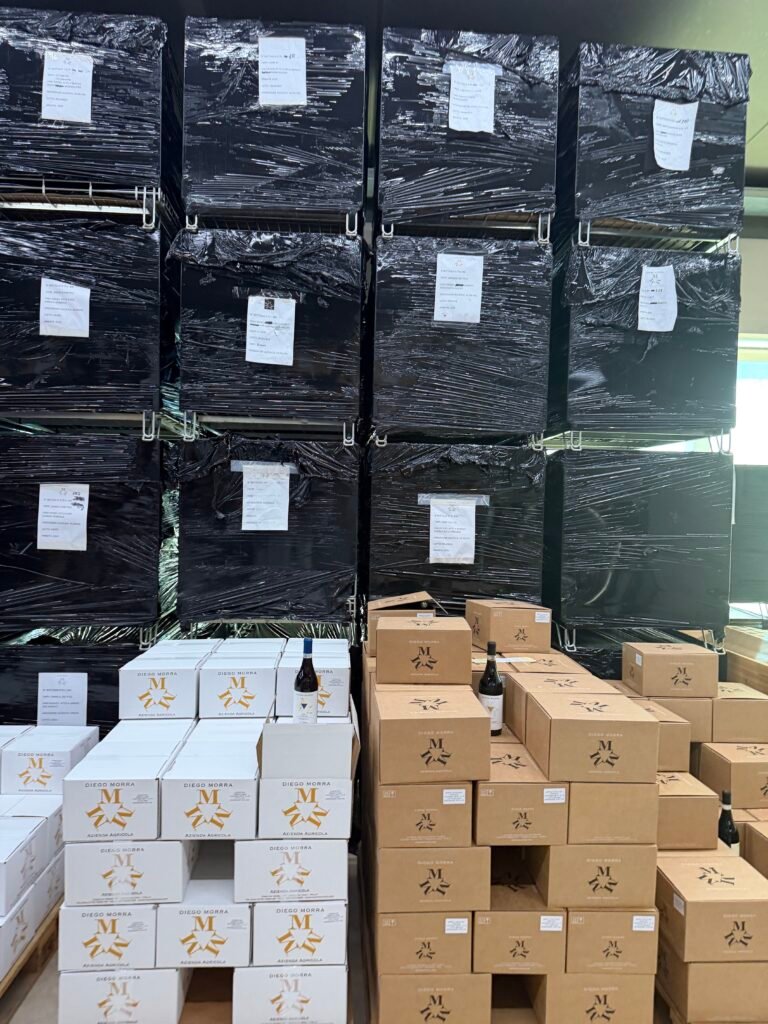
What sets a Diego Morra tasting apart is the directness of it. This isn’t a stop with a gift shop and a scripted tour; it’s a chance to taste wines that reflect Monvigliero’s cool, aromatic character (think rose petal, red currant and white pepper) straight from the people who farm it. The Barolo Monvigliero is the wine to ask for, but the estate also produces excellent Verduno Pelaverga, a lighter, spicier red native to the village that rarely leaves Piedmont.
Visit: morrawines.com, located at Cascina Mosca 37, Verduno (CN). Tastings are by appointment.
Vietti (Castiglione Falletto)
Vietti has been making single-cru Barolo since 1961 and remains one of the benchmark producers for understanding how the region’s individual vineyards differ from one another. The estate sits just outside the village of Castiglione Falletto, on a hillside with a panoramic terrace looking out over the Rocche, Villero and Scarrone crus. Visits typically begin with an introduction on that terrace, move through the historic cellars (including old tunnels running beneath the property), and finish with a structured tasting that can include several of Vietti’s single-vineyard bottlings side by side.
For serious tasters, this side-by-side format is the real value of a Vietti visit: it’s one of the clearest ways to feel the soil differences described earlier in this guide, since the crus sit close together but express noticeably different character in the glass.
Visit: vietti.com, Piazza Vittorio Veneto 5, Castiglione Falletto (CN). Tastings range from a classic flight to a guided trek through the cru vineyards, and online booking is required.
Trediberri (La Morra)
Trediberri is about as far from a corporate estate as Barolo gets. Founded in 2007 by Nicola Oberto, his father Federico and their friend Vladimiro Rambaldi, the winery takes its name from the tiny hamlet of Berri at the western edge of the appellation, close to the Tanaro river. Federico spent decades as cellar master for the legendary Renato Ratti before helping start this project, and that lineage shows in the restraint of the wines: elegant, precise, and deliberately built so that tannin and power never overwhelm the aromatics typical of La Morra.
The estate farms around ten hectares across several parcels, including old vines in the historic Rocche dell’Annunziata cru directly in front of the winery. Visits are limited to Mondays and by appointment only, which keeps the experience intimate. There’s no direct retail shop on site, so if a bottle catches your attention during the tasting, it’s worth noting the vintage to track down later through an importer.
Visit: trediberri.com, Borgata Torriglione 4, La Morra (CN). Appointment only, Mondays.
Ceretto (Castiglione Falletto and Alba)
Ceretto is a good choice for travelers who want both serious wine and a bit of architectural spectacle. The family has vineyards across Barolo and Barbaresco, but the standout visit is Bricco Rocche, their striking glass structure set directly into the Rocche cru in Castiglione Falletto, source of one of their flagship Barolos. Ceretto has also built a reputation for contemporary art in the vineyards, most notably the Cappella delle Brunate, a small chapel in the Brunate cru near La Morra painted in bright, unexpected color by artists Sol LeWitt and David Tremlett. It’s free to walk up to and worth the detour even outside tasting hours.
Ceretto also runs a walk-in tasting room in central Alba, useful if your schedule doesn’t allow for advance bookings, alongside more structured cellar and vineyard visits by appointment.
Visit: ceretto.com, Bricco Rocche, Castiglione Falletto (CN), with a tasting room also in central Alba.
Recommended Barolo Wines to Buy Online
Not every trip to the Langhe fits into the calendar this year, and some of the best bottles from these estates are worth seeking out regardless. A few starting points, roughly in order of what to try first if you’re building a case:
Diego Morra, Barolo Monvigliero. The clearest expression of Verduno’s cool, high-toned style, with white pepper, blood orange and dried rose on the nose and fine, silky tannins. Recent vintages (2019 and 2020 in particular) have drawn strong attention from specialist retailers, and prices are still reasonable relative to other Monvigliero bottlings, several of which now sell for well over €200 a bottle. Look for it through specialist importers such as SommSelect, or search current listings on Wine-Searcher to compare pricing across merchants.
Vietti, Barolo Castiglione. A good entry point into the estate’s portfolio: it draws fruit from multiple communes rather than a single cru, giving a broader sense of Vietti’s house style before stepping up to the single-vineyard bottlings like Rocche or Villero, both worth the splurge if you can find them. You are able to buy them at Colaris.
Trediberri, Barolo Rocche dell’Annunziata. Restrained, floral and precise, this is Nebbiolo built for people who want elegance over power. Availability outside Italy has historically been limited, so check with an importer specializing in small Piedmontese growers rather than a general wine retailer. Decantalo is a good place to start your search.
Ceretto, Barolo Bricco Rocche. Structured and long-lived, this is the estate’s flagship from the Rocche cru in Castiglione Falletto and a useful benchmark for the eastern, sandstone-driven style of Barolo. Have a look at Colaris if you are interested in the Ceretto Barolo.
If you’d rather browse broadly before committing, Wine-Searcher and Vivino are useful for comparing vintages and prices across multiple retailers before you buy, particularly for anything from a small estate where stock can be limited.
Pairing Barolo at the Table
Nebbiolo’s combination of high acidity and firm tannin makes it a demanding but rewarding wine to pair. Classic Piedmontese dishes remain the most reliable match: braised beef or veal cheek cooked slowly in Barolo itself, tajarin (the region’s ultra-thin, egg-rich hand-cut pasta) tossed simply in butter and sage, or aged Castelmagno cheese. Younger, more aromatic bottlings from La Morra or Verduno also work well with roasted game birds, while a structured Serralunga or Monforte Barolo is better saved for slow-cooked red meats that can stand up to the tannin.
If you’re planning meals around a trip rather than a shopping list, our long weekend itinerary through the Barolo region covers a four-day route through La Morra and Castiglione Falletto, including a stop at Diego Morra and a full breakdown of where to eat, right down to a four-course dinner built specifically to match different styles of Nebbiolo course by course.
Planning a Visit
A few practical notes for putting a trip together. Turin’s airport is the most convenient gateway, roughly an hour’s drive from the heart of the Langhe. A car is close to essential, since most producers sit well outside the villages themselves and public transport between them is limited. Book tastings ahead wherever possible, especially at smaller estates like Trediberri, which take visitors only on specific days. And if you’re traveling during harvest, expect roads through the hills to be slower than usual; tractors and grape trailers have the right of way whether it’s marked or not.
The Barolo wine region rewards patience, both in the glass and on the ground. Its wines take years to show their full character, and its villages take more than a single afternoon to tell apart. But for anyone who already appreciates what Nebbiolo can do, there’s no substitute for standing on a ridge in Verduno or Castiglione Falletto and tasting, directly from the people who farm it, exactly why one hillside produces something so different from the one next door.
Frequently Asked Questions
What’s the difference between Barolo and Barbaresco? Both are made entirely from Nebbiolo and sit only a short drive apart in the same province, but Barbaresco’s soils are generally younger and more fertile, and its legal minimum aging is shorter (twenty-six months versus Barolo’s thirty-eight). The result is a wine that’s often a touch softer and more approachable earlier, though top Barbaresco crus can age for decades just as Barolo does.
Do I need to book tastings ahead of time, or can I show up? Book ahead wherever possible. Larger, more established producers sometimes accommodate walk-ins, particularly the communal enotecas found in village centers like La Morra and Castiglione Falletto, but smaller family estates such as Trediberri and Diego Morra operate almost entirely by appointment, and popular slots during harvest season fill up weeks in advance.
How long should Barolo be cellared before drinking? Even after the legal minimum aging before release, most Barolo benefits from another five to ten years in bottle, and top crus from structured villages like Serralunga d’Alba or Monforte d’Alba can continue improving for twenty years or more. If you’re buying to drink soon rather than to cellar, ask the producer directly which vintage or vineyard is drinking well now, since this varies significantly by site and year.
Is it possible to visit Barolo as a day trip from Turin? Yes, technically, since the drive is under an hour each way, but it isn’t the best way to experience the region. Tastings and appointments are spaced out across hillside estates that require real driving time between them, and a single day rarely allows for more than two unhurried visits. Staying at least two nights in or near La Morra or Castiglione Falletto makes for a far less rushed trip.
Enjoyed reading about the Barolo wine region? Read about more Italian wine regions here or go straight here to read more about our own trip to the Barolo wine region.