
Giants, Grapes, and Great Pours: The Deep Terroir of Spain’s La Mancha Wine Region
The Infinite Horizon: Beyond the “Wine Lake” Stereotype
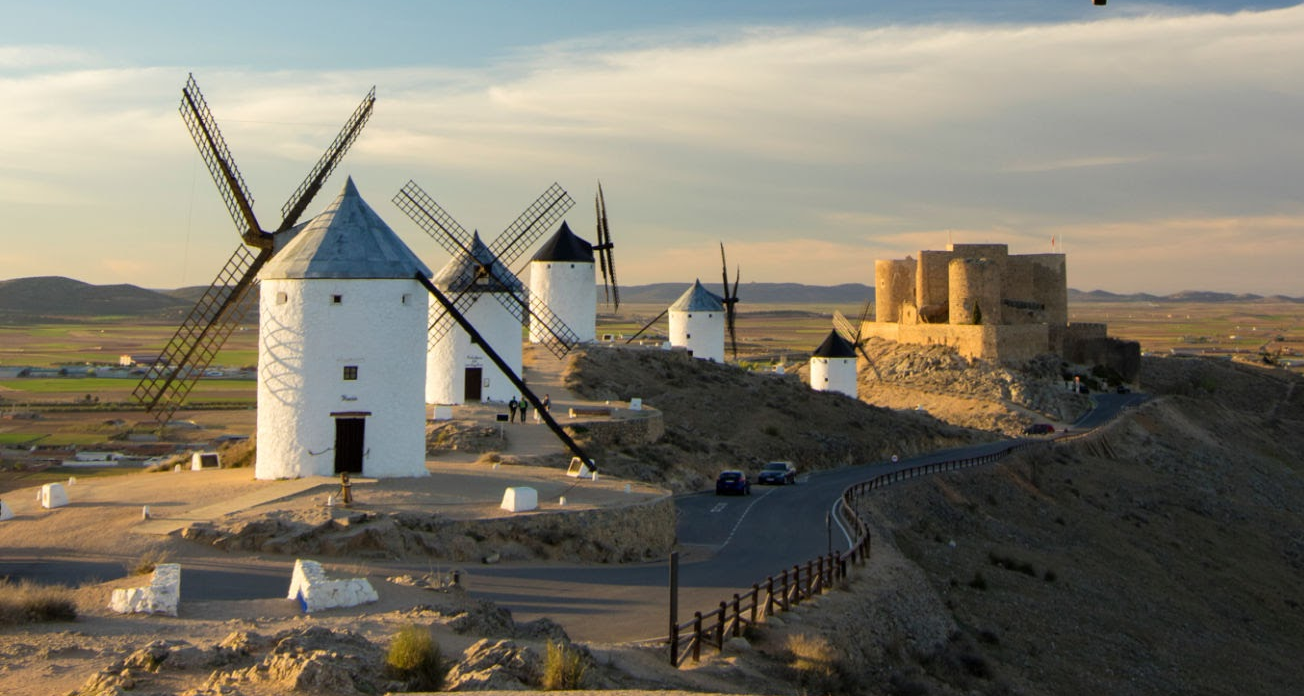
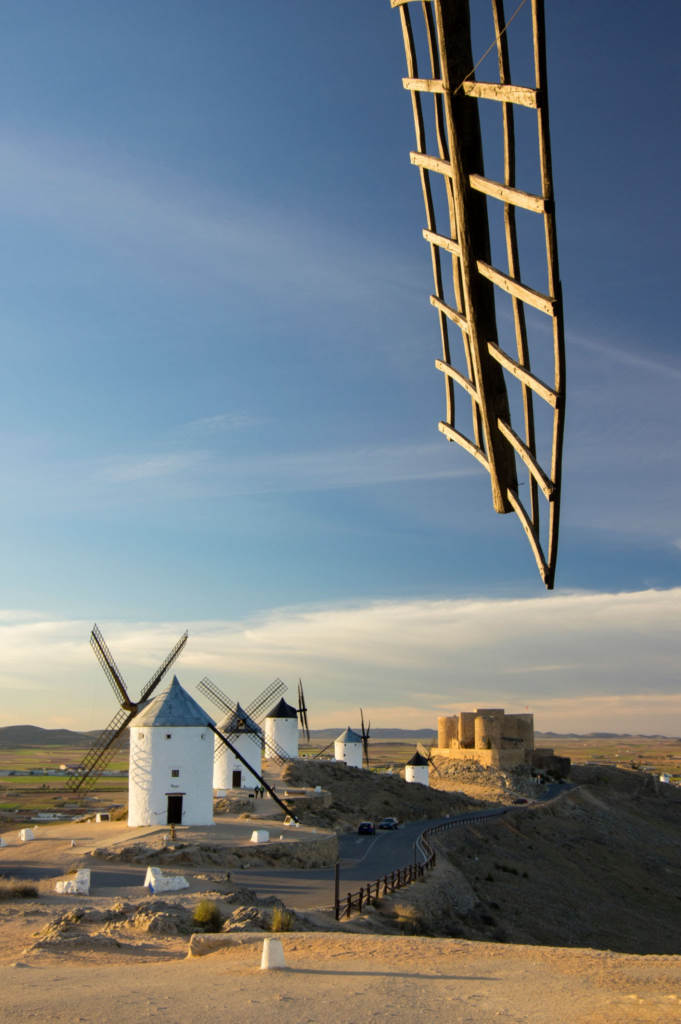
Mention the words “La Mancha,” and your mind likely conjures a very specific, romanticized image of the Spanish interior. You think of Miguel de Cervantes’ delusional knight, Don Quixote, tilting at white windmills along a rocky ridge. If you happen to be a wine drinker, a second, slightly less romantic image probably pops up: an endless, flat, sun-baked landscape producing millions of hectoliters of cheap, uninspiring white bulk wine used for industrial blending or brandy distillation.
For the better part of the late 20th century, that reputation was completely earned. La Mancha was long regarded as the “wine lake” of Europe. It prioritized sheer volume over anything resembling character, site expression, or balance. It was a region of massive cooperatives, industrial processing plants, and low prices that left serious collectors looking exclusively to the north, towards Rioja, Ribera del Duero, or the coastal valleys of Galicia.
But landscapes change, and generations shift.
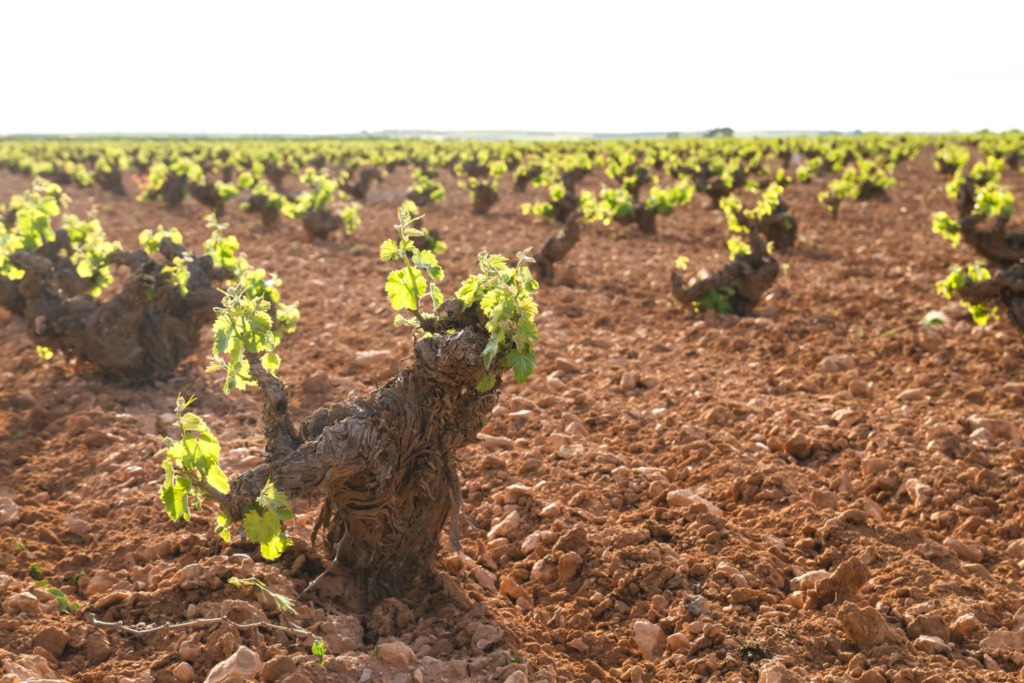
Right now, across the vast, sun-bleached plateau of central Spain, a quiet, stubborn revolution is taking place. A scattered network of independent viticulturists, boutique family estates, and avant-garde winemakers are looking at the region’s ancient, dry-farmed bush vines not as low-value historical relics, but as an incredible viticultural treasure. By slashing yields, ditching industrial irrigation, and embracing native yeast fermentations, these producers are proving that the La Mancha wine region possesses a profound, rugged terroir capable of producing world-class wines.
To understand the future of Spanish wine, you have to look precisely where everyone else stopped looking decades ago. It is time to peel back the industrial veneer of Castilla-La Mancha and explore one of the most extreme, geologically fascinating, and value-packed wine regions on earth.
1. The Meseta Central Matrix: Climate and Elevation
To appreciate the structural tension that modern La Mancha wines can achieve, you have to discard the idea that this region is a low-lying, humid desert. The geography here is defined by the Meseta Central, a massive, high-altitude plateau that dominates the interior of the Iberian Peninsula.
The entire appellation hovers between 600 and 800 meters (and in some sub-zones, up to 900 meters) above sea level. This elevation is the region’s saving grace. Without it, the blistering summer sun would bake all the acidity out of the grapes within weeks, leaving behind flat, jammy, high-alcohol wines completely devoid of freshness.
The Continental Extremes
The climate of La Mancha is fiercely, unapologetically continental. Locals describe their year with a sense of grim pride: “Nueve meses de invierno y tres de infierno” (Nine months of winter and three months of hell).
During the winter, icy winds sweep across the exposed plains from the surrounding mountain ranges, plunging temperatures well below freezing. Frost is a persistent threat late into the spring. Come June, the climate flips violently. The summer months bring relentless, baking sunshine with afternoon temperatures routinely climbing past 40°C.
However, the high elevation creates a powerful engine for quality: extreme diurnal temperature shifts.
Even during the hottest weeks of August, the temperature can plummet by up to 20°C the moment the sun drops behind the horizon. The cool night air hits the brakes on grape ripening, allowing the vines to rest and lock in their natural acidity. This dramatic day-night temperature swing is the exact mechanism that prevents La Mancha’s white grapes from turning flabby and gives its red wines their bright, refreshing architectural framework.
The Drought Factor
La Mancha is one of the driest wine-producing regions in Europe, receiving a meager 300 to 400 millimeters of rainfall per year. Hot, drying winds sweep across the plains continuously, quickly evaporating any surface moisture.
While this sounds like a nightmare for traditional agriculture, it creates a pristine environment for clean grape growing. Fungal diseases, mildew, and rot simply cannot survive in this arid, windswept atmosphere. Consequently, La Mancha is the largest natural laboratory for organic viticulture in the world. Winemakers can farm thousands of hectares without ever needing to spray chemical fungicides or systemic pesticides. It is a naturally clean environment where the vine relies on its own biological defenses to survive.
2. The Geology Under the Dust: Limestone, Clay, and Chalk
If the climate dictates the rhythm of the vintage, the subterranean landscape dictates the texture and mineral drive of the wine. From the surface, La Mancha looks uniform, a continuous expanse of reddish-brown earth. But drop down into the vine trenches, and you find a highly complex soil matrix that has evolved over millions of years of continental sedimentation.
The Caliza Layer: The Sponge of the Meseta
The defining geological feature of the finest plots in La Mancha is a dense, hard sublayer of limestone, known locally as caliza.
Above this limestone layer sits a variable mixture of sandy loam and iron-rich red clay (arcilla). The red clay provides the vines with essential nutrients and structural support, while the sandy elements ensure rapid drainage during sudden, violent autumn storms.
But it is the limestone underneath that does the heavy lifting. Limestone is highly porous; it acts like a massive subterranean sponge. During the brief winter rains, this chalky rock absorbs water, locking it deep underground. When the summer heat hits and the topsoil turns to powder, the deep, ancient roots of the vines drill down into the fractured limestone, slowly drawing up the stored moisture.
This deep water access allows the vines to survive without artificial drop-irrigation. Crucially, wines grown on these highly calcareous soils carry a distinct textural signature: a chalky, fine-grained tannin structure in the reds, and a savory, almost salty mineral length in the whites.
3. The Grape Revolution: Reimagining Airén and Cencibel
The transformation of La Mancha from a bulk-driven powerhouse to a terroir-focused frontier is directly tied to how winemakers treat their two primary indigenous grape varieties. For generations, these grapes were manipulated for yield; today, they are curated for depth.
Airén: The Great White Reevaluation
For a long time, Airén held the title of the most widely planted white wine grape variety on the planet, almost entirely concentrated within central Spain. Because it is incredibly resistant to drought, exceptionally productive, and capable of surviving extreme heat, industrial cooperatives planted it everywhere. They loaded the vines with water, harvested mechanically at massive yields, and produced flat, neutral white wines that tasted like absolutely nothing.
However, when you track down Airén old vines, plots planted fifty, seventy, or a hundred years ago as low-slung, widely spaced bush vines (en vaso), the grape completely transforms.
Unirrigated old bush vines naturally restrict their own yields. The grape clusters become smaller, more concentrated, and deeply expressive of the limestone bedrock. Modern, quality-driven Airén is a beautiful, understated white wine. Fermented under temperature control in stainless steel or aged on its fine lees, it yields aromas of fresh green apple, white grapefruit, wild chamomile, and a distinct flinty minerality.
Furthermore, avant-garde winemakers are currently using old-vine Airén for skin-contact skin-fermented white wines (orange wines) and aging them in ancestral clay amphorae (tinajas). The grape’s neutral aromatic profile makes it the perfect vessel for showcasing the texture, structure, and earthy complexity derived from clay aging.
Cencibel: Tempranillo’s Hardened Alter Ego
If you cross the mountain passes north into Rioja, Spain’s iconic red grape is called Tempranillo. But down on the high plains of the Meseta, it goes by its historical local clone: Cencibel.
Centuries of adaptation to the violent continental climate of La Mancha have physically altered the grape. To protect itself from the intense UV radiation and blistering summer heat, the Cencibel clone has developed significantly thicker skins and smaller berry sizes than the Tempranillo found in cooler northern valleys.
This skin-to-juice ratio alters the Cencibel wine profile dramatically:
- Color and Concentration: Cencibel yields a deeply colored, opaque purple juice packed with polyphenols.
- Flavor Architecture: While Rioja Tempranillo leans toward red cherries, elegant tobacco, and dill, La Mancha Cencibel is darker, broader, and more muscular. It explodes with black cherries, wild blackberries, dark cocoa, and a rustic, iron-like mineral note.
- Tannic Structure: The thicker skins provide a robust, muscular tannic framework. In the hands of a lazy winemaker, this can result in tough, astringent wines. But when managed with gentle extraction and judged oak aging, it creates age-worthy red wines with remarkable structural integrity.
The Supporting Cast
While Airén and Cencibel are the undisputed rulers of the plateau, La Mancha’s unique climate has proven to be an exceptional home for several other varieties:
- Graciano: Traditionally used as a minor blending grape in Rioja to add acidity, Graciano thrives as a single-varietal wine in La Mancha. The intense heat allows this late-ripening grape to reach perfect phenolic maturity, yielding deeply aromatic reds packed with blue fruit, black pepper, and vibrant, electric acidity.
- Garnacha Tintorera (Alicante Bouschet): One of the very few teinturier grapes on earth (meaning the flesh of the grape is red, not just the skin). It produces dark, ink-like wines with massive structure, juicy acidity, and intense flavors of wild forest fruits.
- Sauvignon Blanc and Verdejo: At the highest elevations of the Meseta, where the night temperatures plummet dramatically, winemakers are crafting highly aromatic, intensely crisp white wines that display remarkable tropical fruit intensity and laser-focused freshness.
4. The Vinos de Pago Revolution: The Peak of Quality
To fully navigate the modern landscape of the La Mancha wine region, you must understand a critical legal designation that central Spain pioneered: Vino de Pago.
In the traditional Spanish wine hierarchy, the highest quality tier was long assumed to be the Denominación de Origen Calificada (DOCa), a title held only by Rioja and Priorat. But in 2003, Castilla-La Mancha’s forward-thinking producers realized that the standard DO system was too broad. It lumped elite, estate-driven, single-vineyard properties into the same legal category as the massive, volume-driven industrial cooperatives down the road.
To fix this, they created the Vino de Pago classification, the highest official status a single vineyard can achieve under Spanish law.
A Pago is a single, legally demarcated estate with a demonstrably unique microclimate and soil structure that sets it apart from the surrounding region. The estate must grow, vinify, and age every single drop of wine within its own physical borders. The rules regarding yields, grape selections, and production techniques are far stricter than those of the standard DO.
La Mancha and its neighboring sub-appellations became the epicenter of this single-estate revolution. Names like Dominio de Valdepusa (the very first Vino de Pago, established by the legendary wine pioneer Carlos Falcó), Pago Florentino, and Finca Élez proved to the global community that central Spain was capable of producing estate-driven wines of stunning precision, longevity, and character. When you see “Vino de Pago” on a bottle from central Spain, you are looking at a specific piece of land chosen for its elite quality, completely disconnected from the bulk-wine trade.
5. Sourcing the High Plains: The Essential Retailer Strategy
Because the premium estates of Castilla-La Mancha focus on low-yielding, boutique productions, navigating general retail shelves is usually a dead end. they are still dominated by mass-market cooperative bulk wine. To find the true, limestone-driven gems of the Meseta, a savvy collector has to split their strategy between curated local importers and direct-from-source Spanish distributors.
The Benelux Pipeline: Wijnbeurs & Colaris
For northern European buyers and collectors, Wijnbeurs and Colaris should be treated as two sides of the same coin. Instead of choosing between them, use them as a complementary network to secure flawless bottle provenance and reliable, temperature-controlled local delivery without international shipping headaches.
- The Wijnbeurs Advantage (The Value Scout): Turn to Wijnbeurs to secure the absolute sweet spot of the price-to-quality ratio. Because La Mancha has historically suffered from a low-price reputation, its premium, long-aged red wines are priced significantly lower than equivalent tiers in Rioja or Bordeaux. Wijnbeurs excels at hunting down small batches of aged Cencibel Gran Reservas that have matured quietly in oak casks before release. These bottles offer complex notes of dried cranberries, sweet tobacco, and leather at an incredible value.
- The Colaris Advantage (The Terroir Scout): Switch over to Colaris when you want to source elite, single-vineyard masterpieces and certified organic Vinos de Pago estate wines. Their portfolio bypasses broad regional blends entirely, focusing instead on independent family estates like Pago Florentino or the high-altitude projects of Bodegas Volver. These wines are broad, muscular, and deeply concentrated, crafted specifically for cellaring and serious gastronomic pairings.
The Direct-From-Source Specialist: Decantalo
When you want to venture into the wild, experimental fringes of central Spain’s wine revolution, Decantalo is an absolute lifesaver.
The Sourcing Strategy: Use Decantalo specifically to hunt down esoteric bottles that are too small-scale to ever secure a major northern European import contract. This is your go-to pipeline for tracking down Bodegas Verum’s clay-amphora (tinaja) fermented Airén, or the micro-production runs of ancient, near-extinct local varieties from Garagewine. If an artisan winemaker in Toledo or Ciudad Real is shaking up the status quo with a few hundred bottles, Decantalo is usually the first platform to secure an allocation.
Why Use Them: Operating straight out of Barcelona with direct physical access to Spanish cellars, Decantalo bridges the gap that traditional import portfolios miss. They carry a massive, real-time catalog of low-intervention gems, unfiltered field blends, and low-production garage wineries.
Recommendations & Styles to Look For:
- The Estate-Specific Vino de Pago: Scan the Colaris digital cellar for iconic single-estate properties such as Pago Florentino or the high-altitude projects of Bodegas Volver (like their Volver Single Vineyard Cencibel). These wines are old-school in their power but modern in their execution, unfiltered, deeply concentrated, showing massive dark plum fruit, violet notes, and a distinct, fine-grained mineral finish derived from pure limestone soils.
- Boutique Old-Vine Airén and Varietal Whites: Colaris is an exceptional source for checking out the white wine renaissance of central Spain. Look for independent producers who isolate high-altitude plots of old-vine Airén, Verdejo, or Sauvignon Blanc. These bottles are imported specifically for their structural tension and food-pairing versatility, showing zero wood interference and a clean, chalky minerality.
6. The Gastronomy of the High Plains: A Rustic Feast
To truly appreciate the structure of La Mancha’s wines, you need to place them next to the food they were born to accompany. The cuisine of Castilla-La Mancha is rustic, simple, and intensely savory, designed centuries ago to sustain shepherds and farmers working through the brutal continental winters and scorching summers.
This food doesn’t play nice with delicate, low-alcohol wines; it demands the robust body, deep fruit, and structural tannins found in premium Cencibel and old-vine field blends.
Queso Manchego: The Definitive Pairing
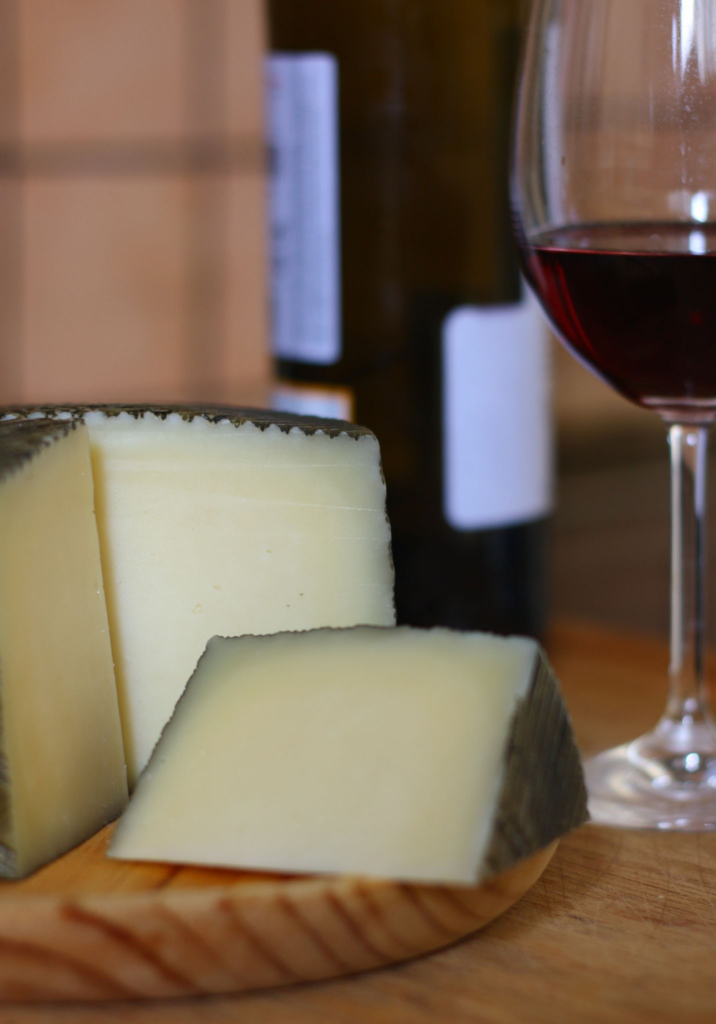
The absolute baseline of La Mancha gastronomy is Queso Manchego, an iconic cheese crafted exclusively from the rich whole milk of native Manchega sheep who graze on the scrubby, aromatic wild herbs of the Meseta.
- Manchego Curado (Aged 3-6 months): This cheese retains a creamy, slightly buttery texture with a mild, tangy finish. Pair it with a cold glass of old-vine Airén or a crisp, high-altitude Sauvignon Blanc. The wine’s bright, clean acidity cuts through the sheep’s milk fat effortlessly.
- Manchego Viejo (Aged 12+ months): The cheese becomes hard, crumbly, and deeply savory, packed with crunchy tyrosine crystals and a rich, nutty, slightly sharp flavor. A young, fruit-forward wine will taste thin and hollow next to this cheese. It requires a muscular, oak-aged Cencibel or a high-altitude Syrah blend. The bold dark fruit notes and firm tannins of the red wine melt into the nutty, savory fat of the cheese, creating a flawless harmony.
Pisto Manchego
Often described as the Spanish cousin to French ratatouille, Pisto Manchego is a beautiful, slow-simmered celebration of summer garden produce.
- The Dish: Ripe tomatoes, sweet bell peppers, zucchini, onions, and garlic are slowly stewed in generous amounts of premium extra virgin olive oil until they collapse into a rich, sweet, savory confit. It is traditionally served warm in a terracotta dish, topped with a rich, olive-oil-fried egg.
- The Wine Match: This dish is highly acidic due to the concentrated tomatoes, which will turn most low-acid red wines sour. It pairs beautifully with a varietal Graciano or a vibrant, fruit-forward Cencibel Joven that retains bright, juicy natural acidity to match the tomato profile.
Cordero Manchego (La Mancha Lamb)
The ultimate centerpiece of a local feast is Cordero Manchego, local grass-fed lamb roasted slowly in traditional wood-fired brick ovens until the meat falls off the bone.
- The Execution: The lamb is typically rubbed with nothing more than coarse sea salt, garlic, fresh rosemary, and a splash of white wine or local olive oil. The exterior turns incredibly crisp, while the interior stays tender and intensely savory.
- The Wine Match: Open a premium Vino de Pago estate red or a long-aged Gran Reserva. The structural, thick-skinned tannins of a high-altitude Cencibel bond directly with the rich proteins of the roasted lamb, softening the wine’s grip while drawing out deep notes of leather, spice, and dark forest berries.
7. The Slow Travel Blueprint: Navigating the Heart of La Mancha
Planning a central Spain wine route through La Mancha requires letting go of traditional, fast-paced tourism concepts. This isn’t Napa Valley or the tourist-heavy paths of the Chianti hills; there are no neon signs directing you to tasting rooms, and many of the best bodegas look like modest, unassuming agricultural outposts from the outside.
To experience the region properly, you must embrace the philosophy of slow travel, taking your time to navigate the long, straight highways connecting ancient towns across the high plains.
The Ultimate 3-Day Regional Hub Strategy
Because the geographical footprint of the appellation is massive, attempting to drive across the entire region in a single weekend is a mistake. Instead, establish a centralized base that bridges historic culture with modern winemaking access.
| Day | Destination Hub | Primary Focus | Key Cultural Landmark |
| Day 1 | Toledo to Consuegra | Steeped history, high-altitude northern fringe vineyards | The historic Toledo Cathedral & the ridge-top windmills of Consuegra |
| Day 2 | Alcázar de San Juan | The historical heartland, ancient underground cellars | Cervantine culture museums and traditional tile-roofed towns |
| Day 3 | Tomelloso & Valdepeñas | Modern boutique bodegas, clay amphorae collections | The historic underground tinaja caves beneath the city streets |
Essential Travel Protocols for Wine Tourists
- The Booking Rule: You cannot simply roll up to a boutique bodega in La Mancha and expect an immediate tasting. Many of these artisan estates are run by small families where the head winemaker is also the vineyard manager. Always send an email or place a phone call at least a week in advance to schedule a formal visit.
- Look for the Tinajas: When visiting historic towns like Tomelloso, explicitly ask your host if you can see their historical cellars. Beneath many modern stainless-steel facilities lie ancient, hand-dug subterranean caves housing massive, spectacular clay amphorae (tinajas) that were used for centuries to ferment wine naturally long before modern refrigeration was invented.
- Embrace the Rural House (Casa Rural): Skip generic corporate hotels along the highway. Instead, book your accommodations in a traditional casa rural, renovated historic farmhouses or countryside estates that feature thick stone walls, interior courtyards, and direct access to old-vine landscapes.
The Final Veracity: Reclaiming the Soul of the Meseta
The story of the modern La Mancha wine region is a testament to the fact that terroir is not just about perfect weather or prestigious historical labels. It is about human vision, patience, and the willingness to look at a forgotten landscape with fresh eyes.
By turning away from the high-volume mindset of the past and protecting their priceless inheritance of ancient, dry-farmed bush vines, the winemakers of the Meseta Central have successfully peeled back the industrial label of central Spain. They have given the global wine community a portfolio of wines defined by extreme climate, intense mineral drive, and a rugged, unmistakable sense of place.
The next time you log onto a platform like Colaris or Decántalo, skip the predictable regional aisles. Look down into the sun-baked interior of Spain. Find an old-vine Airén fermented in clay, or a thick-skinned, estate-grown Cencibel from a rocky limestone plot. You will be drinking a piece of living history, a bold, soulful taste of Spain’s infinite horizon, crafted by the giants who refused to let it fade away.
Enjoyed reading about Castilla-La Mancha? Have a look at other Spanish wine regions here.
2 Comments
Comments are closed.