
The Priorat Wine Guide: Stone, Spirit, and the Renaissance of Catalonia’s Rugged Cult Red
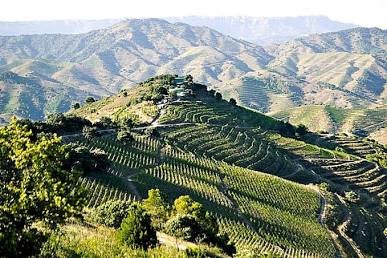
There is an eerie, beautiful silence that hangs over the hills of Priorat. If you stand in a vineyard in the late afternoon, the only sound you are likely to hear is the crunch of brittle, dark slate shifting beneath your boots and the steady whistle of the wind sweeping down from the Serra de Montsant. The landscape feels biblical, an endless tapestry of terrifyingly steep, terraced hillsides where gnarled old vines claw their way into black and gold stone.
For centuries, this isolated pocket of Catalonia, tucked just an hour and a half south of Barcelona, was forgotten by the modern world. Its ancient villages were depopulated, its dramatic mountain terraces abandoned to weeds. Yet today, Priorat stands alongside Rioja as one of only two wine regions in Spain to hold the prestigious DOCa (Denominació d’Origen Qualificada) status, the absolute highest tier of Spanish wine classification.
Priorat is not a wine region that compromises. It doesn’t offer easy viticulture, gentle weather, or massive, high-yielding grape harvests. Instead, it demands backbreaking manual labor, forcing vineyard workers to harvest grapes by hand on slopes so steep that tracking mules are still occasionally used because machinery would simply tip over. The result of this intense struggle is a red wine of singular, unmistakable identity: deeply dark, incredibly concentrated, muscular yet spiritual, and shot through with a distinct, smoky mineral core that tastes exactly like the crushed mountain stones from which it came.
Whether you are looking to understand the monastic roots of the region’s oldest cellar, explore the old-vine Cariñena expressions of Porrera, or discover the low-intervention micro-producers who are reshaping the modern style, this guide will take you deep into the heart of the slate hills.
The Lay of the Land: A Forbidden Geological Amphitheater
To map Priorat is to chart a tiny, fractured geological anomaly. The wine region is completely encircled and protected by the limestone walls of the Montsant mountain range, which acts as a massive natural barrier against the freezing northern winds. Inside this protected bowl lies a chaotic web of valleys and ridges carved out by the Siurana River and its tiny tributaries.
The entire appellation covers just under 2,000 hectares of vineyards, a fraction of the size of neighboring regions, divided among nine historic villages (vins de vila), each possessing its own unique microclimate, altitude, and stylistic variation:
- Gratallops: The historic, sun-drenched capital of the modern Priorat revival. Wines here tend to be rich, powerful, and deeply structural, characterized by ripe black fruits and intense graphite notes.
- Porrera: Tucked into a deep, cool valley to the east. Because it faces away from the blazing afternoon sun, Porrera undergoes a much slower, cooler ripening process. This village is the spiritual home of old-vine Cariñena, yielding wines with astonishingly high natural acidity, bright red-fruit profiles, and intense floral lift.
- Poboleda: Located in the coolest, northernmost corner of the region. The nocturnal temperature drops here are extreme, producing elegant, high-toned, aromatic expressions of Garnacha that trade raw power for delicate perfume and precision.
- Torroja del Priorat: Situated right in the geographic center of the DO. Torroja wines are often considered the baseline benchmark of balance, blending the structural muscle of the south with the fresh, linear acidity of the north.
- Escaladei: Nestled directly at the foot of the towering Montsant cliffs. This sub-zone features a highly unusual mixture of red clay, limestone scree, and classic slate, resulting in wines with incredibly plush, velvety tannins and a distinct, broad-shouldered majesty.
The Climate: Fire, Air, and Massive Diurnal Fluctuations
Priorat experiences a harsh, variable Mediterranean climate that borders on continental. The region receives an intense amount of sunshine, with summer daytime temperatures routinely climbing past 40°C.
However, two saving graces protect the vineyards from burning out:
- The Diurnal Shift: Just like in Ribera del Duero, the high altitude of many vineyard sites (ranging from 200 meters up to nearly 800 meters above sea level) triggers a dramatic temperature drop at night. This nocturnal cooling allows the vines to rest, preserving vital malic and tartaric acids within the grape pulp.
- The Marine Winds: In the late afternoon, a gentle, humid sea breeze known as the Garbinada sweeps inland from the Mediterranean Sea. This wind brings cool moisture into the baking valleys, lowering temperatures and preventing the grapes from dehydrating on the vine. Conversely, the dry northern Serb wind periodically blows through, keeping the grape clusters perfectly dry and entirely free from fungal diseases or rot.
The Magic of Llicorella: Soil That Defines a Spirit
You cannot talk about Priorat without talking about Llicorella (pronounced lyee-ko-ray-yah). It is the defining signature of the region, a unique geological formation that separates Priorat from almost every other wine landscape on earth.
Topsoil Layer   ──► Brittle, decomposed quartzite and slate (Reflects heat, forces roots downward)

Bedrock Layer   ──► Vertical sheets of ancient carboniferous slate (Roots penetrate fractures for water)
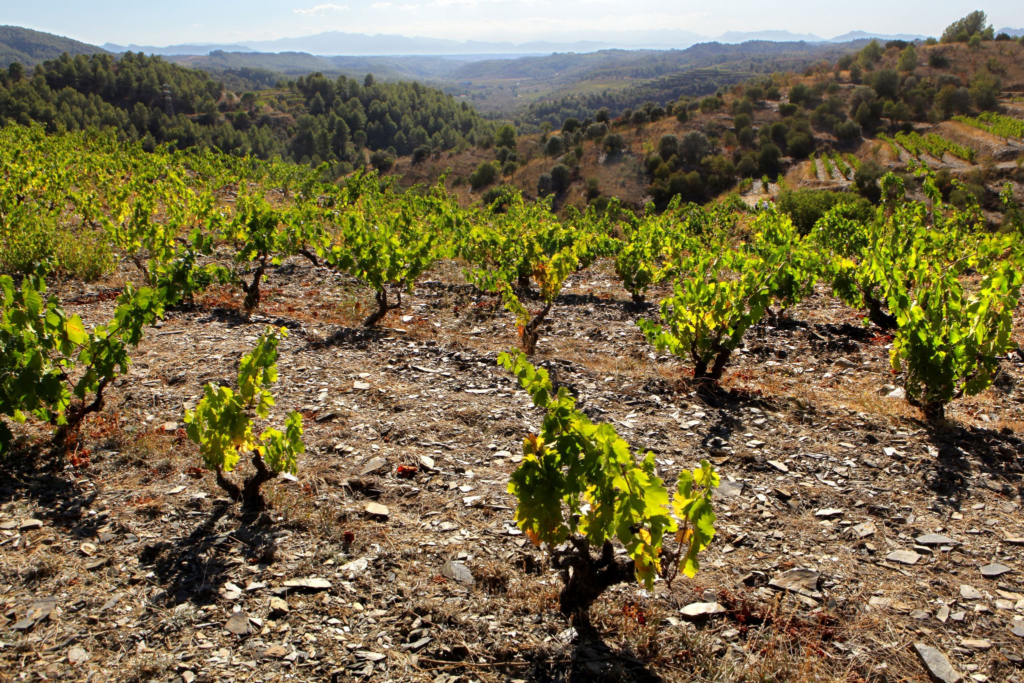
Llicorella is a dark, shimmering soil composed of ancient carboniferous slate interbedded with tiny flakes of glittering quartzite. It is incredibly poor in nutrients, organic matter, and topsoil. In fact, calling it “soil” feels like a misnomer; it is essentially a mountain of shattered, brittle rock.
The Hydrological Miracle of Slate
How does a grapevine survive in a landscape that receives less than 400mm of rain per year and consists entirely of solid rock? The secret lies in the physical structure of the slate itself:
- Vertical Fractures: The layers of Llicorella slate do not run horizontally; they are tilted vertically, pressed together by ancient tectonic forces. When rain does fall during winter storms, the water doesn’t pool on the surface or wash away down the steep hillsides. Instead, it seeps deep into the microscopic cracks and fissures between the vertical rock plates.
- Surgical Root Systems: To survive the blistering summer droughts, the roots of Priorat’s old vines must become master drillers. They bore directly into the fractures of the slate, digging 10, 15, or even 20 meters down into the dark, cool subterranean bedrock to reach those hidden water reserves.
- Natural Yield Control: This constant, systematic struggle for moisture acts as a natural brake on the vine’s vigor. The plant cannot produce large, watery crops. Instead, it channels its limited energy into producing tiny, intensely concentrated grape clusters. A single old vine in Priorat might produce less than one kilogram of fruit per harvest. sometimes just enough to yield a single glass of wine.
When you taste a fine Priorat, this extreme soil speaks directly through the liquid. The slate absorbs the ferocious daytime heat and radiates it back up to the low-hanging grape clusters during the night, helping to break down aggressive green tannins. At the same time, the deep root contact with the mineral bedrock infuses the juice with a structural, savory salinity, a texturing sensation that wine professionals describe as an aroma of crushed wet stone, struck flint, or warm asphalt after a summer rain.
The Sovereign Varieties: Garnacha and Cariñena
While international grapes like Syrah, Cabernet Sauvignon, and Merlot were widely planted during the region’s modern boom in the 1990s, the heart and soul of Priorat will always belong to its two historical native varieties: Garnacha Tinta (Grenache) and Cariñena (Carignan, locally called Samsó).
Garnacha: The Flesh and the Spirit
Garnacha is the emotional core of Priorat. Because it thrives in intense heat and poor soils, it finds its ultimate expression in the llicorella valleys. In Priorat, Garnacha takes on a dark, voluptuous character quite unlike the pale, translucent expressions found in southern France. It provides the wine with its high natural alcohol, its plush texture, and its hauntingly beautiful aromatic profile of black raspberries, ripe wild cherries, dried figs, and exotic incense.
Cariñena: The Spine and the Structural Anchor
If Garnacha is the flesh, Cariñena is the bone structure. On its own, young Cariñena can be rustic, aggressively tannic, and intensely acidic. But when sourced from old bush vines (vinyes velles) that are 60 to 100 years old, it transforms into something majestic.
Cariñena provides the structural dark spine that Garnacha sometimes lacks. It brings an opaque, ink-like color to the blend, along with deep flavors of wild blueberries, black currants, dark cocoa, and a vibrant, mouth-watering acidity that allows Priorat wines to age effortlessly for decades in a cellar.
The Cru Classification System: Els Noms de la Terra
In 2019, the regulatory council of Priorat implemented one of the most progressive, terroir-driven classification frameworks in the entire wine world: Els Noms de la Terra (The Names of the Land). Shifting completely away from the traditional Spanish model based purely on oak aging times (Crianza, Reserva), Priorat adopted a hierarchical structure inspired directly by the classic Cru architecture of Burgundy.
| Classification Level | Equivalent Tier | Description |
| Gran Vinya Classificada | Grand Cru | Single legendary vineyards |
| Vinya Classificada | Premier Cru | Single exceptional estates |
| Vi de Paratge | Lieu-dit | Specific classified locations |
| Vi de Vila | Village Appellation | Village-specific wines (e.g., Porrera, Gratallops) |
| DOQ Priorat | Regional Appellation | The baseline regional blend |
This classification means that when you buy a bottle stamped with Vi de Vila, 100% of the grapes must be grown and vinified within the borders of that specific village, showcasing its distinct microclimate. A Vinya Classificada represents a singular, exceptional estate vineyard (equivalent to a Burgundy Premier Cru), while a Gran Vinya Classificada is the absolute pinnacle, a legendary, single-vineyard site with old vines and historically recognized genius, such as the famous L’Ermita or Clos Mogador.
The Benchmark Titans: Deep Dives into Three Great Priorat Cellars
To fully appreciate the range and history of this mountain appellation, one must look closely at the benchmark estates that define its identity. Let’s dive deep into three legendary cellars that showcase the diversity of Priorat winemaking.
1. Cellers de Scala Dei: The Cradle of Priorat History
You cannot understand the spirit of Priorat without visiting Cellers de Scala Dei. Located in the northern shadows of the Montsant cliffs, this winery is the physical birthplace of winemaking in the region.
The Terroir and History
In the year 1194, Carthusian monks traveled from Provence and established the Charterhouse of Scala Dei (Latin for “Ladder of God”). According to local lore, a shepherd boy had a vision of angels ascending a ladder up the sheer limestone cliffs of the Montsant mountain. The monks built their monastery on that exact spot, planted the very first grapevines, and effectively managed the agricultural landscape of the valley for over six centuries.
The terroir of Scala Dei is highly unusual for Priorat. Because it sits directly below the high limestone walls of the mountain, the soils here are not pure llicorella slate. Instead, they are a unique, pale mixture of limestone scree, gypsum, and dense red clay, intermingled with slate terraces at altitudes climbing up to 800 meters. This high clay and limestone content gives Scala Dei wines a radically different tannic profile, plush, expansive, and incredibly fine-textured.
What Makes it Special
Cellers de Scala Dei was the first winery to bottle and commercialize estate-grown wines under the official “Priorat” name back in 1974. Under the brilliant modern guidance of winemaker Ricard Rofes, the estate has undergone a profound philosophical shift back to its historical roots.
Rofes looked at ancient monastic texts and realized that the monks didn’t use small, heavily toasted new oak barrels or high-tech extraction pumps. Today, Scala Dei has brought back traditional vinification methods: fermenting their finest old-vine Garnacha using 100% whole grape clusters (including the stems) in open concrete vats, followed by long, gentle maturation in massive, neutral oak casks (foudres). This minimal-intervention approach coaxes out an ethereal, pale, aromatically explosive style of Priorat that values perfume and historical precision over brute strength.
Tasting Notes & Sensory Profile
The estate’s historical benchmark, Scala Dei Cartoixa, is a profound experience. It pours a brilliant, translucent ruby-red. The nose is exceptionally lifted, showing a striking perfume of red currants, wild strawberries, and fresh orange peel, layered with complex secondary notes of dried rosemary, white pepper, and a cool, limestone-driven chalky minerality.
On the palate, the wine is silky and surprisingly weightless, yet it possesses incredible structural grip. The whole-cluster stems bring a fine, tea-like tannic weave and an alpine freshness that balances the warm fruit core. The finish is remarkably clean, linear, and long, leaving a lingering impression of mountain herbs and cool, stony salinity.
Culinary Food Pairings
Because of its bright acidity, elegant fruit profile, and fine tannins, Scala Dei matches beautifully with delicate meats and complex savory reductions:
- The Perfect Pairing: Herb-crusted rack of mountain lamb roasted with garlic and fresh sprigs of thyme.
- Traditional Option: Conejo a la Cazadora (Wild rabbit stewed with chanterelle mushrooms, white wine, and aromatic herbs).
- Cheese Pairings: Semi-cured goat cheeses, particularly traditional Catalan Formatge de Garrotxa.
Where to Buy
Scala Dei enjoys excellent global distribution due to its historical status. You can reliably find their flagship Cartoixa or their village wine Prior Escaladei through major fine wine merchants, premium duty-free shops in Spain, and dominant online retailers like Bodeboca or Decántalo. Expect to pay around €40–€50 for the Cartoixa, which represents magnificent value for a wine of such deep historical pedigree.
2. Celler Vall Llach: The Soul of Porrera and Old-Vine Carinyena
If Scala Dei represents the monastic history of the north, Celler Vall Llach represents the fierce, poetic, independent spirit of the rugged eastern village of Porrera.
The Terroir and History
Celler Vall Llach was founded in the early 1990s by two close friends: the celebrated Catalan singer-songwriter Lluís Llach and the micro-winery pioneer Enric Costa. They chose the isolated village of Porrera, a sub-zone famous for its steep, terrifyingly vertical slopes (costers) composed of ancient, dark llicorella slate.
Porrera is a cooler, north-and-east-facing micro-appellation. The vines here are exposed to late-morning sun rather than the searing heat of the afternoon. This slow-ripening environment is uniquely suited to Cariñena, allowing this notoriously late-ripening variety to slowly develop soft tannins and complex flavor compounds while maintaining an intensely high, vibrant natural acidity. Vall Llach’s crown jewel vineyards are centenarian bush vines planted on dizzying slopes that must be tended entirely by hand.
What Makes it Special
Vall Llach is a cellar built on a profound social covenant with the village of Porrera. When they started, they committed to purchasing fruit from local elderly grape-growers at premium, micro-estate prices, single-handedly revitalizing the agricultural economy of the town.
Their winemaking style is unashamedly deeply concentrated, structural, and opulent, yet structurally saved by Porrera’s trademark acidity. They practice micro-vinifications, fermenting small batches of old-vine fruit in small 225-liter open oak barrels, punching down the cap by hand daily to slowly extract color and flavor without drawing out any coarse, green tannins. The result is a selection of wines that showcase the incredible power, density, and age-worthiness of old-vine Cariñena.
Tasting Notes & Sensory Profile
The flagship Vall Llach Porrera Vi de Vila pours an incredibly dense, opaque, ink-like purple-black. The aromatics are brooding, rich, and remarkably profound: a luxurious wave of wild blueberries, black currants, and crushed plums bursts from the glass, closely followed by sophisticated notes of dark French chocolate, espresso grounds, graphite, and an unmistakable background note of slate smoke.
On the palate, this wine is a magnificent, broad-shouldered giant. The texture is intensely rich and velvety, coating the mouth with dark fruit preserves. Yet, the moment the wine hits the mid-palate, a striking, vibrant line of Porrera acidity takes over, cutting through the density and making the wine feel shockingly fresh and dynamic. The tannins are massive but perfectly ripe and round, leading to an endless finish of sweet baking spices, black licorice, and a mineral salinity.
Culinary Food Pairings
This is a muscular, highly structural wine that requires heavy, fat-dominant, intensely savory culinary pairings to soften its dense tannic architecture:
- The Perfect Pairing: Slow-braised beef short ribs (Costillas de Ternera) cooked for six hours in a dense red wine reduction with star anise and rosemary.
- Rustic Classic: Grilled venison steak or wild boar tenderloin served with an earthy blueberry or dark chocolate sauce.
- Intense Tapas: Slow-cooked pig’s trotters (Pies de Cerdo) or intense, air-cured artisan sausages like Catalan Fuet and Botifarra.
Where to Buy
Because Vall Llach focuses on low-yielding old vines, production numbers are naturally limited. Their entry-level estate wine Embruix is widely available globally for around €25, but to experience the true soul of the estate, you must search out the Porrera Vi de Vila (around €50–€60) or their ultra-cult single-vineyard Mas de la Rosa. These are best sourced through specialized online allocation merchants like Vinissimus, or direct from boutique retailers who specialize in premium Catalan wines.
3. Clos Mogador: The Pioneer of the Modern Slate Revolution
No guide to Priorat is complete without honoring Clos Mogador, the estate that single-handedly changed the destiny of the entire region.
The Terroir and History
In 1979, a visionary French winemaker named René Barbier arrived in the desolate village of Gratallops. He looked at the steep, abandoned slate slopes and recognized an incredible, untapped viticultural goldmine. Barbier bought a small, isolated bowl-shaped amphitheater of old vines and persuaded a handful of fellow winemakers, including Álvaro Palacios, Daphne Glorian, and Carles Pastrana, to pool their resources and create a single, unified winemaking collective.
In 1989, this group released their first wines (originally vinified in a shared shed in Gratallops), capturing the immediate attention of the international wine world. Modern Priorat was born.
The terroir of Clos Mogador is a stunning, sun-drenched natural amphitheater of pure llicorella slate located along the road to Torroja. The vines are farmed using strict organic and biodynamic principles, with the soil covered in natural vegetation to protect the microbial life of the stone.
What Makes it Special
Clos Mogador is a family-run institution driven by an obsessive respect for artisanal craftsmanship. René Barbier, alongside his son René Barbier Jr., utilizes an old vertical basket press from the 1920s because it exerts an incredibly gentle, uniform pressure on the grape skins, yielding ultra-silky juice.
Their flagship wine is a classic, complex field blend dominated by Garnacha and Cariñena, complemented by small percentages of Syrah and Cabernet Sauvignon. The wine is aged for up to 20 months in custom-selected, fine-grain French oak barrels and large neutral foudres, creating a wine of unparalleled structure, intellectual complexity, and legendary aging potential.
Tasting Notes & Sensory Profile
Clos Mogador is a deeply intellectual wine that requires patience. It shows a magnificent, dark cherry-red color. The nose is a shifting kaleidoscope of aromas: it starts with dark, savory notes of leather, cigar box, and black truffles, before opening up to reveal wild blackberries, dried lavender, espresso, and an intense, unmistakable core of crushed wet slate and graphite.
The palate entry is remarkably dense and aristocratic. The wine possesses a massive structural grip, yet the tannins feel completely polished, like liquid velvet. It drives down the palate with a monumental, multi-layered intensity, balanced by an inner core of refreshing mountain freshness that prevents it from ever feeling heavy. The finish stays on your palate for minutes, whispering stories of dark stone and sun-baked earth.
Culinary Food Pairings
Clos Mogador is a world-class collector’s wine that belongs alongside elegant, deeply complex culinary masterpieces:
- The Perfect Pairing: Classic French roasted squab or wood-fired roasted duck breast served with a rich truffle-infused potato purée.
- Rich Game: Slow-cooked jugged hare (Liebre a la Royale) with its traditional, highly complex savory sauce.
- Vegetarian Masterpiece: Grilled portobello mushroom caps stuffed with roasted chestnuts, wild herbs, and aged, smoky blue cheese.
Where to Buy
Clos Mogador is a blue-chip cult collectible found in the cellars of serious collectors worldwide. It is regularly allocated through premier international merchants like Fine+Rare & Berry Bros., and top-tier US boutiques. Expect to invest around €80–€100 per bottle depending on the vintage. It is an essential foundation bottle for anyone building a serious collection of Spanish fine wine.
The Hidden Gems: Small-Scale, Boutique, and Artisanal Producers
While the founding legends of Gratallops dominate the textbook histories, a brilliant new generation of low-intervention, boutique winemakers is stripping away the heavy oak profiles of the 1990s, focusing instead on freshness, old-vine field selections, and a lighter, pure expression of the slate.
If you want to taste the cutting edge of Priorat, add these three small-scale producers to your search list.
1. Terroir al Límit (Dominik Huber)
- The Location: Torroja del Priorat
- The Philosophy: Ethereal, vertical, Burgundy-inspired infusions with zero new oak.
Founded by the visionary German expat Dominik Huber, Terroir al Límit has completely redefined the stylistic possibilities of Priorat. Huber was among the first to look at the heavy, highly alcoholic, oak-driven styles of the region and completely rebel against them.
In the cellar, Huber treats his grapes not like a heavy red wine, but like delicate Pinot Noir. He avoids all mechanical crushing and pumping, opting for gentle whole-cluster infusions where the grapes macerate quietly in large neutral oak vats or concrete tanks. He completely bans the use of standard small oak barrels (barriques).
The Wine to Hunt For: Terra de Cuques or Torroja Vi de Vila
The Torroja Vi de Vila is a revelation. It is pale, incredibly vibrant, and bursting with aromas of fresh red cherries, pomegranate seeds, wild mountain thyme, and raw slate. It feels athletic, linear, and completely unadorned by wood, a pristine window straight into the central valley’s rocky soils.
2. Family Nin-Ortiz (Ester Nin & Carles Ortiz)
- The Location: Porrera and Planetes
- The Philosophy: Strict biodynamics, ancient ungrafted vines, natural purity.
Ester Nin is a legendary figure in Priorat viticulture (she was the long-time vineyard manager for the famous cult estate Clos Erasmus). Alongside her husband Carles Ortiz, their tiny family project Nin-Ortiz represents the absolute pinnacle of obsessive, biodynamic estate farming.
They cultivate tiny, remote parcels of ancient, ungrafted vines situated on rocky ridges at extreme altitudes. They farm entirely by hand, using horses to plow the steep terraces, and treat their vines with specialized biodynamic herbal teas rather than synthetic chemicals. In the cellar, they use zero commercial additives and bottle their wines with minimal sulfur additions.
The Wine to Hunt For: Nit de Nin “La Coma d’en Romeu“
An extraordinary, small-scale single-vineyard bottling dominated by old-vine Garnacha Peluda (a rare, downy-leafed variant of Grenache that preserves incredible acidity). It is an ethereal, deeply spiritual wine showing complex layers of blood orange peel, wild raspberries, crushed white pepper, and an intense, vibrant mineral energy that vibrates across the tongue.
3. Celler Joan Simó (Gerard Batllevell Simó)
- The Location: Porrera
- The Philosophy: Artisanal family heritage, traditional power matched with pure freshness.
Operating out of a beautiful, historic 19th-century townhouse in the center of Porrera, Celler Joan Simó is a small, family-owned boutique estate that beautifully bridges the worlds of traditional Priorat concentration and modern varietal precision. Winemaker Gerard Batllevell Simó works with estate vineyards that have been in his family for generations.
Their crown jewel is the Les Sentius vineyard, a terrifyingly steep slope of pure slate planted with ancient Cariñena and Garnacha vines that are over 80 years old. Gerard focuses on meticulous sorting, micro-fermentations, and careful aging in seasoned French oak to create wines that capture the profound soul of Porrera without ever feeling over-extracted.
The Wine to Hunt For: Les Sentius
A spectacular, small-production Priorat that offers an incredible entry into old-vine Porrera character. It explodes with dark blueberries, wild blackberries, and a striking, smoky, crushed-stone minerality. It is structured and muscular, yet it finishes with a beautiful, cleansing line of crisp acidity that makes it remarkably food-friendly.
Sourcing Secrets: How to Buy the Finest Priorat
Finding these artisanal mountain gems requires navigating the retail landscape with open eyes. Here are a few insider secrets to building your Priorat collection:
Learn the Importer Strategy
Priorat is a small region with highly fragmented allocations. To find the best small producers in your local wine shops, turn the bottle over and look at the importer stamp. Top-tier importers like De Maison Selections (who imports Nin-Ortiz), European Cellars / Eric Solomon, and Skurnik Wines act as exceptional quality filters. If they put their name on a Priorat bottle, you can trust it implicitly.
Leverage Specialized Spanish E-Commerce
Because productions of wines like Nit de Nin or Terroir al Límit are tiny, they are rarely found in traditional high-street shops. Use specialized European-facing digital wine networks:
- Bodeboca & Decántalo: These platforms source directly from the wineries in Catalonia and feature exceptional storage conditions and secure global shipping.
- Wine-Searcher Pro: Use this tool to track down older, cellared vintages of Clos Mogador or Scala Dei Cartoixa from reputable collector houses.
The Essential Vintage Checklist
Priorat’s mountain weather creates massive stylistic differences between years:
- 2019: A magnificent, historically balanced vintage. The wines display intense fruit purity, perfectly ripe tannins, and great cellular structure built for long-term aging.
- 2020: A highly challenging year characterized by severe spring downpours and mildew, which reduced crop sizes by up to 50%. The surviving wines are incredibly rare, highly concentrated, and deeply structural.
- 2021: An exceptional, cool-climate style vintage. A winter snowstorm (Storm Filomena) provided deep water reserves, resulting in a slow, uniform ripening season. The wines are chiseled, linear, elegant, and packed with refreshing acidity.
Serving Priorat: The Decanting and Service Protocol
To maximize the expression of these intense, high-altitude mountain red wines at your dinner table, observe these three critical serving laws:
1. Give it Time to Uncoil (The Decanting Rule)
Priorat is inherently a tightly wound wine built of dense fruit and firm volcanic tannins. Never open a bottle and pour it straight into the glass.
- For entry-level village wines (Vi de Vila) or young boutique reds, give them at least 1 hour in a wide-bottomed decanter.
- For historic benchmark treasures like Clos Mogador or Scala Dei Cartoixa, uncork the bottle 2 to 3 hours prior to service to let the intense slate minerality and rich dark fruit harmonize.
2. Control the Serving Temperature
Because of the naturally high alcohol content of Priorat red wines (often ranging from 14.5% to 15.5% ABV), serving them too warm is a critical mistake. If served at warm room temperature, the alcohol will dominate, masking the beautiful violet perfume and mineral core. Serve your Priorat at a cool cellar temperature of 16–17°C.
3. Use Large Burgundy or Large Bordeaux Glassware
The glassware choice depends entirely on the style of Priorat you are pouring:
- For traditional, muscular, dark-fruited expressions like Vall Llach or Clos Mogador, use a large, classic Bordeaux glass to help distribute the firm tannins and dense structure.
- For modern, whole-cluster, elegant expressions like Scala Dei or Terroir al Límit, opt instead for a wide-bowled Burgundy glass. The expansive balloon shape captures and amplifies the high-toned floral perfumes, orange peel aromatics, and delicate mineral nuances that make this mountain region so unique.
Enjoyed reading about Priorat? Find more Spanish wine regions here or go straight to the surrounding ring of DO Montsant

7 Comments
Comments are closed.