
The Rioja Wine Guide: Wood, Wine, and the Infinite Horizon of Spain’s Greatest Valley
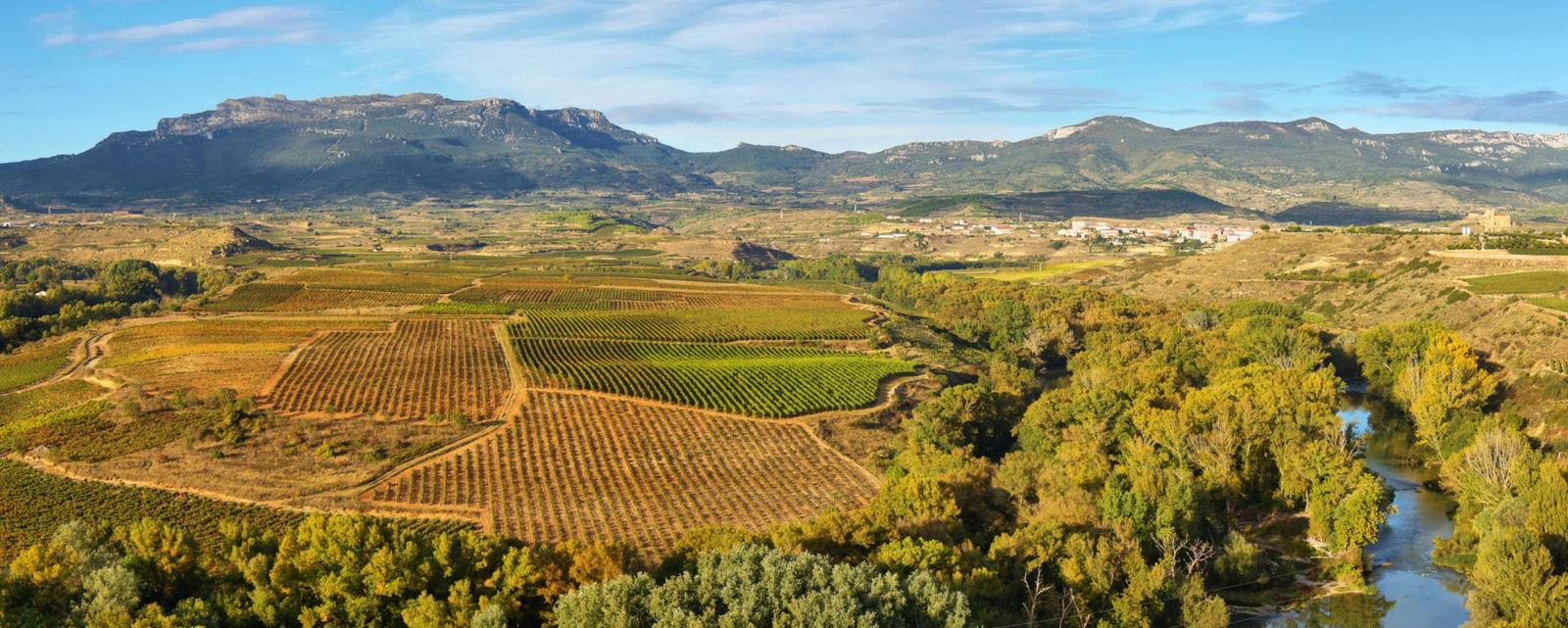
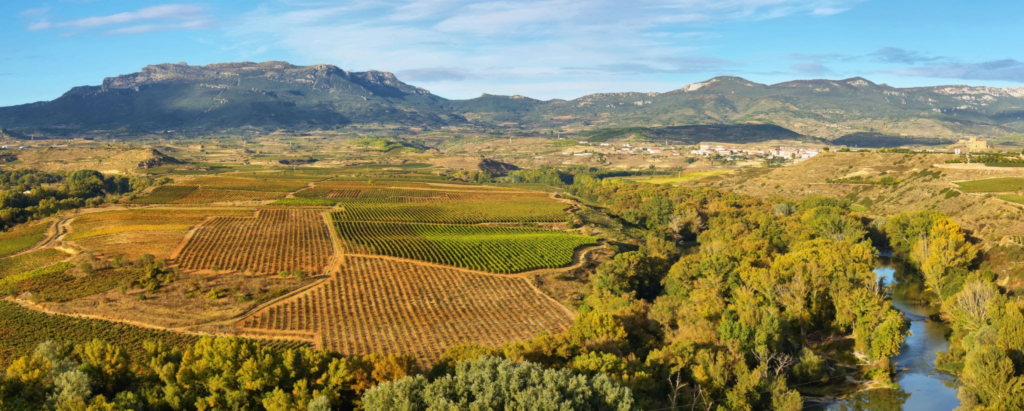
If Spanish wine has a spiritual homeland, it belongs within the sun-drenched, walled borders of Rioja. Stretching lazily along the banks of the Ebro River in northern Spain, Rioja is a landscape where time seems to expand. Here, ancient medieval villages fortified with golden sandstone overlook vast, rolling seas of grapevines that turn a fiery crimson every autumn. Beneath the soil, kilometers of damp, cobweb-covered stone tunnels hold millions of bottles, quietly sleeping away the decades in the dark.
Rioja was the very first wine region in Spain to be awarded DOCa (Denominació d’Origen Qualificada) status back in 1991, cementing its position as the undisputed benchmark of Spanish winemaking. For over a century, Rioja has been the global ambassador for the Tempranillo grape, producing red wines celebrated for their astonishing capacity to age, their seamless silkiness, and their unmistakable perfume of sweet vanilla, dill, tobacco, and dried red berries.
Yet, to look at Rioja as merely a bastion of historic tradition is to miss half the story. Today, the region is undergoing a thrilling, high-stakes ideological civil war. On one side stand the classical houses of Haro’s historic station district, fiercely defending the traditional art of master blending and extended aging in American oak barrels. On the other side is a revolutionary vanguard of young, independent terroir-focused winemakers who are throwing out the old rules, isolating single-vineyard plots (viñedos singulares), and embracing concrete eggs and large neutral French oak to let the raw voice of the soil sing.
Whether you are looking to decode the age statements on a bottle label, navigate the dramatic differences between its three sub-regions, or plan an unforgettable journey to its most iconic cellars, this comprehensive guide will give you the inside track on the past, present, and future of Rioja.
The Lay of the Land: One Valley, Three Diverse Identities
The Rioja appellation is not a monolith. It forms an elongated basin roughly 100 kilometers long, sheltered dynamically between two mountain ranges: the jagged, limestone wall of the Sierra de Cantabria to the north and the forested peaks of the Sierra de la Demanda to the south.
This unique geography creates a transitional climate zone where the cool, damp, Atlantic maritime weather systems coming off the Bay of Biscay collide head-on with the baking, dry, Mediterranean air blowing up from the east. Because of this climatic tug-of-war, Rioja is officially split into three distinct sub-regions, each possessing its own unique soil signature and microclimate:
1. Rioja Alta (The High Valley)
Occupying the western portion of the appellation at higher elevations, Rioja Alta is the historic engine room of the classical style. The climate here is heavily dominated by the cool Atlantic air currents, ensuring a slow, steady ripening season with massive diurnal shifts.
- The Soils: A rich mix of alluvial silt, iron-rich clay, and limestone.
- The Style: Wines from Rioja Alta are prized for their structural balance, elegant mid-weight body, bright, mouth-watering acidity, and legendary cellaring potential. It is home to the historic town of Haro.
2. Rioja Alavesa (The Basque Highlands)
Tucked into the Basque Country province of Álava, this sub-region clings to the sheer southern foothills of the Sierra de Cantabria. The vines here are planted on highly fractured, south-facing slopes at the highest altitudes in the region.
- The Soils: Pure, chalky calcareous limestone.
- The Style: Because the soils are so poor and chalky, the vines struggle immensely, producing tiny berries with thick skins. Rioja Alavesa wines are famously aromatic, showing a lighter translucent color, fine-grained, chalky tannins, and an ethereal floral lift that sets them apart.
3. Rioja Oriental (The Warm East)
Formerly known as Rioja Baja, this eastern wing sweeps downward into the lowlands towards the Mediterranean. The landscape changes dramatically here, turning drier, hotter, and increasingly arid, looking more like Provence than the Atlantic north.
- The Soils: Dominated by heavy alluvial soils and ferrous clay.
- The Style: Tempranillo struggles in this intense heat, so the star of Rioja Oriental is Garnacha. The wines from this sub-zone are round, powerful, deeply colored, and high in alcohol, providing the rich, plush fruit core used to flesh out the austere blends of the cooler western zones.
The Hierarchy of Time: Deciphering the Oak Classifications
Unlike almost any other wine region on earth, Rioja’s regulatory council historically built its entire classification framework not around the quality of the vineyard site, but around time spent aging in the cellar. This system is clearly indicated on the colorful, serialized back labels (precintas) of every bottle.
Understanding this hierarchy is your ultimate roadmap to knowing exactly how a bottle will taste before you pull the cork:
| Classification | Minimum Oak Aging | Total Aging Requirement | Style & Sensory Profile |
| Genérico (Garantía de Origen) | No minimum | None | Bright, fresh fruit, minimal to no oak influence. Drunk young. |
| Crianza | 1 Year in barrel | 2 Years total | Fresh red fruit balanced with subtle notes of vanilla, spice, and coconut. |
| Reserva | 1 Year in barrel | 3 Years total | The sweet spot. Complex layers of dried fruits, leather, tobacco, and velvet tannins. |
| Gran Reserva | 2 Years in barrel | 5 Years total | The pinnacle of traditional Rioja. Pale tawny color, silky texture, notes of cedar, forest floor, and incense. |
The Modern Revolution: Viñedo Singular
In 2017, acknowledging the global shift toward terroir-driven wines, Rioja introduced a parallel classification layer: Viñedo Singular (Single Vineyard). To qualify for this prestigious stamp, a wine must be hand-harvested from a single, officially recognized vineyard plot where the vines are at least 35 years old, with strictly limited yields. This marks a profound evolution from the old model of blending across sub-regions to a model that honors the specific geology of a single piece of land.
The Sovereign Varieties of the Valley
While Rioja permits several grapes within its borders, the identity of the valley is defined by a masterclass in varietal blending.
- Tempranillo: The undisputed king. Taking its name from the Spanish word temprano (meaning “early”), because it ripens weeks before other native grapes, Tempranillo is the backbone of Rioja. It provides flavors of wild black cherries, black plums, and tobacco leaf, boasting a naturally moderate acidity and supple tannins that act as a perfect sponge for oak aging.
- Garnacha (Grenache): The ultimate blending partner. It thrives in the hotter, sun-baked plots of Rioja Oriental, bringing crucial juiciness, soft plush flesh, and high alcohol to the blend, sweetening Tempranillo’s occasionally austere structure.
- Graciano: The secret weapon of premium Rioja. This notoriously low-yielding, difficult grape is highly prized by winemakers. Even when added as just 5% or 10% of a blend, Graciano injects an intense, inky color, a soaring natural acidity, and a brilliant, wild aroma of black pepper, violets, and mint that allows a wine to age gracefully for decades.
- Mazuelo (Carignan): Used sparingly to provide structural tannins and a sharp line of rustic acidity to long-aging Gran Reservas.
- Viura (Macabeo): The dominant white grape behind Rioja Blanca. When vinified fresh, it is clean and crisp. However, when subjected to the traditional method of long aging in oxidized oak barrels, Viura transforms into an exotic, nutty masterpiece reminiscent of old White Burgundy.
The Historic Hub: Barrio de la Estación
To understand the architecture and history of Rioja, one must travel to the town of Haro and step into the legendary Barrio de la Estación (The Station District).
In the mid-19th century, when the devastating phylloxera root louse destroyed the vineyards of Bordeaux, desperate French wine merchants traveled south across the Pyrenees. They found in Rioja a pristine wine paradise. They settled around the newly built Haro railway station, introducing classic French viticultural techniques, including the use of 225-liter oak barrels (barricas).
Within a few decades, a spectacular cluster of iconic wineries was constructed directly around the train tracks so barrels could be rolled straight out of the cellars and onto trains bound for the port of Bilbao. Today, this neighborhood represents the densest concentration of world-class, centenarian wineries on earth.
The Benchmark Titans: Two Legendary Estates to Visit
If you are planning an educational or sensory pilgrimage to Rioja, these two iconic estates represent the absolute dual-zenith of the region’s split personality: one representing the apex of classical family tradition, and the other representing a bold, avant-garde fusion of history and futuristic design.
1. Bodegas Muga: The Masters of Classical Handcrafted Tradition
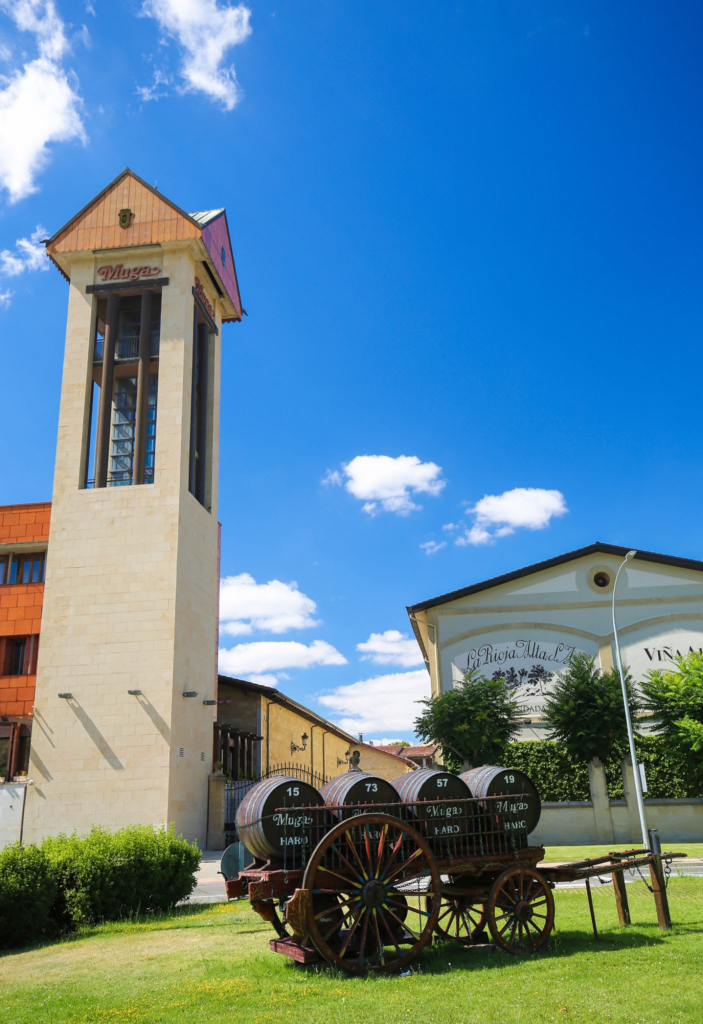
Located right in the beating heart of Haro’s Barrio de la Estación, Bodegas Muga is a living, breathing testament to the power of family heritage and uncompromising artisanal technique. Founded in 1932 by Isaac Muga Martínez, the estate remains entirely family-owned and operated, fiercely defending old-world methods that most of the wine industry abandoned decades ago.
The Terroir and Philosophy
Muga controls roughly 350 hectares of prime vineyards nestled primarily in the cool, iron-clay foothills of the Alta sub-region. Their farming is meticulous, but it is what happens inside the walls of the bodega that makes Muga a legendary producer.
Muga is one of the only wineries left in Spain to employ a full-time, in-house cooperage. They import raw oak staves from France and America, seasoning the wood on-site before their master coopers shape and toast every single barrel over open wood fires without a single nail or drop of glue.
Furthermore, Muga is completely obsessed with large-format wood. While almost every modern winery ferments their juice in sterile stainless-steel tanks, 100% of Muga’s wines are fermented and aged in oak vats and barrels. Every step of their production follows strict gravitational laws; they still clarify their fine red wines using a traditional egg-white clarification process (clarificación), dropping fresh egg yolks into the barrels by hand to bind to harsh sediments before siphoning off the crystal-clear wine.
Tasting Notes & Sensory Profile
The estate’s flagship Muga Prado Enea Gran Reserva is an absolute masterpiece of the classical style, released only in exceptional vintages. It pours a beautifully translucent, brilliant ruby color with a delicate garnet edge.
The nose is a deeply emotional, shifting panorama: it opens with high-toned red fruits like wild raspberries and dried cranberries, quickly giving way to sophisticated secondary notes of sweet vanilla bean, cedarwood, fresh tobacco leaves, leather, and a hint of warm baking spices like cinnamon and clove.
On the palate, Prado Enea is pure silk. It possesses a weightless, feather-like elegance that glides across the tongue, yet it is supported by a remarkably vibrant line of natural acidity and incredibly fine, powdery tannins. The finish is endless, leaving an exquisite trail of dried orange peel, sweet wood smoke, and truffle-infused forest floor.
The Visitor Experience
Visiting Bodegas Muga is a warm, deeply educational masterclass in traditional winemaking.
- What to Expect: A guided tour takes you directly through the active cooperage, where you can watch the coopers hammering iron hoops onto blazing oak staves. You’ll walk through towering forest-like rooms of massive oak fermentation vats before entering the spectacular candle-lit barrel cellars.
- The Highlight: Booking a specialized private tasting in their beautiful tower tasting room, or taking a spectacular early-morning hot air balloon ride directly over their estate vineyards, followed by a traditional Riojan vineyard breakfast.
Sourcing & Culinary Pairings
Muga wines enjoy superb global distribution. Their standard Muga Reserva (around €25) is a brilliant everyday benchmark found in fine wine shops worldwide. The legendary Prado Enea Gran Reserva (around €65–€80) requires an investment but represents one of the greatest long-term cellaring values in fine wine.
- The Perfect Pairing: Slow-cooked milk-fed lamb chops (Chuletillas de Cordero) grilled over open flames fueled by old, dried Tempranillo vine cuttings. The sweet, smoky char of the meat mirrors the oak structure of the wine beautifully.
2. Bodegas Marqués de Riscal: The Avant-Garde Titan of Rioja History
If Muga represents the continuous line of family tradition, Marqués de Riscal represents the bold, dramatic collision of deep history and breathtaking modernity. Located in the picturesque village of Elciego in Rioja Alavesa, Marqués de Riscal is the historical pioneer that single-handedly dragged Rioja onto the international stage in the 19th century.
The Terroir and History
Founded in 1858 by Don Camilo Hurtado de Amézaga (the Marqués de Riscal), the estate was the first winery in Rioja to bring back the structural secrets of Bordeaux. The Marqués hired a French cellarmaster, imported ungrafted Cabernet Sauvignon vines from France, and constructed a magnificent stone cellar known as El Chacolí. Riscal was the first non-French wine to ever win the coveted Diploma of Honor at the Bordeaux Exhibition in 1895, a triumph still proudly displayed on their iconic label.
The terroir surrounding Elciego is pure Rioja Alavesa: high altitude, low yields, and a heavy concentration of chalky clay-limestone soils. This provides the grapes with an intense aromatic focus and a firm, chiseled mineral backbone.
What Makes it Special
Marqués de Riscal shocked the conservative wine world in 2006 by unveiling its new headquarters: a jaw-dropping, futuristic hotel designed by the legendary architect Frank Gehry (famous for the Guggenheim Museum Bilbao). The structure features spectacular, undulating, twisted ribbons of pink, silver, and gold titanium hovering over the historic 19th-century stone cellars below. The pink titanium represents the rich color of Rioja wine, the silver mirrors the foil capsule of the bottle, and the gold honors the iconic wire netting (malla) that wraps around every bottle of Riscal Reserva.
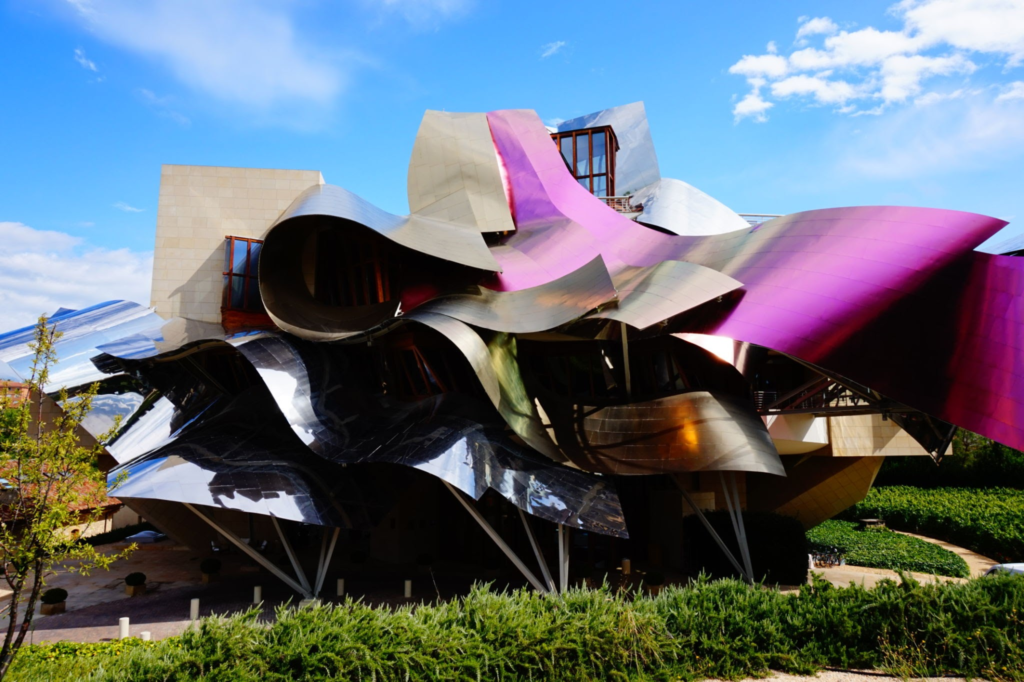
Yet, behind this space-age exterior lies one of the most sacred viticultural vaults on earth: La Catedral (The Cathedral). This private, subterranean sanctuary contains a complete, untouched bottle archive of every single vintage produced by Marqués de Riscal since their inaugural harvest in 1862.
Tasting Notes & Sensory Profile
The estate’s modern icon bottling, Marqués de Riscal Baron de Chirel Reserva, beautifully showcases this intersection of history and precision. It pours a dark, concentrated, opaque ruby color.
The bouquet is powerful, intense, and modern, showing a striking density of ripe blackberries, black currants, and crushed dark plums. This fruit power is seamlessly integrated with sophisticated notes of dark French roasted coffee beans, graphite, dark cocoa, and a savory hint of toasted brioche.
On the palate, Baron de Chirel is broad-shouldered, muscular, and deeply concentrated. Unlike traditional expressions, the tannins here are firmer and more structural, offering a velvety texture backed by immense power and a bright, rocky mineral core that keeps the palate feeling fresh, long, and energized.
The Visitor Experience
Marqués de Riscal is a world-class luxury wine tourism destination.
- What to Expect: A stunning journey that transitions seamlessly from the historic 1860 stone cellars to the striking, titanium-clad modern galleries. You’ll explore the vast automatic sorting tables where every single grape cluster is digitally scanned for quality, before walking through the atmospheric, historic bottle cellars.
- The Highlight: Dinner at the estate’s Michelin-starred restaurant, located inside the Gehry building, where traditional Riojan gastronomy is reinterpreted with avant-garde culinary techniques, overlooking the medieval village of Elciego.
Sourcing & Culinary Pairings
Their classic Marqués de Riscal Reserva, housed in its distinctive gold wire mesh, is one of the most widely recognized and reliable bottles of Spanish wine on earth, retailing for around €20–€25. The premium Baron de Chirel retails for around €75–€90 and is a magnificent addition to any serious collector’s cellar.
- The Perfect Pairing: A classic Rabo de Toro (Oxtail slow-braised in red wine, garlic, and dark chocolate) or a thick, wood-fired prime rib eye steak (Chuletón) seared over roaring oak coals. The wine’s robust structure cuts through the rich fat of the beef effortlessly.
The Hidden Gems: Exceptional Modern Cult Producers
If you want to look past the large historic houses and experience the cutting edge of Rioja’s modern terroir revolution, keep an eye out for these three small-scale, highly sought-after producers:
1. Bodegas Contador (Benjamín Romeo)
- The Location: San Vicente de la Sonsierra (Rioja Alta)
- The Vibe: Radical garagiste precision, obsessive sorting, legendary concentration.
- The Magic: Operating out of a low-profile, multi-level modern cellar built directly into the base of San Vicente’s castle hill, Benjamín Romeo is an absolute perfectionist. He handles every vine manually, harvests exclusively during specific lunar cycles, and uses custom-designed oak vats. His flagship red, Contador, achieved back-to-back 100-point scores from Robert Parker, showing an astonishingly rich, dark, pure modern expression of old-vine Tempranillo.
2. Olivier Rivière
- The Location: Logroño / Alavesa
- The Vibe: A Frenchman making Burgundy-style Rioja with zero compromise.
- The Magic: Olivier Rivière is a brilliant French oenologist who studied in Bordeaux and worked in Burgundy before arriving in Rioja in 2004. Unable to buy expensive land at first, he leased old, high-altitude plots in Rioja Alavesa. He avoids heavy oak extractions completely, focusing instead on organic farming, whole-cluster concrete fermentations, and neutral oak aging. His wines, like Ganko and Los Almendros, are stunningly mineral, showing a crystalline, high-toned, fresh acidity that challenges the traditional definition of Rioja.
3. Sierra Cantabria (The Eguren Family)
- The Location: San Vicente de la Sonsierra
- The Vibe: Masterful execution of single-vineyard plots with stunning ancient roots.
- The Magic: Run by the visionary Eguren family, this estate is dedicated to exploring the highly specific micro-terroirs of the Rioja Alta and Alavesa borders. While they produce magnificent traditional Reservas, their true glory lies in single-vineyard expressions like Amancio or Finca El Bosque. These wines are crafted from ancient ungrafted vineyards, yielding an incredibly concentrated, velvety, and mineral-driven experience that is highly sought after by serious international collectors.
Sourcing Secrets: How to Buy and Collect Rioja Like a Pro
Navigating a wine shop to find the best bottles of Rioja requires a few insider tactics:
1. Look for the “Traditionalist” Importer Stamp
If you are looking for classic, long-aged, savory Rioja, check the back label for elite importers who specialize in traditional Spanish houses. Houses brought in by importers like Rare Wine Co., Classical Wines, or De Maison Selections are exceptional guarantees of authentic, high-quality execution.
2. The Great Vintage Cheat Sheet
Rioja is blessed with great climatic stability, but the finest years produce wines that can easily improve in a cellar for 30 to 50 years:
- 2010: A legendary, benchmark vintage. The wines are perfectly balanced, showing massive structure, high acidity, and intense fruit power. A collector’s dream.
- 2015: An exceptionally warm, ripe year. The wines are rich, opulent, broad-shouldered, and deeply expressive, making them delicious to drink young or cellar short-term.
- 2019 & 2020: Exceptional modern vintages characterized by perfect ripening conditions, resulting in wines with vibrant color purity, fine-grained tannins, and great natural energy.
The Service Protocol: How to Pour Rioja
To unlock the complex aromatic layers of a fine Rioja, ensure you adhere to these serving rules:
- The Decanting Warning: Be incredibly careful when handling older traditional wines like a 20-year-old Gran Reserva. These delicate wines are highly susceptible to oxidation. If you expose them to an aggressive, wide-bottomed decanter, their beautiful old perfumes of dried flowers, leather, and cedar can completely fade away within 20 minutes. Instead, pull the cork an hour before serving and pour directly from the bottle into your glass.
- The Temperature Law: Never serve a premium Rioja at warm room temperature. The high alcohol and oak notes will dominate the palate. Keep the bottle at a cool cellar temperature of 16–17°C.
- The Glassware: Always opt for a large, classic Bordeaux glass. The wide bowl and tall chimney allow the intense oak spices, sweet red fruit aromatics, and complex tertiary tobacco notes to unfold perfectly before reaching your nose.
Did you enjoy reading about Rioja, read more about the “close” La Mancha region or find other Spanish wine regions here.
9 Comments
Comments are closed.