The Galician Resurrection: Why Wise Collectors are Quietly Swapping Rías Baixas for Ribeiro
If you ask the average wine consumer to name a premium Spanish white wine, they will almost certainly point you toward Rías Baixas. Over the past two decades, that coastal Galician powerhouse has pulled off a masterclass in global wine marketing, turning the Albariño grape into a household name and a staple of trendy seafood restaurants from London to Amsterdam.
But if you pull aside a seasoned Spanish sommelier, an investigative wine critic, or a serious collector of boutique European whites, they will likely whisper a different name in your ear: Ribeiro.
Tucked slightly inland, away from the immediate Atlantic coastline, the Ribeiro wine region is currently undergoing one of the most intellectually thrilling, quality-driven transformations in modern viticulture. For years, this historic appellation was buried under the weight of industrial overproduction and forgotten traditions. Today, it has emerged as Spain’s most exciting hotbed for high-altitude, terroir-centric, remarkably complex white field blends.
While Rías Baixas provides pristine, linear, varietal freshness, Ribeiro offers something altogether different: texture, ageability, structural architecture, and an almost haunting, saline-granitic minerality. It is a wine region that doesn’t just refresh your palate; it demands your full attention from the very first sip to the last fading notes of its finish.
Let’s pull back the curtain on this green, river-carved paradise and explore why Ribeiro is the ultimate insider secret in Spanish wine today.
1. The Rise, Fall, and Holy Rebirth of Ribadavia
To appreciate what is happening inside the bottles of modern Ribeiro today, we must first travel back in time. Ribeiro does not possess a new wine industry; it possesses an ancient one that simply went to sleep for a century. In fact, this is one of the oldest historically documented wine regions in Europe.
The story begins in the medieval period with the Cistercian monks of the San Clodio monastery. These pious, viticultural obsessives realized that the steep, sheltered river valleys surrounding the town of Ribadavia possessed a magical microclimate for growing white grapes. They painstakingly carved stone terraces into the granite hillsides, isolated the best indigenous grape varieties, and laid the foundations for a massive wine empire.
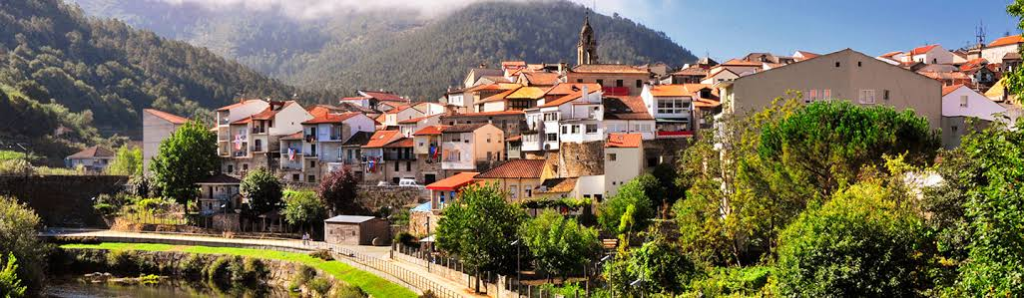
By the 16th and 17th centuries, Ribeiro was arguably the most famous and highly prized white wine in western Europe. Known across the continent as Vino de Ribadavia, it was loaded onto merchant ships and exported in massive quantities to England, France, and Italy. It was a luxury product, celebrated for its stability during long sea voyages and its rich, intensely aromatic profile. Even William Shakespeare felt compelled to reference the high quality of these Galician juices in his plays.
The Century of Darkness
Then came the 19th century, and with it, absolute devastation. A triple-onslaught of powdery mildew, downy mildew, and the catastrophic Phylloxera epidemic tore through Ribeiro’s terraced hillsides. Desperate to recover their livelihoods, local growers made a tragic compromise: they abandoned their low-yielding, finicky indigenous varieties and replanted their slopes with high-yielding, neutral, industrial grape varieties, most notably Palomino (the grape of Sherry, which performs poorly in Galicia’s damp climate) and low-grade clones of Torrontés.
Almost overnight, Ribeiro transformed from Europe’s most aristocratic white wine into an ocean of cheap, watery, industrial bulk wine. It became the low-cost “house white” served in nondescript porcelain bowls (tazas) across the traditional taverns of Madrid and Santiago de Compostela. The glorious history of the region was effectively erased from global consciousness.
The Treixadura Revolution
The true turning point arrived in the late 1980s and 1990s, spearheaded by a small, stubborn band of visionary independent growers (colleiteiros). These winemakers looked at their ancient stone terraces and realized that if Ribeiro was to survive, it had to dig up its industrial past and replant its heritage.
They launched a systematic campaign to rip out the industrial Palomino vines and restore the rightful king of the region: the Treixadura grape. Along with a supporting court of other native Galician varieties like Godello, Lado, Loureira, and Albariño, they proved to the world that when grown on its native granite slopes, Ribeiro could once again produce complex white wines capable of standing shoulder-to-shoulder with the finest premier crus of Chablis or the old-vine field blends of the Austrian Wachau.
2. Decoding the Terroir: Granite, River Valleys, and the “Xabre” Factor
What makes the terroir of the Ribeiro wine region so distinctly unique is its position as a geographical transition zone. Located in the southern corner of the province of Ourense, Ribeiro sits at the exact intersection where the damp, cool maritime climate of the Atlantic Ocean collides with the blistering, arid continental climate of Spain’s central plateau (Meseta).
The Mountain Shield
If you drive directly east from the Atlantic coast toward Ribeiro, you will cross a series of formidable mountain ranges, most notably the Serra do Faro. These peaks act as a massive natural wall, intercepting the ferocious, rain-heavy storms blowing in from the ocean.
As a result, Ribeiro is significantly warmer and much drier than its coastal neighbor, Rías Baixas. The region receives plenty of sunshine during the critical summer ripening months, allowing white grapes to develop rich sugar levels, deep phenolic complexity, and luscious mid-palate weight. However, the region is still fundamentally Galician; it retains cool night-time temperatures and experiences just enough ambient humidity to preserve a vibrant, mouth-watering, electric core of natural acidity.
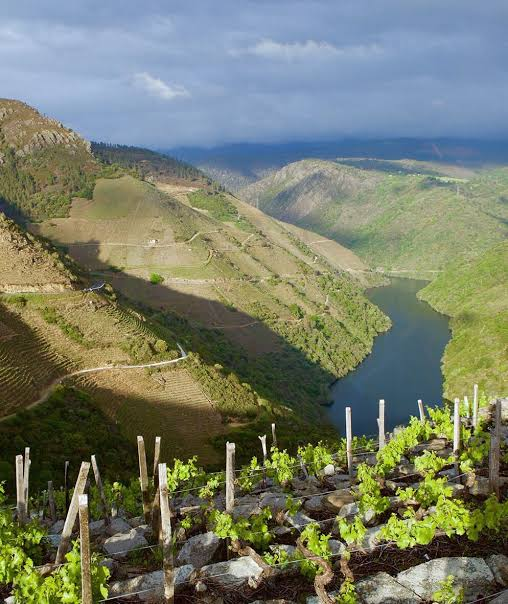
The Three Valleys and Socalcos
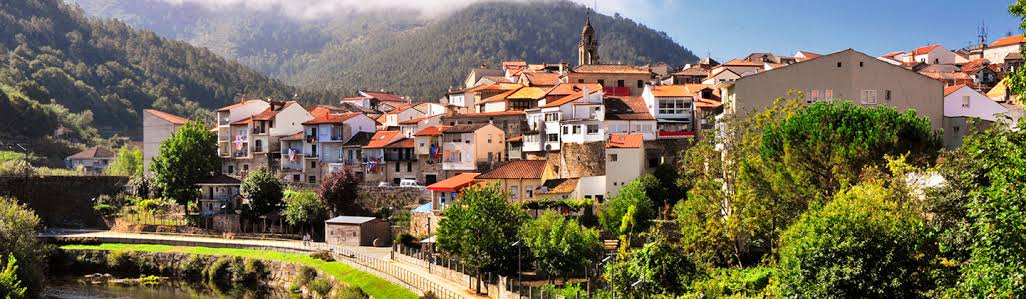
The topography of Ribeiro is a dramatic maze of steep slopes, ridges, and water systems shaped by three main rivers: the Miño, the Avia, and the Arnoia. The best vineyards are planted directly on the dizzying, sun-drenched hillsides flanking these rivers.
Because the slopes are far too steep for modern tractors or machinery, viticulture here is an act of pure heroism. Growers must maintain ancient stone terraces known locally as socalcos. Every single vine must be tended, pruned, and harvested entirely by hand, with pickers carrying heavy crates of grapes up and down steep stone steps that have stood for centuries.
The Magic of Xabre Soils
If you pick up a handful of earth in a premium Ribeiro vineyard, you won’t find rich loam or dark topsoil. You will find a coarse, crumbly, pale-grey sand known as xabre.
Xabre is the local term for weathered, decomposed granite bedrock. This soil is highly porous, meaning that when the spring rains arrive, water drains through the topsoil instantly, forcing the vine’s root systems to dive deep into the underlying rock fractures to find moisture.
Granite soils exert a fascinating chemical influence on white wines. They naturally limit the vine’s vigor, resulting in small berries with highly concentrated flavors. More importantly, granite-derived soils imbue the final wine with a distinctive texturing sensation, a fine-grained, crystalline minerality on the finish that feels almost salty and structural, elevating the wine from a simple fruit beverage to a profound expression of liquid geology.
3. The Royal Alchemy of Grapes: Treixadura and her Court
While modern wine culture has conditioned us to look for single-variety wines (like 100% Chardonnay or 100% Sauvignon Blanc), Ribeiro’s ultimate superpower lies in the ancient art of the masterful white blend.
For centuries, growers in these river valleys realized that no single grape could perfectly capture the entirety of their complex terroir. Instead, they practiced co-planting multiple varieties within the same vineyard plot, creating an agricultural insurance policy and a natural flavor harmony. Today, the finest expressions of Ribeiro are field blends dominated by one undisputed matriarch.
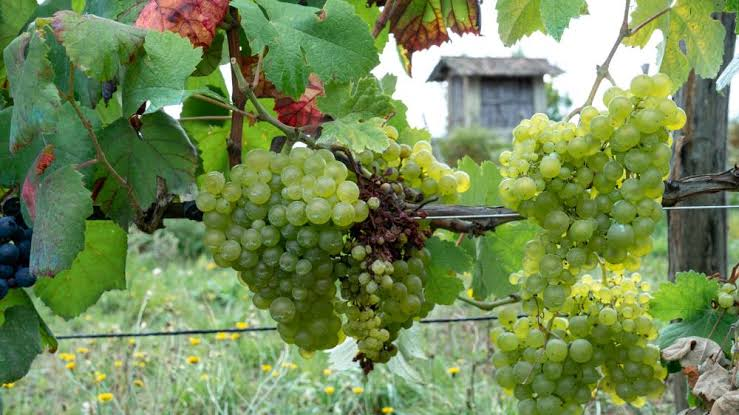
King Treixadura: The Soul of the Blend
To understand Spanish wine Ribeiro, you must understand Treixadura. This late-ripening, thick-skinned variety finds its absolute global capital in the valley of the Avia River.
On its own, Treixadura is a grape of immense nobility. It provides the wine with its aromatic architecture and its luxurious, velvety physical texture. When you smell a Treixadura-dominant Ribeiro, you are met with an explosion of white peach, ripe yellow pears, lemon blossom, fresh mountain herbs, and a delicate hint of raw honey. On the palate, it delivers a broad, oily, glissando texture that coats the mouth, yet it maintains a firm, underlying mineral spine that keeps it beautifully light on its feet.
The Supporting Court
To accent and perfect the broad shoulders of Treixadura, winemakers carefully interweave a selection of other brilliant indigenous varieties:
- Godello: Adds pure muscle, structure, and intense age-ability. Godello brings notes of green apple, wet stones, and a rich, smoky, almost Burgundian depth to the blend.
- Loureira: The aromatic firework of the region. Even a tiny percentage (2% to 5%) of Loureira can transform a blend, injecting intense aromas of bay leaf, laurel, orange peel, and damp wildflowers.
- Lado: An incredibly rare, ancient local variety that winemakers use like a precious spice. Lado brings brilliant, high-toned citrus acidity, exotic floral aromas, and a striking structural brightness.
- Torrontés: Not to be confused with the highly aromatic Torrontés found in Argentina, the native Galician variant adds light, playful notes of white flowers, elderberry, and a clean, refreshing bitterness on the finish.
4. The Pilgrim’s Path: Elite Wineries to Visit in Ribeiro
If you want to experience the cutting edge of the Galician white wine revolution firsthand, a journey through the Ribeiro wine region is an unforgettable travel experience. Located just an hour’s drive from the historic pilgrimage site of Santiago de Compostela, Ribeiro feels wonderfully untouched by mass tourism. Here are four elite, boundary-pushing bodegas that are paving the future of the region.
Bodegas Viña Mein: The Terroir Archivist
Located in San Clodio, the very birthplace of Ribeiro’s viticultural history, Viña Mein is an absolute monument to the region’s revival. Founded in 1988 by Javier Alén, the estate set out to prove that Ribeiro’s historic slopes could produce white wines of world-class distinction. Today, the property is managed by the visionary Alma Carraovejas group, who have poured immense resources into mapping, restoring, and vinifying individual historic parcel selections separately.
- The Experience: Viña Mein is the ultimate destination for terroir purists. The estate features a gorgeously restored stone manor house surrounded by rolling amphitheatres of historic vines. A tour here involves walking through their meticulously mapped plots, followed by a tasting in a state-of-the-art gravity cellar where wines are aged in a mixture of neutral oak barrels, concrete eggs, and large clay jars (tinajas).
- What You’ll Taste: You will experience the magic of site-specific blends. Their classic Viña Mein O Ribeiro is a masterclass in balance, while their rare, single-plot expressions show how subtly different granite formations alter the texture and aromatics of the Treixadura grape.
Luis Anxo Rodríguez Vázquez: The Garage Wine Icon
If you want to meet the intellectual high priest of the Ribeiro revolution, you must track down Luis Anxo Rodríguez Vázquez. Operating out of a tiny, cluttered garage-style cellar in Arnoia since 1988, Luis Anxo is a quiet radical. While the rest of the region was chasing high yields, he quietly spent decades buying up tiny, abandoned, ultra-steep parcels of ancient native vines from old villagers who could no longer farm them.
- The Experience: This is not a corporate affair with a slick tasting room; it is an intimate, authentic encounter with a legendary artisan winemaker. You will stand among stacked oak casks and stainless steel vats while Luis Anxo passionately explains the genetic diversity of old-vine Galician grapes and the mechanics of soil acid stabilization.
- What You’ll Taste: Luis Anxo’s white wines, released under the label Viña de Martin, are legendary among global wine collectors for their extraordinary, almost supernatural capacity to age. Tasting his Escolma white, a wine kept on its fine lees for years before release, is an epiphany, revealing notes of petrol, dried honey, wet slate, and a laser-like acidity that rivals great German Riesling.
Bodegas Coto de Gomariz: The Biodynamic Avant-Garde
Located in the historic Avia Valley, Coto de Gomariz is the oldest recorded registered vineyard estate in Galicia, with records tracing back to the 10th century. Today, under the bold direction of Ricardo Carreiro and legendary winemaker Xosé Lois Sebio, the estate has become the region’s leading pioneer in biodynamic, natural, and low-intervention viticulture.
- The Experience: A tour of Gomariz is an immersion into living agricultural ecology. The estate completely rejects chemical fertilizers and pesticides, using traditional herbal infusions and astrological cycles to care for their ancient socalcos. The winery itself blends rustic medieval architecture with a punk-rock winemaking philosophy.
- What You’ll Taste: Gomariz produces an array of wildly original wines. You will taste their classic Coto de Gomariz white (an explosive, mineral-drenched Treixadura), alongside their jaw-dropping The Flower and the Bee labels. They also produce some of the most compelling, high-acid, peppery red Ribeiro wines from indigenous varieties like Sousón and Caíño Longo.
Casal de Armán: The Family Hospitality Hub
For travellers seeking a flawless blend of world-class estate wines, spectacular architecture, and authentic Galician gastronomy, Casal de Armán is an absolute dream destination. Run with passionate care by the González Vázquez family, this estate is housed in a beautifully restored 18th-century court manor (pazo) overlooking the rolling hills of the Avia Valley.
- The Experience: This is the perfect anchor spot for any Ribeiro wine tour. Beyond their pristine, modern winemaking facility, Casal de Armán operates an exceptional, traditional stone-walled restaurant and an intimate boutique hotel. Visitors can spend the afternoon walking the vineyards, touring the barrel rooms, and then transition directly into a long, lazy multi-course lunch paired with the estate’s complete lineup.
- What You’ll Taste: Their signature Casal de Armán white is an exceptionally pure, precise, and joyful expression of Treixadura, Godello, and Loureira. It is universally loved for its bright citrus aromatics, silky texture, and long, mouth-watering granitic finish.
5. The Collector’s Sourcing Strategy: What to Buy & Where to Find It
Because Ribeiro’s top-tier producers operate on a boutique, artisanal scale, these bottles rarely appear on standard retail shelves. To secure pristine bottles with flawless provenance, collectors must leverage specialized, curated online portfolios.
To help you build an incredible home exploration flight, we have curated a selection of five elite Ribeiro bottles across various price points, mapped directly to your core continental sourcing channels: Colaris, Wijnbeurs, and Decantalo.
| Bottle Name | Producer | Sourcing Pipeline | Style & Structural Profile | Storage & Cellaring Potential |
| The Flower and the Bee White | Coto de Gomariz | Wijnbeurs / Decantalo | 100% Treixadura. Explodes with fresh green apples, lemon zest, and white flowers. Juicy, crisp, and beautifully accessible. | Drink fresh within 1–3 years of release. |
| Casal de Armán Blanco | Casal de Armán | Decantalo | Classic field blend. Broad, silky texture balanced by aromas of ripe yellow pears, fresh laurel leaf, and a bright saline spine. | Excellent now, will develop beautifully over 3–5 years. |
| Viña Mein O Ribeiro | Bodegas Viña Mein | Colaris / Decantalo | A spectacular, complex blend aged in neutral oak and concrete. Layers of wet stone, yellow peach, dried herbs, and a dense, structural mineral finish. | A serious collector piece; cellars comfortably for 5–8 years. |
| Coto de Gomariz Colección | Coto de Gomariz | Colaris / Decantalo | Selected old-vine Treixadura with a touch of Godello and Lado. Deeply concentrated, smoky, showing hints of beeswax, white truffles, and a long granitic grip. | Built for the cellar; will evolve gracefully over 8–10 years. |
| Viña de Martin Os Pasás | Luis Anxo Rodríguez | Decantalo | An intellectual masterpiece. Intensely mineral, showing notes of petrol, smoky flint, lime oil, and wild mountain thyme backed by a razor core. | Highly age-worthy; cellars beautifully for 10–15 years. |
Retailer Portfolio Breakdown
To build your collection efficiently, tailor your shopping habits to each retailer’s core strength:
- The Benelux Curators (Colaris & Wijnbeurs): Utilize Colaris to secure your allocations of elite, estate-bottled expressions like Viña Mein and the premium Colección tiers from Coto de Gomariz. Their direct logistical ties with the Alma Carraovejas portfolio guarantee perfect, temperature-controlled transit. Turn to Wijnbeurs to discover vibrant, value-driven daily luxuries like The Flower and the Bee, which offer premium indigenous character at an unbeatable price point.
- The Direct Iberian Pipeline (Decantalo): Turn to Decantalo to access micro-allocations and rare library releases from cult, low-production garage winemakers like Luis Anxo Rodríguez Vázquez or experimental single-parcel white labels that never see wide international distribution.
6. Sourcing the Galician Feast: The Ultimate Ribeiro Food Pairings
The electric acidity, dense mid-palate texture, and distinct granitic salinity of a fine Ribeiro make it one of the most versatile, food-friendly white wines on the planet. While it loves fresh seafood, its structural power allows it to venture into culinary pairings that would completely crush a lighter white wine.
For a true gastronomic experience, pair your bottles with these four classic dishes:
1. Pulpo a la Gallega (Galician-Style Octopus)
The undisputed national dish of Galicia. Tender octopus is boiled until meltingly soft, sliced onto traditional wooden platters, drizzled generously with premium extra virgin olive oil, and dusted with coarse sea salt and smoky Spanish paprika (pimentón). The oily, unctuous texture of the octopus and the warmth of the paprika find a flawless partner in a Treixadura-dominant blend like Casal de Armán, which cuts through the oil while complementing the smoky spice.
2. Empanada Gallega (Galician Savory Pie)
Unlike the small empanadas found in South America, the Galician empanada is a large, double-crust savory pastry pie stuffed with a rich, slow-simmered mixture of sweet onions, bell peppers, tomatoes, and local tuna or wild cockles. The flaky, buttery pastry and the sweet acidity of the onion-tomato filling scream out for the vibrant acidity and deep orchard fruit profile of The Flower and the Bee.
3. Arroz de Mariscos (Rich Seafood Rice)
A massive, shallow pan of short-grain rice simmered slowly in an incredibly deep, concentrated broth made from roasted lobster shells, shrimp heads, saffron, and garlic, loaded with fresh mussels, clams, and langoustines. A structurally muscular, concrete-aged bottle of Viña Mein possesses the weight, phenolic grip, and saline drive required to cut through the immense umami depth of the seafood rice without being overshadowed.
4. Queso Tetilla & San Simón da Costa
If you are serving a local cheese board, select Galicia’s iconic native cheeses. Queso Tetilla, with its soft, creamy, buttery, and slightly acidic profile, melts beautifully against the fresh fruit notes of a young Ribeiro. If you prefer something more complex, cut a slice of San Simón da Costa, a firm, pear-shaped cow’s milk cheese that is gently smoked over native birch wood. The cheese’s delicate smokiness pairs magnificently with the mineral complexity and beeswax tones of an aged Coto de Gomariz Colección.
7. How to Serve Ribeiro Like a Pro
To ensure your premium Ribeiro shows its full aromatic complexity and stunning texture rather than tasting flat or unrefined, copy and paste this quick service guide into your kitchen notes:
Step 1: Avoid the “Ice Trap” (Serve at 10°C to 12°C)
Do not serve a fine Ribeiro bone-chillingly cold straight out of an aggressive ice bucket. If the wine is down at 4°C or 5°C, its magnificent essential oils, peach aromas, and herbal nuances will freeze up, leaving the wine tasting thin and shrill. Aim for a cellar-cool temperature of 10°C to 12°C. This allows the broad texture of the Treixadura grape to expand gracefully across your tongue while releasing its complex aromatics into the glass.
Step 2: Use a Wide Burgundy or Chardonnay Glass
Bypass the traditional narrow, flute-style white wine glasses, which trap aromas and focus solely on vertical acidity. Instead, choose a large, wide-bowled Chardonnay or Burgundy glass. The increased surface area allows a complex field blend to breathe, opening up the subtle herbal layers of Loureira and the rich, stony depths of Godello.
Step 3: Give Top Tiers a Quick Decant (15 to 20 Minutes)
If you are opening an elite, old-vine, or lees-aged bottle (such as a Viña Mein or a Luis Anxo Rodríguez), do not hesitate to pour it into a decanter for 15 to 20 minutes before serving. This brief contact with oxygen breaks open any initial sulfur reduction from the granite soils, unleashing a spectacular second wave of flinty, smoky, and honeyed aromatic layers.
Step 4: Keep a Bottle for the Future
If you purchase a six-bottle case of a premium Ribeiro blend, do not drink them all in the first summer. Hide three bottles away in a dark corner of your cellar. Over 4 to 7 years, the vibrant primary citrus fruits will slowly morph into luxurious notes of marzipan, preserved lemons, petrol, and wet slate, providing a mature tasting experience that rivals world-class white Burgundy at a fraction of the cost.
8. The Final Verdict: The Insider’s Grand Cru
The modern story of the Ribeiro wine region is an inspiring reminder that true viticultural terroir cannot be permanently erased. Though modern history tried to turn these pristine valleys into an industrial bulk-wine factory, the ancient granite soils, the steep stone terraces, and the noble Treixadura vine simply waited patiently for a generation of winemakers wise enough to listen to them.
Today, Ribeiro stands proud as Spain’s most compelling frontier for white wine excellence. It offers an alternative to the simple, everyday crispness of mass-market varietals, delivering instead an intellectual, deeply gastronomic, and age-worthy experience that celebrates the ancient art of the field blend.
It is time to look past the coastal shorelines of Albariño, journey up the rivers of Ourense, and secure your place in the great Galician resurrection. Your cellar will thank you for years to come.