
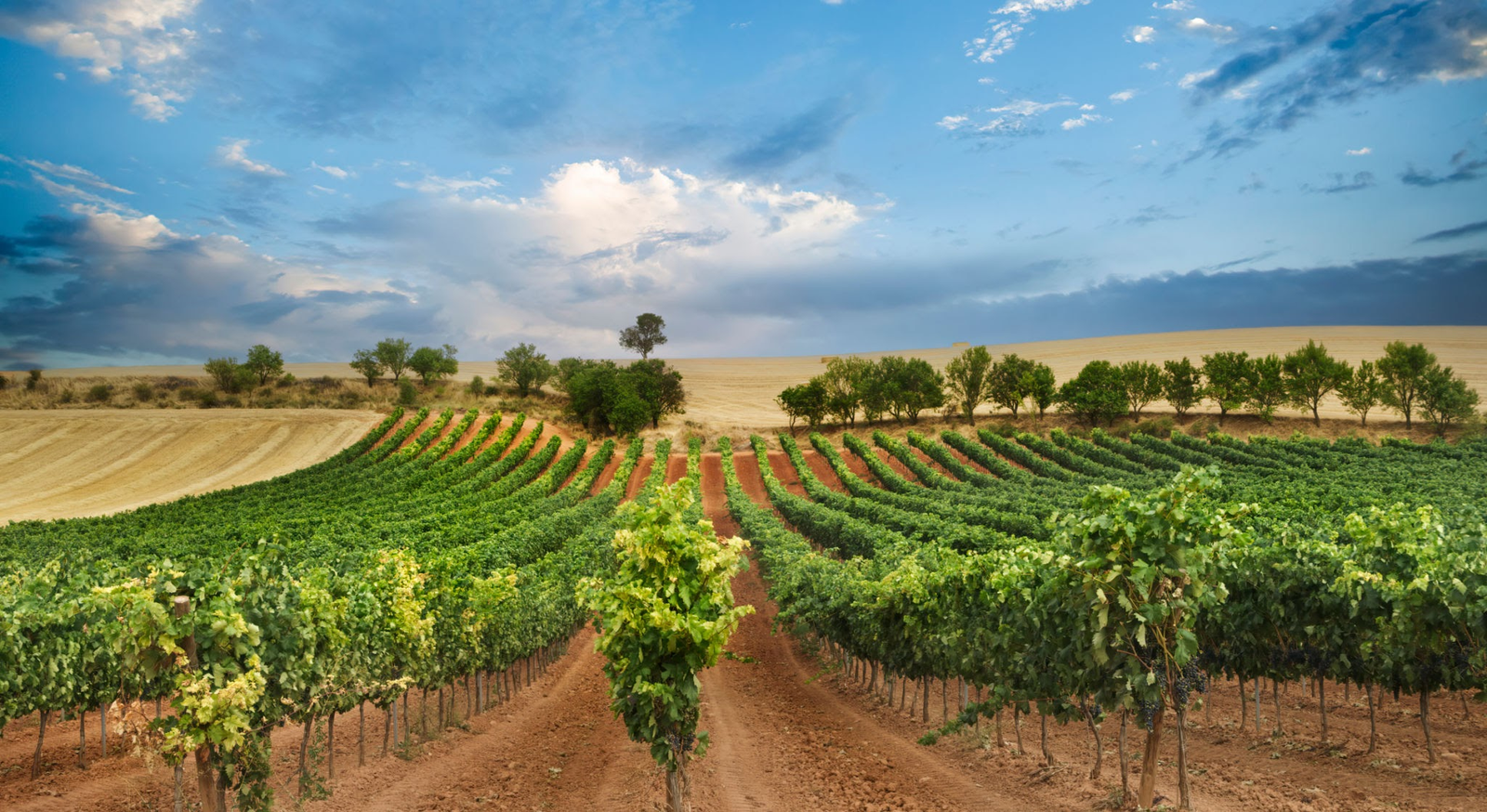
The Ribera del Duero Wine Guide: Power, Elegance, and the Evolution of Spain’s Boldest Red
There is a distinct moment when you realize you are drinking a great Ribera del Duero. It isn’t just the deep, opaque violet hue in the glass, or the immediate aromatic wave of black fruit, shaved graphite, and sweet spice. It is the texture. It is a wine that somehow manages to feel structural yet velvety, fiercely powerful yet balanced by a clean, piercing line of high-altitude acidity.
For decades, Ribera del Duero has stood as one of the twin titans of Spanish red wine, alongside its historical neighbor, Rioja. But while Rioja built its global reputation on traditional oak aging, long cellar maturation, and savory red-fruit profiles, Ribera del Duero is a landscape of untamed power and extreme geology. It is a region shaped by blistering summer days, freezing winter nights, and an uncompromising river valley that forces the Tempranillo grape to adapt, thicken its skins, and yield some of the most concentrated, soul-stirring red wines on earth.
Whether you are a seasoned collector looking to explore the famous golden miles of Peñafiel and Roa, or a curious enthusiast trying to track down a vibrant, small-production bottle from a boutique winemaker, this guide covers what makes the valley so remarkable. We will explore the harsh continental terroir, unpack the unique grape clone that rules the valley, analyze some of the region’s great benchmark estates—including a fascinating cross-regional project from Rioja royalty- and uncover the tiny, micro-boutique producers that are quietly rewriting the rules of the region.
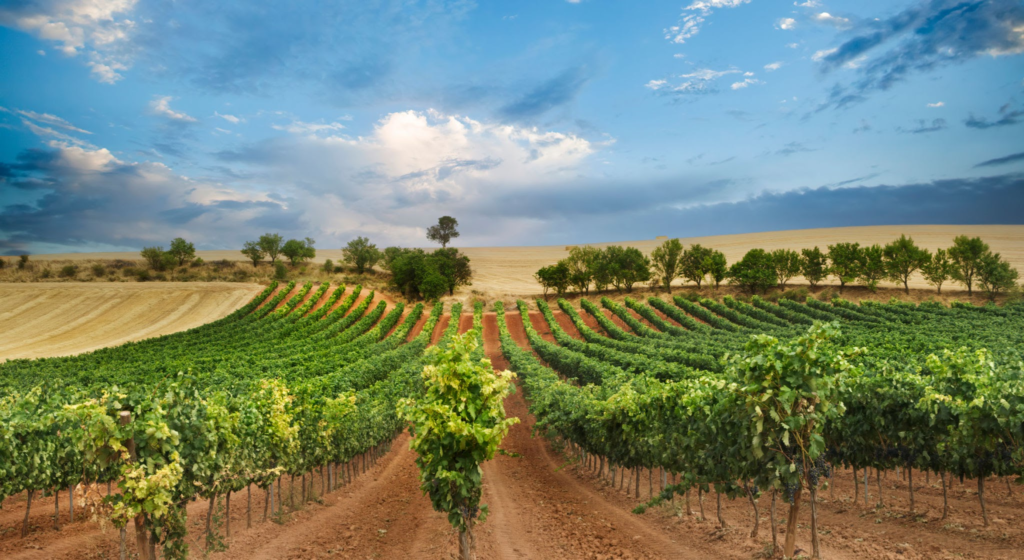
The Lay of the Land: Location and Extreme Terroir
To understand the wine in your glass, you have to understand the sheer hostility of the Castilian plateau. Ribera del Duero DO sits within the autonomous community of Castile and León, slicing horizontally across the northern landscape of Spain. The wine region tracks the course of the Duero River (the very same river that flows west into Portugal and becomes the Douro, home to Port wine) as it winds across a narrow strip of land roughly 115 kilometers long and 35 kilometers wide.
The appellation spans four distinct provinces: Valladolid, Burgos, Soria, and Segovia. Each province lends a completely different personality to the grapes grown within its borders.
The Climate: “Nine Months of Winter, Three Months of Hell”
The locals have a classic saying about the weather in the Meseta Central (the high central plateau of Spain): Nueve meses de invierno y tres de infierno. This translates literally to “Nine months of winter and three months of hell,” and it is barely an exaggeration.
Ribera del Duero is defined by an extreme, unyielding continental climate. Because the region is entirely encircled by mountain ranges, it is cut off from any moderating maritime or Atlantic influences.
- Extreme Diurnal Shifts: During the peak ripening month of August, daytime temperatures can easily soar past 40°C. Yet, the moment the sun drops below the flat Castilian horizon, cold air rushes down from the surrounding mountains, plunging the nighttime temperatures down to 10–12°C. This massive temperature swing is the secret weapon of Ribera del Duero. The daytime heat fully develops the sugars and rich phenolic compounds in the grapes, while the sudden cold at night halts the ripening process, preserving the natural tartaric acidity inside the fruit. Without these freezing nights, the wines would be heavy and flabby; with them, they retain a vibrant, structural spine.
- The Threat of Frost: Spring frosts are the nightmare of every vineyard manager in the valley. It is not uncommon for devastating freezes to strike as late as mid-May, wiping out fragile early buds before the growing season even gets underway. In autumn, early winter freezes can arrive before harvest is fully completed, forcing winemakers into a high-stakes gamble against nature.
The Geology: Altitude, Limestone, and Ancient Sands
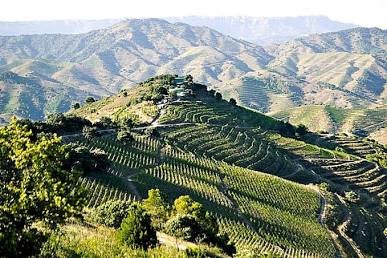
If Rioja is a wine region of rolling hills and gentle valleys, Ribera del Duero is a wine region of the sky. The vineyards here are among the highest in Europe, planted at altitudes ranging from 750 meters up to more than 1,000 meters above sea level. At these elevations, the atmosphere is noticeably thinner, exposing the grapes to intense UV radiation. This solar intensity causes the vine to develop thicker skins to protect its seeds, and since all the color, tannin, and flavor compounds reside in the grape skins, this high-altitude radiation results in naturally deeply pigmented, highly structural wines.
The soils of the valley floor and its surrounding terraced cliffs are a complex patchwork puzzle formed over millions of years:
High Plateau (900m+)  ──► Limestone and Chalk (Elegance, Aromatics, Mineral spine)

Terraced Slopes       ──► Clay and Marl (Body, Power, Deep color, Fleshy texture)

Valley Floor / River  ──► Alluvial Gravel and Sand (Fruit-forward, Accessible, Early ripening)
The finest, most age-worthy wines generally trace their roots to the chalky-limestone slopes and the high, barren plateaus (páramos). Limestone soils act like a natural sponge, holding onto vital water reserves during the bone-dry summer months and slowly feeding the vine, which translates to a signature chalky, mineral precision in the final pour.
The Sovereign Grape: Tinto Fino (Tinta del País)
While the back label of a Ribera del Duero bottle will proudly declare the wine inside is made from Tempranillo, the reality is a bit more nuanced. Over centuries of adapting to the brutal freezes and searing heat of the Castilian plateau, the grape has mutated into a distinct localized variant known interchangeably as Tinto Fino or Tinta del País.
How Tinto Fino Differs from Classic Tempranillo
If you plant a vine of traditional Rioja Tempranillo down in the soils of Ribera del Duero, it will struggle to survive. Tinto Fino has evolved specific evolutionary mechanisms to cope with its environment:
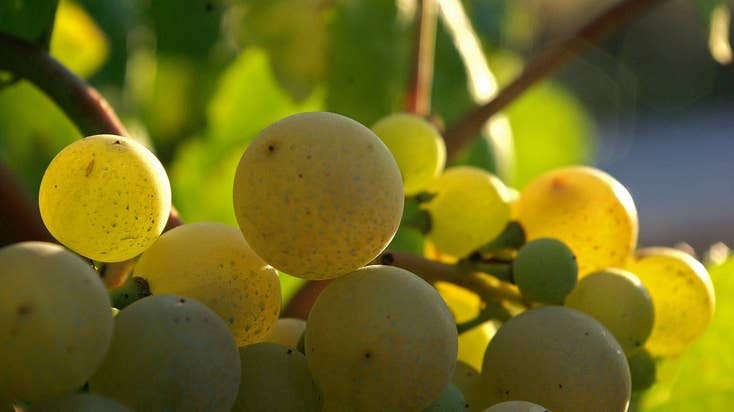
- Smaller Berries: Tinto Fino clusters feature significantly smaller grapes than those found in Rioja. Smaller berries mean a much higher skin-to-juice ratio. This is the root cause of Ribera’s legendary concentration; more skins mean more extraction, deeper color, and vastly higher tannin levels.
- Thicker Skins: The skin of Tinto Fino is exceptionally thick and leathery, a natural shield against both late-spring frosts and the punishing UV sunrays of the high plateau.
- Shorter Life Cycle: The grape has adapted to ripen remarkably fast, squeezing its entire growth cycle into the brief, unpredictable window between the last spring frost and the first autumn freeze.
By law, any red wine carrying the Ribera del Duero DO seal must contain at least 75% Tinto Fino. The remaining 25% can be blended with a handful of authorized varieties: Cabernet Sauvignon, Merlot, Malbec, and Garnacha Tinta.
While some traditionalists stick to 100% pure Tinto Fino, many of the region’s iconic estates love blending in small percentages of Bordeaux varieties. A splash of Cabernet Sauvignon brings a rigid backbone and classical structure, while Merlot softens the mid-palate with plum notes, and a dash of Malbec injects exotic floral aromatics and refreshing acidity.
Understanding the Classification System: Traditional vs. Modern
Historically, Ribera del Duero has utilized the strict, time-based aging classifications regulated by the Spanish Consejo Regulador. These terms are stamped on the back label of the bottle, guaranteeing exactly how long the wine slept in oak barrels and glass cellars before hitting the market.
| Classification | Total Minimum Aging | Minimum Time in Oak Barrels | Character Profile |
| Cosecha (or Joven) | No minimum rule | 0–3 months | Vibrant, fruit-forward, bursting with primary blackberries, minimal oak influence. Best enjoyed young. |
| Crianza | 24 months | 12 months | The perfect sweet spot. Balanced primary dark fruits with secondary layers of vanilla, toast, and baking spices. |
| Reserva | 36 months | 12 months | Crafted only in exceptional vintages. Complex, savory, showing notes of leather, cigar box, and dried plums. |
| Gran Reserva | 60 months | 24 months | The pinnacle of traditional patience. Deeply complex, velvety, with integrated tannins and tertiary forest-floor notes. |
The Modern Shift: Terroir-First Labeling
While the aging grid above is still widely used, the modern generation of Ribera winemakers is shifting away from these rigid time-based rules. The region’s top producers realized that forcing a wine to sit in oak for an arbitrary number of months just to hit a “Reserva” status can sometimes overpower the pristine fruit and mask the unique character of their soils.
Today, many of the most expensive and highly sought-after cult wines are labeled simply as “Cosecha.” This does not mean they are cheap, unaged wines; rather, it means the winemaker chose to age the wine precisely as long as the vintage required, whether that was 14 months in large neutral oak vats or 22 months in French barriques, prioritizing the unique voice of the vineyard over a bureaucratic label stamp.
The Titans of the Valley: Three Exceptional Benchmark Estates
To truly appreciate the heights that this region can achieve, you have to look closely at the benchmark producers who have defined its modern identity. Let’s look at three standout estates, exploring their specific terroirs, tasting profiles, and how they showcase the best of the region.
1. Pago de Carraovejas: A Masterclass in Slope and Synergy
Located just outside the historic, castle-crowned town of Peñafiel in the province of Valladolid, Pago de Carraovejas is a striking example of what happens when meticulous viticulture meets smart winemaking architecture.
The Terroir and Location
The vineyards of Pago de Carraovejas are situated in a unique amphitheater-like valley carved out by a small tributary of the Duero River. The vines climb up steep, sun-drenched hillsides at elevations hovering around 850 meters.
The soil composition here is highly specific: a dense mixture of loam, limestone, and white clay. This combination provides excellent water retention while forcing the roots of the vine to dig deep through the dense clay layers to hit the bedrock below. The estate utilizes a combination of high-density planting and terraced viticulture, allowing them to capture optimal solar radiation while managing water stress with surgical precision.
What Makes it Special
Unlike many traditional Ribera producers who treat Tinto Fino as a solitary island, Pago de Carraovejas found its magic formula by embracing classic Bordeaux varieties. Their flagship estate wine is typically a blend of roughly 93% Tinto Fino, 4% Cabernet Sauvignon, and 3% Merlot.
Furthermore, Carraovejas was a true pioneer in the region for its focus on wood quality. They were among the first to mandate that all fermentation take place in custom-built, large French oak vats using indigenous yeasts isolated directly from their own vineyard skins. The wine is then aged exclusively in extra-fine-grain French oak barrels, resulting in a seamlessly integrated oak profile that never obscures the underlying fruit.
Tasting Notes & Sensory Profile
In the glass, Pago de Carraovejas displays a dense, opaque purple-black core. The nose is incredibly expressive and multidimensional: layers of ripe black cherry, wild blueberry, and crème de cassis interweave with notes of Madagascar vanilla bean, dark cocoa powder, damp earth, and a distinct hint of dried lavender.
On the palate, the wine is an absolute powerhouse, yet it feels brilliantly light on its feet. The entry is lush, creamy, and expansive, flooding the mouth with dark fruit preserves. The tannins are remarkably fine-grained, tightly woven and structural, yet silky smooth. A bright, limestone-driven acidity balances the wine’s natural opulence, leading into a spectacularly long, resonant finish defined by toasted spices and a stony, mineral salinity.
Culinary Food Pairings
This is a wine built for rich, savory dishes where the dense tannin structure acts as a natural palate cleanser against rich meats:
- The Classic Match: Lechazo Asado (Traditional Castilian milk-fed roasted lamb cooked in a wood-fired clay oven). The high fat content and crisp skin of the lamb melt effortlessly into the fine-grained tannins of the wine.
- Modern Alternative: A thick, dry-aged ribeye steak (Chuletón) grilled over open oak coals, served simply with sea salt.
- Cheese Companion: Aged Manchego cheese cured in olive oil for at least 12 months.
Where to Buy
Pago de Carraovejas has an immense following inside Spain, making allocations highly competitive. Look for it at specialized online retailers like Decántalo, Bodeboca, or Vinissimus. If you are shopping locally, head straight to independent, high-end fine wine boutiques. Expect to pay around €45–€55 per bottle depending on the vintage, an absolute steal given its world-class quality.
2. Pago de los Capellanes: The Pinnacle of Varietal Purity
If Carraovejas represents the pinnacle of modern blending and slope engineering, Pago de los Capellanes showcases exactly what 100% pure Tinto Fino can achieve when grown in the historic heart of the Burgos province.
The Terroir and Location
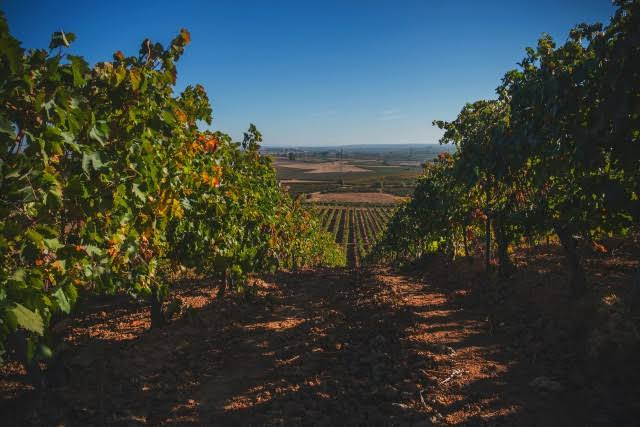
Situated in the iconic village of Pedrosa de Duero within the Burgos province, Pago de los Capellanes is anchored in some of the oldest viticultural ground in the entire DO. The name translates to “The Land of the Chaplains,” paying homage to the 14th-century village priests who originally tended these exact parcels of land.
The topography here consists of a flat, sun-baked sedimentary plateau sitting at an altitude of 800 meters. The soil is a lean, nutrient-poor mixture of clay-limestone blend laced with chalk, sand, and large surface pebbles. The clay components provide structural power and density to the grapes, while the highly active limestone content infuses the wine with a signature freshness and mineral focus.
What Makes it Special
Pago de los Capellanes is fiercely dedicated to preserving old-vine massal selections of Tinto Fino. They eschew modern laboratory clones, propagating their vineyards entirely from cuttings taken from their oldest, pre-industrial vines.
Their winemaking philosophy is centered on gentle extraction. They utilize long, cold pre-fermentation macerations to draw out the purest fruit aromatics and colors without aggressively pulling out harsh, bitter seed tannins. Every single parcel is vinified completely separately in isolated tanks before a meticulous blending session determines the final destination of the juice.
Tasting Notes & Sensory Profile
The flagship Pago de los Capellanes Crianza is a masterclass in balance. It pours a deep cherry red with brilliant garnet reflections at the rim. The nose is dominated by clean, focused primary fruit: fresh blackberries, red plums, and wild raspberries. As the wine breathes, it reveals beautifully integrated layers of cedar chips, fresh tobacco leaf, roasted coffee beans, and a distinct cracked black pepper spice.
The palate entry is surprisingly sleek and athletic. Unlike heavier, over-extracted styles, this wine glides across the tongue with a velvety, supple texture. The mid-palate is juicy and packed with red and black fruit energy. The tannins are ripe, soft, and completely round, supported by a line of clean, refreshing acidity that keeps the mouth watering long after you have swallowed.
Culinary Food Pairings
Because of its exceptional balance, focused acidity, and smooth tannin profile, this wine is incredibly versatile at the dinner table:
- The Perfect Pairing: Slow-braised oxtail (Rabo de Toro) cooked in a rich reduction of red wine, garlic, and rosemary. The wine’s acidity cuts beautifully through the gelatinous richness of the meat.
- Casual Pairing: Hand-carved Jamón Ibérico de Bellota (acorn-fed Iberian ham) paired with rustic tomato-rubbed bread (Pan con Tomate).
- Vegetarian Alternative: A rich, earthy wild mushroom risotto finished with plenty of shaved Parmigiano-Reggiano.
Where to Buy
Thankfully, Pago de los Capellanes maintains an excellent distribution network. Their Crianza can be reliably sourced from major European fine wine merchants and global online platforms like Wine.com or The Wine Society. It sits comfortably at an accessible price point of approximately €25–€30, making it one of the absolute best values for a benchmark Spanish red wine.
3. Bodegas Muga: The Cross-Regional Vision
At first glance, seeing Bodegas Muga listed in a Ribera del Duero guide might cause a seasoned wine drinker to pause. For nearly a century, Muga has stood as one of the ultimate, unwavering icons of La Rioja, famous worldwide for traditional, long-aged wines like Prado Enea.
However, wine landscapes evolve. In an incredibly exciting move, the Muga family recently extended their roots outside their home territory, investing heavily in the rugged southern frontiers of Ribera del Duero. They have acquired 30 hectares of pristine, high-altitude vineyards and are actively finalizing a completely autonomous, dedicated winemaking facility in the region. This cross-regional project beautifully bridges the worlds of Rioja elegance and Ribera power.
The Terroir and Location
To plant their flag in Ribera, the Muga family intentionally avoided the warmer valley floors. Instead, they traveled south to the ultra-extreme, cool-climate sub-zone of Moradillo de Roa, located in the elevated southern rim of the Burgos province.
The vineyards here sit at an astronomical altitude of nearly 900 to 930 meters above sea level on a desolate, windswept sedimentary plateau. The soils are incredibly stark: a harsh layer of rolling river stones (cantos rodados) sitting on top of a deep bed of white active limestone and iron-rich red sand. This is one of the coldest, most marginal ripening zones in the entire appellation, meaning harvest occurs weeks later than the rest of the valley.
What Makes it Special
This project represents a fascinating collision of two distinct winemaking cultures. Muga brings their legendary mastery of wood to the table, they are one of the only wineries in Spain that maintains a fully functional, in-house cooperage, making all their own barrels by hand from scratch.
By applying their signature Rioja philosophy- gentle wood extraction, meticulous fruit sorting, and a deep reverence for natural acidity- to the inherently thick-skinned, muscular Tinto Fino grapes of Moradillo de Roa, they are crafting an entirely new expression of Ribera. It is a style that tames the raw power of the region, filtering it through a lens of classical structure, high-toned freshness, and immense cellaring potential.
Tasting Notes & Sensory Profile (What to Expect)
The wines coming from this high-altitude project offer a striking departure from the heavier, jammy Ribera profile. They display a deep ruby-crimson hue. The nose is incredibly lifted and vertical, bursting with aromas of red currants, sour cherries, and wild violets, backed by intense mineral notes of crushed wet stone, graphite, and subtle baking spices derived from pristine French oak casing.
On the palate, the wine is beautifully tense and chiseled. Instead of sprawling horizontally with heavy fruit weight, it drives down the center of the tongue with a laser-focused beam of chalky acidity. The tannins are dense but incredibly tight and fine-grained, showing an iron-like grip that signals a wine built to evolve gracefully in a dark cellar for decades.
Culinary Food Pairings
Thanks to the intensely high altitude and chiseled acidity of the Moradillo de Roa fruit, this wine sings alongside game meats and dishes with complex smoky or herbal undertones:
- The Ideal Pairing: Pan-seared duck breast with a blackberry or plum reduction sauce. The high acidity cuts cleanly through the rich duck fat, while the dark fruit notes mirror the sauce perfectly.
- Rustic Classic: Grilled lamb chops seasoned with fresh thyme and rosemary, cooked over an open grapevine fire.
- Wild Option: Slow-roasted wild boar stew with root vegetables and juniper berries.
Where to Buy
Because these first vintage releases are highly anticipated global events, initial allocations are tightly controlled. Keep a close eye on premium online wine merchants and exclusive allocation lists on sites like Fine+Rare &Berry Bros. Securing a bottle early is a smart play for any serious collector of Spanish wine, as these high-altitude terroirs represent the definitive future direction of fine wine in the region.
The Hidden Gems: Small-Scale, Boutique, and “Garagiste” Producers
While the grand estates of the valley rightfully command global headlines, a quiet movement is taking place in the forgotten corners of the appellation. A small group of independent, low-intervention, boutique winemakers is stripping away the reliance on heavy oak flavorings, focusing instead on old field-blends, ancient ungrafted vines, and a radically fresh style of winemaking.
If you want to experience the cutting edge of Ribera del Duero, seek out these three exceptional small-scale producers.
1. Quinta Milú (Germán R. Blanco)
- The Location: La Aguilera (Burgos)
- The Philosophy: Pure, joyful, low-intervention expressions of the vineyard.
Germán R. Blanco is the definition of a viticultural craftsman. Working out of the high-altitude village of La Aguilera, his project Quinta Milú is a passionate love letter to sustainable, traditional farming. He treats his vineyards as a living ecosystem, avoiding all chemical pesticides and synthetic fertilizers.
In the cellar, Germán throws out the heavy, modern industrial rules. He utilizes ancient techniques like foot-treading the grapes in open vats to ensure a uniform, incredibly gentle extraction. Instead of aging his wines in new, heavily toasted oak barrels, he uses large, older neutral French oak casks, wooden foudres, and clay amphorae.
The Wine to Hunt For: Milú Tinto
This is 100% Tinto Fino sourced from old bush vines. It is an absolute revelation: exploding with crunchy red berries, wild strawberries, and cracked peppercorns. It contains zero noticeable oak flavor, just pure, vibrant, refreshing fruit juice that is incredibly easy to drink. It changes everything you think you know about heavy Ribera wines.
2. Goyo García Viadero
- The Location: Roa and Anguix (Burgos)
- The Philosophy: Natural winemaking, zero added sulfites, ancient field blends.
“This is a completely different interpretation of Ribera del Duero, the traditional, unadorned way!”
Goyo García Viadero is a true iconoclast who was among the very first in the region to completely abandon the conventional use of selected commercial yeasts, enzymes, and added sulfur. He works exclusively with incredibly old, co-planted vineyards sitting at extreme elevations of more than 900 meters.
Goyo firmly believes in the historical tradition of field blending. In the old days, vineyards weren’t single-variety blocks; farmers planted red and white grapes completely intermingled. Goyo harvests his ancient Tinto Fino grapes alongside small percentages of Albillo Mayor (an indigenous white grape variety). He ferments them together in centuries-old, deep underground stone caves (cuevas), where the naturally freezing, stable temperatures allow for an incredibly slow, peaceful fermentation.
The Wine to Hunt For: Finca Los Quemados
Sourced from 100-year-old vines rooted into pure ferrous sand and rolling river pebbles. This wine is a masterclass in ethereal beauty. It displays a stunning aromatic profile of freshly cut violets, wild herbs, blood orange peel, and raw graphite. On the palate, it is vertical, bright, and packed with an intense, iron-like minerality and refreshing acidity.
3. Dominio de Es (Bertrand Sourdais)
- The Location: San Esteban de Gormaz (Soria)
- The Philosophy: The “Burgundy of Ribera”, biodynamic micro-parcels of pre-phylloxera vines.
While the majority of famous Ribera estates are concentrated in the western provinces of Valladolid and Burgos, the brilliant French winemaker Bertrand Sourdais traveled all the way east to the forgotten, wild province of Soria to establish Dominio de Es.
Soria is an incredibly cold, high-altitude frontier where the soils are dominated by pure sand mixed with chalky limestone. Because of these unique, deep sandy soils, the devastating vine-destroying pest phylloxera could never survive here. As a result, Soria is home to pristine, rare pockets of pre-phylloxera vines, vines that are more than 150 years old, growing on their own original native rootstocks. Sourdais manages these tiny micro-parcels using strict biodynamic principles, treating each isolated plot with the same reverence a winemaker applies to a Grand Cru vineyard in Burgundy.
The Wine to Hunt For: Dominio de Es Viñas Viejas de Soria
A phenomenal, spellbinding red wine blended from ancient Tinto Fino and a small splash of Albillo. It offers a hauntingly beautiful, complex bouquet of wild black currants, crushed black cherries, freshly turned black soil, cacao nibs, dried mint leaf, and exotic wood spices. The texture is completely unforgettable, unbelievably deep and concentrated, yet carrying a silky, weightless elegance and a fine-grained tannin structure that represents the absolute pinnacle of artisanal winemaking.
Sourcing Secrets: How to Buy the Best Ribera del Duero Wines
Navigating retail channels to build your personal cellar collection can be tricky, but following a few key principles can ensure you find the absolute best bottles:
Decode the Importer Label
When shopping in your local boutique stores, always flip the bottle over to inspect the importer tag on the back. Premier importers act as a reliable, built-in quality filter. If you see names like De Maison Selections, Eric Solomon, or Rare Wine Co. stamped on the back, you can buy with total confidence, knowing the bottle was meticulously sourced and shipped in temperature-controlled reefers.
Embrace the Digital Marketplace
Because small-production gems like Quinta Milú or Goyo García Viadero are produced in tiny batches (often fewer than 5,000 bottles per year), they rarely sit on standard retail shelves. Your best bet is to leverage specialized online wine platforms:
- For Direct European Shipping: Use Decántalo or Bodeboca. These Madrid-based digital warehouses source direct from the wineries and offer highly secure, insulated international shipping options.
- For Rare Allocations: Sign up for email newsletters at boutique web shops like K&L Wine Merchants or Chambers Street Wines, which frequently secure direct allocations of rare, pre-phylloxera Soria reds.
Check the Vintage Guide
Ribera del Duero is heavily impacted by its volatile weather, making vintage chart awareness incredibly helpful:
- 2019: An exceptional, benchmark vintage. Growing conditions were balanced, yielding deeply concentrated, intensely structured wines with incredible aging potential.
- 2020: A warmer, highly generous year. The wines are lush, fruit-forward, soft, and beautifully expressive even in their youth.
- 2021: A spectacular vintage defined by high-toned freshness, crisp linear acidity, and elegant tannic structures, perfect for long-term cellaring.
Serving Ribera del Duero: How to Bring Out the Best
To truly do justice to these magnificent, high-altitude red wines, you must treat them with the proper service reverence at home:
1. Nail the Serving Temperature
Never serve a fine Ribera del Duero at standard, warm room temperature. If a wine gets past 20°C, the alcohol content will burn out the delicate fruit and volatile floral aromatics. Aim for a perfect cellar temperature of 15–17°C. Pop the bottle into the refrigerator for 20–30 minutes before pouring to bring it into this optimal zone.
2. Give it Room to Breathe
These are tightly coiled, highly structural wines that need oxygen to unfurl their layers. For standard Crianza or young boutique releases, give them at least 45 minutes in a wide-bottomed glass decanter. For grand, powerhouse estate reserves like Pago de Carraovejas, pull the cork 2 hours before dinner to allow the firm tannins to soften and harmonize.
3. Choose the Right Glassware
Skip the small, narrow glasses. Use a large, generous Bordeaux glass with a tall chimney. The wide bowl provides ample surface area for oxygen contact, while the tall rim directs the intense dark fruit and oak spice aromatics straight to your nose, ensuring every sip delivers the full, dramatic story of the Castilian plateau.
Did you enjoy reading about Ribeira del Duero wines? Find more Spanish wines here.
6 Comments
Comments are closed.