The Spanish Red Wine You’ve Never Heard of (and Why it Belongs in Your Cellar)
Mention red wine from Spain to any casual enthusiast, and their mind immediately drifts to the heavyweights: the oak-aged Tempranillo of Rioja, the structural, sun-drenched bottles of Ribera del Duero, or perhaps the slate-grown, muscular garnachas of Priorat. But if you drift south of Madrid, down past the historic windmilled plains of Don Quixote and into the southern reaches of the Cuenca province, you hit a dramatic topographical shift.
Here, carved out by the path of the Júcar River, sits one of the most exciting, qualitative, and criminally overlooked micro-regions in Western Europe: Ribera del Júcar.
Granted its own independent Denominación de Origen (DO) status in 2003, this compact appellation was born from a radical mission. A small, fierce cooperative of multi-generational winemakers looked at their hyper-specific terroir, defined by a high-altitude plateau covered in a spectacular blanket of ancient river stones, and decided to stop blending their juice into mass-market table wines. Instead, they set out to prove that their indigenous star grape, Bobal, could produce world-class, age-worthy, terroir-driven estate wines.
For wine travelers and collectors looking for authentic, unmanipulated Spanish profiles that offer mind-boggling value, this region is the next frontier. This is your comprehensive insider guide to the vineyards, the bottles, the experiences, and the food pairings of Ribera del Júcar.
1. Terroir, Altitude, and the Stone Blanket
To understand why a Ribera del Júcar bottle tastes so radically different from a standard, jammy wine from the broader Castilla-La Mancha plains, you have to look at the ground beneath your feet.
The entire DO sits at a uniform, high-altitude plateau averaging 750 meters (2,460 feet) above sea level. This elevation is critical. While the summer days in central Spain are scorching, the high altitude triggers a dramatic diurnal temperature variation; the temperature can plummet by up to 20°C (36°F) the moment the sun sets over the river basin. This nightly deep-freeze hits the brakes on sugar development in the grapes, allowing them to hang on the vines longer and develop complex phenolics (flavors and tannins) without losing their crisp, natural acidity.
The Pebble Matrix (Los Cantos Rodados)
The defining visual marker of the region is its soil. Walk into any old vineyard here, and you won’t see open dirt; you will see an absolute sea of smooth, rounded river stones (cantos rodados) and boulders covering the ground.
- The Upper Layer: These pebbles act as a natural thermal radiator. During the day, they absorb the intense Spanish sunshine. At night, they slowly radiate that trapped heat back up into the lower canopy of the vines, ensuring even, perfect ripening of the grape clusters.
- The Subsoil: Beneath this stony blanket lies a dense, moisture-retaining layer of clay-calcareous soil. The stones on top prevent water from evaporating into the arid air, while the deep clay acts as an underground sponge. This allows ancient, deep-rooted vines to survive dry summers without the need for artificial irrigation, forcing the roots deep into the bedrock to extract intense mineral character.
2. The Hero Grape: Ancient, Old-Vine Bobal
While the region grows excellent expressions of Cencibel (the local clone of Tempranillo), Syrah, and Cabernet Sauvignon, the undisputed soul of the Bobal wine region is its namesake grape.
For decades, Bobal was treated as the workhorse grape of Mediterranean Spain. It is naturally high in skin-to-juice ratio, high in tannins, and packed with deep color, which meant it was historically used to give structure and color to weak bulk wines. But when harvested from old vine Bobal plots, vines ranging from 60 to well over 100 years old, the grape transforms entirely.
Traditional Bobal vines in Ribera del Júcar are grown using the ancient en vaso (bush-trained) method, rather than modern wire trellises. These gnarled, low-yielding wooden sculptures produce tiny, intensely concentrated berries.
Tasting Profile of High-End Júcar Bobal
When vinified with care by artisan estate producers, Bobal steps out of the shadows with a fascinating sensory profile:
- Aroma: Wild blackberries, black currants, dried violets, and crushed gravel, frequently underscored by a savory whiff of Mediterranean scrubland (rosemary and thyme).
- Palate: Dark fruits dominate, but they are framed by a striking, bright acidity that prevents the wine from ever tasting heavy or flabby.
- Texture: The tannins are rustic but finely polished by careful oak or clay-jar aging, leaving a structural chewiness that demands food.
3. The Essential Wineries and Experiences
The Castilla-La Mancha wine travel map is changing rapidly, and Ribera del Júcar is at the epicenter of this shift toward boutique enotourism. The DO encompasses just seven small towns in the south of Cuenca: Casa Benítez, Casas de Fernando Alonso, Casas de Guijarro, Casas de Haro, El Picazo, Pozoamargo, and Sisante.
If you are planning a road trip through central Spain, these are the essential boutique estates and innovative winemakers you need to book for an authentic tasting experience.
Bodegas Illana (Pozoamargo)
A family-owned estate run by the fourth generation of the Illana family, this bodega is a masterclass in balancing regional history with forward-thinking winemaking. Their vineyards surround a beautiful, traditional estate house where they offer immersive, high-end tastings.
- The Standout Experience: Book their 4×4 vineyard tour. You’ll be driven deep into their oldest plots to see the stony soils up close, followed by a tasting in their barrel room.
- The Wine to Try: Los Bobalistas Cuvee. This is a gorgeous, deeply expressive red that shows exactly how elegant and velvety old-vine Bobal can become when treated with absolute respect.
Las Calzadas (Pozoamargo)
If you want to taste history in its purest form, Las Calzadas is an absolute mandatory stop. This micro-winery is dedicated to resurrecting lost 19th-century winemaking traditions.
- The Standout Experience: A private tour with the winemaker through an intimate cellar filled with massive, historical clay amphorae jars (tinajas). They do not use modern stainless steel here; everything is focused on ancestral methods.
- The Wine to Try: Tinácula. Fermented and aged entirely in raw clay jars, this wine bypasses oak influence completely. It offers an incredibly pure, wild, and mineral expression of Bobal that tastes like stepping back in time.
Vega Moragona / La Magdalena (Casas de Haro)
Founded originally as a cooperative in 1958, this winery represents the collective heartbeat of the region’s growers. Today, it has evolved into a powerhouse of quality control, selecting only the finest, lowest-yielding old-vine plots from its members for its premium labels.
- The Standout Experience: Their educational tasting walkthroughs show the evolution of Bobal, comparing young, fresh styles against their heavy-hitting, old-vine reserve selections.
- The Wine to Try: Vega Moragona 60’s Bobal. Sourced exclusively from bush vines planted over sixty years ago, this bottle is dense, complex, and layered with balsamic and dark chocolate notes.
Bodegas Valtravieso – Viñedos Olvidados Project
While Valtravieso is legendary for its prominent estates in Ribera del Duero, their winemaking team became obsessed with the potential of Júcar’s unique landscape. Through their Viñedos Olvidados (“Forgotten Vineyards”) rescue project, they stepped in to buy and preserve ancient, top-tier Bobal plots that were on the verge of being ripped out due to their low, commercially unprofitable yields.
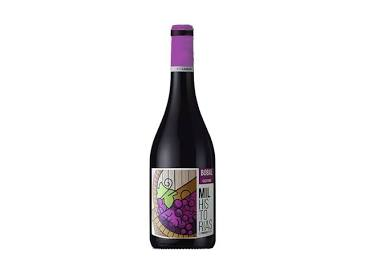
- The Wine to Try: Mil Cantos Bobal. The name translates to “A Thousand Stones,” paying direct tribute to the rocky floor of the vineyard. It is vibrant, mineral, and highly acclaimed by international critics.
4. Gastronomy and Food Pairings
Bobal’s natural structural architecture, its robust tannins paired with a driving, vibrant thread of acidity, makes it an absolute dream at the dinner table. It cuts through fat effortlessly while complementing rich, earthy flavors.
When hosting a dinner party or cooking at home, look to traditional Spanish culinary philosophies to make these wines sing.
The Meat Match: Game and Wood-Fired Roasts
Because Ribera del Júcar is situated in the rugged heart of central Spain, its wines evolved alongside hearty, rustic country cooking.
- The Perfect Pairing: Braised lamb shanks with rosemary, pan-seared duck breast with a blackberry reduction, or wild boar stew. The high skin-to-juice tannins of the old vines wrap beautifully around the proteins of rich game meats, softening the wine and revealing hidden layers of sweet spice and fruit.
The Earthy Match: Mushrooms and Smoked Foods
Bobal possesses a natural, savory, under-the-radar herbal profile that pairs elegantly with woodland flavors.
- The Perfect Pairing: A deep, rich wild mushroom risotto, wood-fired grilled portobello caps capsized in garlic oil, or dishes infused with smoked Spanish paprika (Pimentón de la Vera).
5. Where to Buy Bobal and How to Source These Bottles
Because Ribera del Júcar is a compact DO that focuses heavily on limited, estate-bottled productions rather than industrial volume, you won’t always find these bottles sitting on standard supermarket shelves. However, because more than half of the region’s premium production is designated for export, they are highly accessible if you know where to look.
Specialty Wine Merchants & Online Databases
- Wine-Searcher & Delectable: Use these apps specifically to track down regional labels like Valtravieso Mil Cantos, Bodegas Illana, or Vega Moragona.
- Independent Bottle Shops: Skip the big-box liquor outlets. Head to boutique retailers that specialize in Spanish, natural, or organic imports. Ask the clerk specifically for “High-altitude Central Spanish reds” or “Old-vine bush-trained Bobal.”
- Direct from Importers: Many boutique Spanish wine importers online carry these hidden gems because they offer the structural complexity of a €60 Ribera del Duero or Napa Cabernet at a fraction of the price (frequently retailing between €18 and €28).
The Summary: Why You Need to Look South
The modern wine landscape can often feel uniform, dominated by international varieties and over-extracted flavors designed to chase commercial trends. Ribera del Júcar stands as a beautiful, stubborn contradiction to all of that.
By preserving their ancient, low-yielding bush vines, honoring the wild nature of the Bobal grape, and leveraging the cooling alpine winds of their stone-covered plateau, the winemakers of this quiet riverbank are producing some of the most honest, thrilling red wines in Spain today.
Whether you are packing your bags for a road trip through the historic heart of Cuenca or tracking down an artisanal bottle online to diversify your home cellar, Ribera del Júcar is a region that demands space on your palate. It is proof that Spain’s greatest treasures are often found just off the beaten path, hiding in plain sight beneath a blanket of river stones.
While the rocky river stones of Central Spain give Bobal its structural edge, wine lovers seeking the ultimate expression of maritime minerality should head south to explore the chalky soils of the Manzanilla de Sanlúcar wine region, where the ocean wind shapes a truly unique profile
Read more about other Spanish wine regions here.