Beyond the Ring of Priorat: The Unsung Wines of DO Montsant
There is a distinct magic in finding a wine region that feels like an unmapped secret, even when it wraps around one of the most famous wine destinations on earth.
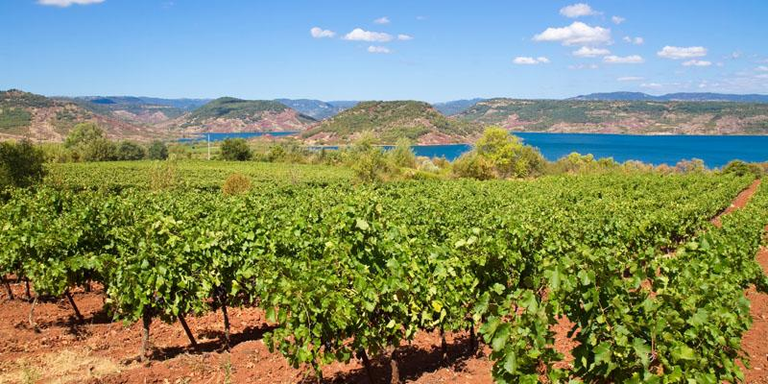
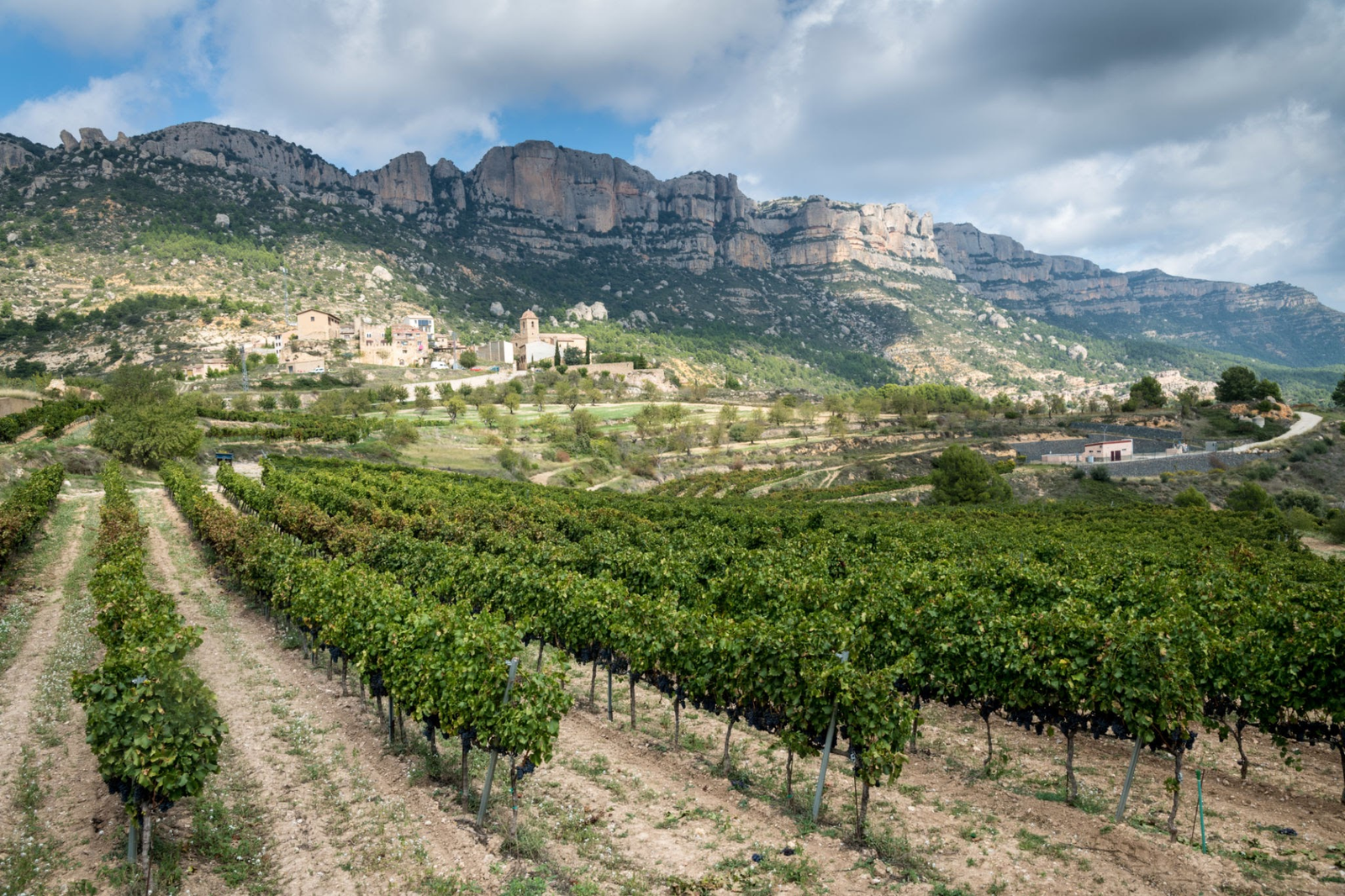
If you travel two hours southwest of Barcelona into the rugged heart of Catalonia, you will find the towering, sheer limestone cliffs of the Montsant mountain range. This massive, majestic rock fortress casts a long shadow over a horseshoe-shaped wine appellation known officially as DO Montsant (Denominació d’Origen Montsant). For decades, this breathtaking region was quietly lumped together with its historic neighbor, but today it stands proudly on its own as one of the most dynamic, high-value, and deeply authentic wine territories in Spain.
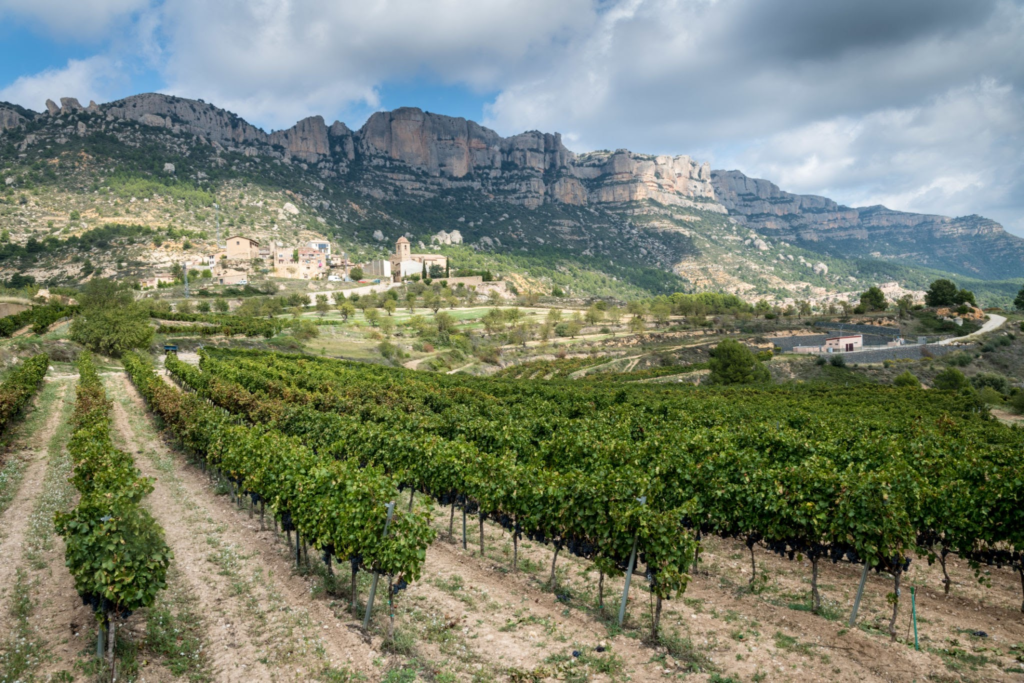
To look at a viticultural map of this corner of Catalonia is to look at a donut. In the center sits the tiny, world-famous, black-slate enclave of DOQ Priorat. Wrapping completely around it like a protective, rugged ring is Montsant. Because of this immediate physical proximity, Montsant shares the exact same wild mountain topography, the same blistering Mediterranean sun, and the exact same ancient, gnarled old vines of Garnacha and Cariñena.
Yet, for a long time, Montsant was treated as merely “the poor man’s Priorat.” That label is not just outdated; it completely misses the brilliant geological variety and stylistic freshness that define the region today. While Priorat is famous for its dark, brooding power and intense, muscular structure, Montsant delivers a completely different sensory experience. It offers an incredible structural lift, vibrant, crunchy red fruit aromatics, a diverse mineral complexity, and, critically for wine travelers and collectors, an exceptional quality-to-price ratio that its more famous neighbor can rarely match.
Whether you are looking to expand your cellar with highly rated bottles that don’t carry triple-digit price tags, decode the complex micro-terroirs of its six distinct structural zones, or map out an intimate, crowd-free road trip through medieval stone villages, this deep-dive guide will unlock everything you need to know about DO Montsant.
The Holy Grail of Terroir: One Appellation, Three Distinct Soils
To understand why Montsant possesses such a wildly diverse array of wine styles, you have to look down at your feet. While Priorat is locked almost entirely into a single soil profile, the famous, dark, glittering volcanic slate known locally as llicorella, Montsant is a brilliant, chaotic geological puzzle.
The appellation forms a vast, amphitheater-like basin running from the cold foothills of the Montsant mountains down to the warmer banks of the Siurana and Ebro rivers. Over millions of years of intense tectonic folding, this varied landscape left behind a patchwork of three completely distinct soil types, each exerting a profound, unmistakable signature on the grapevines:
1. The Chalky Calcareous Limestone (The Soil of Elegance)
Found primarily in the high-altitude northern sectors clinging to the sheer cliffs of the Montsant mountain range, this soil consists of weathered limestone, chalk, and sedimentary clay.
- The Vine Mechanics: Limestone acts as a natural sponge, storing precious moisture deep underground during the scorching summer months and releasing it slowly to the roots.
- The Wine Profile: Grapes grown here retain a stunning, mouth-watering natural acidity. The resulting wines are pale in color, ethereally aromatic, showing fine, chiseled, chalky tannins and a vibrant floral lift of violets and white pepper.
2. The Granitic Sands (The Soil of Fragrance)
Concentrated heavily around the sun-drenched southern and eastern villages like Marçà, Capçanes, and Falset, these soils are composed of eroded granite fragments, local field stones, and coarse yellow sand (sauló).
- The Vine Mechanics: Granitic sand provides absolute, rapid drainage. The vine roots are forced to dive incredibly deep through the loose quartz fragments to find nutrients, struggling immensely.
- The Wine Profile: Granite creates an intensely perfumed, soft, and approachable wine style. The tannins are remarkably smooth, round, and fine-grained, yielding wines bursting with bright, juicy red cherries, wild raspberries, and an exotic, sweet spice note.
3. The Broken Llicorella Slate (The Soil of Power)
Where Montsant borders the outer fringes of the Priorat boundary line, the soils shift dramatically into pockets of pure, dark, iron-rich metamorphic slate and fractured quartz.
- The Vine Mechanics: This hard stone reflects intense heat back up onto the low-hanging grape clusters during the day, forcing rapid sugars and deep phenolic ripeness.
- The Wine Profile: This is where Montsant flirts with the character of its neighbor. The wines are dark, concentrated, opaque, and muscular, defined by deep flavors of black plums, wild blueberries, crushed charcoal, and a distinct, smoky mineral core.
The Monks, the Cooperative Movement, and the Birth of a DO
The history of winemaking in Montsant is deeply intertwined with spiritual devotion, economic survival, and a fierce collective spirit.
Like much of Catalonia, the foundations of serious viticulture here were laid in the 12th century by Carthusian monks who established the breathtaking Cartoixa de Escaladei (the historic Charterhouse of God’s Staircase) at the base of the mountains. The monks instantly recognized that the steep slopes and intense sun were perfect for the vine, and they spent centuries selecting the absolute best plots for Garnacha.
However, the modern soul of Montsant was forged in the early 20th century out of sheer economic necessity. Following the devastating destruction of the region’s vineyards by the phylloxera root louse, independent local farmers found themselves entirely broke, lacking the capital to rebuild their family cellars. Rather than abandon the land, the villages united to form spectacular agricultural cooperatives.
They hired brilliant, avant-garde Catalan modernist architects. including Cèsar Martinell, a dedicated student of the legendary Antoni Gaudí, to design magnificent, monumental winemaking facilities. These stunning structures became known throughout Spain as “Cathedrals of Wine” (Catedrals del Vi), featuring towering brick arches, sweeping open spaces, and innovative gravity-fed production lines that allowed rural communities to produce world-class wines on a grand scale.
For decades, these cooperatives quietly sold their premium juice in bulk to larger blending houses. It wasn’t until 2001 that the region officially broke away from the massive, generic “Tarragona” designation to form its own independent appellation: DO Montsant. This modern milestone triggered an immediate renaissance, drawing a new wave of ambitious, quality-focused independent winemakers who began bottling estate-grown wines that quickly caught the attention of the international wine press.
The Varieties that Matter: Embracing the Holy Trinity
While DO Montsant permits several international grape varieties within its regulations, the true varietal identity and greatness of the region rest squarely upon three local varieties:
- Garnacha Tinta (Grenache Noir): The true heartbeat of Montsant. Garnacha thrives across all three of the region’s soil types. In Montsant’s high-altitude plots, it achieves an uncharacteristically fresh, vibrant character, offering soaring aromas of fresh strawberries, wild thyme, and white pepper, supported by soft, velvety tannins.
- Cariñena (Carignan): The crucial backbone of the region. Locally referred to as Samsó, this late-ripening grape loves the heat. It provides intense, ink-like color, deep structural tannins, and a sharp line of bright acidity. When blended with the plush, sweet fruit of Garnacha, Cariñena provides the necessary framework for a wine to age beautifully for decades.
- Garnacha Blanca (White Grenache): The unsung hero of Mediterranean whites. Montsant produces some of the most compelling, full-bodied white wines in Spain from this skin grape. Vinified primarily in neutral oak or aged on its fine lees (lías), it delivers a luxurious, weightless, rich texture on the palate, bursting with notes of white peaches, bruised yellow apples, wild chamomile, and a distinct, salty, sea-breeze minerality.
The Benchmark Houses: Wineries You Need to Know
To truly understand the breadth and potential of DO Montsant, you should seek out bottles from these three exceptional, benchmark producers, each representing a completely unique facet of the region’s personality:
1. Cellar de Capçanes: The Pioneer of Diversity
Located in the tiny, sleepy village of Capçanes, this estate is arguably the most famous and successful agricultural cooperative in Spain. In the mid-1910s, they shocked the wine world by collaborating with the Jewish community of Barcelona to install state-of-the-art equipment capable of producing world-class, strictly certified Kosher under Mevushal wines using traditional gravity methods.
Their iconic flagship bottling, Flor de Primavera, is widely considered by international critics to be one of the finest Kosher wines produced anywhere on earth. Beyond this success, Capçanes is celebrated for its incredible Terroir Series, a brilliant, educational collection of four distinct 100% Garnacha wines harvested at the exact same altitude on the exact same day, but grown on four different soils (Clay, Limestone, Sand, and Slate). Tasting these side-by-side is the ultimate sensory proof of how soil mechanics shape wine.
2. Joan d’Anguera: The Biodynamic Visionary
If you want to taste the cutting edge of the modern Catalan wine revolution, look no further than the Anguera family in Marçà. Established in 1820, this historic estate was long famous for producing big, powerful, heavily oaked, international-style red blends. However, when young brothers Joan and Josep took over the family reins, they enacted a radical philosophical shift.
They transitioned the entire estate to certified biodynamic farming, ripped out their foreign Cabernet Sauvignon and Syrah vines, abandoned new oak barrels entirely, and embraced whole-cluster fermentation in neutral concrete vats. Their modern estate wines, like Altaroses and Finca L’Argatà, are astonishingly pale, fresh, and light on their feet, showing a wild, Pinot Noir-like elegance and energy that completely redefines what Mediterranean wine can be.
3. Acústic Celler (Albert Jané): The Champion of Old Vines
Albert Jané, arriving from a historic winemaking family in Penedès, founded Acústic Celler in 2005 with a clear, singular mission: to protect and champion the region’s disappearing ancient, ungrafted vineyards of Garnacha and Cariñena. Jané calls his winemaking philosophy “acoustic”, a beautiful acoustic guitar analogy meaning his wines are produced naturally without any modern electronic amplification, heavy extraction, or cosmetic new oak.
His entry-level red, Acústic Braó, is an exceptional value, while his old-vine icon bottling, Auditori, is a deep, emotional, masterfully complex expression of 100-year-old vines that can easily compete with the finest Grand Crus of Europe.
The Service & Culinary Pairing Protocol
Because of their vibrant natural acidity, complex herbal aromatics, and supple tannin structures, the red wines of DO Montsant are incredibly versatile at the dinner table.
Young, Fresh Montsant     ──► Chill slightly to 14-15°C. Pair with local tapas & grilled meats.

Old-Vine, Complex Blends  ──► Decant for 45 minutes at 16-17°C. Pair with slow-cooked stews & game.
To fully unlock their complex aromatic profiles, ensure you follow these precise service guidelines:
- The Temperature Law: Never serve a red Montsant wine at warm room temperature. Because these wines naturally hover around 14% to 14.5% alcohol by volume, excessive heat will cause the alcohol to bloom on the nose, masking the delicate floral and herbal aromas. Keep your bottles at a cool cellar temperature of 15–16°C. For lighter, modern expressions like those from Joan d’Anguera, do not hesitate to give the bottle a brief 20-minute chill in the fridge before pulling the cork to maximize its refreshing quality.
- The Decanting Rule: For entry-level, fresh fruit-forward Crianza styles, a decanter is completely unnecessary. However, for old-vine, field-blend selections that have spent extensive time in oak or concrete, a 45-minute decant in a standard vessel is highly recommended. This brief exposure to oxygen breaks down any initial reduction, allowing the complex secondary aromas of dried rosemary, wild thyme, leather, and cocoa nibs to unfold beautifully.
The Perfect Regional Pairings
- Roast Suckling Pig (Cochinillo Asado): The bright, mouth-watering natural acidity of a limestone-driven Garnacha cuts through the rich, decadent fat of the pork beautifully, while the sweet red fruit flavors mirror the crispy, caramelized skin.
- Wild Mushroom Risotto with Truffle Oil: The earthy, iron-like minerality of a slate-grown Montsant provides a spectacular counterweight to the deep, savory umami profiles of wild forest mushrooms and chanterelles.
The DO Montsant At-A-Glance Directory
| Feature | Core Specification | Essential Detail |
| Established | 2001 | Officially separated from the broad DO Tarragona classification. |
| Total Vineyard Area | ~1,900 Hectares | A compact, mountain-ringed appellation. |
| Dominant Red Grapes | Garnacha Tinta & Cariñena | Must account for the vast majority of traditional red blends. |
| Dominant White Grape | Garnacha Blanca | Prized for its rich texture, waxy weight, and intense herbal aromatics. |
| Key Soil Classifications | Limestone, Granitic Sand, Slate | The core driver behind the region’s wide variation in wine styles. |
| Benchmark Vintages | 2010, 2016, 2019, 2021 | Vintages characterized by long, slow ripening and exceptional acid balance. |
Did you enjoy reading about Montsant? Here you can find more information about the neighbouring Priorat region.