Bypassing Barcelona: The Ultimate Road Trip into the Sparkling, Rebellious Heart of Penedès
Listen, I love Barcelona. I really do. But there is only so many times you can get elbowed in the ribs by a sunburned tourist holding a melting gelato on Las Ramblas before your soul starts begging for an escape. You don’t fly to Catalonia just to stand in line at the Sagrada Familia for three hours. You come here for the culture, the landscape, and most importantly, the wine.
So, do what I do. The next time you land at El Prat airport, bypass the city entirely. Grab a rental car, I usually use EasyTerra to snag a reliable little hatchback without the upselling nonsense at the desk, and point the nose of your car exactly 45 minutes inland, heading west.
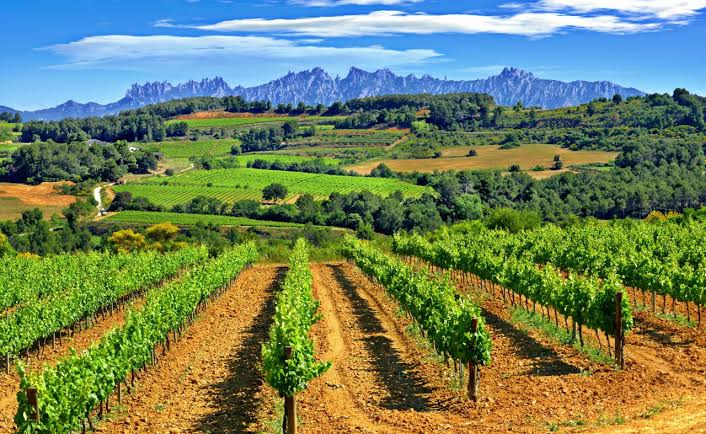
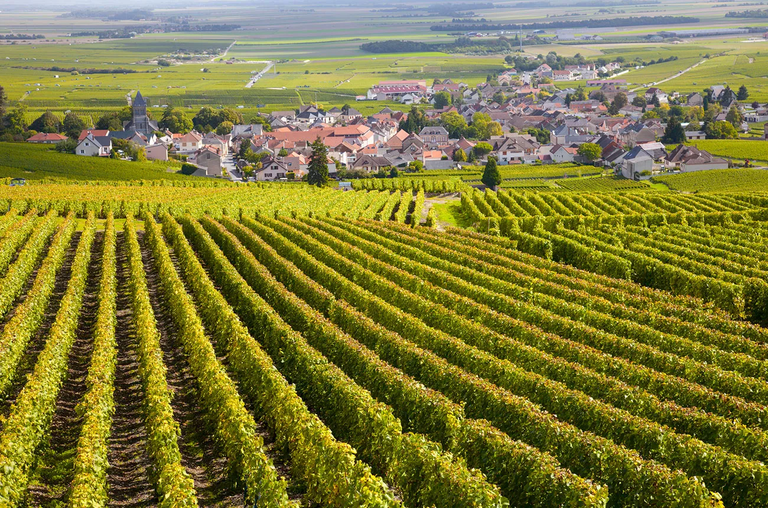
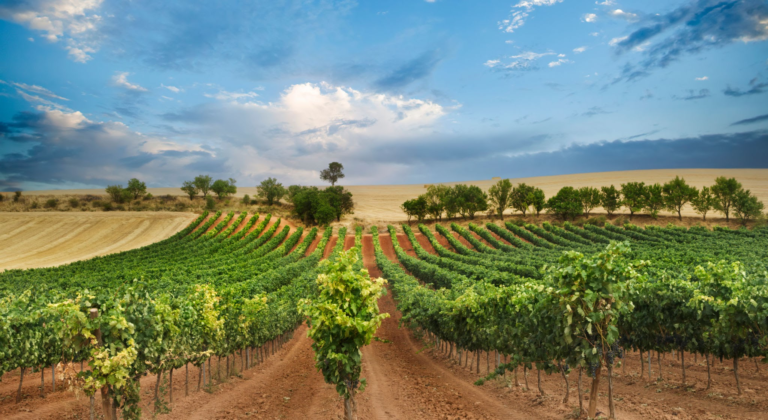
The concrete jungle of the city suburbs vanishes almost instantaneously. The chaotic multi-lane highways narrow down, the air cools off just a fraction, and suddenly, you are driving through a rolling, sun-drenched ocean of green vines. And standing guard over all of this, looming in the background like the jagged teeth of a sleeping dragon, is the sacred mountain of Montserrat.
Welcome to the Denominación de Origen (D.O.) Penedès.
This is the undisputed sparkling wine capital of Spain. It is a region of profound historical significance, intense geological diversity, and right now, some of the most dramatic, tea-spilling political drama the wine world has seen in a century. It’s a place where ancient, pre-Roman winemaking traditions are colliding head-on with modern organic revolutions. Buckle up, roll the windows down, and let’s dive into the messy, beautiful, fiercely independent world of Catalan wine.
The Geography: A Tale of Three Terraces
Before you can understand what’s in your glass, you have to understand the dirt your rental car is parked on. Penedès is not a monolith. It’s a beautifully fractured region that climbs from the warm, salty beaches of the Mediterranean Sea all the way up into the freezing, cloud-scraped foothills of the pre-coastal mountain range.
Because of this dramatic shift in elevation, the region is traditionally divided into three distinct sub-zones, each dictating what grapes can survive and what styles of wine can be made.
| Sub-Zone | Elevation & Climate | Key Grape Varieties | Wine Style Profile |
| Baix Penedès (Lower) | Sea level to 250m. Hot, humid, Mediterranean. | Garnacha, Monastrell, Malvasia de Sitges | Powerful reds, sweet fortified wines, rich and fleshy fruit profiles. |
| Mitjà Penedès (Middle) | 250m to 500m. Broad valleys, moderate climate. | Xarel·lo, Macabeo, Tempranillo | The engine room of sparkling wine. Balanced acidity, excellent ripeness. |
| Alt Penedès (Upper) | 500m to 800m+. Cool nights, continental influence. | Parellada, Chardonnay, Pinot Noir | Extreme freshness, floral aromatics, high-tension acidity for long-aging bubbles. |
When you drive through the Mitjà Penedès, you are in the engine room. This is where you’ll find Sant Sadurní d’Anoia, a town of barely 12,000 people that is responsible for producing an eye-watering percentage of all the sparkling wine in Spain. The streets here quite literally smell like fermenting yeast and crushed grapes in September.
But as you shift gears and wind your way up the narrow, serpentine roads into the Alt Penedès, the temperature drops rapidly. Up here, the soils shift from deep clay to poor, chalky limestone. The vines have to work ten times harder just to survive. And as any winemaker will tell you: struggling vines make profound wines. This is where the grapes retain the razor-sharp acidity required to make sparkling wines that can age in a dark cellar for ten, fifteen, or even twenty years.
The Great Spanish Bubble Drama: Cava vs. Corpinnat
We need to talk about the elephant in the room. If you walk into a prestigious winery in Penedès today and tell the winemaker how much you “love their Cava,” there is a non-zero chance they might politely ask you to leave.
To understand Penedès today, you have to understand the massive schism that tore the region apart over the last decade. It’s a classic tale of quality versus quantity, artisan pride versus corporate greed.
For decades, the word “Cava” was synonymous with Spanish sparkling wine. But unlike Champagne, which is a strictly defined geographical place, the Cava D.O. was bizarrely defined by the method of winemaking (the traditional method of secondary fermentation in the bottle), rather than the origin. You could legally make Cava in Penedès, but you could also make it hundreds of miles away in Rioja, Valencia, or Extremadura.
In the 1990s and 2000s, massive, multinational mega-producers in Sant Sadurní d’Anoia began churning out millions of bottles of industrially farmed, machine-harvested sparkling wine to sell in international supermarkets for $8 a bottle. They bought grapes for pennies, prioritizing massive yields over flavor. The prestige of the Cava name tanked. It became known as the cheap alternative to Prosecco, a wine for throwing into orange juice at brunch rather than sipping thoughtfully from a proper glass.
The Rebellion: Corpinnat is Born
The top-tier, historic, quality-obsessed producers of Penedès had had enough. Their families had been making world-class, vintage-dated, organically farmed sparkling wines that could rival vintage Champagne, but they were legally forced to share the same “Cava” label as the $8 supermarket swill.
So, in 2018, the unthinkable happened. The royalty of Penedès, legendary estates like Gramona, Recaredo, Llopart, and Torelló, officially seceded from the Cava D.O.
They formed their own ultra-strict, hyper-premium association called Corpinnat (meaning “Heart of Penedès”). If you see the Corpinnat logo on a bottle today, it is an ironclad guarantee of extreme quality. The rules are brutal:
- 100% Organic Farming: No exceptions.
- 100% Hand-Harvested: No machines smashing the grapes.
- 100% Vinified on the Estate: You cannot buy base wine in bulk; you must press and ferment everything on your own property.
- Extended Aging: A minimum of 18 months of aging on the lees (compared to Cava’s base minimum of 9 months), with many Corpinnat producers aging their wines for 60 to 120 months.
Clàssic Penedès: The D.O. Strikes Back
Not everyone who was angry with Cava joined Corpinnat. Some producers opted to stay within the local, geographically specific D.O. Penedès, creating a new sparkling category called Clàssic Penedès. Their rules are also incredibly strict: 100% organic, 100% from Penedès, and a minimum of 15 months of aging.
The D.O. Cava, panicking at the loss of their best producers, recently overhauled their own rules to introduce “Cava de Guarda Superior” to try and win back prestige, mandating organic farming for their higher tiers.
But the damage is done, and the landscape is forever changed. As a consumer, this drama is the best thing that could have possibly happened to you. The splintering of the region has forced everyone to raise their game. Penedès is currently producing the greatest, most terroir-expressive sparkling wines in its history. You just need to know what to look for on the label.
The Holy Trinity: Anatomy of the Catalan Blend
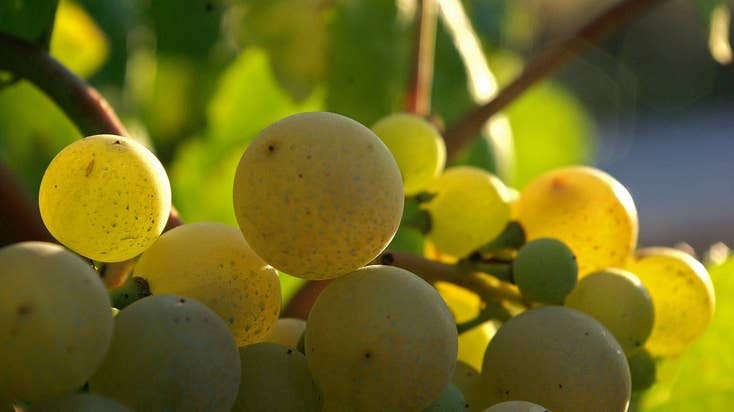
While Champagne relies on Pinot Noir, Chardonnay, and Pinot Meunier, the traditional sparkling wines of Penedès are built on a fiercely local, indigenous trinity of white grapes. Understanding these three grapes is the key to decoding the flavor profile of the region.
Xarel·lo: The Heavyweight Champion
Let’s get one thing straight: Xarel·lo (pronounced shah-RELL-lo) is one of the greatest white wine grapes on planet Earth, and it is criminally under-appreciated. If the Penedès blend were a rock band, Xarel·lo would be the lead singer, the lead guitarist, and the songwriter.
It is a thick-skinned, deeply colored, highly structured grape. Scientifically, Xarel·lo contains some of the highest levels of resveratrol (a natural antioxidant) found in any white grape variety. This antioxidant power acts as a natural preservative. While other white grapes oxidize, turn brown, and lose their fruit flavors after a few years in the bottle, Xarel·lo acts like a shield. It allows the top sparkling wines of Penedès to age for a decade or more, developing mind-bending, savory notes of roasted hazelnuts, dried apricot, toasted brioche, and wild fennel, all without losing their spine of electric acidity.
A wine driven by Xarel·lo will always have a distinctive, slightly bitter, earthy finish, often described as bitter almond or green walnut. That bitterness is the hallmark of quality; it cleanses the palate and begs for food.
Macabeo: The Diplomat
Known as Viura in the Rioja region, Macabeo is the peacemaker of the blend. Where Xarel·lo is intensely structured and herbal, Macabeo is soft, fruity, and welcoming. It brings massive, plush aromas of green apple, Bartlett pear, and white blossoms to the party. It ferments cleanly and provides the broad, fleshy mid-palate that makes a young sparkling wine so enjoyable to drink. However, it lacks the acidic backbone to age forever, which is why it leans so heavily on its partners.
Parellada: The High-Altitude Diva
If Macabeo is the flesh and Xarel·lo is the skeleton, Parellada is the perfume. This grape is highly sensitive to heat and will turn into a flabby, useless mess if grown down by the beach. But plant Parellada up in the Alt Penedès, shivering at 700 meters above sea level, and it produces wines of astonishing delicacy. It provides the high-toned floral notes, jasmine, citrus blossom, and crisp lemon zest, that give the final blend its elegance and lift.
The Red Rebellion: Sumoll and Garnacha
While white grapes dominate, do not ignore the red revolution happening in the background. Garnacha (Grenache) and Monastrell are heavily used for producing deeply colored, spicy Rosé sparkling wines.
But the real darling of the wine geeks right now is Sumoll. A few decades ago, this native red grape was almost entirely ripped out because it is notoriously difficult to farm and highly prone to disease. It produces wines that are pale in color but fiercely acidic and tannic; think of it as Catalonia’s wildly rustic answer to Nebbiolo or Pinot Noir. Today, young, natural winemakers are recovering abandoned Sumoll vineyards, crafting bright, crunchy, cranberry-driven still reds and incredibly tense, herbal sparkling rosés.
The Science of the Sparkle: Autolysis and Ancestral Magic
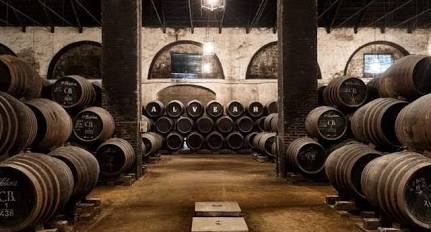
When you visit these wineries, you will inevitably end up walking through dark, damp, subterranean cellars that stretch for miles beneath the limestone. This is where the actual magic happens. The best wines in Penedès are made using the Traditional Method (the exact same process used in Champagne).
The process is a miracle of patience. First, the winemaker ferments the grapes into a highly acidic, still base wine. This wine is bottled, and a precise mixture of sugar and yeast (the liqueur de tirage) is added before the bottle is sealed with a crown cap (like a beer bottle).
The yeast eats the sugar, producing alcohol and carbon dioxide. Because the bottle is sealed, the CO2 has nowhere to escape, so it dissolves into the wine, creating the bubbles.
The Magic of Autolysis
But the bubbles are only half the story. Once the yeast has eaten all the sugar, it dies. These dead yeast cells (the lees) fall to the bottom of the bottle. In cheap, mass-produced sparkling wine, the wine is quickly filtered off these dead cells and rushed to the supermarket.
In premium Corpinnat and Clàssic Penedès, the wine is left in the cellar to rest on these dead yeast cells for years. Over time, the yeast cells begin to break down in a process called autolysis. This chemical breakdown releases amino acids and proteins into the wine, fundamentally altering its texture and flavor. Autolysis is what transforms a simple, fruity wine into a complex, savory masterpiece, giving it that creamy, mouth-coating texture and those intoxicating aromas of freshly baked bread, pastry crust, and toasted nuts.
The Pet-Nat Craze
If you drive through the region today, you’ll also notice a massive boom in “Ancestral Method” wines, affectionately known globally as Pet-Nats (Pétillant Naturel). Instead of a complex secondary fermentation, the winemaker simply takes wine that is still in the middle of its first fermentation and bottles it. The native yeasts finish fermenting the original grape sugars inside the sealed bottle, trapping a gentle, frothy fizz.
These wines are usually left undisgorged (meaning the dead yeast is left in the bottle, making the wine cloudy). They are wild, raw, incredibly fruity, and delightfully unpredictable. They are the punk rock response to the classical symphony of the Traditional Method, and they are perfect for drinking out of a tumbler on a sunny terrace.
The Still Wine Renaissance
It is a massive mistake to view Penedès solely through the lens of bubbles. Over the last ten years, a quiet revolution has been taking place in the still wine sector. Winemakers have realized that if Xarel·lo has the structure to age for twenty years in a sparkling blend, it can make a world-class still white wine.
Today, producers are treating old-vine Xarel·lo with the same reverence that Burgundians treat Chardonnay. They are fermenting it in large French oak foudres, porous terracotta amphorae, and chestnut barrels (the traditional wood of the region). They are utilizing aggressive batonnage (stirring the dead yeast cells) to build immense mid-palate weight.
The result? Still Xarel·lo wines that are massive, textural, and oily, yet driven by a laser-like core of salinity and acid. If you usually drink premium Chablis or white Hermitage, you need to be hunting down the single-vineyard still Xarel·los of Penedès.
The Roadtrip: Where to Stop, Sip, and Stare
You have your rental car. You know the geography. You understand the politics. Now, where do you actually point the GPS?
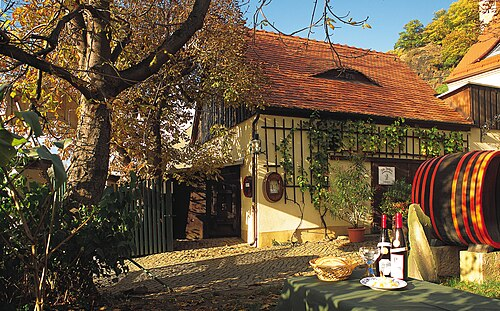
The beauty of Penedès is accessibility. Unlike Bordeaux, where the châteaux are hidden behind massive wrought-iron gates, Penedès is deeply welcoming. However, the premium estates require advanced booking; you cannot just roll up to a Corpinnat producer unannounced.
1. Gramona: The Biodynamic Royalty
If there is a crown jewel of Corpinnat, it is Gramona. Located in the heart of Sant Sadurní, their commitment to aging is unparalleled. Their flagship wine, the III Lustros, is aged for a staggering 70+ months before release, and it is aged under a natural cork stopper rather than a metal crown cap, a highly labor-intensive, traditional practice that allows micro-oxygenation and builds extreme complexity. A tour here takes you through their biodynamic farm, complete with the horses they use to plow the vineyards and the sheep that control the cover crops. It is a masterclass in holistic farming.
2. Recaredo: The Purists of Brut Nature
Recaredo does not compromise. Period. They are a Corpinnat founding member, completely biodynamic, and they only produce Brut Nature vintage wines. “Brut Nature” means zero dosage—absolutely no sugar is added to the wine after disgorgement. If a wine is flawed, sugar can hide it. With zero dosage, the wine is completely naked. Recaredo’s wines are bone-dry, intensely mineral, fiercely acidic, and demand your full attention. Every single bottle is disgorged by hand by a master cellarman, popping the cap to freeze out the yeast plug without losing the bubbles. (If you can’t make the trip, you can occasionally find their brilliant entry-level Terrers bottling on platforms like Decantalo; grab it immediately if you see it).
3. Albet i Noya: The Organic Pioneers
Located in the Ordal mountains of the Mitjà Penedès, Albet i Noya are legends. Long before “organic” was a trendy marketing buzzword, they eliminated all synthetic chemicals from their estate in 1978. Today, they are standard-bearers for the Clàssic Penedès designation. Beyond their excellent sparkling wines, they are fascinating to visit because of their experimental vineyards. They have spent decades researching and recovering lost, pre-phylloxera grape varieties that have gone extinct elsewhere in Catalonia.
4. Familia Torres: The Climate Change Warriors
You cannot talk about Penedès without talking about Torres. They are a massive, globally recognized powerhouse (you’ve probably seen their Sangre de Toro in your local shop). However, their headquarters in Pacs del Penedès is an absolute must-visit. Why? Because they are pouring millions of euros into fighting climate change. They are fundamentally altering how vineyards are farmed to survive extreme droughts, and they are cultivating “ancestral” varieties like Forcada and Moneu that naturally resist extreme heat waves. Their high-end, single-vineyard wines, like the Mas La Plana Cabernet Sauvignon, prove that scale does not have to mean a drop in quality.
Catalan Gastronomy: The Ultimate Pairing Guide
You cannot separate the wine of Penedès from the food of Catalonia. They co-evolved. The reason Xarel·lo-based sparkling wines are so fiercely acidic and structurally robust is that they have to stand up to one of the richest, most heavily seasoned, and aggressively delicious regional cuisines in Europe.
The Chaos of the Calçotada
If you time your road trip between January and April, you must participate in a Calçotada. A calçot is a type of sweet, mild green onion native to the region. During a Calçotada, thousands of these onions are thrown directly onto roaring fires made from dried vineyard prunings. They are charred completely black on the outside, steaming the sweet, tender onion inside.
You are handed a bib (you will need it), and you peel the charred outer layer away with your bare hands, dragging the steaming onion through a massive bowl of Romesco sauce, a thick, rich emulsion of roasted almonds, hazelnuts, garlic, olive oil, and dried ñora peppers. You throw your head back and lower the dripping onion into your mouth.
It is messy, primitive, and glorious. And the only thing that can cut through the intense, smoky, nutty fat of the Romesco sauce is an ice-cold, bone-dry Corpinnat. The bubbles scrub the palate clean, while the earthy, bitter-almond finish of the Xarel·lo locks in perfectly with the nuts in the sauce.
Pa amb Tomàquet Done Right
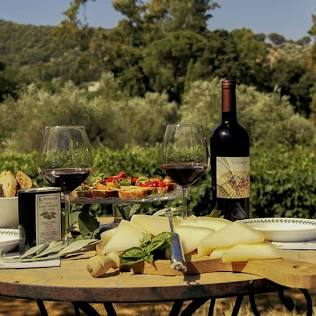
Forget the pre-made tomato pastes you find in tourist traps. Proper Pa amb Tomàquet (bread with tomato) is an interactive sport. You are served thick slices of toasted rustic bread (pa de pagès), a raw clove of garlic, a deeply ripe hanging tomato (tomàquet de penjar), olive oil, and coarse salt. You rub the raw garlic vigorously into the abrasive toast, slice the tomato in half, and physically grind the tomato flesh into the bread until only the skin is left in your hand. Drown it in local, spicy Arbequina olive oil and salt. Pair this with a platter of Jamón Ibérico and a young, floral Macabeo-heavy Clàssic Penedès. Heaven.
The Meat and the Sea (Mar i Muntanya)
Catalan cuisine famously mixes seafood and heavy meats in a concept called Mar i Muntanya (Sea and Mountain). You might order a dish of tender cuttlefish stewed with pork meatballs, or a Fideuà (similar to paella, but made with short, toasted noodles) cooked in intense seafood broth and served with a heavy dollop of garlic allioli.
This is where the structure of Penedès wines shines. A delicate Pinot Grigio would be utterly destroyed by garlic allioli. But a deeply autolytic, lees-aged sparkling wine has the broad-shouldered weight and aggressive carbonation to slice right through the fat and garlic, refreshing your mouth for the next bite.
Practical Logistics: Surviving the Penedès Road Trip
Let’s talk logistics, because a good road trip requires a little bit of strategy.
- The Rental Car Reality: As mentioned, bypass the city center rentals. Pick up your car at El Prat Airport. The drive to Sant Sadurní d’Anoia takes about 45 minutes via the AP-7 highway. Warning: The AP-7 can get brutally congested with freight trucks heading to France. Keep your wits about you. Once you exit the highway and get onto the BP-2121 or BV-2429 local roads, the traffic disappears, and the scenic driving begins.
- Booking Wineries: This is not Napa Valley. You cannot just wander into a tasting room and expect a flight of wines. Almost all quality producers in Penedès require reservations for tours and tastings, often booked weeks in advance. Many estates are working farms, and the person pouring your wine might also be the person driving the tractor that afternoon.
- The Siesta is Real: Do not plan a tasting for 2:30 PM. The region still heavily respects the afternoon lunch and rest period. Plan a morning tasting at 10:30 AM, a massive, two-hour lunch at 1:30 PM in a local masia (traditional farmhouse restaurant), and perhaps a late afternoon visit at 4:30 PM.
- Shipping Wine Home: If you fall in love with a bottle at a cellar door, ask if they have distribution in your home country. Carrying six bottles in your luggage is a nightmare. Many of the top Corpinnat and Clàssic Penedès producers have their wines imported by specialized merchants. You can often find the more robust, oak-aged still wines via importers like Colaris, while Wijnbeurs frequently carries excellent, value-driven D.O. Penedès whites. Use the cellar door to taste the ultra-rare, limited-production cuvées that never leave Catalonia.
The Takeaway: A Region Reborn
Penedès is a region that looked over the edge of the industrial abyss, realized it was about to lose its soul, and actively chose to fight back. The Cava schism was painful, but it was the necessary spark to ignite a revolution of quality.
Today, as you drive your dusty rental car through the limestone ridges of the Alt Penedès, with the smell of wild rosemary and fermenting grape juice pouring through the windows, you are witnessing a golden age. The winemakers here are proving that Spain can produce sparkling wines that rival the greatest names in France, and still whites that demand serious space in your cellar.
They are doing it with indigenous grapes, organic farming, and a stubborn, distinctly Catalan refusal to compromise. So skip the Ramblas. The real magic is waiting for you in the hills.
One Comment
Comments are closed.