Hessische Bergstraße: Germany’s Best-Kept Wine Secret
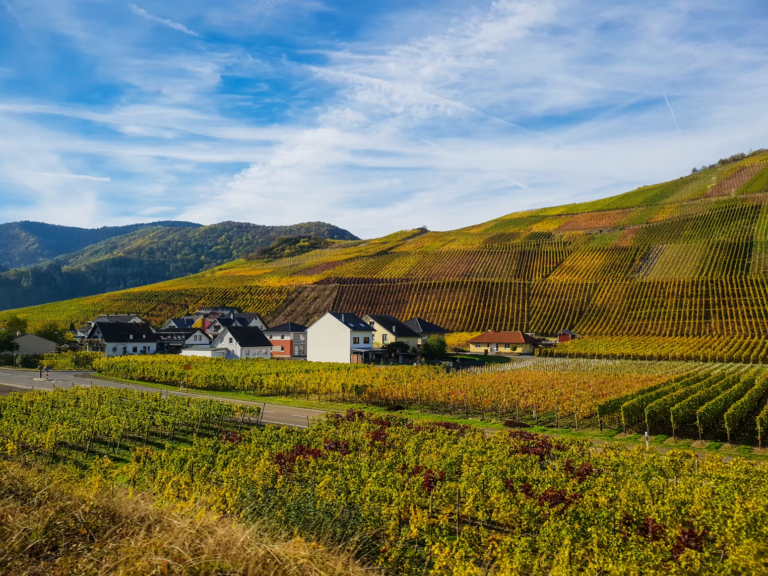
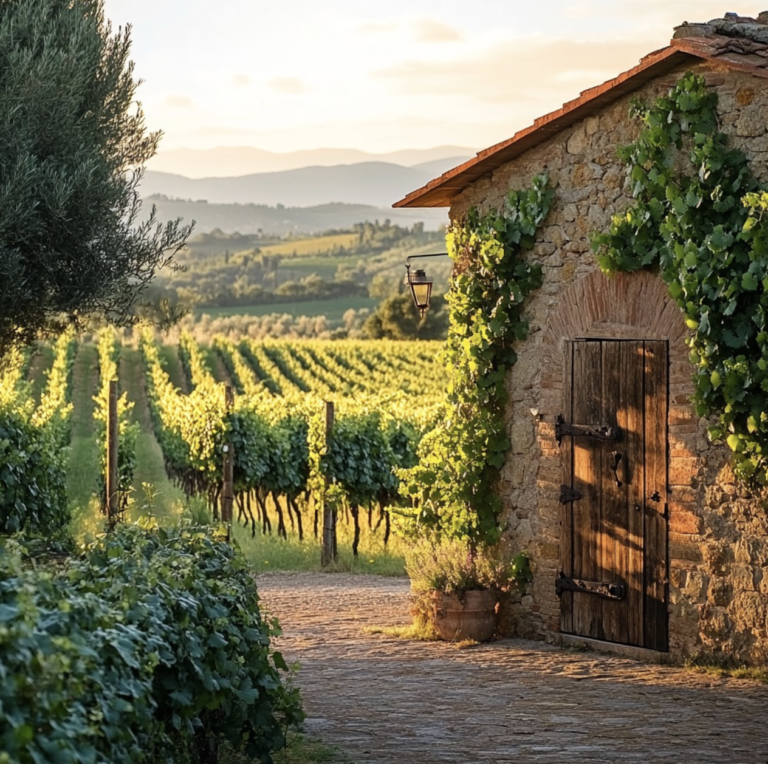
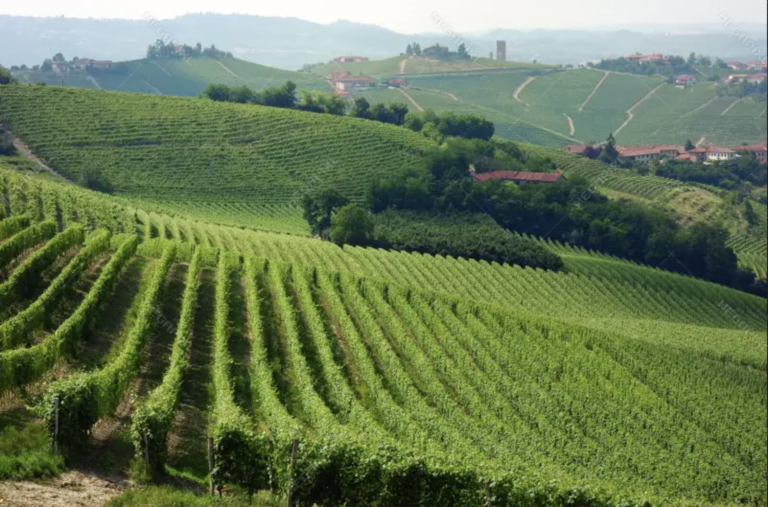
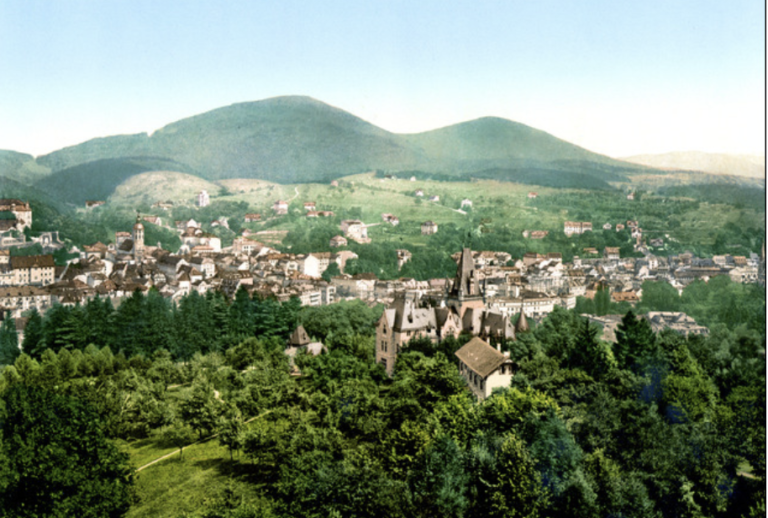
There is a saying, attributed to the Austrian Emperor Joseph II, that captures this corner of Germany better than any wine guide could. Passing through the region in 1764, he reportedly remarked: “This is where Germany begins to become Italy.” Whether or not the quote is apocryphal, the sentiment holds. The Hessische Bergstraße runs along the western slopes of the Odenwald forest between Darmstadt and Heidelberg, and in early spring the landscape bursts into almond blossom before almost anywhere else in Germany. The climate is mild, the growing season long, and the Riesling produced here has a character quite distinct from its neighbours in the Rheingau or the Mosel.
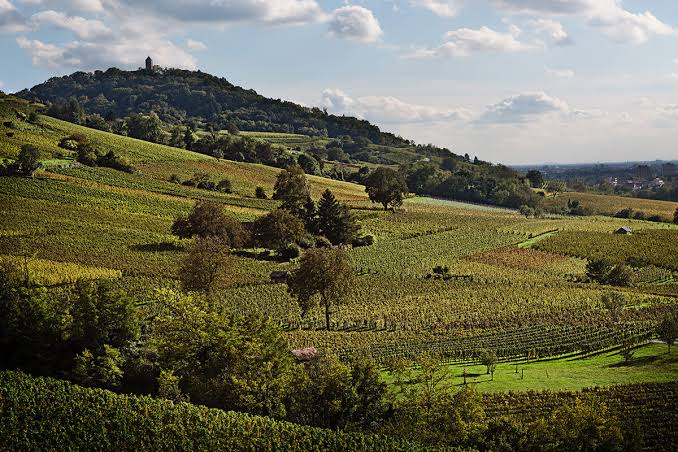
What makes this region genuinely interesting from a wine perspective is also what keeps it so underexplored: it is, by a considerable margin, Germany’s smallest quality wine region. With roughly 440 to 467 hectares of vineyards (the exact figure fluctuates slightly depending on the source and vintage year), it accounts for less than 0.5 percent of Germany’s total wine output. Most of what is produced never leaves the country. In fact, most of it barely leaves the region itself. The cities of Frankfurt, Mannheim, Darmstadt and Heidelberg are all within an hour’s drive, and locals consume the lion’s share of every vintage. For anyone willing to make the trip, this creates a rare opportunity: to drink wines in the places they were made, before they disappear.
Geography and Climate: The Making of a Micro-Region
The Hessische Bergstraße sits between the Rhine River to the west and the Odenwald mountain chain to the east, running roughly 50 kilometres from Zwingenberg in the north to Weinheim in the south. Administratively, it is part of the German state of Hesse and is divided into two districts: Starkenburg, which accounts for around 90 percent of the vineyard area and takes in the main wine towns of Zwingenberg, Bensheim and Heppenheim; and Umstadt, a smaller northern enclave around the town of Groß-Umstadt, sometimes called the “Odenwald wine island” due to its geographic separation from the main body of the region.
The Odenwald provides the defining climatic advantage. It acts as a windbreak against cold northerly and easterly air masses, creating a sheltered pocket with some of the most favourable growing conditions in Germany. The region averages around 1,600 hours of sunshine per year, and the combination of an early spring and a late autumn means the growing season is significantly longer than in many northern German regions. Average rainfall is moderate, roughly the equivalent of 700 millimetres per year. It is no accident that almond trees, which need warmth to fruit well, grow here in productive numbers alongside the vines.
Soils vary considerably along the length of the Bergstraße, which is part of what gives the wines their range. In the north, around Heppenheim and Bensheim, the dominant soils are weathered granite and porphyry-quartz. Moving south, you find more sandstone and loess-loam compositions. This geological diversity translates into wines that shift from taut and mineral in the steeper, rockier Heppenheim sites to rounder and more textured as the soils change. Around 25 percent of the cultivated vineyard area is classified as steep slope, requiring hand work throughout the growing season.
Grape Varieties and Wine Styles
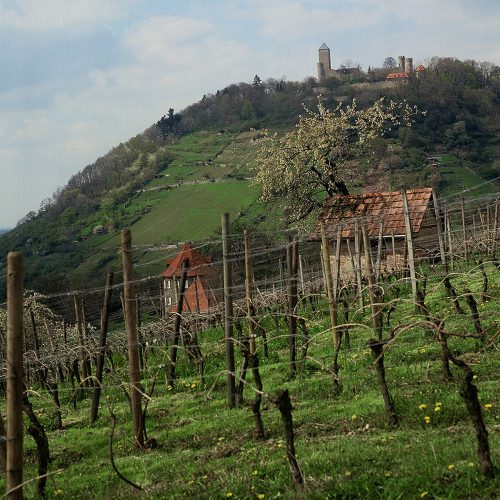
Riesling dominates the plantings, accounting for around 40 percent of the region’s vineyard area as of recent figures. This alone tells you something important: where Riesling is the primary grape in any German region, quality aspirations tend to be high. The Bergstraße version is typically drier and leaner than Rheingau Riesling, with a mineral tension derived from the granite soils around Heppenheim that is quite distinctive. The wines can age well, particularly those from the top single vineyards.
Pinot Gris (Grauburgunder) is the second most significant white variety, at around 12 percent of plantings, followed by Pinot Blanc (Weißburgunder) at roughly five percent. These Burgundy varieties thrive in the warmth of the Bergstraße, producing wines with generous texture and good aromatic definition. Among reds, Pinot Noir (Spätburgunder) is the key variety at around 11 percent, benefiting from the warm, south-facing slopes and producing wines with genuine fruitiness and fine tannin structure.
One curiosity worth noting is the presence of Red Riesling (Roter Riesling), a rare colour mutation of the classic Riesling vine that was nearly extinct before a small number of producers began working with it. Weingut Amthor in Heppenheim is one of the few estates in Germany to cultivate it commercially, and the resulting wines, aromatic, spiced, and texturally different from conventional Riesling, are worth seeking out if you visit.
The dominant style across the region is dry, with the cooperative Bergsträsser Winzer setting much of the commercial tone. The region also has a history of producing Eiswein, with the Domäne Bergstraße claiming credit for the first ice wine harvested on the Hessische Bergstraße. Sekt is another strong suit, most notably from Griesel & Compagnie in Bensheim, which has established itself as one of Germany’s most serious sparkling wine producers.
The Two Main Districts: Starkenburg and Umstadt
Starkenburg
Starkenburg is the heart of the Hessische Bergstraße in every practical sense. The district stretches from Zwingenberg southward through Bensheim to Heppenheim, and it contains the region’s most prestigious vineyard sites. The collective vineyard sites within Starkenburg include the famous Heppenheimer Centgericht, which carries VDP Grosse Lage status and is the benchmark for what Riesling from this region can do at its finest.
Heppenheim itself is the regional hub, and its old town, with the Starkenburg castle perched on the hill above, the half-timbered market square below, and the Viniversum (the cooperative’s impressive modern wine experience centre) just off the main road, makes it a genuinely enjoyable base. The “Wein und Stein” (Wine and Stone) adventure trail, a 6.9-kilometre signposted walking route linking vineyard sites, geological features and historical markers, starts here and is one of the better vineyard walks in all of western Germany.
Bensheim, slightly to the north, is the other key town and home to both the Domäne Bergstraße and Griesel & Compagnie. The Blütenweg, a 10-kilometre circular hiking route through almond and fruit tree orchards and vineyards, is spectacular in mid-March to early April when the blossom is at its peak. If you can time a visit for this window, it is one of the more memorable wine-country walks in Germany.
Umstadt
The Bereich Umstadt is smaller and geographically separate, sitting further north and east near the town of Groß-Umstadt. The soils here differ from Starkenburg, trending toward loess and sandstone, and the wines reflect this with a different weight and aromatic profile. Riesling from Umstadt tends to be softer and less mineralic than its Starkenburg counterparts. For visitors with time, the area around Groß-Umstadt is quieter and less touristic, which has its own appeal. The local cooperative Vinum Autmundis handles much of the production.
Wineries Worth Visiting
Domäne Bergstraße (Hessische Staatsweingüter)
The state wine domain is the largest single vineyard owner in the region, farming around 35 to 38 hectares across some of the most important sites in Starkenburg. It is also the only VDP-member estate on the Hessische Bergstraße, which signals its place at the top of the regional quality pyramid.
The estate traces its origins to the Cistercian monks of Kloster Eberbach, who farmed land along the Bergstraße from the medieval period. Today the domain operates as part of the broader Hessische Staatsweingüter group, though its wines are distinct from the more famous Rheingau operations and reflect Bergstraße terroir clearly.
The vinothek in the former Rebmuttergarten building sits directly between Bensheim and Heppenheim, right at the edge of the Heppenheimer Centgericht vineyard. It is open year-round, with extended hours from April through October including a wine terrace serving Rieslings and snacks in warm weather. The Riesling from the Centgericht is the benchmark bottle to taste here, and the single-vineyard Steinberg wines, from a VDP Grosse Lage site, show genuine complexity and aging potential.
Practical information: Address: Darmstädter Straße 133, 64646 Heppenheim. Opening hours: April to October daily 11:00 to 19:00; November to March Monday to Friday 11:00 to 18:00, Saturday, Sunday and public holidays 11:00 to 16:00. Website: kloster-eberbach.de
Griesel & Compagnie
Founded only in 2013 by the Streit family within the historic walls of the former Hessian State Winery in Bensheim, Griesel & Compagnie has become something genuinely unusual: a sparkling wine house with serious ambitions and the wines to match. Cellar master Niko Brandner left a banking career to study viticulture, worked under Volker Raumland (one of Germany’s Sekt legends), and promptly won 92 points from a specialist competition with his first vintage. The house has collected major awards since, including recognition as Germany’s Sekterzeuger des Jahres (Sparkling Wine Producer of the Year) from Wine Advocate critic Stephan Reinhardt.
Griesel makes Sekt exclusively, which means every decision in the vineyard is oriented toward building base wines suited to secondary fermentation: early harvesting for acidity retention, hand-picking, spontaneous fermentation, and extended lees contact. The wines are produced without added sulphur during élevage, aged in small wooden barrels and stainless steel, and aged on the lees far beyond legal minimums. The granite soils around Bensheim-Auerbach, particularly the Auerbacher Fürstenlager site, give the wines a precision and mineral tension that distinguishes them from most German Sekt.
The portfolio runs across three lines. The Tradition range uses classic bottle-fermentation with a minimum of 20 months on the lees. The Prestige line is the expressive centre of the house. The Exquisit range is for extended-aged prestige cuvées, with the Grande Cuvée Exquisit sitting at the top. The zero-dosage Pinot Blanc and Pinot Noir single-vineyard expressions from Fürstenlager are the wines that most clearly demonstrate what granite terroir can add to sparkling wine beyond anything geography.
Sister estate Weingut Schloss Schönberg, also owned by the Streit family and run by winemakers Rabea Trautmann and Julien Meissner, produces still wines from the same Bergstraße parcels. Both estates share vineyard area, and tastings covering both portfolios are available at the Griesel Vinothek.
Practical information: Address: Grieselstraße 34, 64625 Bensheim. Phone: +49 6251 8696890. Website: griesel-sekt.de. Tasting events are held periodically throughout the year; check the website for dates. Group visits are possible by arrangement.
Weingut H. Freiberger
Founded in 1926 by Heinrich and Elisabeth Freiberger, this family estate is now in its third generation under Heinz senior and Heinz junior Freiberger. It is one of the more established independent producers in Heppenheim, farming 15.5 to 16.5 hectares across several of the town’s key vineyard sites: Heppenheimer Steinkopf, Heppenheimer Stemmler, Heppenheimer Maiberg, Heppenheimer Eckweg, and Guldenzoll, among others.
Riesling accounts for roughly half the estate’s plantings, with Grauburgunder (Pinot Gris) making up much of the remainder. Freiberger practices natural viticulture throughout, and the wines are aged in a combination of traditional large wooden barrels and stainless steel, an approach that preserves freshness while adding textural depth. The Steinkopf site, one of the premium individual vineyard locations in Heppenheim, produces particularly focused Riesling with good mineral length.
The estate’s Vinothek in Heppenheim is open throughout the week and on Saturday mornings, and guided tastings for small groups can be arranged by appointment. Once a year in early May, Freiberger holds its “Jazz meets Wine” open house event, which offers the chance to taste a large part of the current range alongside live music and food, a genuinely enjoyable way to explore the portfolio.
Practical information: Address: Hermannstraße 16, 64646 Heppenheim. Opening hours: Monday, Tuesday, Thursday, Friday 9:30 to 12:30 and 14:30 to 18:00; Wednesday 9:30 to 12:30; Saturday 9:30 to 13:00. Phone: +49 6252 2457. Website: weingut-freiberger.de
Bergsträßer Winzer eG (Viniversum)
No visit to the Hessische Bergstraße is complete without stopping at the Viniversum in Heppenheim, the showcase facility of the Bergsträßer Winzer cooperative. The cooperative was founded in 1904 and today represents around 322 winegrower families farming roughly 224 hectares of vineyard across both the Hessische and Badische Bergstraße.
The Viniversum opened in 2014 as a modern wine experience centre with 480 square metres of retail space, a lounge, and two event rooms. Its assortment cWhere to Buy Hessische Bergstraße Wines
overs close to 100 different wines from member growers, with Riesling making up nearly half the range. The cooperative was the first in Germany to be certified by the German Agricultural Society’s guidelines back in 2002, and its consistent quality across a broad range of styles makes it a reliable starting point for anyone unfamiliar with the region.
The cooperative’s Erlebnispfad “Wein und Stein” trail starts nearby and covers 6.9 kilometres through vineyards including the Steinkopf, Centgericht, Stemmler and Paulus sites, with 77 interpretive stations covering wine, geology, history, and ecology. There is also a Vinimat, an automated wine vending machine, operating round the clock outside the building for those who need a bottle at irregular hours (you will need a valid ID to use it).
Practical information: Address: Darmstädter Straße 56, 64646 Heppenheim. Opening hours: Monday to Friday 9:00 to 18:00; Saturday 9:00 to 18:00; Sunday 10:00 to 16:00. Website: bergstraesserwinzer.de
Where to Buy Hessische Bergstraße Wines
This is where honesty matters. Given the region’s small production and the fact that most wine is consumed locally within Germany, Hessische Bergstraße wines are genuinely hard to find through the major international online retailers. A search across Wijnbeurs, Colaris, and Decantalo will typically return nothing specific to this appellation, and that is not a sign of poor quality; it is simply a reflection of how scarce these wines are beyond German borders.
The most reliable route to acquiring them is direct from the estates or the cooperative:
Domäne Bergstraße / Hessische Staatsweingüter: Wines can be ordered directly through the Kloster Eberbach online shop at kloster-eberbach.de. The range includes vineyard-designated Rieslings, Pinot Gris, Chardonnay, and Pinot Noir, with the Heppenheimer Centgericht wines being the ones most worth prioritising. Shipping to the Netherlands and Belgium is available.
Griesel & Compagnie: The estate sells directly via its online shop at griesel-sekt.de. Shipping is currently restricted to Germany, so this is best treated as a purchase to make on-site during a visit. The Blanc de Noirs Brut from the Tradition line is the most accessible entry point; the Exquisit Grande Cuvée is the reference for what the house can achieve at the top level.
Bergsträßer Winzer eG: The cooperative operates a direct online shop at bergstraesserweinshop.de with shipping within Germany. For buyers based outside Germany, the most practical option is to visit the Viniversum during a trip and carry a selection home, or to ask a wine-importing contact within Germany to assist.
A note for readers in the Netherlands and Belgium: Given that Wijnbeurs, Colaris, and Decantalo currently carry no listings for this region at the time of writing, the direct-from-producer route described above is genuinely the most viable option. It is also the most rewarding: ordering from a small estate means the money goes directly to the growers, and it gives you an excuse to make contact before a visit. If you find the region’s wines listed by any of the major Dutch or Belgian retailers in future, it is worth treating that as a fortunate discovery rather than something to rely on.
When to Visit
The Hessische Bergstraße has a clear seasonal rhythm, and there are times of year when a visit is particularly well-timed.
Mid-March to early April is the almond blossom season, when the region earns its reputation as the “Frühlungsgarten Deutschlands” (Germany’s Spring Garden). The Blütenweg hiking route near Bensheim is at its most atmospheric during this window, and the combination of flowering trees, early vineyard activity, and uncrowded roads makes this arguably the best time of year to visit.
May and June bring the Bergsträßer Weinfrühling, the regional spring wine festival season, when many estates hold open-house events. Weingut Freiberger’s “Jazz meets Wine” event takes place in early May and is one of the better examples.
October is harvest time, with the Erlebnispfad “Wein und Stein” walk held annually on 3 October and the Bergsträsser Winzer cooperative hosting harvest-season events. The landscape is at its most colourful, and the new vintage discussion is at its liveliest among local producers.
Winter is quieter but not without its charms. The vinotheks at the Domäne Bergstraße and the Viniversum remain open, and Heppenheim’s old town is genuinely attractive in the colder months without the summer crowds.
Getting There and Around
The Hessische Bergstraße is exceptionally accessible by rail. The A5 motorway runs parallel to the region’s length, and the B3 federal road (which becomes part of the classic Bergstraße scenic route) passes directly through every major wine town. Bensheim and Heppenheim both have direct train connections from Frankfurt (roughly 45 to 50 minutes) and from Heidelberg (around 25 minutes). Mannheim and Darmstadt are similarly close.
Travelling along the region by bicycle is very manageable. The Bergstraße cycle path connects the wine towns with minimal elevation change at the base of the slopes, and several of the vineyard sites are accessible on foot from the town centres. For those who want to cover more ground, a car is useful for reaching the steeper vineyard areas and for carrying purchases home.
A Region Worth Going Out of Your Way For
The Hessische Bergstraße will not appear on most people’s Germany wine itinerary, and that is precisely what makes it worth including. The wines are genuine: they reflect specific soils, specific microclimates, and the work of producers who operate in relative obscurity compared to their counterparts in the Mosel or Rheingau. Domäne Bergstraße offers some of the most elegantly structured Riesling in Hesse. Griesel & Compagnie makes Sekt that can stand alongside serious Champagne without embarrassment. Weingut Freiberger represents the quiet, consistent work of a family that has been farming these slopes for a century.
For wine travellers who have already explored the major German regions and are looking for something less obvious, this narrow strip of vines between the Rhine and the Odenwald offers exactly that combination of quality, character, and difficulty of finding the wines without actually going there that turns a trip into a genuine discovery.