Ahr Wine Region, Germany: Where Pinot Noir Reaches Its Northern Limit
Why the Ahr Deserves More Attention Than It Gets
Ask a seasoned wine enthusiast to name Germany’s best red wine region, and the Ahr wine region will almost certainly come up. Ask a casual wine drinker, and you will likely draw a blank. That gap between recognition and reputation is precisely what makes the Ahr so rewarding to explore. It is a region operating largely below the radar of the broader wine-drinking public while quietly producing some of the most compelling Pinot Noir in Europe.
The Ahr Valley sits roughly 60 kilometres south of Cologne, carved into the volcanic basalt and Devonian slate foothills of the Eifel highlands. The river that gives the region its name runs just 89 kilometres in total, making the Ahr one of Germany’s smallest wine-producing areas, with barely 560 hectares under vine. To put that into perspective: the Mosel has more than 8,000 hectares. Yet the Ahr punches far beyond its size when it comes to quality, particularly for red wine.
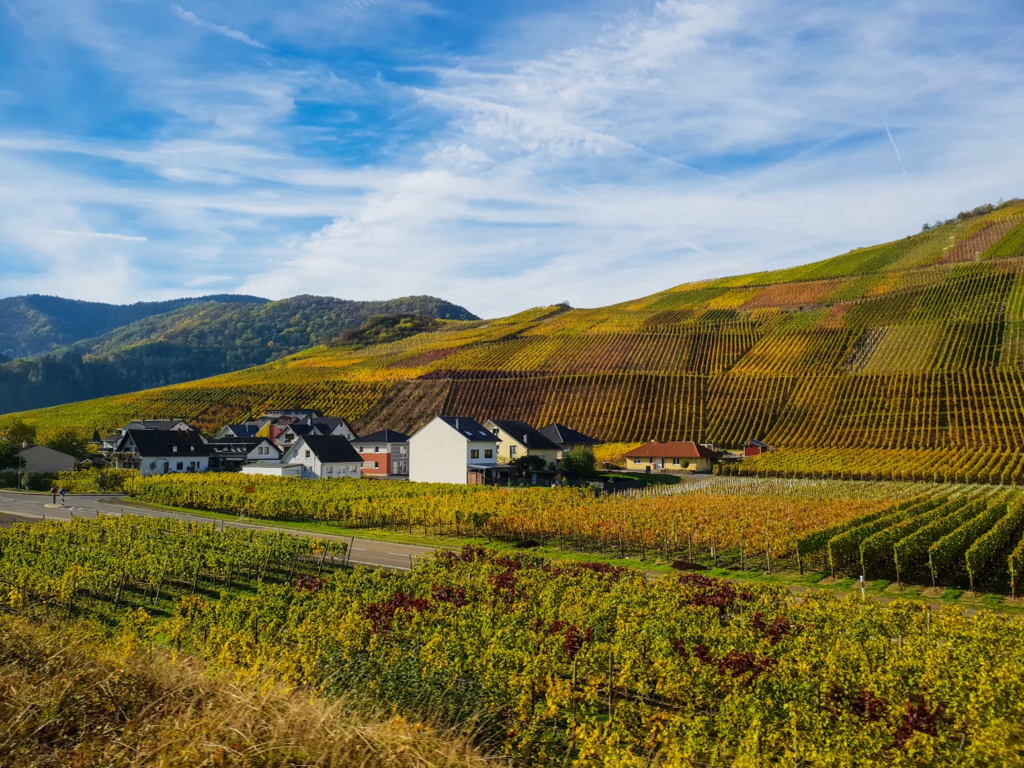
More than 80 percent of those 560 hectares are planted with red varieties. Spätburgunder (Pinot Noir) dominates, followed by the fascinating and increasingly fashionable Frühburgunder, a mutation of Spätburgunder that ripens a week or two earlier and tends to produce darker, more velvety wines with a slightly different aromatic signature. This red wine focus is unusual in Germany’s cool northern climate and speaks to one of the Ahr’s most defining characteristics: its dramatic, south-facing, steep-sloped terroir.
The Ahr’s Terrain: Steep Slopes, Slate, and a Microclimate That Changes Everything
Geology and Geography
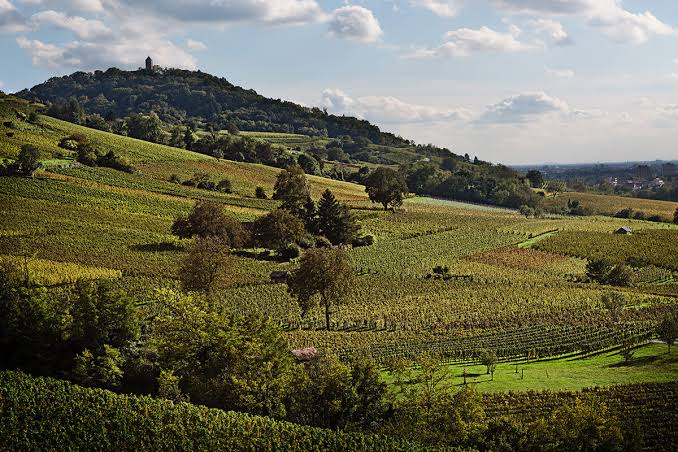
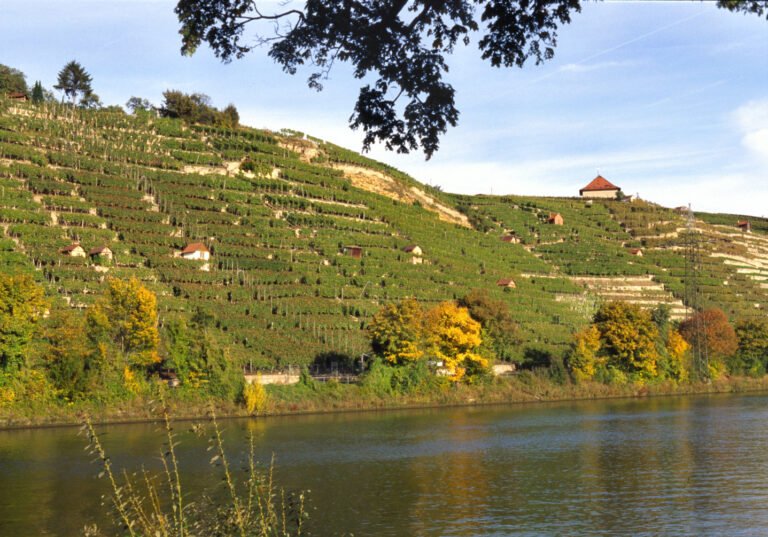
The Ahr Valley is narrow and deeply incised, with vineyards clinging to slopes that regularly exceed 60 degrees of gradient. This is not farming for the faint-hearted. Every tractor manoeuvre on these terraces is a feat of engineering; hand harvesting is not a marketing point here but a physical necessity on many parcels.
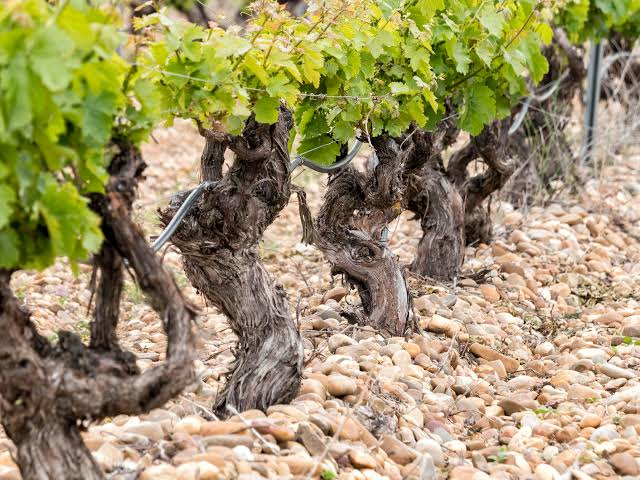
The soils are the real story. Devonian grey and blue slate, known locally as Blauschiefer, dominates the steeper terraces. Slate absorbs heat during the day and releases it slowly overnight, creating a thermal buffer that extends the ripening season well into October. In a region where cold autumn rains can arrive without warning, those extra weeks matter enormously. In the flatter areas near the river, volcanic basalt and loess soils give wines a different, broader textural quality, but it is the steep slate parcels that produce the Ahr’s most mineral, age-worthy expressions.
The Microclimate
Despite sitting at approximately 50.5 degrees north latitude, one of the most northerly wine-growing latitudes in the world, the Ahr enjoys a protective microclimate. The valley walls shield vineyards from cold northerly winds; the south-facing slopes trap and amplify sunlight. The surrounding Eifel highlands act as a natural rain barrier. These factors combine to produce average temperatures that are meaningfully warmer than the surrounding landscape would suggest, allowing Pinot Noir to ripen to phenolic maturity rather than relying on chaptalization.
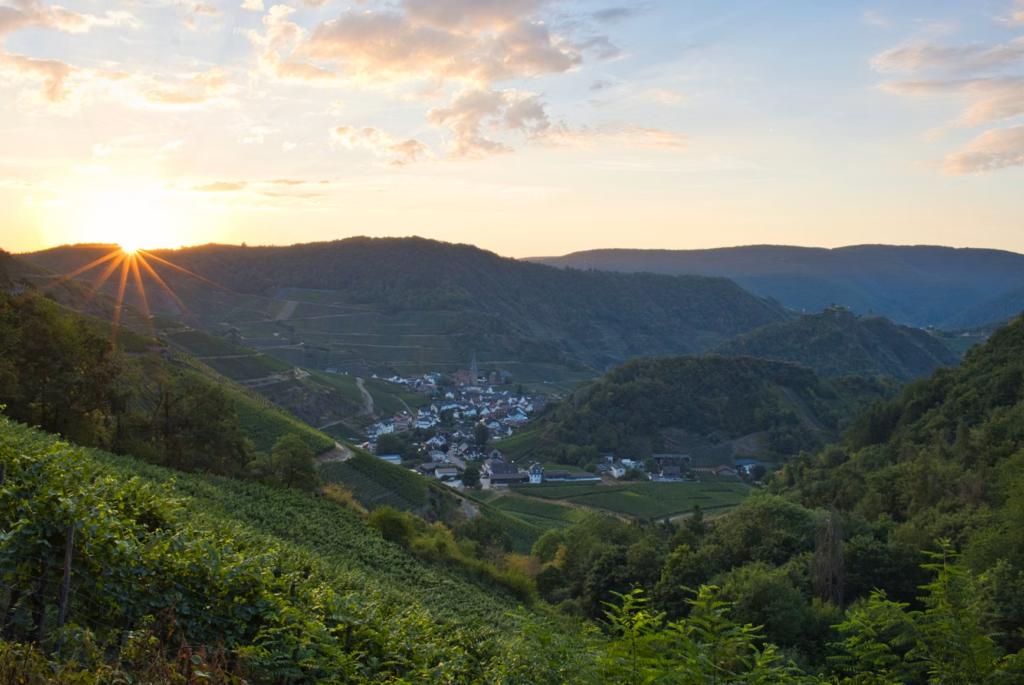
Decanter has characterised the Ahr as a “powerhouse of quality Pinot Noir” precisely because of this combination: a marginal climate that pushes the vine to concentrate flavours, working in concert with a geology that anchors those flavours in minerality and structure.
VDP Grosse Lagen: The Top Sites
The VDP (Verband Deutscher Prädikatsweingüter), Germany’s association of top wine estates, has classified a number of Ahr vineyard sites as Grosse Lagen, the rough equivalent of Burgundy’s Grand Cru. These include Landskrone and Burggarten in Heimersheim, Kräuterberg and Gärkammer in Walporzheim, Pfarrwingert and Hardtberg in Dernau, Herrenberg in Rech, Mönchberg in Mayschoß, and Eck in Altenahr. Wines from these sites that meet strict quality criteria may carry the designation Grosses Gewächs (GG), the pinnacle of dry German wine classification.
A Region Rebuilt: The Flood of 2021 and Its Aftermath
No honest account of the Ahr today can ignore the catastrophe of 14–15 July 2021. Storm Bernd delivered unprecedented rainfall to the Ahr catchment in a matter of hours, sending a wall of water through the narrow valley that devastated villages, destroyed vineyards, and took more than 136 lives in Rhineland-Palatinate alone. For the winegrowers, it was not merely property damage: barrels, bottled wine, equipment, and infrastructure built across generations disappeared in hours.
Meyer-Näkel, the region’s most internationally celebrated estate, saw its winery and tasting room in Dernau submerged in thick brown flood mud. Virtually all equipment was ruined, and most barrels were lost. What made the story remarkable was the response of the broader German wine community: winemakers from across the country descended on the Ahr to help with the clean-up, from Hans and Valentin Rebholz to Klaus Peter Keller and Cornelius Dönnhoff. It was a spontaneous act of solidarity that said something important about the esteem in which the Ahr’s growers are held by their peers.
The reconstruction has been a slow, complicated process. Federal and state authorities set up a national solidarity fund of up to 30 billion euros for flood-affected areas, and the application deadline for reconstruction aid was extended to June 2026. As recently as 2024, large sections of the valley remained active construction zones, with roads, bridges, and railway lines still being rebuilt. Yet the vines recovered more quickly than the infrastructure. Only around 20 hectares of the Ahr’s flatland vineyards were permanently destroyed by the flooding. The steep slate terraces, perched well above the river, largely survived intact. From the 2022 vintage onwards, the Ahr’s growers were back at work, producing wines from sites that carry both the geological memory of millennia and the very human memory of what was lost and rebuilt.
Visiting the Ahr today is, in a quiet way, an act of solidarity. The region needs visitors, needs wine buyers, and needs the world to know it is still very much alive.
Varieties Worth Knowing
Spätburgunder (Pinot Noir)
This is the Ahr’s signature grape and its international calling card. At its best, Ahr Spätburgunder bears comparison with good village-level Burgundy, though it has a character all its own: a saline mineral quality derived from the slate soils, a freshness born of the cool nights, and a fine-boned tannic structure that rewards patience in the cellar. The best examples are not blockbusters; they reward attention.
Frühburgunder
Often overlooked outside Germany, Frühburgunder is a natural mutation of Spätburgunder with smaller berries, thicker skins, and earlier ripening. The wines tend toward darker colour, denser tannins, and aromas of darker fruit with an almost violet, herbal quality. If you visit the Ahr and have the chance to taste a Frühburgunder from a top grower, take it.
Riesling and Blanc de Noir
While red wine dominates, a small amount of Riesling is grown in the Ahr, primarily around Neuenahr and Dernau. These tend to be crystalline, high-acid wines quite distinct from Mosel or Rheingau Rieslings, with a more mineral and herb-edged quality. Several estates, Meyer-Näkel included, also produce Blanc de Noir from Spätburgunder, pressing the red grapes immediately to avoid skin contact and producing a fresh, copper-tinted white that shows real complexity.
Four Wineries Worth a Detour
Weingut Meyer-Näkel, Dernau
If one estate has defined the modern identity of Ahr wine internationally, it is Meyer-Näkel. The story begins in 1982, when Werner Näkel, a secondary school maths and sports teacher, took over the family estate in Dernau and began what amounted to a quiet revolution. He extended maceration times, drew on the best Burgundy clones, moved ageing into French barriques, and focused relentlessly on the slate terraces that he believed were capable of producing extraordinary Spätburgunder.
The strategy worked with remarkable speed. By 1989 Meyer-Näkel had won the German Red Wine Award, the first of seven such victories over the following decades. The New York Times called it the top German winery for red wine. The international press took notice. Today, the estate is run by Werner’s daughters Meike and Dörte Näkel, the fifth generation, who completed wine studies at prestigious universities and gained experience in Burgundy, New Zealand, and Oregon before returning to Dernau. Their approach is to respect the work done by their father while pushing further in the direction of terroir transparency and vineyard-specific expression.
The Meyer-Näkel range is anchored by the Blauschiefer Spätburgunder, named for the blue slate of the Dernau terraces, and rises through a series of Grosse Lage wines: Pfarrwingert, Sonnenberg, Silberberg, Kräuterberg, and Hardtberg. Each has a distinct personality determined by aspect, altitude, and soil composition.
The estate is certified by FAIR’N GREEN, Germany’s rigorous sustainable viticulture programme, which covers environmental protection and social responsibility and requires annual independent auditing.
Visiting: The winery is in Dernau, easily reachable by train on the Ahrtalbahn from Remagen (itself accessible from Cologne or Bonn). Appointments are recommended. The tasting room was rebuilt after the 2021 flood and is open again to visitors.
Website: meyer-naekel.de
Jean Stodden, Rech
Jean Stodden operates from the village of Rech, midway along the valley, and holds a five-star rating from Falstaff, the same top tier as Meyer-Näkel. The Stodden family has been growing vines in the Ahr since 1578, making it one of the oldest documented wine estates in the region. Today, the estate is in the hands of Alexander Stodden, a fourth-generation family member who has earned the informal title “the Pinot Noir obsessive of the Ahr” from Gault Millau.
Stodden’s reputation is built on the Herrenberg and Mönchberg Grosse Gewächs wines, both characterised by exceptional concentration, structural complexity, and considerable ageing potential. The style leans toward intensity and precision rather than early-drinking charm, and the wines benefit from a minimum of several years in the cellar. Reviewers consistently note the clarity and mineral energy that runs through the range.
The tasting room at Stodden is described by visitors as welcoming and informative, with comprehensive tastings that often run through almost the entire GG range. If you are serious about Ahr Pinot Noir, this is a mandatory stop. Visiting the Ahr for the annual autumn new-release presentation, at which Stodden’s new GG wines are introduced, is an experience that knowledgeable wine travellers return to year after year.
Visiting: Located in Rech on the Rotweinwanderweg (Red Wine Hiking Trail). Appointments available through the winery website.
Website: stodden.de
Weingut Deutzerhof, Mayschoß
Deutzerhof occupies arguably the most scenically dramatic position of any estate in the valley, set into the hillside above the village of Mayschoß. The winery is a VDP member and produces Spätburgunder and Frühburgunder across a range from estate-level wines to site-specific Grosse Gewächs expressions. Hans-Jörg Lüchau, the estate’s operations manager and winemaker, is also the regional manager of the VDP’s Ahr office and one of the most articulate voices in the region when it comes to explaining the terroir differences between the valley’s various sites.
Deutzerhof’s wines were described by Decanter in 2024 as among the Ahr’s standout addresses for Frühburgunder, a variety that Lüchau has championed as a genuine expression of the valley’s unique viticulture. The estate was heavily affected by the 2021 flood and has been in active reconstruction since.
Visitors frequently mention the sheer visual drama of the location. Arriving at Deutzerhof from the valley floor, with the vine terraces rising steeply on either side, gives a visceral sense of what the Ahr’s growers are working with every day.
Website: deutzerhof.de
Weingut J.J. Adeneuer, Bad Neuenahr-Ahrweiler
J.J. Adeneuer has been making wine in Bad Neuenahr-Ahrweiler since the 17th century. The estate’s wine-growing history spans more than 300 years, though it was brothers Marc and Frank Adeneuer who, after taking over from their aunt in 1984, elevated the estate to its current status. Marc Adeneuer, by all accounts an engaging and generous host, is famous for walking visitors through the full range in the winery’s tasting room, with something of the enthusiasm of someone who never tires of talking about what they grow.
The crown jewel of Adeneuer is the Gärkammer Grosses Gewächs, from a 0.68-hectare monopole that has been in family ownership since 1714. A grand cru vineyard held by one family for over three centuries: it is exactly the kind of detail that makes the Ahr such a rewarding place to spend a few days. The Gärkammer produces Spätburgunder of considerable depth and concentration, built for ageing, with the characteristic saline, mineral tension of the Walporzheim sites.
Marc Adeneuer recounts visiting a French cooperage that also supplies Robert Mondavi. Mondavi ordered 25,000 barrels. Adeneuer ordered eight. The Ahr operates on a completely different scale from the world’s famous wine regions, and that intimacy is part of its charm.
Visiting: The winery is slightly unexpectedly located in an industrial district on the outskirts of Bad Neuenahr, but the tasting room itself is a calm, well-equipped space. Appointments available.
Website: adeneuer.de
The Rotweinwanderweg: Wine Tourism on Foot
One of the most satisfying ways to experience the Ahr is on foot. The Rotweinwanderweg (Red Wine Hiking Trail) is a 35-kilometre marked trail that runs along the valley from Altenahr to Marienthal, largely through the vineyards themselves. The trail has been one of Germany’s most popular hiking routes for decades, and while sections were damaged in the 2021 flood, much of it has been restored.
Walking the trail gives a perspective on the Ahr that no tasting room visit can replicate: the steepness of the slopes becomes physically immediate, the variation between aspects and soil types becomes visible from above, and the geography that produces such concentrated wines becomes self-evident. The first section, from Altenahr to Ahrweiler, is widely considered the most scenic and takes roughly three to four hours at a comfortable pace.
The villages along the route, including Rech, Dernau, Walporzheim, and Marienthal, all have wine bars and restaurant terraces where it is entirely acceptable to stop, pour a glass of the local Spätburgunder, and take in the view. In fact, that is rather the point.
Meyer-Näkel Wines to Buy Online
For those who cannot visit the Ahr in person, or who want to bring the experience home, Meyer-Näkel’s wines are among the most important purchases you can make in German wine. The good news is that several of the best bottles are available through Dutch and European online retailers, particularly Colaris, which has an excellent selection and carries Meyer-Näkel as one of its flagship producers.
Meyer-Näkel Spätburgunder ‘S’ Selektion
The ‘S’ stands for Selektion, and this is a blend drawn from several of Meyer-Näkel’s Grosse Lage parcels. It offers the complexity and intensity of the estate’s top-tier thinking without requiring a mortgage. Colaris describes aromas of red and black cherries, pepper, and liquorice, with a slightly smoky nose. On the palate, the wine is powerful but restrained, with refined tannins and well-integrated acidity. Robert Parker’s Wine Advocate awarded the 2019 vintage 92 points.
This is the wine to start with if you are new to Meyer-Näkel: it gives you the character of the estate across multiple terroirs in a single, well-priced bottle.
Available at: Colaris (colaris.nl)
Meyer-Näkel Spätburgunder Blauschiefer VDP.Ortswein, Dernau
Named for the blue slate of the Dernau terraces, the Blauschiefer is Meyer-Näkel’s own recommended entry point to the estate’s range. According to Dörte Näkel, if someone asks her which wine best introduces a visitor to what Meyer-Näkel is trying to achieve, this is the one she reaches for. At VDP.Ortswein level, it is the first rung above estate wine and already shows the mineral, saline quality that defines Ahr Spätburgunder at its best.
Robert Parker’s Wine Advocate gave the 2019 vintage 91 points, describing it as “a gorgeous medium-weight red wine from great Dernau terroirs” with crystalline slate aromas, silky texture, and a stimulatingly salty, precise finish.
Available at: Colaris (colaris.nl)
Meyer-Näkel Spätburgunder GG Pfarrwingert
The Pfarrwingert is classified as a Grosse Lage and the wines produced there carry the Grosses Gewächs designation, the equivalent of grand cru. Colaris describes this as the most “pronounced” of Meyer-Näkel’s GG Spätburgunders, with subtle fruit and herbal notes underpinning the mineralité of the slate. It is a wine that rewards cellaring: Colaris recommends opening a bottle every two years to track its evolution. The 2019 vintage received 92 points from Parker’s Wine Advocate.
Available at: Colaris (colaris.nl)
Meyer-Näkel Spätburgunder GG Silberberg
The Silberberg vineyard sits above Ahrweiler and produces one of the estate’s more structured, age-oriented expressions. The 2019 Silberberg GG received 93 points from Robert Parker’s Wine Advocate, which described it as “full-bodied, intense, yet also pure, refined and refreshing,” with notes of After Eight (mint and dark chocolate) on the nose and a tightly structured palate with real ageing potential. This is a wine to keep in the cellar for at least five years.
Available at: Colaris (colaris.nl)
Meyer-Näkel Spätburgunder Illusion Blanc de Noir 2022
For something different, the Illusion Blanc de Noir demonstrates that Meyer-Näkel’s thinking extends beyond red wine. Made from Spätburgunder grapes pressed immediately to avoid skin contact, it produces a clear, pale wine with aromas of citrus, green apple, white peach, and a delicate mineral undertone. It is a food-friendly, elegant style that pairs well with fish, salads, goat’s cheese, or simply as an aperitif.
Available at: Colaris (colaris.nl)
When to Visit the Ahr
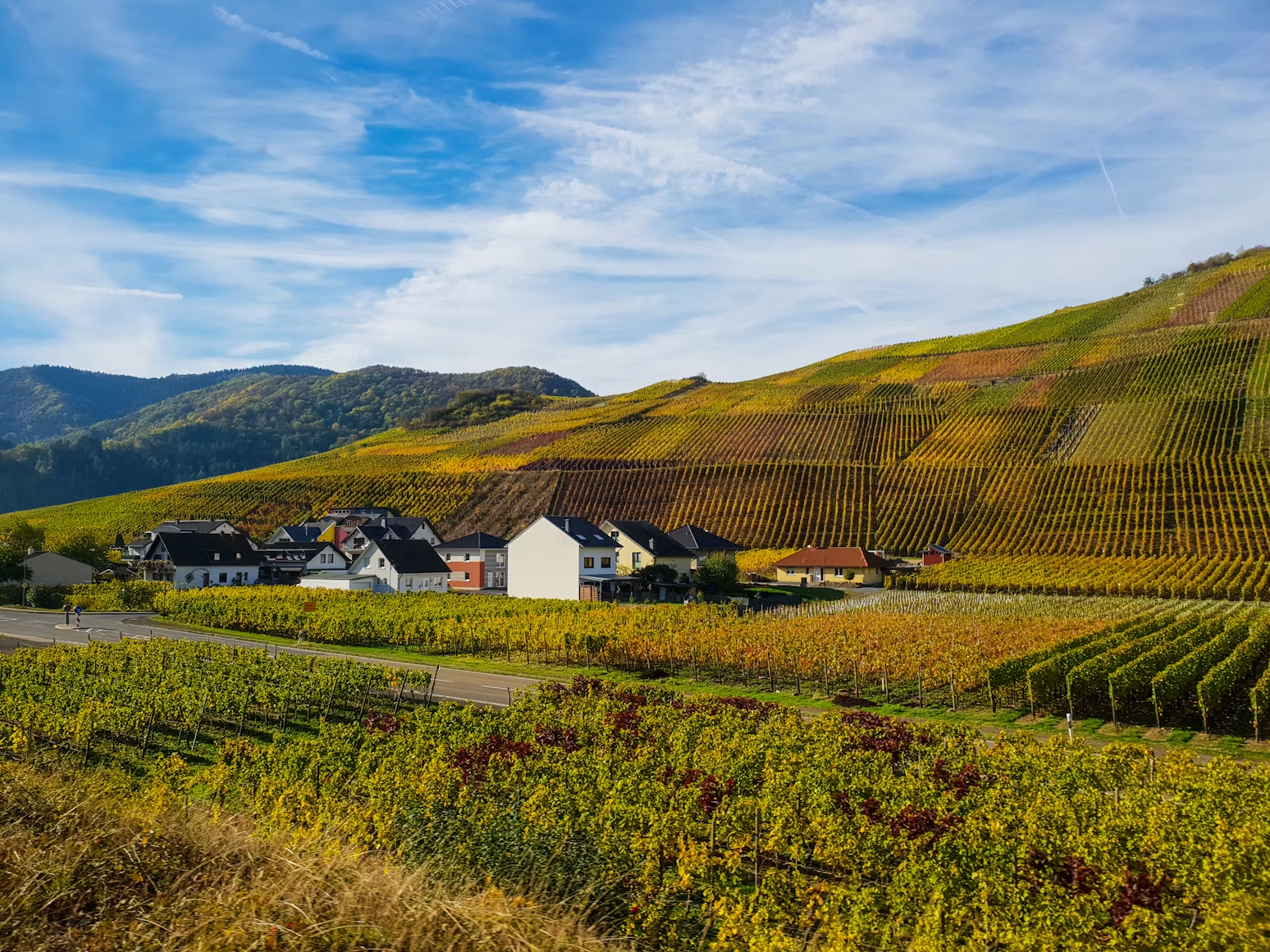
The Ahr is a year-round destination, but the sweet spot for wine enthusiasts is from late September through October, when harvest is underway, and the valley’s colours are at their most spectacular. The combination of vine leaves turning gold and red against the slate walls and the activity of the harvest season makes this one of the most visually rewarding wine travel experiences in Germany.
Spring, particularly April and May, is another excellent time: the valley is green, the weather is mild, and there are fewer visitors than in summer. Several estates hold spring tasting events and open cellar days during this period.
Getting to the Ahr from Cologne or Bonn takes roughly an hour by train to Remagen, with connections to the Ahrtalbahn local line running through the valley. Note that the Ahrtalbahn line, severely damaged in the 2021 flood, was under reconstruction as of mid-2026. Check current services before travelling.
Practical Notes for the Discerning Wine Traveller
Appointments: Unlike Burgundy, where cold-calling at a domaine can be a lottery, the Ahr has a long tradition of welcoming visitors warmly. That said, calling ahead is always advisable, particularly for smaller estates or if you want a structured tasting rather than a quick purchase from the shop.
Language: Most of the region’s top producers have English-speaking staff, particularly the younger generation, many of whom trained internationally.
What to eat: The Ahr Valley’s restaurant scene pairs local wine with local cuisine. Wild game, particularly venison and wild boar, is a natural partner for the valley’s Spätburgunder. Several winery-restaurants in Dernau, Walporzheim, and Marienthal offer menus built around local ingredients. Weingut Kloster Marienthal, the former Augustinian monastery that now houses a state wine domain and a restaurant, is worth a lunch stop for the setting alone.
Accommodation: The valley has a range of accommodation, from guesthouses attached to wineries to hotels in Bad Neuenahr-Ahrweiler, the largest town in the region. Several winery estates offer rooms directly.
The Ahr in the Broader Context of German Wine
The Ahr’s quality revolution of the late 1980s, driven by estates like Meyer-Näkel, Jean Stodden, and J.J. Adeneuer, was part of a broader reassessment of German wine that rejected the legacy of sweet, over-cropped production and returned to the principles of site-specific, low-yield viticulture. In the Ahr, that meant working the steep slate terraces that had been neglected in favour of easier, flatter ground, bringing in Burgundy clones and French oak, and having the confidence to age wines in barrel before release.
The result, from the late 1990s onwards, was a series of vintages that challenged assumptions about what northern European Pinot Noir could achieve. The international wine press took notice. James Suckling, Vinous, and Robert Parker’s Wine Advocate all awarded scores in the low-to-mid 90s to the best Ahr GGs, putting them in conversation with village-level Burgundy at a fraction of the price.
That value proposition still holds today, though prices have risen steadily as the region’s reputation has grown. A top GG from Meyer-Näkel or Jean Stodden typically sells for between €30 and €65 per bottle, compared to comparable quality-level Burgundy that might cost three to five times as much. The Blauschiefer entry-level wines, the kind that Dörte Näkel recommends as an introduction, are available for under €35.
A Region Worth More of Your Attention
The Ahr is not a simple wine region to understand quickly. Its wines tend toward restraint, minerality, and structural complexity rather than the immediate, obvious fruit that makes some regions easier to sell. They reward patience, both in the cellar and in the tasting: returning to a bottle after an hour open, or revisiting the same wine across several vintages, reveals layers that a quick pour does not.
But for the wine enthusiast who has worked through the canonical regions and is looking for something that offers genuine discovery, intellectual engagement, and wines that improve with age and thought, the Ahr is one of Germany’s most compelling answers. The combination of extraordinary terroir, a history of quality winemaking that now stretches back nearly four decades, and a human story of rebuilding after catastrophe makes it a region that repays attention on multiple levels.
The vines have come back. The winemakers are back. And the wines, as the recent vintages have demonstrated, are as good as they have ever been.