Where Riesling Found Its Soul: A Wine Lover’s Guide to the Rheingau
The Rhine Bends and Greatness Begins
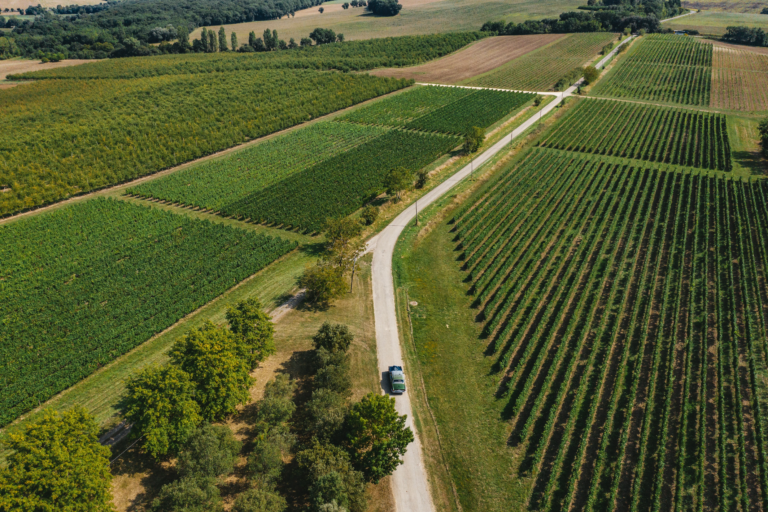
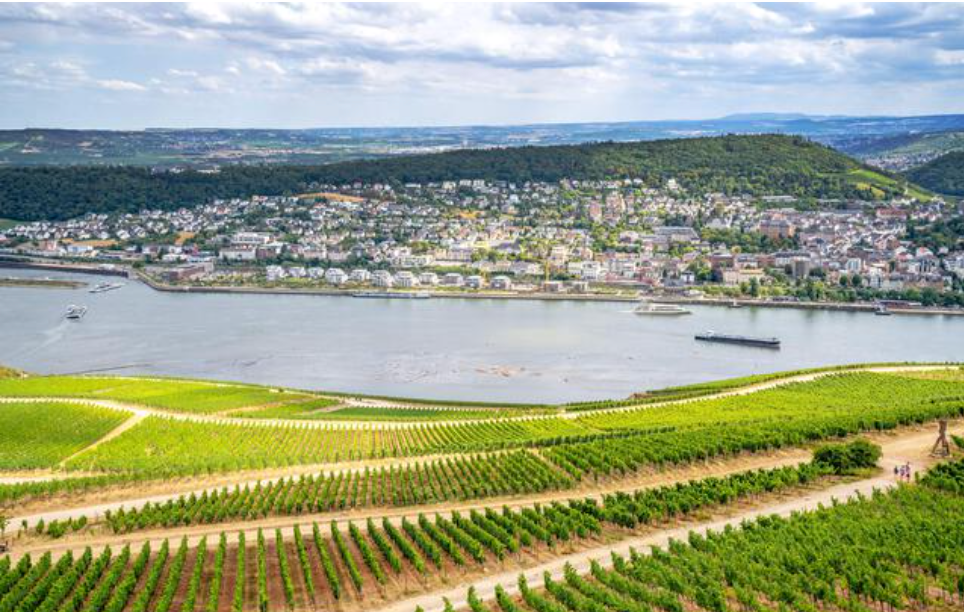
There is a moment when you drive the Riesling Route west from Wiesbaden and the Rhine suddenly opens up beneath you, wide and silver-grey, the slopes dropping sharply to the water’s edge. Vines cling to those terraces in long, disciplined rows. Castles break the treeline. And somewhere in the back of your mind, a penny drops: this is what Riesling was always supposed to look like.
The Rheingau is one of those places that earns its reputation honestly. It covers just over 3,100 hectares of vineyard land, making it one of Germany’s smaller classified regions, yet it has shaped global wine culture in ways that far exceed its size. It is the region where Riesling was first planted as a monoculture rather than a field blend. It is where the concept of Spätlese, late-harvested, progressively riper styles of wine, was discovered in the eighteenth century by happy accident at Schloss Johannisberg. And it is where the VDP classification system later developed many of its ideas about single-vineyard quality and Erste Gewächs (first growth) designations.
For serious wine travellers, the Rheingau is not a detour. It is a destination.
Understanding the Rheingau: Geography and the Rheinknie
To understand why wines from this region taste the way they do, you first need to understand the geography, because nothing about the Rheingau is accidental.
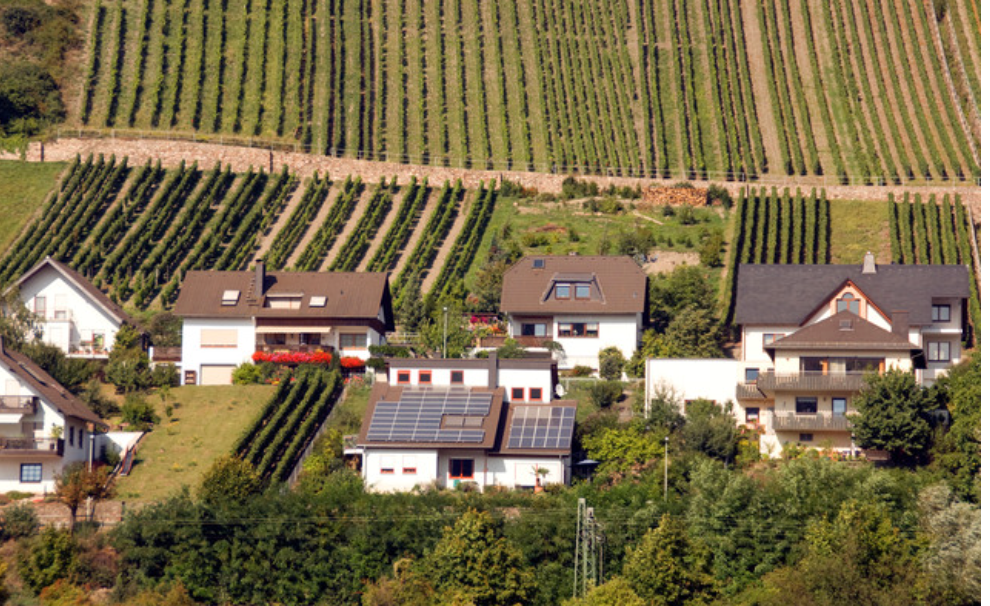
The defining feature is what Germans call the Rheinknie, or “Rhine Knee.” While the river normally flows northward through Germany, it bends almost at a right angle toward the west at Wiesbaden, forced aside by the Taunus mountain range. It then travels roughly 30 kilometres westward before turning north again near Rüdesheim. This lateral stretch is the Rheingau, a single, largely south-facing hillside running along the river’s northern bank.
The consequences for viticulture are enormous. South-facing slopes receive maximum sun exposure throughout the day, allowing the late-ripening Riesling grape to accumulate sugars and complexity while retaining the region’s characteristic acidity. The forested Taunus hills behind the vineyards act as a natural windbreak, blocking cold northerly air. Meanwhile, the Rhine itself at its broadest in this section, moderates temperatures by reflecting sunlight up onto the vines and preventing extreme frost events.
Soils across the Rheingau are usefully varied. Moving from west to east, you encounter the steep quartzite and slate of Rüdesheim’s Berg sites, the loess and clay-rich soils around Oestrich-Winkel and Hattenheim, the deeper loam and sand of Erbach and Eltville, and the distinctive red sandstone of Assmannshausen. Each subzone produces noticeably different expressions of Riesling (and, in the case of Assmannshausen, excellent Spätburgunder/Pinot Noir).
Elevations across the region range from around 80 metres close to the riverbank to over 280 metres in the higher terrace sites, adding another layer of complexity to what is technically a very compact geography. The result is a region where terroir diversity punches well above its apparent scale.
A History Written in Riesling
The Rheingau’s wine history stretches back to Roman occupation, when the first vines were planted in the Rhine valley during the first century AD. After the fall of Rome, the Cistercian monks of Kloster Eberbach became the dominant force in viticulture from the twelfth century onward, systematically improving vineyard practices and spreading Riesling across the region’s best sites. The famous Steinberg vineyard, enclosed by a wall still standing today, was established by the monks in 1135 and remains one of the most historically significant single vineyards in the German-speaking world.
The pivotal moment came in 1775 at Schloss Johannisberg. A messenger carrying permission to begin harvest was delayed by two weeks, during which the grapes developed noble rot (Botrytis cinerea). Rather than dumping the crop, the estate vinified the shrivelled, rot-affected fruit and produced a wine of extraordinary sweetness and concentration, what we now know as Spätlese. The accident gave birth to an entire classification system that eventually became the legal framework of German wine quality law.
The region’s intellectual centre has long been the Geisenheim University (Hochschule Geisenheim), the world-renowned oenological research and teaching institute founded in the nineteenth century. Its work on clone selection, fermentation technology and viticulture practices has influenced winemakers globally, and many of the Rheingau’s most important producers have alumni connections to the institution.
In 1994, the Rheingau was the first German region to introduce an official classification system for top vineyard sites, designating them as Erstes Gewächs (“First Growths”), a precursor to the now-national VDP Grosse Gewächs framework. This commitment to classification reflects the region’s long-standing belief that the vine’s location matters above almost everything else.
The Wines: What to Expect in the Glass
Riesling: The Heartbeat of the Region
Riesling accounts for approximately 76 percent of all plantings in the Rheingau, giving the region the highest proportion of this single variety of any German wine appellation. The style here differs meaningfully from Mosel Riesling, which tends toward lighter body and rapier-thin acidity on steep slate. Rheingau Riesling typically shows more weight, more textural richness, and a broader aromatic range, stone fruit (peach, apricot, nectarine) alongside citrus, beeswax, and that distinctive mineral character that varies from the flinty purity of the Berg sites to the more rounded, loam-influenced character of the central villages.
Dry Rieslings (labelled Trocken or, at the Grosse Gewächs level, often simply presented as single-vineyard wines) are where the region has staked its modern reputation. These are serious, age-worthy wines capable of evolving over fifteen to twenty-plus years in the cellar, developing complexity that few white wines in the world can match. The Erstes Gewächs and Grosse Gewächs designations identify the top dry expressions from classified sites.
The sweeter styles, Kabinett, Spätlese, Auslese, and the rare botrytis-affected Beerenauslese and Trockenbeerenauslese, represent the region’s historical foundation and remain some of the most age-worthy and collector-sought wines Germany produces. They combine apparently elevated sugar levels with an acidity so vivid that they taste simultaneously lush and taut, a balance that can take decades to fully integrate.
Spätburgunder: The Red Wine Worth Knowing
While Riesling dominates, the Rheingau also produces Spätburgunder (Pinot Noir) of genuine quality, particularly in Assmannshausen at the western end of the region. The village’s red sandstone soils and slightly warmer mesoclimate encourage red wines with a silky texture, earthy depth, and the kind of restraint that serious Burgundy enthusiasts will find familiar. The Hessische Staatsweingüter Kloster Eberbach has particularly interesting material here. Georg Breuer also produces small quantities of excellent barrel-aged Spätburgunder from steep Rüdesheim terraces.
Four Estates Worth Building a Trip Around
Schloss Johannisberg: 900 Years of Riesling History
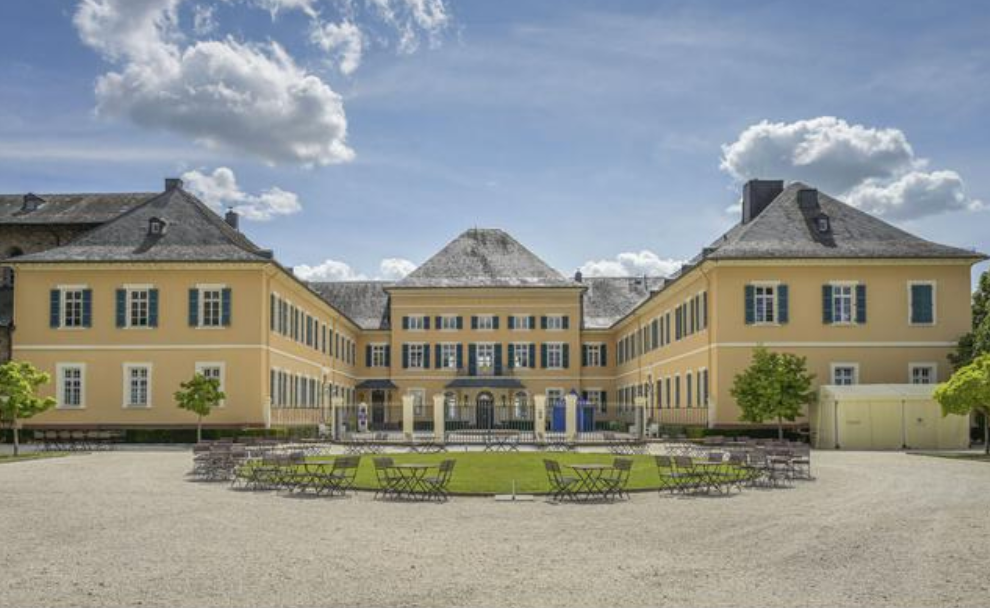
No visit to the Rheingau is complete without at least passing by Schloss Johannisberg, though ideally you will do considerably more than pass by. The castle sits on a prominent hilltop between Rüdesheim and Oestrich-Winkel, its baroque facade and sprawling yellow facade visible from the Rhine below. In 2025, it was ranked number two in the World’s Best Vineyards list, underscoring that its reputation is not merely historical.
The estate has documented wine history reaching back to 817 AD, when the vineyards were first noted by Louis the Pious. The current castle was rebuilt in 1716 on the ruins of a Benedictine monastery. Today, Schloss Johannisberg holds the distinction of being the world’s first estate dedicated exclusively to Riesling, and it occupies a monopole; the entire hillside around it is owned solely by the estate.
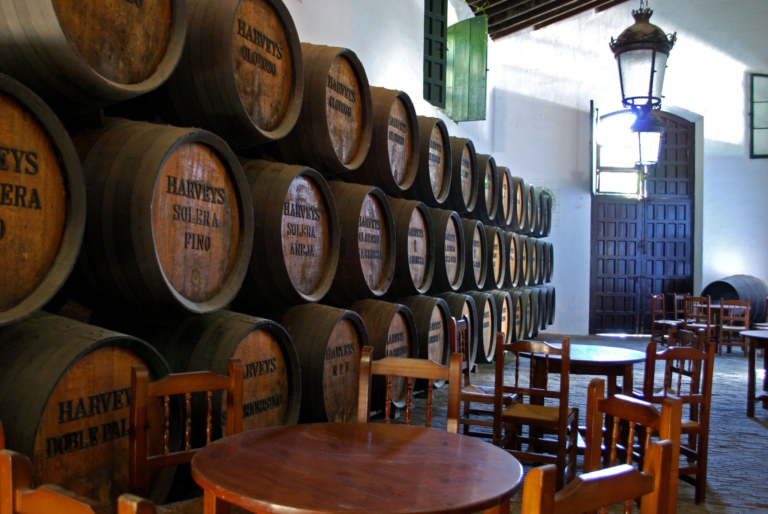
Guided tours take visitors through eighteenth-century palace rooms and into the historic wine cellars, where ancient vaults house more than 25,000 bottles, including rare vintages dating back to 1748. The estate’s Gutsausschank is a lovely spot for tasting with views across the vineyards and river. Wines are classified by wax capsule colour, a tradition unique to the estate, with gold (Goldlack), silver (Silberlack), and the mid-tier Gelblack among the most widely available expressions.
Booking a tasting in advance is advisable, especially from May through October.
Schloss Johannisberg, Geisenheim | schloss-johannisberg.de
Weingut Robert Weil: Precision Riesling in Kiedrich
Robert Weil is the estate many Riesling obsessives consider the benchmark for the Rheingau’s top tier. Founded in 1875 by Dr. Robert Weil, it is now run in its fourth generation by Wilhelm Weil, whose meticulous approach to vineyard management and selective harvesting has maintained the estate at the very top of international rankings.
The estate is based in Kiedrich, a quiet village about five kilometres from Eltville, and centres on two classified sites: the Kiedrich Gräfenberg and the Kiedrich Turmberg. The Gräfenberg is widely regarded as one of the greatest single vineyards in Germany, a steep, south-facing parcel of phyllite and phyllite-slate soils that produces Rieslings of extraordinary tension, longevity, and what Wilhelm Weil calls “bronzewater freshness.” The vineyard slopes can reach a sixty percent gradient, requiring entirely hand-worked viticulture. At harvest, there may be up to seventeen separate passes through the vineyard to collect fruit at different stages of ripeness.
The estate’s range extends from an approachable and well-priced dry Rheingau Riesling entry-level through to the revered Kiedrich Gräfenberg Grosse Gewächs, the kind of wine that wine writers tend to reach for comparisons with Montrachet and Riesling’s equivalent of Burgundy’s most cherished parcels. Their Trockenbeerenauslese bottlings, produced only in suitable years, are among the most sought-after bottles in the German wine world.
Visits and tastings can be arranged by appointment. The estate’s winery building is a pleasant destination in its own right, combining historic architecture with quietly impressive modern cellar technology.
Weingut Robert Weil, Kiedrich | weingut-robert-weil.com
Weingut Georg Breuer: Dry Riesling and the Art of Terroir Expression
Georg Breuer occupies a special place in the Rheingau’s modern narrative. The estate was one of the great advocates for dry Riesling at a time when the region’s reputation was built largely on sweeter styles, and the work of the late Bernhard Breuer in the 1980s and 1990s essentially helped write the manifesto for what top-quality dry Rheingau Riesling could be. Since his death, his daughter Theresa Breuer has continued the estate’s trajectory with equal commitment and without compromising its principles.
The estate owns 34 hectares of vineyards spread across some of Rüdesheim’s finest sites, Berg Schlossberg, Berg Roseneck, Berg Rottland, and the monopole Rauenthal Nonnenberg in the eastern part of the Rheingau. Berg Schlossberg, a steep quartzite-dominant site perched above the entrance to the Rhine Gorge, consistently produces one of the region’s most structured and mineral dry Rieslings. Wines from this parcel are tight and almost severe in youth, requiring patience, but the reward is a wine with genuine depth and ageing potential.
Unusually, Georg Breuer withdrew from the VDP association to remain free of its classification obligations, opting instead to maintain its own quality hierarchy. Grand cru-level wines carry the vineyard name on the label; second-tier sites produce the Terra Montosa blend; the entry-level Charm Riesling is one of the region’s most reliable introductions to the house style.
The estate is based on Rüdesheimer’s main wine street and welcomes tastings in its well-appointed tasting room. Theresa Breuer is also involved in the adjacent Breuer’s Rüdesheimer Schloss hotel and restaurant, where the estate’s wines can be enjoyed alongside excellent regional cuisine.
Weingut Georg Breuer, Rüdesheim | georg-breuer.com
Kloster Eberbach: A Cistercian Abbey and Living Wine Monument
If you make only one stop in the Rheingau for its historical weight, make it Kloster Eberbach. This Cistercian abbey, founded in 1136, is one of the best-preserved medieval monasteries in Europe, and its wine history is inseparable from the Rheingau’s own. The monks who settled here effectively built the region’s vineyard culture from the ground up, managing an estate that at its height constituted the largest wine-producing operation in medieval Europe.
The abbey’s most significant viticultural legacy is the Steinberg vineyard, the first walled single vineyard in Germany, established in 1135 and still in production today under the management of the Hessische Staatsweingüter. Visiting the Steinberg offers a rare chance to walk inside a vineyard that has been continuously farmed for nearly nine centuries. The wall surrounding it is not decorative; it was built to trap heat, protect against wind, and define what was, even in the twelfth century, understood as a privileged site.
Kloster Eberbach also hosts the annual Rheingau Musik Festival each summer, one of Germany’s most prestigious classical music events, which brings performances into the abbey’s medieval basilica. The combination of extraordinary architecture, active winemaking, and a world-class music programme makes Kloster Eberbach genuinely unlike any other wine estate in Europe.
Tours of the abbey, the ancient press house, and the historic cellars are available throughout the year. A tasting room within the abbey offers Hessische Staatsweingüter wines. In 2024, Kloster Eberbach was ranked 82nd in the World’s Best Vineyards list.
Kloster Eberbach, Eltville | kloster-eberbach.de
Best Time to Visit
The Rheingau rewards visitors throughout the year, but the character of your visit will change considerably depending on the season.
April to June brings the vineyards to life after winter pruning. The flowering season in June is particularly beautiful, and the region is not yet swamped with summer visitors. Estates are generally in a more relaxed mode, and spontaneous tastings are easier to arrange.
July and August are the height of the tourist season. Rüdesheim’s Drosselgasse, the famous narrow lane lined with wine taverns and shops, can feel very commercial during these weeks. That said, summer vineyard walks are spectacular, and river boat trips along the Rhine provide excellent perspectives on the vine terraces.
September and October is harvest season and the finest time for a serious wine trip. Many estates open their doors for special events, and several villages run Straußenwirtschaft (seasonal farmgate wine bars) where you can taste the current vintage informally. The vineyards shift from green to gold and amber as the season deepens.
November through March is quiet, with some estates closed to casual visitors. However, those willing to arrange appointments in advance often find winemakers more available and more generous with their time than during peak season.
Getting Around the Rheingau
The Rheingau is well-connected to Frankfurt, which lies roughly 30 kilometres east. A hire car from the airport gives you flexibility for vineyard-to-vineyard exploration, but if you prefer not to drive, regional trains and buses connect the main towns along the Rhine, and cycling is genuinely excellent; the flat riverside Rheingauer Radwanderweg runs the full length of the region and is one of Germany’s more pleasurable wine-trail cycling routes.
Rüdesheim, Eltville, and Oestrich-Winkel are the natural bases for a multi-day stay. Hotel Kronenschlösschen in Hattenheim is the standout luxury option, with a Michelin-starred restaurant and a wine list that reads like a Rheingau retrospective. Burg Schwarzenstein in Geisenheim offers castle accommodation with panoramic Rhine Valley views.
The Rheingauer Riesling Route (signposted by road) connects the key villages and estates in a logical loop that works well for self-guided driving.
Recommended Wines to Buy Online
Visiting the Rheingau in person is ideal, but the region’s top producers are well represented across serious online retailers. Here are wines worth seeking out, with notes on where to find them:
Georg Breuer Estate Rüdesheim Riesling
Available at Decantalo
This is the entry into Breuer’s vineyard hierarchy and arguably one of the most accessible yet genuinely terroir-driven Rieslings you can find at its price point. Made from vineyards in Rüdesheim with south-facing exposure on quartzite and slate soils, it is bottled dry and shows pear, apple, citrus, and that stony mineral finish characteristic of the Berg sites. A benchmark for dry German Riesling under €25. Decantalo stocks the Georg Breuer range and typically ships across Europe & the US with good availability.
Where to buy: decantalo.com
Schloss Johannisberg Riesling Kabinett Orangelack
Available at Colaris
The Orangelack (orange wax capsule) is the Kabinett expression from Schloss Johannisberg and represents the elegant, lighter end of the estate’s range. The 2023 vintage has drawn exceptional press, including praise from James Suckling and Anne Krebiehl MW (Vinous), for its expressive fruit, delicate sweetness, and long mineral finish. These off-dry Kabinett wines are made to be enjoyed relatively young but have the structure to age for a decade or more. If you want to understand what made this estate historically famous, start here before moving up to the dry expressions.
Where to buy: colaris.nl
Schloss Johannisberg Riesling Trocken Goldlack
Available at Colaris
At the opposite end of the estate’s style spectrum is the Goldlack, the Schloss Johannisberg dry flagbearer. The 2021 vintage of this wine received a perfect 100-point score from James Suckling, a genuinely rare achievement for a white wine. Made in severely limited quantities, aged in large oak casks in the oldest section of the historic cellar, the Goldlack is structured around concentration, stony mineralite, and a density that rewards patience in the cellar. This is a collector’s wine and a serious statement about what Rheingau Riesling can achieve at its ceiling.
Where to buy: colaris.nl
Weingut Johannishof Großes Gewächs Riesling
Available at Wijnbeurs
Weingut Johannishof is an estate that does not always receive the same international attention as its neighbours, but among those who know the Rheingau well, it is considered one of the region’s reliable sources of authentic, terroir-focused Riesling at a fair price. The Grosses Gewächs expression has been described by Wijnbeurs as the reference point for a great dry Riesling from the Rheingau, and the 19/20 point score they note on their listing reflects consistent critic recognition. If you want a Rheingau Riesling that combines prestige with approachability, this is a sound choice.
Where to buy: wijnbeurs.nl
Weingut Johannishof Riesling Feinherb
Available at Wijnbeurs
For those who prefer off-dry styles — the kind of Riesling that bridges the gap between bone-dry crispness and lush fruit, this Feinherb expression from Johannishof is particularly well regarded. Feinherb is an informal German wine term for a wine with some perceptible residual sweetness but less than a traditional Halbtrocken, resulting in a style that is refreshing, textured, and food-friendly across a wide range of dishes. It is one of those bottles that tends to disappear quickly at the table, and at its price point it overdelivers considerably.
Where to buy: wijnbeurs.nl
Rheingau and Food: What to Eat With What You’re Drinking
The Rheingau’s culinary tradition is rooted in the same riverine and forested landscape that shapes its wines. Rheinhessen and Rhine River fish- zander (pike-perch), trout, and the occasional eel- are natural companions for the region’s dry Rieslings, where the wine’s acidity cuts through the fish’s natural richness in the same way a squeeze of lemon might. Asparagus (Spargel), harvested in late spring from the Rhine plains, is eaten with intense seasonal focus across the region and pairs beautifully with Kabinett and lighter dry Rieslings.
Hearty dishes, venison, wild boar, and roasted pork from the forested Taunus hills, work well with the region’s Spätburgunder. The Rüdesheimer Kaffee, a local speciality of coffee flambéed with Asbach Uralt brandy and served with cream, is more tourist tradition than fine dining, but it is very much part of the town’s identity and worth experiencing at least once.
The Gutsausschank (estate tavern) culture in the Rheingau means that many producers offer light meals or cheese and charcuterie boards alongside their wines during visiting hours, a convivial, unfussy way to eat well while working through a tasting.
Practical Information for Visiting the Rheingau
Getting there: Frankfurt Airport (FRA) is the natural gateway. By car: roughly 30-45 minutes depending on traffic. By train: regional services connect Frankfurt Hauptbahnhof to Rüdesheim, Eltville, and Wiesbaden, from where connections to the villages run frequently.
Language: German is the working language, but English is widely spoken at the established wine estates, particularly those with regular international visitors.
Booking tastings: The major estates, Schloss Johannisberg, Robert Weil, Georg Breuer, Kloster Eberbach, all offer formal tasting experiences, most requiring advance booking, especially from May through October. Smaller estates often welcome walk-in visitors but may have limited English-speaking staff outside scheduled tours.
Accommodation: Hattenheim (Hotel Kronenschlösschen), Geisenheim (Burg Schwarzenstein), and Eltville offer the best base options for multi-day visits. Rüdesheim has abundant hotels of varying quality and is the most convenient hub for first-time visitors.
Currency and payments: Euro. Major credit cards accepted at established estates and hotels. Smaller Straußenwirtschaft operations may be cash-only.
Why the Rheingau Still Matters
In an era when wine regions from every continent compete for attention, the Rheingau’s significance is sometimes taken for granted. It would be a mistake to do so. This is a region where the connection between site, grape variety, and wine style has been observed, refined, and documented for over a thousand years. Where Cistercian monks established the logic of single-vineyard classification long before the concept had a name. Where a missed messenger in 1775 accidentally invented Spätlese and changed the course of German wine history.
But the Rheingau is not merely a museum piece. The generation of winemakers currently working the steep terraces of Berg Schlossberg, Kiedrich Gräfenberg, and the Steinberg are producing wines that stand comparison with the finest white wines made anywhere on earth. Wilhelm Weil at Robert Weil, Theresa Breuer at Georg Breuer, and the team at Schloss Johannisberg are winemakers engaged in a living conversation with their terroir, not curators of a fixed tradition.
That combination of historical depth and contemporary ambition is what makes the Rheingau so compelling for the serious wine traveller. You are not visiting something fossilised. You are visiting a region still discovering what it can become.