Saale-Unstrut: A Guide to Germany’s Northernmost Wine Region
There is something quietly defiant about Saale-Unstrut. At 51 degrees north, this is one of the most northerly traditional wine regions in the world – a place where vines cling to sun-warmed limestone terraces, where medieval monasteries gave shape to viticulture over a thousand years ago, and where a bottle of wine from a local estate is still more likely to be drunk in the region than it is to be shipped anywhere else. That scarcity is part of what makes a visit here so worthwhile.
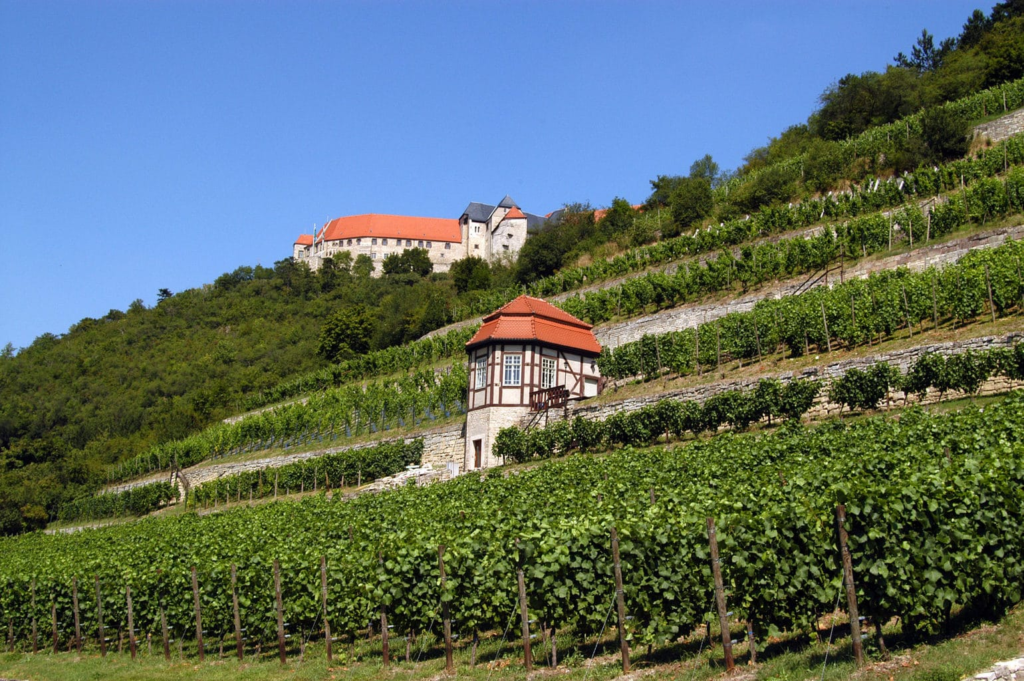
Foto: Saale-Unstrut Tourismus
Most serious wine travellers can name Mosel, Rheingau, or Pfalz without hesitation. Saale-Unstrut tends to stay off the radar, even among people who have spent time in German wine. That is its appeal. The region sits in the south of Saxony-Anhalt, roughly an hour from Leipzig by regional train, and it carries all the character of a place that has never needed to shout for attention. Stone terraces, river valleys, castle ruins, a UNESCO cathedral, and a handful of VDP estates producing wines of real precision – it is a destination that rewards those who seek it out.
A Thousand Years of Viticulture in Context
The wine history of Saale-Unstrut is not a recent marketing invention. Written records from the year 998 AD reference wines from the Memleben Abbey in the region, making this one of the oldest documented wine cultures in Germany. The serious expansion of viticulture came with the Cistercian monks who founded Kloster Pforta in 1137, establishing vineyards along the Saale that are still productive today.
The region takes its name from the two rivers that define it: the Saale and the Unstrut. Together they carve a landscape of south-facing slopes where the combination of continental climate, sparse rainfall, and mineral-rich shell limestone soils creates conditions just warm enough to ripen grapes well into October. Yields are low by German standards – not because of philosophy alone, but because the climate and terrain impose natural limits. Spätlese and Auslese wines are only viable in the warmest years.
What distinguishes Saale-Unstrut from the better-known German regions is the predominance of dry white wines. Unlike the sweetness-spectrum wines of the Mosel, most bottles from this region are vinified trocken, with an acidity and mineral tone that reflects the continental character of the area. It is a style that suits the food culture here – lighter dishes, river fish, fresh vegetable preparations, regional cheeses.
The total planted area is around 800 hectares, spread across the federal states of Saxony-Anhalt and Thuringia, with a cluster of around 60 private estates and the large Winzervereinigung Freyburg-Unstrut cooperative that accounts for a significant share of overall production.
The Landscape and Climate
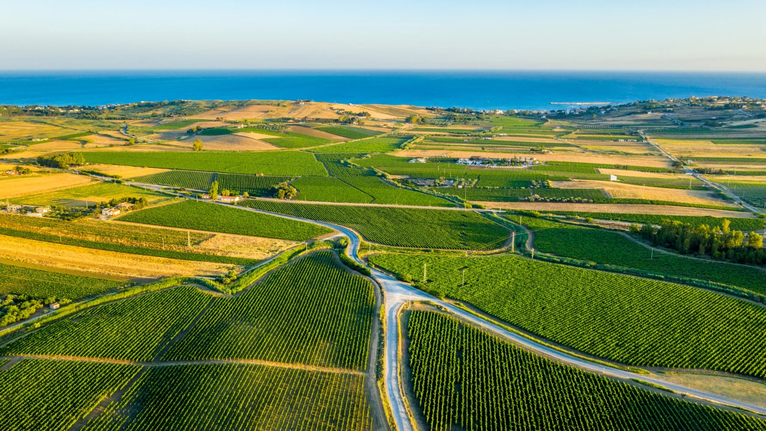
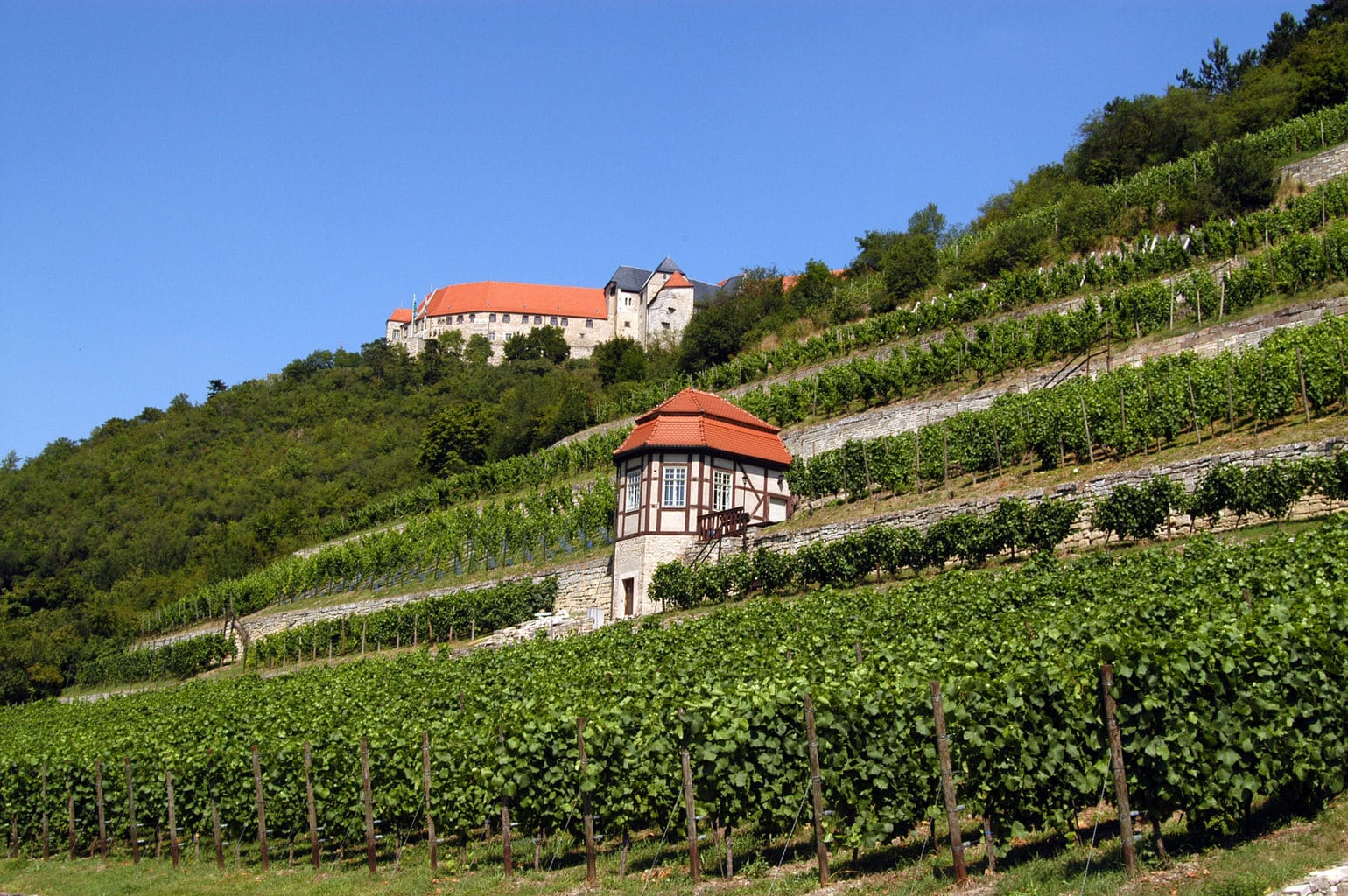
Driving into the region from Leipzig or Halle, the landscape changes gradually and then all at once. The flat agricultural plains of central Germany give way to rolling river valleys and terraced hillsides, with dry-stone walls dating back centuries holding the slope in place above the Unstrut and Saale rivers.
The climate here is strongly continental: cold winters, warm summers, and very little rainfall. With around 1,600 sunshine hours per year, it has more sun than many other German wine regions, and sits in the rain shadow of the Harz mountains to the northwest, which means the region is one of the driest in Germany. Those conditions – sunshine, low precipitation, mineral soils – produce wines with concentrated flavour and good structure, even in a northerly location.
The shell limestone (Muschelkalk) and coloured sandstone soils of the core vineyard zones around Freyburg, Bad Kösen, and Naumburg are the key to the wines’ texture. They retain heat during the day and release it slowly at night, extending the ripening period and preserving freshness. The best individual sites, or Einzellagen, are steep south to southwest-facing slopes where both heat accumulation and drainage are optimal.
The Grape Varieties of Saale-Unstrut
White grapes make up the majority of plantings, accounting for roughly 75% of the region’s vineyard surface.
Müller-Thurgau holds the largest share and is the workhorse variety for approachable, early-drinking whites with soft acidity and mild orchard fruit character.
Weissburgunder (Pinot Blanc) is increasingly the variety that defines the quality conversation in the region – it produces wines with notable textural weight and restrained stone fruit, often vinified with real precision by the better estates.
Silvaner is grown in smaller quantities but shows genuine regional character here, with a herbal, slightly savoury quality that works well with food.
Riesling does well in the better-sheltered sites, delivering taut acidity and a mineral backbone that can age gracefully.
Among less common varieties, Traminer and Gutedel (Chasselas) are grown at a few estates, adding width to a range that could easily become predictable. On the red side, Spätburgunder (Pinot Noir) and Blauer Portugieser are the most planted, along with Dornfelder and Blauer Zweigelt. The reds rarely achieve the depth of counterparts further south, but in warm years and on the best sites, Spätburgunder from estates like Weingut Pawis has a delicacy and transparency of fruit that sits comfortably within the broader German Pinot Noir conversation.
One local curiosity worth noting is Bacchus, a crossing that appears on cooperative labels with a slightly aromatic, almost Muscat-tinged character. It is not a serious variety in the fine wine sense, but it captures something of the region’s character as a producer of wines made for drinking, not collecting.
Wineries Worth Visiting
Weingut Bernard Pawis, Freyburg
If you visit one estate in Saale-Unstrut, make it Weingut Pawis. Founded in 1990 by Herbert and Irene Pawis on just half a hectare in the Freyburger Ehraubergen, the estate has grown steadily under son Bernard and is now installed in a beautifully restored former monastery at Zscheiplitz, a short drive from Freyburg itself. The Mediterranean-like ambience of the Martinsberg – a hillside setting with wide views across the Unstrut valley – makes a visit feel genuinely unhurried.
Bernard Pawis joined the VDP (Verband Deutscher Prädikatsweingüter) in 2001, a membership that reflected both quality ambition and a clear sense of place. The estate covers 16 hectares across several key sites, including the Freyburger Mühlberg and Naumburger Sonneck, both classified as VDP Erste Lage. The grape varieties span Riesling, Weissburgunder, Grauburgunder, Traminer, and Spätburgunder, with Weissburgunder from the shell limestone Schweigenberg terraces being the wine that most consistently demonstrates the estate’s standard. Tastings are available in the estate wine tavern, which also hosts events including the atmospheric Weißen Nacht (White Night) in June and vineyard walks across the 736 steps of the Schweigenberg terrace.
Visiting information: Auf dem Gut 2, 06632 Freyburg. Monday to Saturday 10:00–12:00 and 14:00–18:00, Sunday 10:00–12:00. Guided vineyard walks and moderated wine tastings available on request, and throughout the season for scheduled events. Five holiday apartments are available on the estate from €80 per night. Website: weingut-pawis.de
Landesweingut Kloster Pforta, Bad Kösen
No visit to Saale-Unstrut is properly grounded without a stop at Kloster Pforta. As the region’s largest single estate at around 50 hectares, and with a winemaking tradition stretching back more than 850 years, it is both a historical monument and a working producer of notable quality wines.
The monastery was founded in 1137, and by 1154 the first vineyard – the Pfortenser Köppelberg – was documented. The estate’s core is built around five major vineyard sites: the Saalhäuser, Gosecker Dechantenberg (cultivated continuously since 1080), Pfortenser Köppelberg, Naumburger Paradies, and Eulauer Heideberg. Across these, 15 grape varieties are cultivated, with modern cellar techniques – including work with specific yeast strains and maturation in oak barrels and barriques – applied to produce wines of real structure.
The Vinothek Schulpforte, open daily, offers access to the current range, while the historic wooden barrel cellar with its wine archive is one of the more impressive working cellar spaces in eastern Germany. Guided vineyard and cellar tours with moderated tastings are available throughout the season and give visitors a direct link between the landscape, the history, and the glass.
Visiting information: Located directly on the Saale River, outside Bad Kösen. Turn off the B87 at Friedrich-Ebert-Straße and follow signs along the river for approximately two kilometres. Winery: Monday to Thursday 8:00–17:00, Friday 8:00–15:00. Vinothek Schulpforte: daily 10:00–18:00. The Saalhäuser wine tavern is open Friday to Tuesday and on public holidays from 11:00–18:00. Website: kloster-pforta.de
Weingut Uwe Lützkendorf, Bad Kösen (Karsdorf)
Of all the small private estates in Saale-Unstrut, Weingut Lützkendorf offers perhaps the most intellectually interesting range. Also a VDP member, Uwe Lützkendorf farms around 9 hectares across two primary sites: the Karsdorfer Hohe Gräte and the Freyburger Edelacker. The Karsdorfer Hohe Gräte is a south-southwest-facing slope above the village of Karsdorf, where the ridge of the Querfurter Plate creates a distinctive microclimate – low rainfall, warm summers, and a growing season roughly one week longer than the regional average.
The variety range here reads like a deliberate argument for diversity: Riesling, Weissburgunder, Silvaner, Traminer, Chasselas, Spätburgunder, Portugieser, and Blauer Zweigelt. The Grosses Gewächs releases from the Karsdorfer Hohe Gräte – in particular Silvaner and Traminer – are the wines that have drawn wider attention, with a textural richness and warm yellow fruit character that is unmistakably a product of this particular site and climate.
The soils here are unusually varied for the region, combining mineral double quartzite, shell limestone, coloured sandstone, and loess-loam, which gives the wines a faceted quality that rewards time in the glass. A wine tavern and summer terrace offer tastings by appointment during the week, with Saturday and Sunday openings from 11:00–18:00. Wines are also available through the estate’s own online shop at shop-luetzkendorf.de.
Visiting information: Saalberge 31, 06628 Naumburg OT Bad Kösen. Monday to Friday by appointment; Saturday to Sunday 11:00–18:00. Phone: +49 34463 61000. Website: weingut-luetzkendorf.de
Weingut Klaus Böhme, Kirchscheidungen
Family-run and a little further off the typical tourist circuit, Weingut Klaus Böhme is based in the village of Kirchscheidungen and represents the quieter, more rural end of Saale-Unstrut’s wine offer. The estate is now guided by Luise Böhme and Roland Bähler, and their work on the Schweigenberg – the strikingly terraced, cottage-dotted slope along the Unstrut – has drawn notice from critics at Falstaff, who cite the Riesling from this site as one of the more persuasive arguments for the region’s potential at the quality level.
The estate is part of the Breitengrad51 label, a collaboration through which several small Saale-Unstrut producers market their finest qualities together, giving wines from individual estates greater visibility than they might achieve alone. It is an intelligent model for a region where most bottles never leave the county.
This is a good stop for visitors who want to understand the smaller-scale, hands-on side of the region’s wine culture rather than its institutional history. Visits are best arranged in advance via the estate’s website.
Visiting information: Lindenstraße 42, 06636 Kirchscheidungen. Phone: +49 34462 20395. Website: weingut-klaus-boehme.de
Rotkäppchen Sekt: A Story Within the Story
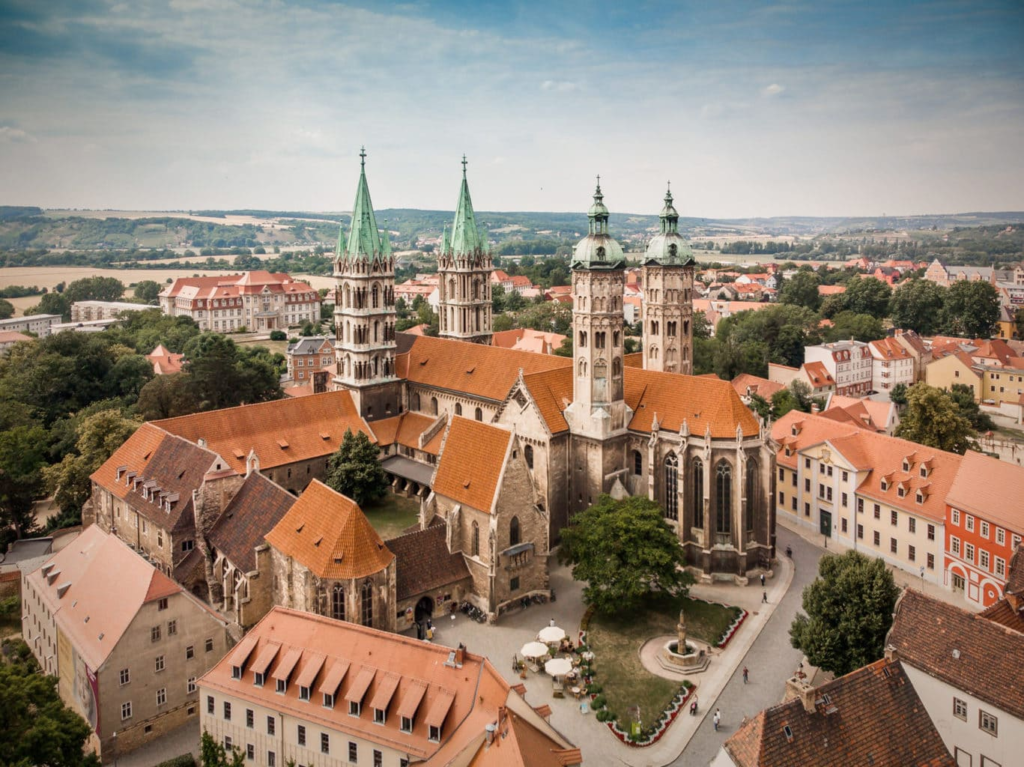
Foto: Rotkäppchen Sektkellerei
Any article about Saale-Unstrut that ignores Rotkäppchen is missing one of the stranger and more compelling chapters in German wine history. The sparkling wine house was founded in Freyburg in 1856, when brothers Moritz and Julius Kloss and their friend Carl Foerster opened a wine shop in the Unstrut valley and began producing sparkling wine – what they initially called “champagne” in the fashion of the time. The brand name Rotkäppchen (Little Red Riding Hood) was adopted in 1894 after a legal dispute over the use of a French trade name, with the distinctive red cap on the bottle providing the new identity.
After the Second World War, the cellars were nationalised and became the GDR’s sole sparkling wine producer. During the socialist era, Rotkäppchen was the sparkling wine of East Germany – a bottle cost around 22 Ostmarks. After reunification, the brand was privatised in 1993, went on to acquire the Mumm sparkling wine brands from Seagram in 2002, and is now Germany’s largest sparkling wine producer. The fact that its headquarters is still in Freyburg – a town of around 5,000 people in a barely-known wine region – remains one of the more quietly remarkable things about German wine culture.
The Rotkäppchen Erlebniswelt (experience world) in Freyburg is open to visitors and offers an interactive exhibition covering the brand’s history across 1,400 square metres of historic cellar space. Guided tours run in German, with wine and sekt tastings included.
Getting There and Getting Around
The gateway city is Leipzig, from which regional trains reach Naumburg (Saale) in roughly an hour and Freyburg (Unstrut) in around 70 minutes. From Halle, connections are even faster. For visitors travelling from Berlin, the journey to Naumburg takes around 90 minutes by direct ICE services.
Within the region, a car or bicycle is strongly recommended. The 60-kilometre Saale-Unstrut Wine Route runs from Memleben to Bad Sulza, threading through all the key wine towns and past more than 50 wineries. Both the Saale-Radweg (Saale cycle path) and the Unstrut-Radweg offer well-maintained riverside routes that connect Freyburg, Naumburg, Bad Kösen, and the surrounding villages. The cycling infrastructure here is genuinely good, making a wine-focused cycling trip an entirely practical proposition.
Naumburg works well as a base if you are relying on public transport or want access to the region’s cultural highlights. It has the most accommodation options and is a short hop from Freyburg on the local train. Freyburg is the right choice if you want to be in the middle of the wine culture from day one – the Rotkäppchen cellar, the Herzoglicher Weinberg terraces, and Neuenburg Castle are all within walking or cycling distance.
The best months to visit are June and July for the landscape and terrace tastings, or September and October for harvest activity and the annual Freyburg Winzerfest, the largest wine festival in the region, typically held in late September.
Beyond the Wine: What Else to See
Naumburg Cathedral
The Cathedral of St Peter and St Paul in Naumburg was granted UNESCO World Heritage status in 2018. It is genuinely one of the most important medieval buildings in Germany, and its artistic significance goes beyond architecture. The West Choir contains twelve life-size donor statues from the mid-thirteenth century, carved with a psychological realism that was extraordinary for the period. The statue of Uta von Naumburg – serene, self-possessed, collar raised against a cold that no sculptor ever explained – has become one of the most reproduced images of medieval German art. The cathedral is also the only church in the world to contain two choir screens from the High Middle Ages. Allow at least two hours here.
Neuenburg Castle
Visible from much of the Freyburg area, Neuenburg Castle dominates the hill above the Unstrut valley. The castle was founded in the 11th century and served as a residence for Ludwigs of Thuringia. Today it houses a wine museum, a reconstructed medieval cellar, and a restaurant with views across the vineyards. The walk up from Freyburg through the vineyard terraces takes around 30 minutes and is one of the more scenic approaches to any castle in eastern Germany.
The Nebra Sky Disc
Somewhat further afield but genuinely worth the detour, the Nebra Sky Disc was discovered near Nebra in 1999 and dates to approximately 1600 BC. At roughly 3,600 years old, it is considered the oldest concrete depiction of the cosmos known to humanity, showing the sun, moon, and stars in a way that suggests sophisticated astronomical knowledge. The original is in the State Museum of Prehistory in Halle, but the excavation site near Nebra and the nearby Arche Nebra interpretation centre are both UNESCO World Heritage locations and make for an unusual half-day trip from Freyburg or Naumburg.
Where to Buy Saale-Unstrut Wines
Here is where honesty matters. Saale-Unstrut wines are among the most locally consumed in Germany. Most bottles are sold directly from estates, at regional wine festivals, or through German-language specialist retailers. Unlike Mosel or Rheingau, they rarely turn up at Wijnbeurs, Colaris, or Decantalo, and it would be misleading to suggest otherwise. Before planning to buy online via these retailers, checking their current catalogues for German whites is worthwhile – stock changes – but for most producers in this region, the reliable channel is direct.
The good news is that several estates and producers offer direct online sales:
Weingut Lützkendorf ships from its own online shop at shop-luetzkendorf.de. The range includes current vintages of Karsdorfer Hohe Gräte Grosses Gewächs wines in Riesling, Silvaner, and Traminer, as well as lighter entry-level whites and distillates. For a focused look at what a serious VDP Saale-Unstrut estate can do, this is the most accessible starting point from outside Germany.
Winzervereinigung Freyburg-Unstrut sells direct through freyburg-unstrut-weine.de and its associated partner retailers. The cooperative’s range covers more than 15 varieties across four quality tiers, from everyday Müller-Thurgau and Silvaner to the more structured Kellermeister Edition. The Saale-Unstrut Weissburgunder and the Silvaner trocken are consistent performers and a good introduction to the region’s dry white style. Wines from the cooperative have appeared on international platforms including Drinks & Co and vinello.eu, where some bottles ship to the Netherlands and Belgium.
Weingut Pawis does not operate a separate online shop, but wines can sometimes be sourced through specialist German retailers such as WirWinzer (wirwinzer.de), which handles direct-from-estate ordering for several Saale-Unstrut producers and ships across Europe.
If you are travelling to the region, the most rewarding approach remains buying at cellar door. Most estates welcome visitors during posted opening hours and offer tasting before purchase. Bottles that rarely leave the county tend to be priced with notable restraint by the standards of any comparable European wine region.
A Region Shaped by Its Latitude
What strikes you most about Saale-Unstrut, walking the Schweigenberg terraces above Freyburg or standing in Kloster Pforta’s barrel cellar, is that nothing here is accidental. Every intervention in the vineyard – the dry-stone walls, the south-facing orientation, the late harvest discipline – exists because this landscape does not freely give what a warmer site might take for granted. That constraint produces wines with a lean, mineral tension that you would not find in Baden or Pfalz.
The region’s wines are not trying to compete on richness or alcohol weight. They compete on precision, transparency, and a kind of quiet character that suits the landscape they come from. For wine travellers who have spent time in the more celebrated German regions, Saale-Unstrut offers a genuinely different register: less polished, more personal, deeply rooted in a place that the rest of the wine world has been slow to notice.
That may not last. Climate change is gradually shifting the growing conditions here in the direction of greater ripeness and longer seasons, which opens new possibilities for the region’s better estates. The VDP members are already producing wines that hold their own in serious company. The castle views, the UNESCO cathedral, and the 1,000-year monastery at Pforta are not going anywhere.
Go before the secret is completely out.
Explore more German wine regions on The Pairing Passport: from the steep slate slopes of the Mosel to the volcanic soils of Baden, our Germany series covers the regions worth building a trip around.