Bordeaux Wine Region: A Guide to Left Bank, Right Bank & Sauternes
Bordeaux does not need an introduction so much as it needs a map. Say the name to any wine drinker, however casual, and something registers: claret, châteaux, Cabernet, prices that make headlines every futures season. What’s harder to grasp from the outside is how much geography explains what ends up in the glass. A river splits this region into two banks with different soils, different dominant grapes, and genuinely different personalities, and once that distinction clicks, the rest of Bordeaux starts to make sense.
This is southwestern France, where the Garonne and the Dordogne rivers meet at the Gironde estuary before pushing out toward the Atlantic. Around 100,000 hectares of vineyard spread across roughly 60 appellations, making Bordeaux the largest fine wine region in the world by planted area, and arguably still the most influential. Nearly every serious red blend produced anywhere, from Napa to Coonawarra, owes something to the Bordeaux model of complementary grape varieties working together rather than any single variety carrying the wine alone.
This guide walks through the Left Bank and Right Bank, the region’s layered classification systems, four châteaux that welcome visitors with genuinely different experiences, and where to actually find these wines on Dutch and Spanish retail shelves rather than only in auction catalogs.
Geography and Terroir
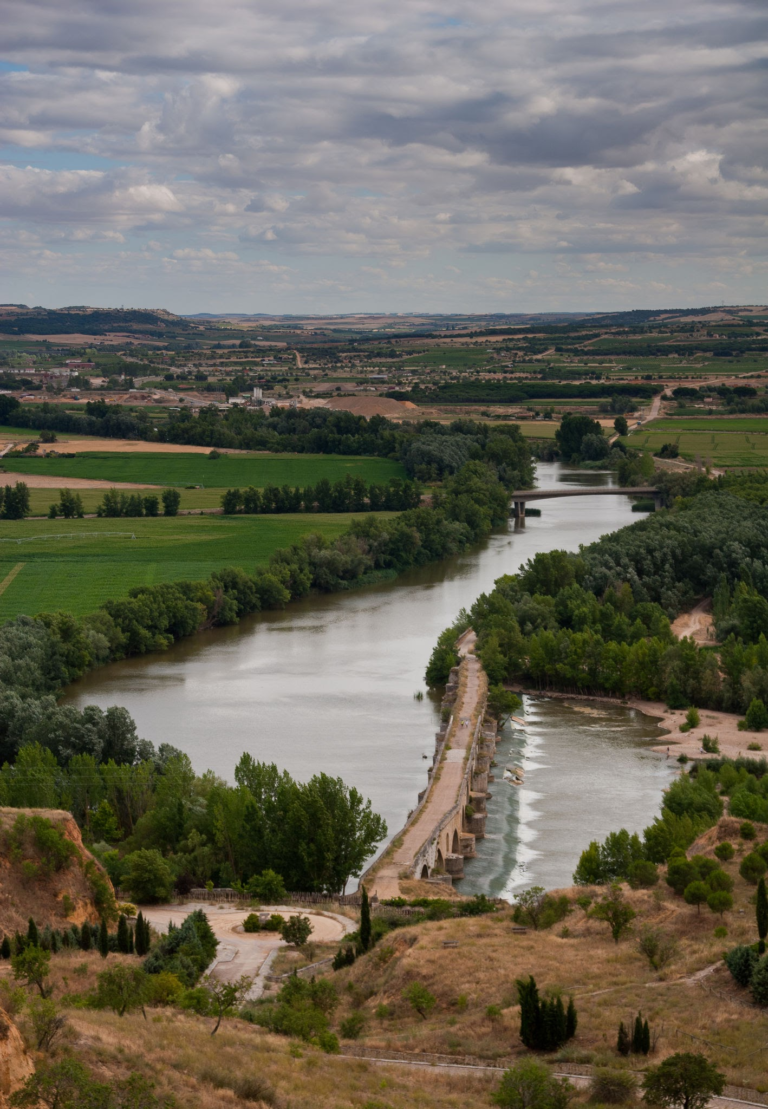
The Gironde estuary is Bordeaux’s organizing principle. Everything west and south of the Garonne River is the Left Bank; everything north of the Dordogne is the Right Bank. Between the two rivers sits Entre-Deux-Mers, a quieter zone known mostly for fresh, everyday whites.
The Left Bank runs from the Médoc in the north down through Graves and Pessac-Léognan to Sauternes and Barsac in the south. Its defining feature is gravel, deep beds of it, deposited by glacial rivers thousands of years ago. Gravel drains fast and retains heat, which suits Cabernet Sauvignon perfectly. The grape needs a long, warm ripening window to shed its green, herbaceous edge, and the Left Bank’s well-drained banks give it exactly that. This is why Médoc appellations like Pauillac, Saint-Julien, Saint-Estèphe, and Margaux are built around Cabernet-dominant blends with firm tannins and long aging curves.
Cross the water to the Right Bank and the picture changes. Saint-Émilion and Pomerol sit on clay and limestone rather than gravel, soils that hold moisture and cool the vine’s roots. Merlot, which ripens earlier and struggles with the water stress that Cabernet tolerates, thrives here instead. The result is a softer, rounder, more immediately generous wine, often approachable years before a comparable Left Bank Cabernet blend would be.
Sauternes and Barsac, tucked into the south near the Ciron and Garonne rivers, run on a different logic entirely. Morning mist off the Ciron and warm afternoon sun create ideal conditions for botrytis cinerea, the noble rot that shrivels Sémillon and Sauvignon Blanc grapes and concentrates their sugars into some of the world’s great sweet wines.
Climate across the whole region is maritime, moderated by the Atlantic and the Gironde itself. This keeps winters mild and summers warm without extreme heat, though it also brings real vintage variation. Rain at the wrong moment during harvest can undo an otherwise strong year, which is part of why Bordeaux vintage charts matter more here than in most wine regions.
A Short History
Bordeaux’s wine trade is older than most European nations in their current form. The Romans planted vines here, but it was the marriage of Eleanor of Aquitaine to the future Henry II of England in 1152 that turned Bordeaux into an export machine. For the next three centuries, under English rule, Bordeaux wine (then called claret) flowed across the Channel in enormous quantities, and the English taste for it never really faded even after the region reverted to French control in 1453.
Dutch merchants shaped the region almost as much as the English did. In the 17th century, Dutch traders drained the marshy land of the Médoc, turning it into plantable vineyard, and their appetite for Bordeaux’s white and sweet wines helped fund the estates that would later become the most famous names in the 1855 classification. That Dutch connection is a nice thread for a Netherlands-based reader to pull on: the gravel banks of Pauillac and Margaux exist in their current form partly because of Dutch engineering.
The 18th and 19th centuries saw the rise of the négociant system, the Bordeaux wine merchants who bought, blended, aged, and shipped wine from individual estates, a structure that still defines how most Bordeaux wine reaches the market today through the en primeur trading system.
Grape Varieties
Bordeaux is a blending region by philosophy, not accident. Each variety contributes something the others cannot.
Cabernet Sauvignon provides structure, tannin, and the backbone for long aging, dominant on the gravel soils of the Médoc.
Merlot softens the blend with plush fruit and earlier-drinking appeal, and is now the most widely planted red grape in Bordeaux overall, particularly across the Right Bank.
Cabernet Franc adds aromatic lift, a peppery, sometimes floral note, and is the backbone of several top Saint-Émilion estates, most famously Château Cheval Blanc.
Petit Verdot and Malbec play smaller supporting roles, adding color, spice, or a rustic edge in small percentages.
For whites, Sémillon and Sauvignon Blanc are blended together for both dry white Bordeaux and the sweet wines of Sauternes, with Muscadelle occasionally added in small amounts for aromatic complexity.
Classification Systems
Bordeaux’s reputation for complexity comes as much from its classification systems as from the wine itself.
The 1855 Classification of the Médoc
Commissioned by Napoleon III for the Paris Exposition Universelle, the 1855 classification ranked 61 Left Bank châteaux into five tiers based on the trading price of their wine at the time. It remains largely unchanged 170 years later, with one notable exception: Château Mouton Rothschild was promoted from Second Growth to First Growth in 1973, the only revision the list has ever received. The five First Growths are Château Lafite Rothschild, Château Latour, Château Margaux, Château Haut-Brion, and Château Mouton Rothschild. Below them sit Second through Fifth Growths, a hierarchy that still drives pricing today even though quality at individual estates has shifted considerably since the 19th century.
The Saint-Émilion Classification
The Right Bank went uncatalogued until 1955, when Saint-Émilion introduced its own system, and crucially built in a review every ten years. Wines move up or down based on reassessed quality, which has made the Saint-Émilion classification both more current and more contentious than its Left Bank counterpart, generating legal disputes almost every cycle it runs.
Sauternes and the Graves Classification
Sauternes received its own 1855 ranking, with Château d’Yquem standing alone as Premier Cru Supérieur above the rest of the Premiers and Deuxièmes Crus. Graves, separately, uses a single-tier classification introduced in 1959 that lists top estates without further ranking among them, a structure that has largely spared the appellation the disputes seen elsewhere in Bordeaux.
Pomerol, notably, has never adopted an official classification at all. Quality there is judged purely on reputation and critical consensus, which has not stopped it from producing some of Bordeaux’s most sought-after and expensive wines, Château Pétrus chief among them.
Four Bordeaux Châteaux Worth Visiting
Bordeaux has thousands of producers, but a manageable trip means picking a handful that represent the region’s range. These four span Left Bank Cabernet, Right Bank Merlot, dry white Pessac-Léognan, and sweet Sauternes, and all four welcome visitors by appointment.
Château Pichon Baron (Pauillac)
Recognizable from the road by its twin turrets and the reflecting pool that mirrors the château’s Renaissance-inspired facade, Pichon Baron is a Second Growth estate that has been reshaped since AXA Millésimes acquired it in 1987. The property reopened to visitors in 2023 following a full renovation of its production facilities, including a striking underground barrel cellar built beneath the water feature at the château’s entrance. Tours begin in the vineyard rather than the building, which suits an estate whose Cabernet Sauvignon-dominant Grand Vin draws heavily from some of the oldest plots in Pauillac.
- Address: 2 Château Pichon-Longueville, 33250 Pauillac, France
- Contact: +33 5 56 73 17 17, bookable through pichonbaron.com
- Visiting: Open year-round by appointment, Monday to Friday, with Saturday hours added from May to November. All tours are private and must be reserved in advance; the vineyard and cellar tour with a four-wine tasting runs around €60 per person.
Château La Dominique (Saint-Émilion)
On the border between Saint-Émilion and Pomerol, La Dominique pairs a traditional maison de maître with a striking red steel cellar building designed by architect Jean Nouvel, its facade reflecting the sky and surrounding vines. Classified Grand Cru Classé since the very first Saint-Émilion ranking in 1955, the estate blends Merlot with smaller portions of Cabernet Franc for a wine that shows the Right Bank’s characteristic generosity. The rooftop restaurant, La Terrasse Rouge, looks out over the vineyards of both Saint-Émilion and Pomerol and is worth booking alongside the tour.
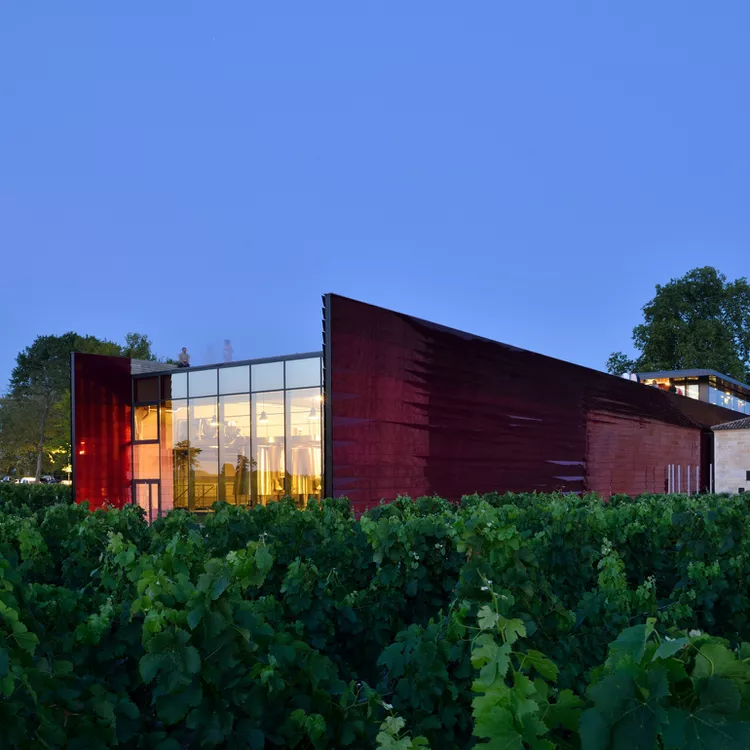
- Address: 1 La Dominique, 33330 Saint-Émilion, France
- Contact: +33 5 57 51 31 36, visite@chateau-ladominique.com, bookable through chateau-ladominique.com
- Visiting: Open daily 11:30 to 18:00 from April to October, with reduced winter hours from November to March. Booking is mandatory; tours typically include a walk through the vineyard, the Nouvel-designed cellar, and a tasting.
Château Smith Haut Lafitte (Pessac-Léognan)
Roughly 20 minutes south of Bordeaux’s city center, Smith Haut Lafitte is one of the most visitor-friendly estates in the region, open seven days a week and equipped to handle everything from a quick tasting to a full day of workshops. Owners Daniel and Florence Cathiard have farmed the estate organically and biodynamically since the 1990s under a philosophy they call Bio-Precision, and the property includes its own cooperage, a weather station, and an art trail through the vines. It is also one of the rare Left Bank estates producing a genuinely serious white wine alongside its red, a Sémillon and Sauvignon Blanc blend classified as Grand Cru in the Graves ranking.
- Address: Chemin du Carosse, 33650 Martillac, France
- Contact: +33 5 57 83 11 22, visites@smith-haut-lafitte.com
- Visiting: Open daily, with tours and tastings bookable through the château website. The estate also operates the five-star hotel Les Sources de Caudalie on site, useful for anyone wanting to stay overnight in the vines.
Château Guiraud (Sauternes)
A Premier Cru Classé from the 1855 Sauternes ranking, Guiraud has quietly become one of the region’s most forward-looking estates, becoming the first Premier Grand Cru Classé in Sauternes to achieve organic certification back in 2011. The approach to the château, along a Gallo-Roman road lined with plane trees, sets up a visit that includes a biodiversity garden as much as a cellar tour, reflecting the estate’s focus on permaculture. Its restaurant, Le Cercle Guiraud, earned a Michelin star in 2026 under chef Yoann Amado.
- Address: Château Guiraud, 33210 Sauternes, France
- Contact: +33 5 56 76 61 01, accueil@chateauguiraud.com
- Visiting: Open daily from 10:00 to 18:00, including public holidays, with or without a booking, though reserving ahead is recommended for tastings. Tours run from around €25 for a shared visit to €85 for the estate’s caviar pairing experience, and are offered in French, English, and Norwegian.
Where to Buy Bordeaux Wine
Bordeaux’s fame cuts both ways for retail availability. The First Growths and other blue-chip names trade through the en primeur system and specialist fine wine merchants, while estate second wines and classified growths one or two tiers down are genuinely easy to find at mainstream European retailers.
Colaris carries the widest Bordeaux range of the three preferred retailers for this guide, including Château La Dominique’s Saint-Émilion Grand Cru Classé across multiple vintages and Château Guiraud’s Sauternes, both the standard 0.75L bottling and half-bottle formats useful for dessert wine that doesn’t need to be finished in one sitting.
Wijnbeurs stocks Les Griffons de Pichon Baron, the newer of Pichon Baron’s two second wines, sourced from the same plots as the Grand Vin but built for earlier drinking. It’s a sensible entry point into the estate’s style without the price tag of the top wine.
Decántalo carries Château Smith Haut Lafitte across its red, white, and second-label Le Petit Haut Lafitte bottlings, making it the most complete single source for this particular estate among the three retailers.
For the Grand Vin bottlings of Pichon Baron and La Dominique, along with First Growth wines generally, availability at these three retailers is inconsistent from vintage to vintage given the small production volumes and en primeur allocation system. Checking the estate’s own webshop, where several of these châteaux (including Pichon Baron and La Dominique) now sell directly to consumers with home shipping, is worth doing before assuming a wine is unavailable. WirWinzer and Drinks & Co are useful fallback aggregators for older vintages that have cycled out of primary retail stock.
Food Pairing
Bordeaux’s structured reds want fat and protein to soften their tannins. A classic Left Bank Cabernet blend from Pauillac or Saint-Julien pairs naturally with roasted lamb, entrecôte, or aged Comté, the tannin cutting through the richness while the wine’s dark fruit picks up the char from a grill. Right Bank Merlot-based wines, being softer and more fruit-forward, are more forgiving and work well with duck breast, mushroom-based dishes, or a simple roast chicken with plenty of herbs.
Dry white Bordeaux blends, built from Sémillon and Sauvignon Blanc, are a natural match for the Arcachon Basin oysters sold at markets throughout the region, as well as grilled fish and goat cheese.
Sauternes deserves better than the standard foie gras pairing it usually gets stuck with, though that combination remains genuinely excellent if you can find good foie gras. Try it instead with blue cheese, particularly Roquefort, where the wine’s sweetness and acidity balance the cheese’s salt. It also holds its own against fruit-based desserts like a tarte Tatin, and, contrary to instinct, works surprisingly well with spicy Southeast Asian dishes where its residual sugar tempers the heat.
Getting There and Planning Your Trip
Bordeaux–Mérignac Airport connects directly to most major European cities, including Amsterdam, and sits about 20 minutes from the city center. From Amsterdam or Rotterdam, flights typically run under two hours.
The city of Bordeaux itself makes a comfortable base, with direct train access to the TGV network and a well-preserved 18th-century center that’s worth a day on its own before heading into the vineyards. From there, the Médoc châteaux are roughly 45 minutes to an hour north by car, Saint-Émilion is about 40 minutes east (and reachable by train to Libourne followed by a short taxi or bike ride), and Sauternes sits about 45 minutes south.
A car is genuinely useful for a Bordeaux wine trip, since public transport between individual châteaux is limited even where towns themselves are well connected by rail. September and October, during and just after harvest, bring the most atmosphere but also the highest demand for tour bookings, so reserving château visits several weeks ahead is worth doing regardless of season. Spring offers quieter roads and the vines in their most photogenic early growth stage.
Base yourself in Saint-Émilion village itself for walkable access to Right Bank châteaux and restaurants, or in Pauillac for closer proximity to the Médoc’s First Growths, several of which cluster within a few kilometers of each other.
Frequently Asked Questions
What’s the difference between Left Bank and Right Bank Bordeaux? Left Bank wines, from areas like Médoc and Graves, are Cabernet Sauvignon-dominant, grown on gravel soils, and built for long aging with firm tannins. Right Bank wines, from Saint-Émilion and Pomerol, are Merlot-dominant, grown on clay and limestone, and generally softer and more approachable earlier in life.
Do I need an appointment to visit Bordeaux châteaux? Almost always, yes. Most classified estates, including all four profiled here, require advance booking, and some accept only private tours rather than shared group visits. A handful of smaller producers allow walk-ins, but planning ahead avoids disappointment, particularly during harvest season.
Is Bordeaux wine always expensive? The First Growths and top Right Bank names command genuinely high prices, but Bordeaux produces far more everyday wine than headline wine. Cru Bourgeois estates in the Médoc, satellite Saint-Émilion appellations, and second wines from classified châteaux offer real quality without First Growth pricing.
What is a château’s “second wine”? Most classified estates produce a second, more affordable label alongside their main wine, made from younger vines or lots that didn’t make the final cut for the Grand Vin. These second wines, like Les Griffons de Pichon Baron or Le Petit Haut Lafitte, offer a genuine window into an estate’s style at a fraction of the price.