Sud-Ouest Wine Region: A Guide to Cahors, Madiran, Jurançon & Fronton
Ask most wine drinkers to name a French region east or south of Bordeaux and the answers thin out fast. That gap in general knowledge is exactly what makes the Sud-Ouest worth the detour. Unlike Bordeaux or Burgundy, this is not one continuous wine region but a loose constellation of small, historically distinct appellations scattered across the land between Bordeaux and the Pyrenees, each built around a grape variety you will rarely encounter anywhere else.
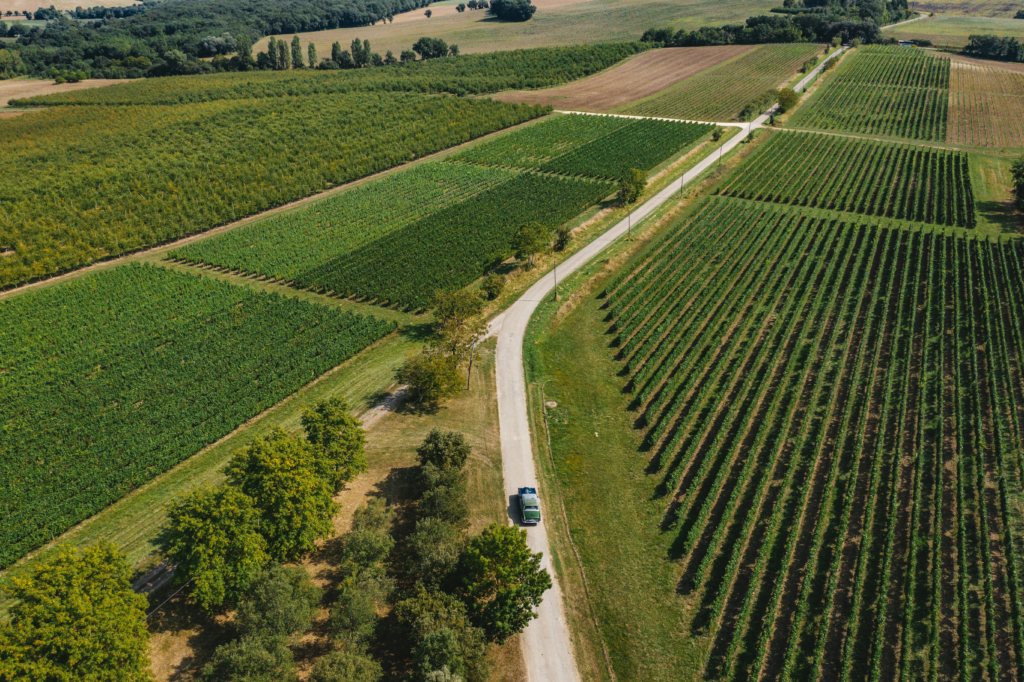
Cahors makes deeply pigmented reds from Malbec, here called Côt, in the grape’s original homeland long before Argentina adopted it. Madiran turns Tannat, one of the most tannic grapes grown anywhere, into serious age-worthy reds. Jurançon, tucked against the Pyrenean foothills, produces some of France’s most distinctive whites, both bone dry and lusciously sweet, from a grape called Petit Manseng that barely exists outside this corner of the country. Add Fronton’s aromatic Négrette and Gaillac’s cluster of ancient local varieties, and the region becomes less a single destination than an invitation to keep discovering.
This guide covers the geography and history behind that diversity, four estates spanning Cahors, Madiran, Jurançon, and Fronton, and an honest look at where these wines can actually be found on Dutch and Spanish retail shelves, since availability here is far patchier than in Bordeaux.
Geography and Terroir
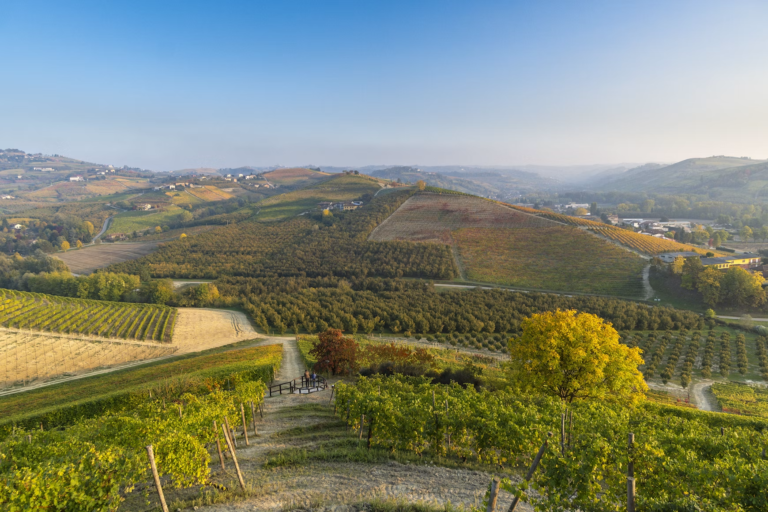
The Sud-Ouest has no single defining landscape the way Bordeaux has its gravel banks, or Burgundy has its limestone slope. Instead, terrain and climate shift dramatically as the region stretches from the Dordogne valley in the north down to the Basque foothills of the Pyrenees in the south.
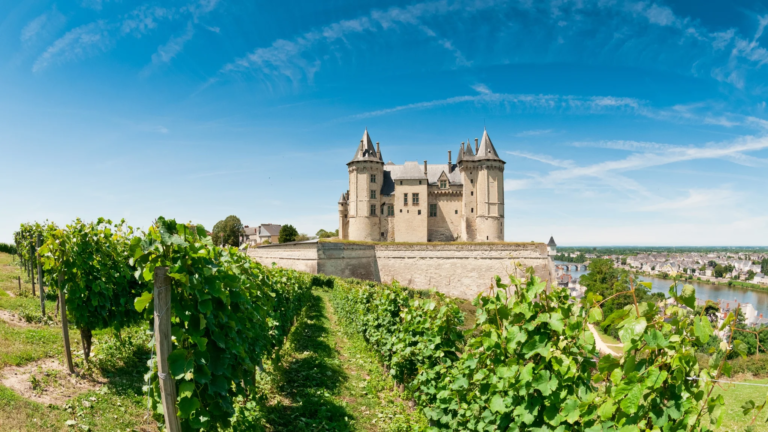
Cahors sits along the Lot River, where vines grow across three alluvial terraces rising from the riverbanks up to a limestone plateau known locally as the causse. The lower terraces, closer to the water, produce softer, more approachable wine, while the elevated causse gives structured, aromatic Malbec with real aging potential. This altitude gradient within a single appellation is unusual and worth understanding before choosing a bottle, since a Cahors from the plateau and one from the valley floor can taste like different wines entirely.
Madiran, further south in Gascony, sits on clay-limestone hillsides at the edge of the Pyrenean foothills, a terroir some locals half-jokingly compare to the right bank of Saint-Émilion for its combination of clay’s structure and limestone’s freshness. It is here that Tannat, a thick-skinned grape that resists rot and ripens late, finds a home suited to its power.
Jurançon and Irouléguy, the region’s Pyrenean appellations, experience a genuinely different climate again. Altitude and mountain weather create dramatic swings between day and night temperatures, and in autumn, warm, dry foehn winds descend from the mountains and desiccate grapes left on the vine, concentrating their sugars for the region’s celebrated sweet wines without relying on botrytis the way Sauternes does.
Gaillac and Fronton, closer to Toulouse, sit on a mix of gravelly clay and rounded river terraces. Fronton in particular grows on alluvial gravel terraces of the Tarn that suit Négrette’s need for warmth without excessive water stress.
Climate across the region ranges from oceanic influence in the north and west, moderated by proximity to Bordeaux’s Atlantic weather systems, to increasingly continental and mountain-influenced conditions moving south and east toward the Pyrenees.
A Short History
South-West France can plausibly claim to be one of the oldest winemaking territories on earth. Amphorae and vine remnants found near Gaillac date cultivation back to at least the first century BC, predating significant Bordeaux plantings by centuries. Cahors built its reputation earliest and most dramatically: in the Middle Ages, its intensely dark reds, nicknamed vin noir, or black wine, were prized across Europe and reportedly used as sacramental wine in the Russian Orthodox Church.
For a long stretch of history, the Sud-Ouest’s wines were shipped out through Bordeaux, and Bordeaux merchants, protecting their own market position, imposed trade restrictions that favored their own region’s wines over those arriving from upstream. This tension between the Sud-Ouest’s producers and Bordeaux’s commercial dominance shaped centuries of the region’s development and is part of why these wines remained comparatively obscure even as their quality stayed high.
Jurançon has its own royal footnote: the wine was reportedly served at the christening of the future King Henry IV in the 16th century, a detail still repeated by producers in the region today. Madiran, meanwhile, spent much of the 20th century in decline, reduced to little more than a bulk blending wine for Bordeaux, before Alain Brumont’s arrival in the 1980s proved that Tannat, properly farmed and vinified, could produce genuinely world-class wine.
Grape Varieties
The Sud-Ouest’s defining feature is its collection of grape varieties found almost nowhere else in significant quantity.
Malbec (Côt), Cahors’ signature grape, produces dark, savory, structured reds, distinct from the fruitier expressions grown in Argentina.
Tannat, Madiran’s backbone, is famously thick-skinned and tannic, capable of producing wines with serious aging potential when handled with modern winemaking.
Petit Manseng and Gros Manseng, Jurançon’s core white varieties, deliver high natural acidity that supports both crisp dry wines and intensely sweet late-harvest styles.
Négrette, found almost exclusively in Fronton, gives soft, perfumed, floral reds, unlike anything else in the region.
Mauzac, Len de l’El, Duras, and Fer Servadou anchor Gaillac’s distinctive blends, a cluster of ancient local varieties that give the appellation its singular, slightly rustic character.
Sud-Ouest’s Approach to Classification
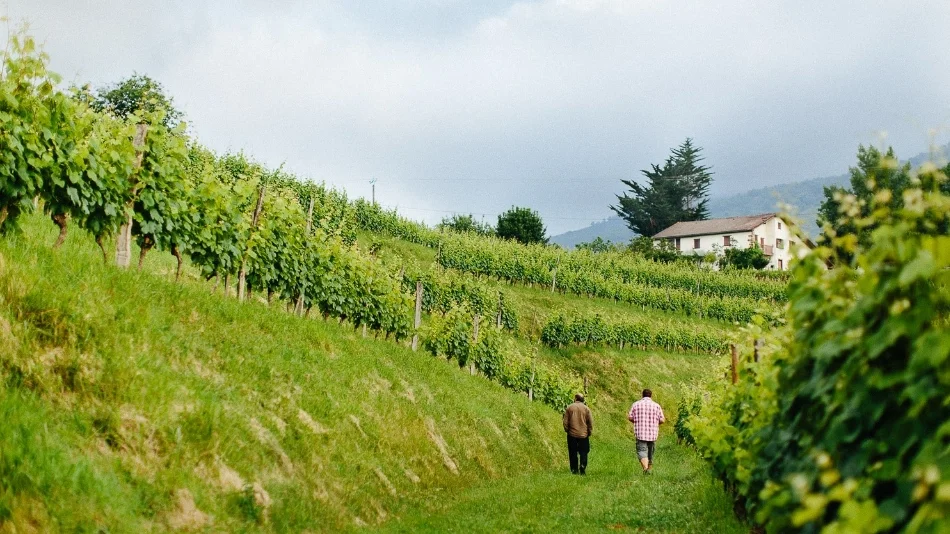
Unlike Bordeaux, the Sud-Ouest has no overarching regional classification system layered across its appellations. Each of its more than 50 AOCs, including Cahors, Madiran, Jurançon, Fronton, Gaillac, Bergerac, Monbazillac, Pécharmant, and Irouléguy, stands on its own, governed independently by its own INAO rules covering permitted grapes, yields, and winemaking practices.
This absence of a unifying hierarchy is part of what keeps the region approachable rather than intimidating. There is no equivalent of Bordeaux’s five-tier growth system to memorize, no cru pyramid to climb. Reputation here is built estate by estate and producer by producer, which rewards readers willing to learn names rather than rankings, and explains why a single visionary producer like Alain Brumont in Madiran or Henri Ramonteu at Domaine Cauhapé in Jurançon can single-handedly reshape how an entire appellation is perceived internationally.
A handful of the region’s appellations also carry sub-designations worth knowing. Madiran’s red wines share their production zone with Pacherenc du Vic-Bilh, the appellation reserved for the same estates’ white wines, both dry and sweet versions, built mainly from Petit Courbu and Petit Manseng. Cahors, similarly, has no internal cru system, though producers and critics increasingly distinguish informally between wines from the valley terraces and the more structured, age-worthy bottlings from the causse plateau, a distinction that functions almost like an unofficial hierarchy even without INAO recognition. Gaillac carries the added complexity of also producing a traditional-method sparkling wine, Gaillac Mousseux, alongside its still reds and whites, a reminder that many of these appellations cover more stylistic ground than their modest international profile suggests.
Four Sud-Ouest Estates Worth Visiting
Given how spread out the Sud-Ouest is, visiting more than one or two sub-regions in a single trip requires real planning. These four estates, one each in Cahors, Madiran, Jurançon, and Fronton, represent the range of what the region offers and all welcome visitors.
Château du Cèdre (Cahors)
Widely regarded as the estate that redefined what Cahors could be, Château du Cèdre is run by brothers Pascal and Jean-Marc Verhaeghe, whose grandfather left Flanders to settle in south-west France in the early 20th century. The 27-hectare property has been certified organic since 2012 and sits across two distinct terroirs: a cone of stony, constantly shifting limestone scree known locally as the Tran, and a soil of pebbles over iron-rich sand that gives the wines more power. Visits include a walk through the vineyard and organic farming practices followed by a guided tour of the winemaking facilities and a commented tasting.
- Address: Bru, 46700 Vire-sur-Lot, France
- Contact: +33 (0)5 65 36 53 87, info@chateauducedre.com, bookable through chateauducedre.com
- Visiting: Open Monday to Saturday, 10:00 to 12:00 and 14:00 to 18:00, closed Sundays and public holidays. Reservations recommended for guided tours and commented tastings.
Château Montus / Château Bouscassé (Madiran)
No single figure has shaped a Sud-Ouest appellation as decisively as Alain Brumont has shaped Madiran. He inherited Château Bouscassé from his father in 1979 and purchased Château Montus a year later, and by 1985 had produced a 100% Tannat wine that stunned critics who assumed the grape was too rustic for that kind of ambition. Montus’s underground barrel cellar has earned the nickname the Cathedral of Tannat for its scale, and the estate now farms nearly 300 hectares across the two properties. Wine tourism reception and tastings are centered at Château Bouscassé, with guided tours extending to Montus itself for those booking the fuller experience.
- Address: Chemin des Domaines, 32400 Maumusson-Laguian, France
- Contact: +33 (0)5 62 69 74 67, contact@brumont.fr, bookable through brumont.fr
- Visiting: Château Bouscassé welcomes walk-in visitors without reservation, open Monday to Friday 09:00 to 12:30 and 14:00 to 18:00 from October to April, with extended hours including Saturdays from May to August. Guided tours pairing both châteaux, including tastings and lunch options, require advance booking.
Domaine Cauhapé (Jurançon)
Henri Ramonteu founded Domaine Cauhapé in 1980 after selling his family’s cattle and pastureland to focus entirely on wine, a decision that now looks visionary given the estate’s status as Jurançon’s benchmark producer. The vineyards sit on clay-siliceous hillsides facing the Pyrenees, farmed under sustainable agriculture principles. Cauhapé’s range moves from the crisp, aromatic Chant des Vignes dry white through progressively richer late-harvest cuvées, culminating in the Quintessence du Petit Manseng, made from grapes picked berry by berry as late as December.
Visiting: Open Monday to Friday 09:00 to 12:00 and 14:00 to 17:30, Saturday 10:00 to 12:00 and 15:00 to 17:00. Guided tours cover the vinification cellar and barrel cellar, followed by a tasting; booking ahead is recommended, particularly for the optional aperitif pairing.
Address: 108 route de Cardesse, Quartier Castet, 64360 Monein, France
Contact: +33 (0)5 59 21 33 02, contact@cauhape.com, bookable through jurancon-cauhape.com
Château Bellevue la Forêt (Fronton)
The largest single privately owned wine estate in the Sud-Ouest, Château Bellevue la Forêt farms around 100 hectares on the highest terrace of the Tarn river at the western edge of the Fronton appellation. Founded in 1974, it built its reputation on Négrette, the grape found almost nowhere else in the world, blended in varying proportions with Syrah, Cabernet Sauvignon, Cabernet Franc, and Gamay. The estate exports widely and has become one of the appellation’s most recognized names internationally, while remaining an easy half-day trip from Toulouse.
- Address: 5580 Route de Grisolles, 31620 Fronton, France
- Contact: +33 (0)5 34 27 91 91
- Visiting: Open Monday to Friday 09:00 to 12:00 and 14:00 to 18:00, Saturday 09:30 to 12:30 and 14:00 to 18:00, closed Sundays and public holidays. Free tasting and direct sales; guided cellar tours available on request, ideally booked ahead for weekday visits.
Where to Buy Sud-Ouest Wine
Retail availability across Dutch and Spanish wine shops is genuinely uneven for this region, and it is worth being upfront about that rather than implying a completeness that isn’t there.
Colaris is the strongest of the three preferred retailers for Sud-Ouest wine by a clear margin. It carries Château du Cèdre’s Cahors range, including the Juveniles bottling across multiple vintages and the estate’s Grand Vin, along with Madiran from Château Barréjat, a smaller producer using vines up to 200 years old, some of them rare pre-phylloxera plantings.
For Château Montus and Château Bouscassé specifically, availability at Wijnbeurs, Colaris, and Decántalo could not be confirmed at the time of writing. The estate sells directly through brumont.fr with home shipping, and this is genuinely the most reliable route to the wine for readers outside France, alongside specialist fine wine merchants that carry small allocations.
The same is true for Domaine Cauhapé and Château Bellevue la Forêt. Neither appeared in current stock at the three preferred retailers. Cauhapé sells directly through jurancon-cauhape.com, and several smaller Dutch wine merchants specializing in lesser-known French appellations, including Wijnkoperij Okhuysen, carry the estate’s range if a direct international order isn’t practical. Bellevue la Forêt is best sourced directly from the estate or through French wine specialists until broader Benelux distribution develops further.
This is, honestly, part of the Sud-Ouest’s appeal and its challenge in equal measure: these are wines that reward seeking out rather than wines that will find you on a supermarket shelf. WirWinzer and Drinks & Co are worth checking periodically as fallback aggregators, since their catalogs shift more frequently than dedicated retailers, but neither had reliable Madiran or Jurançon stock at the time of research.
Food Pairing
The Sud-Ouest is, without much competition, France’s most carnivorous wine region, and its wines were shaped alongside a genuinely rich culinary tradition built on duck. Cahors Malbec is the natural partner for cassoulet, the white bean, sausage, and duck confit stew claimed by several competing towns across the region, where the wine’s tannins cut cleanly through the dish’s richness. It also pairs beautifully with a simple duck confit or a well-aged Rocamadour, the small goat cheese from the Lot valley.
Madiran, with its formidable tannin structure, was practically built for magret de canard, seared duck breast, and holds its own against foie gras poêlé as well, standing up to the fat in a way most wines cannot.
Jurançon’s two faces call for different pairings. The dry (sec) style, crisp and mineral, works well with grilled trout, Ossau-Iraty sheep’s milk cheese, or lighter seafood. The sweet (moelleux) style pairs famously with foie gras, but is equally at home with blue cheese or a fruit-forward dessert, and its high acidity keeps it from ever feeling cloying.
Fronton’s Négrette-based reds are more casual and food-friendly by design, well suited to grilled sausages, charcuterie boards, or the kind of simple bistro fare found around Toulouse.
Getting There and Planning Your Trip
The Sud-Ouest does not have a single gateway city the way Bordeaux does, which makes trip planning slightly more involved but also opens up several reasonable starting points depending on which sub-region interests you most.
Toulouse–Blagnac Airport is the most useful entry point for Fronton and Gaillac, both under an hour’s drive from the city, and Toulouse itself connects directly to Amsterdam on a handful of routes. For Cahors, the nearest airport is Bergerac or, with a longer transfer, Toulouse; the city of Cahors also sits on a direct rail line from Paris via the north-south TGV network, making a train-based itinerary genuinely workable. Madiran and Jurançon are both best reached via Pau, which has a regional airport with connections through Paris, or by driving roughly 90 minutes south from Bordeaux–Mérignac.
A car is close to essential for a Sud-Ouest wine trip given how dispersed the appellations are; public transport between Cahors, Madiran, and Jurançon in particular is impractical for anyone wanting to visit more than one in a single day. Because the region draws far fewer wine tourists than Bordeaux, advance booking requirements are generally more relaxed, though it’s still worth calling ahead, particularly for smaller family-run estates where the owner may also be the one pouring the tasting.
Autumn brings harvest activity to Cahors and Madiran, while Jurançon’s late-harvest picking for its sweetest cuvées can stretch into December, making a late-year visit worthwhile for anyone specifically curious about that process. Spring and early summer offer quieter roads and more flexible scheduling at smaller estates.
Frequently Asked Questions
What makes the Sud-Ouest different from other French wine regions? Unlike continuous regions such as Bordeaux or Burgundy, the Sud-Ouest is a scattered collection of more than 50 small, independent appellations spread across south-west France, each built around distinctive local grape varieties rarely found elsewhere, without a shared regional classification system tying them together.
Is Cahors Malbec the same as Argentine Malbec? They’re the same grape variety, sometimes called Côt or Auxerrois in Cahors, but the styles differ meaningfully. Cahors Malbec, grown on limestone and clay soils, tends to produce a darker, more tannic, and more savory wine than the riper, fruit-forward style typical of Argentina, where the grape was exported from Cahors in the mid-19th century.
Why is Sud-Ouest wine harder to find than Bordeaux at retailers? The region produces far smaller volumes than Bordeaux and has historically focused on the domestic French market and specialist export channels rather than broad international distribution. Availability is improving, but readers should expect to check estate webshops or specialist merchants more often than with better-known French regions.
What’s the difference between Jurançon sec and regular Jurançon? Jurançon sec refers to the appellation’s dry white wines, made primarily from Gros Manseng, and must carry “sec” on the label. Wines labeled simply Jurançon, without that qualifier, are the sweet, late-harvest style made predominantly from Petit Manseng.