Alsace Wine Region: A Guide to Riesling, Grand Cru & the Route des Vins
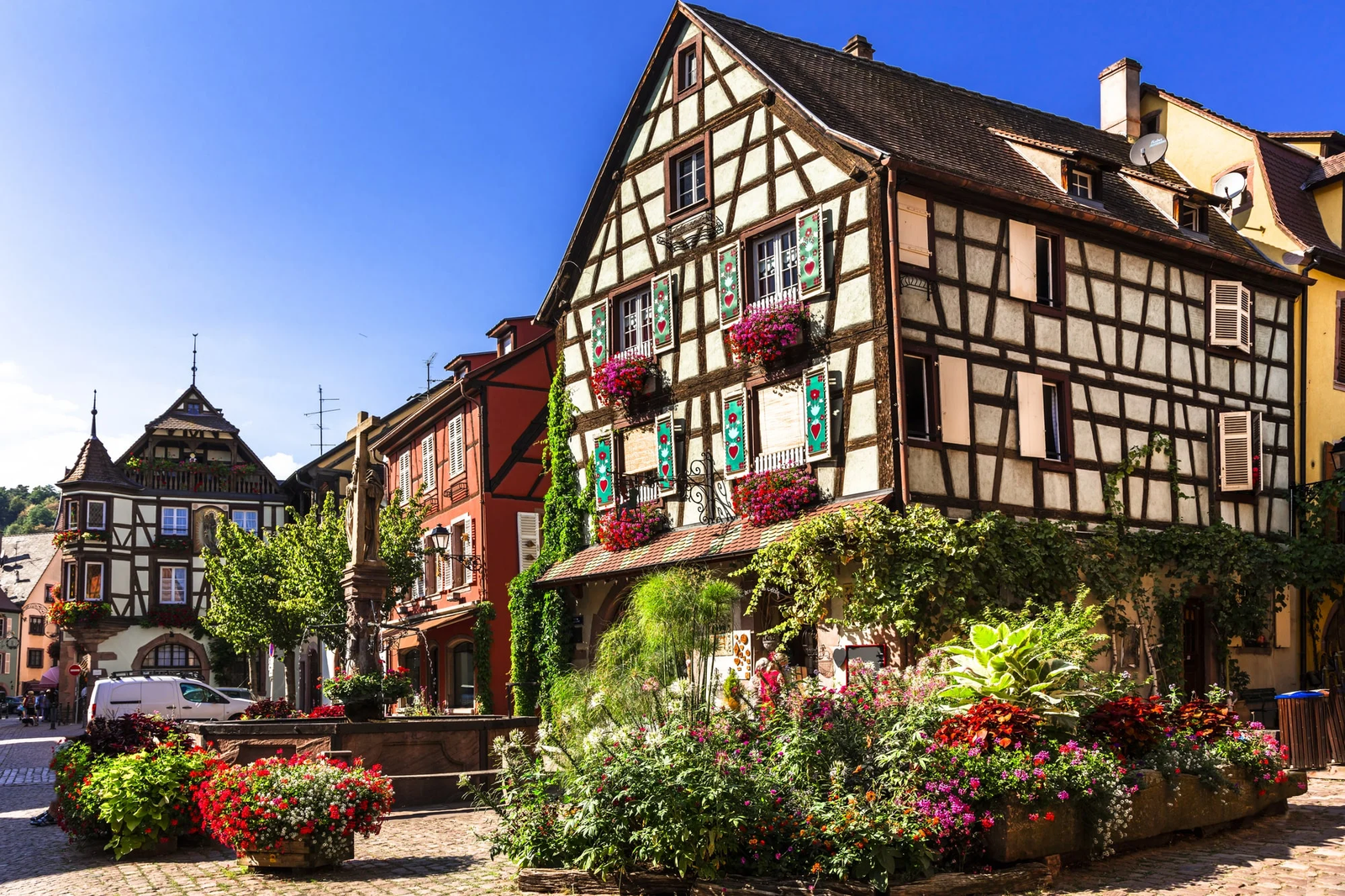
Alsace sits at a genuine crossroads, and its wine reflects that in ways no other French region quite matches. Wedged between the Vosges mountains and the Rhine, having changed hands between France and Germany four times between 1871 and 1945, this is a region that speaks a Germanic dialect at the dinner table, builds half-timbered villages that could pass for Bavaria, and yet insists, in its wine cellars, on being unmistakably French in ambition and precision. The result is something genuinely singular: German grape varieties and German-style single-varietal labeling, married to French rigor around terroir and a formal Grand Cru classification.
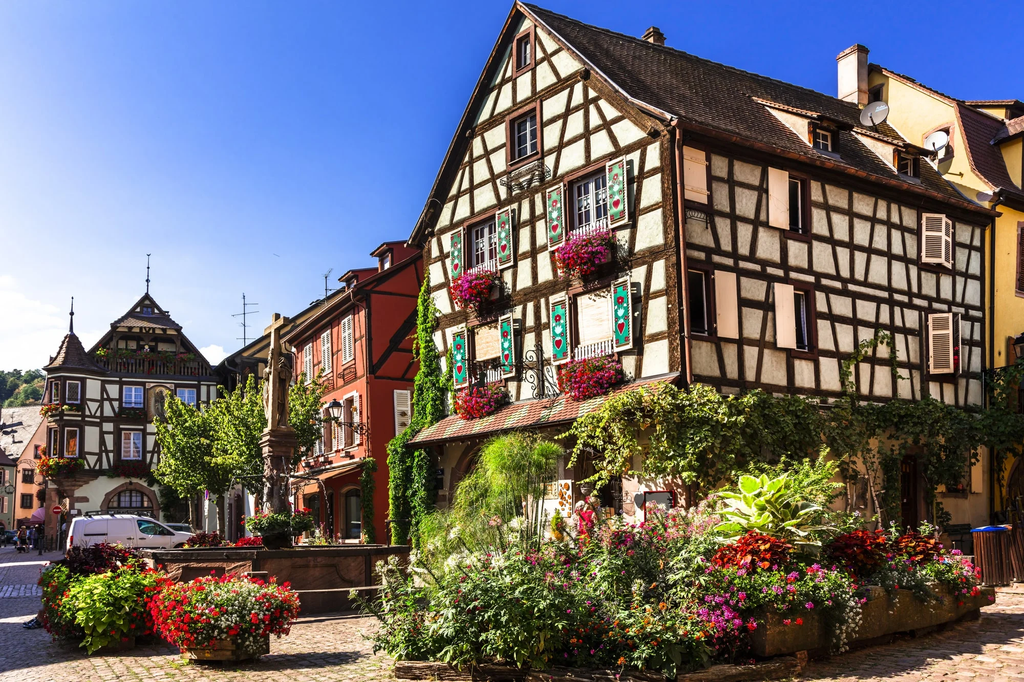
This is also, quietly, one of the most technically demanding regions to actually understand well, precisely because it looks simple on the surface. A label reading “Riesling” tells you the grape but very little else, since Alsace produces everything from bone-dry, age-worthy Grand Cru Riesling to lusciously sweet late-harvest bottlings from the same variety, sometimes from the same producer. Reading Alsace well means learning to look past the grape name on the label toward the vineyard, the producer, and the increasingly important question of residual sugar, none of which show up as clearly here as they do elsewhere in France.
This guide covers Alsace’s geography and history, its distinctive approach to grape variety and classification, four estates spanning the Haut-Rhin and Bas-Rhin, and where to find these wines at Dutch and Spanish retailers.
Geography and Terroir
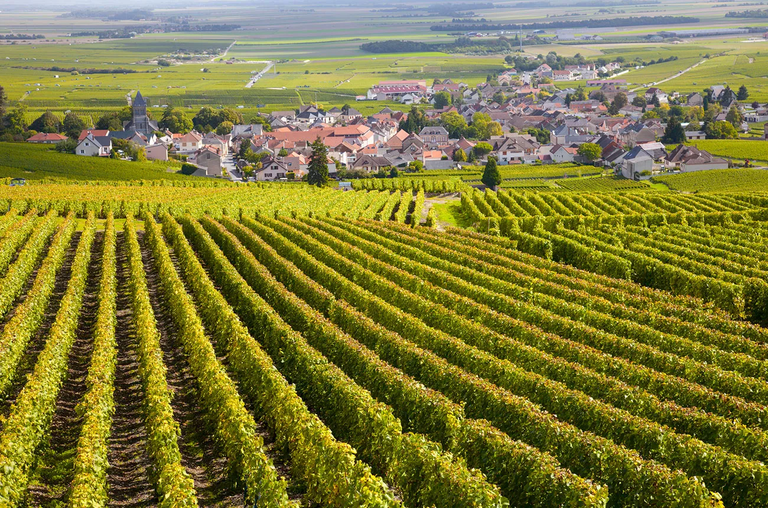
Alsace runs roughly 170 kilometers north to south along a narrow strip between the Vosges mountains to the west and the Rhine River and the German border to the east, split administratively into two départements: the Bas-Rhin in the north, around Strasbourg, and the Haut-Rhin in the south, around Colmar, which holds the large majority of the region’s most celebrated vineyards and villages.
The Vosges are the single most important geographic fact about Alsace wine. The mountain range creates a significant rain shadow, making Alsace the driest wine region in France, with some villages receiving under 500mm of rainfall annually, comparable to parts of the Mediterranean despite Alsace’s northerly, continental position. That dryness, combined with a genuinely warm, sheltered microclimate along the foothills, is what allows aromatic varieties like Gewürztraminer and Pinot Gris to ripen this far north fully.
Soil diversity across Alsace is exceptional for a region of its size, with more than a dozen distinct geological types represented across its vineyards, from granite and schist in the higher elevations to limestone, marl, sandstone, volcanic soils, and clay lower down. This variation happens over remarkably short distances, a direct consequence of the Rhine Rift Valley’s geological history, and is the primary justification behind the region’s plot-by-plot Grand Cru system, where a shift of a few hundred meters can mean an entirely different underlying rock.
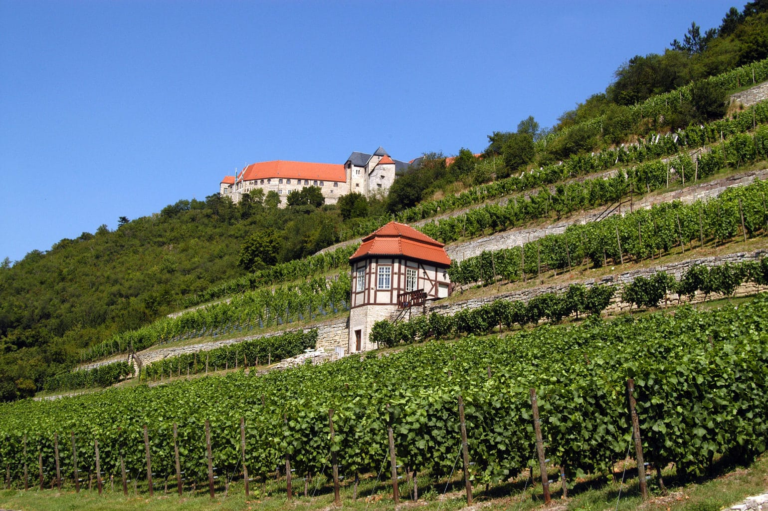
The Haut-Rhin’s most celebrated stretch runs through villages like Ribeauvillé, Riquewihr, Kaysersberg, and Eguisheim, clustered around Colmar and forming the historic heart of the Route des Vins d’Alsace. The Bas-Rhin, further north and cooler, has traditionally been seen as the region’s quieter half, though a wave of ambitious growers working there in recent decades, particularly around villages like Epfig and Barr, has meaningfully raised its profile.
A Short History
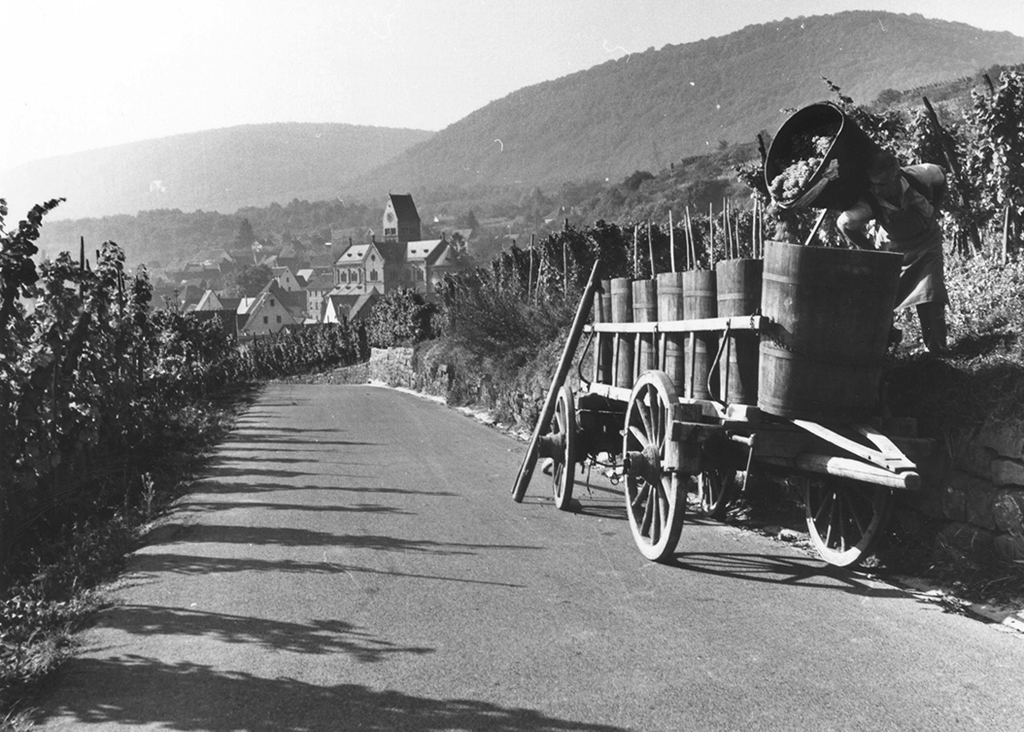
Alsace’s wine history is inseparable from its unusually turbulent political history. Vines have grown here since Roman times, and by the Middle Ages, Alsace wine, largely white and often quite highly regarded, was already being exported along the Rhine to German, Dutch, and English markets, a trade network that shaped the region’s winemaking culture as much as its language did.
The 20th century was brutal to Alsace and, by extension, its wine industry. The region changed sovereignty four times in under 75 years: annexed by the newly unified German Empire after the Franco-Prussian War in 1871, returned to France after the First World War in 1918, annexed again by Nazi Germany during the Second World War, and returned to France definitively in 1945. Each transition disrupted trade relationships, replanting decisions, and even which grape varieties were favored, and post-war Alsace inherited a vineyard area that had been significantly degraded by decades of instability and, during the German annexation periods, a shift toward high-yield, lower-quality production for the German market.
The rebuilding that followed the Second World War is the direct root of the modern region’s identity. Growers and negociants worked deliberately to reestablish Alsace’s reputation for quality, formalizing the AOC Alsace appellation in 1962 and, crucially, choosing to label wines by grape variety rather than by village or region, a distinctly German-influenced convention found almost nowhere else in France. The Grand Cru system followed a full decade later, its slow and often contentious rollout starting with a single vineyard in 1975 and not completing until 2007, reflecting just how difficult it was to build consensus on quality classification in a region still working out its post-war identity.
Grapes and the Single-Variety Label
Alsace permits eight grape varieties, and its central labeling rule sets it apart from nearly every other French wine region: a wine made from a single variety is labeled with that variety’s name, full stop, the same convention used across the Rhine in Germany.
Riesling, the region’s most planted grape at roughly a fifth of total plantings, produces steely, high-acid, dry wines capable of aging for a decade or more, especially from Grand Cru sites. Unlike German Riesling, which spans a full sweetness spectrum, Alsace Riesling is overwhelmingly vinified dry.
Gewürztraminer, spelled here without the German umlaut as a small but deliberate act of linguistic independence, is the region’s most instantly recognizable wine, intensely aromatic with lychee, rose petal, and exotic spice, often finished slightly off-dry.
Pinot Gris, called Tokay-Pinot Gris until EU regulation forced the change in 2007, produces rich, full-bodied wine with real weight and often a smoky, honeyed complexity, especially from top sites.
Muscat, less commonly planted but prized where it appears, is unusual among Muscat-family wines for typically being vinified fully dry, with intensely grapey, floral aromatics that belie its bone-dry palate.
Pinot Blanc, Sylvaner, Pinot Noir, and Chasselas round out the permitted varieties, with Sylvaner enjoying a genuine renaissance among quality-focused growers after decades of being treated as an afterthought, and Pinot Noir increasingly taken seriously as a red wine grape as the region’s climate warms.
Only Riesling, Gewürztraminer, Pinot Gris, and Muscat, the so-called four noble varieties, are permitted for Grand Cru production, with one long-standing exception: Sylvaner is uniquely allowed in the Zotzenberg Grand Cru, a historical anomaly that the appellation rules have simply preserved.
Classification: AOC, Grand Cru & Crémant
Alsace’s classification system runs across three main tiers.
Alsace AOC
The base appellation, covering the large majority of production, permits wine from any of the eight main varieties, either as a single-variety bottling or, less commonly, as a blend, most often labeled Edelzwicker or, among quality-focused producers today, Gentil.
Alsace Grand Cru AOC
Alsace’s top tier consists of 51 individually delimited vineyard sites, 14 in the Bas-Rhin and 37 in the Haut-Rhin, ranging dramatically in size from tiny Kanzlerberg at roughly 3 hectares to Schlossberg, the very first Grand Cru recognized in 1975, at closer to 80. Only the four noble varieties may be grown for Grand Cru production, yields are capped considerably lower than base AOC Alsace, and the label must state both vintage and the specific vineyard name. Producers who disagree with the classification’s grape restrictions or its village-by-village boundaries, a notable minority including some of the region’s most respected growers, sometimes choose to decline Grand Cru labeling entirely even from qualifying plots, bottling the wine instead under the base Alsace AOC, a genuinely unusual form of quality protest specific to this region.
Crémant d’Alsace
Alsace’s traditional-method sparkling wine, made predominantly from Pinot Blanc with Pinot Noir, Riesling, Pinot Gris, Auxerrois, and Chardonnay also permitted, has grown into a significant category in its own right, now accounting for a substantial share of total regional production and offering excellent value against Champagne for a similarly made wine.
Vendanges Tardives and Sélection de Grains Nobles
Beyond the three main appellations, Alsace also recognizes two late-harvest designations available across both AOC Alsace and Grand Cru sites. Vendanges Tardives (late harvest) wines are made from very ripe, late-picked grapes of the four noble varieties, ranging from off-dry to fully sweet. Sélection de Grains Nobles, reserved for grapes affected by noble rot, produces intensely sweet, rare wines comparable in ambition to Sauternes, though built around entirely different grape varieties.
Four Alsace Estates Worth Visiting
These four estates span Alsace’s geographic and stylistic range: a historic negociant house in Ribeauvillé, a biodynamic family domaine in Kaysersberg, a cult, largely unmarketed Grand Cru specialist in Turckheim, and a quietly influential Bas-Rhin producer pushing the region’s boundaries from Epfig.
Maison Trimbach (Ribeauvillé)
Founded in 1626 and now run by the 13th generation of the Trimbach family, this is one of Alsace’s oldest and most internationally recognized houses, holding roughly a third of the region’s Grand Cru vineyard land. Trimbach’s reputation rests above all on dry, age-worthy Riesling, and its Clos Sainte Hune, drawn from a tiny walled parcel within the Rosacker Grand Cru, is widely regarded as one of the world’s benchmark dry Rieslings, capable of aging for decades. Notably, Trimbach has historically declined to label several of its top wines, including Clos Sainte Hune and Cuvée Frédéric Emile, with the Grand Cru designation at all, preferring its own long-established naming conventions over the newer classification system.
- Address: 15 Route de Bergheim, 68150 Ribeauvillé, France
- Contact: +33 3 89 73 60 30, contact@trimbach.fr
- Visiting: Open Monday to Friday, 8:00 to 12:00 and 14:00 to 17:30, Saturday by appointment, subject to availability; closed Sundays and public holidays. Tastings by appointment; contact the estate ahead of a planned visit
Domaine Weinbach (Kaysersberg)
Housed in a former Capuchin monastery at the foot of the Schlossberg Grand Cru, Domaine Weinbach has been run by women for three consecutive generations, first Colette Faller after her husband Théo’s death in 1979, then her daughters Catherine and Laurence, and now Catherine’s daughter Eve Faller-Boeckel. Farmed biodynamically, the estate’s roughly 30 hectares include significant Grand Cru holdings in Schlossberg and Furstentum, and the domaine has built a particular reputation for Riesling and Gewürztraminer of real precision, alongside a genuinely excellent Pinot Blanc that outperforms the variety’s usual reputation.
- Address: 25 Route du Vin, 68240 Kaysersberg, France
- Contact: +33 3 89 47 13 21, contact@domaineweinbach.com
- Visiting: By appointment, Monday to Saturday, 9:00 to 12:00 and 14:00 to 17:30. Tastings start at around €15; book two to four weeks ahead during high season, as group sizes are kept deliberately small.
Domaine Zind-Humbrecht (Turckheim)
Created in 1959 through the marriage of Léonard Humbrecht and Geneviève Zind, though the family has farmed vines in the area since 1620, Domaine Zind-Humbrecht is widely considered Alsace’s most quietly influential estate, run today by Olivier Humbrecht, the first Frenchman to qualify as a Master of Wine. The domaine has farmed around 40 hectares biodynamically since 1997, with holdings across four Grand Crus, Rangen, Brand, Hengst, and Goldert- and bottles many of its non-Grand Cru wines under specific lieu-dit names like Clos Windsbuhl and Clos Häuserer rather than the generic village appellation, a level of site-specificity closer to Burgundian practice than typical Alsace convention. The estate deliberately keeps a low public profile, with no active marketing presence, relying instead on its wines and word of mouth among serious collectors.
- Address: 4 Route de Colmar, 68230 Turckheim, France
- Contact: +33 3 89 27 02 05, contact@zind-humbrecht.fr
- Visiting: Open Monday to Friday, 8:00 to 12:00 and 13:00 to 17:00; closed weekends. Visits are strictly by appointment, arranged at least a couple of weeks in advance, given the estate’s limited staff for tastings.
Domaine Ostertag (Epfig)
Founded in 1966 by Adolphe Ostertag and taken over by his son André in 1980, Domaine Ostertag has become one of the Bas-Rhin’s defining estates and a genuine counterpoint to the more famous Haut-Rhin producers further south. Farmed biodynamically since 1997 across around 14 hectares split into roughly 80 individual small plots, the domaine is known for a deliberately unconventional approach: André Ostertag was an early and vocal critic of overly sweet, high-residual-sugar Alsace wine at a time when much of the region leaned that way, and the estate’s wines, including its long-respected Pinot Gris and Riesling bottlings, are built instead around dryness, precision, and genuine site expression. The domaine now also produces a well-regarded Pinot Noir, reflecting the increasing seriousness with which Alsace red wine is being treated.
- Address: 87 rue Finkwiller, 67680 Epfig, France
- Contact: +33 3 88 85 51 34, info@domaine-ostertag.fr
- Visiting: By appointment; contact the domaine ahead of a planned visit, as there is no dedicated public tasting room with fixed walk-in hours.
Where to Buy Alsace Wine
Alsace is genuinely well represented across the three preferred retailers for this series, a welcome contrast to some of the smaller and more fragmented French regions covered earlier.
Decántalo carries all four estates profiled here in real depth. Maison Trimbach is stocked extensively, from the entry-level Riesling and Gewürztraminer through the Grand Cru Frédéric Emile bottling. Domaine Zind-Humbrecht appears across multiple lieu-dit cuvées, including the Roche Calcaire and Roche Granitique Riesling and Pinot Gris bottlings and the estate’s Zind blend. Domaine Weinbach is similarly well represented, and Domaine Ostertag’s Les Jardins Riesling, Gewürztraminer, and Pinot Gris are all available, making Decántalo a genuinely strong single source for readers wanting to explore this region without hunting across multiple retailers.
For Trimbach’s rarest bottlings, particularly Clos Sainte Hune, availability is inconsistent even at specialist retailers given the parcel’s tiny size and the wine’s collector status; checking directly with the estate or a dedicated fine wine merchant is the more reliable route for that specific cuvée. Colaris and Wijnbeurs both carry a general selection of Alsace wine as well, worth checking directly given how frequently regional selections rotate at both retailers.
Food Pairing
Alsace’s aromatic whites and genuinely hearty regional cuisine were built for each other, and the pairings here are some of the most reliable in this entire series. Riesling, with its high acidity and mineral drive, is the natural match for choucroute garnie, Alsace’s signature dish of sauerkraut with an assortment of pork and sausage, cutting cleanly through the dish’s richness and salt. It also pairs beautifully with freshwater fish, particularly trout, and with the region’s own tarte flambée (flammekueche), the thin, crisp flatbread topped with crème fraîche, onions, and lardons.
Gewürztraminer’s aromatic intensity and often off-dry finish make it the classic pairing for Munster cheese, itself a strong, pungent, washed-rind cheese produced in the Vosges foothills, one of the few wine and cheese pairings where both elements are genuinely local to the same valley. It also works well with Asian cuisine, particularly dishes with ginger, five-spice, or moderate heat, where its aromatic sweetness balances the spice.
Pinot Gris, fuller-bodied than Riesling, suits richer dishes: foie gras, roasted poultry, or creamy mushroom-based preparations. Crémant d’Alsace, crisp and food-friendly, works well as an aperitif or alongside the region’s charcuterie, while late-harvest Vendanges Tardives and Sélection de Grains Nobles wines pair naturally with fruit tarts, blue cheese, or foie gras served with a fruit compote.
Getting There and Planning Your Trip
Strasbourg, in the Bas-Rhin, is Alsace’s largest city and best-connected transport hub, with a direct TGV line from Paris in under two hours and its own airport with connections across Europe, making it a genuinely practical entry point from Amsterdam or Rotterdam via a Paris or direct connection. Colmar, further south in the Haut-Rhin and closer to the heart of the classic wine villages, is roughly 40 minutes from Strasbourg by regional train and makes the more natural base for a wine-focused trip, sitting within easy reach of Ribeauvillé, Riquewihr, Kaysersberg, and Eguisheim.
The Route des Vins d’Alsace, formalized in 1953, runs roughly 170 kilometers along the base of the Vosges foothills, threading through nearly all of the region’s best-known villages, and is genuinely drivable in stages, with most of the Haut-Rhin’s highlights coverable in two to three unhurried days. A car is the most practical way to move between estates, many of which sit down village lanes without meaningful public transport access, though several tour operators run half- or full-day minibus routes through the wine villages for visitors without their own transport. The route is also, notably, one of the more cyclable wine regions in France, with dedicated cycle paths connecting many of the main villages across largely flat terrain.
Harvest typically runs from September into October depending on grape variety and style, with late-harvest Vendanges Tardives and Sélection de Grains Nobles grapes sometimes picked considerably later. December brings genuine seasonal appeal too: Alsace’s Christmas markets, particularly in Colmar, Strasbourg, and Riquewihr, are some of the most celebrated in Europe and pair naturally with a round of Munster cheese and Gewürztraminer, though winery visits during this period require even more advance planning given the seasonal tourist volume.
Frequently Asked Questions
Why does Alsace label wine by grape variety instead of by region, unlike the rest of France? Alsace’s turbulent 20th-century history, including two periods under German annexation, left the region with strong German winemaking influence, particularly the convention of labeling wine by its single dominant grape variety. When the modern AOC Alsace appellation was formalized after the Second World War, growers deliberately retained this labeling approach rather than adopting the village- or estate-based systems used elsewhere in France.
What’s the difference between Alsace Riesling and German Riesling? Both come from the same grape, but Alsace Riesling is almost always vinified fully dry, while German Riesling spans a full range from bone-dry to lusciously sweet, often indicated by Prädikat terms like Kabinett or Auslese. The two styles reflect genuinely different winemaking philosophies despite sharing both the grape and, historically, cultural influence.
Can Alsace Grand Cru wines be sweet? Yes, though dry styles are more common. Grand Cru rules permit late-harvest style wines when conditions allow, and some producers make both a dry and a Vendanges Tardives or Sélection de Grains Nobles bottling from the same Grand Cru vineyard in a given vintage, so it’s worth checking the specific label rather than assuming Grand Cru automatically means dry.
Is Crémant d’Alsace a good alternative to Champagne? It’s made using the same traditional method as Champagne, with a second fermentation happening inside the bottle, though typically from different grape varieties, predominantly Pinot Blanc rather than Chardonnay or Pinot Noir. Quality varies by producer, but well-made Crémant d’Alsace offers genuinely good value against Champagne for a similarly produced sparkling wine.