Tuscany Wine Region: Chianti, Brunello & the Vineyards Worth Your Time
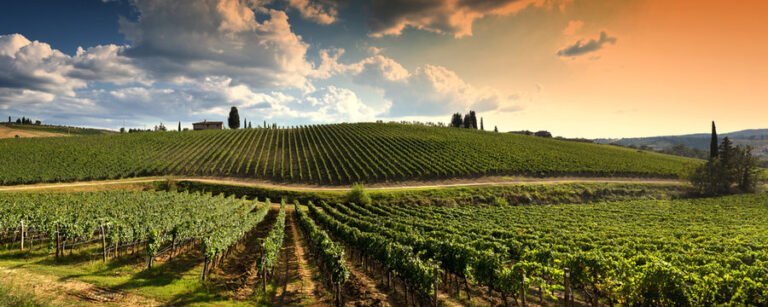
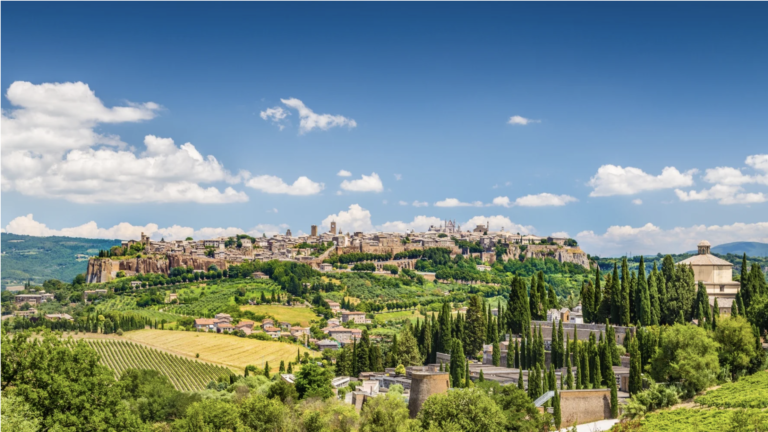
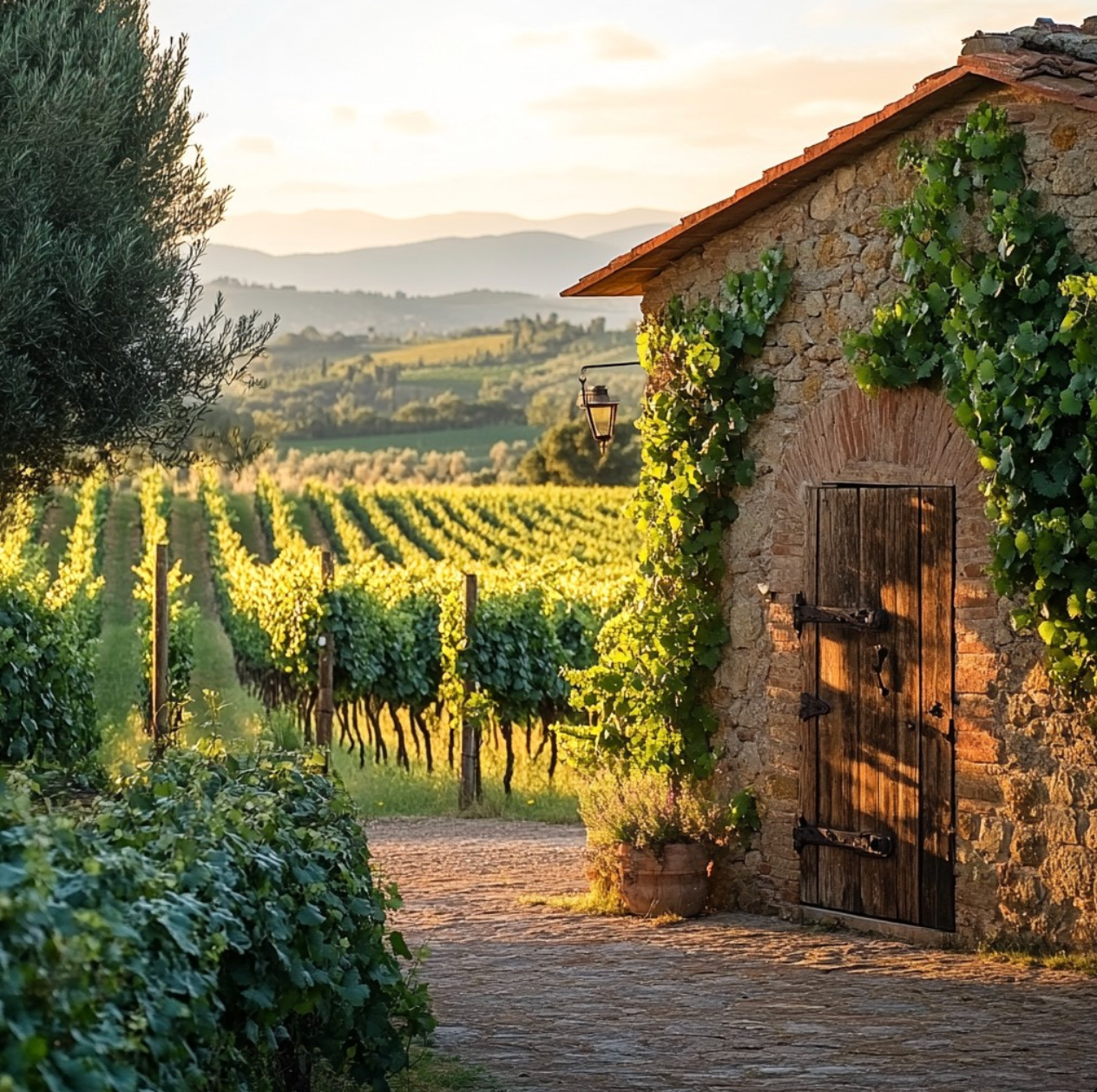
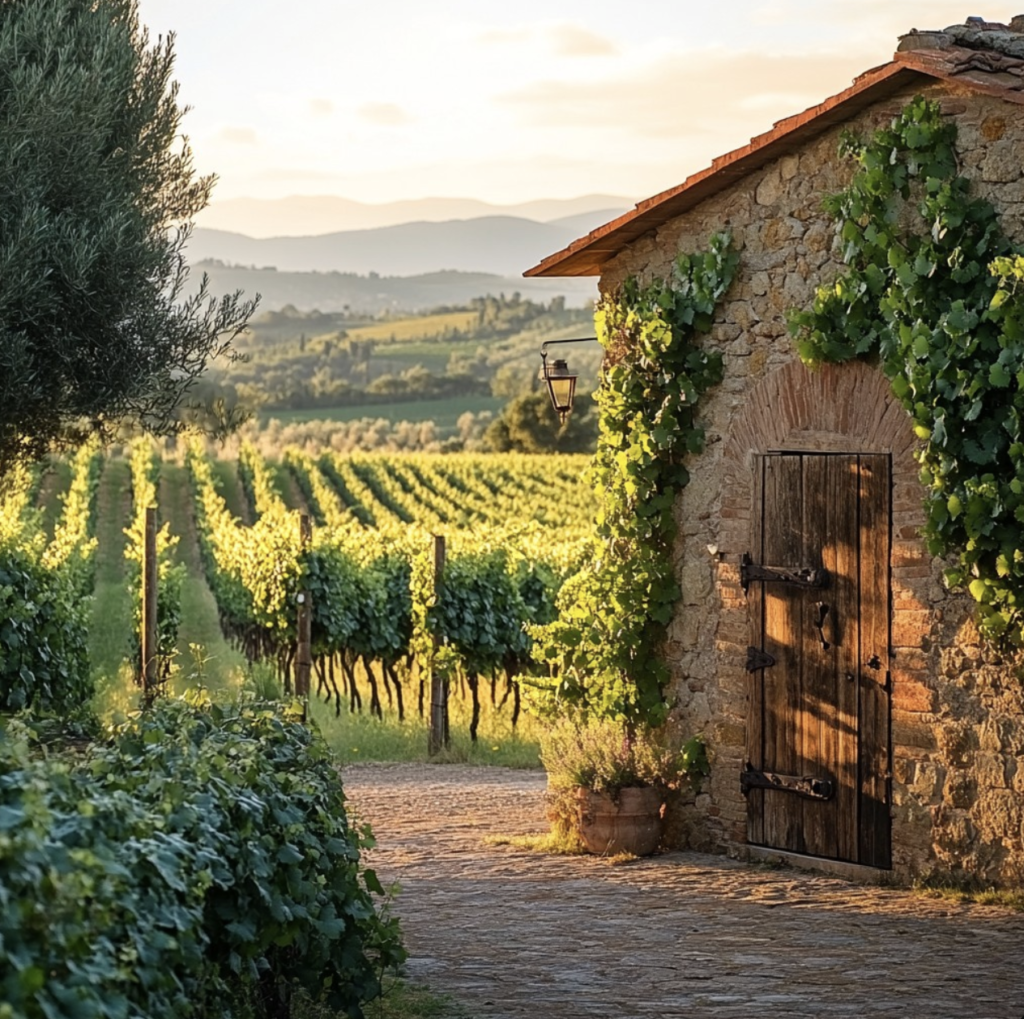
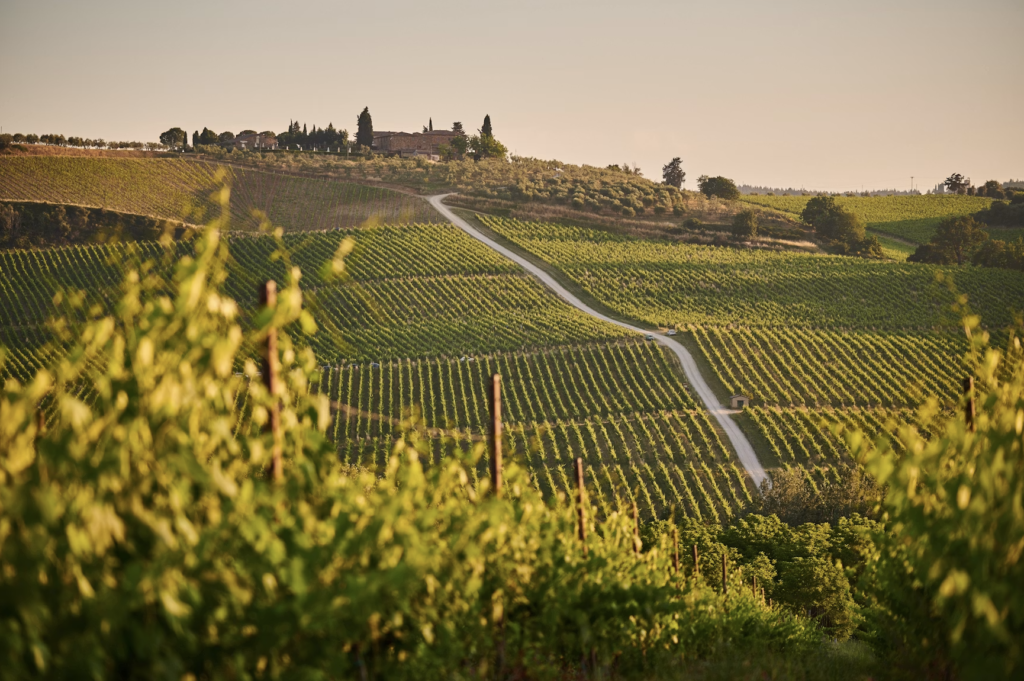
There is a particular moment, usually somewhere between Greve in Chianti and Panzano, when you stop looking at the map and just look out the window. Rows of Sangiovese climbing limestone ridges, stone farmhouses flanked by cypress trees, and light that seems uniquely calibrated for this landscape. No amount of reading prepares you for how Tuscany actually feels when you arrive.
But for wine lovers, the feeling deepens once you understand what is being made here, and why it matters. Tuscany is not simply a beautiful backdrop for wine tourism. It is one of the world’s most technically serious wine regions, with a collection of appellations that span centuries of tradition, decades of controversy, and some of the most intellectually compelling bottles Italy produces.
This guide takes you through the region’s key zones, the grapes and styles that define them, four estates genuinely worth visiting, and a curated selection of wines you can source online right now.
Understanding Tuscany’s Wine Geography
Tuscany stretches across central Italy, roughly from Florence in the north down toward the coast and the southern hill towns of Montalcino and Montepulciano. The terrain is dominated by ridges and valleys, with altitude playing a critical role in vine management, mitigating heat in summer and slowing ripening to preserve acidity.
The region is built almost entirely around one grape.
Sangiovese, Tuscany’s Native Son
Sangiovese is one of the most planted red grape varieties in Italy, but in Tuscany it finds its most articulate expressions. The grape is late-ripening, thin-skinned, and notoriously sensitive to site and clone. It produces wines with naturally high acidity, firm tannins, and aromas that range from sour cherry and dried tomato leaf in cooler sites to ripe plum, iron, and dried rose in warmer, south-facing vineyards.
Across Tuscany’s various DOCG zones- Chianti Classico, Brunello di Montalcino, Vino Nobile di Montepulciano, Morellino di Scansano- the grape goes by different names and faces different regulatory requirements. But the personality is consistent: savoury, structured, built for food, and capable of extraordinary longevity.
The Major Appellations
Chianti Classico, The Historic Heart
The original Chianti zone, a broad and often misunderstood DOC, covers a large swath of Tuscany. But the more serious destination is Chianti Classico, a separate DOCG lying between Florence and Siena. Wines carrying the Gallo Nero (black rooster) seal on the neck come from this historic core and are held to stricter requirements.
The appellation has three tiers. Basic Chianti Classico requires a minimum of 11 months ageing. Riserva demands 24 months total. Gran Selezione, introduced in 2014, is the top tier, wines that must come from a single vineyard or a selection of the estate’s best fruit, and age for at least 30 months. Gran Selezione changed the appellation’s ambitions considerably, giving producers a platform to compete with Italy’s finest single-vineyard expressions.
The soils here are dominated by galestro (crumbly, limestone-rich schist) and alberese (compact clay and limestone). Both drain well and stress the vine in productive ways. The result, in the best hands, is Sangiovese with real structural precision and a mineral tension that can sustain a decade or more of ageing.
Brunello di Montalcino, Italy’s Long Game
South of Siena, the hilltop town of Montalcino oversees what many consider Italy’s greatest red wine. Brunello di Montalcino is 100% Sangiovese, known locally as Sangiovese Grosso or Brunello, and carries some of the strictest ageing requirements in the country. Standard Brunello must spend at least five years ageing before release, two of which are in oak. Riserva requires six.
The result is a wine of extraordinary patience-demanding character. Great vintages from serious producers typically need a decade before they begin to open properly. The best examples from exceptional years can evolve comfortably for thirty years or more.
The region was essentially built by Ferruccio Biondi-Santi in the late nineteenth century, who isolated the Sangiovese Grosso clone and demonstrated what Montalcino’s territory could produce. Today, there are well over two hundred producers in the zone, ranging from traditional estates that age in large Slavonian oak casks to more modern operations that favour French barriques.
Vintages matter enormously here. 2016 is regarded as one of the finest of the modern era. Balanced, precise, with exceptional ageing potential. 2019 brought pure, fruit-filled wines with real elegance, widely compared to the best 2016s. And 2021 is shaping up to be a landmark year, producing wines of extraordinary finesse and energy that have attracted some of the highest scores critics have issued in years.
Bolgheri and the Super Tuscans
On the coast, roughly two hours west of Siena, a different story unfolded. In the 1940s, Marchese Mario Incisa della Rocchetta acquired the Tenuta San Guido estate and planted Cabernet Sauvignon, drawing on his admiration for Bordeaux and recognising something in Bolgheri’s stony, well-drained soils and Mediterranean climate that others had missed. The wine he made, Sassicaia, was initially produced for private consumption and sold commercially from 1968. A 1978 blind tasting in London saw it outperform premier Bordeaux châteaux in a Decanter magazine comparison. The reputation was sealed.
Sassicaia was, for years, technically illegal under Italian wine law; the regulations permitted only Sangiovese or other native varieties in Tuscany’s recognised appellations. The wine had to be sold as a humble Vino da Tavola (table wine). The same fate befell Antinori’s Tignanello, launched in 1971, which broke two significant rules: it included Cabernet Sauvignon and Cabernet Franc alongside Sangiovese, and it was aged in small French barriques rather than large Slavonian oak casks.
The wine press began calling these wines Super Tuscans, a category defined not by law but by quality. In 1994, Bolgheri received DOC status and the wines were finally legitimised. Today the appellation is home to some of the most sought-after and expensive bottles in Italy: Sassicaia, Ornellaia, Masseto, Guado al Tasso.
Four Vineyards Worth Visiting
Antinori nel Chianti Classico, Bargino
The modern flagship estate of the Antinori family is one of the most architecturally dramatic wineries in the world. Completed in 2012, the building sits partially embedded into the hillside near Bargino, with the roof planted with vineyards. An extraordinary piece of design that makes it almost invisible from a distance. Inside, the scale is enormous, with vast ageing cellars, a museum, a rooftop restaurant (Rinuccio 1180), and a dedicated wine shop where visitors can taste across the full Antinori portfolio.
The winery offers several guided experiences, ranging from an introductory tour and tasting of three wines to a deeper cellar exploration followed by four wines in the suspended glass-walled tasting room overlooking the estate. All visits require advance booking.
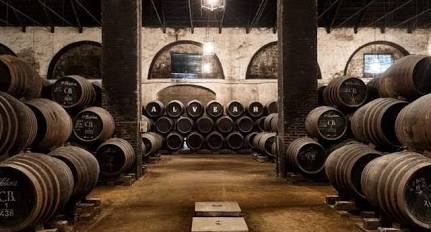
Nearby, on the road toward Tavarnelle Val di Pesa, sits Badia a Passignano, the estate that has been in continuous agricultural use since 395 AD and was purchased by the Antinori family in 1987. The abbey cellars below the medieval Vallombrosan monastery are among the most atmospherically extraordinary wine cellars in Italy, with vaulted stone ceilings and constant natural humidity. Visits here are by appointment only, arranged through the Osteria di Passignano, which operates a Michelin-starred restaurant on the same property. Tastings include the Badia a Passignano Chianti Classico Gran Selezione, a monovarietal Sangiovese considered one of the finest expressions of the appellation.
Contact: Via Passignano 33, Loc. Badia a Passignano, Tavarnelle Val di Pesa | +39 055 807 1278 | info@osteriadipassignano.com
Castello di Ama, Gaiole in Chianti
Located in the municipality of Gaiole in Chianti, about 12 miles northeast of Siena, Castello di Ama is one of the most intellectually coherent wine estates in Tuscany. Founded in 1976, it was among the first estates in the appellation to champion the concept of the cru, producing single-vineyard wines that could articulate the distinct character of individual sites. Winemaker Marco Pallanti, who has been at the estate since 1982 and served as president of the Chianti Classico Consortium, was instrumental in creating the Gran Selezione category, which Ama had been effectively making decades before the designation existed.
The estate’s flagship San Lorenzo Chianti Classico Gran Selezione has appeared in Wine Spectator’s Top 100 and the 2021 vintage received 100 points from Antonio Galloni for the L’Apparita, the estate’s monovarietal Merlot, the first of its kind in the appellation.
What sets Castello di Ama apart for visitors is an ongoing commitment to contemporary art. The estate has collaborated with internationally recognised artists, including Louise Bourgeois, Chen Zhen, and Daniel Buren, who have created permanent site-specific installations throughout the property. A guided tour takes visitors through the historic cellars, the contemporary art installations, and culminates in a tasting of three Chianti Classico wines. More immersive experiences, including private tastings of the flagship San Lorenzo, are available for those who book in advance.
Contact: Località Ama, Gaiole in Chianti | info@castellodiama.com | castellodiama.com
Ornellaia, Bolgheri
Founded in 1981 by Marchese Lodovico Antinori, Ornellaia sits just off the Via Bolgherese, a few kilometres from the medieval village of Bolgheri with its famous cypress-lined avenue. The estate spans two properties, the original site with 30 hectares of vineyards and the Bellaria property with a further 46 hectares, giving access to diverse parcels across the coastal plain. Under Frescobaldi ownership since 2005, the estate has maintained a level of ambition and consistency that has made the flagship Ornellaia Bolgheri DOC Superiore one of the most collected Italian wines on the secondary market.
Visits to Ornellaia are genuinely memorable but require forward planning; demand consistently outpaces available slots, and it is advisable to book months in advance, particularly for peak season. The standard guided tour takes visitors through the vineyards and state-of-the-art production cellars, followed by a tasting of several wines. More exclusive experiences include the Vendemmia d’Artista picnic beneath the century-old Bellaria oak tree, where a gourmet spread is paired with Ornellaia’s Poggio alle Gazze white wine.
Note: the estate is closed on Saturdays and Sundays, which is unusual for the region. Plan accordingly.
Contact: Località Ornellaia 191, 57022 Bolgheri (LI) | +39 0565 71811 | info@ornellaia.it | ornellaia.com
Casanova di Neri, Montalcino
For those prepared to go deeper into Brunello, Casanova di Neri offers one of the most rewarding visits in the entire region. Founded by Giovanni Neri in 1971 with just 12 hectares of vineyards on the eastern slopes of the Montalcino hill, the estate has grown to 63 hectares and is now run by Giovanni’s son Giacomo, who has refined a style that sits comfortably between power and precision.
The flagship Tenuta Nuova Brunello di Montalcino comes from a single vineyard at 250 to 300 metres elevation. Grapes are harvested by hand and the wine ages for 24 to 30 months in a combination of tonneaux and barriques before a further year in bottle. The 2019 vintage received 97 points from Robert Parker’s Wine Advocate. The Cerretalto Brunello, the estate’s riserva-level wine from a single vineyard of older vines, received 98 points from Jeb Dunnuck for the 2018 vintage.
Visits are hosted in the estate’s atmospheric tasting room, which has something of a private cellar feel, accessed through what regulars describe as a “secret door.” The experience is intimate, often personally guided, and gives a direct sense of how carefully this family manages both the vineyards and the relationships with the people who come to taste their wines.
Contact: Directly via the estate website at casanovadineri.com
Wines to Buy Online Right Now
You do not need to be in Italy to access the best of these appellations. Below are wines currently available through Wijnbeurs, Colaris, and Decantalo, three of the most reliable online sources for this category.
Antinori Tignanello Toscana IGP, Available at Colaris and Decantalo
Tignanello is where the Super Tuscan story begins for most wine lovers. Made at the Tenuta Tignanello estate in the heart of Chianti Classico, the blend is typically around 80% Sangiovese with Cabernet Sauvignon and a small amount of Cabernet Franc, aged in French and Hungarian barriques for around a year. It was first produced in 1971, initially as a Vino da Tavola given that the inclusion of non-native varieties placed it outside the existing appellation rules.
The 2020 vintage shows a concentrated profile of ripe red and black fruit with sweet spice, leather, and a balsamic quality on the nose. The palate is clean and smooth, with refreshing acidity and a long, polished finish. Medium-bodied for Tignanello, it is one of the more approachable recent vintages.
Colaris carries Tignanello alongside the estate’s Solaia, a Cabernet Sauvignon-dominant blend from the warmest parcel of the Tignanello estate, which received 100 points from Vinous for the 2021 vintage. Decantalo also stocks the Marchese Antinori Chianti Classico Riserva, a more accessible entry point into the Antinori range.
Where to buy: colaris.nl | decantalo.com
Fuligni Brunello di Montalcino 2021, Available at Colaris
If there is one wine from the 2021 Brunello vintage that has generated more discussion than any other, it is the Fuligni. The estate has been producing wine in Montalcino since 1899 and sits on the eastern slopes of the hill at 380 to 450 metres elevation, prime territory for Sangiovese that retains natural acidity and expresses genuine terroir character. Under the stewardship of Maria Flora Fuligni, with winemaking input from Paolo Vagaggini, the house style is one of classicism and restraint.
The 2021 received 99 points from James Suckling, who described the nose as perfumed and seductive with black cherries, minerals, and rose petals, followed by ultra-fine tannins on the palate. Eric Guido at Vinous awarded 95 points, noting the wine’s model purity and lifted, silken feel. Jeb Dunnuck praised the jewelled ruby colour and the wine’s vibrant energy. Multiple critics agree it will benefit from cellaring to 2027 or beyond.
Colaris has the 2021 in stock and describes it as one of the most vital and intense expressions in their Italian range. It is rare to encounter a 100-point wine (one critic’s assessment) at this price point, and the 2021 represents a genuine opportunity for collectors.
Where to buy: colaris.nl
Casanova di Neri Brunello di Montalcino Tenuta Nuova, Available at Decantalo
Decantalo stocks the Tenuta Nuova across multiple vintages, with the 2016 currently available — one of the most celebrated years in the appellation’s modern history. The wine is 100% Sangiovese from the estate’s namesake vineyard at 250 to 300 metres elevation. After fermentation and maceration for approximately 23 days, it ages in small French oak barrels for 24 to 30 months, followed by a minimum of one year in bottle before release.
This is a wine that rewards patience. The tannin structure in the 2016 is formidable in youth, but the underlying fruit concentration and natural acidity give it the architecture to develop beautifully over the next decade. If you have the discipline to put it down, this is one of the more rewarding bottles available in this price category.
Where to buy: decantalo.com
Bolgheri DOC from Wijnbeurs
For those drawn to the coastal Super Tuscan style, Wijnbeurs carries a strong selection of Bolgheri DOC wines, including wines made in the classic Bordeaux-variety style that defines the appellation. The wines in this range typically blend Cabernet Sauvignon, Merlot, Cabernet Franc, and sometimes Petit Verdot, with ageing in small French oak that adds structure without obscuring the fruit.
Wijnbeurs’ blind tasting approach means every wine on their shelves has been assessed before listing, which provides a degree of reassurance when exploring less familiar producers in the appellation.
Where to buy: wijnbeurs.nl
Planning Your Visit to the Tuscany Wine Region
When to Go
Late September through early November is the best window if you want to see the harvest in action. The vendemmia (harvest) brings the estates to life and gives tastings a particular urgency; the winemaker’s attention is partly on the cellar, but so is yours. The weather at this time of year is typically warm during the day and cool at night, and the landscapes are genuinely spectacular as the vines begin to turn.
Late spring (May and June) is a quieter alternative. The vines are green and flowering, the estates less crowded, and accommodation noticeably easier to book. July and August can be done, but temperatures in the hill towns and valleys regularly exceed 35°C, and some estates reduce their visitor hours or close for summer maintenance.
Getting Around
A car is essentially non-negotiable if you want to move freely between appellations. The SR222 (known as the Chiantigiana) is the backbone of Chianti Classico, a winding road running between Florence and Siena through Greve, Panzano, Radda, and Gaiole. It is narrow in places, so plan journeys with more time than Google Maps suggests.
For Montalcino, approach from Siena on the SP45 and the climb to the hilltop town itself is worth the drive. The views from the fortress walls take in most of the production zone.
Bolgheri is a different kind of journey, flat coastal territory. The famous Viale dei Cipressi, the cypress-lined avenue leading to the village of Bolgheri, is a road that stops most wine-aware visitors in their tracks. From Bolgheri, the main estates are within a few kilometres.
Staying in Wine Country
Within Chianti Classico, the area around Panzano and Gaiole offers the most concentration of quality estates. Castello di Ama itself has a handful of rooms in the main villa for those who prefer to simply not leave. In Montalcino, the town itself is small and walkable, and several agriturismos in the surrounding countryside offer stays on working estates.
For Bolgheri, Castagneto Carducci is the nearest base with reasonable accommodation options, and the town makes a logical hub for exploring both the coastal Maremma and the Bolgheri estates.
A Note on Vintage Strategy
For those buying Tuscan wines to drink in the near to medium term, a few general rules apply.
Chianti Classico from the 2019 and 2020 vintages is currently at or near its drinking window for producers who work in a more modern, approachable style. Gran Selezione from 2019 will benefit from another three to five years. The 2021 Gran Selezioni are still very young and should not be hurried.
Brunello di Montalcino from 2016 is still developing and rewards cellaring. 2019 is more immediately expressive, one of the more generous recent vintages, and can be opened with pleasure now while continuing to improve. The 2021s, only recently arriving on the market, should be treated as long-term cellaring propositions by anyone serious about the appellation.
For Bolgheri, the Super Tuscans generally need five to ten years from vintage to hit their stride. Tignanello from 2020 can be approached now with decanting; a 2015 or 2016, if you can find one, will be drinking closer to its best.
Final Thoughts
Tuscany rewards depth of engagement. The casual visitor sees beautiful scenery, drinks pleasant wine, and leaves happy. The wine-focused traveller who takes time to book tastings, research producers, and spend a few extra days in the region leaves with something harder to define. A structural understanding of how geography, climate, and human choices combine to produce bottles that can sit in a cellar for twenty years and still have something to say.
The four estates above, Antinori nel Chianti Classico, Castello di Ama, Ornellaia, and Casanova di Neri, are not the only worthwhile destinations in the region. They are, however, four that consistently deliver what serious wine visitors actually want: intellectual rigour, genuine hospitality, wines that say something about where they come from, and an experience you will actually remember.
Book well in advance. Bring patience. And do not skip the food.