Trentino-Alto Adige Wine: A Travel Guide to Italy’s Alpine Wine Country
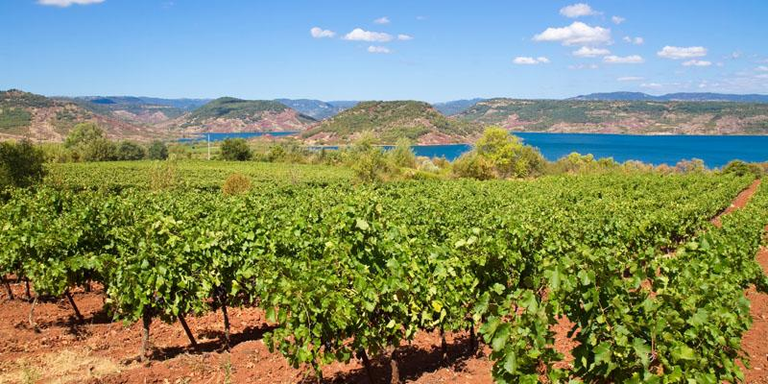
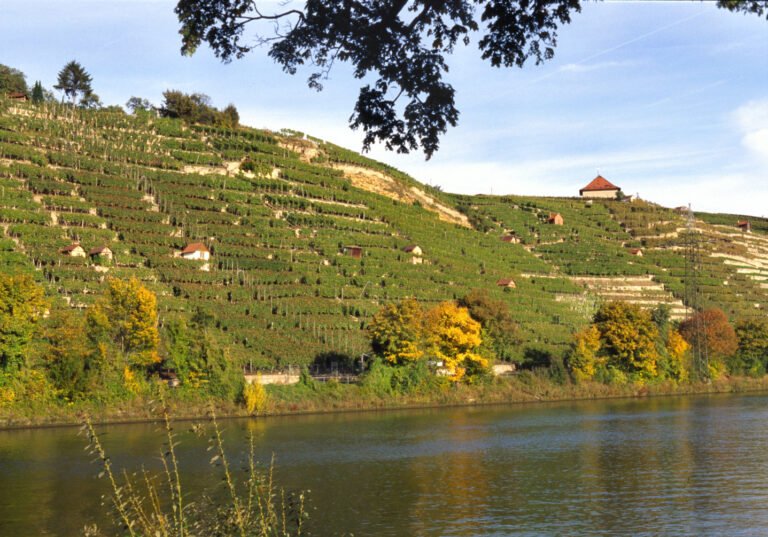
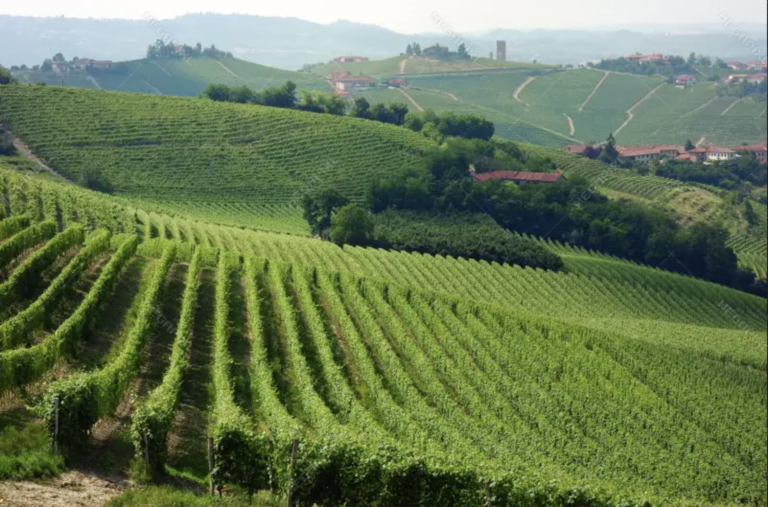
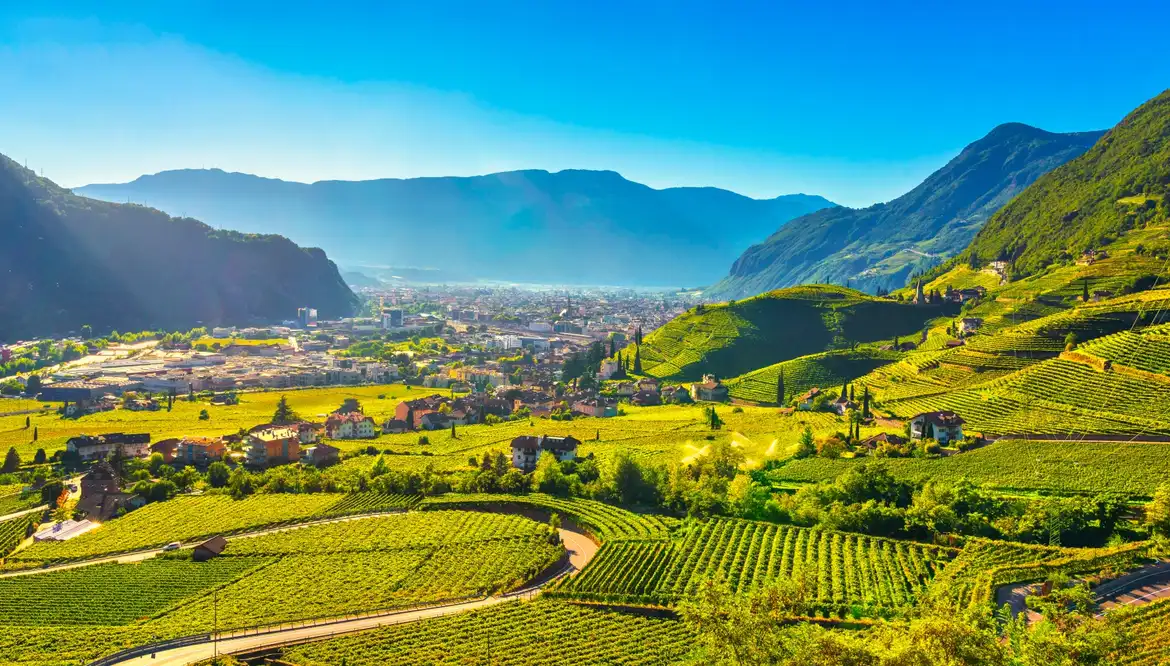
There is a moment, driving north from Verona along the Adige valley, when the landscape changes quite suddenly. The broad flatlands of the Veneto give way to a narrowing gorge, the road is pressed between river and rock face, and the vineyards begin to climb the slopes in terraces that were cut out of the mountainside over centuries. You are entering Trentino-Alto Adige, and it feels like crossing into a different world entirely.
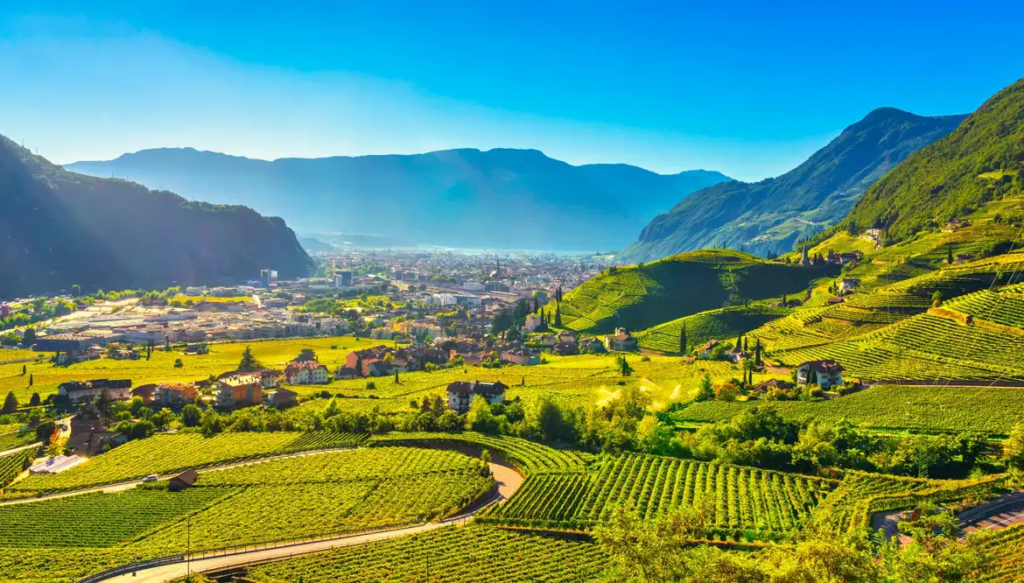
That sense of crossing borders is accurate in more ways than one. Trentino-Alto Adige is a region with two identities, two languages, and two very distinct wine personalities. In the south, around the city of Trento, the culture is Italian, and the wines reflect that: expressive sparkling wines under the Trentodoc appellation, indigenous reds like Teroldego and Marzemino, and a confident sense of place rooted in Italian viticultural tradition. Travel north toward Bolzano and the Alto Adige, and the signs switch to German, the cuisine starts to look Austrian, and the wines take on a precision and Alpine freshness that puts them in a category of their own within Italy.
For wine travellers who have already covered the obvious Italian regions, Trentino-Alto Adige is where the real discovery begins.
Two Regions, One Appellation: Understanding the Geography
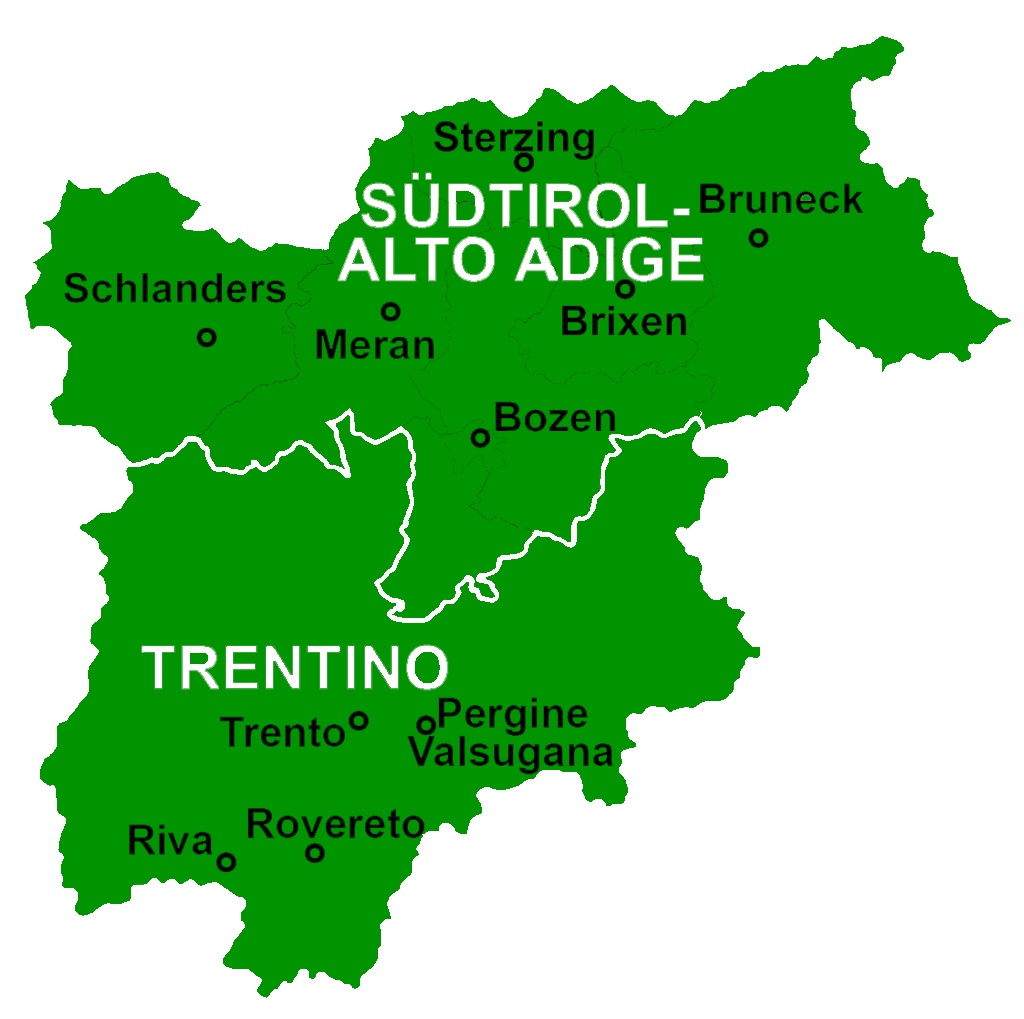
The region sits at the northern tip of Italy, bordered by Austria to the north and by Lombardy and the Veneto to the south and east. The Dolomites loom on three sides. The valley of the River Adige is the spine that connects everything, and it is along this corridor that most of the winegrowing happens.
Trentino, the southern province, has a largely Italian-speaking population and produces the bulk of the region’s volume. The terrain here is varied, with broad alluvial plains at lower altitude and steep hillside vineyards above. The flagship designation is Trento DOC, now marketed as Trentodoc, which covers sparkling wines made by the traditional method from Chardonnay, Pinot Nero, Pinot Bianco, and Pinot Meunier. These can age for extended periods on the lees and rival serious Champagne in complexity and texture, though they tend to be somewhat more Alpine in character, with a steelier acidity and a mountain freshness that sets them apart.
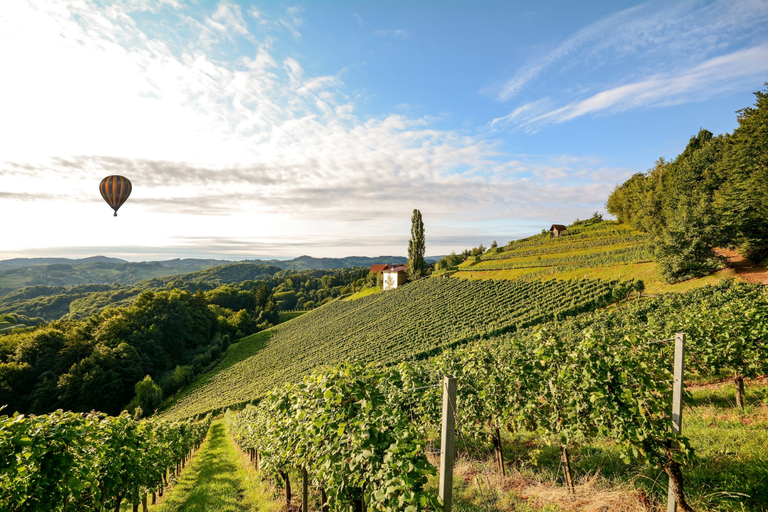
Further north, the province of Alto Adige (Südtirol in German) is a different proposition. Here, around two-thirds of the population speaks German as their first language. The vineyards are predominantly on steep slopes rising from the valley floor to elevations that, in some spots, push toward 1,000 metres above sea level. The diurnal temperature swings at these altitudes- warm enough during the day to ripen grapes fully but with cool nights that protect acidity and aromatic intensity- produce white wines of extraordinary precision and longevity.
The grape that most uniquely defines Alto Adige is Gewürztraminer, and the grape’s name tells you something about this region’s history. The village of Tramin (Termeno in Italian) along the Alto Adige wine road is where the variety is thought to have originated, and the local cooperative, Cantina Tramin, continues to make what many consider the reference point for the grape worldwide. Alongside Gewürztraminer, Alto Adige excels with Pinot Bianco, Pinot Grigio, Sauvignon Blanc, and the indigenous red Lagrein, which produces wines of dark colour, notable structure, and a distinctive wild herb character.
The region has no DOCG wines but carries roughly ten DOC titles, the most significant being Alto Adige DOC, Trentino DOC, Trentodoc (for sparkling wines), Teroldego Rotaliano DOC, and Lago di Caldaro DOC for the lighter-style Schiava-based wines from the area around the Caldaro lake south of Bolzano.
The Grapes Worth Knowing
Teroldego
This is Trentino’s most original red variety and one of the more fascinating indigenous grapes in all of Italy. It is grown almost exclusively in Campo Rotaliano, a small alluvial plain north of Trento near the town of Mezzolombardo, where the rivers Adige and Noce converge and deposit a patchwork of limestone, granite, and porphyry gravels. Genetically, Teroldego is a grandparent of Lagrein and an uncle of Syrah, which explains why good examples have that combination of dark fruit, violet aromatics, and mineral tension that makes them feel more structured than their weight might suggest.
At its best, Teroldego produces wines that are deeply coloured, with black cherry, plum, and dark herb on the nose, a lively acidity on the palate, and a long mineral finish. The grape can also produce wines that are simply jammy and unremarkable when yields are too high, which is why the best producers in Campo Rotaliano are those who keep strict control over their fruit.
Lagrein
Lagrein is native to the valleys around Bolzano and is the dominant red variety in Alto Adige. It is a late-ripening grape that thrives on the sun-exposed slopes around the city, producing wines with deep, inky colour, aromas of blackberry, violet, and dark chocolate, and a characteristic slightly bitter finish that makes it an excellent partner for food. The best examples, particularly from Riserva bottlings that spend time in oak, are wines of real complexity and ageing potential.
Lagrein also produces a rosé version called Kretzer, which can be surprisingly serious and structured for a rosé, with a dried raspberry and spice character that goes well beyond the pale, neutral style that has dominated European rosé markets for decades.
Gewürztraminer
Gewürztraminer divides opinion, but in Alto Adige it finds a home that brings out its best qualities. The cool nights and warm days of the Alto Adige slopes give the variety enough time to develop full aromatic intensity without losing acidity, which is the balance that makes the difference between a genuinely interesting wine and something that is merely perfumed and heavy. The variety takes its name from Tramin, its likely place of origin, and the wines from the best producers here, particularly the single-vineyard examples, are among the most structured and ageworthy expressions of Gewürztraminer produced anywhere. Expect lychee, rose petal, ginger, and dried spice on the nose, with a waxy texture and considerable length.
Trentodoc and Metodo Classico Sparkling
The sparkling wines of Trentino are made using the same method as Champagne: secondary fermentation in the bottle followed by extended ageing on the lees before disgorgement. The Chardonnay-based versions from the hills around Trento, particularly at higher elevations in the Val di Cembra and Paganella zones, develop a fine, persistent perlage and a vinous depth that rewards those who approach them with the same seriousness as vintage Champagne. Extended-ageing Riserva examples from houses like Ferrari spend years on the lees before release and can age for a decade or more in bottle.
Pinot Bianco and Pinot Grigio
Both varieties reach unusually high quality in Alto Adige. Pinot Bianco, in particular, is perhaps the most underrated white wine in Italy: in the right hands, it is restrained, mineral, and complex, with a tension between ripe apple and citrus and a long, saline finish. The wines from the Terlano cooperative are perhaps the clearest demonstration of what Pinot Bianco is capable of, with some bottlings showing remarkable freshness after a decade in the bottle.
Food and Wine in the Region
Eating in Trentino-Alto Adige requires some adjustment if you have arrived from southern Italy. The cuisine is much closer to Central European cooking than to the Mediterranean template. In Alto Adige, the staple is speck, a cured, lightly smoked ham that appears on almost every table; canederli (large bread dumplings served in broth or with butter and cheese), polenta with game, and Tiroler Gröstl (a pan of fried potatoes and meat) are common dishes. The wines, with their natural freshness and Alpine character, are extremely well matched to this food. A glass of Lagrein with speck and mountain cheese is one of the more satisfying combinations in Italian food culture, and the local Schiava, a pale, light-bodied red with low tannin and a slight almond note on the finish, works brilliantly with the lighter dishes and charcuterie.
In Trentino, the cooking moves a little closer to the Italian mainstream: fresh pasta, lake fish from Garda and the local mountain lakes, mushrooms, and a tradition of making apple strudel that competes seriously with Austria for quality. The Trentodoc sparkling wines are obvious companions for the lighter dishes, but the region’s Chardonnay and Nosiola (a local white variety used to make the rare, honeyed Vino Santo Trentino) also pair beautifully with the fish and vegetable-focused cooking of the area.
Wineries Worth Visiting
Ferrari Trento, Trento
Ferrari is the founding house of Trentodoc and the producer that has done more than any other to establish Italian sparkling wine as a serious category. The winery was created in 1902 by Giulio Ferrari, an enologist who studied viticulture in the Champagne region and returned to Trentino convinced that the hillside vineyards around Trento had the terroir to produce world-class sparkling wine from Chardonnay and Pinot Nero. From the 1950s onwards, the Lunelli family took over and built the winery into the benchmark producer it is today.
Visiting Ferrari is a genuinely impressive experience. The cellars run deep underground beneath the hills above Trento, storing bottles in an atmosphere of cool, quiet darkness. The guided tours pass through historical areas of the winery, explaining the riddling, disgorging, and ageing process, before arriving at a dedicated tasting room where the range of Trentodoc wines is presented. The flagship Giulio Ferrari Riserva, made from a single vineyard of Chardonnay and aged for a minimum of ten years on the lees, is one of the great sparkling wines of Italy.
The full experience also includes the option to visit the sixteenth-century Villa Margon, an estate above the vineyards with remarkable Renaissance frescoes, and to dine at the Michelin-starred Locanda Margon, where the kitchen works closely with the wine range.
Winery tours run Monday to Saturday and on the last Sunday of each month. Multiple tour formats are available, from a standard cellar tour with tasting of the Perlé range to extended experiences combining the vintage wines, Villa Margon, and lunch or dinner at Locanda Margon. Reservations are essential and can be made via hospitality@ferraritrento.it or by calling +39 0461 972331. The winery is accessible from Trento train station by urban bus (lines 12 or 14).
Website: ferraritrento.com
Foradori, Mezzolombardo
Foradori occupies a special place in Italian wine culture. Elisabetta Foradori took over the family estate in 1984 at the age of twenty, at a time when Campo Rotaliano’s Teroldego was largely being grown for high yields and cooperative production at the expense of quality. Her decision to pursue low-intervention, biodynamic viticulture and to push Teroldego toward the highest level of quality was, at the time, considered eccentric. Decades later, the winery is a reference point not just for Trentino but for the broader Italian natural wine movement.
The estate has around 30 hectares of vineyards in Campo Rotaliano, farmed biodynamically and certified Demeter. Teroldego is the focus, and the range moves from the entry-level Foradori Teroldego (a blend of multiple plots, fresh and vibrant in style) through the single-vineyard Sgarzon and Morei bottlings to the old-vine Granato, which comes from pergola-trained vines averaging 70 years of age. Several of the wines are aged in clay amphorae rather than oak or stainless steel, which preserves the fruit character and terroir expression while adding a subtlety and complexity that barrel ageing can sometimes obscure.
The winery also works with Nosiola, grown at the Fontanasanta estate in the hills above Trento, and with Pinot Grigio from plots near the River Noce.
Visits include a tour of the vineyards, the cellar, and a tasting of the range, with guides who speak both Italian and English. The estate is just five minutes from the A22 (Brenner) motorway at the Mezzolombardo exit, making it an easy stop if you are travelling north or south through the valley.
Website: agricolaforadori.com
Cantina Tramin, Termeno (Tramin)
The village of Tramin, sitting on the hillside southwest of Bolzano along the Strada del Vino, is the birthplace of Gewürztraminer, and the local cooperative, Cantina Tramin, is its most distinguished interpreter. Founded in 1898, the cooperative works with around 200 member growers across vineyards on the calcareous clay slopes above the village and has developed a range of wines that represent some of the most consistent quality in Alto Adige.
The standout wine is the Nussbaumer Gewürztraminer, sourced from 12 hectares of selected vineyard parcels behind the winery and raised in stainless steel on the lees for almost a year before bottling. Nussbaumer carries a consistent streak of critical acclaim with scores typically in the 91-93 range and an aromatic profile that is genuinely distinct: rose petal and lychee at the front, building to ginger, cardamom, and exotic spice with a waxy texture and dry, composed finish. This is a Gewürztraminer that can hold its own against the top Alsace examples.
The cooperative also produces an excellent Lagrein under its Urban Lagrein Riserva label, a Pinot Grigio (Unterebner) that shows the surprising elegance and longevity the variety can achieve in this landscape, and a compelling white blend called Stoan.
The cantina’s tasting room and the building itself are worth noting: the modern winery architecture, designed to integrate the production facility into the landscape, has a terrace and tasting space with views across the Alto Adige wine road toward the Mendola plateau. Guided tours and tastings are available, including visits led by knowledgeable staff who can walk you through the full range. The village of Termeno is on the Strada del Vino cycle and driving route and is easily combined with visits to neighbouring wineries along the road.
Website: cantinatramin.it
Cantina Terlano (Kellerei Terlano), Terlano
If there is a cooperative in Italy that consistently punches above its scale in terms of quality, it is Cantina Terlano. Founded in 1893 by 24 local growers, it now has just over 200 members farming around 240 hectares, most of it planted with white varieties on the volcanic porphyry soils of the Terlano hills north of Bolzano. The minerality that these soils impart to the wines is one of the more discussed topics in Italian wine, and it is genuinely notable: the whites from Terlano, particularly the Pinot Bianco and the Terlaner cuvée (a blend of Pinot Bianco, Chardonnay, and Sauvignon), carry a structural firmness and a saline, mineral grip that allows them to age for decades.
The cooperative maintains a wine archive of around 100,000 bottles covering every vintage since 1955, and occasionally releases old vintages for tasting and sale. A Terlano Pinot Bianco from the 1990s, still vibrant and complex, is one of the more striking demonstrations that great white wines do not have to come from Burgundy.
The tasting room is in the village of Terlano itself, in a converted building with a transparent glass tasting room positioned above the production areas. Staff speak German and Italian; English is generally available. The cellar is accessible from the A22 motorway, with Bolzano’s old town only a short drive south. The cooperative also operates a wine path (Terlano Wine Path) through the vineyards with information boards explaining the history and viticulture of the area.
Opening hours are Monday to Friday from 9am to 6pm and Saturday from 9am to 12:30pm. Walk-in visits are usually possible, though booking in advance is recommended for groups.
Website: cantina-terlano.com
Bottles to Buy Online
Finding wines from Trentino-Alto Adige at the major European online retailers varies by producer. The following represent the most accessible entry points to the region.
Cantina Tramin Nussbaumer Gewürztraminer Alto Adige DOC
Wijnbeurs carries Cantina Tramin wines, including their Chardonnay; for the Nussbaumer, which is the producer’s benchmark white and arguably Italy’s most recognised Gewürztraminer, check current availability at Wijnbeurs (wijnbeurs.nl) or directly via cantinatramin.it, which ships to most European destinations. The Nussbaumer scores consistently at 91-93 points across vintages and represents outstanding value for a wine of this aromatic complexity and length.
What you are tasting: rose petal, lychee, tangerine zest, ginger, and cardamom on the nose; a waxy, full-bodied palate with dry spice, tropical fruit, and a long saline finish. Serve lightly chilled with mildly spiced dishes, Asian food, soft-ripened cheeses, or simply on its own as an aperitif.
Foradori Teroldego Vigneti delle Dolomiti IGT
Foradori wines are available through Decantalo (decantalo.com), which carries multiple cuvees including the entry-level Teroldego, the single-vineyard Morei and Sgarzon, and the old-vine Granato. For those new to the producer, the Foradori Teroldego is the place to start: bright and vivid, with aromas of red cherry, plum, violet, and a mineral edge, and a fresh, lively palate that finishes clean and long. It is the kind of red that works at the table without demanding attention, which is rare at this quality level.
The Foradori Morei is the step up: denser, more structured, aged in clay amphorae, with dark fruit, graphite, and an intensity that rewards several years of cellaring. Both are available at competitive prices on Decantalo and are worth having several bottles on hand.
Ferrari Brut Trentodoc
Ferrari’s entry-level Brut Trentodoc is more widely distributed than the single-vineyard and Riserva wines and appears at various European online retailers. For Dutch buyers, it is worth checking Colaris (colaris.nl), which holds a strong range of Italian wines and often carries Ferrari’s Trentodoc range. The Brut Trentodoc is a Chardonnay-driven sparkling wine with fine persistent perlage, a golden colour, notes of white peach, light brioche, and citrus zest, and a clean, dry finish that makes it one of the best aperitif wines at its price point. It is also worth looking directly at ferraritrento.com for the Riserva and vintage range if you want to go deeper into the category.
A note on Colaris and the broader Trentino range: Colaris stocks Italian wines across a wide range of regions and is a reliable source for producers like Cantina Tramin. Stock changes regularly, so it is worth checking their Italian white and red pages for current availability on specific producers from Alto Adige and Trentino.
Planning Your Trip: Practical Information
Getting There
The main gateway is Verona Villafranca Airport (VRN), around an hour south of Trento by road. Innsbruck Airport in Austria is another option if you are focusing on Alto Adige and the northern part of the region. The A22 motorway runs the length of the Adige valley from Brenner to Modena and is the main artery connecting wineries in both provinces.
Trento is also on the main rail line between Verona and Innsbruck, with frequent trains making it accessible without a car if you are staying in the city. However, reaching wineries in the surrounding hills and the Val di Cembra or Campo Rotaliano is significantly easier with your own transport.
When to Go
The best months for winery visits are May through October. Harvest typically runs from mid-September through October depending on altitude and variety, and visiting during harvest gives you the chance to see the wineries in full operation. Autumn also brings the added bonus of colourful foliage in the Dolomite valleys. Spring is quiet, with fewer tourists and wineries generally open for visits, though the vines are not yet in full growth.
Summer in the Adige valley can be genuinely hot, particularly at lower altitudes, so early morning or late afternoon visits to wine cellars are welcome. Higher-altitude locations and the Dolomites themselves offer relief from the summer heat.
Where to Stay
Trento is the natural base for the southern part of the region: a compact, manageable city with Renaissance architecture, good restaurants, and easy access to the surrounding wine zones. For Alto Adige, Bolzano (Bozen) is a lively, dual-culture city with excellent food markets, a good wine bar scene, and proximity to wineries along the Strada del Vino and the Isarco valley to the north.
If your focus is on the Dolomites as well as wine, smaller towns like Caldaro (Kaltern) on the lake, Appiano (Eppan), or Termeno (Tramin) place you directly on the wine road and within easy reach of multiple estates.
Final Thoughts
Trentino-Alto Adige is a region where the wines genuinely reflect the place they come from. The Alpine cool that drives the aromatic intensity of the white wines, the alluvial soils of Campo Rotaliano that give Teroldego its mineral edge, the porphyry slopes above Terlano that explain why that cooperative’s whites age so unexpectedly well- all of these things are readable in the glass if you know where to look.
It is also a region that rewards exploration beyond the obvious. Trentodoc sparkling wine remains underknown internationally compared to its quality; Lagrein is among the more interesting indigenous reds in Italy if you approach it with an open mind, and the white wines from both provinces consistently outperform expectations at their price points.
The dual-culture nature of the region, Italian in the south and German-inflected in the north, gives a trip here an added texture that most Italian wine destinations do not offer. You can eat canederli in one valley, and tagliatelle al ragù the next, pair Teroldego with a Trentino venison dish and then drive north to match Gewürztraminer with speck and Bergkäse. The variety of experiences within a relatively compact geography is one of the region’s real strengths as a travel destination.
It is, in short, a place where serious wine travellers are unlikely to be disappointed.