Beyond the Rosé: What Provence Wine Is Actually About
Ask someone what Provence wine tastes like, and you’ll get one answer, and it’s not wrong, exactly. Pale, dry, crisp rosé, the kind that shows up on every restaurant terrace from Saint-Tropez to Antibes, has become such a dominant global category that it’s genuinely easy to forget Provence makes anything else. Around 90% of what the region bottles is rosé, and a good chunk of that has been engineered, quite deliberately, to hit a very specific flavor profile that sells extremely well internationally. That’s a real achievement, and I don’t want to undersell it. But it’s also a bit like judging Burgundy entirely on its cheapest regional Bourgogne Rouge, and missing everything that happens once you know where to look.
Where I’d point you instead is Bandol, a small coastal appellation making some of France’s most genuinely age-worthy red wine from a grape, Mourvèdre, that struggles almost everywhere else in the world. Or Cassis, tucked beneath dramatic limestone cliffs, making white wine specifically built to be drunk with the fish caught a few hundred meters away. Or the wilder, more idiosyncratic corners like Les Baux-de-Provence, where at least one estate has spent decades happily ignoring appellation rules because the wine they wanted to make didn’t fit inside them. This is, genuinely, one of the oldest wine-producing places in France, older than Bordeaux, older than most of Burgundy, and it deserves a reputation built on more than a single, admittedly excellent, summer drink.
This guide covers Provence’s geography and history, its grapes and appellations, four estates spanning Bandol, Cassis, Côtes de Provence, and Les Baux-de-Provence, and where to actually find these wines at Dutch and Spanish retailers.
Sun, Wind, and Limestone
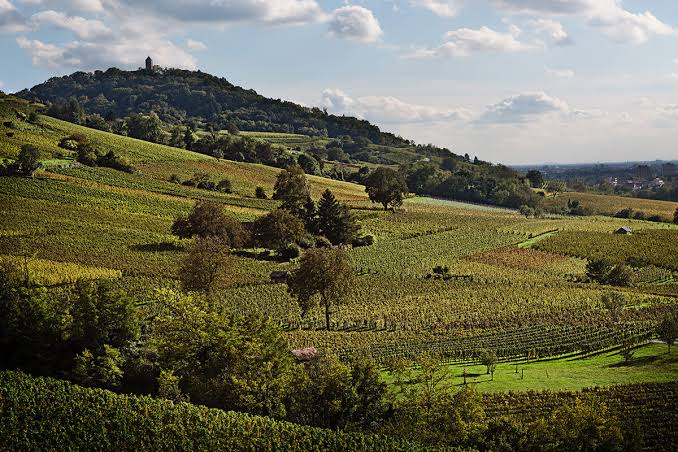
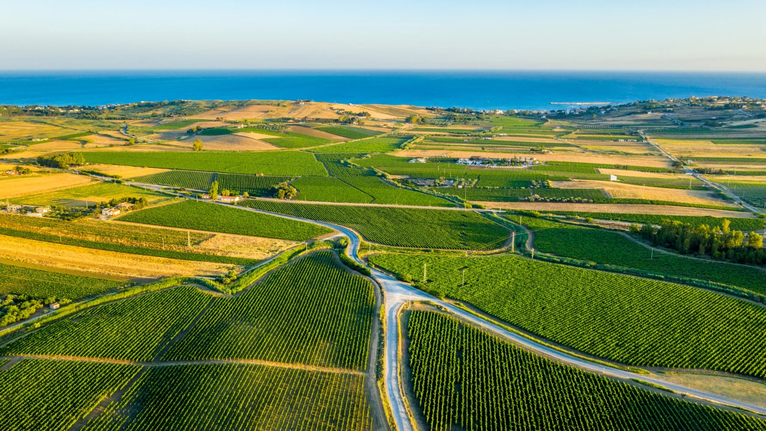
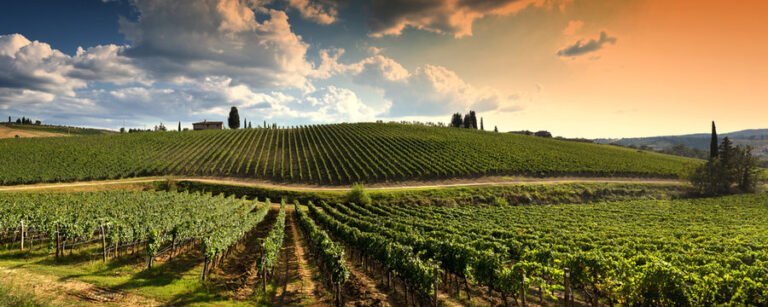
Provence stretches along France’s Mediterranean coast roughly from the Rhône delta near Arles east toward the Italian border, with its vineyards spread across a genuinely varied landscape shaped by limestone massifs, coastal cliffs, and the ever-present influence of the sea.
Côtes de Provence, the region’s largest appellation by a wide margin, covers a huge swath of central and eastern Provence, running from around Aix-en-Provence toward the hills behind Saint-Tropez and further east toward the Var. Soils here shift considerably depending on where you are, from crystalline schist in the Maures massif to limestone and sandstone elsewhere, and the appellation is further divided into four recognized cru zones, Sainte-Victoire, Fréjus, La Londe, and Pierrefeu, each entitled to add its own name to the label.
Bandol, right on the coast between Toulon and Marseille, is smaller and considerably more specific in what it demands: arid, sandy limestone soil terraced up steep hillsides, ideally suited to Mourvèdre, a grape that needs real heat and a long growing season to ripen properly, something Bandol’s amphitheater of south-facing terraces provides in a way few other places manage.
Cassis, just along the coast from Bandol, is a tiny appellation squeezed between dramatic limestone cliffs and the sea, its vineyards sheltered from the worst of the Mistral by the very geography that makes the town such a postcard. This is Provence’s dedicated white wine appellation, something of a rarity in a region so thoroughly dominated by pink and red.
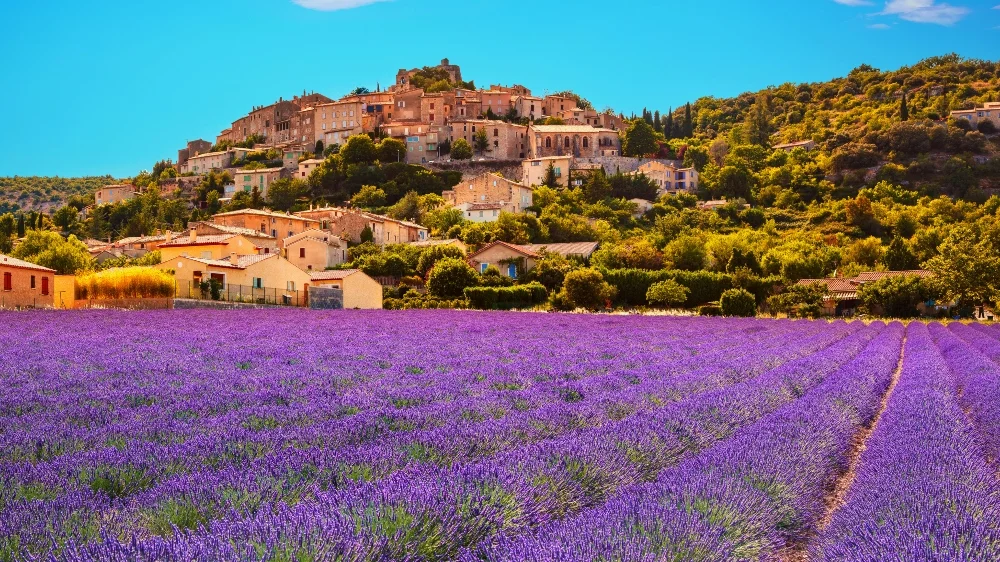
Further west, Les Baux-de-Provence sits in the Alpilles, a jagged little limestone mountain range that looks almost otherworldly against the flat Rhône plain surrounding it, and further east still, above Nice, the tiny appellation of Bellet clings to steep, high-altitude terraces that feel closer to alpine wine country than the Riviera glamour just down the hill.
Binding all of this together is the Mistral, Provence’s defining wind, which sweeps down the Rhône corridor and across much of the region, keeping vineyards dry and disease pressure low even through genuinely hot Mediterranean summers. It’s a big part of why organic farming has taken hold so easily here, and also, frankly, part of why the wine tends toward freshness rather than heaviness even in a climate that could easily produce something flabbier.
An Older Story Than the Rosé Suggests
Provence has a fair claim to being the oldest wine-producing region in France, full stop. Greek colonists from Phocaea founded Massalia, modern Marseille, around 600 BC, and brought viticulture with them; the Romans, arriving a few centuries later, expanded it considerably, and by the first century AD, Provençal wine was already being shipped as far as Roman Britain. That’s a genuinely long head start on Bordeaux or Burgundy, both of which developed their wine cultures considerably later.
The region’s medieval chapter runs through Avignon rather than Provence proper, but it still shaped the area meaningfully. When the Catholic Church relocated its seat to Avignon in the 14th century under a series of French-born popes, several of them took a real interest in reviving local viticulture, even if, by most accounts, their personal loyalty still leaned toward Burgundy’s wines over anything local. Provence’s reputation specifically for rosé started building in earnest in the 19th century, and by most measures the region was already a recognized rosé producer well before phylloxera arrived and devastated much of the vineyard area toward the end of that century.
The path back from phylloxera was slow, and Provence spent much of the early-to-mid 20th century rebuilding rather than innovating. Côtes de Provence didn’t achieve full AOC status until 1977, decades after most of Bordeaux and Burgundy’s classifications had long settled, and for a good while afterward, the region’s rosé had a mixed reputation: often high in alcohol, inconsistently made, more a holiday souvenir than a serious wine style.
The turnaround, and it’s a genuinely recent one, is largely credited to Sacha Lichine, son of the well-known Bordeaux négociant Alexis Lichine, who sold his family’s stake in a Margaux property and moved to Provence specifically to build a rosé brand with real consistency and quality behind it. The result, Whispering Angel, became one of the best-selling rosés in the world and, whatever you think of its ubiquity today, genuinely pushed the whole appellation toward higher standards. Provence has kept building on that since, not just in rosé but increasingly in the serious reds and whites that had honestly never really gone away, just gotten overshadowed.
The Grapes Behind the Pink
Provence’s grape list leans heavily Mediterranean, shared in large part with the Southern Rhône and Languedoc, though the specific proportions and blending traditions here are genuinely distinct.
Grenache, Cinsault, and Syrah form the backbone of most Côtes de Provence rosé, typically blended together and made by direct pressing, similar to how white wine is produced, rather than the brief skin-contact method more common in rosé elsewhere. This is a large part of what gives Provençal rosé its distinctively pale color, closer to onion-skin than the deeper pink you’ll find from other regions.
Tibouren, a genuine regional rarity, shows up in smaller quantities and is prized by some producers for the herby, aromatic lift it brings to a rosé blend, a subtle signature that connoisseurs specifically look for.
Mourvèdre is Bandol’s defining grape and, arguably, Provence’s most serious calling card. Thick-skinned, late-ripening, and genuinely difficult to grow well outside a handful of ideal sites worldwide, it produces deeply colored, structured, spicy red wine with real aging potential, something Bandol reds have been quietly proving for well over a century.
Rolle, known elsewhere as Vermentino, is Provence’s most distinctive white grape, showing up in Cassis and increasingly in serious white bottlings from Côtes de Provence, often blended with Clairette, Ugni Blanc, Marsanne, and Bourboulenc, a mix that gives the region’s whites real textural variety despite their relatively small production volume.
Nine Appellations, One Coastline
Provence divides into nine recognized appellations, and unlike Burgundy’s neat pyramid or Bordeaux’s estate rankings, the hierarchy here runs more by reputation and specificity than any formal tiered system.
Côtes de Provence, established in 1977, is by far the largest, producing roughly three-quarters of the region’s total output, the overwhelming majority of it rosé, with an increasing share of serious red and, to a lesser extent, white coming from ambitious producers pushing past the appellation’s easygoing reputation. Coteaux Varois en Provence and Coteaux d’Aix-en-Provence cover substantial additional ground in the region’s interior, similarly rosé-dominant but with real potential in the right hands.
Bandol, created in 1941, is Provence’s most specific and demanding appellation, requiring a minimum 50% Mourvèdre for both its reds and rosés, and it’s here that the region’s reputation for serious, ageable wine is most convincingly made. Cassis, dating to 1936, one of France’s very first AOCs, covers a tiny area but punches well above its size for white wine specifically, alongside a smaller amount of rosé.
Les Baux-de-Provence, granted its own appellation status in 1995 after splitting off from the broader Coteaux d’Aix-en-Provence, and Bellet, a genuinely tiny, high-altitude appellation above Nice, round out the region’s more specific zones, alongside Côtes du Luberon and Côtes du Ventoux to the north, both of which sit closer, geologically and stylistically, to the Southern Rhône.
Provence also runs its own classification for individual estates: the 1955 Crus Classés de Provence, a list of 18 properties recognized for consistent quality, largely concentrated around the Côtes de Provence appellation. It’s a considerably looser system than Bordeaux’s 1855 Classification, more akin to a quality seal than a strict pricing hierarchy, but it remains a useful signal on a label, particularly for rosé from producers with genuine, longstanding reputations.
Four Estates Worth Visiting
These four span Provence’s range: Bandol’s serious, age-worthy reds, Cassis’s dedicated whites, a grand Côtes de Provence rosé house, and a genuine maverick in the Alpilles who spent decades making wine the appellation system didn’t quite know what to do with.
Château Pradeaux (Bandol)
Owned by the Portalis family since 1752, one of the longest unbroken ownership runs of any estate in this entire series, Château Pradeaux sits on the outskirts of Saint-Cyr-sur-Mer, its roughly 22 hectares farmed as a single, unusually contiguous block for the Bandol appellation. Suzanne and Arlette Portalis, mother and daughter, settled here in 1939 after fleeing Nazi-occupied territory and were instrumental in rebuilding the estate’s reputation, and it’s now run by Cyrille Portalis, continuing what’s become one of Bandol’s most traditionally minded, deliberately old-school houses: the flagship red is built from 90 to 95% Mourvèdre and aged four years in large old oak casks before release, a patience that shows in wine genuinely built to be cellared rather than opened on arrival.
- Address: 676 Chemin des Pradeaux, 83270 Saint-Cyr-sur-Mer, France
- Contact: +33 4 94 32 10 21, secretariat@chateaupradeaux.com
- Visiting: Open Monday to Friday, 9:00 to 12:30 and 15:00 to 18:00 for sales and tasting. Guided cellar visits (around €15 per person) are by appointment only; the estate is closed on Saturdays, but visits can sometimes be arranged by prior reservation.
Clos Sainte Magdeleine (Cassis)
Perched on a private cape jutting into the Mediterranean, with terraced vineyards running almost to the cliff edge beneath the towering Cap Canaille, Clos Sainte Magdeleine farms around 12 hectares in what has to be one of the most dramatically situated vineyard sites anywhere in this series. The estate produces one of Cassis’s most respected white blends, drawing on Marsanne, Ugni Blanc, Clairette, and Bourboulenc, alongside a smaller amount of rosé, both made in relatively small quantities that tend to sell out locally to the restaurants and hotels dotted along this stretch of coast before they travel very far at all.
- Address: Avenue du Revestel, 13260 Cassis, France
- Contact: +33 4 42 01 70 28
- Visiting: Open for tastings, roughly Tuesday to Saturday, 10:00 to 12:30 and 14:30 to 19:00 (hours shift seasonally, so confirm ahead). The estate doesn’t run formal guided tours, but visitors are generally welcomed into the tasting room and, when staff have a moment, shown around the grounds; it’s a short walk from Cassis harbor, and parking near the property is limited, especially in summer.
Château Minuty (Gassin, Côtes de Provence)
Founded in 1936 and family-run by the Matton-Farnet family for four generations before Moët Hennessy acquired a majority stake in 2023, Château Minuty is one of the 18 estates recognized in Provence’s 1955 Cru Classé listing and among the most internationally recognized rosé producers anywhere, now producing around 8 million bottles a year across a range that runs from everyday cuvées to the prestige Rosé et Or and Cuvée 281 bottlings. Its vineyards spread across the hills of Gassin and Ramatuelle above the Gulf of Saint-Tropez, a single contiguous 65-hectare block in Gassin on limestone soils, with a further 15 hectares in Ramatuelle’s Val de Rian overlooking the Bay of Pampelonne, about as postcard-perfect a Provence wine setting as exists anywhere.
- Address: 2491 Route de la Berle, Quartier Minuty, 83580 Gassin, France
- Contact: +33 4 94 56 12 09, info@minuty.fr
- Visiting: Open Monday to Friday, 9:00 to 12:30 and 13:30 to 18:00, with shorter weekend hours seasonally. Self-guided visits are free, with tastings and a shop on site; guided tours can be arranged by advance booking, and the estate is easily reached from Saint-Tropez, roughly a 15-minute drive.
Domaine de Trévallon (Les Baux-de-Provence)
There’s no tidier way to put this: Domaine de Trévallon makes some of the most respected red wine in the south of France, and it’s technically not even allowed to call itself Les Baux-de-Provence anymore. Eloi Dürrbach planted the estate from scratch in 1973, carving vineyards out of wild garrigue and limestone scree at the foot of the Alpilles, and built his red wine around a roughly equal blend of Cabernet Sauvignon and Syrah, a combination that made the wine’s reputation but ran up against a 1993 INAO ruling capping how much Cabernet the appellation would allow. Rather than change the blend to fit the rule, Dürrbach simply declassified, and Trévallon has been sold as a humble IGP Alpilles ever since, despite trading and aging like one of the region’s genuine grands crus. His children Antoine and Ostiane now run the estate, continuing the same minimal-intervention, unfiltered approach that built its reputation in the first place.
- Address: Vieux Chemin d’Arles, 13103 Saint-Étienne-du-Grès, France
- Contact: +33 4 90 49 06 00, contact@domainedetrevallon.com
- Visiting: By appointment only, and genuinely worth booking well ahead, ideally a month in advance, since the estate keeps a deliberately low-key, low-volume approach to visitors that matches its general philosophy toward everything else.
Where to Buy Provence Wine
Decántalo carries Domaine de Trévallon’s Alpilles Rouge directly, a genuinely useful find given how limited the estate’s production is and how quickly its wine tends to move through specialist channels elsewhere.
Château Minuty, given its scale and LVMH ownership, is widely distributed across mainstream retailers more broadly, similar to how Pommery shows up in general Champagne distribution; it wasn’t confirmed specifically at Wijnbeurs, Colaris, or Decántalo at the time of writing, but its high production volume makes it a reasonable one to check at general Dutch wine retailers and supermarkets with a curated selection, not just specialist importers. Château Pradeaux and Clos Sainte Magdeleine, both considerably smaller producers, were not confirmed at any of the three preferred retailers; both sell in limited volumes that tend to stay close to home or move through dedicated Provence and Bandol specialists, and readers wanting either are likely better served checking the estate directly or a specialist retailer with strong Provence allocations.
Colaris does list a general Provence category on its site worth browsing even without these four specific names, and given how popular Provence rosé remains across the Netherlands generally, checking seasonal selections at both Colaris and Wijnbeurs closer to summer is worth doing, since availability in this category tends to expand considerably ahead of the warmer months.
Food Pairing
Provence’s food and wine culture developed together in a way that makes pairing feel less like an exercise and more like common sense once you’re actually sitting at a table there. Chilled rosé is the natural match for aïoli, the garlic mayonnaise served alongside salt cod, boiled vegetables, and snails that anchors much of the region’s everyday cooking, as well as for salade niçoise, grilled fish, and the herb-heavy dishes that define Provençal cuisine generally.
Bandol reds, with their real tannic structure and characteristic game and spice notes, want heartier fare: daube provençale, the region’s own slow-braised beef stew, grilled lamb, or a well-aged hard cheese, anything with enough weight and fat to meet the wine’s structure halfway. Cassis whites, bright and saline, are built specifically for the bouillabaisse and other fish-forward dishes native to this exact stretch of coast, a pairing that’s less a suggestion than a description of how locals have always eaten with this wine. Trévallon’s Cabernet-Syrah blend, structured and savory, suits roasted red meat and game in the same register as a serious Northern Rhône Syrah or a mid-weight Bordeaux, reflecting its genuinely unusual position straddling both traditions.
Getting There and Planning Your Trip
Marseille and Nice both offer major international airports with direct connections from Amsterdam, making either a practical entry point depending on which end of Provence you’re prioritizing. Marseille sits closest to Cassis, a roughly 30-minute drive, and to Aix-en-Provence, itself a pleasant base for the western Côtes de Provence and Les Baux-de-Provence, both under an hour away. Toulon, further along the coast, is the more convenient base for Bandol specifically. For the Saint-Tropez area and Château Minuty, flying into Nice and driving roughly 90 minutes, or Toulon-Hyères, considerably closer, both work depending on what else is on the itinerary.
A car is genuinely necessary to cover more than one sub-region here, given how spread out Provence’s appellations are along the coast and inland. Given the area’s enormous popularity as a general holiday destination, not just for wine, summer brings serious traffic and crowds, particularly around Saint-Tropez and the more scenic coastal towns; late spring and early autumn offer a considerably more relaxed pace for winery visits while still delivering reliably good weather.
Harvest typically runs from late August into September, on the earlier side given the region’s reliably warm Mediterranean climate, and rosé, being made for early release, tends to hit shelves remarkably quickly after picking, often within weeks. The Mistral can pick up unpredictably at any time of year, worth factoring into outdoor plans, particularly along the more exposed stretches of coast near Cassis and the Alpilles.
Frequently Asked Questions
Why is Provence rosé so pale compared to rosé from other regions? Most Provence rosé is made by direct pressing, a method closer to white winemaking than the brief skin-contact maceration used for rosé elsewhere. This minimizes color extraction and produces the pale, almost onion-skin pink most associated with the style internationally.
Is Bandol wine only red? No, though red is what the appellation is best known for. Bandol also produces rosé, required to contain at least 50% Mourvèdre just like the reds, and a smaller amount of white wine, though red remains the appellation’s defining and most collected style.
Why doesn’t Domaine de Trévallon carry the Les Baux-de-Provence appellation despite being located there? The estate’s signature red blend uses roughly equal parts Cabernet Sauvignon and Syrah, exceeding the Cabernet percentage the appellation permitted under a 1993 ruling. Rather than reformulate the wine to comply, the estate chose to declassify to the broader IGP Alpilles designation, a decision that hasn’t dented its reputation as one of the south of France’s most respected producers.
Is Provence wine only worth buying for summer drinking? Not at all, though that’s understandably the association most people have. Bandol reds in particular are built for aging, often improving for a decade or more, and are well suited to autumn and winter drinking alongside heartier food, a genuinely different experience from the crisp rosé most associated with the region.