Württemberg Wine Region: Germany’s Red Wine Country Along the Neckar
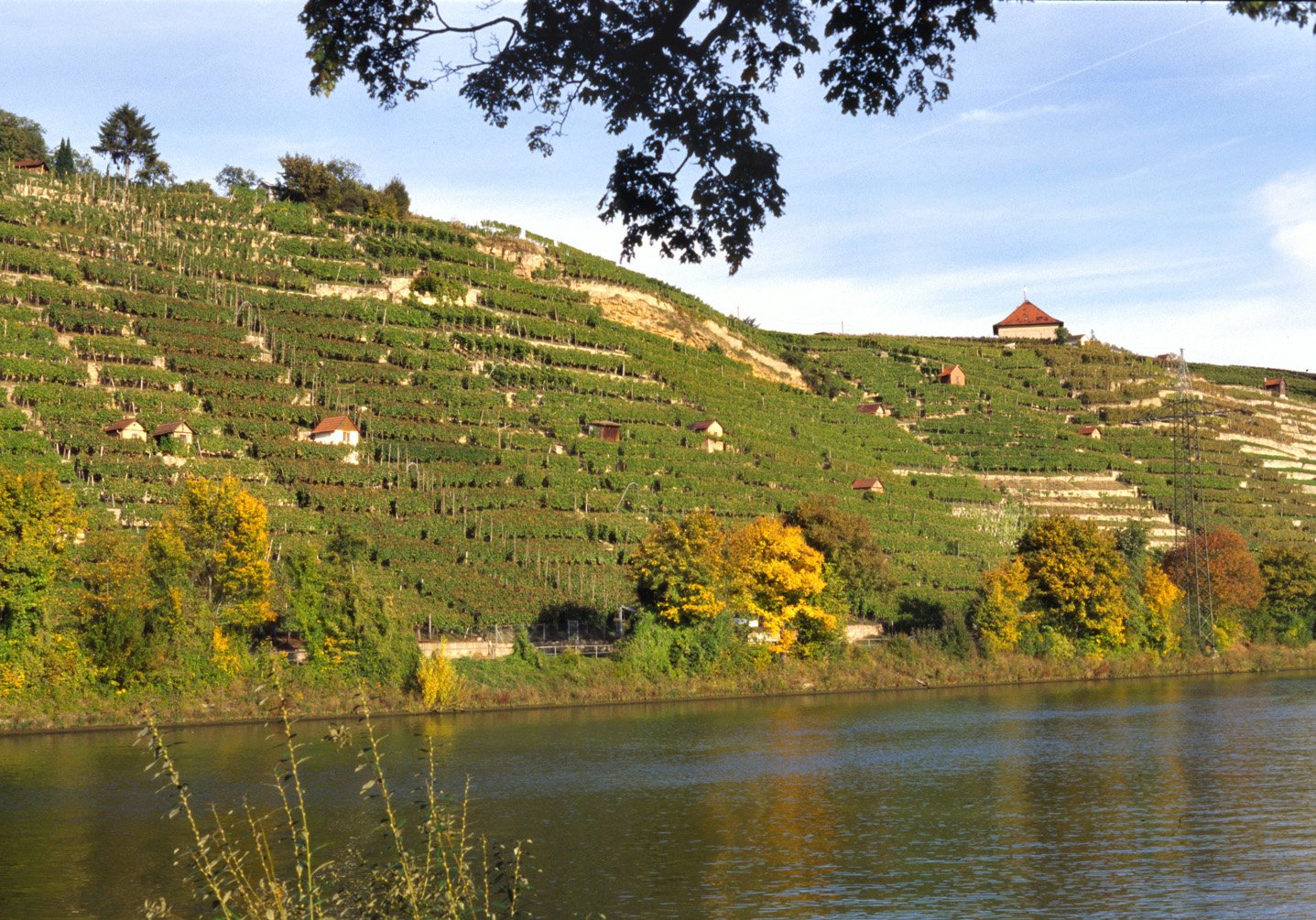
Ask most wine drinkers to name a German wine region, and you will hear Mosel, Rheingau, maybe Pfalz. Württemberg rarely comes up, which is strange given that it is the fourth largest wine region in the country, with roughly 11,500 hectares under vine stretching along the Neckar River from Heilbronn down past Stuttgart toward Tübingen. What makes Württemberg genuinely unusual is that it flips the German script entirely. Where Riesling and white wine dominate almost everywhere else, Württemberg produces more red wine than white, and it does so with grape varieties that barely exist outside its borders.
Trollinger, Lemberger, and Schwarzriesling are not international names. You will not find them lining supermarket shelves in London or Amsterdam. That obscurity is precisely why Württemberg rewards a visit. This is a region that still drinks its own wine, at Besen taverns tucked into vineyard slopes, in the Weindorf festivals that take over Stuttgart’s old town every late summer, and at family tables where a bottle of Trollinger is treated less like a luxury and more like a staple, the way bread or beer might be treated elsewhere. Locals here drink more wine per capita than anywhere else in Germany, and once you understand the local relationship with Trollinger, that statistic makes complete sense.
This The Pairing Passport guide covers the wines, the estates worth building a trip around, and where you can actually get your hands on a bottle once you are home.
The Lay of the Land: Geography, Climate, and Soil
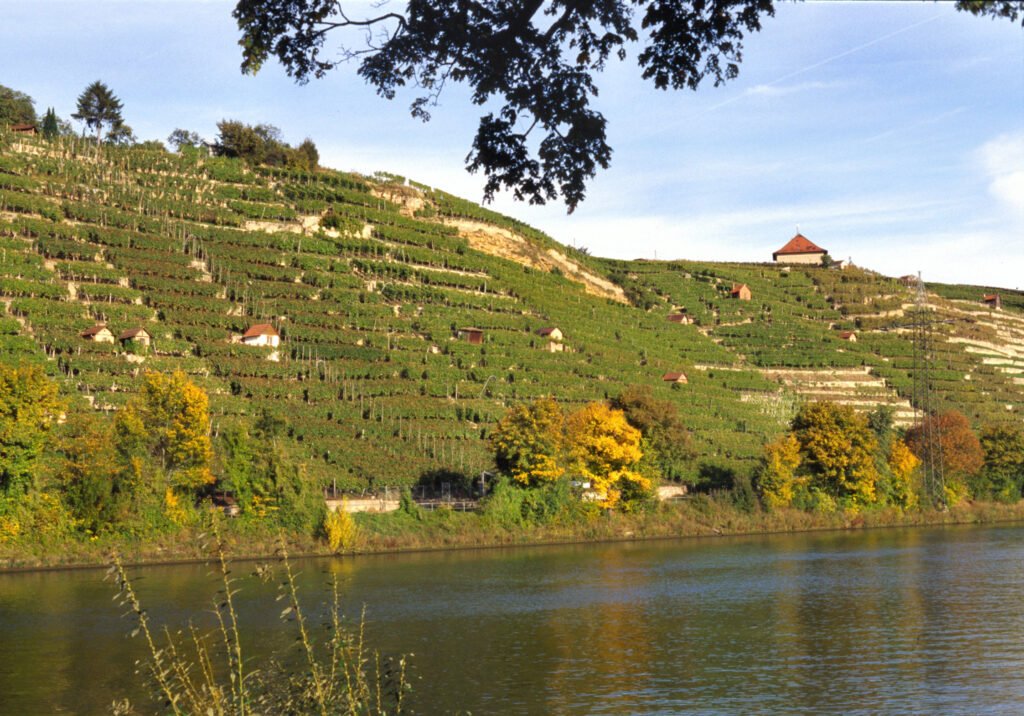
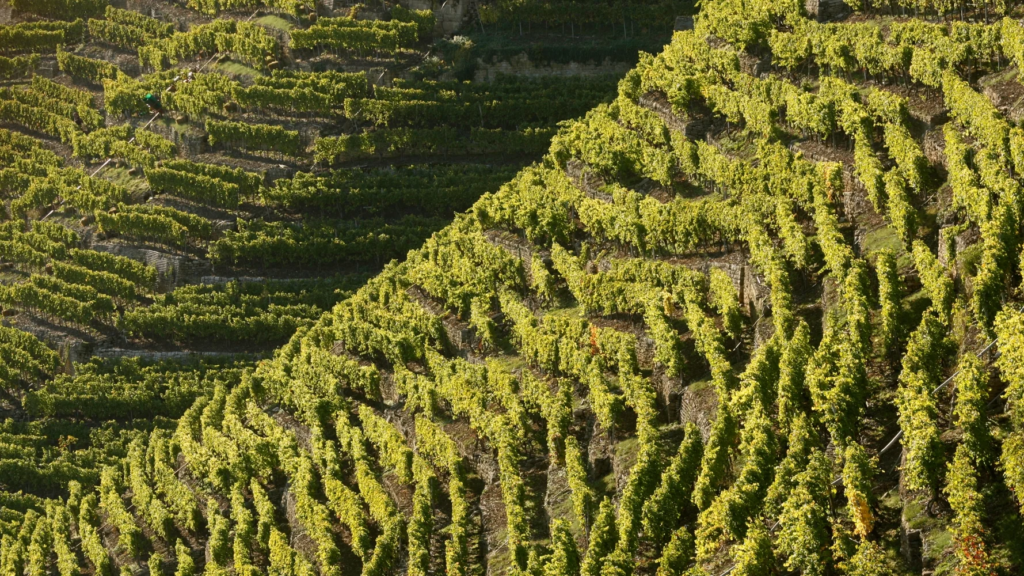
Württemberg sits in the southwest of Germany, in the state of Baden-Württemberg, hugging the Neckar river and its tributaries: the Rems, the Enz, the Kocher, the Jagst, and the Zaber. The vineyards are not concentrated in one continuous strip the way the Mosel is. Instead, they spread across a patchwork of valleys and slopes, protected on several sides by higher ground: the Black Forest to the west, the Swabian Alb to the south and east. That shelter matters. It creates a warmer, more continental microclimate than you would expect this far south in Germany, and it is the reason red grapes can ripen reliably here in a way they struggle to elsewhere in the country.
Soil types vary by sub-region but two dominate. Keuper, a reddish sandstone-marl formation, covers much of the central and northern vineyards and tends to favor the fruitier, lighter reds like Trollinger. Muschelkalk, a shell limestone left behind by an ancient sea, appears in pockets around Kleinbottwar, Hessigheim, and parts of the Neckar valley closer to Stuttgart, and it produces wines with more structure and minerality, particularly in Lemberger and Riesling.
The region divides informally into several zones worth knowing if you are planning a route: the Remstal around Fellbach and Winnenden, the Württembergisches Unterland stretching from Heilbronn through the Zabergäu, the Stuttgart city vineyards themselves (Stuttgart is, remarkably, one of the largest wine-producing cities in Germany with vines growing right up against residential streets), and the southern reaches near the Bodensee exclave at Kressbronn.
The Grapes: What Makes Württemberg Different
Trollinger: The Local Icon
Trollinger is Württemberg’s calling card and its most planted variety, covering close to 1,900 hectares, nearly all of the world’s plantings. Genetically, it is the same grape as Vernatsch or Schiava, grown across the border in South Tyrol, but in Württemberg it has taken on its own identity entirely. The wine is light in color, high in acidity, low in tannin, and best served with a slight chill. It smells of cherry and red currant and tastes almost like a cross between a light Beaujolais and a rustic country red. Purists elsewhere sometimes dismiss it as simple, but that misses the point. Trollinger is not built for cellaring or scoring points; it is built for drinking with Maultaschen and good company, and the best versions, particularly from old vines on steep Keuper slopes, have a purity that is genuinely charming.
Lemberger: The Serious Red
Lemberger, known elsewhere as Blaufränkisch, is Württemberg’s answer to a more ambitious red. It carries darker fruit, more tannin, and enough structure to age. The top examples, especially the VDP Grosses Gewächs bottlings from producers like Graf Adelmann and Schnaitmann, show real depth: black cherry, pepper, a savory edge, sometimes a touch of smoke from careful oak use. If you want to understand why serious sommeliers are starting to pay attention to Württemberg, Lemberger is where that argument gets made.
Schwarzriesling and Spätburgunder
Schwarzriesling, which is Pinot Meunier under a different name and unrelated to actual Riesling despite the confusing name, makes light, juicy, slightly earthy reds. Spätburgunder, Germany’s Pinot Noir, is a smaller share of plantings but increasingly the grape ambitious producers reach for when they want to show off site and precision, particularly on the limestone soils around Kleinbottwar and Fellbach.
Riesling and the Whites
It is easy to forget, given the region’s red wine reputation, that Riesling is actually Württemberg’s single most planted grape variety by area, just ahead of Trollinger. It rarely gets the international attention of Mosel or Rheingau Riesling, but the best examples, grown on Muschelkalk in villages like Kleinbottwar and Untertürkheim, have real bright acidity and citrus-driven energy. Kerner, a Riesling-Trollinger crossing bred at the Weinsberg research institute in the region, is another local specialty worth trying if you come across it.
When to Visit
Andreas Durst / Weingut Dautel
Late June through mid-September is the most comfortable window weather-wise, but if festivals matter to your trip, plan around the calendar. The Stuttgarter Weindorf, held at the end of August into early September, takes over the city center with more than a hundred wine stands run by local growers and taverns. It is touristy in the sense that everyone knows about it, but it remains a genuinely local event and a good crash course in the region’s range. Harvest season, late September into October, is when the vineyards themselves look their best and when Besen taverns, the seasonal wine bars that growers open in their own courtyards to sell the new vintage, are in full swing.
Cooperatives, Classification, and Why That Matters for Buyers
One detail that separates Württemberg from almost every other German wine region is the dominance of cooperatives. More than 80 percent of the region’s grapes are vinified through cooperative cellars, by far the highest share in Germany. Historically, this was a matter of necessity. Vineyard holdings in Württemberg were, and often still are, small and fragmented, split among many part-time growers who never had the volume or capital to bottle and market their own wine. The cooperative model let them pool resources, and it is the reason Trollinger became a genuine household staple rather than a niche product, since cooperative pricing kept it affordable and widely distributed within the region.
For a buyer or visitor, understanding this matters because it explains the gap between everyday Württemberg wine, competent, inexpensive, mostly consumed locally, and the small but serious tier of estate-bottled wines produced by growers who broke away from or never joined the cooperative system. Adelmann, Schnaitmann, Aldinger, and Dautel all belong to that second category, and all four are members of the VDP, the association of Germany’s top estates, whose Grosses Gewächs designation marks a dry wine from a classified top vineyard site. When you see VDP.Grosses Gewächs on a Württemberg Lemberger or Riesling label, it signals that the wine comes from one of the region’s best-regarded sites and was made to the VDP’s stricter yield and quality standards, a useful shorthand when you are trying to separate serious bottles from everyday cooperative Trollinger.
This split also explains why so little of the region’s best wine reaches export markets. Cooperative wine, by design, tends to stay close to home, sold through regional supermarkets and direct cellar-door sales rather than international distribution. Estate wine from producers like the four profiled here is made in far smaller volumes, often just a few thousand bottles per top cuvée, and producers frequently find it more practical to sell directly to a loyal customer base than to chase listings with foreign retailers. That is the real story behind Württemberg’s near-invisibility on shelves outside Germany. It is not a quality problem. It is a distribution problem, and one that direct ordering solves easily enough for anyone willing to plan a few weeks ahead of drinking.
A Brief History Worth Knowing
Viticulture in the Neckar valley predates the modern German state by well over a thousand years. Roman settlers planted vines around Lauffen am Neckar, and by the early medieval period Benedictine monasteries had taken over much of the region’s winegrowing, a pattern repeated across most of Europe’s historic wine regions. The nobility followed, and estates like Graf Adelmann’s Burg Schaubeck trace their winegrowing lineage back to the late thirteenth century, a span of continuous production that few wine regions anywhere in the world can match.
The modern shape of Württemberg wine, dominated by red grapes and cooperative production, is a more recent development, largely a nineteenth- and twentieth-century response to phylloxera, industrialization, and the practical realities of a region with thousands of small landholders rather than a handful of large estates. What has changed more recently, roughly since the 1990s, is the emergence of a small group of ambitious growers willing to farm for quality over volume, take on VDP classification standards, and treat Lemberger and Spätburgunder as vehicles for serious wine rather than everyday drinking. That shift is still underway, which is part of what makes visiting now more interesting than it might have been a generation ago. You are watching a region redefine what it is capable of in something close to real time.
Wineries Worth Visiting
Weingut Graf Adelmann, Kleinbottwar
Few estates in Germany can claim continuous winegrowing history stretching back to 1297, and Graf Adelmann wears that history without being weighed down by it. The estate is based at Burg Schaubeck, a genuine medieval castle in Kleinbottwar, and is run by Felix Graf Adelmann, whose family motto could be summed up as traditional but never conventional. The 20 hectares here sit on Keuper and Muschelkalk soils across two monopole sites, Kleinbottwarer Süssmund and Kleinbottwarer Oberer Berg, both farmed organically. The Lemberger, bottled under the name Der Schwarze Löwe, is one of the benchmark examples of the variety in Germany, and the Spätburgunder from the Götzenberg site shows the kind of finesse that surprises people who assume Württemberg reds are all rustic and simple.
Visitor information: the estate offers tastings and cellar tours by appointment at Burg Schaubeck, 71711 Steinheim-Kleinbottwar. Contact the winery directly through graf-adelmann.com to book, since visits are arranged rather than walk-in. The castle grounds alone are worth the detour, and a tasting here pairs naturally with a walk through the old village of Kleinbottwar.
Weingut Schnaitmann, Fellbach
Rainer Schnaitmann founded his own label in 1997 after generations of his family had grown grapes for cooperatives, and the transformation since has been remarkable. The estate is certified biodynamic, works with spontaneous fermentation on several cuvées, and keeps yields well below what Württemberg’s fertile soils could otherwise produce. The Lämmler vineyard, a steep Keuper site in Fellbach, is the source of the estate’s top wines across three varieties: Lemberger, Spätburgunder, and Grauburgunder, all bottled as VDP Grosses Gewächs and all consistently rated among the best in the region. If you only taste one Lemberger in Württemberg, the Schnaitmann Lämmler is a strong argument for that slot.
Visitor information: the winery is located at Untertürkheimer Strasse 4, 70734 Fellbach, and welcomes visitors for tastings by appointment. Fellbach itself is worth a slower look, a working town where vines grow visibly between rooflines rather than in an isolated rural setting, which gives the visit a different character than a countryside estate would.
Weingut Aldinger, Fellbach
Also based in Fellbach, Aldinger has been farming in the area since the fifteenth century and is currently run by brothers Hansjörg and Matthias Aldinger, who took the estate over from their father Gerd. Aldinger and Schnaitmann sit almost side by side geographically, and tasting both on the same day is one of the more instructive comparisons you can make in Württemberg, two serious producers working similar soils with distinct styles. Aldinger’s Lemberger from the Fellbacher Lämmler site has long been considered a reference point for the grape, and the Riesling from the same vineyard, along with a second Riesling from Untertürkheimer Gips, shows the estate’s range beyond red wine. The estate also experiments in ways that keep things interesting, including a Sauvignon Blanc fermented in a concrete egg.
Visitor information: contact the estate directly to arrange a tasting, and consider combining the visit with Schnaitmann given the short distance between the two cellars.
Weingut Dautel, Bönnigheim
Ernst and Christian Dautel run one of Württemberg’s most consistently well-regarded VDP estates from Bönnigheim, in the Zabergäu district. The Dautel style leans toward precision and restraint rather than power, with Lemberger and Spätburgunder that show a lighter touch than some of their Remstal counterparts, alongside Riesling that reflects the estate’s Muschelkalk sites. The family has been farming here for generations, and the winery has built a reputation as a reliable benchmark for what the region’s better terroirs are capable of when farmed with care.
Visitor information: tastings are available by appointment at the estate in Bönnigheim. This is a useful stop if your route takes you through the Zabergäu on the way between Heilbronn and Ludwigsburg.
Where to Buy Württemberg Wine Online
Here is the honest picture. Württemberg wines have historically stayed close to home, and that pattern still holds when it comes to Dutch retail. As of this writing, none of Wijnbeurs, Colaris, or Decantalo carry a meaningful selection of genuine Württemberg estate wines, meaning Trollinger, Lemberger, or Spätburgunder from producers like Adelmann, Schnaitmann, Aldinger, or Dautel. Wijnbeurs currently stocks German wine primarily from Mosel; Colaris leans similarly toward Mosel and Rheinhessen whites, and Decantalo’s German selection, while broader and including some southern German Spätburgunder from Baden, does not extend into Württemberg specifically. This mirrors the situation with Franken wines: a region whose best bottles rarely travel far, which makes buying direct from the estate the more reliable route.
The good news is that all four estates profiled above sell wine directly through their own webshops, and shipping to the Netherlands is standard practice for German producers used to a European customer base.
Graf Adelmann Lemberger “Der Schwarze Löwe” VDP.Grosses Gewächs. Available through graf-adelmann.com. A structured, savory Lemberger from the Kleinbottwarer Oberer Berg site, with enough tannin and acidity to reward a few years in the cellar. Pairs well with braised beef or a good Zwiebelrostbraten if you want to stay regionally faithful.
Schnaitmann Lämmler Lemberger VDP.Grosses Gewächs. Available through weingut-schnaitmann.de. One of the most consistently high-scoring Lembergers in Germany, biodynamically farmed, with real depth of dark fruit and a savory, almost Burgundian sense of restraint for a variety that can sometimes run hot and jammy elsewhere.
Aldinger Fellbacher Lämmler Riesling. Available through the estate’s own shop or via WirWinzer, a German platform that ships direct-from-producer German wines across the EU and is a useful resource generally for tracking down Württemberg bottles that Dutch retailers do not carry. A bright, mineral-driven Riesling from the same top site that produces Aldinger’s benchmark, Lemberger.
Dautel Spätburgunder. Available through weingut-dautel.de. A more restrained, terroir-focused style of German Pinot Noir, useful for anyone curious how Württemberg’s limestone sites express the variety compared to Baden or the Ahr.
If you would rather browse a wider net of German estate wines that Dutch retailers do not stock, WirWinzer (wirwinzer.de) is worth bookmarking. It aggregates direct sales from small and mid-sized German producers, Württemberg included, and ships internationally.
Food and Wine in Württemberg
Swabian cuisine is hearty, regional, and built to be eaten with the local wine rather than against it. Maultaschen, the Swabian answer to ravioli, filled with meat, spinach, and breadcrumbs, is the classic match for a chilled Trollinger. Zwiebelrostbraten, a roast beef dish smothered in caramelized onions, wants something with more backbone, which is where Lemberger earns its keep. Spätzle, the ubiquitous egg noodle, shows up as a side to almost everything and never seems to get old. Gaisburger Marsch, a beef and potato stew named after a Stuttgart neighborhood, is the kind of dish that makes more sense after a cold day of vineyard walking than it does on paper.
For a sit-down meal that takes the wine list as seriously as the kitchen, Weinstube Fröhlich in Stuttgart pairs traditional Swabian cooking with a genuinely thoughtful selection of local bottles. Gasthof Lamm in Rosswag, a family-run inn, offers a more rustic, traditional version of the same idea.
Planning a Trip
Stuttgart makes the most practical base. It has direct rail connections across Germany, an international airport, and vineyards within the city limits, which means you can walk from a hotel into working vineyard rows without renting a car. From Stuttgart, Fellbach (home to both Schnaitmann and Aldinger) is a short S-Bahn ride away, making it an easy half-day trip even without a car. Kleinbottwar and Bönnigheim, further north in the Zabergäu and Unterland, are better reached by car, and a two- or three-day route connecting Stuttgart, Fellbach, Ludwigsburg, and the Zabergäu villages gives a realistic sense of the region’s range without excessive driving.
Esslingen am Neckar, with its half-timbered old town, is worth a half-day on its own merits and sits close enough to several vineyard walks to combine easily with a wine visit. Heilbronn, sometimes nicknamed the city of wine, anchors the northern end of the region and is a reasonable base if your focus leans toward the Unterland producers rather than Stuttgart and the Remstal.
A short hike along a stretch of the Württemberger Weinwanderweg, the region’s dedicated wine hiking trail, is one of the better ways to understand the landscape before or after a series of tastings. Several sections wind directly through vineyard terraces around Kleinbottwar and the Zabergäu, with views back toward the Neckar valley that explain, better than any tasting note could, why red grapes ripen the way they do here.
Final Thoughts
Württemberg does not chase international attention, and that is arguably its strongest quality. It is a region still drinking its own wine, still built around family estates and cooperative culture in roughly equal measure, and still capable of surprising visitors who arrive expecting simple, chillable reds and leave having tasted a Lemberger GG that could hold its own against a mid-tier Burgundy. If you want a wine trip that feels genuinely lived-in rather than curated for tourists, and if you are willing to accept that some of the best bottles will need to be ordered directly from the producer once you are home, Württemberg is one of the more rewarding corners of Germany left to discover.