Franciacorta Wine: Italy’s Answer to Méthode Classique – and Then Some
There is a moment, somewhere between the first pour and the second sip, when Franciacorta stops being a conversation point and becomes an experience. The glass catches the light; the perlage rises in a fine, disciplined column; and the nose delivers something that resists easy categorisation: ripe orchard fruit, a whisper of brioche, a mineral thread that pulls the whole thing into focus. It is, by any serious measure, one of the most refined sparkling wines made anywhere on Earth.
And yet, outside of Italy, Franciacorta remains surprisingly under-discussed. Wine lovers who can name a dozen Champagne villages without blinking often draw a blank when asked about the hills south of Lake Iseo. That gap is worth closing, both for the knowledge and, more urgently, for the bottles you have been missing.
Where Is Franciacorta? Understanding the Geography
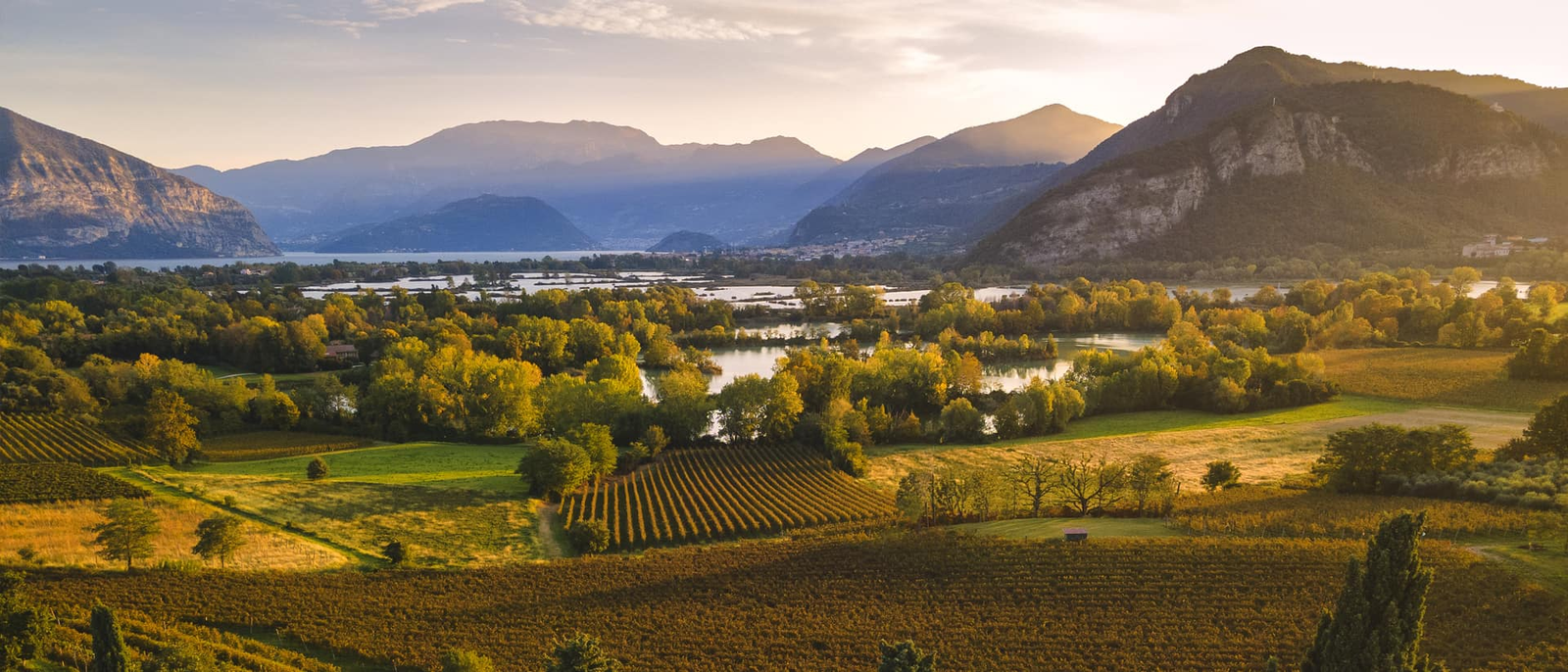
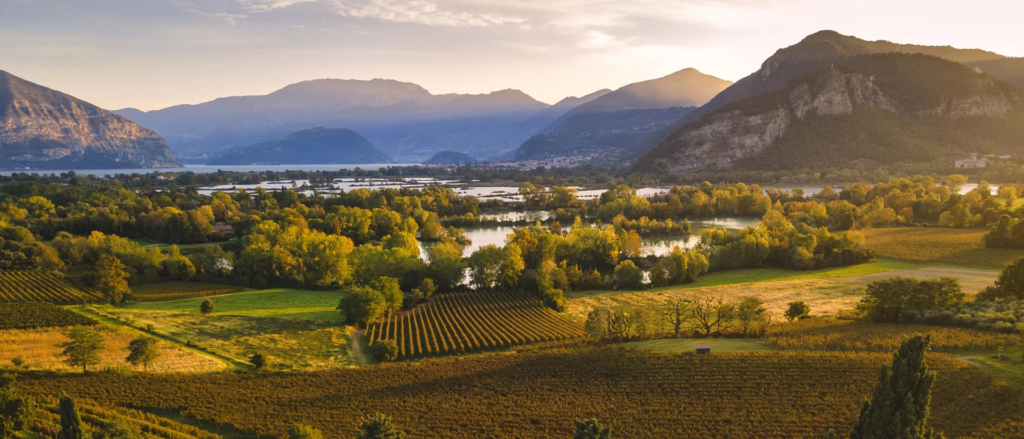
Franciacorta is located in the heart of Lombardy, near the city of Milan. Situated on the shores of Lake Iseo, it covers some 200 square kilometres and encompasses 19 localities in the Province of Brescia.
The region sits roughly 90 kilometres east of Milan, making it genuinely accessible for anyone travelling through northern Italy. From Brescia, the gateway city, the vineyards begin almost immediately, a patchwork of morainic hills that roll south and west from the lake’s lower shore.
Located in the Brescia province, north of the Po Valley, its northern vineyards border Lake Iseo, a deep, natural body of water, and one of only a few in northern Italy. As the area’s fourth-largest lake, it is a major moderating influence on the climate, which is otherwise continental. Franciacorta is a relatively small region, spanning just 15 miles from the Oglio River in the west to the city of Brescia in the east.
That compactness matters. Unlike some of Italy’s sprawling appellations, Franciacorta has a coherence that makes its wines knowable. You can drive the Strada del Franciacorta, the official wine route, in a morning and have a working mental map of the territory. But the more you dig in, the more variation you find.
The Terroir: Glacial Moraine and Lake Influence
The region, which is mostly hilly, was formed by glaciers retreating over 10,000 years ago, creating the Sebino Morainic Amphitheatre, which is home to the vineyards of Franciacorta.
The soils left behind by that glacial retreat are central to everything. Soils in the region are rich in sand and silt and typically lacking in clay. Abundant stones of different shapes, types and colours are scattered everywhere, and for centuries they have been used for constructing villas, farmhouses and ‘Broli’, the characteristic stone walls that surround houses and vineyards. One of the basic characteristics of Franciacorta’s moraine-originating soils is an enormous wealth of added minerals, which form the basis for the area’s high-quality viticulture.
That mineral complexity, drawn from decomposed limestone, gravel, and glacial till, is what gives Franciacorta its distinctive character. The wines carry a freshness and structural tension that sets them apart from sparkling wines grown on clay-heavy or volcanic soils. The lake amplifies this: “cool breezes from the Camonica valley and the lake’s warmth create an ideal environment for vine growing, and spring and summer storms provide moisture that nurtures the vineyards.”
The net result is a climate that hovers between the continental and the moderated, warm enough to ripen Chardonnay and Pinot Nero fully, cool enough to retain the acidity that backbone-quality sparkling wine demands.
The History of Franciacorta – From Monks to DOCG
The name itself is old. The wine’s name derives from the historical “Franca Corta,” referring to tax-exempt monastic estates in the area dating back to the 12th century. Cluniac monks ran the early agricultural economy here, and viticulture was part of that from the beginning. But Franciacorta as a recognised sparkling wine tradition is, by comparison, young.
Despite centuries of making sparkling wine, production in Franciacorta flew under the radar until the 1960s. That is when the critic Franco Ziliani introduced the French méthode Champenoise to the region while working for the winemaker Guido Berlucchi. In this approach, the second fermentation happens in the bottle. The first vintage of méthode traditionelle was in 1961 and consisted of 3,000 bottles of Pinot di Franciacorta. This release sparked a revolution in the region.
The institutional recognition followed quickly. In 1967, Franciacorta was granted DOC status, covering both sparkling and still wines. The local consortium worked tirelessly to elevate the quality of the region’s sparkling wines, lobbying for lower yields, gentler grape-pressing techniques, and the elimination of Pinot Grigio from the blends. These efforts paid off in 1995 when Franciacorta’s sparkling wines were promoted to DOCG status, the highest level of Italian wine classification.
Franciacorta is the first Italian sparkling wine made exclusively with the traditional method to receive DOCG status, which is Italy’s highest classification for wine. That distinction is not a marketing point; it is a statement about the standards the region holds itself to. No other Italian sparkling designation carries the same combination of method requirements and regulatory rigour.
The momentum has only continued. In 2024, Wine Enthusiast named Franciacorta its International Wine Region of the Year, recognising not just the quality of what is in the bottle but the region’s commitment to sustainability and forward-thinking viticulture.
Grapes and Winemaking – The Metodo Classico in Detail
The Permitted Varieties
Franciacorta wines are crafted using the Metodo Classico (traditional method), identical to Champagne in its technique but distinct in style. The permitted grape varieties include Chardonnay, Pinot Noir, and up to 50% Pinot Blanc.
More recently, a fourth variety has been added: the region has embraced the native Erbamat grape, which adds a distinctive freshness to its sparkling wines. Erbamat is a late-ripening white variety that had nearly disappeared from Franciacorta, but a handful of producers, Barone Pizzini among the most prominent, began working with it in the late 2000s. It contributes acidity and a particular mineral grip that experienced tasters can begin to identify as a Franciacorta signature.
What Makes Méthode Classico Different
The process itself is worth understanding in detail, because it explains why these wines cost what they cost and why they taste the way they do. After the first fermentation, the base wines are blended and bottled with a small addition of sugar and yeast. The bottle is sealed, and the secondary fermentation takes place inside, producing carbon dioxide that dissolves into the wine under pressure. The bottles rest on their lees, the spent yeast cells, for a minimum period that varies by style. When the time comes, the bottles are gradually tipped and turned (riddled) so the lees gather at the neck, then disgorged, topped up with a dosage, and corked for sale.
Every step of this takes time, space, and attention. It is fundamentally different from the Charmat method used for Prosecco, where secondary fermentation happens in large pressurised tanks. Neither method is inherently superior; they simply produce different wines. But the Metodo Classico produces wines of greater structural complexity and greater potential for development in bottle.
The Styles of Franciacorta – Beyond Brut
This is where things get genuinely interesting for advanced wine lovers. Franciacorta is not a single style; it is a family of styles governed by production rules that are, in some respects, stricter than those in Champagne.
Franciacorta (non-vintage): The entry point. Standard Franciacorta is a non-vintage sparkling wine aged a minimum of 18 months on the lees. This already exceeds Champagne’s 15-month minimum for non-vintage wines, a detail that matters when you are comparing the two.
Franciacorta Satèn: One of the appellation’s genuinely unique contributions to sparkling wine. Made primarily with Chardonnay, it is bottled at a slightly lower pressure, 4.5 to 5 atmospheres, compared to the standard 5 to 6 atmospheres used for other Franciacorta styles. The result is a finer, creamier mousse. Satèn is a white wine only (no Pinot Nero), and the name, derived from the Italian for “satin”, gives you an accurate sensory expectation. It is the style that pairs most naturally with risotto alla Milanese or delicate lake fish.
Franciacorta Rosé: Franciacorta Rosé requires at least 35% Pinot Nero. The best examples sit somewhere between the precision of a blanc de noirs and the vivacity of a red fruit-driven sparkler. Aged a minimum of 24 months, they carry genuine depth.
Franciacorta Millesimato: The vintage expression. The Franciacorta Millesimato needs to age 37 months in the bottle, with the first 30 months containing the yeast. Millesimato wines are produced only in years the consortium deems appropriate, and they showcase individual vintages with clarity, which means they reward cellaring and scrutiny.
Franciacorta Riserva: Franciacorta Riserva is the rarest expression, single-vintage, aged on the lees for at least 60 months, and always dry, limited to Pas Dosé and Extra Brut. This is where the appellation’s serious collectors focus. Riserva wines, particularly those from Ca’ del Bosco and Bellavista, can age beautifully for a decade or more and rival top Champagne prestige cuvées in complexity.
A note on dosage levels: across all styles, Franciacorta is produced from Pas Dosé (zero or near-zero residual sugar) through Extra Brut, Brut, Extra Dry, and up to Demi-Sec. The dominant commercial style is Brut, but if you have not yet explored Pas Dosé or Dosaggio Zero Franciacorta, it is worth seeking out; the minerality is bracing, and the palate finish is exceptionally long.
Sustainability in the Vineyard
Today, Franciacorta is home to over 120 producers, all united by a shared dedication to precision, sustainability and continual improvement. Organic certification is notably prevalent here; Barone Pizzini earned the distinction of being the region’s first certified organic producer in the 1990s, and the number of estates farming without synthetic chemistry has grown substantially since.
The region has also been exploring PiWi varieties, known for their resilience in the face of climate change. These are disease-resistant hybrid varieties that require fewer treatments, and several Franciacorta producers are running experimental plots as part of longer-term adaptation strategies. It is a region that takes its environmental responsibility seriously, which is increasingly reflected in how the wines are made and how the vineyards are farmed.
Four Wineries Worth Visiting in Franciacorta
Franciacorta rewards a slow visit. The estates are architecturally varied; some are modern, glass-walled affairs; others occupy 16th-century agricultural compounds, and the landscape shifts noticeably as you move from the lakeshore south toward Brescia. Below are four estates that represent different facets of what the region offers.
Ca’ del Bosco – Erbusco
If there is one winery that shaped modern Franciacorta, it is Ca’ del Bosco. The estate began in the mid-1960s when Annamaria Clementi bought a farmhouse in Erbusco; her son Maurizio Zanella turned it into one of the most technically ambitious wineries in Italy. Today it spans more than 200 hectares.
Ca’ del Bosco, known for its art-filled estate and gravity-flow cellar, crafts some of Italy’s most refined sparkling wines, including the prestigious Annamaria Clementi. The flagship Annamaria Clementi Riserva, named after the founder, is aged on the lees for well over 60 months and is widely considered one of Italy’s great prestige cuvées.
The cellars here open regularly to allow visitors a glimpse of winery life, including the process behind Franciacorta and a tour of the winding subterranean cellars which house thousands upon thousands of Ca’ del Bosco’s best bottles. Conclude with a wine tasting of some of the estate’s best; at least eight different variations on Franciacorta are produced regularly here.
A visitor to the estate described the experience: “The tour through the estate and winery was detailed and well organised. The glass-walled cellar was fascinating and showed how much the house values tradition and art. One of the most memorable moments was the elevator surrounded by thousands of Franciacorta bottles.“
Book visits directly through the Ca’ del Bosco website. Tours include cellar access and structured tastings; advance booking is strongly recommended, particularly in peak season.
Location: Via Case Sparse 20, Erbusco (BS) Website: cadelbosco.com
Bellavista – Erbusco
The Bellavista estate was founded in the 1970s, when owner Vittorio Moretti fell in love with the stunning hilltop views from the estate; hence the name Bellavista, which quite literally translates as ‘beautiful view’. The winery, now led by Vittorio’s daughter Francesca, has become one of the leading producers of Franciacorta; no detail is overlooked, and the Bellavista approach just screams quality, from the length of time the wine is allowed to mature, to bespoke bottles designed in world-famous Murano in Venice.
The estate’s vineyards cover close to 200 hectares divided across 107 separate parcels, each vinified separately before blending. Bellavista perfects traditional riddling and focuses on harmony and finesse, especially in their vintage expressions.
The visitor experience at Bellavista is distinctive, the estate integrates sculpture and contemporary art throughout the grounds, and the winery architecture is a landmark in its own right. Bellavista throws open its doors and welcomes guests for an authentic wine tour experience, taking in the winery itself, some beautiful art and sculpture dotted around the estate, and of course a wine tasting. Advance reservation is essential, as the winery may not be able to accommodate walk-ins.
Location: Via Bellavista 5, Erbusco (BS) Website: bellavistafarm.it
Barone Pizzini – Provaglio d’Iseo
Founded in 1870, Barone Pizzini is one of the oldest wineries in Franciacorta and the first to produce Franciacorta wines from grapes grown under organic farming, leaving each vineyard the opportunity to express itself in a harmonious partnership between nature and technology.
The estate’s commitment to organic viticulture was not a marketing decision; it grew from a genuine conviction about long-term soil health and wine quality. The vineyards cover a total surface area of 47 hectares. The cellar tour follows a raised route that takes you through all the production stages; it continues to a room 10 metres below ground level, where you find the barrique cellar, and ends up with a wine tasting.
One visitor described it as a place where four wines on tasting, two cuvées and two vintages, proved that fame is sustained by curated wines, with persistent bubbles and a creamy drink of rare finesse.
Particularly interesting here is the Animante; the first Franciacorta to incorporate Erbamat in its blend, giving it a structural precision and acidity that rewards comparison with older vintages of the same wine. <cite index=”17-1″>Tours and visits here are excellent, with a range of options. Prices start from €20, and it is advisable to book in advance.
Location: Via San Carlo 4, Provaglio d’Iseo (BS) Website: baronepizzini.it
Guido Berlucchi – Borgonato
Guido Berlucchi, where Italy’s first Franciacorta was born, mixes legacy with modern luxury under the historic Palazzo Lana. This is the estate where Franco Ziliani and Guido Berlucchi produced those first 3,000 bottles of traditional-method sparkling wine in 1961. The historical weight is palpable when you walk through the property.
The production scale here is considerably larger than the previous three estates; Berlucchi produces around 4–5 million bottles annually, but the emphasis on quality has not diminished. The estate’s focus is on quality and sustainable practices, and the Berlucchi family continues to produce an outstanding selection of Franciacorta in the shadow of the stately family residence, the Palazzo Lana.
Tours and visits here are excellent, with a range of options from the I Classici cellar tour and wine tasting to the Gli Exclusivi, an unmissable tasting experience of some of the estate’s best vintages dating back as far as 2008. Prices start from €20.
Location: Via Berlucchi 4, Borgonato di Corte Franca (BS) Website: berlucchi.it
Food and Franciacorta: How to Think About the Pairing
Franciacorta is not a wines-with-nibbles proposition. Its range of styles and dosage levels gives it an unusual versatility across a full meal, and the local food culture has evolved in conversation with the wines.
The most obvious pairing is with Lake Iseo fish, in particular, tinca al forno (baked tench from the village of Clusane), a dish so closely associated with the lakeside that it is celebrated at an annual festival. The high fat density, intense saltiness of the melted Grana Padano crust, and soft texture of the baked freshwater fish require a highly absorbent starch base and an acidic, effervescent liquid to lift the lipids from the palate, and it is paired exclusively with cold glasses of dry, bottle-fermented Franciacorta DOCG.
Beyond the lake, the pairings expand considerably. Franciacorta Satèn goes well with tortellini in brodo, while Franciacorta Rosé pairs splendidly with spaghetti with clams and tomatoes. For more structured vintage expressions, Michelin-starred chefs in the region point to casoncelli (Lombardy’s stuffed pasta, traditionally served with butter and sage) and slowly braised meats.
Franciacorta Riserva is lovely alongside stockfish all’anconetana. At the highest level, aged Riservas from Ca’ del Bosco or Bellavista carry enough complexity to stand alongside dishes that you might otherwise reach for a white Burgundy to accompany.
The local recommendation from Michelin-starred Due Colombe restaurant: Franciacorta is a complex yet versatile wine which makes a pleasant accompaniment to fish and slow-cooked meat dishes.
Recommended Bottles to Buy Online
Buying Franciacorta outside Italy has historically required effort, but the situation has improved. Decantalo carries an expanding range of Franciacorta DOCG wines shipped across Europe; Wijnbeurs (Netherlands) stocks Berlucchi, Ca’ del Bosco, and Bellavista; and individual estates sell direct through their own websites with European shipping. Below are four bottles worth tracking down.
Ca’ del Bosco Cuvée Prestige (NV)
The entry point to Ca’ del Bosco’s range and one of the most polished non-vintage sparkling wines produced anywhere in Italy. The Cuvée Prestige derives from a blend of Chardonnay, Pinot Bianco, and Pinot Nero. The harvest is manual, and fermentation takes place in steel tanks, with 7 months of aging. After blending, the wine is aged on the lees for a further 25 months.
The current edition, released as numbered “Editions”, consistently scores in the low 90s across major publications. Expect green apple, ripe peach, and a subtle toasted note from the extended lees contact, with a mousse that is fine, persistent, and exceptionally well-integrated. Drink it over aperitivo or alongside a plate of lake fish crudités.
Where to buy: Decantalo (decantalo.com), Ca’ del Bosco directly (cadelbosco.com/en). Also available at Wijnbeurs (Netherlands) and selected Belgian importers. Price range: €32–45 depending on market. Score: Consistently 91–93 points across Wine Enthusiast, Gambero Rosso, and Wine-Searcher aggregations.
Bellavista Alma Gran Cuvée Brut (NV)
Bellavista’s signature non-vintage bottling, the Alma Gran Cuvée is assembled from multiple parcels across the estate’s 107 vinified lots. The blend typically leans heavily on Chardonnay, with Pinot Nero adding structure. Winemaker Mattia Vezzola has been refining this wine since the late 1970s, and the consistency across releases is remarkable.
The wine opens with white flowers and ripe citrus, moving through brioche and a subtle hazelnut note on the mid-palate. The finish is long and saline — that mineral thread from the morainic soils makes itself felt. Bellavista ‘Alma’ Assemblage Non Dosato scores 92 points on Wine-Searcher in its zero-dosage configuration; the Brut version is more widely available and slightly more approachable for immediate drinking.
Where to buy: Wijnbeurs (wijnbeurs.nl), Decantalo (decantalo.com), Bellavista directly (bellavistafarm.it). Price range: €35–50. Score: 91–93 points across major publications.
Barone Pizzini Animante Franciacorta Brut Organic (NV)
The Animante is the wine that introduced Erbamat to the wider world of Franciacorta. The blend is Chardonnay 77%, Pinot Nero 17%, Pinot Bianco 3%, and Erbamat 3%. The result is a wine with noticeably higher natural acidity than many of its peers, taut, focused, and built for food.
Certified organic across all vineyards, the Animante represents an estate philosophy as much as a wine style. On the nose, it delivers fresh citrus, green apple, and a flinty, almost chalky minerality. The palate is precise rather than generous; this is a wine for people who want structure over softness, and it repays pairing with fresh seafood or light pasta.
Where to buy: Barone Pizzini directly (baronepizzini.it), with European shipping available. Also stocked by specialist Italian wine importers across the Netherlands and Belgium. Price range: €30–40. Certification: Certified organic (EU).
Berlucchi ’61 Nature Blanc de Blancs (NV)
Named after the year of that first 1961 vintage, the ’61 range is Berlucchi’s quality-focused line. The Nature designation means zero dosage, no liqueur d’expédition added after disgorgement. The result is a wine of pure expression: what you taste is the terroir, the vintage reserve wines, and the extended lees contact, with nothing added to smooth the edges.
Chardonnay dominates the blend, giving the wine a taut, linear structure with notes of green apple, lemon zest, and chalk. It is not an easy wine in the sense of being immediately flattering; it rewards attention and a thoughtful food pairing rather than casual aperitivo drinking. Try it alongside aged Bagòss cheese (a local Alpine cow’s milk cheese from Bagolino) or a simply prepared lake perch.
Where to buy: Berlucchi directly (berlucchi.it), available with European shipping. Also stocked at Wijnbeurs (Netherlands) and various Belgian specialist retailers. Price range: €28–38. Score: 90 points on Wine-Searcher; consistently recommended by Gambero Rosso.
Getting There and Planning Your Visit
Franciacorta is genuinely easy to reach. From Milan Malpensa or Linate, the drive takes 60 to 90 minutes depending on traffic. Brescia has a high-speed rail connection to Milan (around 25 minutes) and Verona, and from Brescia a hire car gives you the most flexibility to move between estates.
The town of Iseo, on the southern shore of Lake Iseo, makes a practical base; it has several hotels, lakeside restaurants, and ferry connections to Monte Isola, the large lake island that is itself worth a morning’s visit. Erbusco is the wine-country equivalent: quieter, more rural, and surrounded by the vineyards that produce some of the region’s most celebrated bottles.
The best time to visit is September and October, when the harvest is underway, and the light on the morainic hills is at its most dramatic. Spring (April to June) is also excellent; the vines are flowering, the estates are less crowded, and the lake is still cool enough that hiking or cycling between wineries is genuinely pleasant.
The annual Franciacorta Festival, held each September in the region, brings producers together for public tastings and cellar events; it is one of the better wine tourism events in northern Italy, well organised and genuinely informative.
Franciacorta vs Champagne – A Comparison Worth Making Honestly
The comparison comes up in every serious discussion of Franciacorta, and it is worth addressing directly rather than deflecting.
The shared elements are substantial: the same method, similar grape varieties, a commitment to lees aging and traditional riddling techniques. But the differences are real.
Champagne’s soils are predominantly chalk, the deep Cretaceous formations that give its wines a particular limestone-mineral character. Franciacorta’s glacial moraines produce a different mineral signature: silica-forward, with more sand and gravel in the mix. Franciacorta can show riper fruit notes than Champagne, reflecting northern Italy’s generally warmer climate.
The dosage approach also tends to differ. Many Franciacorta producers favour lower dosage levels than non-vintage Champagne, letting the natural acidity and lees character carry the wine without the softening effect of added sugar. This gives Franciacorta a bracing, precise character that serious drinkers tend to find compelling, though it can be less immediately accessible for those accustomed to rounder styles.
Price-wise, Franciacorta generally comes in below comparable Champagne at each tier, which makes it one of the more intelligently priced prestige sparkling wines on the market.
As Tom Stevenson, one of the world’s foremost sparkling wine authorities, noted of the region: Franciacorta is the only compact wine area producing world-class sparkling wine in Italy. That assessment, made over two decades ago, has only been confirmed by what has happened since.
Final Thoughts: Why Now Is the Right Time to Explore Franciacorta
Wine regions earn their reputations slowly, and Franciacorta has done things the right way: by building quality from the inside out, investing in the vineyard, tightening production rules, and letting the wines make the argument. The 2024 Wine Enthusiast award is not a turning point, it is a recognition of something that serious tasters have known for years.
What makes this moment particularly interesting is the access question. As more importers across Europe add Franciacorta to their portfolios, and as estates invest in their own direct-sales infrastructure, the wines are becoming easier to find. Decantalo, Wijnbeurs, and Colaris all carry ranges that would have been difficult to source from northern Europe a decade ago.
If you are the kind of wine enthusiast who has already mapped the major Champagne houses and is looking for something that rewards the same depth of engagement, but offers a different conversation about terroir, method, and Italian identity, Franciacorta is the obvious next chapter.
Start with a Ca’ del Bosco Cuvée Prestige alongside something straightforward from the kitchen. Then move to a Bellavista Millesimato over dinner. By the time you open a Riserva and find yourself reaching for a notepad, you will understand why this region keeps earning the attention it receives.