Champagne Wine Region: A Guide to the Terroir, Crus & Houses of France
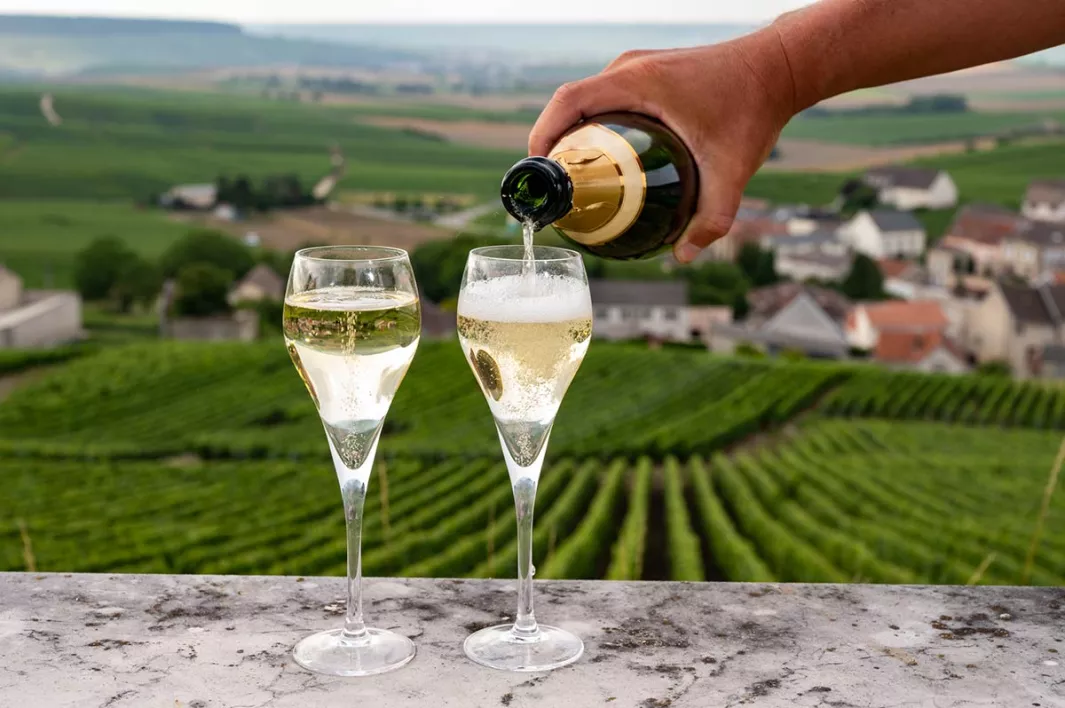
Champagne is the rare wine region whose name became the generic word for its product, which is both a triumph of branding and, in some ways, an obstacle to understanding it properly. Reduce Champagne to “sparkling wine from France” and you lose almost everything that makes it interesting: a specific, narrow band of chalk soil at the northern edge of where wine grapes can reliably ripen, a production method invented to solve a problem rather than a stylistic choice, and a two-tier industry split between grand international houses managing millions of bottles and small grower-producers farming a few hectares of their own vines.
This is northeastern France, roughly 90 minutes by train from Paris, cooler and further north than any other major French wine region, which is precisely the point. Champagne’s high natural acidity, the backbone of everything the wine becomes after its second fermentation, comes directly from grapes grown at the edge of ripeness in a genuinely marginal climate. Understanding that tension between marginal growing conditions and centuries of refined technique is the key to appreciating what’s actually in the glass, well beyond the celebratory associations most people bring to it.
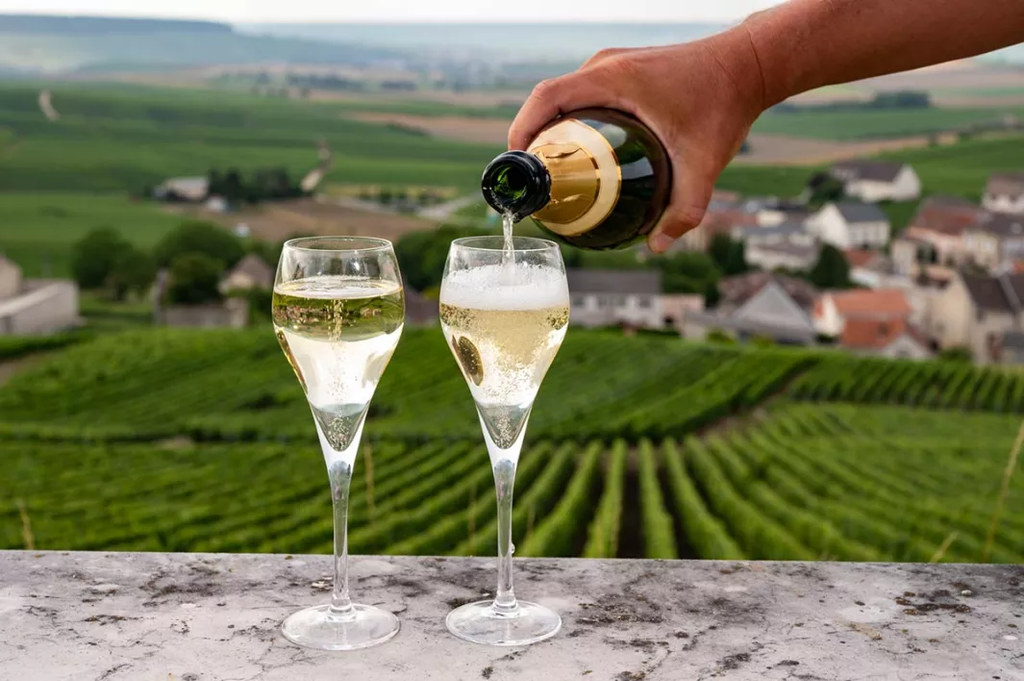
This guide covers Champagne’s five sub-regions, its échelle des crus classification, four houses spanning a grower-producer, a major Reims maison, a Vallée de la Marne house, and a Côte des Bar estate, and where to actually find these wines at Dutch and Spanish retailers.
Geography and Terroir
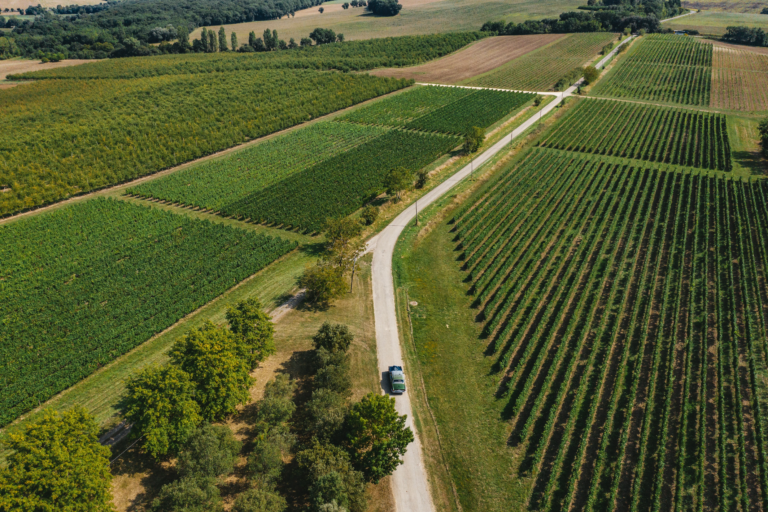
Champagne sits roughly 150 kilometers northeast of Paris, its vineyards spread across five main sub-regions, each with a distinct role in the blends most houses ultimately produce.
Montagne de Reims, a horseshoe of low hills south of the city of Reims, is Champagne’s Pinot Noir stronghold, home to ten of the region’s seventeen Grand Cru villages, including Ambonnay, Bouzy, Verzenay, and Mailly-Champagne. Chalk soils here, layered with loam, lignite, clay, and marl, give the grape structure and power, and some of the more southerly villages, like Bouzy, have a tradition of producing serious still red wine under the separate Coteaux Champenois appellation.
Vallée de la Marne, following the Marne River south and west of Reims, is Pinot Meunier’s home ground, a hardier, earlier-budding grape that tolerates the valley’s more variable soils and frost risk better than Pinot Noir or Chardonnay. Aÿ, the valley’s sole Grand Cru village, is a notable exception, prized for Pinot Noir of real depth.
Côte des Blancs, stretching about 20 kilometers south of Épernay, is planted almost exclusively (around 95%) to Chardonnay, its east-facing slope of pure chalk producing the precise, mineral-driven grapes behind blanc de blancs Champagne. Six of its twelve villages, including Cramant, Avize, and Le Mesnil-sur-Oger, hold Grand Cru status.
Côte de Sézanne, just south of the Côte des Blancs, is a smaller, less-established Chardonnay-focused zone, still building its reputation relative to its more famous northern neighbor.
Côte des Bar, the southernmost sub-region near Troyes, sits apart geographically and geologically from the rest of Champagne, closer in fact to northern Burgundy’s Chablis, with Kimmeridgian marl soils rather than pure chalk. This is Pinot Noir country with a warmer, more oceanic climate, and it has become the base for a growing number of ambitious grower-producers working outside the shadow of the grand Reims houses.
Underlying all five sub-regions is the chalk that defines Champagne globally: a porous, moisture-retentive limestone laid down some 70 million years ago, which drains excess water while retaining just enough to sustain the vines through dry spells, and which also, historically, provided the vast quarried cellars, the crayères, where Champagne ages today.
A Short History
Champagne’s association with sparkling wine is younger than most people assume. For centuries the region produced still wine, prized but overshadowed by Burgundy just to the south, and its light-colored red wines were what put the region on the map among French courts. The accidental fizz that occasionally appeared in bottles, caused by a second fermentation restarting in the cold cellars each spring, was for a long time considered a flaw, dangerous enough that cellar workers wore heavy masks to guard against exploding bottles, a hazard known as le vin du diable, the devil’s wine.
The transformation from flaw to feature happened gradually through the 17th and 18th centuries, with English drinkers, who had access to stronger glass bottles capable of containing the pressure, playing a documented role in embracing and popularizing the sparkling style before French producers fully committed to it themselves. The Benedictine monk Dom Pérignon, working at the Abbey of Hautvillers in the late 17th century, is popularly credited with inventing Champagne, though his actual documented contributions centered on blending across plots and improving cork closures rather than deliberately creating bubbles.
The 19th century built the industry as it’s recognized today. Widow entrepreneurs, most famously Barbe-Nicole Clicquot Ponsardin (Veuve Clicquot) and Louise Pommery, took over their late husbands’ houses and drove major innovations, including the riddling process (remuage) that clarifies the wine before disgorgement, still used with variations in Champagne cellars today. The region also endured genuine hardship: phylloxera devastated vineyards in the early 20th century, and both World Wars saw fighting directly across Champagne’s vineyards and cellars, with the crayères beneath Reims serving as bomb shelters and even underground hospitals during the First World War.
Grapes and the Traditional Method
Champagne’s identity rests on three grape varieties and one defining production method.
Chardonnay provides finesse, citrus-driven freshness, and aging potential, dominant in the Côte des Blancs and the backbone of blanc de blancs Champagne, made from 100% Chardonnay.
Pinot Noir contributes structure, body, and red fruit character, dominant in the Montagne de Reims and much of the Côte des Bar, and forms the backbone of blanc de noirs Champagne when used alone, despite being a black-skinned grape vinified without skin contact.
Pinot Meunier, the least prestigious of the three historically but increasingly respected, offers fruitiness and earlier approachability, particularly suited to the Vallée de la Marne’s variable soils and frost-prone sites.
Most Champagne is a blend of these three varieties, often across multiple villages and even multiple vintages, which is where the traditional method comes in. After a first fermentation produces a still base wine, a mixture of sugar and yeast (liqueur de tirage) is added, and the wine is bottled and sealed, triggering a second fermentation inside the bottle itself. This traps carbon dioxide as dissolved gas, creating the characteristic bubbles, while the wine ages on its spent yeast cells (lees) for a minimum of 15 months for non-vintage Champagne and 36 months for vintage, though prestige cuvées frequently exceed these minimums by years, developing the toasted, brioche-like complexity fine Champagne is known for. The bottle is then riddled to collect the sediment in the neck and disgorged, removing that sediment before a final dosage of sugar determines the wine’s ultimate sweetness level, from bone-dry brut nature to sweeter demi-sec.
The Échelle des Crus Classification
Champagne’s classification system, introduced in 1920, works differently from anywhere else in France. Rather than ranking individual vineyard plots as Burgundy does, the échelle des crus (ladder of growths) ranks entire villages (communes) on a percentage scale reflecting the historical quality and reputation of grapes grown there.
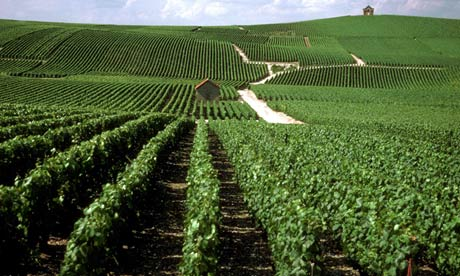
Of the 320 or so villages within the Champagne AOC, 17 are ranked Grand Cru, rated at 100%, entitling grapes grown there to command the highest prices under the system’s original pricing mechanism. A further 42 villages rank as Premier Cru, rated between 90% and 99%. The remaining majority of villages, some 261 in total, fall outside these top two tiers entirely, rated in the 80% to 89% range with no special designation on the label.
The pricing mechanism this percentage scale originally controlled, fixing grower payment rates according to a village’s rank, was formally abolished after the 2003 harvest, following EU competition concerns. The classification itself, however, remains fully in use today for labeling purposes, and a Champagne sourced entirely from Grand Cru villages can legally state “Grand Cru” on its label, just as a wine from Premier Cru villages can state “Premier Cru.”
This village-level system is also why Champagne producers, unlike Burgundian growers, rarely emphasize individual vineyard sites on their labels, though a small but growing number of grower-producers now do exactly that, bottling single-vineyard or single-village cuvées that push against the system’s traditionally blended, house-style logic.
Four Champagne Houses Worth Visiting
These four span Champagne’s range: an ambitious grower-producer in the Côte des Blancs, a grand Reims maison built for tourism, an intensely private Vallée de la Marne house, and a forward-thinking Côte des Bar estate.
Champagne Pierre Péters (Le Mesnil-sur-Oger, Côte des Blancs)
Now run by sixth-generation Rodolphe Péters, Pierre Péters has quietly become one of the Côte des Blancs’ most respected grower-producers since the family began estate-bottling in 1919. Its roughly 19 hectares of Chardonnay sit almost entirely in Grand Cru villages, Le Mesnil-sur-Oger, Oger, Avize, and Cramant, and the house has never relied on modern clonal selection, working instead with sélection massale to preserve genetic diversity across its old vines. Its flagship Les Chétillons, a single-vineyard bottling from a plot in Le Mesnil, is widely regarded as one of the finest expressions of blanc de blancs made anywhere.
- Address: 9 rue de l’Église, 51190 Le Mesnil-sur-Oger, France
- Contact: +33 3 26 57 50 32
- Visiting: Tours with tasting by reservation only, booked between two months and one week in advance, Monday to Thursday. Visits pause each year during harvest and resume once fermentations are complete, typically from late September.
Champagne Pommery (Reims, Montagne de Reims)
Founded in 1858 and famous today for its Elizabethan-style headquarters and vast Gallo-Roman chalk pits, Pommery is arguably the most visitor-friendly of the grand Reims houses, with self-guided and guided tour options built specifically for tourism rather than trade-only appointments. The house holds the historical distinction of commercializing the first brut-style Champagne in 1874, a genuinely dry style that shifted the entire industry away from the sweeter dosages that had dominated until then. Descending 30 meters into its 18 kilometers of chalk galleries, lined with contemporary art installations commissioned over the decades, remains one of the more theatrical winery visits in France.
- Address: 5 Place du Général Gouraud, 51100 Reims, France
- Contact: +33 3 26 61 62 56, visites@vrankenpommery.fr
- Visiting: Open daily, early April to mid-November 9:30 to 19:00, mid-November to late March 10:00 to 18:00. Tours range from a one-hour self-guided or guided cellar visit around €22-30 to a 90-minute “Genius of Madame Pommery” tour with two tastings; booking ahead is recommended, particularly in summer.
Champagne Bollinger (Aÿ, Vallée de la Marne)
One of the few remaining fully independent, family-run Grand Champagne houses, Bollinger has built its reputation on a distinctly Pinot Noir-driven style, sourced from 179 hectares that are around 85% Grand and Premier Cru. Its Vieilles Vignes Françaises, made from two small, ungrafted, pre-phylloxera parcels planted on their own rootstock, is one of Champagne’s genuine rarities, and the house remains one of the relatively few maisons still fermenting a significant portion of its base wines in oak barrels. Bollinger has also cultivated a famous cultural footnote as James Bond’s Champagne of choice across the film franchise, a detail the house leans into without letting it define the visit.
- Address: 20 Boulevard Maréchal de Lattre, 51160 Aÿ, France
- Contact: +33 3 26 53 33 66, contact@champagne-bollinger.fr
- Visiting: Visits by appointment only, Monday to Friday; the boutique is open 9:00 to 12:00 and 14:00 to 17:00. Tours are genuinely limited in number and often booked through specialist platforms rather than a simple walk-in system, so reserving well in advance is essential, particularly for the roughly two-hour cellar tour and tasting.
Champagne Drappier (Urville, Côte des Bar)
Founded in 1808 and still family-run, now in its eighth generation under Michel Drappier and his children Charline, Antoine, and Hugo, Drappier farms 90 hectares split mainly across the Côte des Bar with a small holding in the Côte des Blancs. The house was an early adopter of low-sulfite and zero-dosage winemaking, and its cellars occupy the site of a former Cistercian abbey founded by Saint Bernard in the 12th century, giving the visit a genuine sense of place beyond the usual tasting-room experience. Drappier leans heavily on Pinot Noir, reflecting the Côte des Bar’s strength with the grape, and its cuvées range from the accessible Carte d’Or through more experimental, low-intervention bottlings.
- Address: 14 rue des Vignes, 10200 Urville, France
- Contact: +33 3 25 27 40 15, info@champagne-drappier.com
- Visiting: Open Monday to Friday 8:00 to 12:00 and 14:00 to 18:00, Saturday 9:00 to 12:00 and 14:00 to 18:00, closed Sundays. A 90-minute guided tour through the 12th-century cellars with a tasting of three Champagnes runs around €26; booking ahead is recommended, though not always strictly required outside peak season.
Where to Buy Champagne
Champagne is, unsurprisingly, the most broadly distributed of any wine covered in this series, and general retail availability across the Netherlands and Spain is strong for major houses even when specific estate profiles vary.
Decántalo carries Champagne Bollinger extensively, including the Brut Special Cuvée, La Grande Année in both white and rosé across multiple vintages, and the rare, prestige-tier R.D., making it a genuinely comprehensive single source for the house.
Champagne Pommery, while not confirmed in current stock at Wijnbeurs, Colaris, or Decántalo specifically, is widely available through general Dutch retailers including Albert Heijn’s wine range, reflecting how mainstream-market this particular house has become; readers wanting the Pommery range are more likely to find it through general supermarkets and dedicated Champagne specialists than through the three boutique retailers this series otherwise prioritizes.
Champagne Pierre Péters and Champagne Drappier were not confirmed in stock at Wijnbeurs, Colaris, or Decántalo at the time of writing. Both are the kind of grower-focused, allocation-driven Champagne more commonly found through specialist importers; readers interested in Pierre Péters specifically should look to dedicated Champagne specialists, while Drappier, given its wider production volume, appears more frequently at independent Dutch wine merchants and through the estate’s own webshop. WirWinzer remains a reliable fallback for both smaller grower Champagne and the larger houses.
Food Pairing
Champagne’s high acidity and fine bubbles make it one of the most genuinely versatile wines at the table, capable of working through an entire meal rather than serving only as an aperitif. Blanc de blancs, crisp and citrus-driven, is the natural match for oysters and other raw shellfish, much like the Chablis and Muscadet it shares a chalk-soil kinship with. Blanc de noirs and Pinot Noir-heavy blends, fuller-bodied and more structured, stand up to richer fare: roast chicken, mushroom-based dishes, or even a simply prepared duck breast.
Rosé Champagne, made either by blending in a small amount of still red wine or through brief skin contact, pairs particularly well with salmon, both cured and cooked, as well as with soft cheeses like Brie de Meaux, itself produced not far from Champagne’s borders. Vintage and prestige cuvées, with their years of lees aging and toasted, nutty complexity, are worth pairing with genuinely rich dishes, foie gras, aged Comté, or a proper poulet de Bresse, rather than reserved only for a toast at the start of a meal.
Demi-sec and sweeter styles, though less fashionable than they once were, remain an underrated match for fruit-based desserts and, somewhat unexpectedly, work well against the sweet-and-savory balance of a good foie gras torchon.
Getting There and Planning Your Trip
Reims and Épernay are Champagne’s two natural bases, and both are genuinely easy to reach from the Netherlands. The TGV connects Paris to Reims in under 45 minutes, and Reims itself is directly reachable from several other French and Belgian cities without a Paris transfer required. Flying into Paris and taking the train onward remains the most practical route from Amsterdam or Rotterdam, with total door-to-door travel typically well under five hours.
Reims serves as the natural base for exploring the Montagne de Reims, with its cathedral, a UNESCO World Heritage Site and the traditional coronation site of French kings, worth a half day on its own before heading into the vineyards. Épernay, about 30 minutes south, sits at the edge of the Côte des Blancs and along the Avenue de Champagne, a single street lined with the cellars of some of the grandest houses, itself a worthwhile walk even without booking a single tour. The Côte des Bar, further south near Troyes, is best treated as a separate leg of the trip given the roughly hour-and-a-quarter drive from Reims, and pairs naturally with a stop in Troyes’ well-preserved medieval old town.
A car becomes useful once venturing beyond Reims and Épernay themselves, since individual villages and grower-producers, particularly in the Côte des Blancs and Côte des Bar, sit down rural roads without meaningful public transport. Harvest typically runs from late August through September, and while some houses welcome visitors during this period, availability for tours narrows considerably as cellar staff focus on the vintage itself; booking well ahead, particularly for the major Reims houses in summer, is genuinely necessary rather than merely advisable.
Frequently Asked Questions
What’s the difference between a Champagne house and a grower-producer? Champagne houses (maisons), like Pommery or Bollinger, typically buy grapes from many growers across different villages to blend into a consistent house style each year. Grower-producers (récoltants-manipulants), like Pierre Péters, grow and vinify only their own estate fruit, often producing wines with a more specific, site-driven character.
Is all Champagne made the same way? All Champagne must be made using the traditional method, with second fermentation happening inside the bottle, but styles vary significantly based on grape blend, dosage level (from brut nature to demi-sec), and length of lees aging, which together shape everything from a crisp, youthful non-vintage to a rich, complex prestige cuvée.
What does “Grand Cru” mean on a Champagne label? Unlike Burgundy, where Grand Cru refers to a specific vineyard plot, Champagne’s Grand Cru designation applies to an entire village. A Champagne can carry the Grand Cru label if all of its grapes come from one or more of the region’s 17 villages ranked at the top of the échelle des crus classification system.
Can Champagne age, or should it be drunk young? Non-vintage Champagne is generally made to be enjoyed on release or within a few years, while vintage Champagne and prestige cuvées, made only in strong years and aged considerably longer on their lees before release, can develop further complexity with additional bottle age, sometimes for a decade or more depending on the producer and style.