A Comprehensive Guide to the Montilla-Moriles Wine Region: Bodegas, Bottles, and Terroir
When you think of the sun-drenched vineyards of southern Spain, your mind likely drifts toward the famous Sherry triangle of Jerez. But travel just a couple of hours inland, past the ancient olive groves and the undulating hills of Córdoba, and you will find a quiet, profoundly historic, and arguably more fascinating winemaking powerhouse: the Montilla-Moriles wine region.
This is a land where the summer heat is relentless, the chalky white soils blind you in the midday sun, and the wine rests in cool, cathedral-like cellars waiting for years, sometimes over a century, to see the light of day again. Montilla-Moriles is a region that has perfected the art of time, capturing the harsh Andalusian climate and transforming it into liquid gold and deep mahogany elixirs.
If you are a wine enthusiast looking to expand your palate, or a traveler planning a gastronomic journey through Spain, understanding Montilla-Moriles is essential. This comprehensive guide will walk you through the unique characteristics of the region, the magic of the Pedro Ximénez grape, the ancient bodegas you must visit, and the bottles you should add to your cellar right now.
The History of a Forgotten Giant
The story of the Montilla-Moriles wine region is as old as the Iberian Peninsula itself. The Romans were the first to recognize the agricultural potential of this sun-baked land, planting vines and exporting the robust wines back to the empire. Later, during the Moorish occupation of Al-Andalus, despite Islamic prohibitions on alcohol, viticulture survived, often under the guise of producing raisins and medicinal tonics.
Following the Christian Reconquista, winemaking flourished once more. By the 18th and 19th centuries, the wines of Montilla were world-renowned, though often confused with, or blended into, the more heavily marketed Sherries of Jerez. In fact, the very term “Amontillado” (a famous style of Sherry) literally translates to “in the style of Montilla.” This historical linguistic quirk proves that Montilla was once the benchmark for quality, barrel-aged, biologically influenced wines.
In 1945, the region finally received its official Denominación de Origen (D.O.) status, cementing its boundaries and strictly regulating its quality. Since then, Montilla-Moriles has fought to step out of Sherry’s shadow, leaning into its unique selling proposition: an absolute mastery of the Pedro Ximénez grape and a completely natural approach to biological aging. Today, it is revered by sommeliers and wine geeks worldwide, though it remains a glorious hidden gem for the casual consumer.
The Geography, Climate, and Soil: A Terroir of Extremes
You cannot understand the wines of the Montilla-Moriles wine region without understanding the brutal, beautiful terroir that shapes them. The region sits in the southern part of the province of Córdoba, bordered by the Genil River and the Subbética mountain range.
A Searing Continental-Mediterranean Climate
The climate here is a mix of Mediterranean influences and extreme continental shifts. Unlike Jerez, which is cooled by the Atlantic breezes, Montilla-Moriles is inland. The summers are famously scorching, with July and August temperatures frequently soaring past 40°C (104°F). The winters, conversely, are short but remarkably cold. Rainfall is scarce, averaging around 600 millimeters a year, mostly falling in fierce bursts during late autumn and winter.
This intense heat is the defining factor of the region. It causes the grapes to ripen rapidly, accumulating massive amounts of natural sugar. This climatic reality forces the vines to dig deep into the earth to find water, resulting in highly concentrated, deeply flavorful fruit.
The Magic of the Albariza Soil
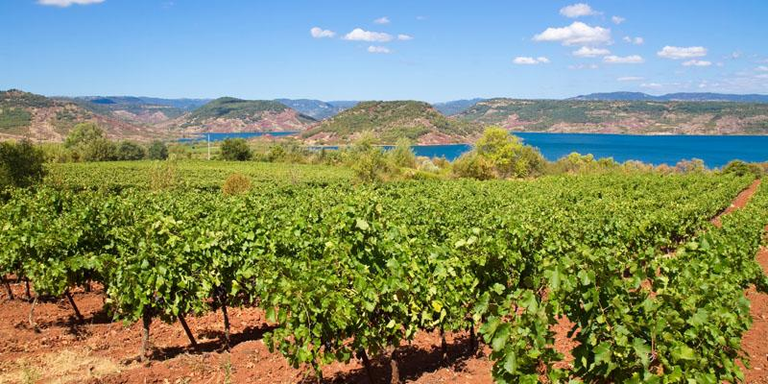
The true savior of the vines in this arid landscape is the soil. The highest quality vineyards, designated as the Zona de Calidad Superior (Superior Quality Zone), are found in the Sierra de Montilla and the Altos de Moriles. Here, the ground is covered in Albariza, a blindingly white, porous, chalky marl.
Albariza is an agricultural miracle. During the sparse winter rains, it acts like a giant sponge, absorbing and holding massive volumes of water. When the searing summer heat arrives, the top layer of the soil bakes into a hard crust, trapping the moisture beneath the surface. The vine roots, which can extend meters underground, slowly sip on this reserved water throughout the dry season. Without Albariza, viticulture in Montilla-Moriles would be nearly impossible.
In the lower-lying areas, known as the Zona Llana, the soils are sandier and darker (known locally as ruedos or arenas). These soils do not retain water as well, and the grapes grown here are typically used for younger, simpler wines or for the production of brandy.
Pedro Ximénez: The Undisputed King of Montilla-Moriles
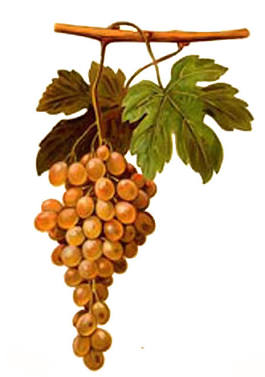
If there is one thing you must remember about the Montilla-Moriles wine region, it is the name Pedro Ximénez (often abbreviated to PX). While Jerez relies heavily on the Palomino Fino grape for its dry wines, Montilla-Moriles has pledged almost total allegiance to PX. Today, over 95% of the vineyards in the D.O. are planted with this single varietal.
Legend has it that the grape was brought to Spain from the Canary Islands or the Rhine Valley by a soldier named Pieter Siemens (his name Hispanicized to Pedro Ximénez) serving under Charles V. Regardless of its true origins, the grape has found its ultimate expression in the sun-baked chalk of Córdoba.
Pedro Ximénez is a remarkably versatile grape with a very thin skin. When fermented to dryness, it produces wines that are rich, glycerin-heavy, and full-bodied, capable of standing up to the rigorous biological aging process. However, its thin skin also makes it the perfect candidate for the region’s most famous practice: the asoleo.
The Asoleo Process: Sun-Drying the Grapes
To create the decadently sweet, syrupy dessert wines that the region is famous for, the winemakers employ an ancient technique called asoleo. After the harvest in late August or early September, the bunches of PX grapes are laid out on esparto grass mats directly under the blistering Andalusian sun.
For one to two weeks, the grapes bake. The water inside them evaporates, shrinking the berries into raisins and concentrating the natural sugars, acids, and flavor compounds to an extreme degree. The resulting must is so thick and sticky that it resembles molasses. Fermentation of this thick syrup is painfully slow and naturally stops at a very low alcohol level, leaving massive amounts of residual sugar. The wine is then fortified and aged, resulting in a liquid that tastes of liquid dates, figs, dark chocolate, and roasted coffee.
The Magic of Winemaking: Flor, Tinajas, and the Solera
The winemaking techniques in Montilla-Moriles are steeped in tradition, blending ancient Roman practices with highly complex biological systems.
Fermentation in Tinajas
Historically, and still in many traditional lagares (farmhouse wineries) today, the initial fermentation of the grape juice does not happen in stainless steel tanks or oak barrels. Instead, it takes place in tinajas, massive, human-sized earthenware amphorae. These porous clay vessels allow for a micro-oxygenation of the wine, rounding out the texture and giving the young wines a distinct earthy, rustic profile. While large modern bodegas now use temperature-controlled steel, the resurgence of the tinaja for boutique, terroir-driven white wines is a thrilling trend in the region.
Biological Aging and the Velo de Flor
Once the dry PX base wine is fermented, the cellar master must make a crucial decision: will this wine age biologically or oxidatively?
Biological aging (crianza biológica) is the process that creates Fino wines. The young wine is transferred into 600-liter American oak casks (called botas), which are intentionally left about one-sixth empty. Because the cellars are kept cool and somewhat humid, a naturally occurring layer of indigenous yeast, known as the velo de flor (veil of flower), blooms on the surface of the wine.
This thick, creamy layer of yeast completely covers the liquid, protecting it from oxygen. But the flor doesn’t just sit there; it is a living organism that feeds on the glycerin, alcohol, and unfermented sugars in the wine. In return, it excretes acetaldehyde, a chemical compound that gives Fino its distinctive bone-dry, salty, almond-like, and appley aroma.
The Montilla Miracle: Here is the crucial difference between the Finos of Montilla-Moriles and the Finos of Jerez. In Jerez, the Palomino grape rarely ferments past 11-12% alcohol, meaning the winemaker must artificially add grape spirit (fortify) the wine up to 15% to protect it from turning to vinegar. In Montilla-Moriles, the blistering sun ensures the Pedro Ximénez grape naturally ferments to 15% alcohol. Most Finos from Montilla-Moriles are completely unfortified. This gives them a slightly rounder, fuller, and more integrated mouthfeel compared to their coastal cousins.
Oxidative Aging
If a wine does not develop a robust layer of flor, or if the winemaker intentionally destroys the flor by fortifying the wine to 17% alcohol, the wine enters oxidative aging (crianza oxidativa). Without the protective yeast, the wine is exposed to the air inside the barrel. Over years and decades, the wine slowly oxidizes, evaporating slightly (the “angel’s share”), concentrating in alcohol, and turning a deep amber or mahogany color. This is how Amontillados and Olorosos are born.
The Solera and Criadera System
Whether aging biologically under flor or oxidatively, the wines are managed using the brilliant Solera and Criadera system. This is a method of fractional blending.
The barrels are stacked in tiers. The bottom tier, resting on the floor (suelo), is called the Solera. This contains the oldest wine. When wine is drawn out of the Solera to be bottled (a process called saca), the barrel is never completely emptied. Instead, the void is filled with slightly younger wine from the tier above it, known as the First Criadera. The First Criadera is then topped up with even younger wine from the Second Criadera, and so on, up to the newest wine at the top.
This system achieves two things:
- It ensures absolute consistency year after year, blending the vitality of young wine with the complexity of old wine.
- In the case of Finos, the young wine added to the barrels provides fresh nutrients to keep the velo de flor alive.
Because of this continuous blending, most wines from Montilla-Moriles do not carry a vintage year. The age on the bottle represents the average age of the blend.
Decoding the Wine Styles of Montilla-Moriles
Walking into a wine shop and navigating the labels of Montilla-Moriles can be daunting. The region produces a massive spectrum of flavors, ranging from the driest white wines in the world to the absolute sweetest. Here is your cheat sheet to the styles:
1. Joven / Blanco sin Crianza (Young Whites)
These are fresh, unaged white wines made from Pedro Ximénez, sometimes blended with Moscatel or Airén. They are fruit-forward, showcasing aromas of melon, peach, and citrus. In recent years, a new wave of “Vinos de Pueblo” (village wines) has emerged, focusing on high-quality, dry, unfortified PX that highlights the chalky terroir without the influence of oak or flor.
2. Fino
The classic dry wine of the region. Aged biologically under the flor. It is pale straw in color, bone-dry, and offers intense aromas of green apple, chamomile, fresh dough, and Marcona almonds. Because the PX grape is naturally rich in glycerin, Montilla Finos often feel slightly more velvety on the palate than those from Jerez. Serve this ice-cold.
3. Amontillado
An Amontillado represents the best of both worlds. It begins its life as a Fino, aging under the flor for several years. Eventually, the flor dies off (either naturally as nutrients deplete, or via fortification by the winemaker). The wine is then subjected to years of oxidative aging. The result is an amber-colored wine that retains the sharp, saline tang of a Fino but adds the complex, toasted notes of hazelnuts, old wood, and dried herbs. It is a wine of profound intellect and elegance.
4. Oloroso
Oloroso (meaning “fragrant”) never sees the flor. From day one, it is fortified to around 17% and aged oxidatively. Through years of evaporation, the alcohol can creep up past 20%. These wines are dark mahogany, full-bodied, and aggressively aromatic. They smell intensely of roasted walnuts, tobacco, leather, and autumn leaves. Despite smelling sweet and rich, a true Oloroso is completely dry on the palate.
5. Palo Cortado
The rarest and most mysterious style. A Palo Cortado begins life intending to be a Fino, but early on, it inexplicably loses its flor and begins to oxidize. It is said to combine the delicate, sharp nose of an Amontillado with the massive, weighty palate of an Oloroso. Finding a great Palo Cortado from Montilla-Moriles is like finding a unicorn; they are heavily concentrated, slightly bitter, incredibly long on the finish, and highly prized by collectors.
6. Pedro Ximénez (Sweet / Dulce)
This is the showstopper. Made from the sun-dried asoleo grapes, this is one of the sweetest wines on the planet, often containing over 400 grams of residual sugar per liter. It pours out of the bottle like motor oil, completely opaque and dark. The aromas are explosive: molasses, figs, dates, licorice, espresso, and dark chocolate. Despite the massive sugar content, the best examples retain a backbone of acidity that keeps them from becoming cloying.
A Couple of Great Winehouses (Bodegas) to Visit
If you are planning a trip to Andalusia, the Montilla-Moriles Wine Route is an absolute must. The bodegas here offer a much more intimate, rustic, and personal experience compared to the highly commercialized tours in Jerez. Here are the titans you must visit.
Bodegas Alvear (Montilla)
Founded in 1729, Bodegas Alvear is not only the oldest winery in the Montilla-Moriles region, but it is also one of the oldest family-owned wineries in all of Spain. Now run by the eighth generation of the Alvear family, this massive estate is the undisputed champion of the D.O.
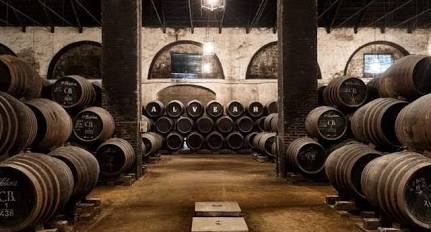
Walking into Alvear’s monumental cellars (some of which house over 5 million liters of wine) feels like entering a cathedral dedicated to Bacchus. The air is thick with the smell of old oak and sweet raisins. Alvear is famous for its impeccable, unfortified Finos, particularly their “C.B.” label, which is a staple in tapas bars across Spain. Recently, they have also pioneered the “3 Mirades” project, a revolutionary attempt to produce unfortified, terroir-specific dry white wines from different plots of Albariza soil in the Sierra de Montilla.
Bodegas Toro Albalá (Aguilar de la Frontera)
If Alvear is the king of the Solera, Toro Albalá is the absolute master of the Vintage. Founded in 1844, this bodega operates out of a former electrical plant (which is why their flagship Fino is cheekily called “Fino Eléctrico”).
Toro Albalá is unique because they specialize in Añadas, vintage sweet Pedro Ximénez wines that are left to age undisturbed in single barrels for decades, rather than being blended into a Solera. Their “Don PX Convento Selección” series is legendary in the wine world. They regularly release wines from the 1950s, 1940s, and even the 1930s, complete with hand-written labels and wax seals. Tasting a 70-year-old Don PX in their tasting room (which doubles as an incredible antique museum) is an almost religious, emotional experience. The sheer concentration and viscosity of these old wines defy logic.
Bodegas Pérez Barquero (Montilla)
Established in 1905, Pérez Barquero is a beacon of elegance and consistency. They are deeply committed to traditional viticulture and were recently certified as a “Sustainable Winery for Climate Protection”.
Pérez Barquero controls vineyards in the absolute best albariza plots of the Sierra de Montilla and Moriles Altos. Their cellars hold some of the oldest soleras in the region. They are highly regarded for their “Gran Barquero” range, which offers some of the best value-to-quality ratios in the world of fortified wine. Their Amontillados and Olorosos are masterclasses in balance, offering profound complexity without overwhelming heaviness.
Bottles to Buy Right Now
You don’t have to fly to Córdoba to taste the magic. Many excellent European retailers, such as Decantalo, Colaris, or Wijnbeurs, carry fantastic selections from the Montilla-Moriles wine region. Here are a couple of specific bottles you should hunt down immediately to build your understanding of the region.
1. Alvear 3 Mirades Vino de Pueblo (Dry White) If you want to understand the pure, naked Pedro Ximénez grape before it gets heavily aged, buy this wine. This is part of Alvear’s modern terroir project. It is an unfortified, dry white wine made from old vines grown on pure chalk. It is fermented in concrete and traditional tinajas, and sees just a tiny bit of flor influence.
- Tasting Notes: Expect a fiercely mineral, vibrant wine. It opens with aromas of crushed rocks, sea spray, grapefruit, and a hint of wild fennel. The palate is bone-dry with a thrilling, saline acidity and a slightly bitter, chalky finish. It pairs spectacularly with raw oysters or ceviche.
2. Toro Albalá Don PX (Vintage Sweet PX) You cannot experience Montilla without drinking an old, sweet PX. Decantalo frequently stocks recent vintage releases of Toro Albalá’s Don PX (such as the 2002 or 2004), as well as the ultra-premium “Convento Selección” for special occasions.
- Tasting Notes: Pours jet-black with a viscous, syrupy rim. The nose is a decadent explosion of dark treacle, dried figs, roasted espresso beans, dark soy sauce, and balsamic glaze. On the palate, it is incredibly sweet, coating the mouth in flavors of liquid chocolate and raisins, but a surprising core of acidity lifts the finish, ensuring it doesn’t feel heavy. Pour this over high-quality vanilla bean ice cream for the greatest dessert of your life.
3. Pérez Barquero Gran Barquero Amontillado (Aged Dry): To understand the bridge between biological and oxidative aging, seek out a mature Amontillado from Pérez Barquero. This wine spends roughly a decade under flor and another decade aging oxidatively.
- Tasting Notes: A glowing amber color. The nose is highly intellectual, offering waves of toasted hazelnuts, dried orange peel, antique furniture polish, and a lingering hint of salty sea air. The palate is completely dry, razor-sharp, and incredibly intense, with flavors of roasted nuts and dried herbs lingering on the finish for minutes. This is a contemplative wine that demands your attention.
Pairing Montilla-Moriles Wines with Food
The gastronomic versatility of Montilla-Moriles wines is unparalleled. Because they span the entire spectrum from bone-dry to intensely sweet, you can pair an entire multi-course tasting menu exclusively with wines from this D.O.
- Fino: The ultimate aperitif. Its salty, almond-like profile is the absolute perfect match for a plate of thinly sliced Jamón Ibérico de Bellota. It also cuts beautifully through the fat of fried foods (like calamares fritos or boquerones) and pairs brilliantly with green olives and salted Marcona almonds.
- Amontillado: The savory, umami-rich notes of an Amontillado make it the king of pairing with difficult vegetables. It is one of the only wines in the world that truly flatters artichokes and asparagus. It also shines alongside rich, clear consommés, wild mushroom risotto, and roasted poultry.
- Oloroso: Because of its weight and roasted, complex aromas, Oloroso is a meat wine. Pair it with slow-braised beef cheeks, oxtail stew (rabo de toro), game meats like venison or wild boar, and hard, aged cheeses like a mature Manchego.
- Pedro Ximénez (Sweet): PX is essentially a dessert on its own, but if you must pair it, go for extreme contrast. It is magnificent alongside a pungent, salty blue cheese like Roquefort or Cabrales. Alternatively, use it as an ingredient: drizzle it over vanilla ice cream, fresh strawberries, or a rich dark chocolate tort.
Exploring the Montilla-Moriles Wine Route
If reading about these wines has inspired you to visit, the region is highly accommodating to tourists. The Montilla-Moriles Wine Route winds through 17 municipalities, including Montilla, Moriles, Aguilar de la Frontera, and Lucena.
Unlike the coast, this is rural, authentic Andalusia. The local tourism board has invested heavily in Cyclo-Enotourism, offering dozens of signposted routes for gravel bikes and mountain biking through the rolling, chalky vineyards. You can pedal from bodega to bodega, enjoying the stark contrast between the bright white earth and the deep green vines.
Plan your trip for late August or early September to witness the Vendimia (the grape harvest). This is when the region truly comes alive, and you can see the back-breaking labor of the asoleo process as thousands of kilos of Pedro Ximénez grapes are laid out on mats under the late summer sun. The festival atmosphere in the towns, filled with flamenco, tapas, and free-flowing Fino from the local lagares, is an unforgettable cultural experience.
Conclusion
The Montilla-Moriles wine region is a testament to the resilience of agriculture and the genius of traditional winemaking. In a world increasingly dominated by homogenous, international wine styles, Montilla-Moriles stands defiant. It relies on a single, native grape, ancient earthenware jars, indigenous yeast, and the blistering heat of the Andalusian sun to produce wines that are utterly unique to their place of origin.
Whether you are sipping an electrifyingly dry Fino on a hot summer afternoon, meditating over a complex, nutty Amontillado, or indulging in a century-old sweet Pedro Ximénez, drinking Montilla-Moriles is drinking liquid history. The next time you are browsing a wine shop like Decantalo or Colaris, skip the familiar and reach for a bottle from Córdoba. Your palate will thank you.