Inside Umbria’s Wine Country: Sagrantino, Orvieto and the Wineries Worth Seeking Out
Italy’s only landlocked region sits in quiet defiance of its own obscurity. Umbria shares a border with Tuscany to the north and west, occupies the geographic centre of the peninsula, and has been growing vines on its clay-limestone hills since at least the Etruscan era. Yet it rarely appears on the itineraries of wine travellers who haven’t specifically sought it out. That is, in every practical sense, a gift.
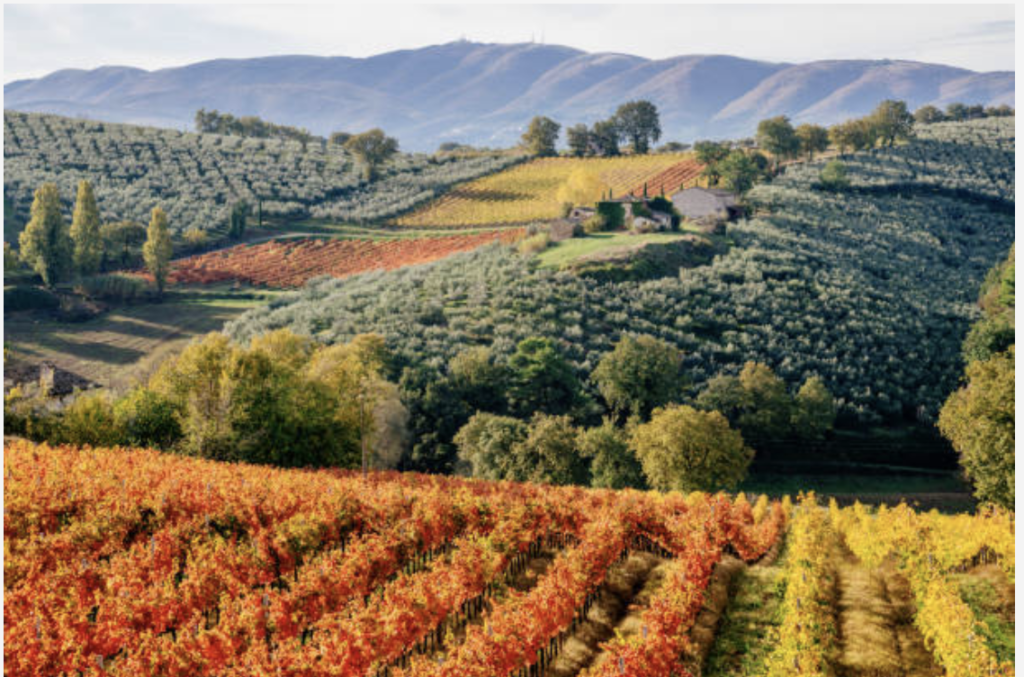
The wines here are distinct from anything produced in the more celebrated regions around it. Sagrantino, the grape responsible for Umbria’s most serious red wine, grows almost nowhere else on earth. The DOCG zone of Montefalco covers just 415 hectares, making it one of the smallest in Italy. Orvieto, by contrast, is Umbria’s most widely recognised appellation, producing aromatic whites on volcanic tufa soils that have been coveted since Roman times. Between these two poles sits Torgiano, where a single producer effectively created the region’s DOC and DOCG from the ground up.
None of this is the kind of quiet competence that generates headlines. Which is precisely why a week spent in the Umbrian hills with a sensible list of addresses and a car with good suspension is more rewarding than almost anywhere else in Italian wine country right now.
Understanding Umbria’s Wine Appellations
The appellation landscape in Umbria runs across two provinces, Perugia and Terni, and includes two DOCG designations, thirteen DOC zones, and six IGP/IGT classifications. Total production sits at roughly 600,000 hectolitres annually, modest by Italian standards.
The Two DOCGs
At the summit are Montefalco Sagrantino DOCG and Torgiano Rosso Riserva DOCG. These are Umbria’s highest-tier wines, and they couldn’t be more different in character.
Montefalco Sagrantino is made from 100% Sagrantino, a variety documented in this area since at least the 16th century and acknowledged by the Italian Ampelographic Commission as indigenous to Umbria as far back as 1879. The grape earned DOCG status in 1992 following a period of renewed producer interest, most notably through the research and advocacy of Arnaldo Caprai, who collaborated with the University of Milan on clonal selection and vineyard management. The zone covers the municipality of Montefalco and parts of four neighbouring communes: Bevagna, Gualdo Cattaneo, Castel Ritaldi, and Giano dell’Umbria.
What makes Sagrantino immediately striking, and initially challenging, is its tannin structure. The variety contains some of the highest levels of polyphenols of any Italian grape, producing wines that require substantial time to open. The dry version, Montefalco Sagrantino Secco, demands patience in the cellar. Producers typically release wines five to seven years after harvest, and the best bottles continue evolving for fifteen years or more. A passito version also exists, made from partially dried Sagrantino grapes, producing a sweet dessert wine that was once the more common expression of the grape before the dry style gained prominence in the late 20th century.
Torgiano Rosso Riserva DOCG, dominated almost entirely by the Lungarotti family, is built principally on Sangiovese with additions of Canaiolo and Colorino. The wine must age a minimum of three years before release, and the prestige cuvée, Rubesco Riserva Vigna Monticchio, spends at least five years in wood and bottle combined before it reaches market. While Sagrantino commands the conversation around Umbrian reds, this Sangiovese-based DOCG quietly delivers wines of depth and linearity that track more closely with the great Tuscan expressions of the variety.
Key DOC Zones
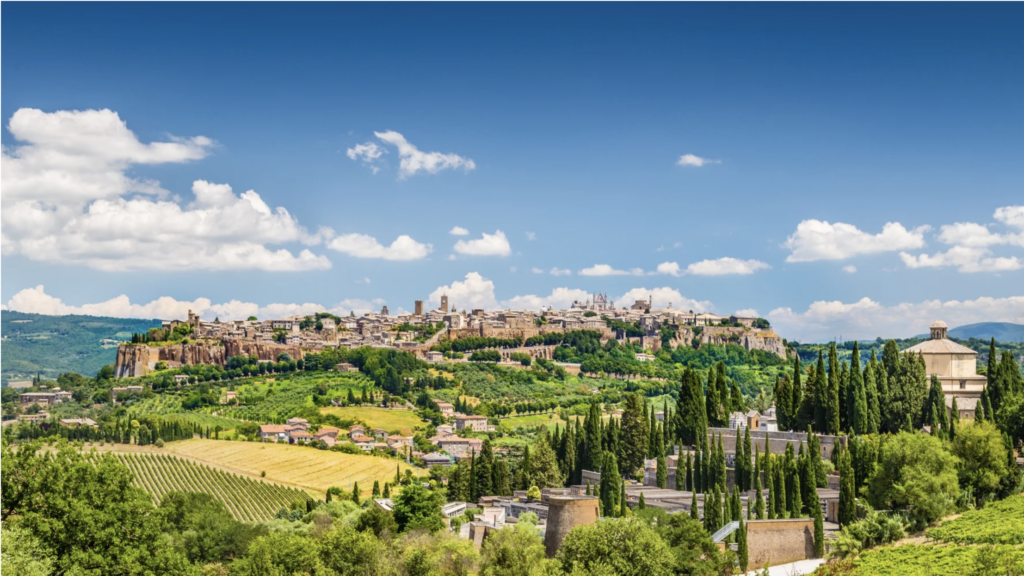
Orvieto DOC is the most commercially significant appellation in the region, accounting for the majority of Umbrian wine production by volume. It sits in the southwestern corner, with vineyards extending across volcanic tufa soils into the neighbouring province of Lazio. The blend is centred on Grechetto and Trebbiano Toscano (called Procanico locally), with permitted additions of Verdello, Canaiolo Bianco, and Chardonnay. The appellation has suffered reputationally from decades of industrial production, but a core of serious producers has been making the case for Orvieto’s legitimacy as a genuinely age-worthy white wine, particularly in the Classico Superiore style. The best examples age in bottle for a decade or more, developing an almost waxy, mineral intensity rooted in the volcanic terroir.
Montefalco DOC, the broader appellation sitting below the DOCG, covers the Rosso blend of Sangiovese, Sagrantino, and Montepulciano, as well as Grechetto whites. This is where you find the more accessible, earlier-drinking expressions from the Montefalco zone, useful for understanding the terroir before committing to a full Sagrantino.
Other zones worth noting for the attentive traveller include Colli del Trasimeno near Perugia, where Grenache (locally called Trasimeno Gamay in a longstanding misnomer) is producing wines that have attracted growing international attention. Spoleto DOC is another sub-region gaining momentum, particularly for Trebbiano Spoletino, a white variety making single-varietal wines with real structural interest.
The Grape Varieties of Umbria
Red Varieties
Sagrantino is the headline act, but Sangiovese is the most widely planted red variety in the region. Umbrian Sangiovese tends toward a leaner, more mineral expression than its Tuscan equivalent, with bright cherry, dried herb, and an earthy undertow that suits food pairing well. It forms the backbone of Montefalco Rosso, Torgiano Rosso, and several IGT wines.
Grenache under its local identity as Trasimeno Gamay is worth tracking down, particularly from estates around Lake Trasimeno. The wines show floral aromatics and red fruit character that sit closer to Rhône Grenache than the name might suggest.
White Varieties
Grechetto is Umbria’s most characterful white grape, producing wines that range from crisp and aromatic when vinified simply to richly textured when given some skin contact or barrel ageing. The variety carries a distinctive bouquet of stone fruit, herbal notes, almond, and citrus pith. Its best expressions come from Orvieto, where it blends with Trebbiano Toscano to produce the classical Orvieto Classico, and from Colli Martani, where varietal bottlings show impressive concentration.
Trebbiano Spoletino is worth attention as a distinct variety, unrelated to the more ubiquitous Trebbiano Toscano. It produces wines of savoury intensity and texture that age unexpectedly well and have won admirers among sommeliers looking for Italian whites outside the obvious reference points.
Four Wineries Worth Visiting in Umbria
Arnaldo Caprai, Montefalco
No serious visit to Umbria’s wine country starts anywhere other than Arnaldo Caprai. The story begins in 1971, when textiles entrepreneur Arnaldo Caprai purchased twelve hectares outside Montefalco. His son Marco took over the estate in 1988 and reoriented it entirely around Sagrantino, entering into a long-running collaboration with the University of Milan on clonal selection, vineyard density trials, and winemaking techniques. That research effectively redefined how Sagrantino was understood and produced across the entire zone.
Today the estate covers more than 150 hectares and operates as the most prominent reference point for Montefalco Sagrantino internationally. The winery sits on a hillside with views across to Spoleto and Assisi, and the tasting experiences available range from an accessible Tour and Food introduction (approximately €30 per person, including three wines paired with Umbrian cold cuts and local olive oil) through to the Sagrantino Lovers experience, which guides visitors through different single-vineyard expressions of the grape, and a Picnic in the Vineyard option available from late April through September.
The flagship wine, Collepiano Montefalco Sagrantino DOCG, offers an ideal entry point into the Caprai range. The prestige bottling, 25 Anni, first produced in 1993 to mark the winery’s 25th anniversary, has retained that name as a permanent label and represents the estate’s finest selection of Sagrantino from the oldest vines, aged in French oak barriques for a minimum of 22 months before extended bottle refinement.
Booking is advised year-round, essential in spring and autumn. The on-site enoteca is open for walk-in purchases if you’re not arranging a formal visit.
Contact: arnaldocaprai.it | Via Alzatura 36, Montefalco (PG)
Lungarotti, Torgiano
The Lungarotti story is inseparable from the broader history of Umbrian wine as a modern industry. Giorgio Lungarotti, the son of landowners who studied agriculture at the University of Perugia, spent the 1950s converting his family’s mixed farming estate into a focused wine operation. His first Rubesco vintage was 1962, several years before Italy’s DOC system came into existence. Torgiano DOC, designed to fit the Lungarotti wines almost exactly, followed in 1968. The DOCG for Torgiano Rosso Riserva was granted in 1990, retroactively validated for the 1983 vintage onward.
Giorgio died in 1999, and the winery is now led by his daughters Chiara and Teresa, with the next generation, Teresa’s son Francesco, heading export and his daughter Gemma working alongside. The family also founded the Wine Museum of Torgiano in 1974 and the Olive and Oil Museum, both of which are part of the winery visit experience and deserve serious time.
The cellar tour at Torgiano takes around 30 minutes and covers vineyards, production areas including a traditional-method sparkling wine cellar, and the company’s remarkable historical archive, where bottles from the early 1960s are stored and occasionally brought out for vertical tastings. The tasting that follows is accompanied by Umbrian bread and the estate’s own extra virgin olive oil; a professional olive oil tasting can also be arranged separately.
The enoteca at the winery is open Monday through Saturday, 10am to 6pm, and does not require a prior booking for wine purchases. For guided experiences, advance reservation is recommended.
Contact: lungarotti.it | Via Mario Angeloni 16, Torgiano (PG)
Palazzone, Orvieto
The story of Palazzone begins with a piece of medieval architecture. In 1969 Angelo Dubini purchased a 13th-century building near Rocca Ripesena that had originally been commissioned by Pope Boniface VIII as a hostel for pilgrims walking to Rome. After a meticulous restoration, the property became a boutique hotel and family home. Angelo planted 25 hectares of vines on the hillside, and in 1982 his sons Giovanni and Lodovico made the estate’s first vintage. By 1988, production was sufficient to justify building a dedicated winery, which is Palazzone as it stands today. The third generation, Pietro Dubini, trained in Piedmont and Marlborough, is now leading production.
Palazzone is positioned about five kilometres from Orvieto, which it overlooks from the Rocca Ripesena hillside. The estate farms without herbicides and seeds fava beans between vine rows in winter to maintain soil health. Their approach to Orvieto Classico Superiore is serious in a way that distinguishes them sharply from most other producers in the appellation. The flagship white, Campo del Guardiano, has demonstrated genuine ageing capacity across multiple vintages.
The winery also makes Musco, a field blend of Procanico, Verdello, and Malvasia fermented in chestnut barrels in an Etruscan cave on the property. It is one of the more unusual and historically interesting wines in Umbria. A traditional-method sparkling wine from the local variety Verdello is also produced.
Visiting options include a standard tasting and tour, a vertical tasting of four vintages of Campo del Guardiano paired with lunch (approximately €120 per person), lunch with the winemaker, truffle hunting experiences, and barrel tastings. The estate hotel, Locanda Palazzone, has eight suites available for overnight guests, making it one of the most considered wine hotel experiences in the region.
Contact: palazzone.com | Loc. Rocca Ripesena 68, Orvieto (TR)
Paolo Bea, Montefalco
Paolo Bea operates at the opposite end of the winery spectrum from Arnaldo Caprai, not in terms of quality but in philosophy and scale. The Bea family has farmed this land outside Montefalco since the 16th century. Paolo Bea himself is a founder of the Vini Veri association, which requires that wines be made without interventionist winemaking additions, grapes farmed organically, and vineyard biodiversity actively maintained. He and his wife Marina began making wine in this way in the 1970s, when such an approach was unusual enough to draw attention.
The estate covers fifteen hectares in total, with only five hectares given over to vineyard. The remainder supports olives, wheat, fruit, and vegetables for the family’s own consumption. Sagrantino is the dominant red variety, followed by Sangiovese and Montepulciano. The estate’s Arboreus white, made from Trebbiano Spoletino grown on a single freestanding tree trained to a pergola system, has become something of a cult wine internationally.
Winemaking is non-interventionist throughout: no fining agents, no filtration, sulphur added only in minimal amounts at bottling. Fermentation happens in a mix of stainless steel and large Slovenian oak casks. The wines can be slow to open and benefit from patience; the Pagliaro Montefalco Sagrantino DOCG, the estate’s single-vineyard benchmark, typically requires a decade in bottle before it begins to reveal its full character.
Visits require a reservation and are conducted at the family’s pace, usually including the drying room for passito production, the barrel cellar, and a tasting that often ends with something from the family’s archive. Contact the winery directly to arrange. This is not a turnkey visitor experience; it rewards those who arrive with genuine curiosity.
Contact: paolobea.com | Via Cerrete 8, Montefalco (PG)
Recommended Wines to Buy Online
Colpetrone Memoira Montefalco Sagrantino DOCG
Available at Wijnbeurs (wijnbeurs.nl)
Colpetrone is the Umbrian estate of Tenuta del Cerro, a Tuscan group that came to the Montefalco zone with serious resources and applied them carefully. The Memoira is their flagship Sagrantino, aged in large oak barrels to soften the grape’s natural tannic force without stripping away character. The nose brings dried black fruit, cacao, truffles, and a thread of rose. On the palate there is grip and body without aggression, with satin-soft tannins and a persistent finish that speaks to the quality of the raw material. Wijnbeurs lists this consistently at approximately €18, making it one of the strongest value propositions for serious Sagrantino outside the leading estates.
Grape: 100% Sagrantino. Alcohol: 14.5%. Drinking window: now to 2030 and beyond. Pair with braised wild boar, pasta al tartufo, or aged Parmigiano Reggiano.
Antonelli San Marco Montefalco Rosso DOC
Available at Colaris (colaris.nl)
Antonelli San Marco is a certified organic estate in Montefalco producing wines that consistently earn praise from critics for their balance and fidelity to the appellation. The Montefalco Rosso DOC is a Gambero Rosso-recognised blend of Sangiovese 70%, Sagrantino 15%, and Montepulciano 15%, offering an approachable gateway into the Montefalco style before stepping up to the full DOCG. The wine shows an intensely fruity nose of black cherry and red berries, dried herbs, and a light touch of vanilla from oak maturation. On the palate, it is dry, elegant, and well-structured with good length. It drinks well with two to three years of additional cellaring but is accessible now with decanting.
Grape: Sangiovese, Sagrantino, Montepulciano. Style: dry, medium to full body. Pair with pork dishes, BBQ, pasta with meaty ragù, and pizza with rich toppings.
Scacciadiavoli Montefalco Sagrantino DOCG
Available via Decantalo and directly from the winery (scacciadiavoli.it)
Founded in 1884, Cantina Scacciadiavoli is the oldest winery in the Montefalco zone. The name itself refers to an exorcist who reportedly lived on the edges of the estate, casting out devils: sciacciare meaning to drive away, diavoli meaning devils. The fourth generation of the Pambuffetti family now manages the estate, having maintained the historic exterior of the winery building while completely modernising the production facilities within.
Their Montefalco Sagrantino DOCG is a wine of classic structure: deep ruby in colour, with aromas of dark berries, dried herbs, black pepper, and a slight earthiness that is typically Sagrantino. On the palate, the tannins are firm and present, as they should be at release, but with enough fruit concentration to hold everything together. Wine-Searcher lists it at around €40–50, with 90 points across multiple critic assessments. Decantalo carries a selection of Umbrian wines including from this zone; check their Italian wine listings for current availability.
Grape: 100% Sagrantino. Alcohol: 14.5%. Best from 2025 to 2032. Pair with grilled entrecôte, lamb with rosemary, or pecorino stagionato.
Planning Your Visit to Umbria’s Wine Country
When to Go
The most rewarding periods for a wine-focused visit are May through June and late September through October. Spring brings the countryside into full colour with wildflowers and sunflowers in the valley floors. Autumn overlays the hills with harvest-season warmth and the prospect of watching Sagrantino grapes coming off the vine, a sight worth planning around. September also hosts Enologica Montefalco, an annual tasting event gathering producers from across the zone.
July and August are warm and busy around Assisi and Perugia. If you’re visiting primarily for wineries, these months can work, but you’ll share the roads and towns with considerably more company.
Getting There
Perugia Airport (PEG) operates Ryanair, Transavia, and other carriers with connections to several European cities. For more options, Rome Fiumicino (FCO) is roughly two hours by car and connects Umbria to the international network easily. Florence Airport (FLR) is another useful option if you’re combining a Tuscany visit with a crossing into Umbria.
A car is essentially required for any serious exploration of the wine zones. Train connections reach the larger centres, Perugia, Orvieto, and Spoleto, but the estates are rural and not easily visited without independent transport. Driving times are reassuringly short: Torgiano to Montefalco is around 30 minutes; Montefalco to Orvieto is about an hour. The whole region is compact enough to base yourself in one place and reach most key wineries within a half-hour drive.
Where to Stay
Locanda Palazzone near Orvieto is the most obvious choice for those who want to combine accommodation with winery access in the western part of the region. Eight suites, panoramic vineyard views, breakfast included, and direct access to one of the region’s most interesting wine estates. Book well ahead, particularly for spring and autumn.
Montefalco itself is a well-preserved medieval hilltop town with a growing selection of small hotels and agriturismi. Several estates in the surrounding hills offer agriturismo accommodation, which places you in the countryside with immediate access to the Sagrantino zone. The Wine Travel Guides Umbria accommodation guide (winetravelguides.com) has a well-researched current listing.
For accommodation in the Torgiano area, Lungarotti itself has connections to the Borgonuovo wine hotel in the village, and the historic centre of Torgiano is compact enough to be a comfortable base for exploring the northern part of the region.
The Broader Umbrian Experience
Wine is one element of what makes Umbria absorbing. The region sits between the Apennines to the east and the Tiber valley to the west, a geography that concentrates cultural and gastronomic density into a small area.
Truffles are a serious business here. The Valnerina, the valley of the Nera river running south from Spoleto toward the border with Lazio, produces some of Italy’s finest black truffles. The Tartufo Nero di Norcia carries IGP protection. In season, from late November through March, truffles appear in some form on almost every menu. Strangozzi al tartufo, the thick local pasta served with black truffle, is one of the more straightforward pleasures in Italian regional cooking.
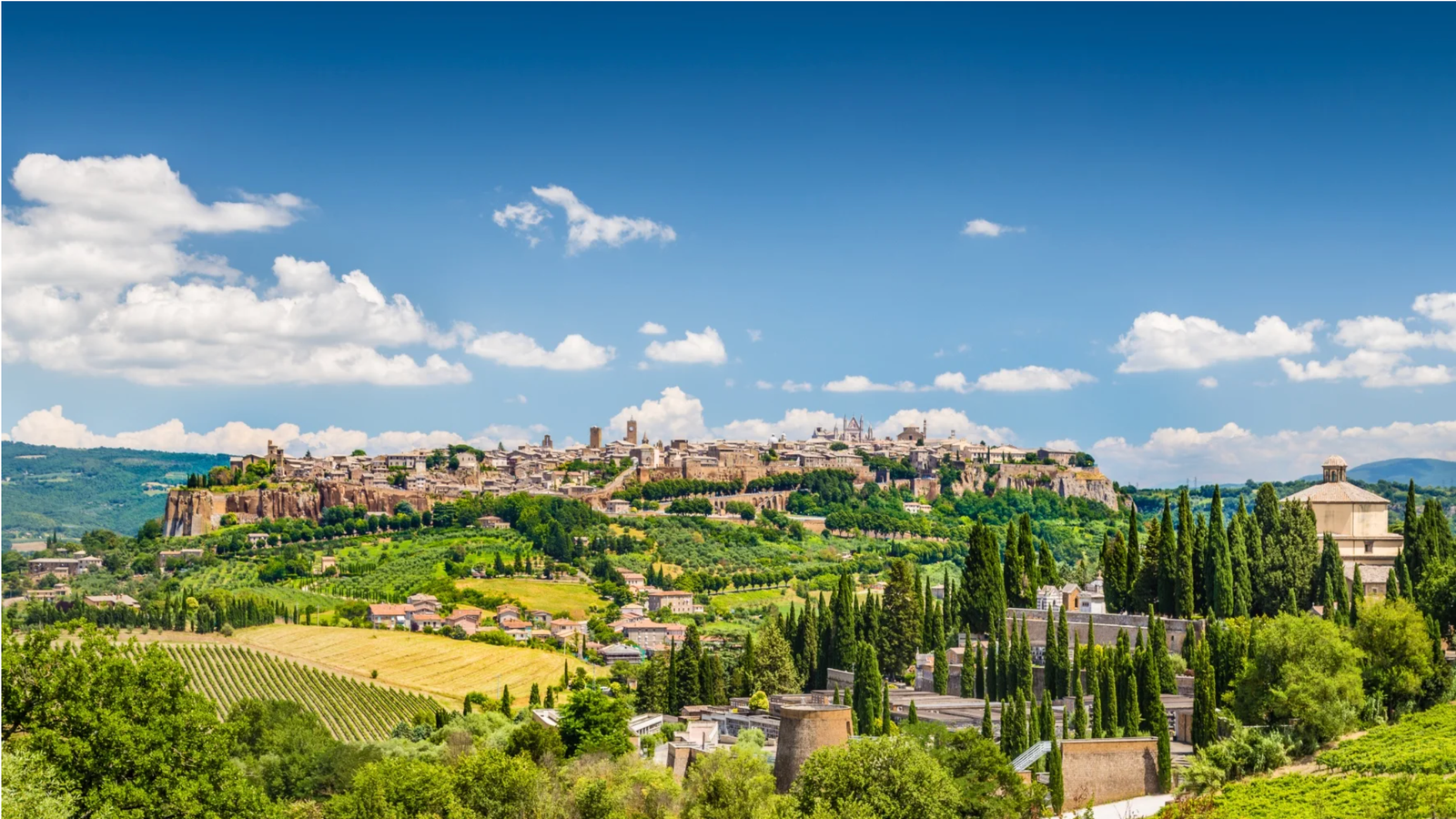
The hilltop towns deliver history at a density that rarely disappoints even when you’ve covered a lot of Italian ground. Assisi needs no introduction; the Basilica di San Francesco is one of the genuinely important buildings in Western art. Spoleto is less visited but arguably more liveable, with a remarkable Roman amphitheatre, a 14th-century aqueduct, and a food culture that feels less polished than Orvieto’s but more honest for it. Orvieto itself warrants at least a morning in the town before heading back down to the vineyards, particularly the cathedral, which took three centuries to complete and remains one of the most spectacularly decorated religious buildings in Italy.
The food to drink alongside the wines is direct: braised meats, wild game, black truffle pasta, Castelluccio lentils, and the cheeses of the Apennine valleys. These are wines built for the table, not the tasting room.
A Few Practical Notes
Winery visits in Umbria almost universally require advance booking, even for estates with visitor centres. Do not turn up unannounced at Paolo Bea; phone or email first. Arnaldo Caprai and Lungarotti both have booking systems on their websites and can accommodate a reasonable range of schedules. Palazzone’s most detailed experiences, particularly the Campo del Guardiano vertical with lunch, need to be arranged a minimum of a week ahead.
Most producers speak workable English, and Arnaldo Caprai’s visitor team is specifically equipped for international guests. At smaller estates, a few words of Italian open doors that straightforward English does not.
For online purchases shipped to the Netherlands and Belgium, Wijnbeurs, Colaris, and Decantalo each carry selections from the Umbrian appellations. Availability shifts with vintages, and some wines sell through quickly after critical recognition, so checking stock before planning a pairing dinner is advisable.
One final point about Sagrantino that saves disappointment: these wines need time in the glass even after decades in the cellar. Open a bottle two hours before you intend to drink it, decant generously, and check it every 30 minutes. The wine that seems austere and closed at 6 pm is often transformed by 9 pm. Patience, here as elsewhere in Umbria, is rewarded.