Why Does Jura Age Wine Without Topping Up the Barrel?
Every other wine region on earth treats barrel evaporation as a problem to be managed. Wine evaporates slowly through oak as it ages; the volume drops, and winemakers top the barrel back up periodically, ouillage in French, specifically to keep oxygen away from the wine and stop it from turning. In the Jura, a small, mountainous region tucked between Burgundy and the Swiss border, winemakers do the opposite on purpose. They let the wine sit in barrel for six years and three months without topping it up at all, and watch a living film of yeast, le voile, form naturally across the surface, deliberately inviting the exact kind of oxidative aging everywhere else in the wine world works so hard to avoid. The result is Vin Jaune, yellow wine, and it’s unlike anything else made from a still, unfortified white grape anywhere in France.
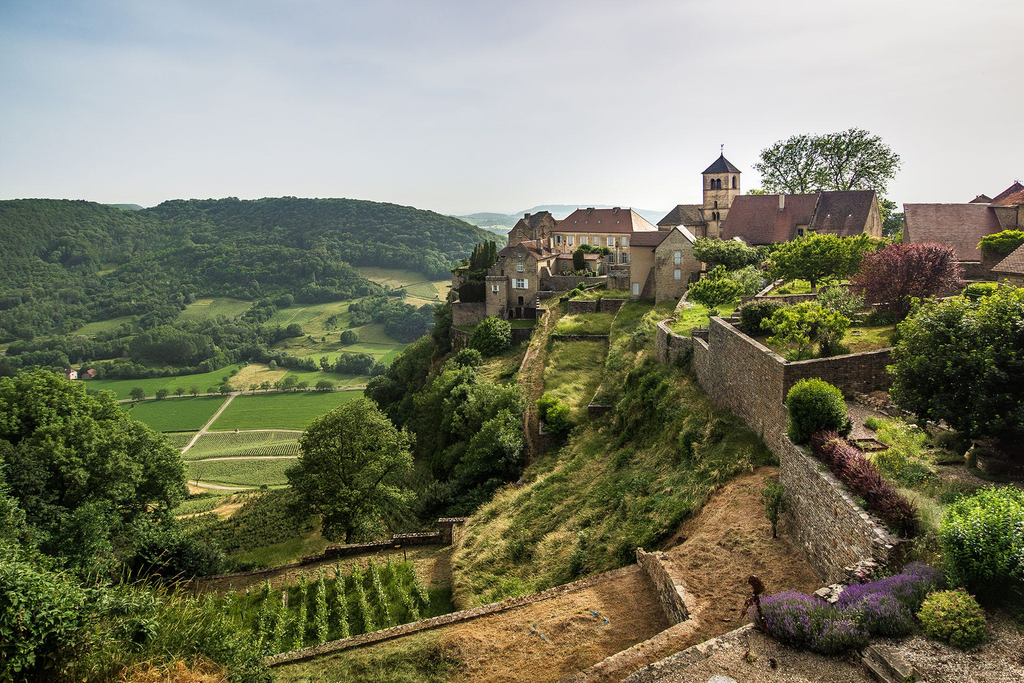
That single, deliberately contrarian technique tells you most of what you need to know about the Jura as a region. This is a place that makes wine on its own terms, shaped by a genuinely marginal, sub-alpine climate, a small cluster of grape varieties that barely exist outside its borders, and a winemaking culture that’s spent the last few decades quietly becoming one of the most talked-about corners of French wine among sommeliers and serious collectors, despite producing a genuinely tiny fraction of what Burgundy, its far more famous neighbor an hour’s drive west, turns out in a single vintage. If Burgundy is the established institution, the Jura is the stubborn, slightly eccentric relative who’s been doing their own thing in the next valley over the entire time, and is finally getting the attention that persistence deserves.
This guide covers the Jura’s geography and grapes, its distinctive winemaking traditions and appellation structure, four estates spanning Arbois, Pupillin, Château-Chalon, and the southern Revermont, and where to actually find these wines at Dutch and Spanish retailers, since this remains a genuinely specialist category even by French regional standards.
A Narrow Strip Between Burgundy and the Alps
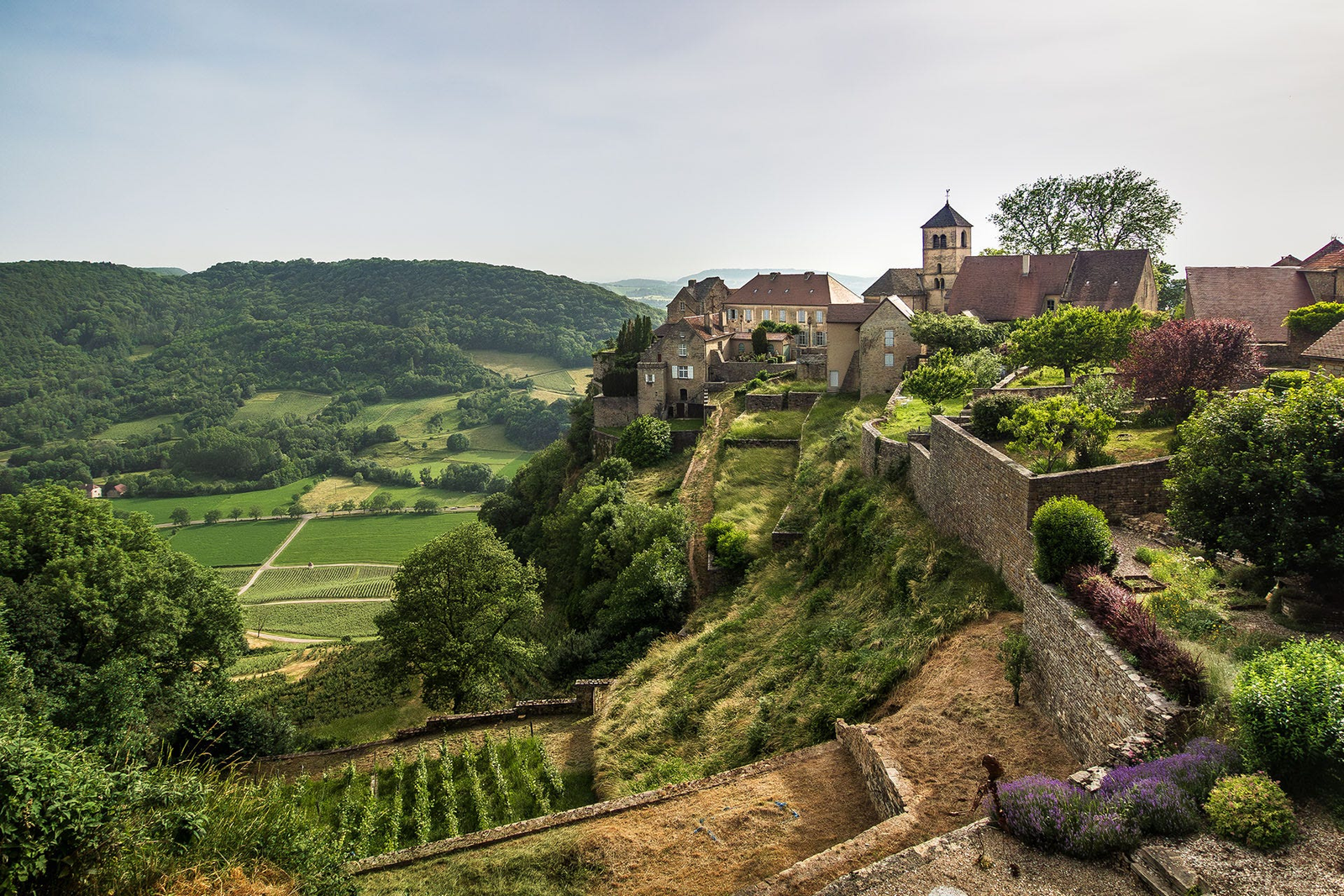
The Jura’s vineyards occupy a narrow band running roughly 80 kilometers north to south along the western edge of the Jura mountains, a limestone range that gives the region its name and continues on into Switzerland. The total vineyard area is small, around 2,000 hectares, a fraction of Burgundy’s footprint just across the valley, and it sits at genuine altitude by French wine-region standards, generally between 250 and 500 meters, enough to produce a markedly continental climate with cold winters, warm but relatively short summers, and real diurnal temperature swings that help preserve acidity even in a warming climate.
Soil here runs through a complex sequence of marls, blue, grey, and red, interspersed with limestone, laid down during the Triassic and Jurassic periods; it’s worth remembering, in fact, that the Jurassic geological period itself takes its name from this exact mountain range, first studied by geologists working in these hills. The blue-grey marl around Château-Chalon in particular is considered the ideal terroir for Savagnin, retaining enough moisture to sustain the vine through dry spells while its mineral composition shapes the wine’s eventual character in barrel.
The region divides loosely into a handful of named zones rather than the more clearly separated sub-regions you’d find in, say, the Loire or the Rhône. Arbois, in the north, is the Jura’s largest and best-known appellation, and sits at the center of the region both geographically and culturally. Château-Chalon, a tiny enclave spanning four communes further south, is devoted entirely to Vin Jaune. L’Étoile, smaller still, specializes in white wine, and the broader Côtes du Jura appellation stretches across the rest of the vineyard area, picking up the southern Revermont hills around villages like Rotalier, where some of the region’s most ambitious recent work has taken place.
From Pasteur’s Hometown to a Natural Wine Pilgrimage Site
Winemaking in the Jura dates back to Roman times, and the region built a genuine reputation through the medieval period, with Cistercian monks playing a role here not unlike the one they played in Burgundy, carefully documenting which plots produced the best wine. Arbois holds a particular claim to fame: it’s the hometown of Louis Pasteur, who conducted much of his groundbreaking research into fermentation and the role of microorganisms in wine right there in his family’s own cellar, research that quietly underpins modern winemaking everywhere, not just in the Jura. Fittingly, Arbois also became the first appellation in all of France to receive AOC status in 1936, a few months ahead of several of the more famous Burgundy and Bordeaux designations that followed shortly after.
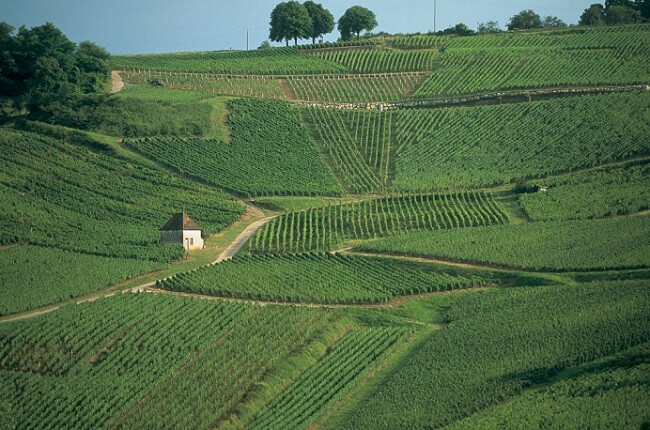
The 20th century was harder on the Jura than on most of its neighbors. Phylloxera, industrialization, and the pull of easier agricultural work elsewhere shrank the region’s vineyard area dramatically over the decades, and for a long stretch, Jura wine was treated as a rustic regional curiosity rather than something worth serious international attention, Vin Jaune included.
The turnaround, much like Beaujolais‘ own revival, is largely credited to a handful of individual growers rather than any institutional push. Pierre Overnoy, working in the small village of Pupillin just south of Arbois, began vinifying without added sulfur in 1983, a genuinely radical decision at the time, and became, almost reluctantly by his own account, one of the founding figures of what’s now called the natural wine movement. His influence on winemakers well beyond the Jura’s borders, in Beaujolais, the Loire, and far beyond France entirely, is hard to overstate, and his estate, now run by his successor Emmanuel Houillon, remains something close to a pilgrimage site for natural wine devotees. Around the same period, growers like Jean-François Ganevat, trained in Burgundy before returning to his family’s land in Rotalier, pushed Jura wine toward a level of ambition and precision that drew serious international critical attention for the first time, helping transform the region’s reputation from rustic curiosity into one of the most genuinely sought-after corners of French wine among specialists today.
Five Grapes, Several Very Different Wines
The Jura works with just five permitted grape varieties, a small list that belies the genuine range of styles the region produces.
Savagnin, known locally as Naturé, is the Jura’s defining white grape and the only variety permitted for Vin Jaune. High in acidity and capable of real textural weight, it can be vinified in a fresh, topped-up style (ouillé) for a more conventional dry white, or left under voile for anywhere from two to over six years, depending on the resulting style, developing the nutty, curry-spiced, almost sherry-like character the Jura is best known for internationally.
Chardonnay, called locally Melon d’Arbois in places, is actually the Jura’s most widely planted grape, often vinified in a fresh, unoaked style but just as capable, when left under voile, of taking on the same oxidative character as Savagnin, sometimes blended with it in Côtes du Jura whites.
Poulsard, sometimes spelled Ploussard, particularly around Pupillin, is a thin-skinned, pale red grape that produces light-colored, delicately aromatic red wine, often closer in weight to a rosé, and is one of the grapes most closely associated with the region’s natural wine producers, given how naturally low in tannin and sulfur-tolerant it tends to be.
Trousseau, native to the Franche-Comté region and genuinely rare outside the Jura, is a more structured, deeply colored red grape that thrives on the warmer, lighter, gravelly soils around Arbois, producing wine with real spice and grip.
Pinot Noir, present in the Jura since at least the Middle Ages and not a modern Burgundian import as some assume, rounds out the red grape list, typically used in blends alongside Poulsard and Trousseau.
Vin Jaune, Vin de Paille, and the Jura’s Own Appellation Logic
The Jura runs seven appellations, split between four geographic zones and three wine-style-specific designations that cut across them.
Arbois, the Jura’s largest and first appellation, produces the full range of the region’s styles, red, white, rosé, Vin Jaune, and Vin de Paille, and includes its own smaller recognized zone, Arbois-Pupillin, around the village most associated with the natural wine movement. Côtes du Jura, the broadest geographic designation, covers much of the rest of the vineyard area, including the southern Revermont. L’Étoile, small and white-wine-focused, produces Chardonnay and Savagnin-based wines, along with Vin Jaune, named, somewhat romantically, for the star-shaped fossils found in its limestone soil. Château-Chalon, the most tightly restricted of the four, covers just 50 hectares across four communes and is dedicated exclusively to Vin Jaune; so demanding are the appellation’s quality standards that producers will occasionally declare an entire vintage unfit and decline to release any Château-Chalon at all that year, a level of self-imposed restraint genuinely rare in French wine.
Layered across these geographic appellations are three product-specific designations. Vin Jaune can be produced within Arbois, Côtes du Jura, L’Étoile, and Château-Chalon, made exclusively from Savagnin and aged a minimum of six years and three months in barrel without topping up, bottled in a distinctive 62cl flask called the clavelin, the traditional measure said to represent what remains from a liter of wine after six years of evaporation through the barrel, the so-called angels’ share. Vin de Paille, meaning straw wine, is a concentrated sweet wine made from Chardonnay, Poulsard, and Savagnin grapes dried on straw mats (or increasingly on racks) for several months before pressing, concentrating their sugars naturally. Macvin du Jura, a vin de liqueur, is made by adding the region’s own marc brandy to unfermented grape must, halting fermentation and producing a sweet, fortified aperitif wine, while Crémant du Jura, the region’s traditional-method sparkling wine, made predominantly from slightly underripe Chardonnay, has become an increasingly significant part of total production in its own right.
Four Jura Estates Worth Visiting
These four span the region’s defining threads: a large, historically significant Arbois house covering all four appellations, the natural wine movement’s spiritual home in Pupillin, one of the Jura’s oldest Château-Chalon producers, and the Revermont estate that helped put the region on serious collectors’ radar.
Domaine Rolet Père et Fils (Arbois)
Founded in 1942 by Désiré Rolet and now one of the largest independent producers in the Jura at around 65 hectares, Domaine Rolet holds vineyards across all four of the region’s geographic appellations, Arbois, Côtes du Jura, L’Étoile, and Château-Chalon, making a single visit here a genuinely useful crash course in the Jura’s full stylistic range. The estate farms organically and ages its Vin Jaune and other oxidative styles in a 14th-century cellar in the nearby hamlet of Aiglepierre, one of the oldest and most atmospheric wine cellars still in active use in the region. Rolet is also, notably, one of the more genuinely visitor-ready Jura estates, with a well-developed wine tourism program that goes beyond a simple tasting.
- Address: 11 Rue de l’Hôtel de Ville, 39600 Arbois, France
- Contact: +33 3 84 66 08 89, caveau@domainerolet.com
- Visiting: Open daily, 10:00 to 12:30 and 13:30 to 19:00 (winter hours 9:00 to 12:30 and 13:30 to 19:00, closed December 25 and January 1). Guided cellar tours at the 14th-century Aiglepierre site run from €10 for a basic tasting to €40 for a tour with a charcuterie and cheese platter; gourmet vineyard walks and bike tours are also bookable, typically around €30 to €60 per person.
Maison Pierre Overnoy (Pupillin)
Pierre Overnoy took over his family’s estate in the small village of Pupillin, just south of Arbois, in 1968, and began vinifying without any added sulfur from 1983 onward, a decision that quietly made him one of the founding figures of what the wine world now calls natural winemaking, well before the term existed in anything like its current form. Overnoy passed the estate to his longtime apprentice Emmanuel Houillon in 2001, and Houillon, working alongside his wife Anne, has continued the same uncompromising approach: organic and biodynamic farming, spontaneous fermentation, and no added sulfur at any stage. The wines, overwhelmingly Poulsard and Savagnin from Arbois-Pupillin, are now among the most sought-after and allocated in the entire natural wine world, genuinely difficult to find even for people actively looking.
- Address: 14 Rue Abbé Guichard, 39600 Pupillin, France
- Contact: +33 3 84 66 24 27, emmanuel.houillon@wanadoo.fr
- Visiting: By appointment only, and genuinely worth writing well ahead given the estate’s modest size and the volume of interest it attracts; tastings are offered when the schedule allows, often with Pierre Overnoy himself still present to talk through the estate’s history.
Caves Jean Bourdy (Arlay, Château-Chalon)
Held by the Bourdy family since 1475, making it one of the oldest continuously operating wine estates anywhere in the world, Caves Jean Bourdy is now run by 15th-generation brothers Jean-Philippe and Jean-François from the village of Arlay, just west of Château-Chalon. The estate farms 10 hectares biodynamically, including a small half-hectare parcel within the Château-Chalon appellation itself, and ages its wines in barrels up to 80 years old, deliberately avoiding new oak to preserve the purity of fruit and terroir. Bourdy holds a genuinely remarkable library of historic bottles, whites dating to 1911 and Château-Chalon reaching back as far as 1865, a reflection of just how long these wines are built to last.
- Address: 41 Rue Saint-Vincent, 39140 Arlay, France
- Contact: +33 3 84 85 03 70, contact@domainebourdy.com
- Visiting: By appointment; contact the estate ahead of a planned visit to arrange a tasting through its historic cellars.
Domaine Jean-François Ganevat (Rotalier)
Trained in Burgundy under Jean-François Morey before returning to take over his family’s estate in the southern Revermont village of Rotalier in 1998, Jean-François Ganevat is widely credited, alongside Pierre Overnoy, with helping transform international perception of what Jura wine could be. Ganevat farms biodynamically across a genuinely sprawling range of small parcels and produces dozens of distinct cuvées each vintage, often in tiny quantities, sourced from old vines and worked with an experimental, terroir-obsessed intensity that’s drawn comparisons to Burgundy’s most ambitious growers, a comparison Ganevat himself has never shied away from. His wines are now among the most collected and allocated in the Jura, trading at prices that would have seemed unthinkable for the region a generation ago.
- Address: La Combe, 39190 Rotalier, France
- Contact: +33 3 84 25 02 69, anne.ganevat@orange.fr
- Visiting: Visits and tastings are offered to trade and industry professionals only; this is not a general public tasting room, and readers hoping to taste the wines are better served seeking them out through a specialist retailer or restaurant list rather than planning a direct estate visit.
Where to Buy Jura Wine
Decántalo carries Domaine Rolet in real depth, including Château-Chalon Vin Jaune, Arbois Poulsard Vieilles Vignes, and Arbois Trousseau, making it a genuinely strong single source for a representative taste of the region’s core styles without needing to hunt across multiple retailers.
Caves Jean Bourdy, Maison Pierre Overnoy, and Domaine Jean-François Ganevat were not confirmed in stock at Wijnbeurs, Colaris, or Decántalo at the time of writing. This isn’t especially surprising for Overnoy and Ganevat specifically; both producers work at a genuinely tiny scale relative to international demand, and their wines are allocated through specialist importers and restaurant lists well before they’d ever reach general retail shelves; readers specifically chasing either name are more realistically served by specialist natural wine shops or by building a relationship with a dedicated Jura importer than by checking general retailers. Jean Bourdy, produced in somewhat larger volume, is more plausibly found through specialist fine wine merchants or the estate’s own export channels, even though it wasn’t confirmed at the three retailers checked here.
Colaris and Wijnbeurs both carry a general Jura selection worth browsing even without these four specific names, given how distinctive and increasingly fashionable the category has become; checking both periodically is worthwhile, since smaller regional allocations tend to shift more than a retailer’s core Bordeaux or Burgundy range.
Food Pairing
Jura wine developed alongside a genuinely hearty, mountain-adjacent cuisine, and the pairings here lean toward cheese and game more than almost anywhere else in France. Vin Jaune is, without much competition, the single best pairing partner for Comté, the Jura’s own aged cow’s milk cheese, and for poulet au vin jaune et morilles, chicken braised with Vin Jaune and morel mushrooms, a genuine regional signature dish worth seeking out specifically for the pairing. Vin Jaune’s nutty, curry-spiced intensity also holds up remarkably well against lobster, mature hard cheeses generally, and surprisingly, against sushi, a combination several producers and sommeliers have specifically championed in recent years.
Lighter Poulsard reds, served lightly chilled, suit charcuterie, lighter poultry dishes, and the Jura’s own mountain cured meats, while the more structured Trousseau pairs well with grilled or roasted red meat and game, standing up to richer, spicier preparations than Poulsard’s delicacy allows. Vin de Paille, intensely sweet and concentrated, is a natural match for blue cheese, foie gras, or fruit-based desserts, while Macvin, served chilled as an aperitif, pairs well with the same regional charcuterie and cheese boards that define Jura’s everyday table.
Getting There and Planning Your Trip
Lons-le-Saunier and Arbois are the Jura’s two natural bases, both reachable by regional train, with Dole, the nearest station on the Paris-Lyon TGV line, roughly 30 to 40 minutes further out. From Amsterdam or Rotterdam, flying into Paris, Lyon, or Geneva and connecting by train or car remains the most practical route, with the Geneva connection genuinely worth considering given how close the southern Jura sits to the Swiss border.
Arbois itself works well as a central base, sitting close to Pupillin, just a few minutes south, and within a reasonable drive of Château-Chalon, roughly 30 minutes southwest. The southern Revermont around Rotalier, where Ganevat and several other ambitious younger producers are based, is closer to an hour from Arbois, making it worth treating as a separate leg of the trip rather than a quick add-on.
A car is genuinely necessary to properly explore the Jura, since the region’s hillside villages and individual estates sit well beyond what public transport reasonably covers, and the driving itself, along genuinely dramatic sub-alpine roads, is part of the appeal rather than a chore. Harvest typically runs from September into October, later than most of France given the region’s continental climate and altitude, and visiting during this period offers real atmosphere, though booking tours and tastings becomes correspondingly harder as cellar staff focus on the vintage. Late spring and early autumn offer the most comfortable weather and the easiest access for winery visits, while winter, cold and quiet, has its own appeal for anyone wanting to pair a Vin Jaune tasting with the genuinely excellent regional cuisine built for exactly that season.
Frequently Asked Questions
What makes Vin Jaune different from other white wines? Vin Jaune is aged a minimum of six years and three months in oak barrels without being topped up, allowing a layer of yeast called voile to form naturally on the wine’s surface and protect it from full oxidation while still imparting a distinctly nutty, oxidative character. It’s made exclusively from the Savagnin grape and bottled in a unique 62cl flask called a clavelin.
Is Vin Jaune similar to sherry? The two share some surface similarities; both develop under a layer of flor-like yeast and take on nutty, oxidative characteristics, but Vin Jaune is not fortified, unlike sherry, and is made from a single grape variety in a specific region using methods that developed independently. The comparison is useful shorthand but shouldn’t be taken to mean the two wines taste the same.
Why is Jura wine so hard to find outside France? The Jura’s total vineyard area is small, and several of its most celebrated producers, Pierre Overnoy and Jean-François Ganevat chief among them, work at a genuinely tiny scale relative to the international demand their wines generate. Much of what they produce is allocated to specialist importers and restaurants well before it reaches general retail shelves.
What is Vin de Paille and how is it different from other sweet wines? Vin de Paille is made by drying Chardonnay, Poulsard, and Savagnin grapes on straw mats or racks for several months after harvest, concentrating their natural sugars before pressing, a method distinct from the botrytis-driven sweet wines made in regions like Sauternes. The result is intensely sweet and concentrated, with the grapes’ original character preserved rather than transformed by noble rot.