Beaujolais Wine Region: A Guide to the Ten Crus, Gamay & Granite
Beaujolais has spent decades living down a reputation it never fully deserved. Ask most people what they know about it and the answer is usually one word: Nouveau, the young, grape-juice-adjacent wine released every November that gave the entire region a lightweight image it’s still working to shed. What that reputation obscures is that Beaujolais, just south of Burgundy proper, produces some of the most genuinely distinctive terroir-driven red wine in France, built almost entirely from a single grape variety farmed on granite hillsides that most wine drinkers have never heard named.
That grape is Gamay, and in the right hands, on the right slope, it produces wine serious enough that growers and critics increasingly compare top bottlings to red Burgundy, at a fraction of the price. The engine behind that reputation shift is the ten crus, named villages in the northern half of the region where granite, schist, and elevation combine to produce wine with real structure and, in several cases, genuine aging potential. This is a region rewarding to a reader who already knows Burgundy and wants to understand what its unpretentious southern neighbor does differently, and arguably does better for the money.
This guide covers Beaujolais’ geography, the ten crus and what distinguishes them, four estates spanning Moulin-à-Vent, Fleurie, and Brouilly, and where to actually find these wines at Dutch and Spanish retailers.
Geography and Terroir
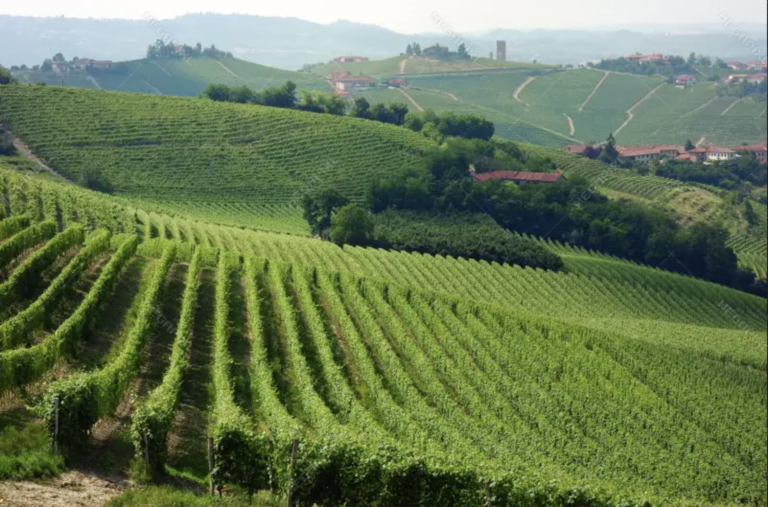
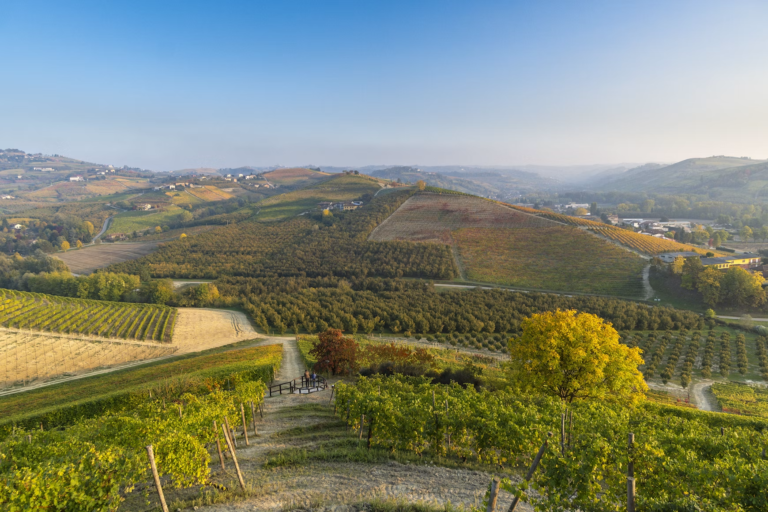
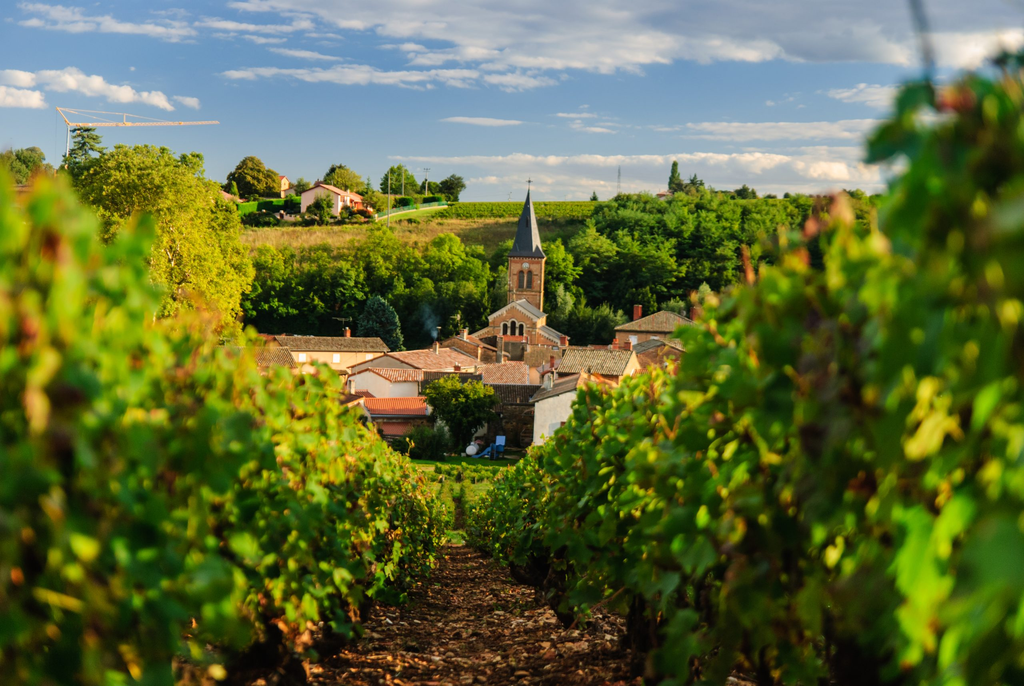
Beaujolais sits at the southern tip of Burgundy, a narrow strip of vineyard roughly 34 miles long and 7 to 9 miles wide, bordered by the Saône River to the east, the Monts du Beaujolais foothills of the Massif Central to the west, and the city of Lyon just to the south.
The region splits geologically into two distinct halves. The southern part, closer to Lyon, sits on limestone and clay, similar in composition to parts of the Mâconnais just north, and produces the lighter, more straightforwardly fruity wine sold as basic Beaujolais and Beaujolais-Villages. The northern half, where the ten crus are concentrated, sits on granite and schist, older and harder rock that stresses the vine just enough to produce more structured, more concentrated wine. Pink granite in particular defines crus like Fleurie and Moulin-à-Vent, while Morgon’s most prized slope, the Côte du Py, sits on the eroded remains of an extinct volcano, giving its wine a distinctive iron and mineral character locals sometimes describe as morgonner, aging in a way unique to that specific site.
Elevation varies meaningfully across the crus too. Chiroubles, the highest of the ten at up to 450 meters, harvests later and produces the lightest, most floral wine in the group, while lower-lying crus ripen earlier and tend toward more weight. The climate overall is semi-continental, moderated somewhat by the Saône valley, with warm summers and enough diurnal temperature swing at altitude to preserve acidity in the grapes.
A Short History
Winemaking in Beaujolais likely dates back to Roman times, with Régnié, the region’s newest official cru, believed to be the site of some of the area’s very first plantings. For centuries, Beaujolais wine served largely as an everyday drinking wine for nearby Lyon, transported down the Saône in a relationship not unlike the one between Muscadet and the Atlantic ports.
The modern identity of Beaujolais was shaped, and later nearly undone, by Beaujolais Nouveau. The tradition of releasing a young wine shortly after harvest is old, but its marketing as an international event, complete with the “Beaujolais Nouveau est arrivé” campaigns of the 1970s and 1980s, turned the region into a global phenomenon and, eventually, a liability. By the early 2000s, oversupply and a wine-buying public that increasingly saw Beaujolais as synonymous with cheap, forgettable Nouveau had left the region’s reputation seriously bruised.
The recovery began with a handful of Morgon-based growers now remembered as the Gang of Four: Marcel Lapierre, Jean Foillard, Jean-Paul Thévenet, and Guy Breton. Mentored by Jules Chauvet, a chemist and negociant often credited as the father of the natural wine movement, they returned to older, lower-intervention farming and winemaking practices in the late 1970s and 1980s, and in doing so proved that cru Beaujolais could rival serious Burgundy in seriousness while remaining genuinely itself. Their influence, and the broader quality movement it sparked across the ten crus, is the reason Beaujolais is taken seriously by sommeliers and collectors again today.
Grapes and Style
Beaujolais is built almost entirely around a single grape.
Gamay, officially Gamay Noir à Jus Blanc, is a black-skinned grape with white juice, closely related to Pinot Noir genetically but producing wine with lighter tannin, brighter acidity, and more immediate red-fruited charm in its youth. On Beaujolais’ granite and schist soils, particularly in the crus, Gamay can also develop real structure and, in wines from Moulin-à-Vent or Morgon, age for a decade or more.
A small amount of Chardonnay is also grown, mostly in Saint-Amour, Juliénas, and Chénas, producing fresh, aromatic white wines sold as Beaujolais Blanc, a genuine curiosity worth seeking out for readers who assume the region is exclusively red.
Traditional vinification in Beaujolais relies heavily on semi-carbonic maceration, a technique where whole grape clusters ferment partially intact before being pressed, producing the bright, juicy fruit character associated with everyday Beaujolais and Nouveau. Serious cru producers, particularly those working in what’s sometimes called the “Burgundian” style, often destem some or all of their fruit and use longer, more traditional maceration and oak aging instead, producing wine with noticeably more structure and aging potential.
The Ten Crus
Beaujolais has no formal growth classification the way Bordeaux does. Instead, its top tier is defined by geography: ten named villages in the northern part of the region, each with its own AOC, entitled to put only the cru name on the label rather than “Beaujolais.” From north to south, they are Saint-Amour, Juliénas, Chénas, Moulin-à-Vent, Fleurie, Chiroubles, Morgon, Régnié, Brouilly, and Côte de Brouilly.
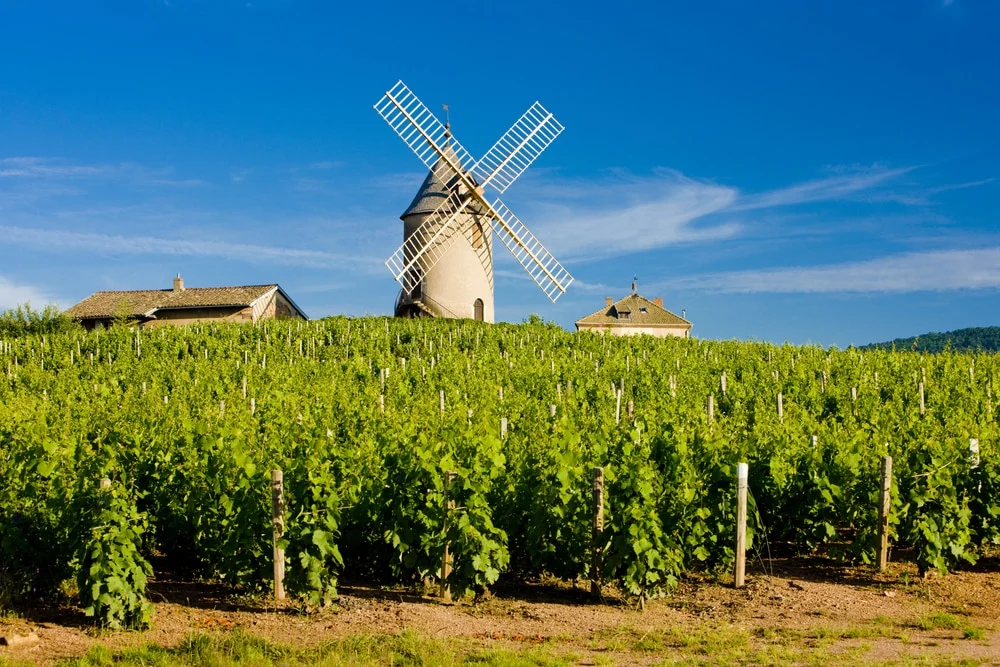
Moulin-à-Vent, named for the windmill still standing at its highest point, is widely considered the most structured and age-worthy of the ten, grown on manganese-rich granite that gives its wine real tannic grip; some producers age it in oak specifically because it can handle the wood.
Morgon runs a close second in weight and aging potential, with the Côte du Py delivering its most concentrated, mineral-driven wines, dense enough that a well-aged Morgon can genuinely be mistaken for red Burgundy in a blind tasting.
Fleurie, sometimes called the Queen of Beaujolais in contrast to Moulin-à-Vent’s King, is built on pink granite and produces the region’s most perfumed, floral wine, elegant rather than powerful.
Chiroubles, the highest-altitude cru, is lighter and more delicate still, defined by cool nights and fresh red berry character.
Chénas, the smallest cru by production, sits between Moulin-à-Vent and Fleurie stylistically, earthy and floral with real concentration for its size.
Juliénas and Saint-Amour, the two northernmost crus, offer deeper red fruit and spice, and delicate, lightly spiced wine respectively, with Saint-Amour’s name (more coincidence of etymology than romance, though winemakers rarely correct the assumption) making it a popular Valentine’s Day pour internationally.
Brouilly, the largest cru by area, wraps around the extinct volcano of Mont Brouilly and shows real soil diversity as a result, while Côte de Brouilly, the smaller appellation on the mountain’s steeper slopes, produces more concentrated, mineral wine from the same general area.
Régnié, the newest cru, added in 1988, sits between Morgon and Chiroubles in both geography and style, balanced between fruit and structure.
Three Beaujolais Estates Worth Visiting
These three estates span the crus most useful for understanding the region’s range: the structured, age-worthy end in Moulin-à-Vent, the floral middle ground in Fleurie, and the historic, multi-cru scale of a single large estate spanning Brouilly and beyond.
Château des Jacques (Moulin-à-Vent)
Founded in 1924 and acquired by Burgundy négociant Maison Louis Jadot in 1996, Château des Jacques has become the estate most closely associated with Moulin-à-Vent’s reputation for structure and longevity. Its 69 hectares extend across some of the appellation’s best-regarded individual climats, including Clos de Rochegrès and Clos du Grand Carquelin, each vinified and aged separately in oak, a distinctly Burgundian approach to a Beaujolais cru. The property also farms plots in Morgon and Fleurie, and a small parcel of Chardonnay for Beaujolais Blanc, making a single visit a useful cross-section of several crus at once.
- Address: 147 rue des Jacques, 71570 Romanèche-Thorins, France
- Contact: +33 3 85 35 51 64, contact@chateau-des-jacques.fr
- Visiting: By appointment Monday to Saturday, with tours typically at 10:30 or 14:30 in French or English. The 1-hour 15-minute visit through the 17th-century vaulted cellars and cuvage costs €20 per person, waived with the purchase of six bottles or more; a shorter tasting-only option is also available at the shop for €5.
Château de Poncié (Fleurie)
With written records dating to 949, when the estate was gifted to the Abbey of Cluny, Château de Poncié is one of the oldest documented properties in Beaujolais. Since a new generation of owners took over in 2020, the estate has committed fully to organic farming, agroforestry, and viti-pastoralism (grazing animals in the vineyard rows), planting trees and hedgerows alongside its roughly 40 individual terroirs. The winemaking team works each parcel with what they describe as haute couture precision, tailoring the approach to each site rather than applying a single house style across the board.
- Address: 1087 route de Poncié, 69820 Fleurie, France
- Contact: +33 4 74 69 83 33, bookable through chateaudeponcie.fr
- Visiting: Guided vineyard and history tours plus a separate food-and-wine pairing experience are both bookable online; confirm current seasonal hours and language options when reserving.
Château de la Chaize (Brouilly, Côte de Brouilly, Fleurie, Morgon)
The largest single-block wine estate in Beaujolais, Château de la Chaize has been in family hands since its construction in 1676, designed by Jules Hardouin-Mansart, the architect behind parts of Versailles, with gardens laid out by André Le Nôtre, Louis XIV’s own landscape designer. Classified as a French national historical monument since 1972, the estate was acquired by the Gruy family in 2017, who have since converted the full 150 hectares of vineyard to organic farming and built an ambitious environmental program aimed at zero carbon emissions. Its 108-meter cellar, built in 1771, remains the longest in Beaujolais, and the estate’s 23 individually vinified plots span Brouilly, Côte de Brouilly, Fleurie, and Morgon.
- Address: 500 route de La Chaize, 69460 Odenas, France
- Contact: +33 4 74 03 41 05 (general), +33 6 13 07 92 76 (visits), contact@chateaudelachaize.fr
- Visiting: Guided tours cover the château exterior, the Le Nôtre-designed gardens, and the historic winery and cellar, ending with a tasting of three cuvées. Booking is required and available through the estate’s website.
Where to Buy Beaujolais Wine
Beaujolais is genuinely well distributed across Dutch and Spanish retailers compared to smaller French regions like the Sud-Ouest, though the specific estates profiled here vary in availability.
Decántalo carries Château des Jacques’ Clos de Rochegrès Moulin-à-Vent, one of the estate’s flagship single-vineyard bottlings, making it a strong entry point into serious cru Beaujolais alongside the broader Burgundy range Decántalo already stocks from Maison Louis Jadot.
Château de la Chaize and Château de Poncié were not confirmed in stock at Wijnbeurs, Colaris, or Decántalo at the time of writing. Château de la Chaize’s wines are more readily found at other Dutch specialists, including Wijnhandel Peeters and various independent cavistes, and the estate ships directly through its own webshop as well. Château de Poncié, a smaller and more recently relaunched estate, is best sourced directly through chateaudeponcie.fr for now, though its profile is likely to grow given the current ownership’s investment in the property.
Broader cru Beaujolais, particularly Morgon, Fleurie, and Brouilly from a range of producers, is worth checking directly on Colaris and Wijnbeurs‘ websites given how frequently their Beaujolais selection rotates; both retailers stock the category more consistently than they do smaller Sud-Ouest or Loire appellations, reflecting Beaujolais’ stronger general distribution across Europe. WirWinzer remains a reliable fallback for German-market Beaujolais imports specifically.
Food Pairing
Beaujolais’ combination of bright acidity and generally moderate tannin makes it one of the most food-flexible red wine categories in France, capable of pairing with dishes that would overwhelm a heavier red. Basic Beaujolais and Beaujolais-Villages, served lightly chilled, pair naturally with charcuterie, roast chicken, or a simple pork dish, and are famously one of the few red wines that hold up to salmon.
The crus, being more structured, can handle richer fare. Moulin-à-Vent and Morgon, the two most powerful crus, pair well with roasted lamb or duck, standing up to the fat and richness the way a red Burgundy might. Fleurie and Chiroubles, lighter and more floral, suit mushroom-based dishes, softer cheeses, or a simply prepared quiche.
Lyon sits just south of Beaujolais, and the region’s wines are the natural pour for the city’s bouchon tradition: rich, offal-forward dishes like quenelles, andouillette, or a proper saucisson chaud find their match in a cru red with enough acidity to cut through the richness without a heavy tannic structure getting in the way.
Getting There and Planning Your Trip
Beaujolais sits directly between Burgundy and Lyon, making it one of the easiest French wine regions to combine with an existing itinerary rather than requiring a dedicated trip. Lyon–Saint-Exupéry Airport is the closest major airport, roughly 45 minutes from the heart of the crus by car, and Lyon itself connects well to Amsterdam and other European hubs. Mâcon, just to the north in Burgundy, sits on the direct TGV line from Paris and is about 15 to 20 minutes from Moulin-à-Vent, making a Beaujolais detour genuinely easy to tack onto a Burgundy-focused rail trip.
A car is the most practical way to move between the crus themselves, since they cluster tightly together but individual estates often sit down narrow rural roads without public transport access. The whole cru region can reasonably be covered in a single well-planned day trip from Lyon or Mâcon, though staying overnight in a village like Fleurie or Villié-Morgon allows for a more relaxed pace across two or three appellations.
Harvest typically runs from late August through September, notably early compared to much of France given Gamay’s relatively quick ripening cycle, and the third Thursday of November remains a genuine local event thanks to the Nouveau release, worth experiencing at least once for the atmosphere even for a reader more interested in serious cru wine. Spring and early autumn offer the most comfortable weather for exploring the hillside vineyards on foot.
Frequently Asked Questions
Is all Beaujolais wine like Beaujolais Nouveau? No. Nouveau is a specific, quickly fermented style released each November, representing only a portion of the region’s total production. The ten crus, along with Beaujolais-Villages, are made in a more traditional style, with structure and aging potential that Nouveau was never designed to have.
What’s the difference between Beaujolais, Beaujolais-Villages, and cru Beaujolais? Beaujolais is the base-level appellation covering the whole region. Beaujolais-Villages covers a smaller, higher-quality zone in the hillier northern part of the region. Cru Beaujolais refers specifically to wine from one of the ten named villages, considered the top tier, and these wines carry only the cru name on the label rather than the word “Beaujolais.”
Why is cru Beaujolais compared to Burgundy? Gamay is genetically closely related to Pinot Noir, and on granite soils in crus like Morgon and Moulin-à-Vent, it can develop a similar combination of structure, minerality, and aging potential. Several top producers also use Burgundian winemaking techniques, including barrel aging and destemming, which reinforces the comparison, though the two remain genuinely distinct wines rather than substitutes for one another.
Can Beaujolais wine age? Basic Beaujolais and Nouveau are meant to be drunk young, typically within a year or two. Serious cru wines, particularly from Moulin-à-Vent and Morgon, can age for a decade or more in good vintages, developing more savory, Burgundy-like characteristics over time.