Campania Wine Region Guide: The Volcanic South Behind Taurasi, Fiano and Greco di Tufo
Most travelers arrive in Campania for Naples, Pompeii or the Amalfi coastline, and the wines that could have poured for a Roman senator sit almost entirely overlooked an hour inland. That is a mistake worth correcting. Campania is home to three DOCG wines, a red that ages as gracefully as anything from Piedmont, and two white grapes that have quietly become benchmarks for structured, ageworthy Italian whites. For a wine traveler willing to trade the coast road for the hills of Irpinia, this is one of the more rewarding regions left in Italy to explore before it becomes fully discovered.
This guide covers the region’s key appellations, the grapes that define them, four wineries worth building a day around, and a handful of bottles you can track down through Wijnbeurs, Colaris or Decántalo before you ever set foot on a plane.
Why Campania Deserves More Attention From Serious Wine Travelers
Campania’s wine story is older than almost anywhere else in Italy. Greek settlers planted vines here around 800 BC, centuries before Rome existed as a serious power, and by the height of the Roman Empire, Falernian wine from what is now northern Campania was already considered the finest wine money could buy. Pliny the Elder wrote about it. Roman aristocrats aged it for decades. That wine, made largely from what we now call Falanghina and Piedirosso, nearly disappeared after phylloxera and two world wars, and it has only been reconstructed in the last several decades by producers determined to bring it back.
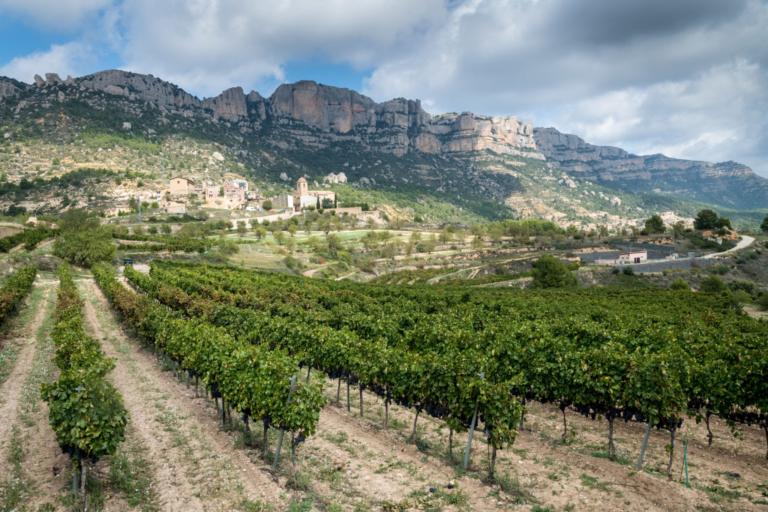
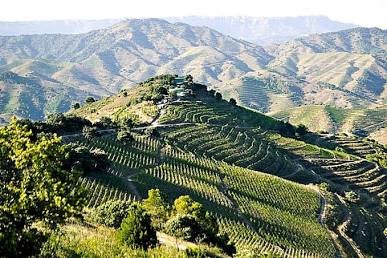
What makes the region genuinely interesting today, rather than merely historic, is the combination of volcanic soil, altitude, and native grape varieties that never got replaced with international ones. Vesuvius looms over the Bay of Naples, Campi Flegrei is a literal volcanic caldera, and the hills of Irpinia sit on ash and tuff deposited by eruptions going back millennia. That volcanic base gives the wines a mineral, almost saline quality that separates them from anything else in southern Italy.
Campania also escaped the fate of many other southern regions during the twentieth century, when much of Italy’s south was farmed for bulk wine shipped north for blending. Producers like Mastroberardino kept native varieties like Aglianico, Fiano and Greco alive through decades when it would have been far more profitable to rip them out and plant something more fashionable. That stubbornness is why the region now has three DOCG appellations and a growing reputation among sommeliers who have grown tired of the same handful of famous Italian names.
The Key Appellations of Campania
Taurasi DOCG: The Barolo of the South
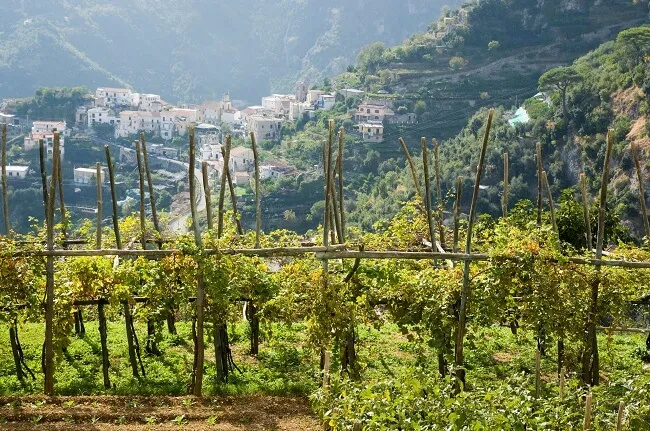
Taurasi is Campania’s most serious red and the wine most likely to make skeptical Barolo drinkers stop and pay attention. The appellation sits in the province of Avellino, in the hills of Irpinia around the town of Taurasi itself, roughly fifty kilometers northeast of Naples. Taurasi received DOC status in 1970 and was promoted to DOCG in 1993, and it was the first DOCG granted anywhere in southern Italy, a recognition that took decades to arrive despite the wine’s obvious quality.
The wine must contain at least 85 percent Aglianico, with the remaining 15 percent typically made up of Piedirosso, though most serious producers now bottle Taurasi as 100 percent Aglianico. Aglianico is a late-ripening, thick-skinned black grape that produces wines with high acidity, substantial tannin, and real structure. Regulations require a minimum of three years of aging before release, with at least one year in barrel, and Riserva bottlings need four years total with at least eighteen months in wood. That mandatory patience shows in the glass. Young Taurasi can be tight and almost forbidding, dominated by dark fruit, tar and iron. Given a decade or two, it develops into something closer to old Barolo or Barbaresco, with notes of dried cherry, leather, tobacco and balsamic vinegar layered over a still-firm tannic backbone. Bottles from Mastroberardino’s celebrated 1968 vintage are still discussed by collectors today as the wine that first proved Aglianico’s aging potential to the wider wine world.
Fiano di Avellino DOCG: Campania’s White Aristocrat
If Taurasi is the region’s answer to Barolo, Fiano di Avellino is arguably Italy’s most underrated white wine full stop. Grown in the same Irpinian hills around Avellino, Fiano produces wines that are waxy, honeyed and nutty even in youth, with a bouquet of white flowers, hazelnut and stone fruit. What sets it apart from most Italian whites is genuine aging potential. A well-made Fiano di Avellino can develop smoke, mineral depth and a deeper golden color over five to ten years, something that was long assumed impossible for a southern Italian white until producers here proved otherwise.
The grape itself has ancient roots and may be connected to the Vitis apiana that Pliny the Elder described as attracting bees due to its sweetness, though the historical link is debated among ampelographers. What is not debated is the wine’s quality today: DOCG status, granted in 2003, reflects decades of work by Irpinian producers to prove that Fiano belonged among Italy’s serious whites rather than being treated as a regional curiosity.
Greco di Tufo DOCG: Volcanic Minerality in a Glass
Named for the small town of Tufo, a village of fewer than a thousand people in the province of Avellino, Greco di Tufo is grown on genuinely volcanic tuff soils across eight communes including Tufo, Altavilla Irpina, Chianche and Montefusco. The grape has been cultivated here since Roman times, and the wine it produces is firmer and more citrus-driven than Fiano, with a distinctly sulphurous, flinty mineral edge that comes directly from the volcanic rock beneath the vines. Expect aromas of green apple, citrus peel and white flowers, with a saline finish that pairs beautifully with the region’s seafood. Like Fiano, Greco di Tufo rewards a few years in the bottle, though it tends to show well slightly earlier, often hitting its stride at three to four years.
Beyond the Big Three: Falerno del Massico, Lacryma Christi and the Coast
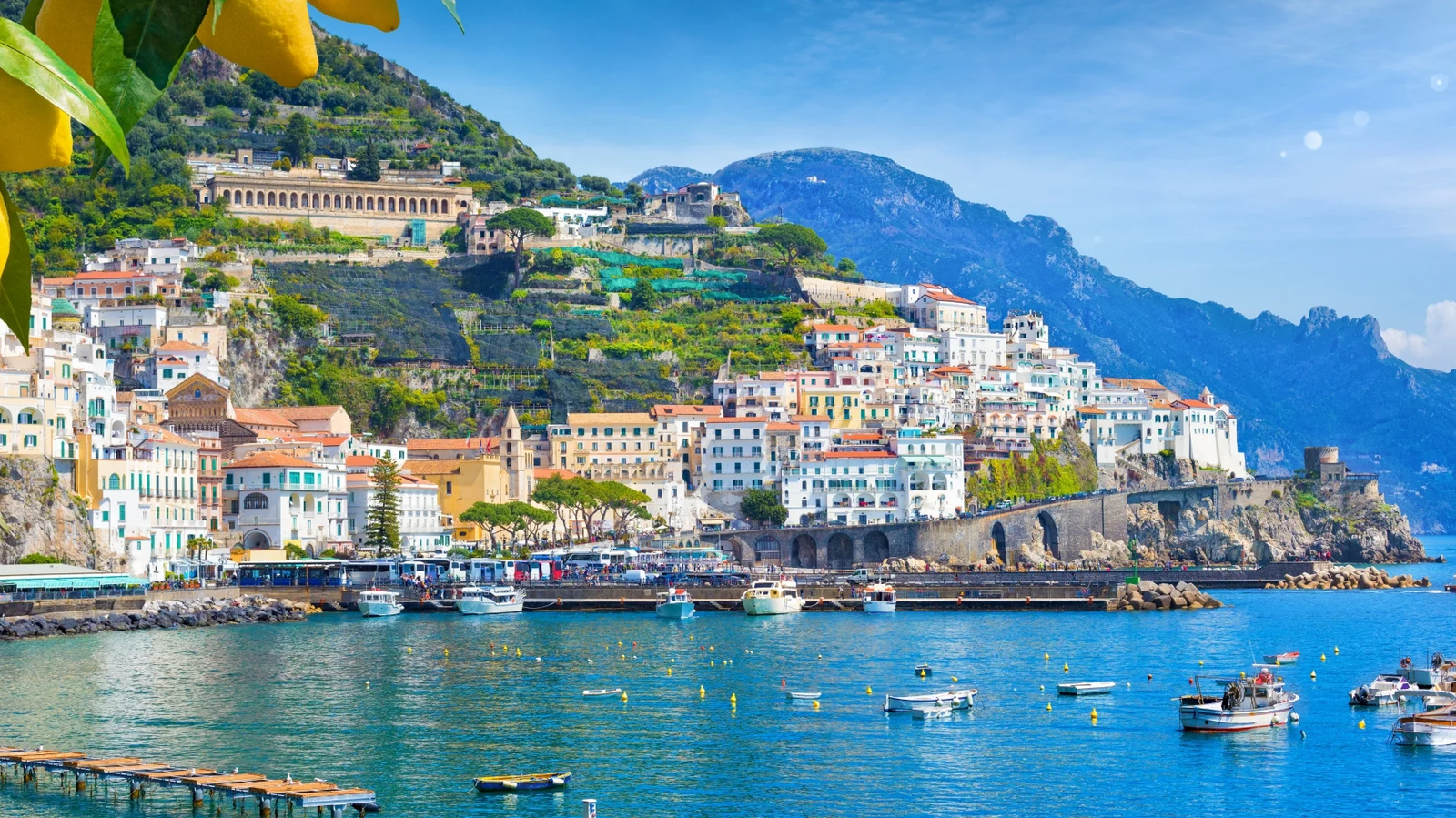
Irpinia’s three DOCGs get most of the attention, but Campania has plenty more worth knowing. Falerno del Massico, produced around the town of Cellole in the province of Caserta, is the closest modern equivalent to the Falernian wine the Romans prized above all others, made from Aglianico and Piedirosso for the red version and Falanghina for the white. On the slopes of Vesuvius itself, Lacryma Christi del Vesuvio produces both reds and whites from Piedirosso and Falanghina grown in genuinely black volcanic soil, a novelty for wine tourists but also a legitimately interesting wine in the hands of a careful producer. Along the Amalfi coast and around Ischia and Capri, tiny DOCs like Costa d’Amalfi and Ischia DOC grow local varieties such as Fenile, Ginestra and Biancolella on terraced, nearly impossible vineyard sites that exist more out of tradition than economic sense.
Four Wineries Worth Building a Day Around
Mastroberardino, Atripalda
No winery did more to keep Campania’s native grapes alive through the twentieth century than Mastroberardino. Founded in 1878 in Atripalda, in the province of Avellino, the estate has been central to the survival of Aglianico, Fiano and Greco through decades when it would have been easier to plant more marketable international varieties. The family’s connection to the region runs deep enough that in 1996 the Archaeological Superintendence of Pompeii invited Mastroberardino to replant experimental vineyards inside the ancient city itself, using grape varieties believed to match those grown there two thousand years ago. The winery’s Taurasi Riserva from the 1968 vintage is still cited by wine historians as the bottle that proved southern Italian reds could age with real distinction.
Visits are by appointment and should be booked at least a week in advance by email or phone. Tastings range from a short three-wine classic tasting to a vertical tasting of past Radici Taurasi Riserva vintages paired with a buffet of Irpinian food. The cellar tour includes the estate’s private family vault and a look at bottles dating back to the 1930s.
- Address: Via Manfredi 75-81, 83042 Atripalda (AV)
- Booking: By appointment, one week’s notice recommended, email pr@mastroberardino.com or call +39 0825 614111
Feudi di San Gregorio, Sorbo Serpico
Founded in 1986 by the Capaldo and Ercolino families, Feudi di San Gregorio is the winery most credited with dragging Campania’s reputation into the modern era. The estate’s architecture alone justifies the drive: the current winery, inaugurated in 2004, was designed by Japanese architect Hikaru Mori with interiors by Massimo and Lella Vignelli, and it has twice been recognized for architectural excellence at the Venice Biennale. Beyond the design, this is a serious producer of Fiano di Avellino, Greco di Tufo and the flagship Serpico, an Irpinia Aglianico that ranks among the region’s most collectible reds.
Tours typically combine a walk through the vineyard and barrel cellar with a guided tasting, and the on-site restaurant, Ristorante San Gregorio, makes this an easy choice for a full afternoon rather than a quick stop. Book ahead, particularly for anything that includes lunch or dinner.
- Address: Località Cerza Grossa, 83050 Sorbo Serpico (AV)
- Booking: Reservation required, book via the winery’s official experiences page
Terredora Di Paolo, Montefusco
Terredora was founded in 1994 by Walter Mastroberardino, following the 1993 split of the historic Mastroberardino family estate between two brothers. Walter named the new winery after his wife, Dora Di Paolo, and built it into one of Irpinia’s most respected producers in its own right, with roughly 180 hectares spread across five communes: Santa Paolina, Montefusco, Montemiletto, Montefalcione and Lapio. The estate sits at the intersection of all three Irpinian DOCG zones, and its portfolio reflects that, ranging from a Grand Cru Taurasi Riserva CampoRe down to more accessible Falanghina and Fiano bottlings. The Pago dei Fusi Taurasi, made from lower-altitude, earlier-ripening Aglianico grown in Pietradefusi, has become one of the estate’s signature wines and a good entry point into serious Taurasi.
The winery welcomes walk-ins, though booking ahead is strongly advised, especially if a private guided tour is preferred over a self-directed visit.
- Address: Montefusco, 83030 (AV)
- Booking: Appointment recommended, email info@terredora.it or call +39 0825 968215
Villa Matilde Avallone, Cellole
For a genuine change of scenery from Irpinia, Villa Matilde sits near the coast in Cellole, in the province of Caserta, in the historic Falerno del Massico zone. Founded in the 1960s by Francesco Paolo Avallone, the winery is credited with reviving Falerno, the wine the Romans considered the finest in the ancient world, by replanting vines that had survived phylloxera in the Monte Massico area. Today Villa Matilde’s range covers Falerno del Massico in both red and white, along with Falanghina, Piedirosso and a small line of amphora-aged wines. The estate has also invested seriously in sustainability through a long-running zero emissions project.
Tastings here range from a base three-wine session through to a VIP tasting covering five whites, including Fiano di Avellino and Greco di Tufo alongside the estate’s own Falerno wines, and most experiences include a paired lunch built around local specialties.
- Address: S.S. Domitiana 18, 81030 Cellole (CE)
- Booking: Reservation required; book via the winery’s official experiences page or call +39 0823 932088
Wines to Buy Before You Go
Confirming actual retailer stock matters more than repeating a producer’s reputation, so here are three bottles currently available through the retailers this site works with, rather than a generic list of famous names that may or may not actually be on shelves.
Terredora Pago dei Fusi Taurasi DOCG 2015, available through Colaris, is a serious and accessible entry point into aged Taurasi. Made from 100 percent Aglianico grown in Pietradefusi, it shows silky, concentrated red fruit with light spice and fine, sweet tannin on a long finish, a good demonstration of what Taurasi looks like once a decade of bottle age has softened its edges.
Feudi di San Gregorio Fiano di Avellino DOCG, available through Decántalo, is a reliable and well-priced example of the appellation from one of its most consistent producers. Fermented and aged on its lees in stainless steel, it shows straw yellow color with green reflections, white flowers, citrus and yellow stone fruit, with the mineral finish that marks out serious Fiano from simpler versions.
Feudi di San Gregorio Serpico, also available through Decántalo, is the estate’s flagship Irpinia Aglianico and a wine worth decanting well ahead of dinner. Sourced from centuries-old vines around Avellino, it is dense, structured and built for the table, particularly braised or grilled meat.
If you are shopping through Wijnbeurs, look for their Aglianico selections from Nativ, an Irpinia winery founded in 2008 by Mario Ercolino, formerly head winemaker at Feudi di San Gregorio; their range has appeared on Wijnbeurs’s Italian native grape list and offers another route into the same volcanic terroir. Given how quickly individual vintages move through these retailers, it is worth checking current availability directly before finalizing a purchase, particularly for anything from a specific vintage.
For anything from smaller Irpinia producers that is not confirmed in the three retailers’ current catalogs, WirWinzer or Vinello are reasonable fallback options, along with ordering directly through a winery’s own webshop, several of which ship within the EU.
Food Pairing in Campania
Campania’s kitchen is built around tomatoes, buffalo mozzarella, seafood and, further inland in Irpinia, cured meats, mushrooms and hearty stews, and the wines track the food closely. Taurasi, with its firm tannin and dark fruit, wants braised lamb, wild boar ragù or aged pecorino rather than anything delicate. Fiano di Avellino, with its waxy texture and nutty depth, is a natural match for baked fish, mushroom risotto or fresh burrata. Greco di Tufo’s brighter acidity and mineral edge make it one of the better wines in Italy for raw shellfish, grilled octopus or a simple plate of clams. Falanghina, lighter and more floral, is the easy pizza and antipasto wine that locals reach for without much thought, and it deserves more attention outside the region than it currently gets.
Getting There and Getting Around
Naples’ Capodichino Airport is the natural entry point, with Feudi di San Gregorio and the rest of the Irpinia wineries roughly forty-five minutes to an hour inland by car. A rental car is genuinely the only practical way to string together multiple wineries in a day, since public transport into the Irpinian hills is limited and slow. The towns of Avellino, Atripalda, Montefusco and Sorbo Serpico sit close enough together that two or three winery visits in a single day is realistic without excessive driving, particularly if lunch is built into one of the stops rather than treated as a separate errand. Villa Matilde, near Cellole in the Falerno del Massico zone, sits closer to Caserta and the coast north of Naples, making it a natural stop on the way to or from Rome rather than a detour from an Irpinia-focused day.
Late September through October is harvest season and the most atmospheric time to visit, though it is also when wineries are busiest, and tours can be harder to book. Spring offers milder weather and quieter cellars, with the added benefit of the surrounding hills being genuinely green rather than dusty.
Frequently Asked Questions
What is the best wine to try first in Campania? Fiano di Avellino is the easiest entry point for most wine drinkers new to the region, since it is approachable young while still showing real complexity and structure. Taurasi is worth trying too, but it is best appreciated with some bottle age, so seek out a vintage that is at least five to seven years old rather than the most recent release.
How long does Taurasi need to age before drinking? Legally, Taurasi cannot be released until three years after harvest, with Riserva bottlings held back four years. In practice, most serious examples benefit from another five to ten years beyond that minimum, and top vintages from producers like Mastroberardino have been known to develop favorably for two decades or more.
Is Aglianico the same grape as Aglianico del Vulture? The grape is the same, but the appellations are different. Aglianico del Vulture is grown in neighboring Basilicata around the extinct volcano Monte Vulture, while Taurasi and Aglianico del Taburno are Campania’s DOCG and DOC expressions of the same variety. Style differences exist between the zones, largely driven by altitude, soil composition, and each producer’s approach to aging.
Can I visit Campania wineries without a car? It is difficult. Most Irpinia wineries sit in small hill towns with limited or no direct public transport connections, and taxis between towns are impractical for a full day of visits. A rental car from Naples, or a private driver for the day, is the realistic option for anyone planning to visit more than one estate.
What should I order to eat while wine tasting in Irpinia? Local cheeses, particularly aged pecorino and caciocavallo, along with cured meats like soppressata, pair naturally with the region’s reds. If a winery offers a lunch pairing, it is usually worth taking, since several estates, including Feudi di San Gregorio and Villa Matilde, run genuinely good on-site restaurants built specifically around their own wines.