Barbaresco: Piedmont’s Nebbiolo at Its Most Refined
A firsthand guide to the DOCG, its crus, its producers, and the wines you should have in your cellar.
Why Barbaresco Deserves Far More Attention Than It Gets
There is a tendency among wine enthusiasts, even well-travelled ones, to arrive in the Langhe and make a beeline for Barolo. The “King of Italian Wines” sits conveniently to the southwest of Alba, its hillside villages and centuries-old cellars exerting a near-gravitational pull. Barbaresco, just 10 kilometres to the northeast, often gets a day trip at best.
That is a mistake worth correcting.
Barbaresco is not Barolo’s understudy. It is a singular appellation with its own geological personality, its own cast of extraordinary producers, and a vinous character that even experienced drinkers frequently describe as more immediately communicative than its neighbour while still possessing a structural backbone capable of rewarding decades in the cellar. If Barolo is the King, as the saying goes, Barbaresco is unquestionably the Queen: precise, nuanced, and formidably complex on its own terms.
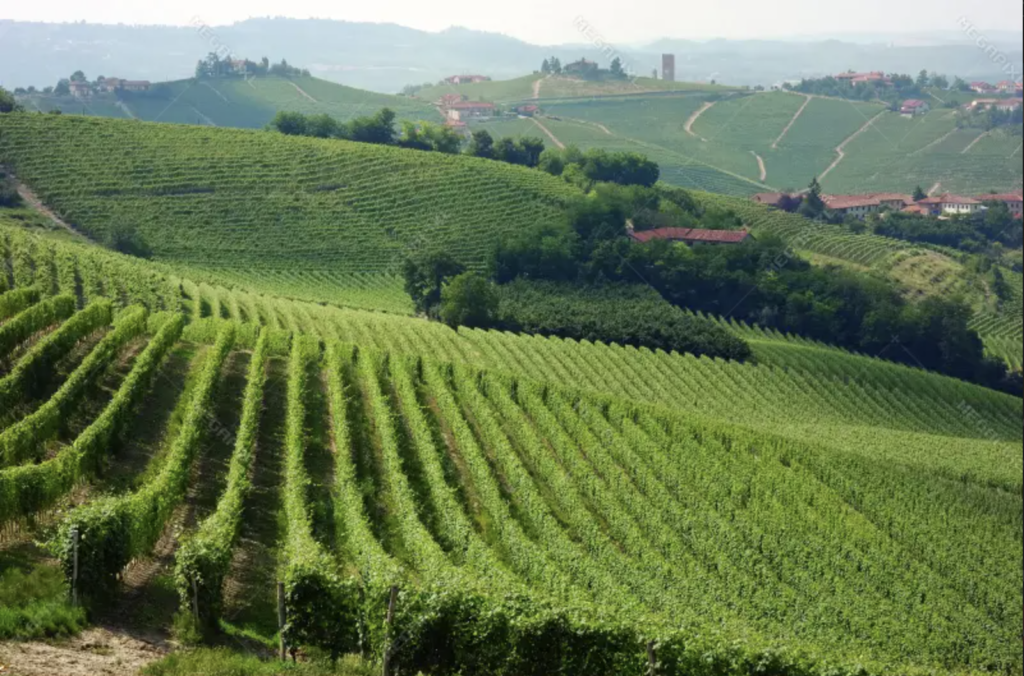
This guide is written for drinkers who already know that Barbaresco is made from 100% Nebbiolo, that it holds DOCG status, and that Angelo Gaja put it on the world map. What follows goes deeper: the geological differences between communes, the MGAs that matter and why, the wineries worth making the journey for, and the specific bottles available online that merit a place in your cellar right now.
The Appellation at a Glance
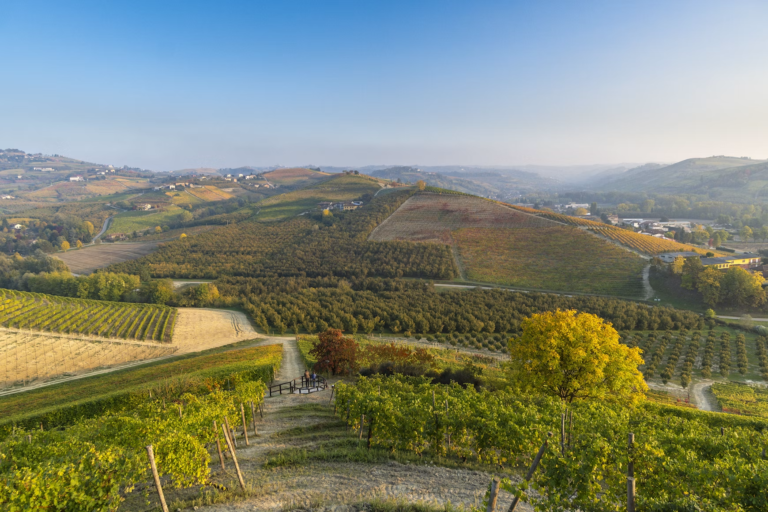
Barbaresco received Italy’s highest wine classification, DOCG (Denominazione di Origine Controllata e Garantita), in 1980. The vineyards span roughly 760 hectares across four communes: Barbaresco itself, Neive, Treiso, and a small wedge of Alba known as San Rocco Seno d’Elvio. In total, there are 65 officially recognised vineyard sites, referred to as MGAs (Menzioni Geografiche Aggiuntive), each of which can appear on a wine label.
To carry the DOCG fascetta, a Barbaresco must be aged a minimum of 26 months in total, with at least 9 months in wood. A Riserva requires 50 months total. These minimums are floors, not targets: the best producers routinely go well beyond them.
The story of modern Barbaresco arguably begins in 1894, when oenologist Domizio Cavazza founded the first cooperative winery with a vision to produce a serious dry wine from the Nebbiolo grown around the village. Post-war, two figures reshaped the appellation’s identity: Bruno Giacosa, who defined what traditional Barbaresco could achieve at its most transcendent; and Angelo Gaja, who dragged the region into international consciousness through both the quality of his wines and his determination to operate on the world stage. The Produttori del Barbaresco cooperative, revived in 1958, filled in the third corner of this picture, demonstrating that artisan quality and collective winemaking were not mutually exclusive.
Terroir: Why the Commune You Come From Matters
The Geology Beneath the Vines
Barbaresco sits on sedimentary hillsides formed by two distinct geological formations. The Sant’Agata marl, a finer-grained clay-dominant deposit, characterises the commune of Barbaresco itself. This is the formation that underpins the most celebrated MGAs: Asili, Rabajà, Montestefano, and Ovello. The older Lequio formation, with coarser, more calcareous soils, dominates much of Treiso in the south, contributing wines with a more rigid, angular structure and notably bright aromatics.
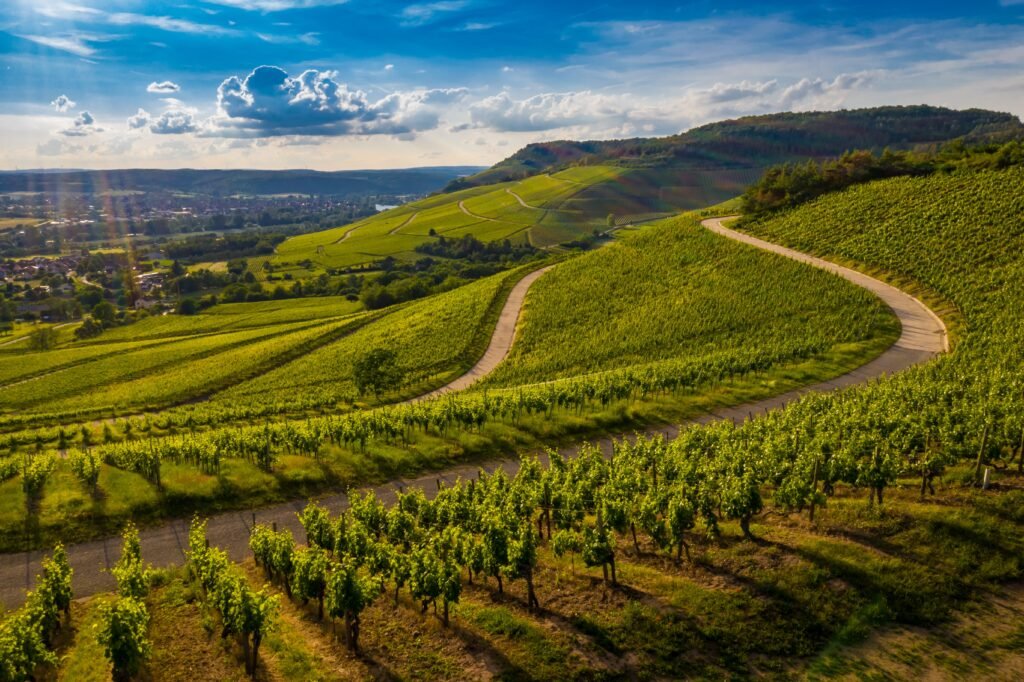
This geological split explains something that often puzzles visitors who taste across the appellation side by side: a Barbaresco from Treiso (say, Rizzi’s Nervo) can seem almost like a different variety from one made in the commune of Barbaresco (say, Produttori’s Asili Riserva). The Nebbiolo is the same. The winemaking philosophy can be identical. What changes is what sits beneath the vines.
The Tanaro River, which runs along the northern edge of the appellation, provides a moderating influence on temperature. The numerous small valleys draining toward the Tanaro create a mosaic of aspects, altitudes, and drainage conditions that give each MGA its own microclimate. This is not marketing language; it is geology working at a fine-grained level.
The Four Communes
Barbaresco accounts for more than half of total DOCG production. Its soils are almost uniformly Sant’Agata clay-dominant marls, and its best-known crus, Asili, Rabajà, Montestefano, Ovello, and Montefico, sit here. The wines from this commune tend toward the more opulent end of the Nebbiolo spectrum, with richer textures and deeper colour.
Neive lies to the northeast and includes important MGAs such as Gallina, Albesani, and Santo Stefano. The soils are more varied here, with some Lequio formation influence in the higher parts, producing wines that tend toward more aromatic expressiveness and structural tension.
Treiso occupies the higher, southernmost ground. Lequio formation soils prevail, delivering wines with defined freshness, taut tannins, and a bright red-fruit character. The MGAs Rizzi, Nervo, and Pajorè are particularly well regarded.
San Rocco Seno d’Elvio is a small enclave within the commune of Alba, historically part of Barbaresco before administrative changes. Its production is modest, but the wines can be excellent.
The MGAs That Matter: Cru Profiles for the Serious Collector
Understanding the key MGAs is not mere oenological trivia. It is the difference between buying a Barbaresco that will peak in five years and one that you should be decanting carefully in fifteen.
Asili
Asili is often considered the single greatest vineyard in the appellation. It sits on the western ridge of the Barbaresco commune with a south to southwest exposure and a warmer microclimate than most neighbouring sites. The soils are a complex mix of silt, loam, and clay, which is thought to account for the vineyard’s characteristic finesse. Wines from Asili are consistently among the most elegant, tightly structured, and long-lived in the denomination. Robert Parker famously described the Bruno Giacosa version as a reference point for all of Barbaresco. Produttori del Barbaresco, Ceretto, Ca’ del Baio, Roagna, and Gaja all hold parcels here.
Rabajà
Rabajà sits at the conjunction of two main geological ridges in the Barbaresco commune. The meeting of soils with different calcium content, one axis running toward the Tanaro (progressively less calcium), the other running south to north toward Ovello (higher calcium), gives Rabajà a complexity that winemakers still argue about. The south-southwest exposure adds warmth and richness. Rabajà wines tend to be darker, denser, and more structured than Asili, with a meaty, inky character when young and extraordinary depth with age. Produttori first bottled it as a single-vineyard wine in 1971.
Montestefano
On a steeper slope than Montefico and one of the last vineyards in Barbaresco to be harvested, Montestefano produces wines of considerable power. The combination of steep gradient, late ripening, and Sant’Agata marl soils results in Nebbiolo with intense macerated cherry aromas, robust structure, and acidity that keeps everything in balance. These are wines for patient cellaring.
Montefico
Montefico faces due south and benefits from cooling northerly winds coming off the Tanaro in the early morning hours. The soils contain a higher proportion of calcareous limestone than some neighbouring sites. The resulting wines are tighter and more aromatic than Rabajà, combining the structure of Asili with the fragrant red fruit of some of the more northerly sites. It is a consistently undervalued MGA for the serious buyer.
Gallina (Neive)
Among the most discussed MGAs in Neive, Gallina sits on a prominent hillside with a south to southwest exposure. La Spinetta’s Gallina is probably the most internationally recognised expression, though several other excellent producers work parcels here. The wines tend toward a more floral, aromatic character than the best sites in the Barbaresco commune, with excellent freshness and tension.
Vintages: What to Look for Right Now
Any collector building a Barbaresco cellar in 2026 should have a clear understanding of recent vintages.
2021 is already widely discussed as one of the greatest Barbaresco vintages in a generation. A mild winter with well-distributed rainfall, a long growing season, and a late harvest produced wines with exceptional aromatic purity, bright acidity, and fine-grained tannin structure. Multiple critics and producers have noted that 2021 may actually be stronger in Barbaresco than in Barolo, precisely because the additional moisture in Barbaresco benefited the clay-dominant Sant’Agata soils. The Produttori del Barbaresco 2021 is already drawing comparisons to the 2016. Wines to buy now, before they become harder to find.
2020 was described by Giovanni Gaja as “textbook Nebbiolo.” The vintage produced rich, concentrated wines with excellent structure, though slightly less tense than 2021 in some assessments. Roberto Conterno called 2019, 2020, and 2021 three consecutive great vintages.
2019 produced classic, structured wines with firm tannins and excellent ageing potential.
2016 remains the benchmark for the decade: a cool, late vintage that produced extraordinarily defined, long-lived wines. Well-stored 2016 Riservas are still a sound cellar investment.
Four Wineries Worth the Journey
1. Produttori del Barbaresco – The Benchmark Cooperative
There is no more important starting point for understanding Barbaresco than Produttori del Barbaresco. Founded in 1958 by the village priest Don Fiorino Marengo alongside 19 small growers, the cooperative today has 50 members farming some of the finest crus in the appellation: Asili, Rabajà, Pora, Montestefano, Ovello, Pajè, Montefico, Muncagota, and Rio Sordo.
The winemaking philosophy is uncompromisingly traditional. Fermentation takes place at 30°C with 28 days of skin contact. Ageing occurs in large 25-50 hectolitre oak barrels for a minimum of 30 months. No fining, no filtration, no shortcuts. In declared vintages, the cooperative releases all nine cru Riservas or none of them, a policy that underlines the commitment to quality over commercial opportunism.
The village Barbaresco, a blend drawing from all nine MGAs, is one of the greatest value propositions in fine wine. In top vintages, the cru Riservas rank among the most profound wines in Italy at any price point.
Visiting: The winery sits in the centre of the village of Barbaresco. Visits require advance appointment. The cellar tour is among the most instructive in the Langhe, giving an unobstructed view of the cooperative’s traditional winemaking approach and a comparative tasting across crus in strong vintages.
Address: Via Torino 54, 12050 Barbaresco
2. Roagna – Old Vines, Extreme Patience
If Produttori represents the cooperative tradition, Roagna represents the artisan extreme. The family history in Barbaresco traces back to 1929, with the initial purchase of a section of the Montefico vineyard. Today, fourth-generation Luca Roagna makes wines that are among the most demanding and ultimately rewarding in the appellation.
Roagna’s approach is non-negotiable: no herbicides or pesticides in the vineyards, no fining or filtration in the cellar, extended macerations of 60 days or more, and ageing solely in large old botti (barrels) for anything up to ten years. Wines may be held even longer in bottle before release. Several of the estate’s wines come from vines designated vecchie viti (old vines), with some in the Pira vineyard dating to 1937.
The flagship wine, the Barbaresco Crichet Pajé, comes from the Pajè MGA on a south-southwest-facing ridge between Barbaresco and Treiso, and is considered by many observers to be among the longest-lived wines in the denomination. Wine-Searcher places it among the most expensive Italian wines on the secondary market.
Visiting: Roagna is located in the hamlet of Barbaresco, close to Gaja. Appointments are essential and capacity is limited; this is not a volume tasting room. Visitors who do gain access often describe it as one of the most memorable cellar experiences in the Langhe.
Address: Loc. Paglieri 9, 12050 Barbaresco
3. Ca’ del Baio – Family Warmth, Four MGAs
Ca’ del Baio is run by sisters Paola, Valentina, and Federica Grasso from the family estate in Treiso, and the contrast with the more austere producer visits elsewhere in the denomination is noticeable from the moment you arrive. The approach is hospitable and genuinely educational, with tastings that systematically walk through the estate’s four Barbarescos: Autinbej (a multi-cru blend), Pora, Vallegrande, and Asili (plus an Asili Riserva).
The wines themselves are elegantly styled: not the most extracted or muscle-bound expressions of the appellation, but wines with excellent clarity of fruit, defined structure, and impressive ageing potential. The Asili is consistently one of the most celebrated expressions of that MGA from outside the village of Barbaresco itself. Multiple critics have noted its ability to combine ripeness and restraint in a single coherent package.
The estate works all four of its MGAs with care, and the comparative tasting across crus makes Ca’ del Baio one of the most instructive visits in the entire Barbaresco DOCG for a wine enthusiast who wants to understand how site influences character.
Visiting: Ca’ del Baio welcomes visitors with advance appointment. The cellar tour is informative, and the welcome is genuinely warm. The estate also produces a Moscato for those wanting a palate reset between reds.
Address: Via Ferrere 33, 12050 Treiso
4. Gaja – The Icon That Changed Everything
You cannot write honestly about Barbaresco without spending time on Gaja, and you cannot visit the denomination seriously without at least understanding what Angelo Gaja did here over five decades. Founded by Giovanni Gaja in 1859, the estate was transformed into an internationally acclaimed producer when Angelo took the reins in 1970. He introduced stainless steel fermentation tanks, reduced yields dramatically by limiting buds per vine, pioneered single-vineyard bottlings with the Sorì San Lorenzo in 1967, and was the first in the region to use small French barriques for malolactic fermentation.
Today the estate produces the classic Barbaresco DOCG from 14 separate plots across the appellation, alongside the Langhe DOC single-vineyard wines (Sorì San Lorenzo, Sorì Tildin, Costa Russi) that were famously declassified from Barbaresco to allow the incorporation of a small percentage of Barbera. Gaja also makes wine in Barolo and Tuscany, but Barbaresco remains the spiritual home.
The cellar visit at Gaja was historically closed to the public. A significant tasting fee, donated to charity, now opens the door. Tours begin in the vineyard at Sorì San Lorenzo near the village centre and move through an extraordinary labyrinth of large tinos, traditional barrels, and small French casks beneath the street, ending in the old castle of Barbaresco with a structured tasting.
Visiting: Visits are by appointment only and require advance planning. The tasting fee goes to a charitable cause of Gaja’s choice. Expect to book well in advance.
Address: Via Torino 36, 12050 Barbaresco
Recommended Wines to Buy Online
The bottles below represent a range of styles, price points, and availability across the main online retailers serving European wine lovers: Decantalo, Colaris, and Wijnbeurs.
Produttori del Barbaresco Barbaresco DOCG 2021
This is the wine to buy if you want to understand what the 2021 vintage means for Barbaresco and why serious collectors are moving quickly. The village-level Barbaresco is a blend from nine crus including Asili, Rabajà, and Ovello, fermented in the traditional manner and aged in large Slavonian oak. The 2021 pours with a soaring bouquet of crushed red cherries, wild strawberries, rose petals, and underlying notes of anise and tar. The tannins are fine-grained, the acidity is bright, and the finish is long with a savoury leather note.
Multiple critics, including James Suckling and Robert Parker’s successors at Wine Advocate, have noted that the 2021 may be even stronger in Barbaresco than in Barolo. This bottle should age gracefully for 10 to 15 years from release, though it is already showing beautifully.
Where to buy: Available at Colaris (colaris.nl) and regularly stocked at Wijnbeurs. Decantalo also lists the current vintage. Price range: €30-€45 depending on retailer and vintage allocation.
Gaja Barbaresco DOCG 2021
The entry point into the Gaja range is also, paradoxically, one of the most complex wines in the denomination. Made from 14 separate plots across the appellation, fermented in stainless steel tanks, then aged for 12 months in small barrels and 12 months in large chestnut botti, the Gaja Barbaresco sits at the elegant, internationally oriented end of the stylistic spectrum. The 2021 offers ripe fruit aromas with floral and spicy notes, an elegant balsamic touch, tobacco, and liquorice on the palate, with a robust structure and ageing potential that promises continued evolution over 15 to 20 years.
Decantalo lists both the 2020 and 2021 vintages. At this price level, you are paying for one of the most consistently excellent cellar programmes in Italy.
Where to buy: Decantalo (decantalo.com) and Colaris (colaris.nl). Price range: €160-€230 depending on vintage.
Ceretto Barbaresco DOCG 2022
Ceretto is one of the most important families in the Langhe, and their village-level Barbaresco represents one of the most accessible introductions to the denomination for the enthusiast looking for a reliable, well-made bottle without paying premium prices. The wine is certified organic, sourced from the younger vines in Asili and the lower part of Treiso, fermented with native yeasts in stainless steel, and then aged in French oak barrels. The result is a Barbaresco that shows the variety’s most delicate side without sacrificing the underlying meatiness and structural character.
Where to buy: Available on Decantalo (decantalo.com), and on Colaris in multiple vintages. Price range: €30-€45.
Bruno Giacosa Asili Barbaresco DOCG
Bruno Giacosa died in 2017, but his legacy defines what Barbaresco can be at its most transcendent. The Asili is widely considered one of the greatest individual expressions of that MGA, and Robert Parker’s estate described it as a reference point for all of Barbaresco. The wines produced under Giacosa’s direction, and continued by his daughter Bruna, are the definition of traditional Piedmontese winemaking: long macerations, large oak ageing, no concessions to modern palatial fashion.
Colaris stocks the Bruno Giacosa Asili with notable consistency across vintages. If a 2016 is still available anywhere in the allocation, it is worth serious attention.
Where to buy: Colaris (colaris.nl). Price range: €80-€150+ depending on vintage.
Massolino Barbaresco DOCG 2021
Massolino is better known for its Barolos from Serralunga d’Alba, but the family farms three plots in Neive producing a Barbaresco of considerable elegance. Fermented in large oak vats with roughly three weeks of skin contact and aged for 18 months in large Slavonian oak barrels, this is a wine that respects the traditional idiom while offering a slightly more accessible early drinking window than the most structured expressions from the denomination. The 2021 is particularly recommended.
Where to buy: Decantalo (decantalo.com) lists the 2021 with good availability. Price range: €35-€50.
Getting There and Planning Your Visit
Barbaresco sits approximately 10 kilometres northeast of Alba, which is itself about 60 kilometres southeast of Turin. Flying into Turin Caselle (TRN) and renting a car is the most convenient approach; the drive to the village takes under an hour on uncongested roads. Milan Malpensa (MXP) is roughly 1.5 hours, which is manageable for a longer trip combining both cities.
The village of Barbaresco is small, quiet, and best explored on foot. The 11th-century tower at the village’s highest point provides the most memorable panorama of the vineyards; at dusk in autumn, with the vines turning and the Alps visible in the distance, it is one of the great wine views of Italy. The deconsecrated church of San Donato houses the regional Enoteca del Barbaresco, where a structured tasting across several producers provides an excellent overview before you commit to individual winery appointments.
Neive is well worth half a day: a beautifully preserved medieval hilltop village with a tight cluster of small producers and a more relaxed atmosphere than the busier wine tourism towns of the Barolo side. Treiso, further south, is quieter still, with Ca’ del Baio and several other excellent producers within easy reach.
The Langhe is truffle country. If your visit coincides with the autumn truffle season, typically October through December, the white truffle fair in Alba is one of the great gastronomic events of the Italian calendar. The combination of aged Barbaresco Riserva and freshly shaved white truffle over egg pasta is not a cliché: it is a genuinely exceptional pairing that rewards the pilgrimage.
For accommodation, the area around Barbaresco, Neive, and Alba offers everything from small agriturismi within the vineyards to well-appointed hotels in Alba itself. Staying in or immediately around Barbaresco rather than commuting from Alba allows you to experience the appellation after the day visitors have gone, which is when its particular quietness becomes its most compelling quality.
Barbaresco and Food: Pairing the Queen
Nebbiolo’s high tannin and high acidity make it a natural companion to rich, savoury dishes. In the Langhe, the traditional pairings are also the most logical ones: the local cuisine evolved alongside these wines over centuries.
Tajarin, Piedmont’s signature thin egg pasta, typically finished with a ragù of rabbit or sausage, is the classic introduction. Brasato al Barolo (but equally at home with Barbaresco), a long-braised beef in red wine, was created precisely for this style of tannic, structured red. Game, both feathered (guinea fowl, pheasant) and furred (hare, venison), pairs with particular authority.
For those who prefer to explore contemporary interpretations, aged hard cheeses such as Castelmagno or Parmigiano Reggiano at 36 months provide a gentler pairing that allows younger Barbaresco to open up without demanding a full meal. Avoid lighter, herb-driven dishes and fish unless the wine is significantly older and its tannins have softened.
Why 2026 Is a Good Moment to Build a Barbaresco Cellar
Barbaresco remains systematically undervalued relative to Barolo on the secondary market, a gap that veteran collectors and analysts have noted repeatedly. Production is roughly a third of Barolo’s total volume, meaning that supply is genuinely constrained on the best wines. The 2021 vintage, already attracting significant critical attention, is still available in reasonable quantities at current release prices.
The appellation’s exposure to climate change is real but has so far been managed more effectively than some feared. The clay-dominant soils of the Barbaresco commune retain moisture well, moderating the effects of the hotter, drier summers that now characterise the Piedmont growing season. Producers who have long farmed organically, Ceretto and Ca’ del Baio among them, have shown particular resilience, with healthier vine systems better able to regulate water uptake.
There is a broader argument to be made about where Barbaresco sits in the hierarchy of Italian fine wine that goes beyond this single article. What is clear to anyone who spends serious time in the appellation, tasting widely and visiting the producers who define it, is that this is not a wine region in the shadow of anything. It is a world-class denomination on its own terms, producing some of the most age-worthy, intellectually stimulating, and emotionally resonant Nebbiolo made anywhere in Italy. The Queen deserves the throne.
A Note on Buying and Storing Barbaresco
Barbaresco at the village level generally benefits from at least three to five years in bottle from the vintage date before drinking. Riserva wines from strong vintages such as 2016 or 2019 should be approached with patience: the tannins in Nebbiolo from the best MGAs take years to fully integrate. If you are drinking a Produttori Riserva from 2016 today, do not be surprised if it is still formidably tannic; give it another five years.
When ordering online from Decantalo, Colaris, or Wijnbeurs, check storage conditions and shipping packaging carefully for summer orders. Nebbiolo is not forgiving of heat damage. Many of the premium retailers now offer temperature-controlled shipping or recommend delaying delivery until cooler months.