Nahe Wine Region: Riesling, Terroir and Wineries Worth Visiting
There is a particular pleasure in discovering a wine region that does not shout for attention. The Nahe has never had the romantic marketing pull of the Mosel, with its postcard-steep riverbanks and tourist boats, nor the polished prestige of the Rheingau. What it has instead is something arguably more interesting: a geological complexity that produces Rieslings of extraordinary range, a handful of estates that belong in any serious conversation about the finest German wines, and a landscape that rewards slow exploration on foot or by bicycle without feeling like you are sharing it with half of Europe.
For wine travellers who have made the rounds of Germany’s more obvious destinations, the Nahe is the logical next chapter. This guide covers what makes the region tick, which estates deserve your time in person, and how to access some of the best bottles online before or after your trip.
Where Is the Nahe and Why Does It Matter?
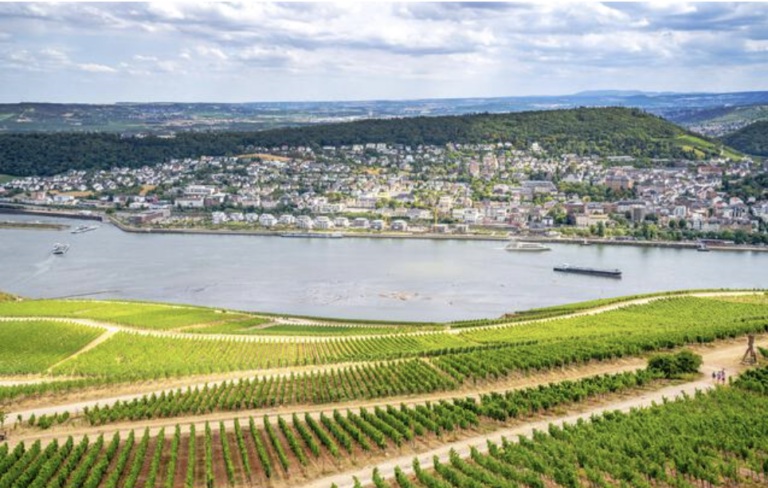
The Nahe takes its name from the river that defines it, a tributary of the Rhine that joins the main flow at Bingen. Geographically, the region sits wedged between Rheinhessen to the east, Pfalz to the south, and Mosel to the west, surrounded, in other words, by some of the most celebrated wine-growing territory in the world. That positioning has historically worked against the Nahe’s visibility. Until the German Wine Law of 1971 officially delimited the region, most Nahe wine was simply sold as “Rhine wine,” a classification that did nothing to communicate what made it distinctive.
What makes it distinctive is geology, and there is nowhere in Germany quite like this.
The Geology That Defines Nahe Riesling
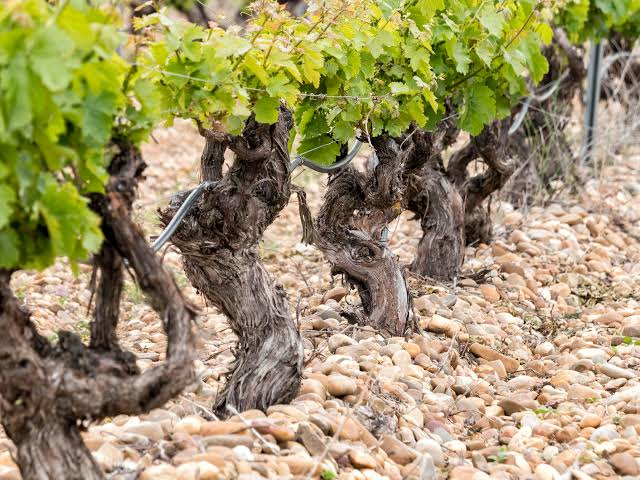
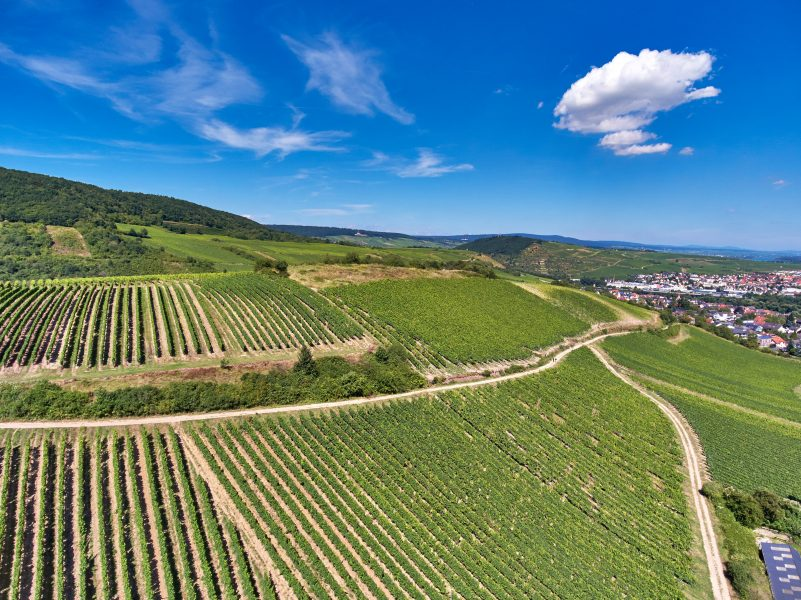
The Nahe is sometimes described as a geologist’s paradise, and that is not an exaggeration. Across roughly 4,200 hectares of vineyards, the region contains examples of essentially the full rock cycle: igneous volcanic material including porphyry and melaphyr, sedimentary formations including sandstone, clay and limestone, and metamorphic rocks including multiple types of slate. Estimates put the number of distinct soil formations across the region at around 180. In the Middle Nahe, the most celebrated stretch of the valley, soils can shift within metres of each other: a slate parcel here, a volcanic outcrop there, a sandstone terrace just over the ridge.
This matters because Riesling is extraordinarily sensitive to what lies beneath its roots. At Dönnhoff’s Niederhäuser Hermannshöhle, a single vineyard of around 8.5 hectares contains blackish-grey slate mixed with volcanic porphyry, limestone and coal-like organic sedimentary rock, a complexity that shows directly in the glass. One kilometre away, the Schlossböckelheimer Felsenberg sits on almost pure volcanic soil with barely any topsoil at all, producing Rieslings with a different tension and mineral signature.
The practical consequence for the wine drinker is that Nahe Riesling does not come in one style. A wine from Monzingen on the slate-dominated Waderner Schichten will taste different to one from Schlossböckelheim on volcanic porphyry, which will taste different again to one from the sandstone sites near Bad Kreuznach. This diversity is what makes tasting through the region so absorbing and what gives its best estates such a varied portfolio from site to site.
Grapes, Styles and What to Expect in the Glass
Riesling dominates, accounting for the majority of plantings at the region’s leading estates and for the wines that have built the Nahe’s international reputation. The style ranges considerably. At Gutswein level, you expect something energetic and relatively approachable. Citrus fruit, crisp acidity, moderate body. As you climb through single-vineyard wines to the Grosse Gewächse (Großes Gewächs, the VDP’s designation for top dry single-vineyard wines), the wines become more complex, more textured, and more demanding of cellaring time. Many of the best dry Nahe Rieslings need five to ten years to fully express their vineyard character.
Beyond Riesling, the Nahe grows Pinot Blanc (Weissburgunder), Pinot Gris (Grauburgunder), Silvaner, Müller-Thurgau and, increasingly, Pinot Noir (Spätburgunder). The Pinot varieties benefit from the region’s warmer pockets and have improved noticeably in quality over the past decade. Red wine is not what draws most serious visitors to the Nahe, but it is worth trying if the opportunity arises.
The VDP classification system is a reliable guide here. Look for the VDP eagle on the bottle. Gutswein is regional, Ortswein is village level, Erste Lage corresponds roughly to Premier Cru, and Grosse Lage (with Grosses Gewächs for dry wines) is Grand Cru. The Nahe has a strong concentration of Grosse Lage vineyards, particularly in the Middle Nahe villages of Niederhausen, Schlossböckelheim, Oberhausen, Monzingen and Traisen.
The Nahe Wine Route
The Naheweinstraße, or Nahe Wine Road, runs for around 130 kilometres through the valley and its side tributaries, connecting winemaking villages from Bingen in the north to Martinstein in the south. It is a practical thread for any wine travel itinerary, passing through Bad Kreuznach, the region’s largest town and a logical base, before heading into the more dramatic Middle Nahe landscape around Niederhausen and Schlossböckelheim.
Bad Kreuznach itself is worth knowing about. The town has a history as a spa destination and contains some genuinely old architecture, including the famous 15th-century Brückenhaus, a row of half-timbered houses built directly on a bridge over the Nahe. It is also home to the Nahe.Wein.Vinothek, a collective shop and tasting room in the old town centre where around 50 producers present and sell their wines. If your schedule only allows for one stop in the region and you want a fast overview of what is being made here, the Vinothek is a good starting point.
For hikers, the Rhine-Nahe Wine Trail covers around 100 kilometres through the Soonwald-Nahe Nature Park. The Rotenfels cliff near Bad Münster am Stein-Ebernburg is a dramatic backdrop; it is the highest sheer rock face north of the Alps, and the view from the top gives a strong sense of why this tucked-away landscape has supported viticulture for two millennia.
The best time to visit is May through October, with the shoulder months of May, June and September offering the quietest conditions. Harvest (Lese) typically runs through October and is the one period when the region buzzes with activity; many estates open more freely during this time, and local wine festivals on the Naheweinstraße tend to cluster in late summer.
Four Wineries Worth Visiting in the Nahe
Weingut Hermann Dönnhoff, Oberhausen an der Nahe
If you can only visit one estate in the Nahe, Dönnhoff is the obvious choice, not because it is the most visitor-friendly (appointments are essential and fill up weeks in advance, particularly for top vintages), but because it represents the apex of what this region can achieve.
The Dönnhoff family has been making wine in Oberhausen since the mid-18th century, with the first documented mention of the name dating to 1761. It was Helmut Dönnhoff, who took over in 1971, who built the estate’s international reputation by focusing obsessively on single-vineyard quality and terroir transparency. His son Cornelius joined in 2007 and has continued in the same direction, farming 25 hectares across nine VDP Grosse Lage sites in six villages spanning the central Nahe valley.
The philosophy here is minimal intervention in the cellar and maximum precision in the vineyard. Grapes are harvested manually, pressed immediately after picking to preserve freshness, and fermented using natural yeasts. Cornelius Dönnhoff has been quoted as saying that quality is determined in the vineyard, not the winery; the winemaking process exists to retain what the site already provides, not to add something the grape does not.
The flagships are the single-vineyard wines from Niederhäuser Hermannshöhle, Oberhäuser Brücke (a 1.1-hectare monopole adjacent to the river), and Norheimer Dellchen. These are wines that deserve and reward serious cellaring: the Grosse Gewächse from top sites need at least a decade to fully open. The estate entry-level Riesling and Tonschiefer Riesling Trocken, fermented on clay slate soils from the Leistenberg, offer a more accessible entry point.
Visiting: The winery is located in the centre of Oberhausen village, about an hour by car from Frankfurt Airport. Tastings are by appointment only; contact the estate well in advance, ideally four to six weeks for a standard tasting, more for special events around harvest. Email via doennhoff.com. The winery does not operate walk-in tastings.
Address: Bahnhofstraße 11, 55585 Oberhausen an der Nahe Website: doennhoff.com
Weingut Emrich-Schönleber, Monzingen
At the western end of the Nahe valley, in the village of Monzingen, the Schönleber family has spent four decades rebuilding and recultivating vineyard plots that most growers had abandoned as too difficult to farm. The result is one of the most distinctive estates in the region and one that has attracted consistently high praise from international critics; James Suckling included it in his World’s Top 100 Wines in 2021, and the VINUM wine guide named it Riesling des Jahres in 2025.
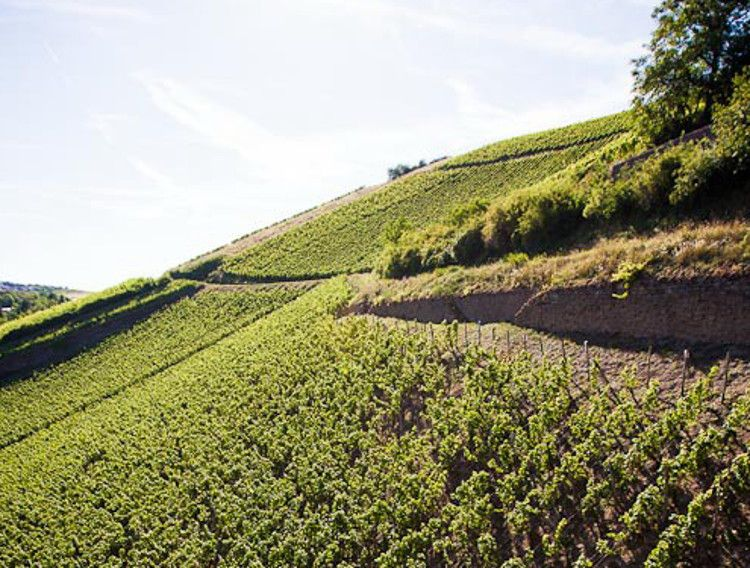
The estate covers around 20 hectares, focused primarily on Riesling from three classified Grosse Lage sites: Monzinger Frühlingsplätzchen, Monzinger Halenberg, and Monzinger Auf der Ley. The Halenberg is the estate’s defining site, with steep, south to southwest-facing slopes on the Waderner Schichten, a rock formation of strongly slate-influenced stone that produces particularly small-berried, aromatic fruit. The site slopes at up to 70 percent in sections, meaning virtually all work is done by hand.
Frank Schönleber, who now runs the estate alongside his father Werner, describes the Auf der Ley as the wine he is proudest of, a recently rediscovered Grosse Lage that is produced in tiny quantities, just one barrel per year. The three principles that guide production here are worth noting: the wines should be a pleasure to drink, honest and authentic in character, and expressive of their individual origin. In practice, this means wines of considerable precision and grip at the top end, and accessible, mineral-driven Rieslings at the entry level.
Goethe wrote admiringly of “Monzinger Wein” in 1815, a reminder that this village’s reputation predates the estate by centuries.
Visiting: Emrich-Schönleber is open Monday to Friday from 8am to 12pm and 1pm to 6pm, and Saturday from 9am to 12pm and 1.30pm to 4pm. Closed Sundays. The estate is on Soonwaldstraße in Monzingen.
Address: Soonwaldstraße 10a, 55569 Monzingen Phone: +49 (6751) 2733 Website: emrich-schoenleber.de
Gut Hermannsberg, Niederhausen
Few estates in the Nahe have a history as dramatic as Gut Hermannsberg. Founded in 1902 as a Prussian state domain, the German government literally blasted rock and moved earth to create the terraced vineyards above the Nahe valley; it spent most of the 20th century as a state-owned benchmark for German Riesling before being privatised in 1998. The current owners, the Reidel family, took over in 2009 and have invested heavily in restoring the estate’s former prestige.
The estate sits at 30 hectares, every one of which carries VDP Grosse Lage classification, a rare distinction. Winemaker Karsten Peter works with seven terroirs, including the legendary Kupfergrube at Schlossböckelheim, the monopole Hermannsberg vineyard in Niederhausen (the estate’s name site), the dramatic Traiser Bastei, and the Felsenberg and Steinberg. The wines are overwhelmingly Riesling, with a small proportion of Weissburgunder.
The estate offers something most Nahe producers cannot match: the full wine tourism package. There is a well-regarded Vinothek on site, and a guesthouse (Gästehaus) with 11 rooms in what was the former residence of the estate director. Guests can stay in the middle of the vineyard landscape, hike through the surrounding Soonwald-Nahe Nature Park, and taste wines with sweeping views over the valley. The Vinothek is open Tuesday to Sunday from May through October (10am to 6pm) and Tuesday to Saturday from November through April.
The Kupfergrube has received particularly noteworthy attention, Robert Parker’s Wine Advocate awarded a perfect 100 points to the 2015 Kupfergrube Trockenbeerenauslese, a wine that subsequently sold at auction for over 12,000 euros per Magnum.
Visiting: No appointment needed during Vinothek opening hours. Guesthouse bookings via the estate website. About an hour from Frankfurt Airport.
Address: Ehemalige Weinbaudomäne, 55585 Niederhausen Website: gut-hermannsberg.de
Weingut Schäfer-Fröhlich, Bockenau
Based in the small village of Bockenau in the Ellerbach valley, a side tributary of the Nahe, Schäfer-Fröhlich has built its reputation on extreme terroir: steep, rocky vineyards on volcanic and slate soils that produce wines of focused intensity. The family has been growing wine here for more than 200 years, and Tim Fröhlich, who has been responsible for the cellar since the mid-1990s, joined the VDP in 2001 after steadily elevating quality through the previous decade.
The estate farms 24 hectares across six VDP Grosse Lage sites. Two of these, the Bockenauer Felseneck and Bockenauer Stromberg, are Bockenau monopoles. The Felseneck sits on Devonian slate and quartzite, the Stromberg on porphyry, two very different soil signatures in two adjacent vineyards. The remaining sites include Frühlingsplätzchen and Halenberg in Monzingen (the same celebrated plots farmed by Emrich-Schönleber), and Felsenberg and Kupfergrube in Schlossböckelheim.
Tim Fröhlich’s stated approach is to find the balance between the specific fingerprint of each site and the estate’s own stylistic identity. In the glass, this translates to wines of considerable mineral clarity and precision, lean, taut and slow to open from top sites, more immediate at Gutswein level. The estate produces around 120,000 bottles annually, making it one of the larger quality producers in the Nahe.
Visits are by appointment from Monday to Saturday. This is a working family estate in a village without major tourist infrastructure, so come with a specific purpose and expect an intimate, focused tasting experience rather than a polished visitor centre.
Visiting: By appointment only, Monday to Saturday. Contact in advance by phone or email.
Address: Schulstraße 6, 55595 Bockenau Phone: +49 (6758) 6521 Website: weingut-schaefer-froehlich.de
Wines to Buy Online
Finding top Nahe Rieslings at retail outside Germany requires some navigation, but a few names appear consistently across the specialist retailers most likely to carry them.
Dönnhoff Riesling Trocken (Decantalo)
The estate’s Riesling Trocken is the most widely available Dönnhoff wine internationally and the most logical starting point for anyone approaching the estate for the first time. Grapes come from multiple parcels around Oberhausen and Niederhausen; the vineyard blend shifts slightly by vintage but always draws from sites with volcanic, slate, and quartzite components. The wine is fermented and matured in stainless steel and large traditional oak barrels (Stückfass), a method that preserves freshness while adding a subtle textural quality.
In the glass, expect citrus peel, fresh stone fruit, a crisp mineral edge, and the kind of acidity that makes you reach for another glass. It drinks well young but holds comfortably for five or more years. Decantalo (decantalo.com) lists current vintages of this wine and also the estate’s Tonschiefer Riesling Trocken, a cuvée from clay slate soils on the Leistenberg with a slightly more concentrated character. Both are within a price range that makes them easy to explore without a significant commitment.
Available at: Decantalo (decantalo.com)
Weingut Michel Riesling Trocken (Wijnbeurs)
For a more accessible entry into Nahe Riesling, particularly useful for introducing the region to guests, the Michel Riesling Trocken is a strong choice. The Wijnhuis Michel family has been based in Bad Sobernheim on the Nahe since 1820 and produces wines that sit solidly in the quality-to-price sweet spot: approachable, well-made, and genuinely representative of the region’s character.
The wine is 100% Riesling, dry, with a profile of yellow grapefruit, lime, apple, and a clean mineral finish. It works well on its own as an aperitif and is particularly good alongside light seafood or the kind of mild Asian-inflected dishes that Riesling handles better than almost any other white wine. Wijnbeurs (wijnbeurs.nl) carries both the Riesling Trocken and the alcohol-free Riesling from the same producer, which is one of the better non-alcoholic wine options currently on the market if that is relevant for your table.
Available at: Wijnbeurs (wijnbeurs.nl)
For those who want to go deeper, both Dönnhoff and Emrich-Schönleber sell directly through their estate webshops (doennhoff.com and emrich-schoenleber.de respectively). This is the most reliable route to accessing older vintages or wines that sell out quickly at retail, including the single-vineyard Erste Lage and Grosse Gewächs bottlings. Gut Hermannsberg’s Vinothek also operates a direct sales function for estate bottles. Colaris (colaris.nl) carries a rotating selection of German Rieslings from top regions, including the Nahe; checking current stock directly is the most reliable approach, as their German range evolves across vintages.
Practical Travel Notes for Visiting the Nahe
Getting there: The Nahe is roughly an hour by car from Frankfurt Airport, making it one of the most logistically straightforward German wine regions to reach on a European trip. Bad Kreuznach is also accessible by rail from Mainz, which connects easily to Frankfurt, Cologne and other major hubs.
Where to stay: Gut Hermannsberg’s guesthouse in Niederhausen is the obvious choice for wine-focused visitors who want to be inside the vineyard landscape. Bad Kreuznach offers a broader range of accommodation and is a practical central base for exploring both the lower and middle Nahe. The village of Meisenheim, further west, has a particularly well-preserved historic centre and is worth an overnight stop if your itinerary takes you to the western end of the region.
Wine routes and hiking: The Naheweinstraße links the major villages and is well signposted. For active travellers, the Rhine-Nahe Wine Trail (Rhein-Nahe Weinwanderweg) offers around 100 kilometres of hiking through the Soonwald-Nahe Nature Park. The Rotenfels cliff near Bad Münster am Stein-Ebernburg is a particularly impressive natural landmark, a sheer volcanic rock face that towers over the valley and makes for a dramatic backdrop during the afternoon light.
Wine festivals: Several villages along the Naheweinstraße hold festivals through July, August and September, when many producers set up outdoor tasting stands. These are a good low-barrier way to taste widely, particularly if cold-calling individual estates feels too planned for your travel style.
Language: Most estate staff at VDP members speak English to a good standard. Smaller family producers in more rural villages may have limited English, though German wine vocabulary is manageable with a bit of preparation, and most producers appreciate the effort.
Why the Nahe Rewards the Detour
The Nahe is not going to surprise you with dramatic views from every hilltop or a wine-themed hotel on every corner. What it does offer is a level of terroir complexity that you will not find anywhere else in Germany at this scale, a set of producers who are ranked among the best Riesling makers in the world, and an atmosphere that feels genuinely unhurried and unperformed. If you have spent time in the Mosel and want to understand why German Riesling can taste so radically different from one valley to the next, a few days here will answer that question in the most direct way possible: by tasting through estates whose wines sit on entirely different soil profiles within a few kilometres of each other.
The wines demand patience, both in the glass and in finding them. But that, too, is part of what makes the Nahe worth the effort.