The Mediterranean Island That Barely Tastes French
AT A GLANCE
Key Grapes & Style: Sciaccarellu, Niellucciu, and Vermentinu, sun-drenched granite and limestone soils producing aromatic, wild-herb (maquis) scented reds and crisp, coastal whites.
Ideal Visiting Months: May to June or September (warm Mediterranean swimming weather without high-season island crowds).
Must-Try Pairing: Crisp Vermentinu paired with grilled Mediterranean red mullet or artisanal Corsican cured coppa ham.
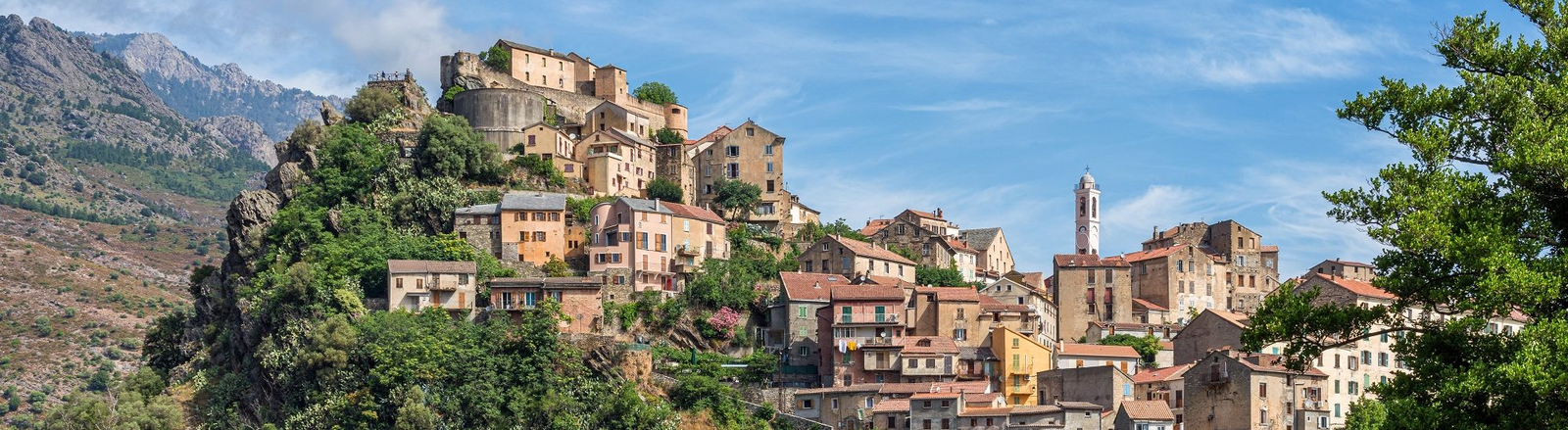
Corsica belongs to France on a map and almost nowhere else. The language spoken in its villages is closer to Italian than French. Its historical loyalty ran to Genoa for over four centuries before a brief, blazing period of independence and then annexation by France in 1768, barely a year before Napoleon Bonaparte was born in Ajaccio into that same unsettled moment. And its wine, which is really what brought you here, is made almost entirely from grapes that don’t exist in meaningful quantity anywhere else on earth: Niellucciu, Sciaccarellu, and a small, stubborn handful of others that Corsican growers spent decades bringing back from the edge of extinction rather than replacing with something more internationally recognizable.
That last part matters more than it might seem. For most of the 20th century, Corsica’s wine industry was a footnote to Algeria’s, literally: after Algerian independence in 1962, thousands of pieds-noirs winegrowers resettled on the island’s eastern plain and planted it with high-yield, undistinguished varieties suited to bulk production, turning much of Corsica into a supplier of cheap blending wine for the mainland. What’s happened since, and it’s a genuinely recent story, is a small, determined group of growers deciding that wasn’t going to be Corsica’s legacy after all, and going back to the island’s own indigenous grapes instead. The wine that’s resulted doesn’t taste like anywhere else in France, and honestly, it doesn’t taste like anywhere else in Italy either, despite the obvious genetic overlap. It tastes like Corsica, which is really the whole point.
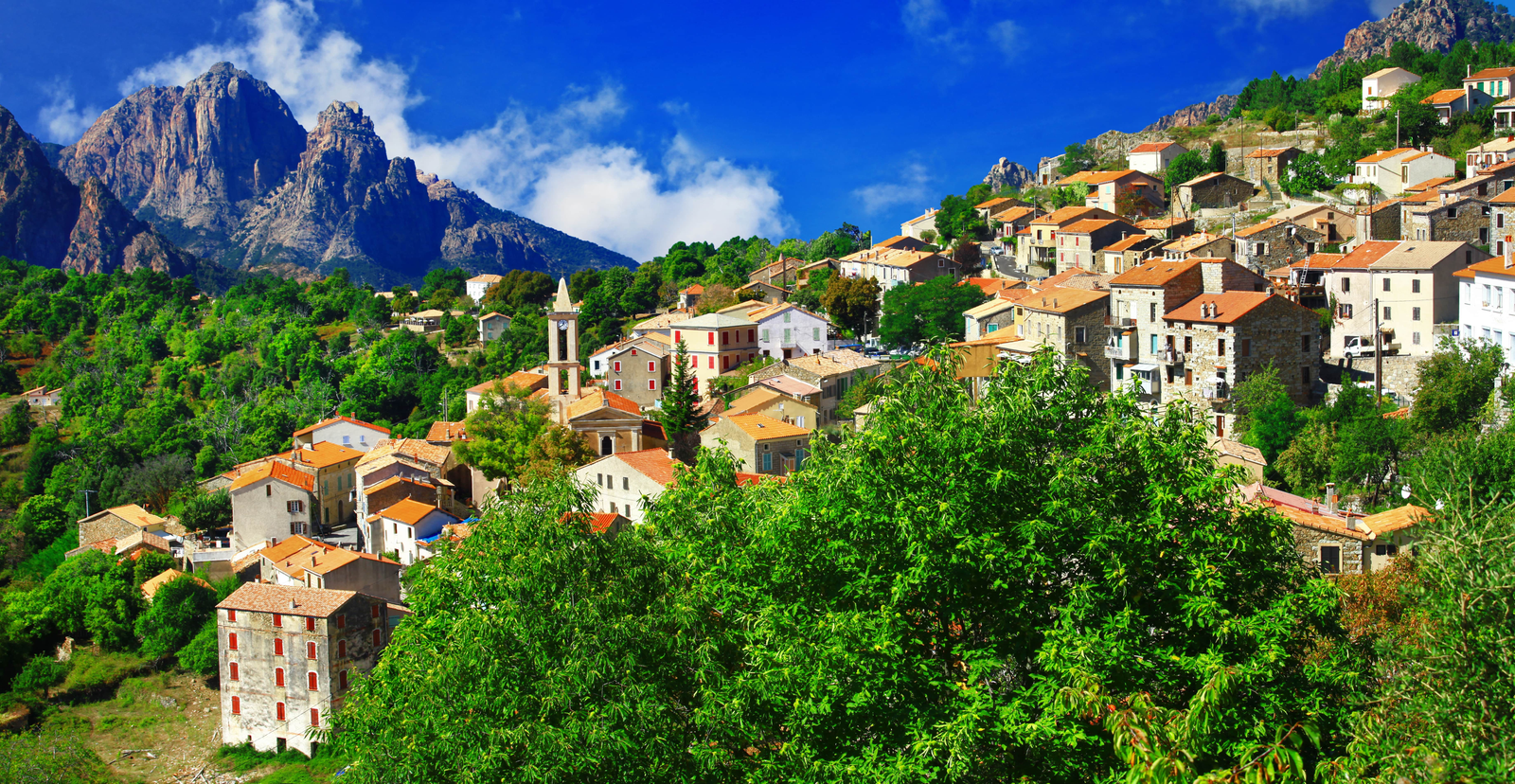
This guide covers the island’s geography and grapes, its appellation structure, four estates spanning Patrimonio, Ajaccio, Figari, and Cap Corse, and an honest look at where to actually find these wines, since this is a genuinely hard region to source outside a handful of specialist shops.
An Island of Two Terroirs
Corsica’s vineyards divide, broadly, along the same fault line that shapes the island’s geology as a whole: granite to the west and south, and schist and limestone concentrated in the north around Cap Corse and Patrimonio.
Patrimonio, at the base of the Cap Corse peninsula near Bastia, sits on a distinctive band of chalky limestone and clay, genuinely unusual for an island otherwise dominated by granite, and it’s this soil, along with a favorable, wind-sheltered microclimate, that’s made Patrimonio the island’s most consistently prestigious appellation since it became Corsica’s first AOC in 1968.
Ajaccio, on the western coast around Napoleon’s birthplace, sits instead on granite, weathered down into the sandy, well-draining soils that suit Sciaccarellu, the grape that’s made this appellation’s reputation, in a way Niellucciu never quite manages on the same ground.
Figari, at the island’s southern tip and its warmest, windiest corner, sits on similarly granitic soil, arguably even harsher, with vines that have to work for every bit of ripeness the Mediterranean sun provides. Cap Corse, the narrow, dramatic peninsula pointing north from Bastia, is a world of its own: steep, terraced vineyards running down toward the sea on schist soils, sheltered just enough to ripen Muscat grapes into the island’s celebrated sweet wine.
Binding all of this together is the sea, obviously, but also genuine altitude in a way flatter Mediterranean regions don’t have; some of Corsica’s vineyards climb into hills and low mountains that give real diurnal temperature swings, preserving acidity even through the island’s long, hot summers. It’s a small landmass punching well above its weight in terroir diversity, a point Corsican winemakers are, understandably, fairly proud of.
A History Written in Occupations
Corsica’s winemaking history stretches back roughly 2,500 years to Phocaean Greek traders who settled the eastern coast around 570 BC, in what’s now the commune of Aléria, the same wave of Greek colonization that founded Marseille just across the water. The Romans, arriving later, expanded cultivation considerably, and Corsica’s wine trade continued in fits and starts through the following centuries, shaped as much by whoever happened to control the island at any given moment as by anything happening in the vineyard itself.
Genoa’s centuries-long rule, running from the medieval period until 1768, left the deepest mark, linguistically and agriculturally. Corsican, still spoken in villages today, sits closer to Tuscan Italian than to French, and it’s genuinely believed that the island’s key grapes arrived via Genoese trade routes: Niellucciu, closely related to, quite possibly identical to, Tuscany’s Sangiovese, and Vermentinu, the same grape grown as Rolle in Provence and Vermentino across the water in Sardinia and Liguria. France’s annexation in 1768, just a year before Napoleon’s birth, folded the island into French administration, but never entirely folded it into French wine culture the way, say, Alsace’s post-war rebuilding pulled that region toward a more standardized AOC framework.
The 19th century saw genuine efforts to grow the island’s wine economy, but the real disruption came in the 20th century, and specifically after 1962, when Algerian independence sent tens of thousands of pieds-noirs settlers, many of them experienced winegrowers, across the Mediterranean looking for new land. Corsica’s eastern plain, previously malarial and only lightly farmed, was drained and replanted at enormous scale with high-yield varieties suited to bulk production, and for a couple of decades, Corsican wine meant cheap blending stock rather than anything with a real sense of place.
The turn back toward quality and toward Corsica’s own indigenous grapes is genuinely recent, dating largely to the 1980s and 1990s, and it’s inseparable from a small handful of individual growers, Antoine Arena in Patrimonio chief among them, who insisted the island’s future lay in its own varieties farmed with real care, not in imported grapes grown for volume. That project is still very much underway, and it’s part of what makes visiting Corsica’s wine country feel less like touring an established, settled region and more like watching one actively rebuild its own identity in real time.
Grapes Found Almost Nowhere Else
Corsica’s grape list runs to more than 30 varieties, many of them genuinely indigenous and grown in meaningful quantity nowhere else in the world.
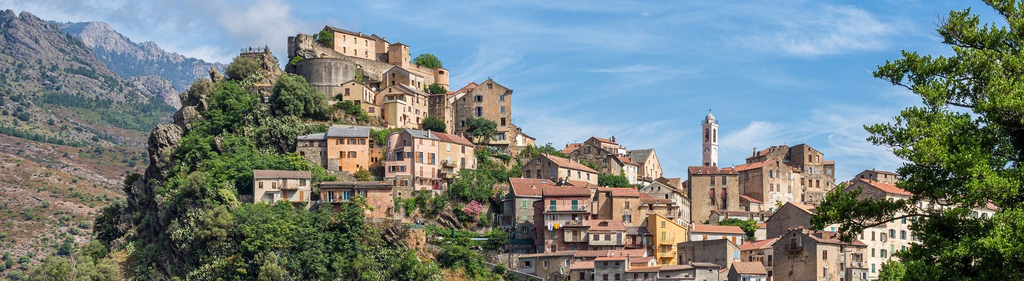
Niellucciu, closely related to Sangiovese and possibly the same grape under a different name, is Patrimonio’s defining red, required to make up at least 90% of that appellation’s red wines, producing dark, structured, spicy wine with real tannin and aging potential on the appellation’s limestone soils.
Sciaccarellu, whose name translates roughly to “crunchy,” is a Corsican original found essentially nowhere outside the island, at its best in Ajaccio’s granite soils, where it produces lighter-colored, aromatic, peppery red and rosé wine with a distinctly elegant character, sometimes likened to a Mediterranean cousin of Pinot Noir.
Vermentinu, called Rolle in Provence and Vermentino elsewhere in the Mediterranean, is Corsica’s principal white grape, required at 100% for Patrimonio’s whites and dominant across most of the island’s other white wine appellations, producing fresh, aromatic wine with citrus and almond notes.
Muscat à Petits Grains underpins Muscat du Cap Corse, the island’s fortified sweet wine specialty, made in the vin doux naturel tradition shared with Roussillon, arresting fermentation with added spirit to preserve natural grape sugar.
Beyond these four, a small revival movement, led by growers like Antoine Arena and Jean-Charles Abbatucci, has brought genuinely rare varieties like Bianco Gentile and Carcaghjolu Neru back from near-extinction, planted in tiny quantities specifically to preserve grapes that had nearly disappeared entirely from the island’s vineyards by the mid-20th century.
Nine Appellations on One Island
Corsica runs nine AOC appellations across three rough tiers: the broad regional AOC Corse (sometimes called Vin de Corse), five village-level crus, and two more specifically demanding appellations recognized as the island’s top tier.
Patrimonio and Ajaccio sit at the top, both historically significant enough to carry their own dedicated appellation status separate from the broader Vin de Corse designation, Patrimonio since 1968 and Ajaccio since 1984. Beneath them, Vin de Corse itself covers the broadest area, stretching along much of the eastern coast, with five recognized village crus permitted to add their own name to the label: Calvi, Figari, Sartène, Porto-Vecchio, and Coteaux du Cap Corse. Muscat du Cap Corse stands apart as the island’s dedicated vin doux naturel appellation, covering the fortified Muscat produced across both Cap Corse and Patrimonio’s northern reaches.
None of this runs anywhere near as elaborate as Burgundy’s cru system or even Bordeaux’s estate classifications; Corsica’s hierarchy is really about which specific corner of the island a wine comes from, with reputation built producer by producer rather than through any formal ranking within an appellation. Given how recently the island’s quality revival has taken hold, that’s arguably appropriate: this is still a region where a handful of individual growers, not institutional classification, have done the most to define what’s actually worth seeking out.
Four Corsican Estates Worth Visiting
These four span the island’s range: Patrimonio’s benchmark natural wine estate, Ajaccio’s most established granite-terroir producer, a biodynamic pioneer at Corsica’s windswept southern tip, and a family estate on Cap Corse still making traditional Muscat by hand.
Domaine Antoine Arena (Patrimonio)
Held by the Arena family since the 18th century, when Corsica was still under Genoese rule, this estate spent generations as a mixed farm- cattle, wheat, fruit trees- before Antoine Arena took it over in 1980 and committed it entirely to vines, eventually building it into arguably the single most influential estate in Corsica’s modern quality revival. Farmed organically from the outset and biodynamically for roughly the last decade, with no added yeasts, minimal sulfur, and no filtration, Arena’s wines are widely credited with proving to critics and consumers alike that Patrimonio could produce genuinely serious wine. He was also the first grower to replant Bianco Gentile in 1997, a rare white grape he’s remained one of very few producers to work with. Antoine made his final vintage in 2023; the estate is now run by his sons Jean-Baptiste and Antoine-Marie, each producing distinct cuvées under their own names from plots inherited from their father.
- Address: Morta Majo, 20253 Patrimonio, France
- Contact: +33 4 95 37 08 27
- Visiting: By appointment only; contact the estate directly ahead of a planned visit, as there is no dedicated public tasting room with fixed walk-in hours.
Domaine Comte Peraldi (Ajaccio)
Replanted in 1965 by the Comte de Poix and now one of the most established names in the Ajaccio appellation, Domaine Comte Peraldi farms around 45 hectares of granite-soil vineyard in the hills overlooking the Gulf of Ajaccio, certified organic since 2022. The estate leans on Corsica’s classic varieties, Sciaccarellu, Vermentinu, and Niellucciu, alongside other Mediterranean grapes like Genovese and Cinsault, with vines averaging around 30 years old and some parcels considerably older. It’s a genuinely accessible introduction to Ajaccio’s granite-driven style, with an on-site shop and an event space that occasionally hosts weddings and seminars alongside its core business of wine.
- Address: Chemin du Stiletto, 20167 Ajaccio, France
- Contact: +33 4 95 22 37 30, info@domaineperaldi.com
- Visiting: Open May to October, Monday to Saturday 9:00 to 12:00 and 14:00 to 18:00, with reduced winter hours (Monday to Friday 9:00 to 12:00 and 14:00 to 17:30, Saturday mornings only) from November to April. Cellar visits and tastings by appointment.
Clos Canarelli (Figari)
Yves Canarelli took over his family’s vineyard near the remote village of Tarabucetta, close to Figari at Corsica’s southern tip, in the early 1990s, and has since built it into one of the island’s most technically ambitious estates, organic since 2002 and biodynamic since 2006. Figari’s harsh, wind-battered granite terroir, considered among the island’s oldest wine-growing grounds, makes for genuinely difficult farming, but Canarelli has turned that difficulty into a strength, producing around 15 distinct cuvées, some from individual parcels, including work with a tiny half-hectare of pre-phylloxera vines near the village of Orasi, planted well over a century ago and now vinified in amphora under the name Tarra d’Orasi. Alongside Antoine Arena and Jean-Charles Abbatucci, Canarelli has been a driving force behind the revival of Corsica’s rarer indigenous varieties.
- Address: Tarabucetta, 20114 Figari, France
- Contact: +33 4 95 71 07 55
- Visiting: By appointment; contact the estate ahead of a planned visit. The property also operates five villas for rent for those wanting to stay directly among the vines.
Clos Nicrosi (Rogliano, Cap Corse)
Founded in 1850 by Dominique Nicrosi and restored a century later by his great-grandsons, Clos Nicrosi is now run by Jean-Noël Luigi and his children Marine and Sébastien, farming around 10 to 11 hectares on schist and alluvial soils at the northern tip of Cap Corse, close enough to the Mediterranean that the estate practically has its feet in the water. The domaine is best known for its Muscatellu, a Muscat du Cap Corse made from Muscat à Petits Grains using the traditional passerillage method, drying the grapes on straw mats in the sun before pressing, to concentrate their sugars naturally rather than relying on late harvest alone. Vermentinu, forming the backbone of the estate’s dry white, rounds out a small range that also includes limited quantities of red and rosé from replanted Niellucciu, Sciaccarellu, and Aleatico.
- Address: Lieu-dit Vignale, 20247 Rogliano, France
- Contact: +33 4 95 35 41 17, clos.nicrosi@orange.fr
- Visiting: Open May to September, Monday to Saturday, 10:00 to 12:00 and 16:00 to 19:00. October to April by appointment. The estate’s sales point is located in the nearby port town of Macinaggio.
Where to Buy Corsican Wine
I’d rather be direct about this than dress it up: Corsica was the hardest region in this entire series to source through Wijnbeurs, Colaris, or Decántalo. None of the four estates profiled here, nor Corsican wine more generally, turned up in confirmed stock at any of the three at the time of writing. This isn’t really a reflection on the wine’s quality; it’s more a function of Corsica’s small total production, its historically domestic-focused sales, and the fact that its most interesting producers, several of them profiled above, work at a scale that rarely stretches to broad international retail distribution in the first place.
What I can point you toward instead: Dutch natural and biodynamic wine specialists carry Corsican producers considerably more consistently than general retailers do. De Geluksdruif and Lekkersapje, both independent Dutch wine shops with a strong natural wine focus, stock Antoine Arena and Clos Canarelli directly, including some of their rarer bottlings. Kermit Lynch, the well-known American importer, has also built a serious Corsican portfolio (Arena, Canarelli, and Abbatucci among them), and while primarily US-facing, their producer pages are a genuinely useful reference for tracking down European stockists carrying the same estates. For Muscat du Cap Corse specifically, smaller specialist fortified-wine merchants tend to be a better bet than general retailers, given how niche the category remains even within France.
If there’s a practical takeaway here, it’s that Corsican wine, more than almost any other region in this series, rewards buying directly from the island itself, either during a visit or through an estate’s own shipping arrangements, rather than expecting to find it waiting on a shelf back home.
Food Pairing
Corsican cuisine leans heavily on the island’s mountainous interior as much as its coastline, and its wine developed to match both. Niellucciu-based Patrimonio reds, structured and savory, pair naturally with wild boar stew (a genuine island staple, given the number of actual wild boar roaming Corsica’s interior), charcuterie made from the island’s free-range pigs, and aged sheep’s or goat’s milk cheeses. Sciaccarellu, lighter and more aromatic, suits grilled lamb, roasted poultry, or the herb-heavy dishes flavored with the maquis, the wild scrubland vegetation that covers much of the island and genuinely perfumes a lot of Corsican cooking, wine included.
Vermentinu-based whites are the natural match for the island’s seafood, particularly the bouillabaisse-adjacent fish stews found in coastal towns, as well as for brocciu, Corsica’s fresh, mild sheep’s or goat’s milk cheese that shows up in everything from savory tarts to dessert. Muscat du Cap Corse, sweet and aromatic, is traditionally served as an aperitif or alongside dessert, and pairs particularly well with the island’s fiadone, a brocciu-based cake, or simply with a plate of dried figs and walnuts.
Getting There and Planning Your Trip
Corsica has four airports, Ajaccio, Bastia, Calvi, and Figari, all with seasonal or year-round connections from mainland France and several other European cities, though direct flights from Amsterdam are limited; connecting through Paris, Nice, or Marseille is generally the most practical route. Ferries also run from mainland France and Italy, a genuinely scenic option worth considering if traveling with a car, since a car is close to essential for covering the island’s wine regions, which are spread across genuinely mountainous terrain with limited public transport between them.
Bastia is the natural base for Patrimonio and Cap Corse, both under an hour away, while Ajaccio serves the same role for its own namesake appellation and, with a longer drive, Figari at the island’s southern tip, roughly two hours south. Given how spread out and mountainous the island is, treating the north (Patrimonio and Cap Corse) and south (Ajaccio and Figari) as separate legs of a trip, rather than attempting both in a few days, makes for a considerably more relaxed visit, and lets the driving itself, along some genuinely spectacular coastal roads, become part of the experience rather than an obstacle to it.
Harvest typically runs from late August into September, and Cap Corse’s Muscat grapes, often dried on straw mats after picking, can extend the winemaking calendar considerably further into autumn. Corsica draws serious tourist volume in July and August, driven mostly by its beaches rather than its wine, so late spring and early autumn offer a considerably quieter, more comfortable window for winery visits while still delivering reliably warm Mediterranean weather.
Frequently Asked Questions
Is Corsican wine the same as Italian wine, given how closely related the grapes are? No, though the connection runs deep. Niellucciu is closely related to, and possibly identical to, Tuscany’s Sangiovese, and Vermentinu is the same grape grown as Vermentino in Sardinia and Liguria, reflecting centuries of Genoese influence on the island. But Corsica’s specific terroir, winemaking traditions, and appellation rules have shaped genuinely distinct wines that stand apart from their Italian relatives.
Why is Corsican wine so hard to find outside France? Corsica’s total wine production is small relative to mainland French regions, and much of it has historically been consumed domestically or sold to visiting tourists rather than exported at scale. The island’s most quality-focused producers, several profiled in this guide, also tend to farm small parcels with limited output, making broad international retail distribution genuinely difficult even for critically acclaimed estates.
What’s the difference between Patrimonio and Ajaccio wine? Patrimonio, in the island’s north, sits on limestone and clay soils and is built around Niellucciu, producing structured, age-worthy reds. Ajaccio, on the west coast, sits on granite and is built around Sciaccarellu, producing lighter, more aromatic, and more immediately approachable reds and rosés.
What is Muscat du Cap Corse? Muscat du Cap Corse is a fortified sweet wine made from Muscat à Petits Grains grapes grown on the Cap Corse peninsula, often using the traditional passerillage method of drying grapes on straw mats before pressing to concentrate their natural sugar. It’s typically served as an aperitif or with dessert and is one of Corsica’s most distinctive wine specialties.