High Altitude, Low Profile: The Wines of the French Alps
AT A GLANCE
Key Grapes & Style: Jacquère, Altesse (Roussette), and Mondeuse, crisp, high-acid Alpine whites with flinty minerality alongside peppery, vibrant red wines grown in the shadow of the French Alps.
Ideal Visiting Months: May to September (for hiking, scenic mountain lake touring, and open cellar doors) or December to March for ski-and-wine trips.
Must-Try Pairing: Crisp Jacquère or Roussette de Savoie paired with authentic regional Fondue Savoyarde, Raclette, or Tartiflette (baked potato, bacon, and Reblochon cheese).
Most people meet Savoie wine in one of two ways. Either they’re standing in a ski chalet with a pot of molten Beaufort in front of them, a glass of something pale and sharp in their hand, and no particular idea what it is, or they’ve never met it at all. Both are understandable. The region produces only around 2,100 hectares of vines; much of the wine is drunk locally by people who’ve just come off a mountain, and very little of it travels far beyond the Alps. That low profile is a large part of the appeal, and also the reason this is one of the harder French regions to write about with any confidence, since so much of what’s interesting here happens on a very small scale.
What you find when you look closely is a wine region with an unusually high proportion of its own grapes. Of the 23 varieties permitted, seven are found only in Savoie: Altesse, Gringet, Molette, Mondeuse Noire, Mondeuse Blanche, Persan and Jacquère. Mondeuse, the dark, peppery red that anchors the region’s best reds, has a documented genetic link to Syrah, which makes Northern Rhône drinkers feel oddly at home with it. Gringet, grown on the terraces above the Arve valley near Geneva, barely exists anywhere else, with only a few dozen hectares planted in the world. The Roman writer Columella apparently described Mondeuse as the grape that ripens amid the snow, which is as good a one-line summary of the whole region as I’ve come across.
This guide covers the region’s geography and its patchwork of crus, the grapes worth knowing, four estates spread across the Combe de Savoie, the Lac du Bourget, the Arve valley and the Tarantaise, and an honest account of where to find these wines in the Netherlands and Spain, which is not a short list.
A Vineyard Strung Between Lakes and Peaks
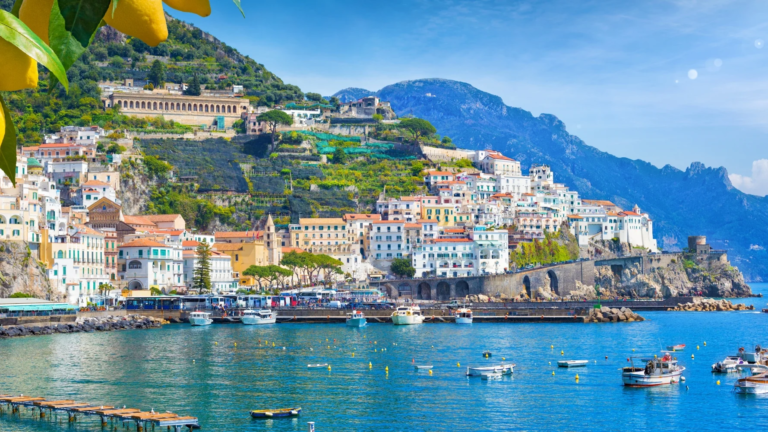
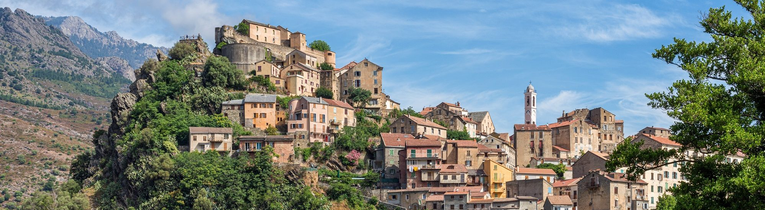
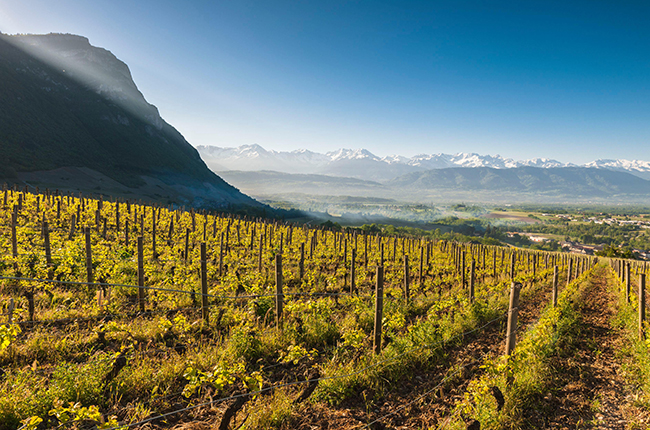
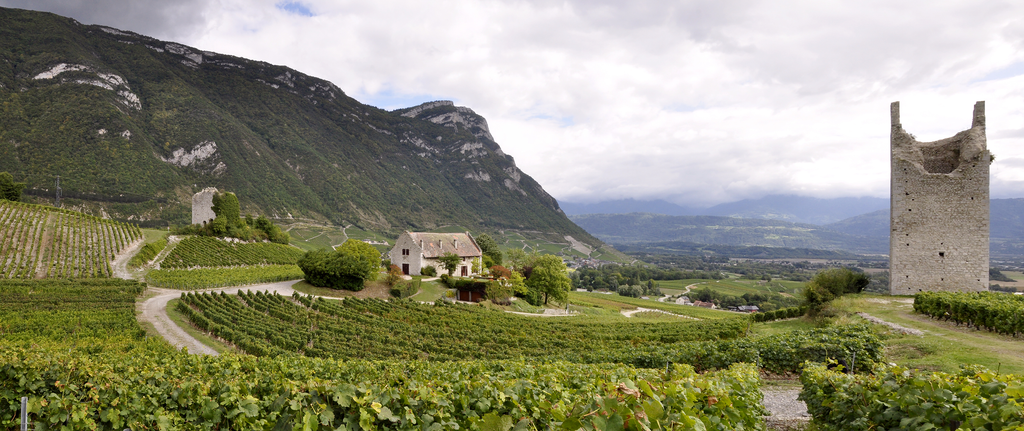
Savoie’s vineyards don’t form a single block. They’re scattered in pockets between Lake Geneva in the north and the Isère valley in the south, spread across the departments of Savoie and Haute-Savoie with small extensions into the Isère and the Ain. Each pocket sits on whatever south-facing slope the mountains happen to offer, which means that altitude, soil, and microclimate change dramatically over short distances, and so does the wine.
The Combe de Savoie, the broad valley running southeast from Chambéry toward Albertville, is the region’s heartland. Here you find Arbin, the benchmark cru for Mondeuse, on steep south-southeast slopes of clay and limestone with scree on top. Nearby Chignin makes the Roussanne-based whites that locals call Bergeron, and Chignin-Bergeron is its own cru within Vin de Savoie. South of Chambéry, the vineyards of Apremont and Les Abymes grow Jacquère on the debris of a mountain: in 1248, a huge section of Mont Granier collapsed into the valley, and the vineyards now planted on that rubble take their names from the event, abîme meaning abyss.
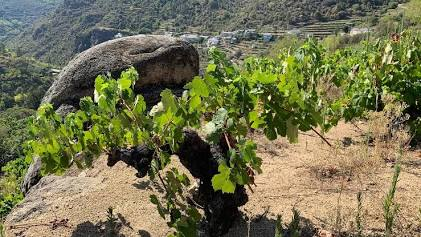
West of the Lac du Bourget, Jongieux sits at the foot of the Dent du Chat. This is where Marestel lives, a steep limestone hillside that is the most famous of the four Roussette de Savoie crus. The other three are Frangy, Monterminod and Monthoux. Further north, in Haute-Savoie, Ayze lies in the valley of the Arve between Geneva and Chamonix, with vines on glacial moraine at around 350 to 450 meters. Further southeast, in the Tarantaise valley, a project that began in the late 1990s replanted abandoned mica-schist terraces above Cevins at gradients that reach 60 to 70 percent.
Climate is alpine and continental, with cold winters, warm summers, and large swings between day and night that help preserve acidity. The lakes, Bourget and Geneva especially, moderate temperatures for the vineyards closest to them. Much of the vineyard work is done by hand because there’s no other way to do it. This is a region where the cost of farming shows in the price, and where the best producers have worked out that the only viable strategy is to make wine that justifies the effort.
From the Allobroges to a Quiet Revival
Vines have grown here since before the Romans. The Allobroges, the Gallic tribe that held the Alpine valleys, were already cultivating what became Mondeuse before the Roman conquest, which is the context for Columella’s remark about snow. The Romans expanded viticulture, and through the medieval period the region’s wine was tied to the local abbeys and to the dukes of Savoy, who ruled a state that straddled the Alps and spent most of its history looking toward Turin as much as Paris.
Savoie became part of France only in 1860, when the Duchy was ceded under the Treaty of Turin. That late arrival matters for wine. The region never became part of the national wine culture the way Burgundy or Bordeaux did, and its appellations came later: Vin de Savoie and Roussette de Savoie in the early 1970s, Seyssel in the 1950s, and Crémant de Savoie only in 2014. For most of the 20th century, the wine was cheap, light, and consumed by the local ski trade, and the vineyard area shrank as the valleys filled with tourism and industry.
The shift came, as it did in the Jura and Beaujolais, from a small number of growers who decided the region’s grapes were worth taking seriously. Michel Grisard, working at Prieuré Saint-Christophe in Fréterive, converted to biodynamics and became an influence on younger growers. Dominique Belluard in Ayze persuaded the wine world that Gringet could make fine still and sparkling wine, a belief that was far from obvious when he started. Louis and Béatrice Magnin in Arbin quietly built a reputation for age-worthy Mondeuse. And in 1998, Grisard took on the Cevins terraces, a project built around about 400 small plots rented from villagers, which became Domaine des Ardoisières. That generation’s work is the reason Savoie now appears on serious wine lists.
The Grapes That Barely Exist Elsewhere
Jacquère is the most planted grape in Savoie, and the one most visitors meet first. It makes light, crisp, low-alcohol white wine, often under 12 percent, with citrus and white flower aromas and a mineral edge. It’s the natural partner for cheese fondue and the wine behind Apremont and Les Abymes. In good hands, from old vines and steep limestone, it can be more than a ski-lodge pour.
Altesse, locally called Roussette, is the region’s noble white, planted on roughly a tenth of the vineyard area. It gives wines with more weight and a nutty, honeyed, dried fruit character, with real aging potential in the best sites. Roussette de Savoie is a 100 percent Altesse appellation when a cru name is on the label, and the Marestel bottlings can age for decades.
Roussanne, called Bergeron in Savoie, thrives on the warm slopes around Chignin and Montmélian. It makes fuller, spicier white wine than you’d expect this far north, and Chignin-Bergeron is among the region’s most serious whites.
Gringet is the great rarity. Long assumed to be a relative of Savagnin, it turned out to be a distinct, older variety, and it’s grown almost exclusively around Ayze. It makes aromatic, herbal, mineral wine, both still and sparkling, and a single estate, discussed below, farms a significant share of the world’s supply.
Mondeuse Noire is the red grape that carries Savoie’s reputation. Deeply colored, peppery and structured, with violet and dark fruit, it ages well. Arbin and Saint-Jean-de-la-Porte are its most prized crus, and yields matter: the appellation allows high volumes, but serious producers keep them far lower.
Persan, Gamay, Pinot Noir, Molette and Chasselas fill out the picture. Persan, a nearly extinct red grape, has had a small revival, and appears in cuvées like the Argile Rouge from Les Ardoisières.
Appellations, Crus and a Fair Amount of Confusion
Savoie’s classification is flatter than Burgundy’s and more confusing than it should be. The principal appellation is Vin de Savoie, covering white, rosé, red and sparkling wine across the whole region. Sixteen village or area names can be added to the label as crus, among them Apremont, Abymes, Arbin, Chignin, Chignin-Bergeron, Chautagne, Jongieux, Saint-Jean-de-la-Porte, Crépy and Ayze. A few are grape-specific: Chignin-Bergeron is Roussanne only, Apremont is Jacquère-based, and Saint-Jean-de-la-Porte is Mondeuse.
Roussette de Savoie is the separate appellation for Altesse wines, with four named crus: Frangy, Marestel, Monterminod and Monthoux. These carry stricter rules, including lower yields and higher minimum alcohol, and the wines must be 100 percent Altesse.
Seyssel, in the northwest, produces still Altesse and sparkling wine from Molette and Altesse. Crémant de Savoie, since 2014, is the region’s traditional-method sparkling appellation, with Jacquère required in the blend. Ayze has its own tradition of sparkling Gringet, made in the same method.
Beyond the AOPs, the IGP Vin des Allobroges allows rarer varieties and is where several of the more experimental growers work. One trap deserves repeating: Roussette and Roussanne sound nearly identical and are entirely different grapes. Roussette is Altesse. Roussanne, here, is Bergeron.
Four Estates Worth Knowing
Savoie is a region of small domaines where visiting often means a phone call rather than a booking page. These four cover the main zones: Jongieux and the Lac du Bourget, Arbin in the Combe de Savoie, Ayze in the Arve valley, and the Tarantaise terraces. I’ve been explicit below about what could be confirmed and what could not, since contact details in this region change often.
Domaine Dupasquier (Jongieux)
The Dupasquier family farms 14 hectares at the foot of the steep Marestel hillside, in the hamlet of Aimavigne near Jongieux, on vines that have been in the family for five generations. The flagship is the Roussette de Savoie Marestel, made from Altesse on clay and limestone, with vines averaging around 35 years old and aged in neutral barrels on the lees. The family’s approach is traditional, with grass between the rows and no synthetic treatments, and the Marestel is aged in bottle far longer than is usual in Savoie before release. Verticals of this wine from the late 1980s have been described as still tense and nutty, which tells you what the cru can do. The estate also makes Jacquère, Mondeuse, a Gourmandise red blend, and a Marc de Savoie.
- Address: 25 Impasse du Vieux Pressoir, Lieu-dit Aimavigne, 73170 Jongieux, France
- Contact: A phone number and email could not be confirmed for this guide; reach the estate through its address or its regional tourism listing
- Visiting: Listed as open every day throughout the year except Sunday, closed on January 1 and December 25, with a group rate for more than eight people. A tasting with Savoyard charcuterie and cheese has been reported by visitors, so ask when arranging a visit.
Domaine Louis Magnin (Arbin)
Run by Louis Magnin and his wife Béatrice, the fourth generation of a family that has worked the Arbin slopes since the late 19th century, this eight-hectare domaine is the reference point for Mondeuse. About 55 percent of the vines are Mondeuse, planted in Arbin on steep clay-limestone with scree, 30 percent Roussanne in neighboring Montmélian, and the rest Altesse and Gamay. The farming is organic, certified since 2012, with biodynamic practices introduced in 2010. The top cuvée, Tout un Monde, comes from a 0.7-hectare plot of vines over a century old, with only a few thousand bottles made, and it’s one of the most sought-after wines in Savoie. In 2017, the estate leased its youngest vines to a neighboring grower, and one importer notes that the Mondeuse bottling called Erythrite at Les Ardoisières draws on those vines.
- Address: Arbin, 73800, France (the estate is in the hamlet of Montmeillant, so ask for directions when booking)
- Contact: No current phone or email could be confirmed; older listings show a defunct email, so contact through a regional tourism office or a retailer that works with the estate
- Visiting: By appointment. Visitors report warm hospitality from Béatrice Magnin and advise dressing warmly, since the tasting cellar is cool.
Domaine du Gringet, formerly Domaine Belluard (Ayze)
For two decades, Dominique Belluard’s estate in Ayze was the standard-bearer for Gringet. He farmed the family land biodynamically from 2001, made both still and sparkling Gringet, and put the grape on the map with wines like Les Alpes, Le Feu from an iron-rich parcel, and the Les Perles du Mont Blanc sparkling. Belluard died during the pandemic years, and the estate has since continued under the name Domaine du Gringet, with a new gravity-fed cellar and a young winemaker, Vincent Ruiz, taking over the vines. The Jura’s Jean-François Ganevat reportedly helped finish the last wines Belluard had begun. Because the estate changed name and hands recently, confirm current details before traveling.
- Address: 5 Route de la Gare, 74130 Ayze, France
- Contact: Confirm directly through the estate’s current website, since contact details changed with the rebrand
- Visiting: Listed as by appointment only, with free tastings and French and English spoken.
Domaine des Ardoisières (Cevins, Tarantaise)
This estate began in 1998 when Michel Grisard, working with a local association that wanted to save abandoned terraces, took on around 400 small plots rented from villagers in and around Cevins. The vines grow on mica-schist terraces at gradients of 60 to 70 percent, worked biodynamically with horses, and the estate takes its name from the local slate used to build the stone walls and cabins. Brice Omont, an agricultural engineer from Champagne, joined in the mid-2000s and has run the domaine since, now farming about 16 hectares. The cuvées include Argile in red and white, the Altesse-based Quartz, the Mondeuse-Persan blend Améthyste, and Silice, made from purchased fruit.
- Address: Cevins, Savoie, France (Tarantaise valley, between Albertville and Moûtiers)
- Contact: A direct estate phone and email could not be verified for this guide
- Visiting: No public visiting hours could be confirmed. Treat this as an estate whose wines you’ll more likely meet in a bottle than on a tasting-room visit, and contact the estate through its importer if you want to try.
Where to Buy Savoie Wine
I checked Colaris, Wijnbeurs and Decántalo for these estates and for Savoie wines more broadly, and I could not confirm any of the four estates in stock at any of them. I’d rather say that plainly than suggest a shelf that isn’t there.
That fits the region. Savoie produces little wine; much of it is drunk close to where it’s made, and the most sought-after names, Magnin, Belluard and Ardoisières among them, work at a scale that rarely reaches general retail. They tend to travel through specialist importers, natural wine shops and restaurant lists. Kermit Lynch, the American importer, lists a Savoie portfolio with Altesse, Mondeuse and Crémant, which is a useful reference if you’re hunting for the names that matter. For Les Ardoisières in particular, French online specialists such as Marée Haute sell the Silice and Améthyste cuvées, though you’d need to check whether they ship to the Netherlands.
If I were buying for myself, I’d look first at independent Dutch natural wine merchants, ask them directly whether they carry Savoie, and check the estate sites for direct shipping. WirWinzer and Drinks & Co are worth checking as fallback aggregators, though stock of small Alpine producers rotates quickly. Of all the regions in this series, Savoie rewards buying on the spot most: pick up a case of Jacquère and a bottle of Marestel when you’re there, and bring them home.
Food Pairing
Savoie wine was made for the food of its mountains, and the pairings here are some of the most dependable in French wine. Jacquère, light and acidic, is the textbook wine for fondue savoyarde, cutting through the melted Beaufort, Comté and Gruyère, and it also suits raclette, tartiflette made with Reblochon, and lake fish from the Bourget and Geneva. Grilled omble chevalier or perch from the lakes, served simply, is where these whites do their best work.
Roussette de Savoie, with more weight and a nutty edge, suits roast chicken, pork stews and aged Tomme de Savoie or Beaufort. The grape’s honeyed side makes it a good match for richer fish dishes and surprisingly good with spiced Asian cooking. Chignin-Bergeron, fuller still, wants cream sauces and mild, nutty cheeses.
Mondeuse is the red for charcuterie, game and grilled meat. Its pepper and dark fruit suit smoked sausages, wild boar and mountain hams, and a well-aged Arbin stands up to roast lamb. Crémant de Savoie and sparkling Gringet are natural aperitif wines, and the Gringet’s herbal, mineral style also works with sushi and light seafood.
Getting There and Planning Your Trip
Chambéry is the natural base for most of the vineyards, sitting on the TGV network and close to the Combe de Savoie, Arbin and Chignin to the southeast, and to Jongieux and Lac du Bourget to the northwest. Aix-les-Bains, on the lake, is a pleasant alternative. Annecy works well as a base for the northern vineyards, and Geneva airport is the most practical entry point for Ayze and the Arve valley. Lyon is the other major gateway, roughly an hour from Chambéry by train. From Amsterdam or Rotterdam, flying to Geneva or Lyon is the simplest route.
A car is close to essential, since the estates sit on steep, narrow roads between villages and public transport doesn’t reach them. The Tarantaise terraces near Cevins are a separate trip from the Lac du Bourget, and Ayze is closer to Geneva and Chamonix than to Chambéry, so treat the region as three or four different bases rather than one itinerary.
Harvest typically runs through September and into October, and the vineyards are especially striking in autumn, with the first snow often visible on the peaks above. Because Savoie is also a major ski region, winter offers a different pairing: a day on the slopes.
Frequently Asked Questions
What is the difference between Roussette and Roussanne in Savoie? They are different grapes with confusingly similar names. Roussette is the local name for Altesse, which makes Roussette de Savoie, while Roussanne, called Bergeron here, makes Chignin-Bergeron. If a label says Roussette de Savoie, the grape is Altesse.
Is Savoie wine the same as Jura wine? No, though the two regions neighbor each other and share a taste for indigenous grapes and low-intervention winemaking. Savoie is alpine, with grapes like Jacquère, Altesse, Mondeuse and Gringet, and little of the oxidative winemaking that defines the Jura’s Vin Jaune. The comparison is useful mainly because both regions are rewarding for readers who already know Burgundy.
Is Mondeuse related to Syrah? Genetic analysis links Mondeuse Noire to Syrah as a parent or close relative, which is why peppery, dark-fruited Mondeuse often reminds drinkers of Northern Rhône reds. It tends to be lighter in body and more acidic, reflecting the cool alpine climate.
Why is Savoie wine so hard to find outside France? The vineyard area is small, much of the wine is consumed locally by visitors, and the top producers work at a tiny scale. Most of what leaves France travels through specialist importers rather than mainstream retailers. Limited by cellar visits, though many small estates reduce their hours or require firmer appointments in the cold months. Spring and early autumn are the most reliable seasons for visits, and anything outside summer will need a phone call ahead.