Beyond Port: Four Douro Quintas on Portugal’s Schist Terraces
AT A GLANCE
Key Grapes & Style: Touriga Nacional, Touriga Franca, and Tinta Roriz, cultivated on steep schist terraced vineyards, yielding mineral-rich dry reds and fortified Ports.
Ideal Visiting Months: May to June or September to October (golden autumn foliage across the river slopes during harvest season).
Must-Try Pairing: Dry Douro DOC red paired with slow-roasted kid goat (Cabrito Assado) or aged Queijo da Serra da Estrela.
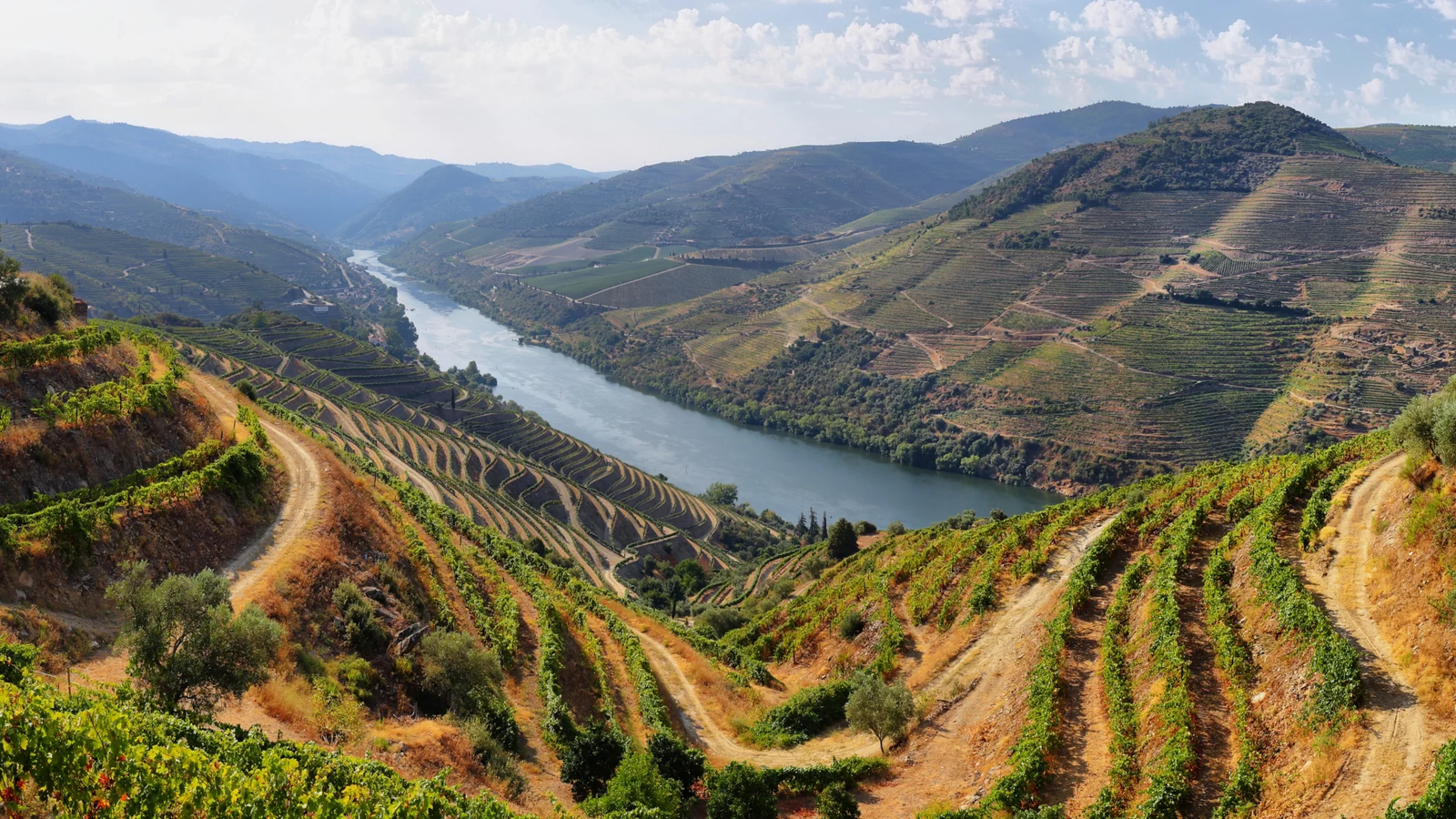
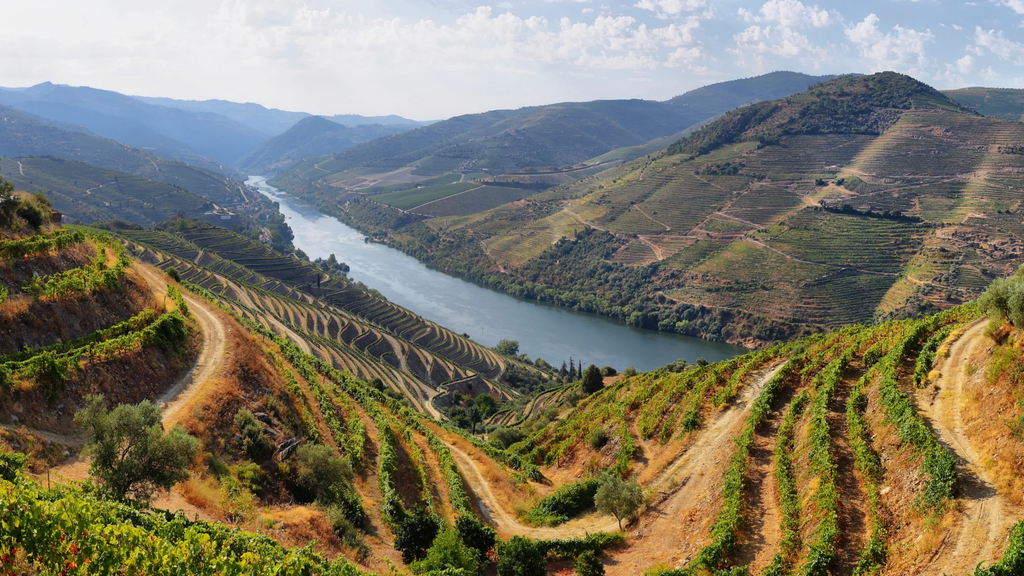
Drive east from Peso da Régua on a clear afternoon, and the valley rearranges itself into a series of stone-walled steps, each one holding a few rows of vines against a slope that looks too steep to farm. The river sits far below, brown-green and slow, and the light bounces off the slate in a way that makes the whole hillside shimmer. This is the Douro, the oldest officially demarcated wine region in the world, and for most of its history it existed to make one thing: Port.
That has changed. Over the past three decades, the same vineyards that fed the Port lodges of Vila Nova de Gaia have become the source of some of Europe’s most distinctive dry wines. Red blends built on Touriga Nacional and Touriga Franca, whites from high-altitude Rabigato and Viosinho, and old-vine field blends that mix thirty or more varieties in a single plot. The question for a visitor is no longer whether Douro table wine deserves attention. It is how to organise a trip so that you taste enough of the diversity without spending the whole week in a car on hairpin bends.
This guide is written for readers who already know their way around a wine map and want specifics. It covers the geography and geology that shape the wines, the history that explains why the region looks the way it does, the grapes and classification rules worth understanding before you read a label, and four quintas we would build a trip around: Quinta do Vallado, Quinta dos Murças, Quinta do Côtto and Quinta Vale D. Maria. It also tells you where the wines can be bought in the Netherlands and globally, which matters if you want to taste before you book flights.
Geography and Terroir of the Douro
The Douro River rises in Spain, where it is called the Duero, and crosses into northern Portugal before running west to the Atlantic at Porto. The wine region occupies the inland section of that valley, roughly from the town of Mesão Frio in the west to the Spanish border in the east. What defines it is not the river itself but the mountains that surround it. The Serra do Marão and the Serra de Montemuro block much of the Atlantic rain, so that the valley behaves more like a hot, dry inland basin than a coastal Portuguese region. Summers regularly push past 40 degrees Celsius, winters can be cold, and rainfall falls steadily as you travel east.
That gradient is the key to reading the region, and it is formalised in three subregions.
Baixo Corgo
The westernmost and wettest subregion runs from around Mesão Frio and Peso da Régua upriver. Commonly cited figures put annual rainfall near 900 millimetres here, which is enough to give lighter, fresher wines and higher yields. Historically, the Baixo Corgo supplied a great deal of the volume that went into entry-level Port. Today it is also where some estates, Quinta do Côtto among them, make table wines that rely on freshness and tension rather than raw weight.
Cima Corgo
The central subregion stretches from Régua to the Cachão da Valeira rapids, with the town of Pinhão at its heart. It is warmer and drier, and it holds many of the region’s best-known quintas, both for Port and for Douro DOC reds. Quinta do Vallado, Quinta dos Murças and Quinta Vale D. Maria all sit in the Cima Corgo. If you only have time for one subregion, this is the one.
Douro Superior
The eastern end, running toward the border, is the hottest and driest part of the valley, with rainfall well below 500 millimetres in many places. It is also the least densely planted, the most recently developed area, and the home of some of the region’s most powerful reds. Several Cima Corgo estates, including Vallado, have added vineyards here to give their blends extra structure.
Schist, Terraces and Vertical Rows
Nearly everything you taste from the Douro grows on schist, locally called xisto. This is a laminated, fractured rock that breaks into vertical layers, which lets vine roots descend many metres in search of water. The soil itself is thin, poor in organic matter and low in water retention, which keeps yields small and flavours concentrated. Granite appears at the margins of the region and in pockets toward the west, but it is schist that gives Douro wines their characteristic mix of dark fruit, wild herbs, rockrose and a mineral edge on the finish.
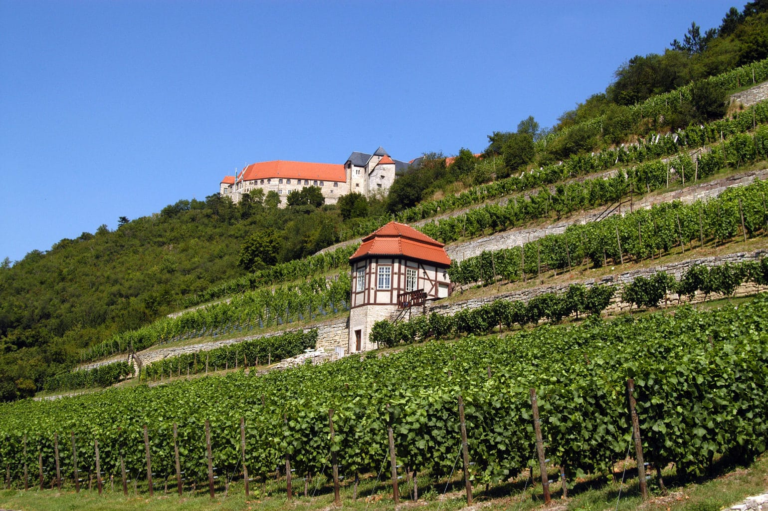
The way vines are planted on that schist tells you about the age of a vineyard. The oldest are on narrow hand-built stone terraces, the socalcos, which hold only a handful of vines per row. From the 1970s, bulldozed terraces called patamares made it possible to plant two rows per level with mechanisation, and in the 1980s growers began planting vines straight up the slope in what is called vinha ao alto. Quinta dos Murças, which we profile below, is credited with the first vertical vineyard in the Douro. Each system has trade-offs in erosion, cost, and sun exposure, and all three still coexist in the same valley.
A Short History of the Douro
The Douro’s modern identity starts in 1756, when the Marquis of Pombal, acting through the Companhia Geral da Agricultura das Vinhas do Alto Douro, set legal boundaries around the vineyards that were to produce Port. Granite boundary stones were placed to mark the limits. This predates the Burgundian and Bordeaux classification systems by a wide margin, and it is the reason Portuguese tourism boards describe the Douro as the oldest demarcated wine region in the world. UNESCO added the Alto Douro Wine Region to its World Heritage list in 2001, recognising the terraced landscape as a living cultural landscape rather than a single monument.
For two centuries after Pombal, the story was Port. British merchants dominated the trade, shipping fortified wine from the valley down the river on rabelo boats to the lodges at Vila Nova de Gaia. Phylloxera devastated the vineyards from the late 1860s and forced a wholesale replanting, and the people who rebuilt the region in that period shaped its social structure. One of the most important was Dona Antónia Adelaide Ferreira, known as Ferreirinha, who owned Quinta do Vallado and many other estates and whose descendants still run it.
Dry table wine was marginal until the middle of the twentieth century. The turning point is usually dated to Barca Velha, first made by Ferreira in 1952, which proved that the valley could produce an age-worthy dry red in a style that owed nothing to Bordeaux. It took decades for the idea to spread. In the 1980s and 1990s, a generation of families started bottling their own quinta wines instead of selling grapes to the Port houses. Miguel Champalimaud launched the first Quinta do Côtto Grande Escolha in 1980. Cristiano van Zeller left his role at Quinta do Noval in 1993 and, after taking control of the family property at Vale D. Maria in 1996, became one of the leading voices for the new style. A group of producers who called themselves the Douro Boys, with Quinta do Vallado among them, took the story abroad. Portugal’s entry into the European Union in 1986 had opened the door to investment and technical exchange, and the Douro DOC for table wine had already been established in the early 1980s.
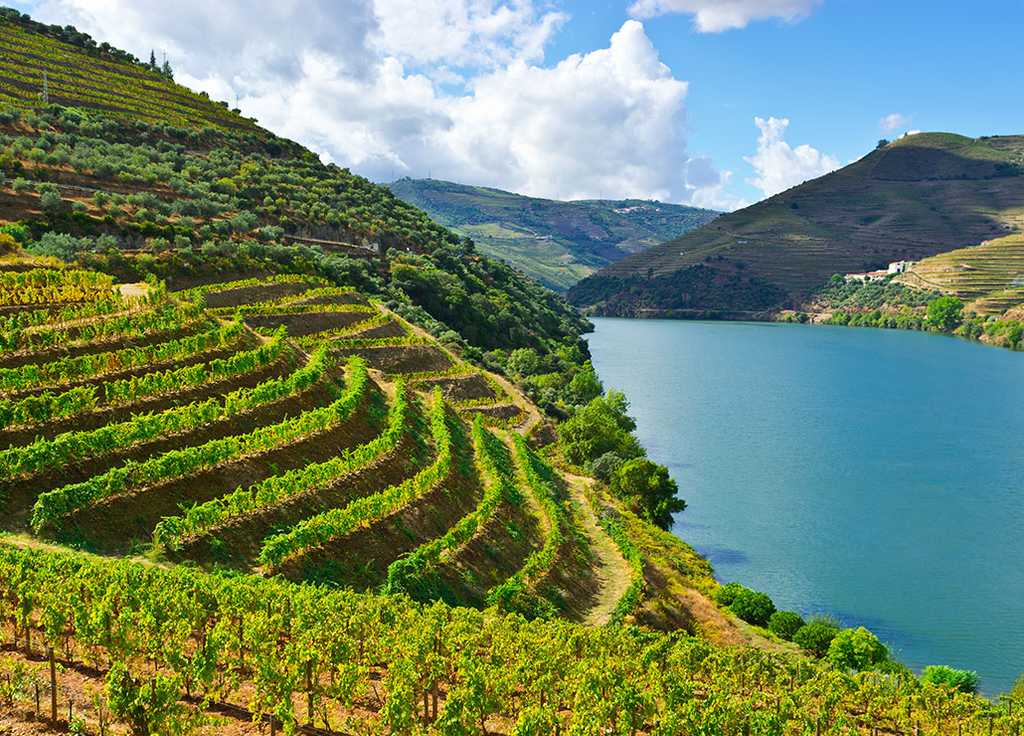
The region today sits in an interesting place. Port remains the economic backbone, but a growing share of the best fruit goes into dry wines, and the focus has shifted from power toward freshness, altitude, and old vines. Whites, once an afterthought, have become a serious part of the conversation.
Grape Varieties of the Douro
The Douro is a region of blends. Authorities permit well over a hundred varieties, and the most revealing wines often come from old vineyards where dozens of them are interplanted. At Quinta Vale D. Maria, for example, the estate’s own description mentions a mixed plot of 28 varieties, many of them over fifty years old. Harvested and fermented together, these field blends produce wines whose personality depends as much on the vineyard as on any individual grape.
Red Varieties
- Touriga Nacional: The aromatic leader. It gives deep colour, violet and bramble fruit, a peppery edge and firm structure. It is rarely bottled alone in the Douro, though single-variety versions exist and are worth trying.
- Touriga Franca: The most widely planted red. It supplies dark floral notes, tannin, and reliable ripening in heat.
- Tinta Roriz: The local name for Tempranillo. It adds red fruit, spice and body.
- Tinta Barroca: Soft, generous and early-ripening, with plum and jam notes that suit both Port and fuller table wines.
- Tinto Cão and Sousão: Smaller players with outsized value. Tinto Cão brings acidity and finesse, while Sousão contributes colour and a bracing, almost inky acidity.
White Varieties
- Viosinho: Structure and citrus, with ageing potential. Many of the region’s richer whites depend on it.
- Rabigato: High acidity and a stony, saline quality. It is the freshness engine of a good Douro white.
- Gouveio: Known as Verdelho elsewhere, it gives weight and ripe orchard fruit.
- Códega do Larinho and Malvasia Fina: Floral, aromatic, and often grown at altitude, where cooler nights preserve their delicacy.
How Douro Wines Are Classified
Two denominations share the same geography. Douro DOC covers still wines, and Porto DOC covers fortified wines. The Instituto dos Vinhos do Douro e do Porto, known as the IVDP, regulates both, and the line between them matters because the same vineyard can contribute fruit to either, depending on the decisions the grower and winemaker make at harvest.
Port production is governed by an annual quota system called the benefício, which determines how much of each producer’s grapes can be turned into Port. Vineyards are graded using a points system that weighs factors such as altitude, soil, slope, age of vines, yield, and the grape varieties planted. The result is a letter grade from A, the highest, to F, and it affects both how much fruit can be made into Port and what the grower can expect to be paid for it. Wijnbeurs, in its own region notes, flags this vineyard scoring system as a distinctive feature of the Douro, and it is one of the reasons why a quinta’s geography matters so much to its pricing.
For table wines, the label vocabulary looks more familiar. Douro DOC wines may be labelled Reserva or Grande Reserva when they meet higher alcohol and ageing requirements, and the phrase Vinhas Velhas signals fruit from old vineyards, often field blends. Wines that fall outside the DOC rules can be released as Vinho Regional Duriense, which is the geographical indication covering the same area with more flexibility. For Port, the main styles to know are Ruby, Reserve, Tawny with an age statement, Late Bottled Vintage, Colheita and Vintage, plus White Port. LBV and Vintage are the styles most directly tied to a single harvest, and they are the ones you are most likely to taste at a quinta.
Four Quintas Worth Planning a Trip Around
All four have a visit programme or can arrange one, and together they span the western Baixo Corgo, the central Cima Corgo and the Rio Torto valley near Pinhão. Contact details below were checked against estate or official tourism sources in October 2026. Where a detail could not be confirmed, we say so rather than guess, and we recommend you verify opening arrangements directly before you travel.
Quinta do Vallado, Peso da Régua
Vallado is the most visitor-ready estate of the four and the easiest place to start. Founded in 1716, it sits on both banks of the Corgo River close to where it meets the Douro, a few minutes from Peso da Régua. The manor house dates from 1734 and was once owned by Dona Antónia Adelaide Ferreira. A 2009 cellar building, designed to combine modern technology with local schist, gives the property a contemporary counterpoint, and since 2005 the estate has run a wine hotel with 13 rooms across the manor and a newer wing. According to a Yeatman Hotel profile of the estate, it covers around 90 hectares, including about 20 hectares at a second property in the Douro Superior. The family connection to Quinta do Côtto is worth noting too. A 2020 profile in Human reports that the Montez Champalimaud family added Vallado to its holdings in 1865 through a marriage.
The wines range from approachable Douro reds to old-vine field blends and Vintage Port. Colaris lists the Touriga Nacional, the Reserva Field Blend, a magnum of the same, and the Vintage Port Adelaide, which together give you a fair cross-section of the house style. The field blend is the one to watch for readers who want to understand what old Douro vineyards can do.
Visit details
- Address: Vilarinho dos Freires, 5050-364 Peso da Régua, Portugal
- Phone: +351 254 323 147
- Email: enoturismo@quintadovallado.com
- Tastings: the estate’s own website lists daily tastings in English at 11:00, 14:30 and 16:30, each lasting about 1 hour 15 minutes, with Portuguese sessions at 12:00, 15:30 and 17:30. Private tastings, workshops, and wine lunches and dinners can be arranged by booking.
- Note: one tourism listing mentions a January closure, while the estate says it is open throughout the year. Confirm if you are travelling in winter.
Quinta dos Murças, Covelinhas
Esporão, the Alentejo organic pioneer, bought Quinta dos Murças in 2008, and the estate is a good example of what an outsider with resources and a long view can do in the Douro. Founded in 1714, it sits on the right bank of the river between Régua and Pinhão. Its best-known wine, the VV47, comes from the estate’s oldest vertical vineyard, planted in 1947, and the estate is credited with the first vertical planting in the Douro. Colaris lists the Esporão Quinta dos Murças VV47 2015, which is a serious Douro red with a long ageing horizon.
The visit programme is straightforward and good value. The estate’s own site lists a visit with Douro tasting for 22 euros per person, lasting about 1 hour 30 minutes, built around the lighter, fresher Assobio range and drawing on the cooler north-facing parcels at the edge of the property. The estate also runs a five-room guest house, Casa de Murças, with boat transport from the Cais da Folgosa included in the stay. That detail alone tells you how much of the Douro’s access still depends on the river.
Visit details
- Address: Quinta dos Murças, Covelinhas, 5050-011 Peso da Régua, Portugal
- Phone: +351 934 550 006 (a second line, +351 254 402 680, is listed on the estate’s visit page)
- Email: reservas.murcas@esporao.com
- Hours: the importer Hatch Mansfield lists opening hours of 10:00 to 18:00, with all visits pre-booked.
- Booking: reservations are made by email in advance and are subject to availability and confirmation.
Quinta do Côtto, Cidadelhe, Mesão Frio
Quinta do Côtto is the history lesson of the four. The property stands in Cidadelhe, near Mesão Frio on the right bank, with about 70 to 75 hectares of vines and an eighteenth-century manor built over a structure from the fifteenth or sixteenth century. According to the Lisbon distributor Wine House Portugal, the Montez Champalimaud family produced exclusively Port until the early twentieth century. In 1980, Miguel Champalimaud released the first Quinta do Côtto Grande Escolha, a red that Revista de Vinhos and others have credited with establishing the idea of a quinta wine in a region that was still thinking in terms of Port. In 2004, tired of cork taint, Champalimaud moved the estate to screw caps, an unusual decision for a premium red at the time, according to a Público feature from 2018.
Wijnbeurs lists the Quinta do Côtto Douro Reserva Branco Parcela Original 2023, categorised by its tasting panel as intense, rich and complex. At the time we checked, it was priced at 13.99 euros on a special offer, from a regular 15.99. For a Douro white with this sort of ambition, that is a fair price, and it is the best entry point we know to the estate’s style from a Dutch retailer.
Visit details
- Address: Quinta do Côtto, Cidadelhe, 5040-154 Mesão Frio, Portugal
- Phone: +351 254 899 269, taken from a 2024 heritage inventory entry
- Website: quintadocotto.pt
- Hours and email: We could not confirm current visiting hours or a booking email. A 2018 Público report described plans to restore the manor for wine tourism, and listings elsewhere suggest guided tastings by reservation. Contact the estate by phone to confirm before building your day around it.
Quinta Vale D. Maria and Van Zellers, Cima Corgo
Cristiano van Zeller is one of the figures who made the modern Douro. After leaving Quinta do Noval, he took control of Quinta Vale D. Maria in 1996. The property had been in his wife Joana Lemos’s family since 1868 and had been leased out for years. It lies in the Rio Torto valley in the Cima Corgo, a few kilometres from Pinhão, and it became one of the region’s most respected addresses for both Vintage Port and dry reds. In 2017 the Aveleda group bought the quinta, with van Zeller staying on as executive director, according to Wine Spectator’s report of the sale at the time.
Wijnbeurs lists a white under the Van Zellers label, the Douro Reserva Zom Van Zeller 2021, made from Códega, Gouveio, Rabigato and Viosinho. Wijnbeurs’s panel compares its richness to premier cru Meursault, which is the kind of comparison that should be read as a description of texture rather than a literal claim of style. A note of caution is in order here: the bottle sold under the Van Zellers name is a separate label from the estate’s own wines, and we cannot confirm from the retailer’s listing that its grapes come from Quinta Vale D. Maria. The estate that visitors can reach is Vale D. Maria itself.
According to the Wines of Portugal tourism listing, the property has a 19-hectare vineyard with a mixed plantation of 28 varieties, a guesthouse in a renovated farmhand’s dormitory, and guided winery tours, with advance booking for meals and tastings.
Visit details
- Address: Sarzedinho, 5130 Ervedosa do Douro, Portugal
- Phone: +351 223 744 320 and +351 936 828 663, as listed by Wines of Portugal
- Hours and email: not published in the sources we found. Because the estate changed ownership in 2017, confirm current contacts and arrangements through its official website before you travel.
Where to Buy These Wines
Preparing for a Douro trip is easier when you have tasted something first, and the retail picture is more uneven than the region’s reputation suggests
Wijnbeurs carries a small Portuguese range, and its Douro offer is weighted toward whites and Port. At the time of writing, it listed the Quinta do Côtto Douro Reserva Branco Parcela Original 2023 and the Van Zellers Douro Reserva white 2021 as in stock, along with a Late Bottled Vintage Port from the Douro. Another Douro white, the Quinta de Porrais Serpentina Douro Branco 2024, was shown as out of stock.
Colaris is stronger on reds and Port. Its Douro selection includes several Quinta do Vallado bottlings and the Esporão Quinta dos Murças VV47, as well as wines from Quinta Dona Mafalda, whose Little Mafalda red is a useful budget reference for the region. Availability changes quickly, particularly on older vintages and magnums, so check stock on the day you plan to order. Decántalo, our third reference, is primarily a Spanish specialist, and we did not use it for this article. If a bottle is not available in the Netherlands, the estates’ own online shops are the last resort.
Pairing Douro Wines With Food
The Douro’s cooking is built on the same ingredients as its wines: strong flavours, roasted meats and good oil. The pairings below follow the bottles above.
Rich Douro whites with substantial fish and cream dishes. The Côtto and Van Zellers whites have the weight to match grilled turbot, octopus roasted with olive oil and potatoes, or salt cod baked with cream. Both retailers’ tasting notes point toward fish and white meat, and the stony, saline edge of Rabigato and Viosinho keeps them from tipping into heaviness.
Structured reds with roast kid and grilled red meat. Cabrito assado, slow-roasted kid, is the classic regional match for a Touriga-led Douro red, and the same logic extends to Vallado’s Touriga Nacional or the Murças VV47. Braised lamb and aged steaks work for the same reason: tannin needs fat, and the spice in these wines echoes the herbs in the cooking.
Cured meats and sheep’s cheese. Presunto from Lamego and a firm, mature sheep’s milk cheese suit both whites and lighter reds, and they make an easy tasting plate at home.
Port with chocolate and blue cheese. Wijnbeurs recommends its LBV with chocolate desserts and a blue cheese board with dried figs, which is the standard approach for the style and a sound one. Vintage Port such as the Vallado Adelaide wants a quiet evening, decanting, and a few walnuts.
Planning a Douro Trip
Getting There and Getting Around
Most visitors fly into Porto, which has direct connections from several northern European airports, and then drive east. The distance from Porto to Peso da Régua is around 100 kilometres, which usually means about 90 minutes in a rental car. Public transport exists, and the Douro railway line from Porto toward Régua, Pinhão and Pocinho is among the more scenic rail journeys in the country, but estate visits are scattered along narrow roads and a car gives you far more freedom. The N222 between Régua and Pinhão is the road wine travellers drive for the views. Allow more time than the map suggests, and nominate a driver before the tastings begin.
Where to Stay
Régua is the practical base for the western and central parts of the valley, with Vallado and Murças within a short drive. Pinhão is the heart of the Cima Corgo and puts you close to Vale D. Maria, while Lamego offers a larger town with more restaurants. Staying on a quinta is part of the experience. Vallado runs a wine hotel, Murças has its own guesthouse, and Vale D. Maria offers rooms in a converted farm building, though you should confirm current availability for each.
When to Go
Harvest, known as the vindima, typically runs from late August into early October depending on the year and the subregion, and it is the most atmospheric time to visit, with foot treading in granite lagares at some estates. It is also the busiest period for the people you are trying to meet, so book early and expect schedules to flex. Spring brings green vineyards and mild temperatures, and autumn colours the terraces in red and gold after the pick. August can be punishingly hot, and many walks and tastings are better done in the morning.
A Three-Day Outline
Plan no more than two visits per day. The distances look short on a map, but the roads are slow, and the tastings run longer than expected.
- Day 1, west: Start with Quinta do Côtto near Mesão Frio if you have confirmed a visit, then drive to Quinta do Vallado for an afternoon tasting and dinner on the estate.
- Day 2, central: Visit Quinta dos Murças in the morning and use the afternoon for a river cruise or a drive along the N222 to Pinhão.
- Day 3, east: Spend the morning at Quinta Vale D. Maria, then continue toward the Douro Superior to see how quickly the landscape dries out.
Book each visit directly and well ahead of time. Murças and Vallado both ask for advance reservations, and smaller estates may only receive visitors by appointment.
Frequently Asked Questions
What is the difference between Douro DOC and Port?
Both come from the same region and often from the same vineyards. Douro DOC refers to still wines, typically dry reds and whites, while Porto DOC refers to fortified wines made by stopping fermentation with grape spirit. The Instituto dos Vinhos do Douro e do Porto oversees both.
Which Douro subregion should I visit first?
The Cima Corgo is the best starting point. It holds the densest concentration of quintas, including Vallado, Murças and Vale D. Maria, and it gives you the clearest picture of the region’s schist terraces and its transition between wetter and drier zones.
Do I need to book winery visits in the Douro?
Yes. Even larger estates such as Vallado and Murças ask for reservations, and smaller properties receive visitors by appointment only. Contact the estate by email or phone a few days ahead, and longer if you are travelling in harvest season.
Are Douro white wines worth buying?
They are. The region’s higher-altitude vineyards, planted with Rabigato, Viosinho and Gouveio, produce whites with real structure and ageing potential, and Dutch retailers currently list more Douro whites than reds in some cases. The Côtto and Van Zellers bottles discussed above are good places to start.
How many days do I need in the Douro?
Three days is a sensible minimum for a focused wine trip, giving you six estate visits at a relaxed pace. A week allows you to add river cruises, hikes, the Douro Superior, and some of the region’s off-the-beaten-track estates.