Unlocking the Jerez-Xérès-Sherry Wine Region: Spain’s Historic Golden Triangle
For decades, Sherry suffered from an unfortunate image problem. Outside of Spain, it was largely relegated to the back of the liquor cabinet, viewed as a stickyly sweet drink dusted off only for the holidays. But in recent years, the culinary world has experienced a massive awakening. Sommeliers, chefs, and wine enthusiasts are rediscovering what the Spanish have known all along: the Jerez-Xérès-Sherry wine region produces some of the most complex, versatile, and gastronomically brilliant wines on the planet.
Located in the sun-drenched, windswept corner of Andalusia in southern Spain, the Jerez region is unlike any other winemaking area in the world. It is a place where biology, architecture, and time intersect to create liquid magic. Whether you are drinking a bone-dry, saline Fino with fresh seafood, or a brooding, nutty Oloroso alongside slow-roasted meats, Sherry offers a spectrum of flavors that no other wine can replicate.
Whether you are planning an Andalusian wine-tasting pilgrimage or simply looking to upgrade your home cellar with bottles purchased from trusted merchants like Decantalo, Colaris, or Wijnbeurs, this guide is your comprehensive passport to understanding the Jerez-Xérès-Sherry wine region. We will dive deep into its ancient history, unearth the secrets of its chalky soils, demystify the famous Solera system, explore the best bodegas to visit, and recommend the exact styles you need to taste right now.
The Origins: A History Forged by Empires
The story of the Jerez-Xérès-Sherry wine region is the story of trade, conquest, and cultural fusion. Winemaking here is not a recent commercial pursuit; it is a tradition that spans over three millennia.
The Phoenicians were the first to recognize the potential of this land, bringing the first grapevines to the Iberian Peninsula around 1100 BC and founding the city of Gadir (modern-day Cádiz). The Romans followed, expanding the vineyards and exporting the local wine, which they called Vinum Ceretensis, across the empire.
However, one of the most fascinating eras in Sherry’s history occurred during the Moorish occupation of Spain, which began in 711 AD. Despite the Islamic prohibition on alcohol, viticulture survived. The Moors introduced advanced distillation techniques (creating alcohol for medicinal and cosmetic use) and named the city Shirish, from which the English word “Sherry” eventually derived.
When the Christians reconquered the city in 1264, renaming it Jerez de la Frontera, the wine trade exploded. By the 16th century, English merchants had developed a ravenous appetite for the wine, which they referred to as “Sack.” The British influence in the region became profound. Many English, Scottish, and Irish merchants settled in Jerez, founding legendary bodegas, such as Osborne, Sandeman, and Garvey, that still bear their names today.
The Terroir: The Golden Triangle and the Brilliant White Earth
By law, all wines bearing the DO (Denominación de Origen) Jerez-Xérès-Sherry must be aged within the “Golden Triangle.” This area is formed by three towns: Jerez de la Frontera (the inland commercial hub), Sanlúcar de Barrameda (a coastal town sitting on the Guadalquivir estuary), and El Puerto de Santa María (situated on the Bay of Cádiz).
While the aging must happen within this triangle, the grapes can be grown in the surrounding areas. The terroir that dictates the quality of these grapes is a masterclass in extreme environmental adaptation.
The Dueling Winds
The climate of Jerez is decidedly Mediterranean, characterized by mild, wet winters and blisteringly hot, dry summers where temperatures routinely exceed 40°C (104°F). However, the region’s viticulture is saved by the Atlantic Ocean and two distinct, dueling winds:
- The Poniente: A cool, humid wind blowing in off the Atlantic Ocean. It acts as a vital air conditioner for the vineyards during the peak of summer, bringing moisture that sustains the vines.
- The Levante: A fierce, dry, and hot wind blowing from the Sahara Desert across the Mediterranean. While it can cause the grapes to shrivel and concentrate their sugars rapidly (a process utilized for sweet Sherries), a prolonged Levante can be devastating to a harvest.

The Magic of Albariza
If you stand in a premium Jerez vineyard in the middle of summer, you might think it has just snowed. The ground is a blinding, brilliant white. This is the Albariza, the most revered soil type in the region.
Albariza is composed of up to 60% calcium carbonate (chalk), along with clay and silica. It was formed millions of years ago when the region was submerged under a shallow sea, composed of the fossilized shells of marine diatoms.
During the torrential winter rains, the Albariza acts like a massive sponge, absorbing and holding an incredible volume of water. As the summer heat sets in, the top layer of the soil bakes into a hard crust. This crust effectively seals the moisture underground, preventing evaporation and providing a slow, steady reservoir of hydration for the deep-reaching vine roots throughout the dry summer.
- Barros and Arenas: While Albariza is the undisputed king of Sherry soils, the region also features Barros (darker, heavier clay soils found in the valleys, yielding coarser wines) and Arenas (sandy coastal soils primarily used for cultivating the Moscatel grape).
The Three Grapes of Sherry
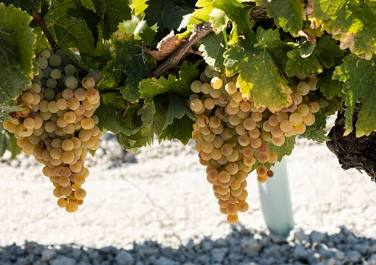
Unlike regions that boast dozens of permitted grape varieties, the DO Jerez-Xérès-Sherry is remarkably focused. The entire spectrum of Sherry, from the driest Fino to the sweetest dessert wine, is built on just three white grapes.
1. Palomino Fino: The Blank Canvas
Palomino Fino accounts for roughly 95% of all plantings in the region. If you taste a Palomino grape straight from the vine, or drink a basic, unfortified Palomino table wine, you might be underwhelmed. It is naturally low in acidity, low in sugar, and fairly neutral in flavor.
However, this neutrality is its greatest strength. Palomino Fino acts as the ultimate blank canvas, allowing the true stars of Sherry, the Albariza soil and the cellar aging process, to shine without interference from overpowering fruit aromatics.
2. Pedro Ximénez (PX): The Sugar Bomb
Used exclusively for sweet wines, Pedro Ximénez grapes are naturally high in sugar. Rather than fermenting them immediately after harvest, winemakers lay the bunches out on esparto grass mats under the scorching Andalusian sun for several days. This process, called soleo, evaporates the water in the grapes, turning them into raisins and concentrating the sugars to astonishing levels before they are pressed.
3. Moscatel: The Floral Coastal Grape
Grown primarily in the sandy Arenas soils near the coast of Chipiona, Moscatel is used to produce sweet wines with intensely floral and fruity aromatics. Like PX, these grapes are often sun-dried before pressing to concentrate their flavors.
The Miracle of the Bodega: Flor and the Solera System
What truly separates Sherry from every other wine in the world is not what happens in the vineyard, but what happens in the cellar.
The Architecture of Aging
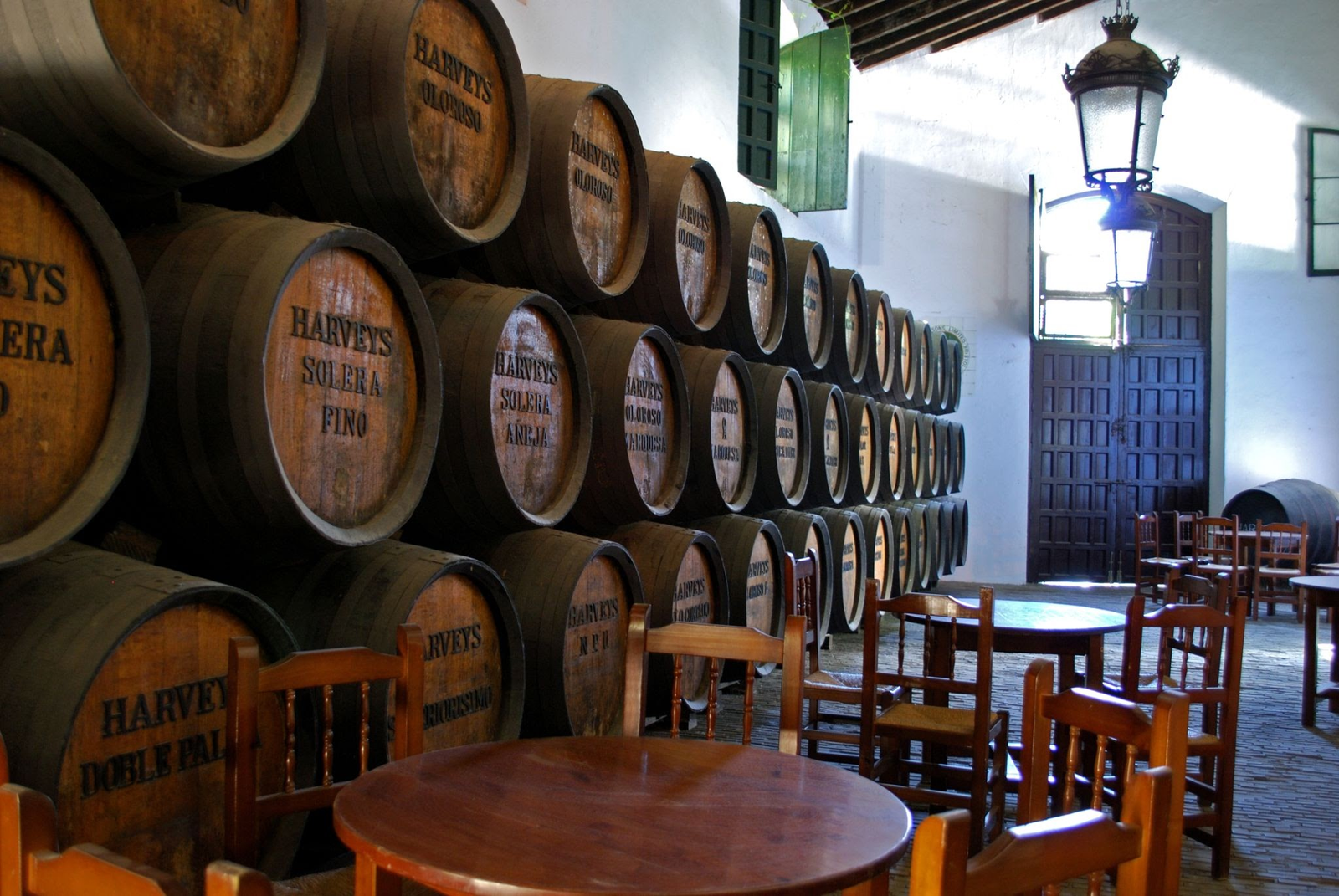
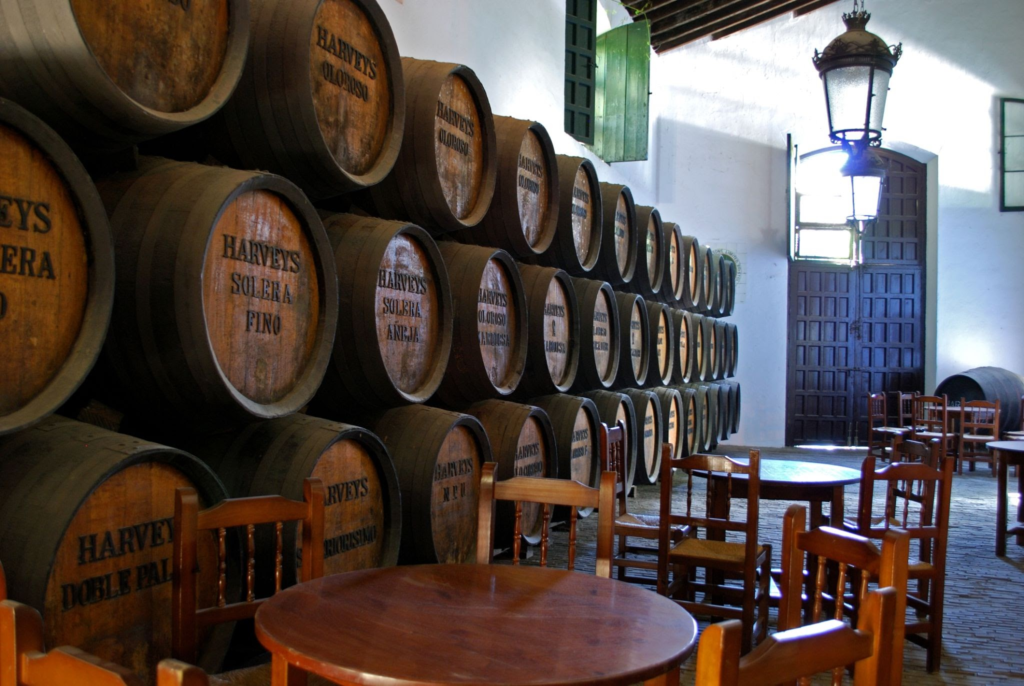
A traditional Sherry bodega is a marvel of passive climate control. They are built to mimic the cooling effects of the ocean. The ceilings are incredibly high to allow hot air to rise away from the barrels. The windows are placed high on the walls to catch the cool Poniente wind while blocking the harsh sunlight. The floors are made of compacted earth (albero), which cellar masters wet down multiple times a week during summer to increase humidity and lower the ambient temperature.
Biological vs. Oxidative Aging
Once the base Palomino wine is fermented, the cellar master tastes it and makes a critical decision that will dictate the wine’s destiny.
Biological Aging (The Path of Fino): If the base wine is particularly elegant and delicate, it is fortified with grape spirit to exactly 15% Alcohol by Volume (ABV). At this specific alcohol level, a magical, naturally occurring yeast called Flor survives and forms a thick, white, blanket-like layer on the surface of the wine inside the barrel.
- The Flor consumes oxygen, completely protecting the wine below from oxidation (keeping its pale color).
- It also consumes glycerol and remaining sugars, rendering the wine bone-dry.
- Finally, the Flor imparts unique flavors: bruised apple, fresh dough, almond, and a distinct, salty tang.
Oxidative Aging (The Path of Oloroso): If the base wine is more robust and full-bodied, it is fortified to 17% ABV or higher. At this alcohol level, the Flor yeast cannot survive. Without the protective blanket, the wine is exposed to the air inside the barrel. As it ages over years and decades, it slowly oxidizes, turning dark amber or mahogany, and developing profound aromas of toasted walnuts, leather, tobacco, and dried fruit.
The Solera System Explained
The heart of Sherry production is the Solera System, a complex method of fractional blending that ensures infinite consistency. Rather than releasing single-vintage wines, bodegas blend older wines with younger wines continuously.
Here is how it works:
- Barrels (butts) are stacked in tiers called criaderas (nurseries).
- The bottom tier, resting on the floor, is called the Solera. This contains the oldest blended wine. When the bodega is ready to bottle, they draw wine only from this bottom tier (never emptying the barrel completely).
- The space created in the bottom Solera tier is then refilled with wine from the tier directly above it (the 1st Criadera), which contains slightly younger wine.
- The 1st Criadera is then refilled from the 2nd Criadera above it, and so on.
- The very top tier is replenished with the newly fermented wine from the current harvest (the añada).
Because barrels are never fully emptied, the bottom Solera tier contains trace amounts of wine dating back to the very year the system was founded, sometimes over a century ago. This system guarantees that a bottle of Fino bought today tastes exactly the same as one bought ten years ago.
The Spectrum of Sherry: A Buyer’s and Tasting Guide
Navigating a Sherry label can be intimidating, but it is deeply rewarding. Sherry ranges from the driest wine in the world to the sweetest. Here is a breakdown of the major styles, how to drink them, and what to look for when shopping online at merchants like Decantalo, Colaris, or Wijnbeurs.
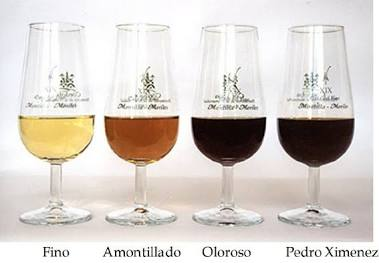
1. Fino and Manzanilla (Biological Aging)
These are the purest expressions of the Flor yeast. They are pale yellow, bone-dry, and intensely crisp.
- Fino: Aged in Jerez or El Puerto. It is pungent, with notes of Mediterranean herbs, toasted almonds, and fresh dough.
- Manzanilla: This is a Fino that is exclusively aged in the coastal town of Sanlúcar de Barrameda. The thicker, coastal Flor gives Manzanilla a lighter, intensely briny, chamomile-laced profile.
- How to serve: Serve ice-cold in a standard white wine glass. Treat it like fresh milk, consume it within a few days of opening.
- Pairing: Fried seafood, Marcona almonds, green olives, and Jamón Ibérico.
2. Amontillado and Palo Cortado (The Hybrids)
These wines start their lives aging under Flor (biological) but finish their aging exposed to oxygen. They are the sommelier favorites of the region.
- Amontillado: Begins as a Fino. After a few years, the Flor is intentionally killed (usually by additional fortification), and the wine oxidizes. It turns a beautiful amber color, retaining the sharp, saline tang of a Fino but gaining the rich, toasted hazelnut and caramel notes of oxidation.
- Palo Cortado: The wild card of Sherry. It occurs when a Fino inexplicably loses its Flor naturally early in the aging process. It is said to have the delicate nose of an Amontillado but the powerful, weighty palate of an Oloroso.
- How to serve: Lightly chilled.
- Pairing: Rich consommé, roasted poultry, hard aged cheeses, and mushroom dishes.
3. Oloroso (Oxidative Aging)
“Oloroso” translates to “fragrant.” These wines never see Flor. They undergo long, slow oxidative aging, evaporating water through the oak barrels and concentrating in alcohol (often reaching 20-22% ABV naturally) and flavor.
- Profile: Deep mahogany in color. Bone dry, but with misleadingly sweet aromas of dried figs, toffee, old leather, roasted walnuts, and exotic spices.
- How to serve: Cellar temperature (around 14-16°C).
- Pairing: Braised beef cheeks, game meats, oxtail stew, or enjoyed alone as a contemplative fireside drink.
4. Pedro Ximénez (Sweet)
Often just called “PX,” this is the ultimate dessert wine. Made from sun-dried raisins and aged oxidatively.
- Pairing: Pour it directly over premium vanilla bean ice cream, or pair it with an intensely pungent blue cheese like Roquefort.
- Profile: Viscous, thick, and jet-black. It boasts mind-bending sugar levels and profound flavors of molasses, espresso, dark chocolate, dates, and liquid Christmas cake.
- How to serve: Slightly chilled.
Top Bodegas to Visit in the Golden Triangle
If you are traveling to Andalusia, visiting a bodega is mandatory. The scale, history, and architectural beauty of these “cathedrals of wine” are unmatched in the wine world.
1. Bodegas Lustau (Jerez de la Frontera)
Lustau is one of the most reliable and high-quality producers in the region, famous for their “Almacenista” range (wines bought from small, independent, artisanal stockholders). Their bodega in Jerez is stunningly beautiful, with massive arched ceilings. Their tours offer a comprehensive tasting across the entire spectrum of Sherry, providing an incredible educational baseline for your trip.
2. González Byass / Tío Pepe (Jerez de la Frontera)
You cannot miss the Tío Pepe signs in Spain. González Byass is a colossal estate right next to the Alcázar in Jerez. While it is highly commercial, it is a spectacular operation to witness. You will ride a small train through the sprawling complex, walking under vine-covered trellises and seeing cellars designed by Gustave Eiffel.
3. Bodegas Tradición (Jerez de la Frontera)
For the luxury connoisseur, Tradición is a must. They do not produce any young wines; they focus exclusively on VOS (Very Old Sherry, 20+ years) and VORS (Very Old Rare Sherry, 30+ years). Furthermore, their bodega houses a jaw-dropping private art collection featuring original works by Goya, Velázquez, and Picasso. You sip world-class, ancient wine while looking at Spanish masterpieces.
4. Bodegas Barbadillo (Sanlúcar de Barrameda)
To understand Manzanilla, you must go to Sanlúcar. Barbadillo is a titan of the town. Their bodegas are strategically positioned to catch the Atlantic breezes essential for the thick Flor native to the area. A tour here perfectly highlights the sharp contrast between inland Jerez and coastal Sanlúcar. Afterward, walk down to the Bajo de Guía neighborhood for the best seafood of your life.
5. Bodegas Osborne (El Puerto de Santa María)
Famous for the massive black bull billboards that dot the Spanish countryside, Osborne is located in El Puerto de Santa María. This town is generally cooler and more humid than Jerez. A tour of their massive, historic cellars provides insight into how this specific microclimate shapes the aging process of their delicate Finos and robust Olorosos.
Planning Your Andalusian Wine Trip
Getting There
The most practical way to reach the Golden Triangle is to fly into Seville (about a 1-hour drive to Jerez) or directly into the small Jerez Airport. Alternatively, Spain’s high-speed AVE train connects Madrid to Jerez via Seville efficiently.
When to Visit
- Summer: Beware. July and August are brutally hot, making vineyard tours physically exhausting.
- Spring (May): This is arguably the best time to visit. The weather is spectacular, the vines are green, and Jerez hosts the famous Feria del Caballo (Horse Fair). The city erupts into a week-long party of flamenco, incredible equestrian displays, and oceans of Fino Sherry.
- Autumn (September): The harvest (vendimia) takes place in late August or early September. The Fiestas de la Vendimia in September celebrate the treading of the grapes and offer a fantastic, culturally immersive experience.
Conclusion: The Renaissance of Jerez
The Jerez-Xérès-Sherry region is not just a place where wine is made; it is an enduring monument to patience. In a modern world obsessed with speed and instant gratification, the cellar masters of Andalusia are perfectly content to wait decades for a barrel of Oloroso or Amontillado to reach its peak.
This region offers the most extraordinary value proposition in the fine wine market today. Where else can you buy a complex, 30-year-old, critically acclaimed wine for less than the price of a young, entry-level Burgundy?
Whether you are exploring the towering, chalk-dusted cathedrals of wine in Jerez de la Frontera, or ordering a crisp, saline bottle of Manzanilla from Wijnbeurs to pair with your Friday night tapas, you are participating in a tradition that has outlasted empires. It is time to clear space in your cellar; the true magic of Sherry awaits.