Cartagena, Colombia: Colonial Streets, a Modern Skyline, and Two Nights on the Rosario Islands
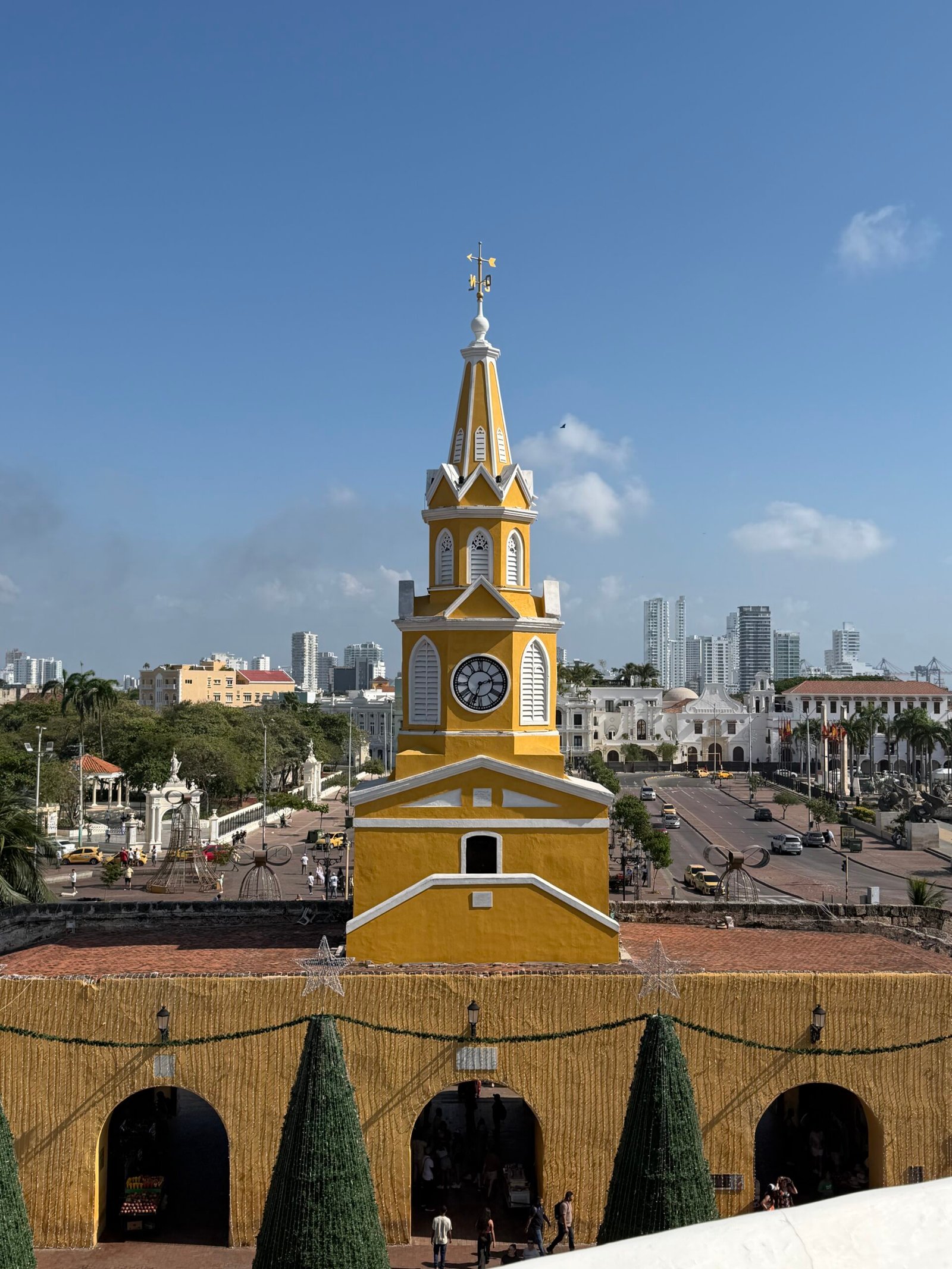
Cartagena is one of those cities that asks you to hold two very different pictures in your head at the same time. On one side, there is the walled city, a UNESCO World Heritage Site since 1984, where balconies drip with bougainvillea, and the streets are narrow enough that the afternoon heat gets trapped between the colonial facades like it has nowhere better to be. On the other side, a fifteen-minute walk or a short taxi ride away, there is Bocagrande, a peninsula of glass towers and beach clubs that looks more like a slice of Miami than anything you would associate with a 16th-century Spanish port. We spent our days moving between these two versions of the same city, and our nights split between candlelit courtyards in the historic center and a much slower rhythm on the Rosario Islands, an hour by boat into the Caribbean. This is our account of that trip: what the city actually feels like on foot, three restaurants worth planning a night around, and what changes once you swap cobblestones for sand.
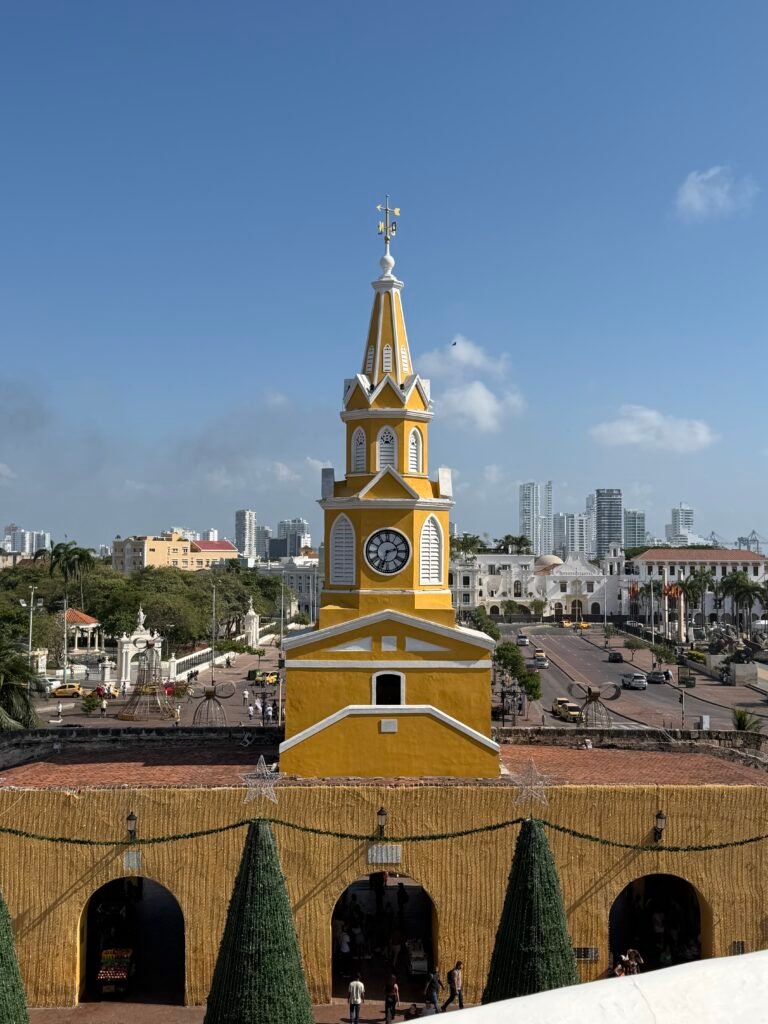
A City of Two Faces: The Walled City and Bocagrande
The historic center, known locally as El Centro, is enclosed by roughly eleven kilometers of stone fortification that took the Spanish crown close to two centuries to finish. Construction began in earnest after Sir Francis Drake sacked the city in 1586, and the walls were not fully completed until 1796. Walking them at golden hour, with the Caribbean on one side and the rooftops of the old town on the other, is still one of the best free things to do in the city, and it gives you an immediate sense of why this place was worth defending. Cartagena de Indias was founded in 1533 and quickly became one of the most important ports of the Spanish Americas, the gateway through which silver from Bolivia and Peru passed on its way to Spain. That wealth, and the fear of losing it to pirates, is the reason the old town looks the way it does today: dense, walled, and built to be defended street by street.
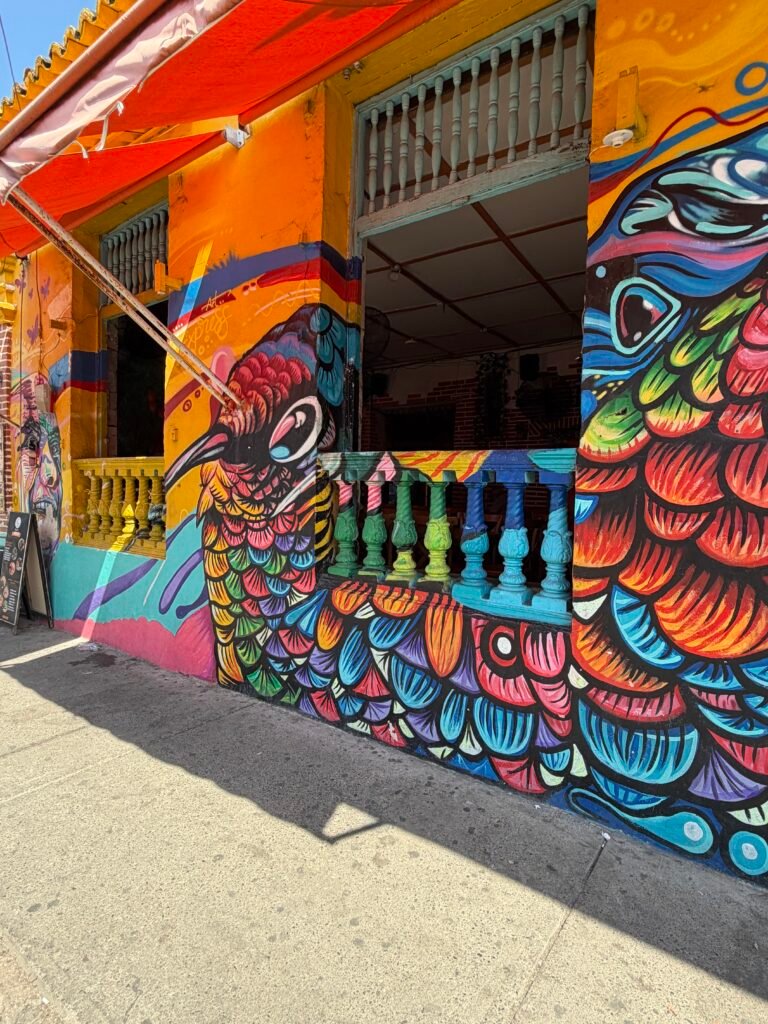
Inside those walls, the neighborhoods each have their own character. San Diego, in the northeastern corner, has a slower, more residential feel despite sitting just blocks from the busiest bars of El Centro. Getsemaní, technically just outside the wall, has become the creative heart of the city, with street art covering entire building facades and Plaza de la Trinidad turning into an open-air party most evenings. We stayed close to San Diego, which made it easy to walk to Restaurante 1621 and Carmen without needing a taxi, and gave us a quieter base to return to after dinner.
Bocagrande is a different story entirely, and that contrast is really the point of visiting both. The neighborhood started developing in the 1940s as Cartagena’s economy grew, and today it is lined with high-rise hotels, shopping malls, and a long stretch of beach that draws both wealthy Colombians and cruise ship day trippers. It lacks the history of the old town, and it knows it. What it offers instead is a more modern, resort-style version of Cartagena, with international hotel chains, casinos, and a beachfront that photographs beautifully against the old town’s church towers in the distance. We found it worth an afternoon, mostly to see the skyline from the water and to understand how much this city has grown beyond its walls, but the old town is where we kept returning for dinner.
A Few Fun Facts About Cartagena
A handful of details stuck with us after the trip, the kind of things that make a place feel less like a postcard and more like somewhere with real layers.
- Cartagena was the first Colombian city to be declared a UNESCO World Heritage Site, in 1984, largely because of how intact its colonial fortifications remain.
- The Castillo de San Felipe de Barajas, the fortress on the hill overlooking the city, was built starting in 1536 and expanded over more than two centuries. Its tunnel system was designed so that sound would carry footsteps to defenders while confusing any attacker trying to navigate inside.
- Sir Francis Drake occupied the city for two months in 1586 after capturing it, and reportedly stayed in a house that still stands in the old town, with a plaque marking the connection.
- The Rosario Islands were designated a natural park before most of the small hotels and vacation homes on them were built, which is why development there has stayed relatively low-key compared to other Caribbean island destinations.
- Cartagena hosts the Hay Festival every year, drawing international writers and thinkers to a city that was also home, for part of his life, to Gabriel García Márquez. His house in the old town sits directly across from Restaurante 1621, which made for a nice bit of literary context before dinner.

Where We Ate: Three Restaurants Worth Planning a Trip Around
Cartagena’s fine dining scene has grown considerably over the past decade, and three restaurants in particular gave us very different but equally memorable nights. We went in with a deliberate focus on wine, since a city with almost no domestic wine production still manages to put together some genuinely serious lists, sourced largely from Argentina, Chile, Spain, and France.
Restaurante 1621: French Technique Inside a 400-Year-Old Convent
Restaurante 1621 sits inside the Sofitel Legend Santa Clara, a hotel built into what was once a 17th-century convent, directly across from the house where Gabriel García Márquez lived. The dining room itself carries that history: chandeliers, high ceilings, and a palm-shaded cloister garden that most reviewers, us included, would recommend requesting over the indoor seating. Chef Dominique Oudin runs the kitchen with a French Caribbean point of view, built around a tasting menu that runs to six or ten courses depending on how much time you want to give the evening. Ours ran closer to four hours with the wine pairing, and it did not feel long.
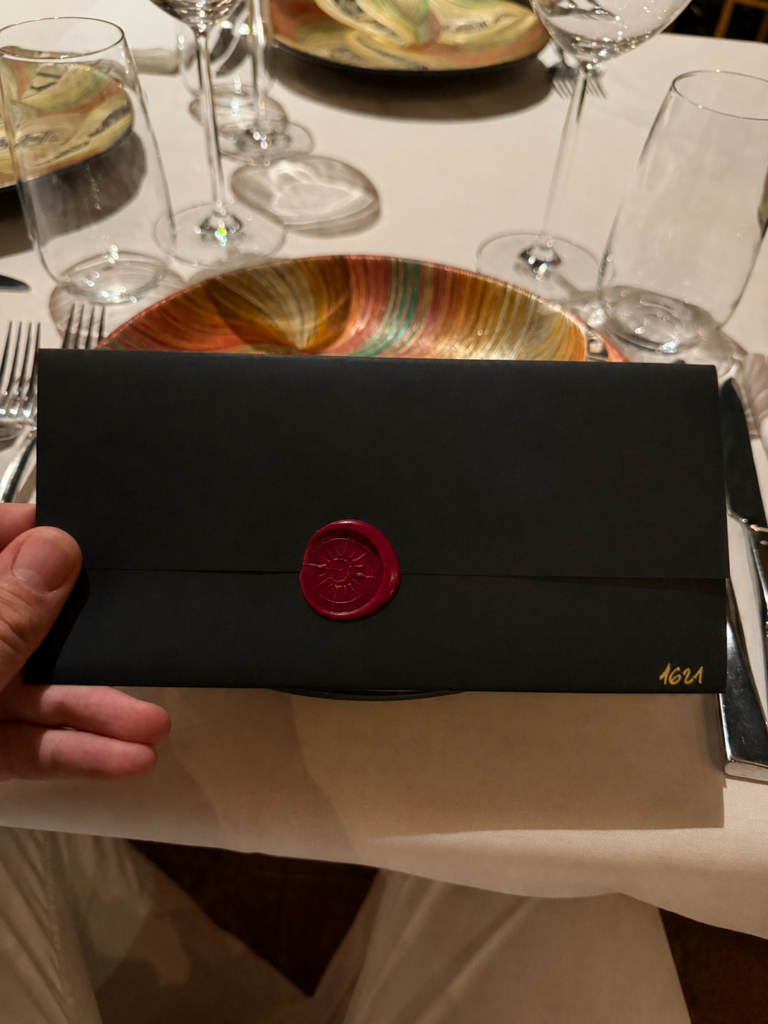
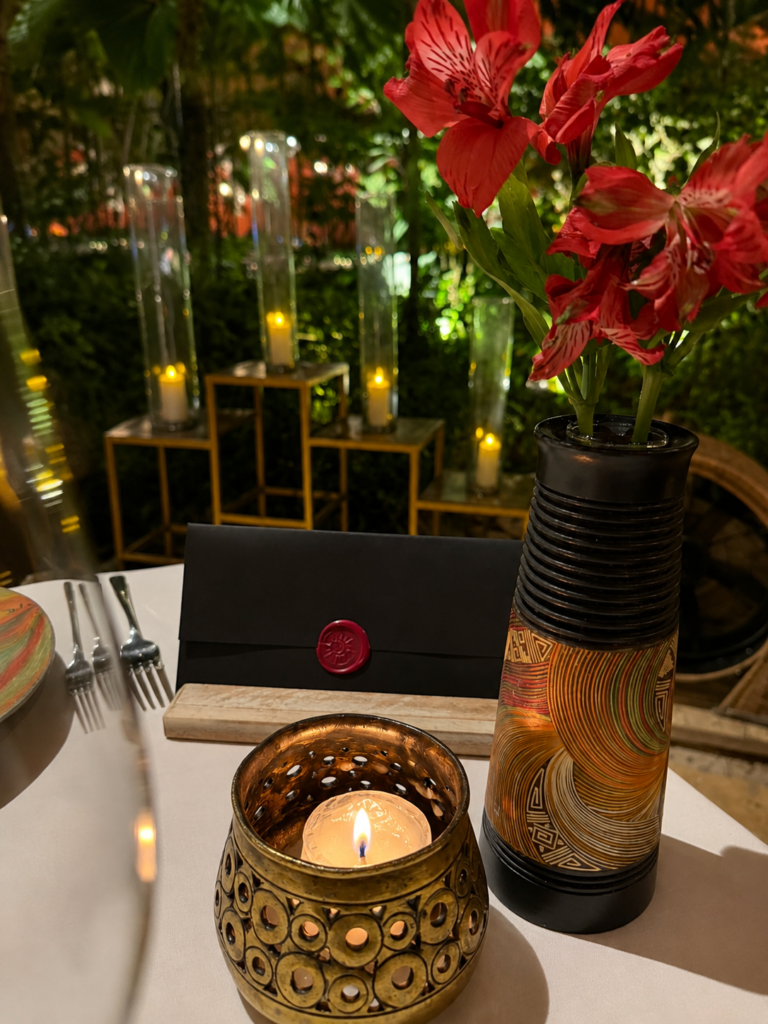
What sets 1621 apart for wine-focused travelers is the cellar. The restaurant holds a Wine Spectator Award of Excellence, and the list runs into the hundreds of bottles, weighted heavily toward South American and European producers rather than the more expected, tourist-friendly options you find elsewhere in the old town. The sommelier team steered us toward drier, more structured wines through most of the tasting menu, saving anything sweeter for dessert, which matched the kitchen’s instinct for balance rather than richness. If you are the kind of traveler who wants a serious wine list attached to a serious kitchen, this is the Cartagena restaurant to build an evening around. Reservations are essential, and the ten-course menu with pairings is a genuine splurge, but it earned its reputation as the benchmark for fine dining in the city.
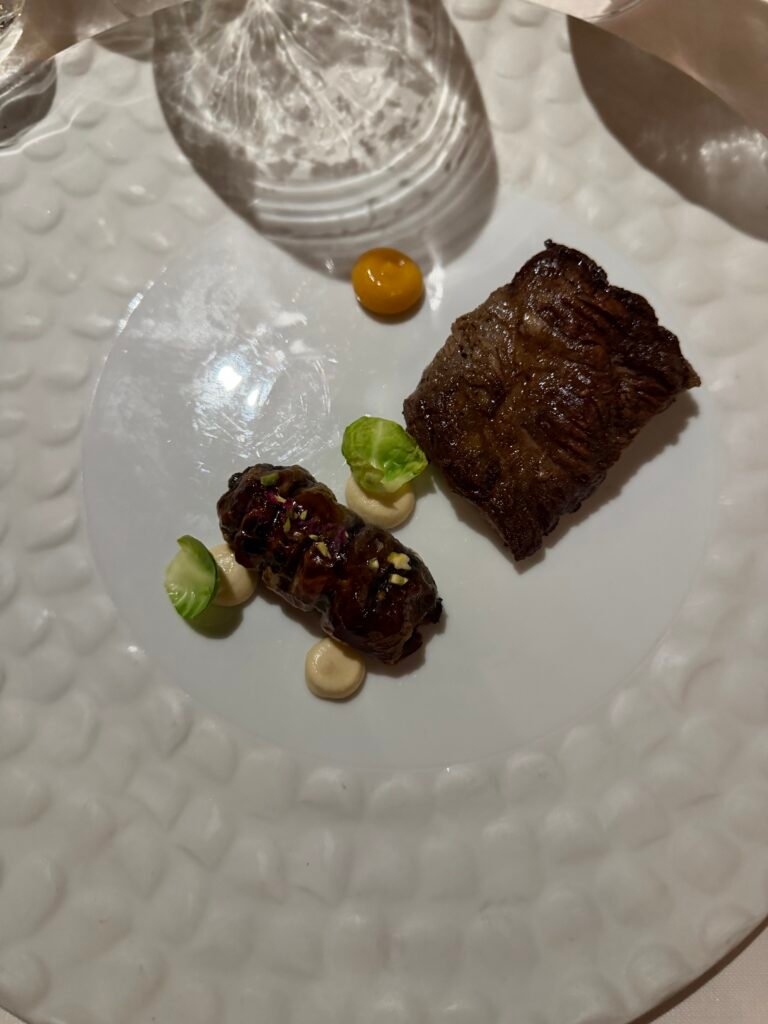
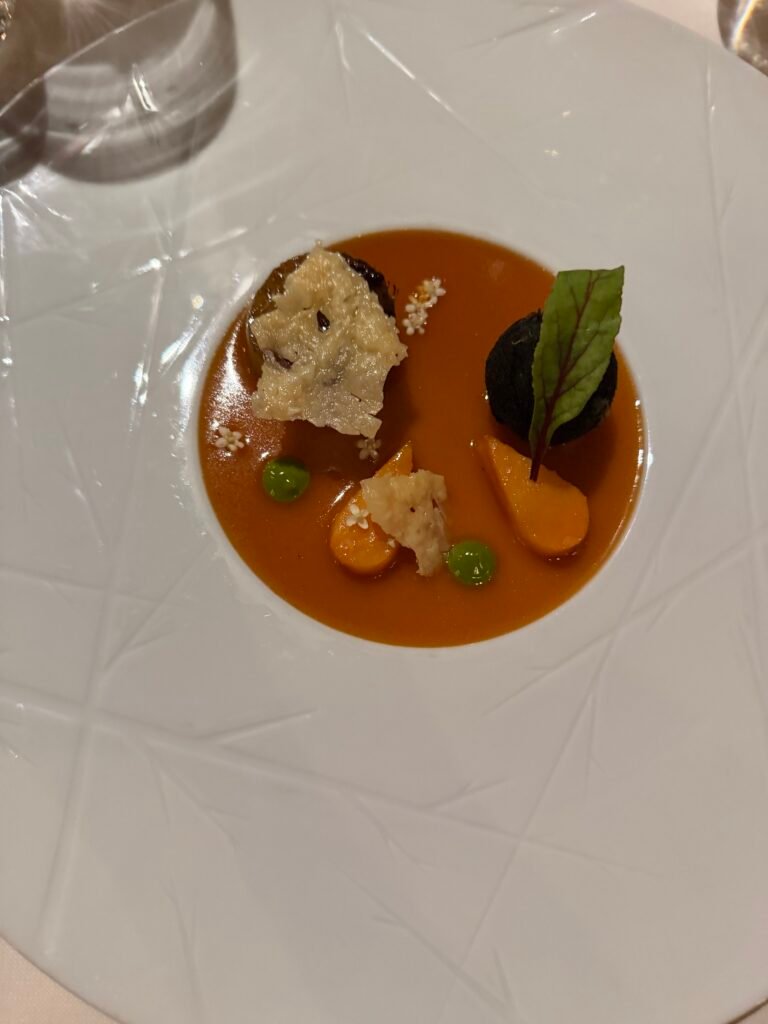
Practical details: Located inside the Sofitel Legend Santa Clara, Carrera 7 (Calle del Curato), Barrio San Diego, Centro Histórico, opposite Casa de Gabriel García Márquez. Reservations recommended well in advance, especially for garden seating.
Carmen: Colombia’s Biodiversity on a Plate
Carmen occupies a converted colonial mansion in the San Diego neighborhood and takes a completely different approach from 1621. Where 1621 leans French, Carmen is built entirely around Colombian ingredients, sourced from the Amazon, the Pacific coast, and the Caribbean, and reworked with modern technique by husband and wife team Rob Pevitts and Carmen Ángel, both Le Cordon Bleu trained in San Francisco before relocating to Colombia. The restaurant opened first in Medellín in 2008 and brought the same philosophy to Cartagena a few years later, and it has become one of the more consistently recognized names in Colombian fine dining as a result.
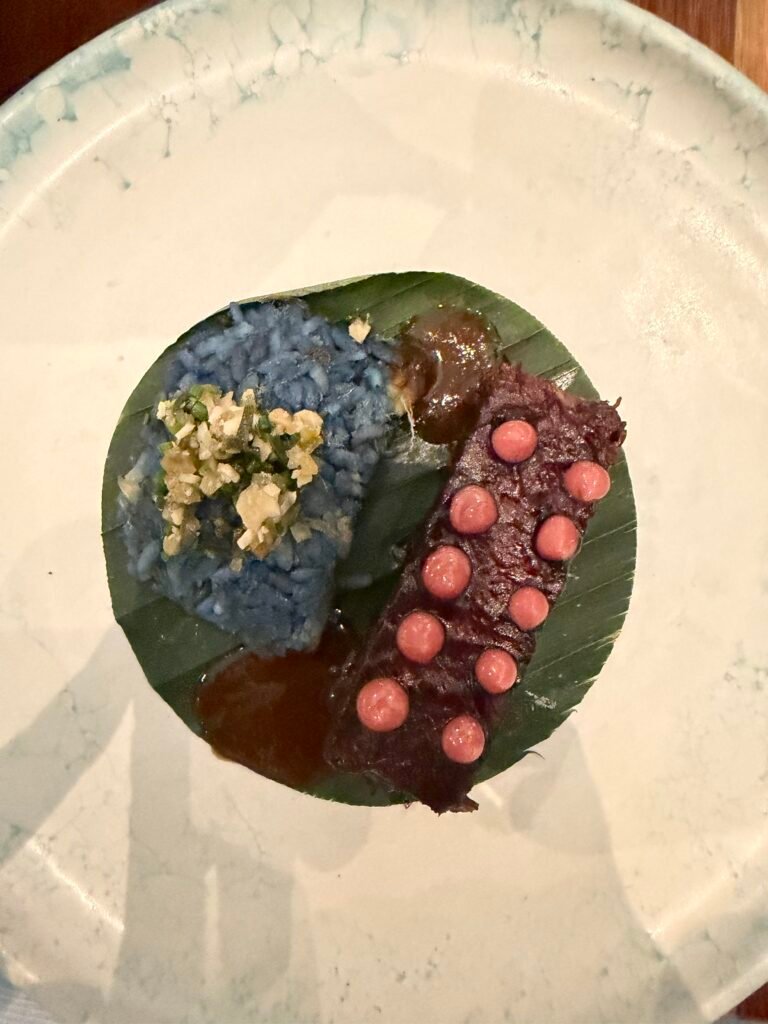
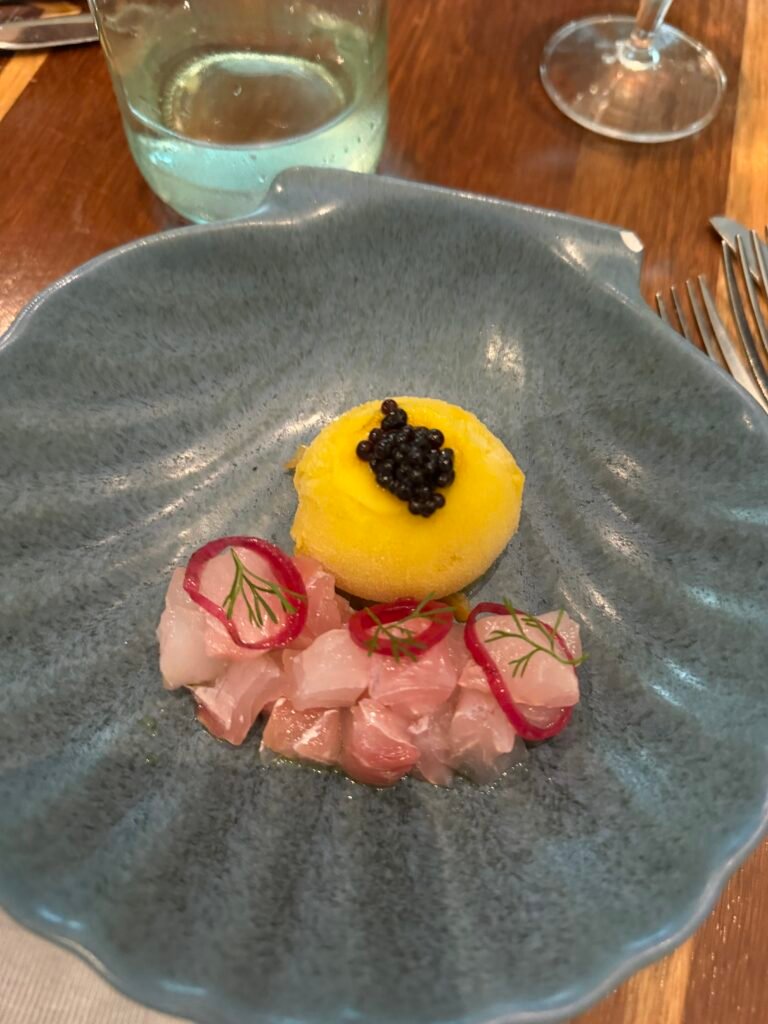
The space is split across three distinct areas: a lush garden patio, an air-conditioned interior with plush seating, and a livelier bar section, and we would recommend the patio if the evening weather cooperates. On the plate, expect dishes built around ingredients most visitors will not recognize, like cupuaçu, a fruity Amazonian relative of cacao, alongside more familiar Caribbean staples like blue crab and fresh Pacific fish. The wine list here is shorter than 1621’s but thoughtfully assembled, with a noticeable lean toward Chilean and Argentine bottles that hold up to Carmen’s spicier, more acid-driven cooking. If your priority is understanding Colombian cuisine specifically, rather than a broadly international tasting menu, Carmen is the stronger choice of the two.
Practical details: Located in a colonial mansion in the San Diego / Getsemaní area near Plaza de los Coches. Reservations recommended, particularly for the garden patio.
Alma: Caribbean Comfort in a Colonial Courtyard
Alma, inside the boutique Casa San Agustín hotel, sits somewhere between the two. The setting is arguably the most atmospheric of the three: an open-air courtyard built around a centuries-old aqueduct, with tropical greenery and the kind of soft lighting that makes every table look good in a photo. Chef Heberto Eljach’s menu is rooted in Caribbean Colombian tradition, with a heavy emphasis on seafood, and it manages to feel both elevated and genuinely local rather than performative. The ceviche, built on whatever is freshest that day and served with a roasted arepa, was a standout, and the grilled lobster tail with lobster puree is the dish most reviewers and our own table kept coming back to.
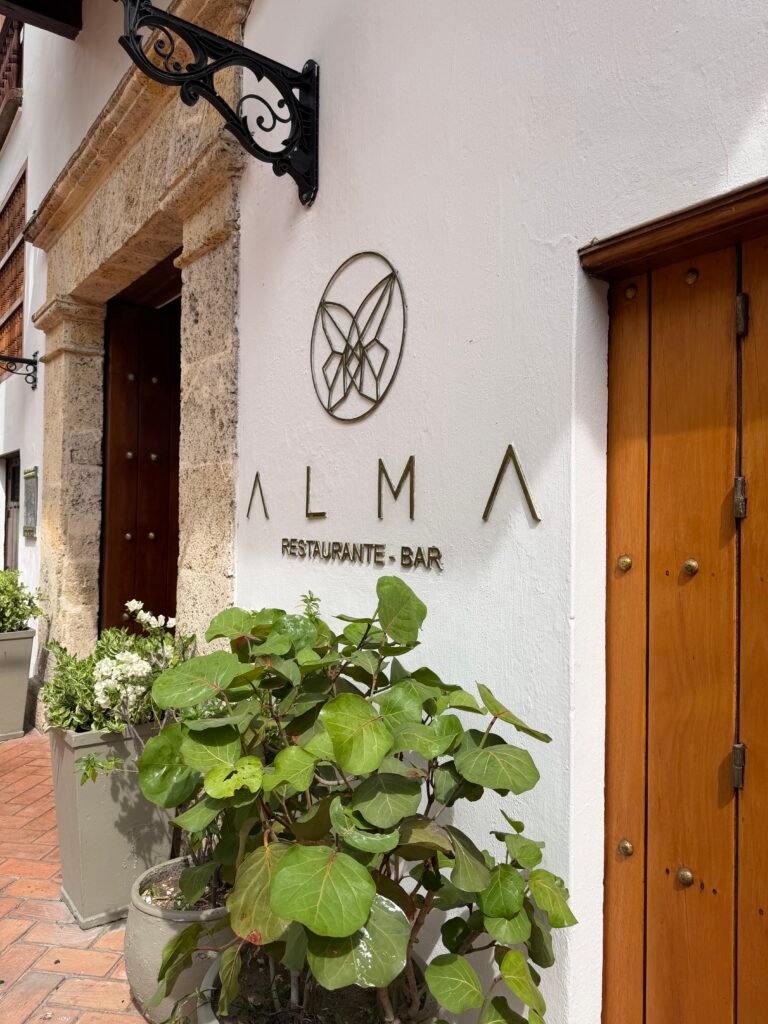
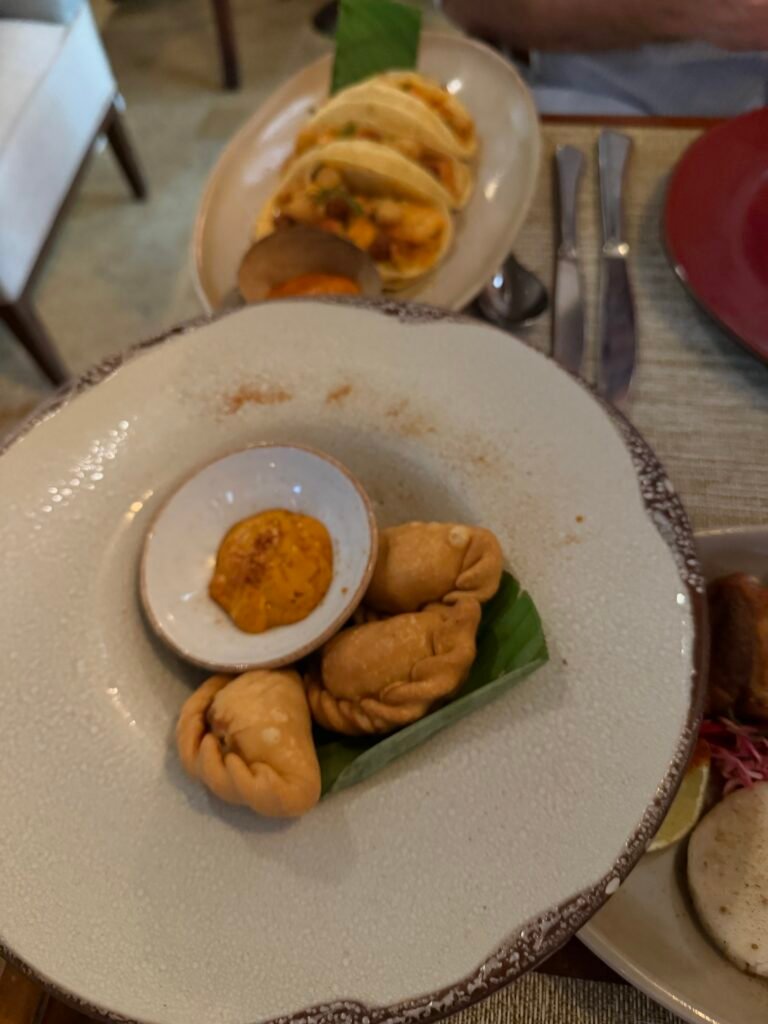
Alma also runs a three-course prix fixe menu that, at roughly twenty-five US dollars, is one of the better value fine dining experiences in the old town, which matters if you are trying to balance a splurge night at 1621 with something more relaxed later in the trip. The wine list is curated rather than extensive, but it is well matched to the seafood-forward menu, with crisp whites and light reds doing most of the work. Service leans warm and conversational rather than formal, which suited the setting better than a more clinical approach would have.
Practical details: Located inside Casa San Agustín, Calle de la Universidad, Centro Histórico. Reservations recommended, especially for courtyard seating at sunset.
Wine in a City That Grows None of Its Own
One thing worth being upfront about, in the spirit of honest reporting rather than assuming readers already know: Colombia is not a wine-producing country in any meaningful commercial sense. The climate along the Caribbean coast simply does not support viticulture, so every bottle on every list in Cartagena has traveled a long way to get there. What that means in practice is that the city’s best restaurants have had to build their reputations on curation rather than local terroir, and the good ones do it well.
Across 1621, Carmen, and Alma, we noticed a consistent pattern: Argentine Malbec and Chilean Cabernet and Carmenère dominate the reds, Spanish and Chilean whites cover most of the lighter dishes, and French Champagne or Cava shows up for celebratory moments rather than as an everyday pour. This is not a city where you will find Mosel Riesling or Barolo on every list, and if that is specifically what you are after, do not expect Cartagena’s fine dining scene to fill that gap. What it does offer is a genuinely interesting cross-section of South American wine, often at prices that are more reasonable than you would pay for equivalent bottles in Europe, since many of these wines are essentially regional imports rather than long-haul luxury goods. If you want to buy a bottle to bring home, your best bet is asking the sommelier directly at 1621, since their cellar is by far the deepest of the three, or looking into Colombian wine retailers and importers directly rather than expecting the kind of specialist access you would get from Wijnbeurs, Colaris, or Decantalo back home. Those retailers do not currently stock South American producers at the boutique level we would want to recommend here, so this is one of the rare cases where we would say: enjoy the bottle at the table, and do not expect to replicate the exact same pour once you are back in Europe.
Two Nights on the Rosario Islands
After several days of restaurant reservations and walled city heat, the Rosario Islands were the reset we needed. The archipelago sits about an hour by boat from Cartagena’s dock near the old city gate, and it is technically a protected national park made up of twenty-seven small coral islands surrounded by reef. Boats leave regularly from the city, and most hotels on the islands will arrange a transfer as part of your booking.
The islands split roughly into two zones. Isla Barú, the most visited and the easiest to reach, is home to Playa Blanca and a cluster of resorts, but it can get crowded with day trippers, especially around midday when the tour boats arrive from Cartagena. We chose to stay further out, on Isla Grande, which takes closer to ninety minutes to reach but rewards the extra travel time with quieter beaches and a genuine sense of remove from the mainland. Once you are there, the pace changes completely: most properties are small, boat access only, and built around the idea that you stay put and let the island come to you rather than the other way around.
We spent two nights at a small boutique property with direct beach access, snorkeling over the reef in the mornings before the water traffic picked up, and doing very little else in the afternoons beyond reading in a hammock and watching the light change over the water. Meals on the islands lean simple and seafood heavy, fresh fish grilled with almost nothing added, coconut rice, fried plantain, and cold beer rather than curated wine lists. That is by design. After the intensity of the tasting menus in Cartagena, the lack of ceremony was exactly the point. If you are deciding whether an overnight stay is worth it over a day trip, our honest answer is yes: the islands genuinely empty out once the last afternoon boat back to Cartagena departs, and that quiet is the entire reason to stay.
A few practical notes if you are planning this part of the trip. Weather can occasionally cancel or delay boat transfers, so build in some flexibility rather than scheduling an overnight stay on your last full day. Bring cash, since card acceptance on the smaller islands is inconsistent at best. And pack reef-safe sunscreen, since much of what makes these islands worth visiting is the coral itself, and it is worth protecting.
Practical Tips for Visiting Cartagena
Best time to visit: Cartagena sits close to the equator, so temperatures stay warm year-round, generally in the low thirties Celsius during the day. The rainy season runs roughly from May through November, with the heaviest rain typically in October. We would lean toward the December through April dry season if flexibility allows, though that is also peak tourist season and prices reflect it.
Getting around: The walled city and Getsemaní are entirely walkable, and honestly best explored on foot given how narrow the streets are. For trips to Bocagrande or the ferry dock, taxis and ride-hailing apps are inexpensive and widely used.
Safety: Cartagena’s tourist zones are generally well patrolled and safe to walk, including at night in the main old town areas, though normal city precautions around belongings apply, particularly in busier plazas.
Reservations: Book 1621, Carmen, and Alma in advance, especially if you have a preference for garden or courtyard seating, since all three are genuinely popular with both tourists and locals.
Frequently Asked Questions
Is Cartagena worth visiting for food and wine-focused travelers, not just beach travelers? Yes. The city’s fine dining scene, led by restaurants like 1621, Carmen, and Alma, has developed real depth over the past decade, and the wine programs at the top restaurants are more serious than most visitors expect from a Caribbean beach destination.
How many days do you need in Cartagena? We would suggest a minimum of four days in the city itself to properly cover the old town and Bocagrande, plus at least two additional nights if you plan to visit the Rosario Islands, which we would strongly recommend rather than treating as an optional add-on.
Do Cartagena’s top restaurants require formal dress? 1621 leans toward smart, dressier attire given its setting and price point, while Carmen and Alma are more relaxed, though still polished. None of the three enforce a strict dress code, but resort casual is generally the right register.
Is it easy to get to the Rosario Islands independently, without a tour? Yes, boats to the islands leave regularly from the dock near Cartagena’s old city gate, and most island hotels will coordinate transfer directly once you have a booking confirmed.