Liguria Wine Country: Vermentino, Pigato, and Rossese Along the Italian Riviera
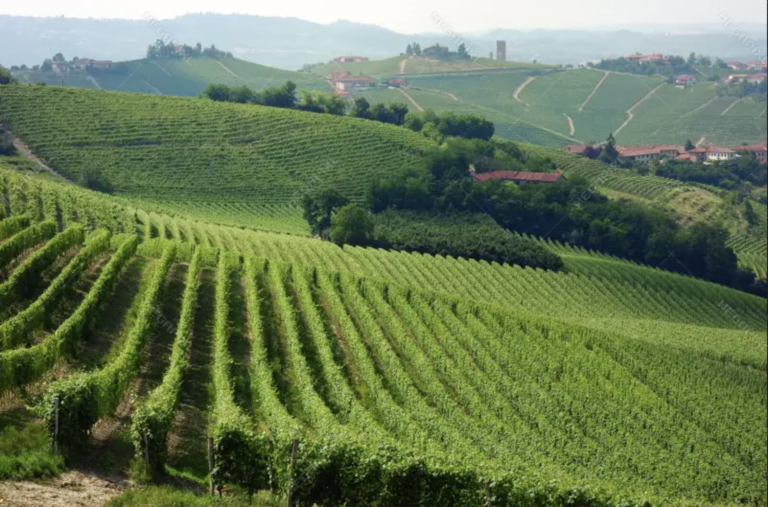
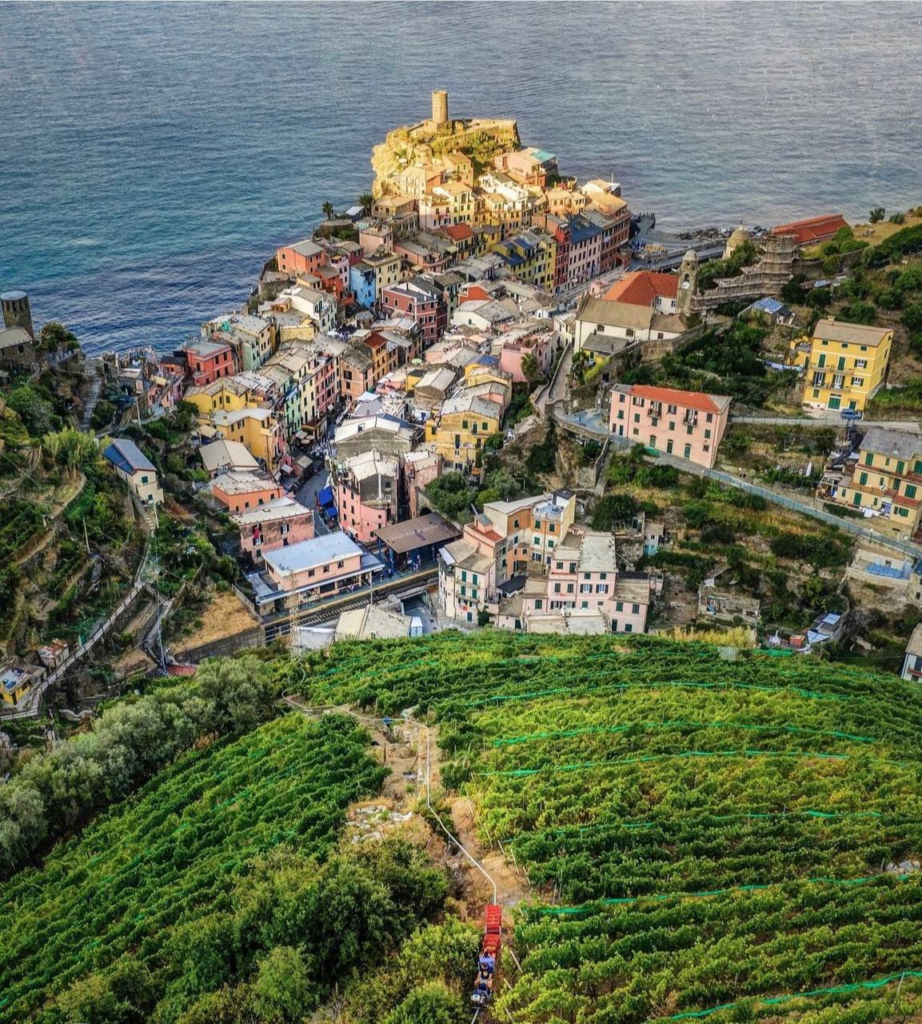
Most people who drive the coastal roads of Liguria are looking at the water. It is hard not to. The Ligurian Sea sits below almost every vineyard in the region, close enough that the salt spray reaches the vines on windy days. But look inland for a moment, and you will notice something else: terraces. Thousands of them, built by hand over centuries, holding back just enough soil on a nearly vertical hillside to grow a row or two of grapes. This is not an easy place to make wine. It might be one of the most stubborn wine regions in Italy, and that stubbornness is exactly what makes it worth a detour from the beach towns.
lamialiguria
Liguria rarely makes it onto a wine lover’s shortlist the way Piedmont or Tuscany does. Production is tiny, most of it consumed within a short drive of where it was made, and a lot of Ligurian wine never crosses the regional border at all. For an advanced wine traveler, that is precisely the appeal. This is a region where you can still taste something genuinely local, poured by the person who picked the grapes, in a landscape that has barely changed in a hundred years.
This guide covers the geography and grapes that define Liguria, four wineries worth planning a trip around, food pairings that make sense of the wines, and where to find a few of these bottles if you cannot make the trip yourself.
A Coastline, Not a Wine Region
Liguria is often described as the thinnest wine region in Italy, and geographically that is accurate. It forms a narrow crescent along the northwestern coast, squeezed between the Ligurian Sea and the Maritime Alps and Apennines, stretching roughly 350 kilometers from the French border near Ventimiglia to the Tuscan border near La Spezia. There is almost no flat ground anywhere in this strip. Vineyards climb dry-stone terraces above Vernazza and Manarola, reach 600 meters in the hills around Pornassio, and only really flatten out where the Magra river opens onto the plain near the Tuscan frontier.
The region has no DOCG wines. It has eight DOCs and four IGPs spread across fewer than 1,500 hectares of vines, which makes Liguria one of the smallest wine-producing regions in Italy by volume, with roughly 70 percent of production being white wine. What Liguria lacks in scale, it makes up for in genetic diversity. Because the terrain was too difficult and too unprofitable to modernize for much of the twentieth century, more than a hundred indigenous grape varieties survived here, many of them found almost nowhere else.
Three grapes matter most to a visiting wine drinker.
Vermentino is Liguria’s most widely planted grape, found from the French border to the Tuscan one. It produces dry, saline whites with citrus and white flower aromatics, and it shows real differences depending on where it is grown, from the herbal, structured versions of Colli di Luni in the east to the lighter, more floral styles of the Riviera di Ponente in the west.
Pigato is genetically a biotype of Vermentino, distinguished by the freckled or spotted appearance of the ripe berries, which is where the name comes from (pigau is Ligurian dialect for spotted). It grows almost exclusively around Albenga and the Arroscia valley in the western Riviera di Ponente, and it tends to produce fuller, more textured wines than straight Vermentino, with a characteristic bitter almond note on the finish.
Rossese is the region’s most important red grape, and Rossese di Dolceacqua is its finest expression. Grown in the alpine valleys near the French border around Dolceacqua, Perinaldo and San Biagio della Cima, it is genetically identical to Tibouren, the grape used for rosé in Provence. In Liguria it is vinified as a light to medium-bodied red with notable perfume, red fruit and a savory, almost floral character that some tasters compare to Nebbiolo for its combination of pale color and real structure. Napoleon is said to have been a fan.
A fourth wine deserves a mention on its own: Sciacchetrà, the passito dessert wine of Cinque Terre, made from the same Bosco, Albarola and Vermentino grapes as the region’s dry white, but from the ripest bunches, dried on mats for weeks before pressing. It takes around three kilograms of fresh grapes to make a single bottle, and the result should age for years before drinking. It is one of the rarest and most expensive traditional wines in Italy, and almost none of it leaves the region.
A Short History of a Region That Almost Disappeared
Liguria’s wine history stretches back to the ancient Greeks and, later, the Romans, who planted vines along this coast well before the rest of Italy had established its major wine regions. For centuries, wine here was a matter of survival rather than commerce: villages like those of Cinque Terre depended on their terraced vineyards for both food and trade, shipping wine out through small ports because there was no arable land to spare inland.
That changed sharply in the twentieth century. As Italy industrialized and its coast turned toward tourism, working an impossibly steep hillside for a small annual yield of grapes stopped making economic sense compared with the tourist economy growing up around it. Through the 1950s and 1960s, large sections of Cinque Terre’s terraces were abandoned. Dry-stone walls, built and maintained by hand for generations, began to collapse without anyone left to repair them, and entire hillsides that had produced wine for centuries reverted to scrub.
The recovery, where it happened, came from a small number of growers who refused to let the tradition disappear, along with the formation of cooperatives that made it economically possible for smaller landholders to keep working their plots. The same pattern repeated itself in Dolceacqua and around Albenga, where individual families rather than large estates kept native varieties like Rossese and Pigato alive through decades when it would have been easier to plant something more commercially straightforward or sell the land outright. That history is part of why a Liguria wine tasting feels different from one in Piedmont or Tuscany. Nearly every bottle you try here represents a choice someone made, often against the economic logic of the moment, to keep a small, difficult tradition going.
The Three Zones Worth Knowing
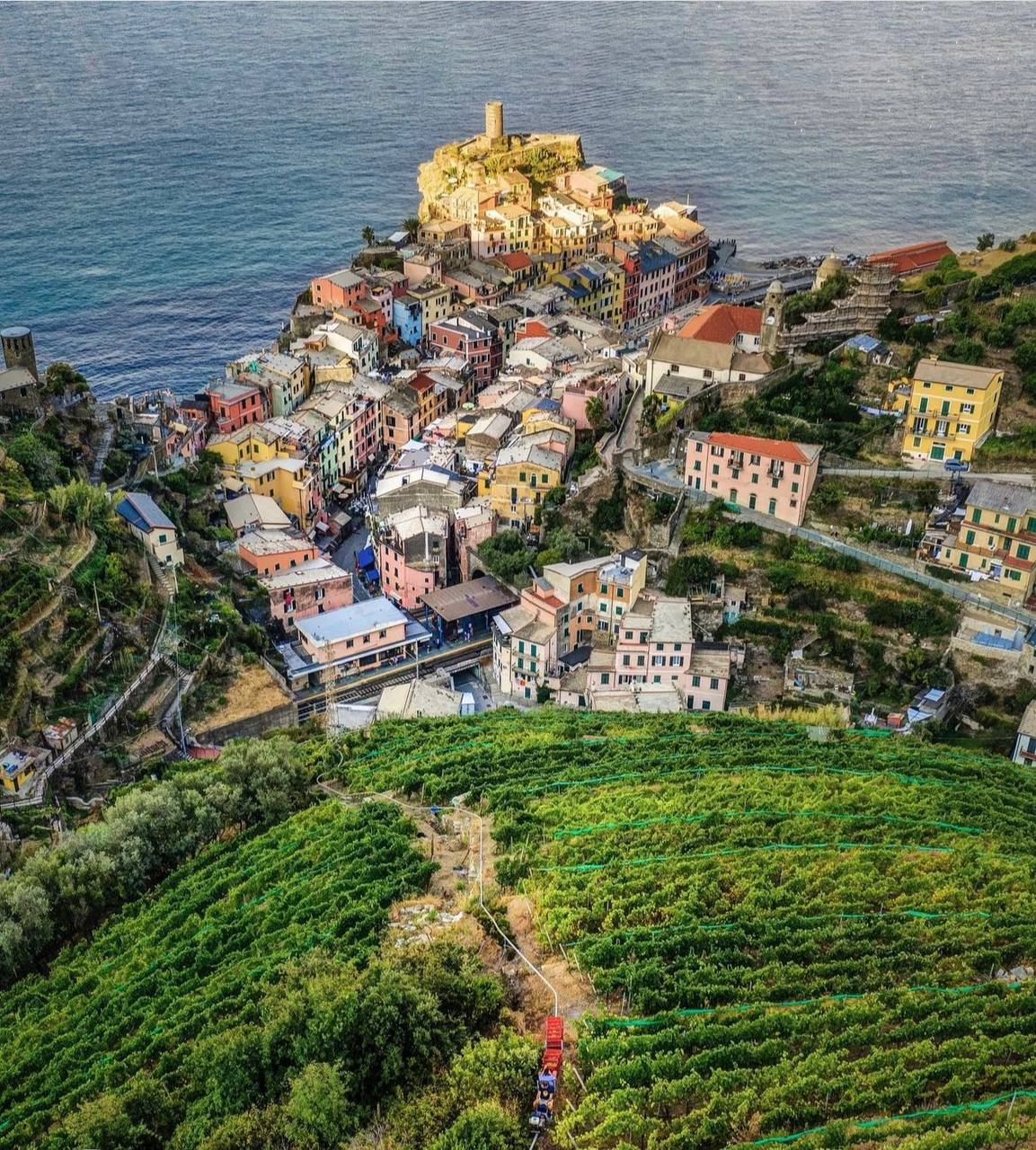
Cinque Terre, in the eastern province of La Spezia, is the most photographed vineyard landscape in the country. Bosco, Albarola and small amounts of Vermentino grow on schist terraces so steep that tractors have never been an option; everything is done by hand, and much of the harvest is carried down the hillside on monorail carts built specifically for the job. The dry white Cinque Terre DOC is crisp, mineral and slightly saline, built to go with the region’s fish. Sciacchetrà is the DOC’s other legal wine and its most prized.
Riviera Ligure di Ponente, running along the western coast from Genoa to the French border, is Pigato and Vermentino country, centered on Albenga, with pockets of Rossese and the rarer Granaccia further inland. This is where Pigato reaches its most aromatic and structured expression.
Colli di Luni, in the far east where Liguria meets Tuscany, is a warmer, more open landscape than the rest of the coast, with vineyards spreading across the alluvial plain of the Magra river and the surrounding hills. Vermentino here tends to be fuller and more textured than elsewhere in the region, and the DOC also produces reds from Sangiovese and the local Ciliegiolo grape.
Four Wineries Worth the Trip
Cantina Cinque Terre (Cooperativa Agricoltura Cinque Terre)
This cooperative, based in the hamlet of Groppo just above Manarola, is the easiest and most reliable way to taste a genuine cross-section of Cinque Terre wine in one visit. Founded by local growers who between them work the terraces above all five villages, the cooperative bottles the DOC white alongside cru-level bottlings such as Costa de Campu di Manarola and Costa de Sera di Riomaggiore, plus a Sciacchetrà worth asking about even if it is not on the standard tasting list. The cooperative also runs a boutique selling local pesto, olive oil and salted anchovies alongside the wine, so it doubles as a useful stop for provisions before a hike.
Location: Località Groppo, 19017 Riomaggiore (SP) Contact: +39 0187 920435, info@cantina5terre.com, cantina5terre.com Visiting: Open daily, roughly 8:00 to 12:30 and 15:00 to 19:00 from April to October and in December, with reduced winter hours from January to March and November. Group visits (minimum four people) and vineyard walks should be booked several days ahead; a guided walk through the Manarola vineyards followed by a tasting of three wines runs a few hours and costs around 55 to 60 euros per person.
Forlini Cappellini
If the cooperative gives you the broad picture, Forlini Cappellini gives you the extreme version of it. This is a one-hectare, family-run estate in Manarola, founded in 1988 by Germana Forlini and Alberto Cappellini and now continued by their son Giacomo and his wife Alessia. The vineyard sits on terraces so steep that mechanization has never been possible, and the estate is part of Italy’s Vini Estremi project, which recognizes wineries working under genuinely extraordinary physical conditions. Production is tiny, around 10,000 bottles a year split between the dry Cinque Terre DOC white and a small amount of Sciacchetrà, and every stage from pruning to harvest is done entirely by hand.
Location: Via Riccobaldi 45, Manarola, Riomaggiore (SP) 19010. Visiting: By appointment only; contact the estate directly ahead of a trip, since there is no walk-in tasting room. Visits typically combine a short vineyard walk with a tasting of the estate’s Cinque Terre DOC and, when available, Sciacchetrà.
Maccario Dringenberg
For Rossese di Dolceacqua, this is the estate to seek out. Run by Giovanna Maccario, whose father was among the first in western Liguria to bottle Rossese commercially in the early 1970s, and her husband Goetz Dringenberg, the estate farms just four hectares by hand in San Biagio della Cima, in the heart of the Dolceacqua district. Some of the vines are more than a century old. Rather than blending everything together, Maccario Dringenberg bottles several single-vineyard crus separately, including Posaù, from a natural amphitheater of sand and silica soil, and Luvaira, planted in part as far back as 1890 and known for producing the estate’s most structured, spice-driven wine. Tasting the crus side by side is the clearest way to understand how much this small appellation can vary from one hillside to the next.
Location: San Biagio della Cima, in the Dolceacqua wine district, Imperia province. Visiting: By appointment; the estate is small, and tastings are personal rather than run as a formal program, so plan ahead and be flexible on timing, particularly during harvest.
Cantine Lunae (Bosoni)
In the Colli di Luni, at the eastern edge of Liguria near the Tuscan border, Cantine Lunae is both the largest producer in the appellation and, by most accounts, the benchmark for the region’s Vermentino. Founded in 1966 by Paolo Bosoni, who converted his family’s mixed farm into a dedicated wine estate, Cantine Lunae is now in its third generation and farms around 65 hectares between the Magra plain and the surrounding hills, with a strong emphasis on sustainable and increasingly organic practices. Its top single-vineyard Vermentino, Cavagino, has picked up national recognition including a Decanter award, while the entry-level Etichetta Grigia bottling remains the estate’s calling card and a fair introduction to what Vermentino from this corner of Liguria tastes like. The estate also runs Ca’ Lunae, a restored eighteenth-century farmhouse with a small museum on the winemaking lifecycle and an osteria serving Ligurian dishes such as testaroli with pesto alongside the wines.
Location: Castelnuovo Magra, La Spezia province, Colli di Luni. Visiting: Tastings and cellar visits are available by appointment, and Ca’ Lunae offers a more relaxed lunch-and-tasting option if you would rather sit down than tour a production facility. Contact the estate directly to arrange either.
What to Buy If You Cannot Get There
Ligurian wine is genuinely hard to find outside Italy, and it is worth being upfront about that rather than pretending otherwise. Production is small, much of it is sold locally or through Italian specialist shops, and even well-regarded producers like Maccario Dringenberg and Cantine Lunae are not currently listed at Wijnbeurs or Colaris. Decántalo, however, does carry a small but genuine selection of Liguria wines, and it is worth checking there first if you want to order online.
Forlini Cappellini Cinqueterre 2024 (Decántalo) is the most direct way to taste the Cinque Terre DOC white without visiting Manarola in person. It is a blend of Bosco, Albarola and Vermentino from the same one-hectare estate profiled above, aged in stainless steel, and it shows the saline, herbal character that defines the appellation.
Maixei Rossese di Dolceacqua 2024 (Decántalo) is a reliable entry point into Rossese di Dolceacqua from a small cooperative founded in 1978 specifically to protect the local Rossese di Ventimiglia biotype. It comes from vineyards on the traditional dry-stone terraces, called maixei, that give the cooperative its name, and it is a fair representation of the appellation’s fresh, floral, low-tannin style at an accessible price.
For Cantine Lunae’s Vermentino, the estate is not currently stocked at Wijnbeurs, Colaris or Decántalo, but it is available through the Dutch importer Vinello (vinello-wijn.nl), which carries several bottlings including the Etichetta Grigia and Etichetta Nera. For Maccario Dringenberg and other small Dolceacqua producers not listed at any of the three main retailers, the most reliable route is ordering directly through the estate’s own webshop, several of which ship within the EU. If you come across a Ligurian wine you cannot find anywhere else, it is also worth checking a general Italian wine specialist like Tannico, which carries a wider spread of small producers than most Northern European retailers.
Pairing Liguria’s Wines With Its Food
Liguria’s wines were built for its kitchen, and the region’s cuisine leans heavily on herbs, olive oil, seafood and fresh vegetables rather than the richer, meat-based cooking of much of the rest of Italy.
Pesto alla Genovese, made with basil, pine nuts, garlic, Parmigiano and local olive oil, is the region’s best-known dish, and a crisp Pigato or a lighter Vermentino handles its herbal intensity better than most white wines from elsewhere in Italy. Fried whole anchovies or a plate of mixed fritto misto call for the same, ideally something with the saline edge that Cinque Terre whites are known for.
Trofie or trenette pasta with pesto, potatoes and green beans is a heartier match for a Vermentino from Colli di Luni, which tends to have more body and texture than its western counterparts. Panigacci and testaroli, the region’s traditional flatbreads and pasta made without eggs, are often served with a light cheese or more pesto, and again favor the region’s whites.
Rossese di Dolceacqua is the wine to reach for with rabbit, roasted or grilled meats, and mushroom-based dishes, all common in the hill towns of the western interior away from the coast. Its low tannin and bright acidity also make it one of the few reds in Italy that works well slightly chilled on a hot afternoon, which is exactly how it is often served locally.
Sciacchetrà, when you can find it, pairs with dry biscuits like the region’s canestrelli, or simply on its own as a slow, contemplative pour after dinner.
Planning a Trip
Liguria rewards travelers who are willing to walk. Many of the best vineyards, particularly in Cinque Terre, are only reachable on foot, and several producers run their tastings around a hike rather than a drive-up visit. Base yourself in La Spezia or one of the Cinque Terre villages for the eastern wineries, and consider Imperia or Bordighera if you plan to focus on Rossese di Dolceacqua and the western Riviera di Ponente, since the two zones are roughly two hours apart by car.
Trains run frequently along the coast and connect most of the Cinque Terre villages directly, which makes rail a genuinely practical way to visit the cooperative in Groppo or Forlini Cappellini in Manarola without a car. For Dolceacqua and Colli di Luni, a car is close to essential, since both areas involve driving into hill towns with limited public transport.
The harvest, generally September into October depending on the grape, is the busiest and least flexible time to visit smaller estates, so booking well ahead matters more during that window than at any other time of year. Late spring and early autumn offer the best combination of good weather and producers who have time for an unhurried tasting.
It is worth allowing at least three full days if you want to cover both the eastern and western sides of the region properly, rather than trying to combine Cinque Terre and Dolceacqua into a single rushed loop. The two areas do not connect easily, and rushing between them tends to mean arriving at a small, appointment-only estate later than planned, which is not a great way to start a tasting with a producer who has cleared time in their day for you. A more realistic itinerary splits the trip in two: two days based in or near Cinque Terre for the cooperative, Forlini Cappellini and a coastal hike, followed by a separate two-day loop through Dolceacqua, Perinaldo and San Biagio della Cima for Rossese, with Colli di Luni added on as a stop either at the start or end of the trip given its location near the Tuscan border.
Many of the smaller producers, including Forlini Cappellini and Maccario Dringenberg, do not run a formal visitor program the way a larger estate might, so treat outreach as a conversation rather than a booking. Email or call ahead, mention roughly when you would like to visit and how many people are in your group, and be prepared for some flexibility on timing, particularly if you are traveling outside the main tourist season when growers are more likely to be out in the vineyard than waiting in a tasting room.
Frequently Asked Questions
Is Liguria known for wine? Not internationally, and that is part of what makes it interesting. Liguria produces a small volume of wine relative to regions like Piedmont or Tuscany, and a lot of it is consumed locally rather than exported, so it remains genuinely under the radar for most wine travelers.
What is the difference between Vermentino and Pigato? They are genetically the same grape, with Pigato being a distinct biotype named for the freckled appearance of its ripe berries. In practice, Pigato tends to produce fuller, more textured wines with a characteristic bitter almond note, while Vermentino is generally lighter and more citrus-driven, though the distinction narrows depending on where and how each is grown.
What food goes with Rossese di Dolceacqua? Rabbit, roasted meats, mushroom dishes and firm cheeses all work well. Its light body and bright acidity also make it one of the few Italian reds that holds up served lightly chilled.
Where can I buy Ligurian wine outside Italy? Availability is limited given the region’s small production. Decántalo carries a small selection including Forlini Cappellini’s Cinque Terre white and Maixei’s Rossese di Dolceacqua. For producers not listed at major retailers, ordering directly from the estate or through an Italian wine specialist is usually the most reliable option.