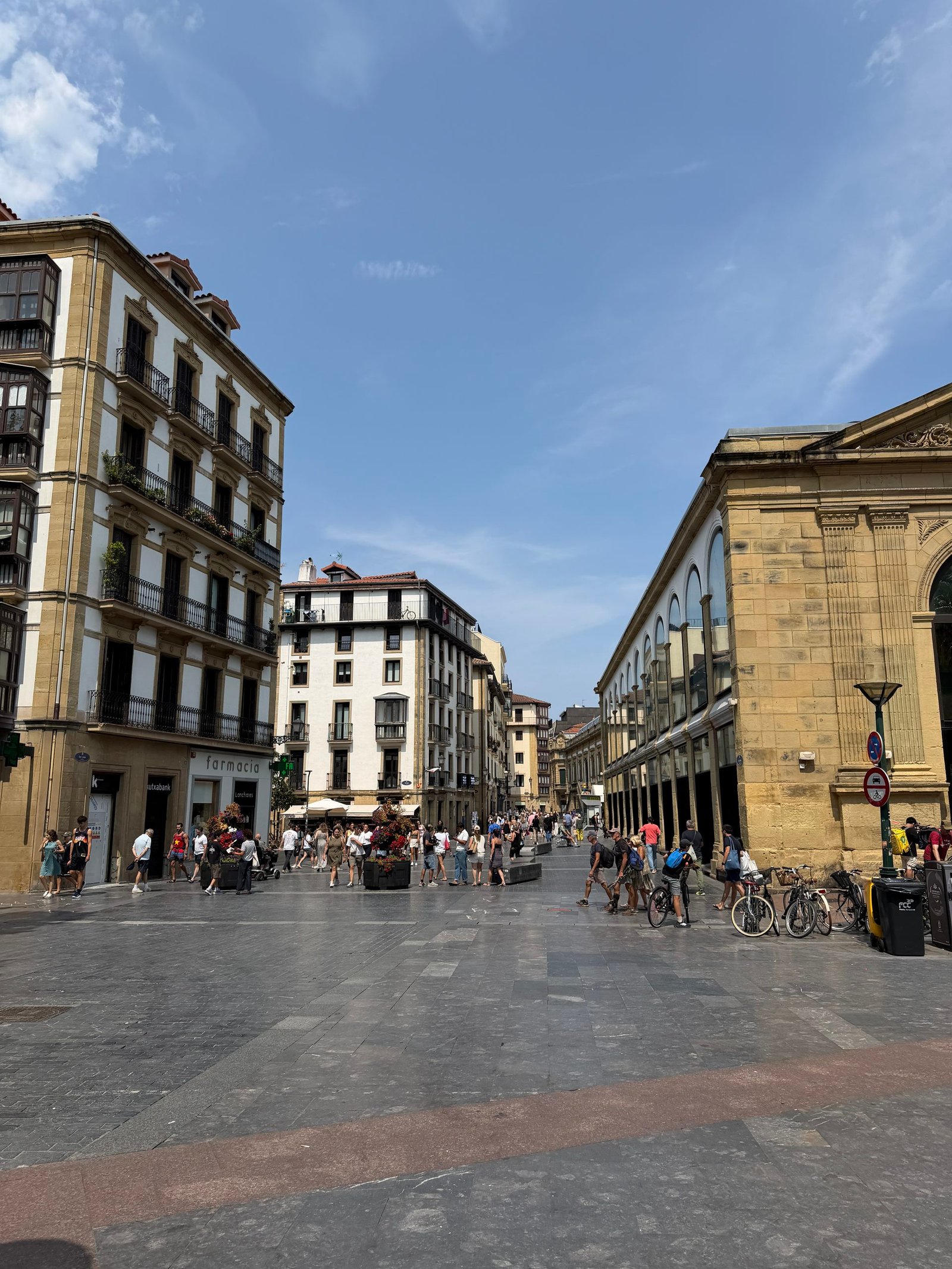
San Sebastian: Why Gros Deserves More of Your Attention Than the Old Town
Anthony Bourdain called San Sebastian one of his favorite cities on earth, and after spending time there, it is not hard to understand why. This is a city of roughly 180,000 people that holds more Michelin stars per capita than almost anywhere else in the world, sitting on a curved bay so photogenic it has its own name, La Concha, while somehow keeping the unpretentious, countertop pintxos culture that made the city famous in the first place. It is the rare place where a three-star tasting menu and a two-euro pintxo off a bar counter can both be the best thing you eat that day.
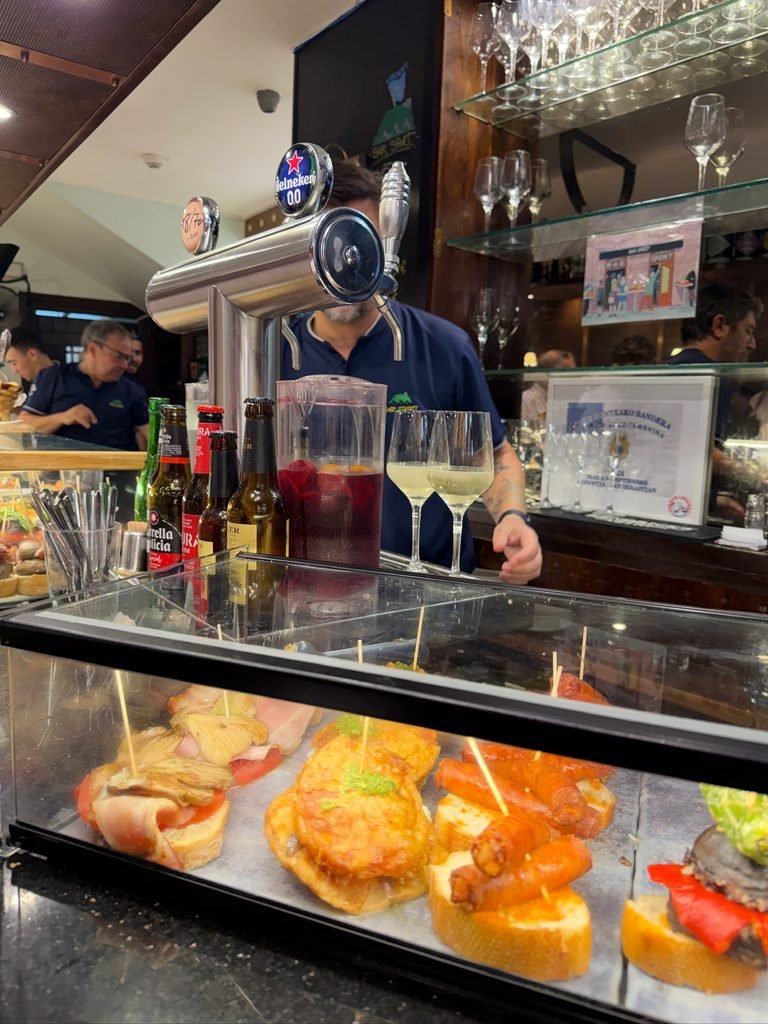
Most visitors spend their entire trip in the Old Town, Parte Vieja, and there is good reason for that. It is packed with history, tight medieval streets, and some genuinely excellent bars. But after covering both neighborhoods properly, the majority of what follows here is about Gros, the district across the Urumea River that gets a fraction of the tourist attention and, in my experience, offers the better version of the San Sebastian food scene.
The Old Town: Where to Start
Parte Vieja is where most first-time visitors base themselves, and it earns that reputation. The streets are narrow, the bars sit shoulder to shoulder, and the pintxos culture here essentially wrote the modern template that the rest of Spain has spent decades trying to copy. The neighborhood sits wedged between Monte Urgull and the harbor, a compact grid of streets that fills with locals after work and stays full well past midnight, which means the crowd inside any given bar is rarely made up purely of visitors. A handful of stops are worth prioritizing before heading across the river.
The typical approach here is to move in short bursts, one or two pintxos and a drink at each stop, rather than settling into a single bar for an entire meal. That grazing style is baked into the culture, and it is worth embracing rather than fighting. Trying to have a full sit-down dinner at any one Old Town pintxos bar generally means missing several other places worth visiting within a five-minute walk.
La Vina: The Birthplace of the Basque Cheesecake
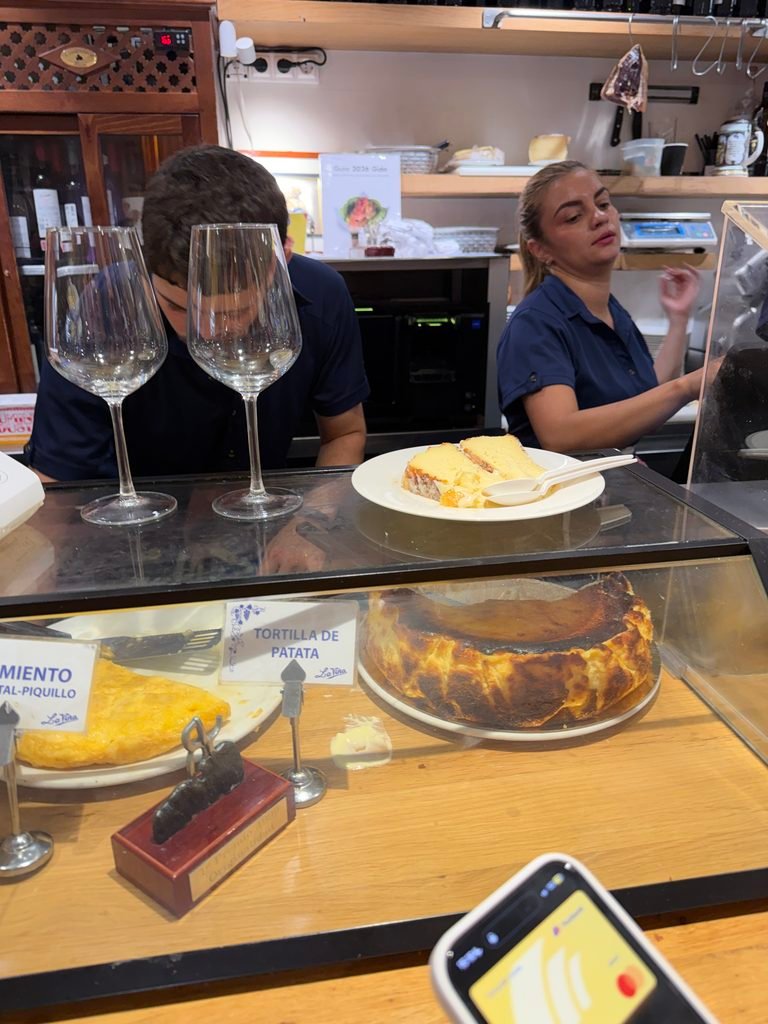
La Vina is not just a good pintxos bar; it is the origin point of one of the most influential desserts of the past decade. The burnt Basque cheesecake, now copied on menus from London to Los Angeles, was invented here, and the original still outclasses almost every version I have had elsewhere. The top is deliberately scorched dark, nearly black in places, while the interior stays loose and custardy, closer to a baked custard than a traditional New York-style cheesecake. No crust, no fuss, just cream, eggs, sugar, and cheese pushed to the edge of burning until the contrast between the caramelized top and the soft center does all the work.
Standing at the counter with a slice and a glass of local cider is one of the simplest, most satisfying things you can do in San Sebastian, and it is worth going before the lunch rush, when the case is still fully stocked and you can actually get a seat at the bar.
Bar Sport: Pintxos and Proper Txakoli
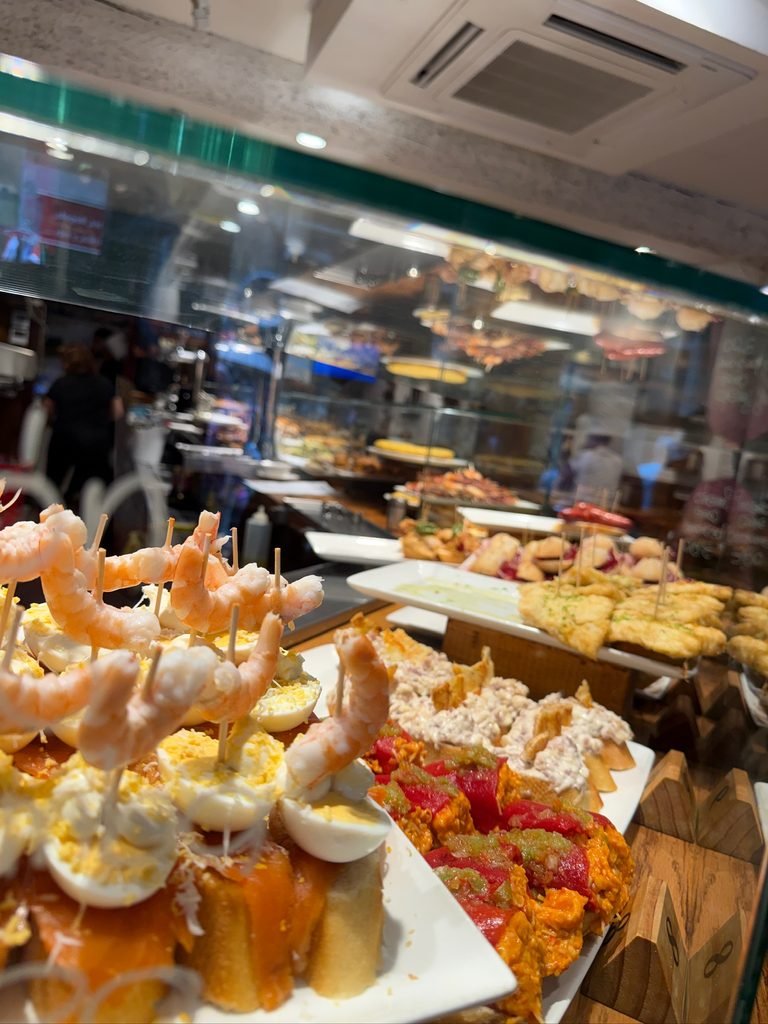
Bar Sport is a step up in complexity from a standard pintxos counter, with a kitchen turning out hot, cooked-to-order pintxos alongside the classic cold counter spread, and it consistently ranks among the better bars in the Old Town for that reason. The txakoli here, the slightly effervescent, high-acid white wine that is practically the house pour of the Basque Country, is poured properly, from height, into wide glasses to aerate it and knock loose some of its natural spritz. That small ritual, the theatrical pour that splashes a little wine into the glass from well above the bar, is worth watching for even if you have seen it before.
Pair a glass with whatever hot pintxo the kitchen is running that day, and do not be shy about ordering two or three rounds. The bar rewards a slower, grazing approach rather than a single quick stop.
KBZONa: The Best Suckling Pig I Have Had Anywhere
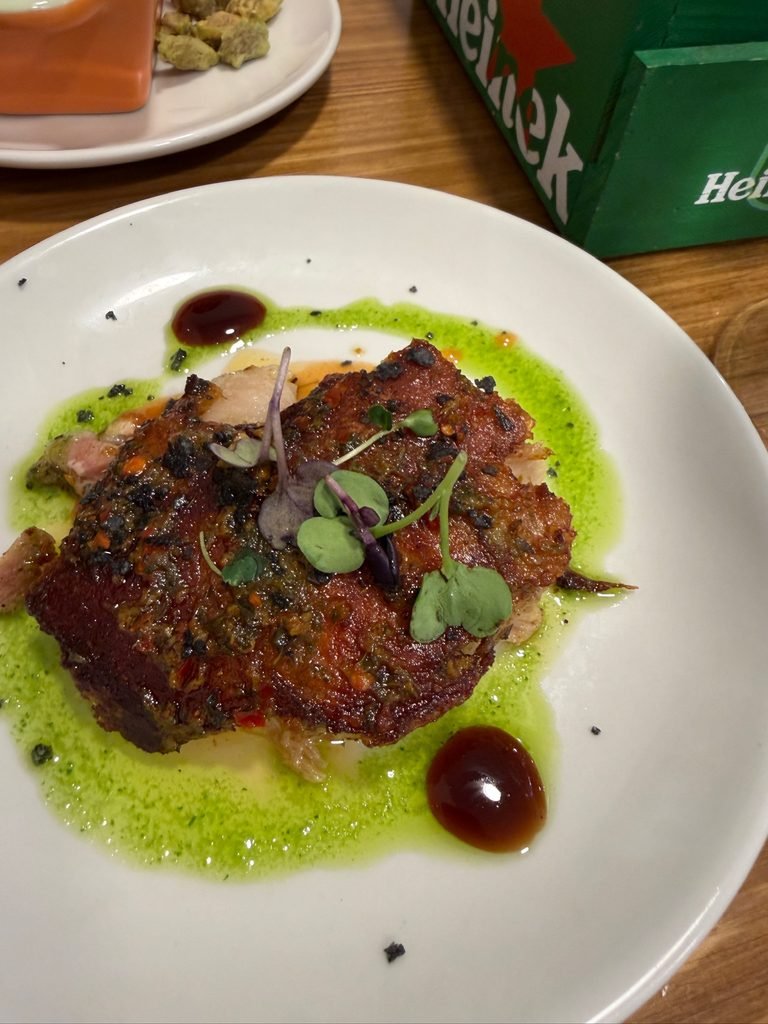
This is a bold claim, but it holds up. KBZONa’s suckling pig, cochinillo, is the best version of the dish I have eaten anywhere, including in Segovia, the Castilian town most closely associated with the dish. The skin shatters into shards the moment a fork touches it, while the meat underneath stays soft enough to fall apart without any resistance. Getting that combination right- a genuinely crisp, blistered skin over meat that has not dried out during the long roast- is far harder than it sounds, and most kitchens attempting the dish fail on one side or the other. KBZONa nails both.
Part of what makes the dish work so well here is restraint. There is no need for a heavy sauce or elaborate plating when the core execution is this precise, and the kitchen wisely lets the meat speak for itself, served simply, with maybe a light jus and a small side of something acidic to cut through the richness. It is a dish built entirely on technique rather than flourish, which tends to be true of the best versions of any classic regional dish.
If suckling pig is on the menu when you visit, order it without hesitation. This is the kind of dish that justifies planning a stop around it rather than treating it as one pintxo among many.
1813: A Terrace Worth Resting At
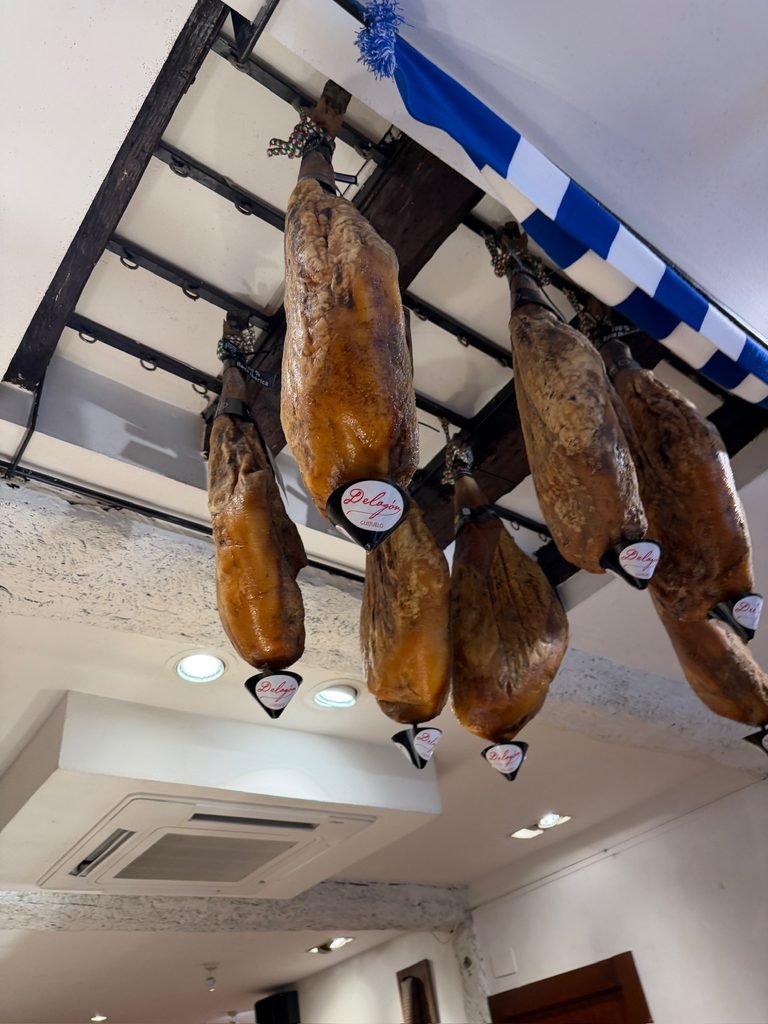
After a few hours weaving through the Old Town’s narrow streets, 1813 offers something the rest of Parte Vieja largely lacks: a proper terrace with room to sit and watch the street for a while. It is a good midpoint stop, somewhere between the tight, standing-room-only pintxos bars and a full sit-down meal, and a glass of something cold on the terrace here is a welcome pause in what is otherwise a fairly intense, high-density eating itinerary.
Gros: The Neighborhood That Deserves the Bulk of Your Time
Cross the Zurriola bridge over the Urumea River and the entire character of the city shifts. Gros is a genuine residential neighborhood, home to surfers drawn to the Zurriola beach break, university students, and locals who eat and drink here because it is their neighborhood, not because a guidebook told them to. It gets a fraction of the visitor traffic that Parte Vieja does, and that alone makes it worth the ten-minute walk across the bridge.
The neighborhood’s identity is shaped heavily by its beach. Where La Concha on the Old Town side draws families and calm water swimmers, Zurriola faces the open Bay of Biscay directly, bringing a genuine, consistent surf break that has turned Gros into something closer to a proper surf town neighborhood than a tourist-adjacent district. That surf culture bleeds into everything around it, from the more relaxed pace of the bars to the grid of side streets lined with wetsuit shops, casual cafes, and apartment buildings that feel lived in rather than staged for visitors. Spending an afternoon simply wandering those streets, away from any specific recommendation, is time well spent in its own right.
Bar Desy: The Best Burger You Will Have
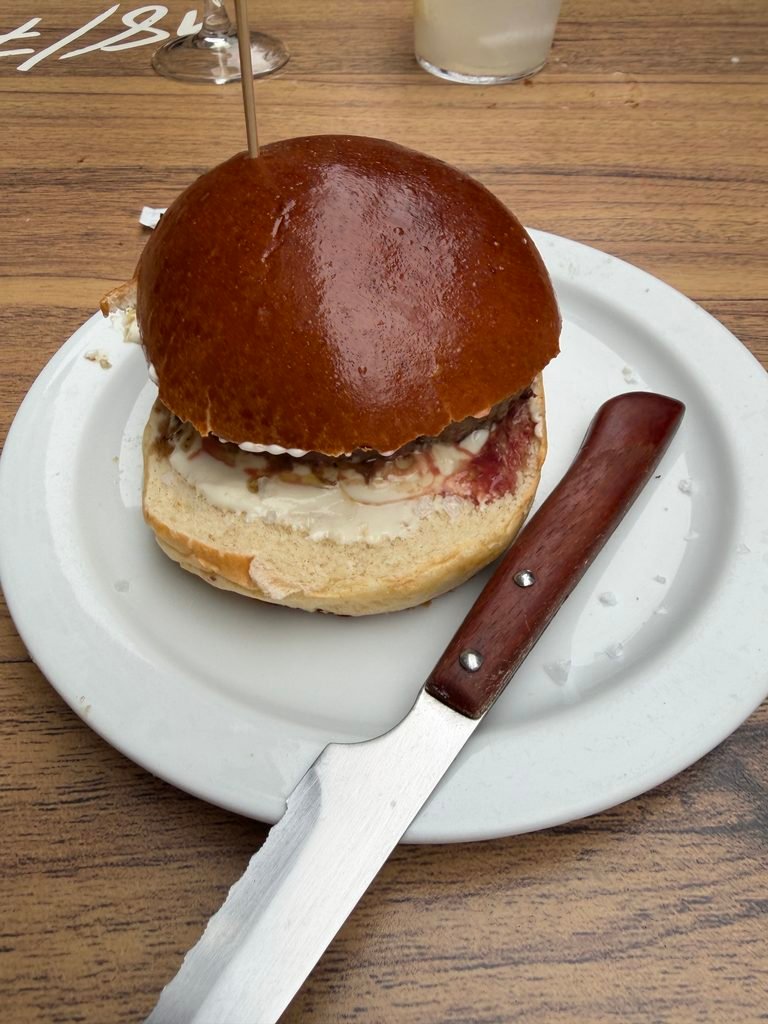
Bar Desy makes a case for itself that is hard to argue with once you have actually eaten there. The burger is built around tender, clean, properly red meat, the kind of quality that is immediately obvious from the first bite rather than something you have to be told about. The patty stays genuinely juicy without tipping into greasy, topped with a cream cheese that adds richness without overwhelming the beef underneath, all held together in a soft, slightly sweet bun that manages to complement rather than compete with everything inside it.
It is a small, no-frills spot, closer in spirit to a neighborhood bar than a destination restaurant, and that is exactly what makes the burger land the way it does. Nothing about the setting oversells the food, so the quality of what arrives on the plate has to do all the talking, and it does.
Calling any single burger the best you will ever have is a big statement, but this one earns the claim. It is a reminder that San Sebastian’s culinary reputation is not limited to pintxos and tasting menus. A city with this much collective knowledge about ingredients and technique tends to produce excellent versions of almost anything it turns its attention to, burgers included.
Plaza Cataluña and the Iglesia de San Ignacio
Not every stop in Gros needs to involve eating. Plaza Cataluna, sitting directly in front of the Iglesia de San Ignacio, is one of the better places in the neighborhood to simply sit for a while. The square has a quieter, more local energy than anything in the Old Town, closer to how residents actually use their public space than to a tourist gathering point. Find a bench or a nearby terrace, sit facing the church, and let the pace of the visit slow down for twenty minutes. Small moments like this end up being some of the most memorable parts of a trip, precisely because nothing is scheduled around them.
Helados Pozzetti: Ice Cream Worth the Detour
A short walk from the plaza, Helados Pozzetti makes some of the better gelato-style ice cream in the city, with a rotating range of flavors that lean into proper Italian technique rather than the more artificially colored, overly sweet versions found at some of the more tourist-facing stands closer to the beach. It is a good stop on a warm afternoon, particularly after a walk along Zurriola Beach, and a far better choice than grabbing whatever is closest to the boardwalk.
Casa Galicia: A Taste of the Northwest, Inside the Basque Country
Casa Galicia rounds out the Gros recommendations with something a little different, a proper Galician menu inside a city otherwise dominated by Basque cooking. Galician food built around octopus, seafood, and simple, high-quality preparation- pulpo a la gallega, good percebes when in season, and clean, unfussy seafood dishes- gives a nice contrast to several days of pintxos and Basque-specific cooking. It is a reminder that Spain’s northern coast, spanning from Galicia through Asturias into the Basque Country, shares a broader culinary sensibility even as each region maintains its own distinct identity.
Beyond Txakoli: What Else to Drink
Txakoli dominates the pintxos bar pour for good reason, but San Sebastian’s wine scene extends further than a single house white, and it is worth paying attention to what else shows up on menus around the city. Rioja, an hour or so inland, is the obvious and reliable choice for anything richer, particularly alongside the suckling pig at KBZONa or a heavier meat course elsewhere in the Old Town. A young, fruit-forward Rioja Crianza handles that kind of dish better than most people expect from a wine so closely associated with long aging and heavy oak.
Cider is the other local specialty worth seeking out, particularly given the region’s sagardotegi, or cider house, tradition just outside the city in towns like Astigarraga. Basque cider is dry, still, and poured from a height directly from the barrel in a ritual similar to the txakoli pour, meant to aerate the cider and highlight its natural acidity. Several Old Town bars serve a version of this pour at the counter, and it pairs particularly well with the fattier pintxos, cured meats, and, of course, a slice of La Vina’s cheesecake at the end of a meal.
A Few Fun Facts About San Sebastian
- San Sebastian, or Donostia in Basque, holds one of the highest concentrations of Michelin-starred restaurants per capita of any city in the world, a remarkable statistic for a city of its size.
- La Concha beach, the crescent-shaped bay at the heart of the city, is consistently ranked among the best urban beaches in Europe, and its calm, sheltered waters are largely the product of the bay’s natural curved geography.
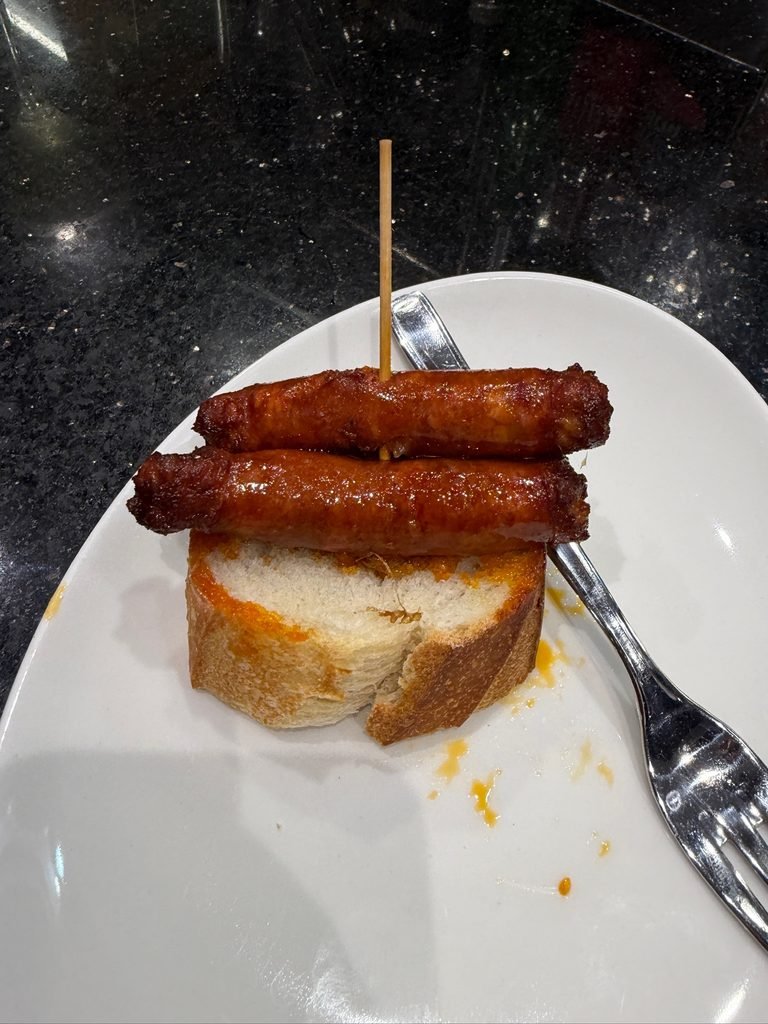
- The city’s pintxos culture developed as a distinctly Basque evolution of the broader Spanish tapas tradition, with an emphasis on small, carefully composed bites served on bread and typically held together with a toothpick, originally used to tally what had been eaten at the end of the night.
- San Sebastian hosts one of the world’s most respected film festivals each September, the San Sebastian International Film Festival, which has run since 1953 and draws major international productions to a city more commonly associated with food than cinema.
- The city’s location, tucked against the French border in Basque Country, means the cultural and culinary influence of southwestern France is never far away, visible in everything from the pastry cases to the wine lists around the city.
When Not to Go: Avoiding the Busiest Week of the Year
San Sebastian has a clear peak within its peak season, and it is worth planning around. The city’s biggest local festival, Semana Grande, falls in mid-August, and it brings a level of crowding that changes the entire character of a visit. Bars that are normally lively but manageable become genuinely difficult to get into, the beaches fill well beyond comfortable capacity, and prices across the city tend to climb accordingly.
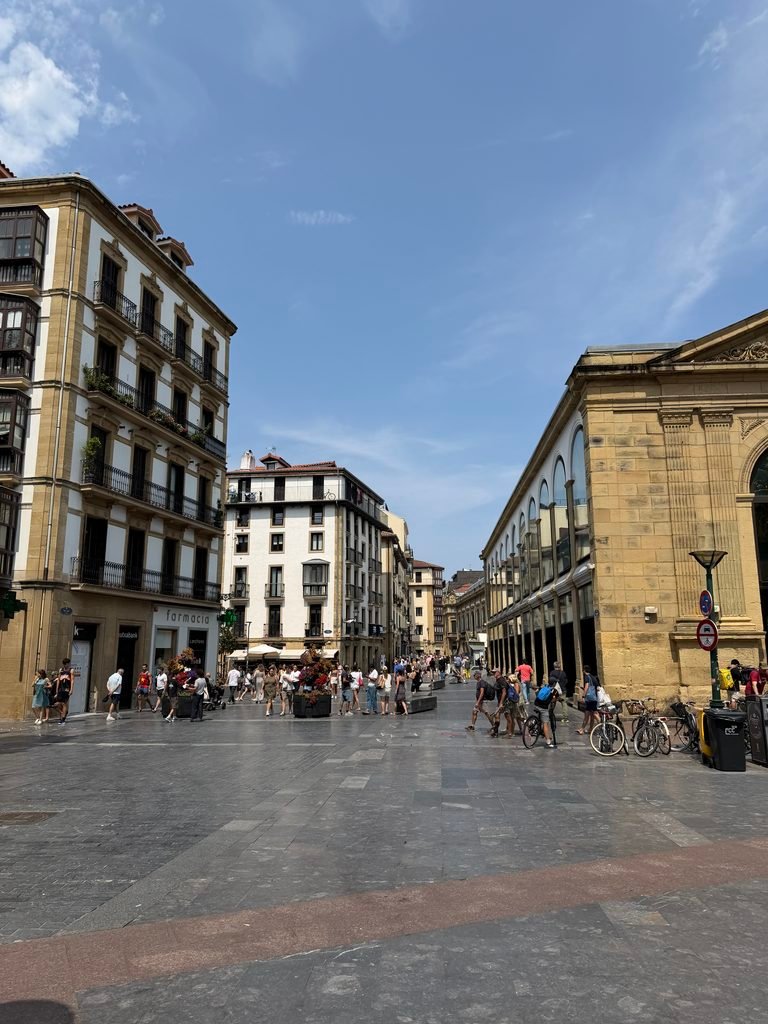
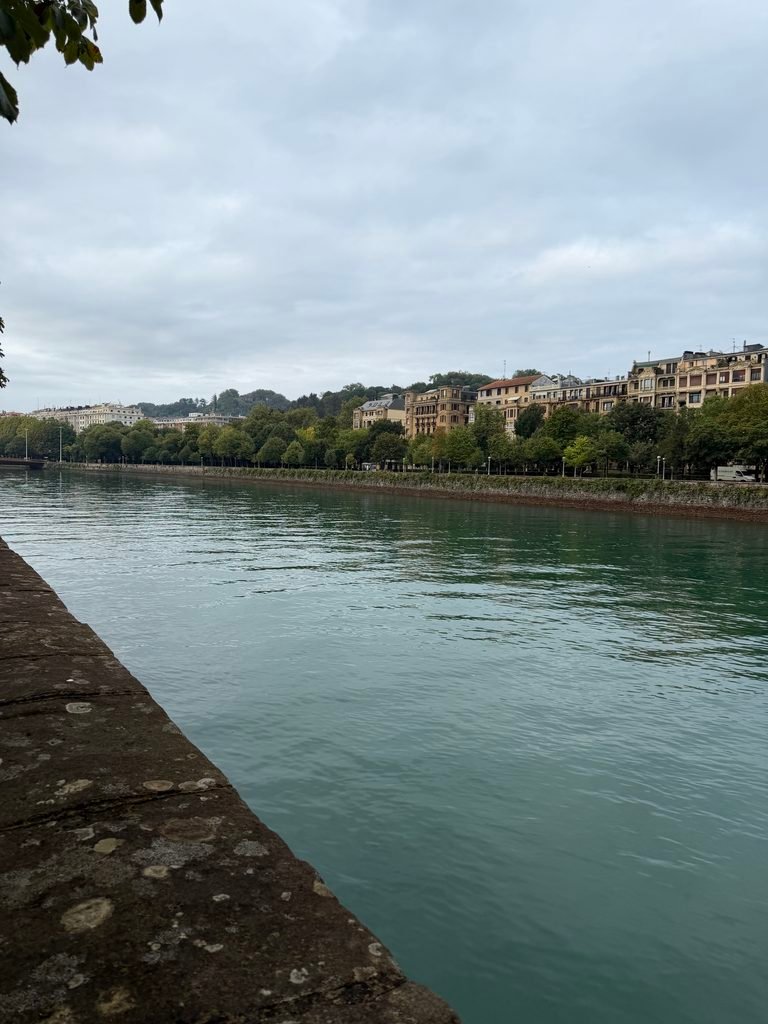
We did not manage to avoid it on this trip, and the difference between that week and a quieter August or September visit was obvious. If your schedule allows any flexibility at all, aim for the shoulder periods just before or after Semana Grande, or push the trip into September, when the weather generally remains excellent and the crowds thin out considerably. The food does not change, but the experience of getting to enjoy it properly does.
Practical Notes for Planning Your Own Trip
- The walk between the Old Town and Gros takes roughly ten to fifteen minutes across the Zurriola or Santa Catalina bridge, making it easy to base yourself in one neighborhood and still spend significant time in the other.
- Pintxos bars in the Old Town are busiest between roughly 1 pm and 3 pm for lunch and again from 8 pm onward for dinner. Arriving just before those windows open gives the best chance of finding counter space.
- Txakoli is meant to be drunk young and cold, and most bars will pour it with the traditional high-pour aeration technique without being asked. It is a good default order at almost any pintxos counter in the city.
- Zurriola beach in Gros, unlike the calmer La Concha, has a genuine surf break and draws a strong local surf culture, worth knowing if you want to watch, rent a board, or simply understand why so much of Gros orients itself around the water.
- San Sebastian’s high season runs from June through August, with Semana Grande in mid-August as the single busiest stretch. September offers a strong combination of good weather and noticeably lighter crowds.
Final Thoughts
San Sebastian rewards exactly the kind of trip Bourdain seemed to love most, one built around eating well in places with no pretense about it, whether that is a Michelin-starred dining room or a plastic stool at a neighborhood bar. The Old Town gives you the postcard version of the city, and it is worth every hour spent there working through La Vina, Bar Sport, KBZONa and a terrace break at 1813.
But Gros is where the city actually lives day to day, and giving it the majority of your time, a burger at Bar Desy, an unhurried sit in front of the Iglesia de San Ignacio, ice cream at Helados Pozzetti, and a proper Galician meal at Casa Galicia, is what turns a good San Sebastian trip into a genuinely memorable one. Plan around Semana Grande if you can, cross the river more than the average visitor does, and let the city’s quieter neighborhood do the work that made Bourdain fall for this place in the first place.