Bangkok for Food and Wine Lovers: What Two Trips Taught Me
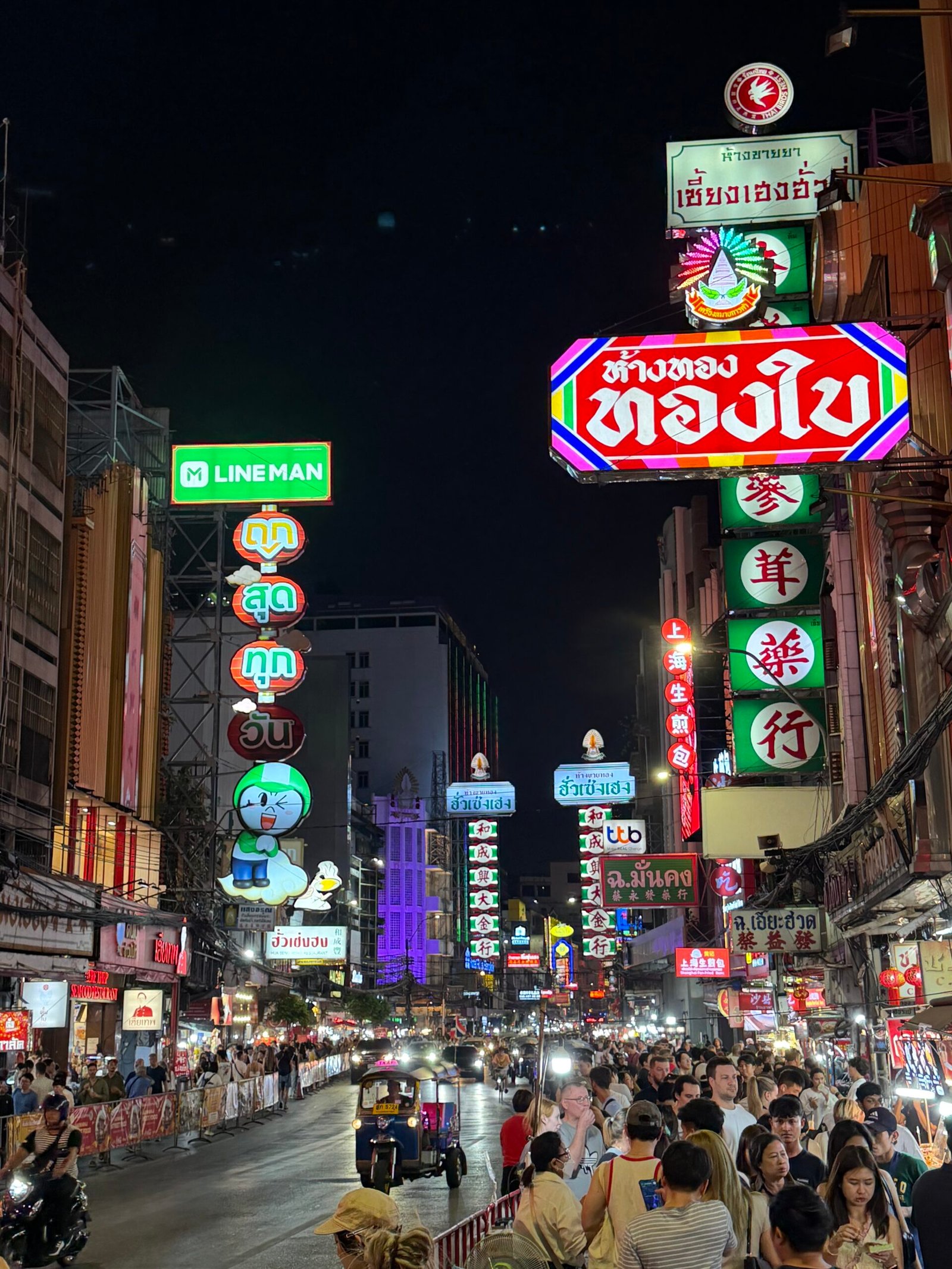
Bangkok does not announce itself the way Paris or Rome does. There is no single postcard image that sums it up. Instead, the city reveals itself in layers: steam rising off a noodle cart at six in the morning, the hush of a five-star dining room at lunch, the horns and heat of a Chinatown alley at midnight. I have now been to Bangkok twice, and both trips confirmed the same thing. This is one of the great food cities of the world, and increasingly, one of the more interesting wine cities in Asia too.
This guide focuses on my second trip, which was more deliberate and better planned than the first. I knew where I wanted to eat, where I wanted to stay, and I had one meal circled on the calendar months in advance: lunch at Blue by Alain Ducasse. That meal alone is worth a dedicated section further down, because it was one of the best lunches I have had anywhere, not just in Bangkok.
If you are the kind of traveler who plans a trip around a tasting menu and a wine list, or who will happily eat noodles from a folding table on the street the same day you eat off Limoges porcelain, Bangkok rewards that instinct completely.
A Few Fun Facts About Bangkok Before We Start
A handful of details help explain why the city feels the way it does.
- Bangkok’s full ceremonial name, Krung Thep Mahanakhon Amon Rattanakosin Mahinthara Ayuthaya Mahadilok Phop Noppharat Ratchathani Burirom Udomratchaniwet Mahasathan Amon Piman Awatan Sathit Sakkathattiya Witsanukam Prasit, holds the record as the longest place name in the world. Locals simply say Krung Thep.
- The city was founded in 1782 as the new capital of Siam, moved across the river from Thonburi, and its canal network once earned it the nickname the Venice of the East. Many khlongs have since been filled in for roads, but the ones that remain, particularly around Thonburi, still carry real daily traffic.
- Bangkok’s street food culture is so significant that in 2017 the city considered banning street vendors from central areas, and the public backlash was strong enough that most of the plan was quietly shelved. Locals treat their favorite noodle stall with the same loyalty someone in Lyon might show a neighborhood bouchon.
- Wat Arun, the Temple of Dawn, is decorated with porcelain that was originally used as ballast on Chinese trading ships. Nothing about that porcelain was wasted.
- Bangkok traffic is legendary, but the Chao Phraya River and its network of express boats and cross-river ferries remain one of the fastest and most enjoyable ways to move through the old city, especially at sunset.
These are the kind of details that make a city feel less like a checklist and more like a place with its own internal logic. Once you understand a little of that logic, Bangkok gets much easier to navigate, and much more fun.
Where to Stay: Basing Yourself in Chinatown
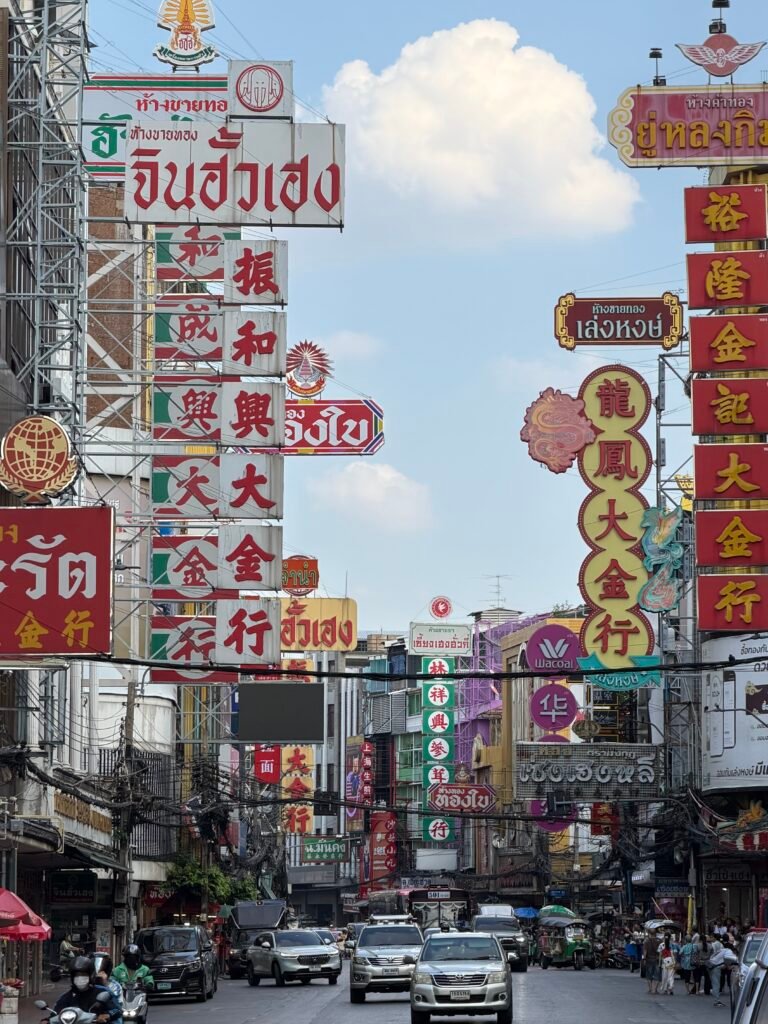
On this trip, I stayed at EXO Residence Heart of Chinatown, and it turned out to be one of the better hotel decisions I have made in Southeast Asia. Bangkok’s Chinatown, known locally as Yaowarat, is not a sanitized tourist version of a Chinatown. It is a working, breathing district that has operated as a trading and food hub since the late eighteenth century, and staying inside it rather than in the more polished Sukhumvit or Silom areas changes the entire rhythm of a trip.
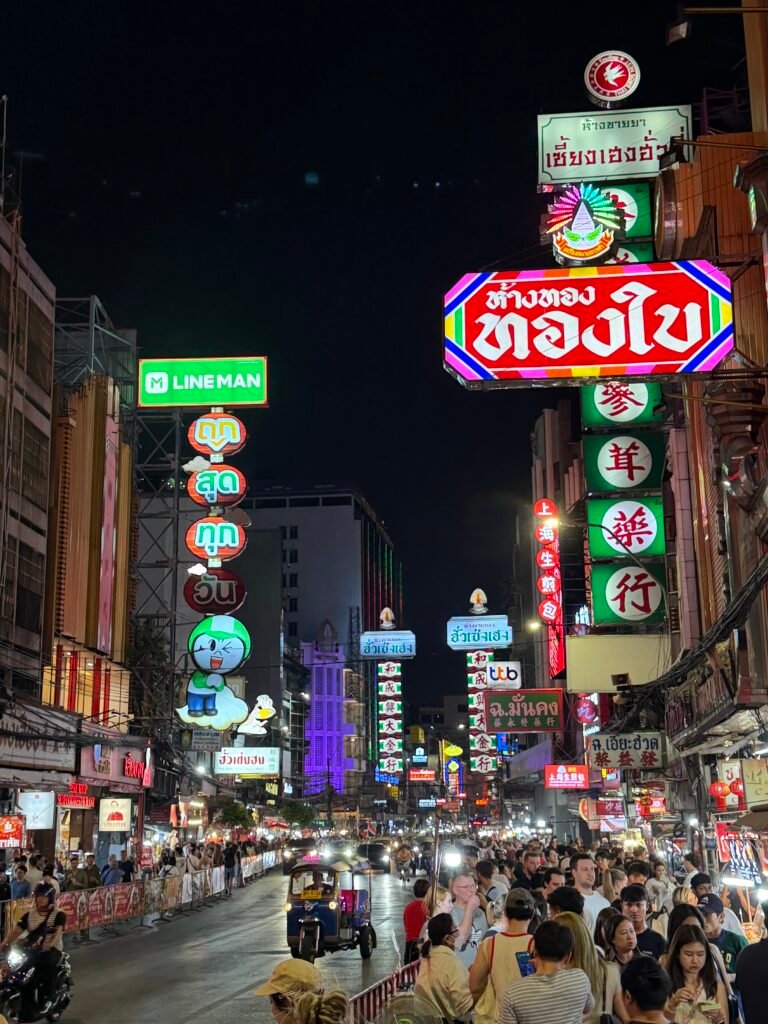
EXO Residence sits within walking distance of Yaowarat Road’s main strip, which means you can step outside at nine in the evening, when the neon signs switch on, and the street food stalls really get going, without needing a taxi. The rooms are clean, modern and quiet, which matters more than people expect in a district known for its noise. After a long day of eating and walking, a properly dark, properly quiet room is worth more than a rooftop pool you will not have time to use.
The practical advantage of a Chinatown base is proximity. Grand Palace and Wat Pho are a short tuk-tuk or river taxi away, the Hualamphong side of the river connects easily to boats heading toward the older parts of the city, and you are a short walk from some of the best cheap eating in Bangkok, most of which does not appear on the generic hotel concierge list. If your trip is built around food, staying in Chinatown puts you at the center of the story rather than at the edge of it.
Bangkok’s Best Food Markets: Where the City Actually Eats
Bangkok has no shortage of food markets aimed at tourists, but the two below are the ones that locals actually queue for, and both are worth planning a meal around rather than treating as a quick photo stop.
Nai Ek Roll Noodle
Nai Ek Roll Noodle, tucked into the Yaowarat area, is a Chinatown institution and one of the more talked-about noodle shops in the city, largely because of a single dish: kuay teow look chin pla, a rolled noodle soup built around house-made fish balls and fish skin dumplings. The broth is clean rather than heavy, which lets the quality of the fish come through, and the texture contrast between the springy fish balls and the delicate rolled noodle sheets is the entire point of the dish.
Expect a line, especially in the evening. That line is a good sign, not a deterrent. The turnover is fast, the seating is simple plastic stools and low tables, and the whole experience takes maybe twenty minutes from sitting down to standing up again. This is street food at its most efficient: one dish, done extremely well, for decades.
Lek Seafood
Lek Seafood is a different kind of Bangkok classic, an open-air seafood spot known for stir-fried crab with black pepper and garlic, and for grilled prawns the size of a small fist. It sits closer to the river and gets busy with a mix of locals and increasingly, food-focused travelers who have read about it online, but it has not lost the plastic table, cold Chang beer energy that made it popular in the first place.
Between these two spots you get a fair cross-section of what makes Bangkok’s street and market food so good: precision on one end, in Nai Ek’s decades of practice on a single bowl, and abundance on the other, in Lek Seafood’s piles of crab and prawns. Both are more memorable than most fine dining meals I have had in other cities.
Lunch at Blue by Alain Ducasse: The Meal Worth Planning a Trip Around
If Bangkok’s street food represents one end of the city’s dining spectrum, Blue by Alain Ducasse represents the other, and it does so at a genuinely world-class level.
The Setting
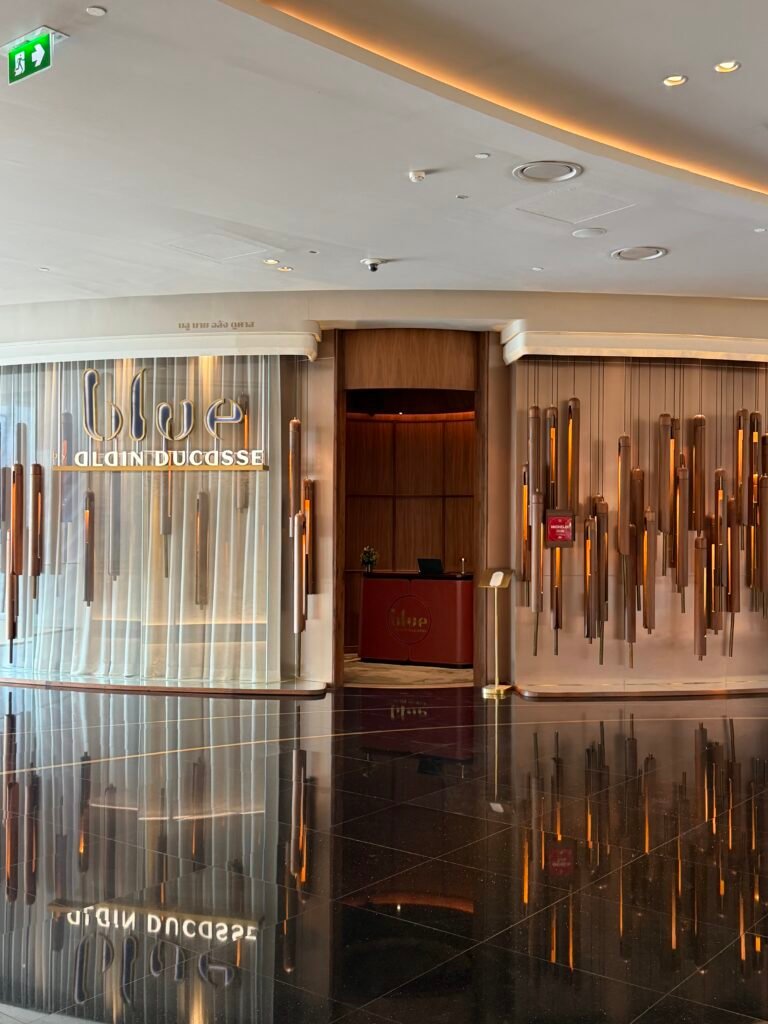
Blue by Alain Ducasse sits inside ICONSIAM, the enormous riverside shopping and lifestyle complex on the Thonburi side of the Chao Phraya. ICONSIAM opened in 2018 and quickly became one of the most talked-about developments in the city, not just for its size but for how it was designed. The mall includes SookSiam, an indoor recreation of a Thai floating market complete with boats and stalls selling regional food from across the country, alongside the kind of luxury retail you would expect from a flagship Southeast Asian mall. It is worth arriving early simply to walk through it before lunch. Few shopping centers anywhere combine that level of retail polish with genuine cultural programming, and ICONSIAM manages to do both without either side feeling like an afterthought.
Blue occupies a striking position within that building, with tall windows and a calm, composed dining room that feels deliberately separated from the energy of the mall below. Walking from SookSiam’s market chaos into Blue’s hushed dining room is its own kind of contrast, and it sets the tone nicely for the meal to come.
The Menu Voyage
We booked the Menu Voyage, the restaurant’s most extensive tasting menu, and gave ourselves the full three hours it deserves. This is not a menu to rush, and the pacing of the service reflects that. Courses arrived with real space between them, conversation had room to breathe, and nothing felt like it was being pushed through to turn the table.
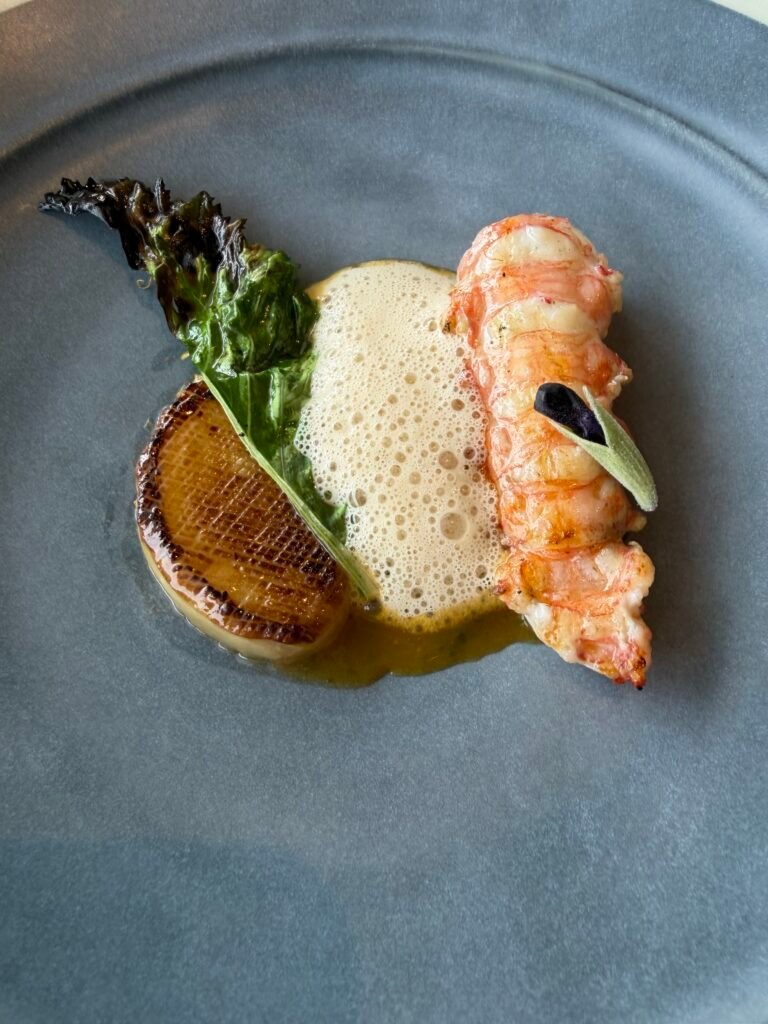
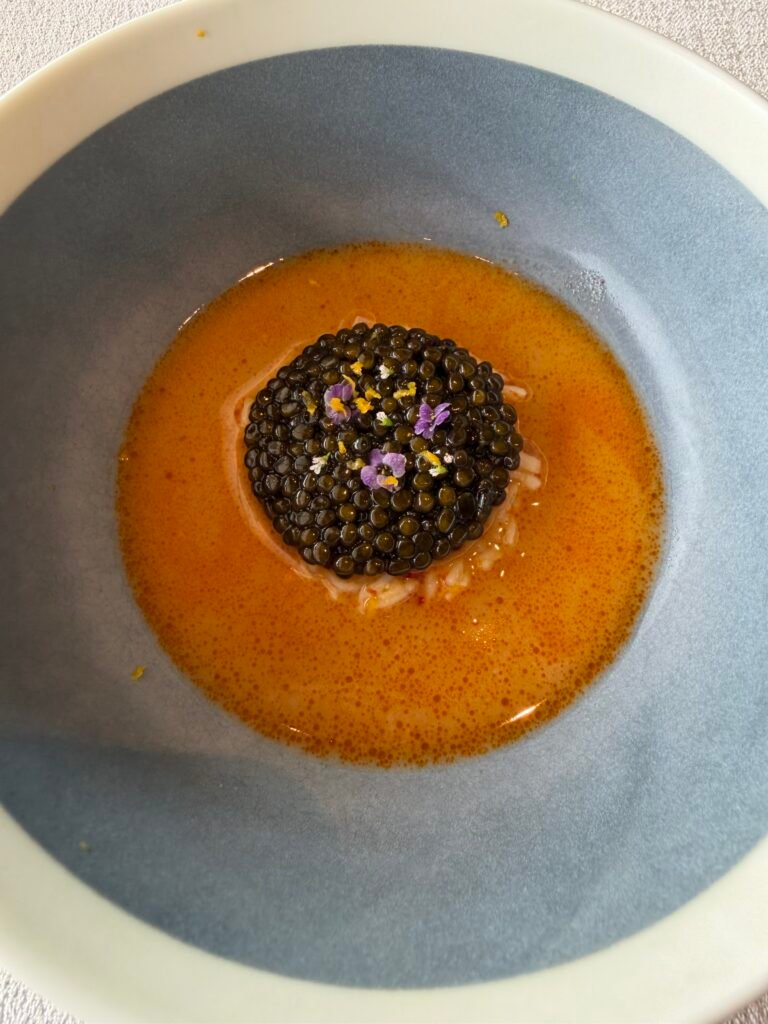
What struck me most was the restraint. Alain Ducasse’s cooking philosophy has always leaned toward showing an ingredient rather than dressing it up, and that philosophy translated cleanly into a Bangkok context, with French technique applied to exceptional Thai and regional produce. Seafood course after seafood course arrived with a precision that felt almost architectural: nothing overworked, sauces used sparingly and with purpose, and a clear sense that every element on the plate had earned its place. A langoustine course stood out in particular, cooked with a lightness that let the sweetness of the meat carry the dish rather than any heavy reduction around it.
By the midpoint of the menu, the kitchen shifted into richer, more classically French territory, and the pacing adjusted accordingly, with slightly longer intervals between courses to let the meal build rather than plateau. Dessert, when it finally arrived, felt less like an ending and more like a natural continuation of the same restraint that defined the earlier courses.
Three hours sounds like a long lunch on paper. In practice, it did not feel long at all. That is the mark of a kitchen and a service team operating at the level Blue clearly is.
The Wine Pairing
We chose to pair the Menu Voyage with a small selection of bottles rather than the full sommelier pairing, and the wine list gave us plenty to work with. Blue’s cellar leans French, as you would expect, but it is not a predictable list, and the by-the-glass and by-the-bottle selection included some genuinely interesting choices for a hotel and mall-adjacent restaurant.
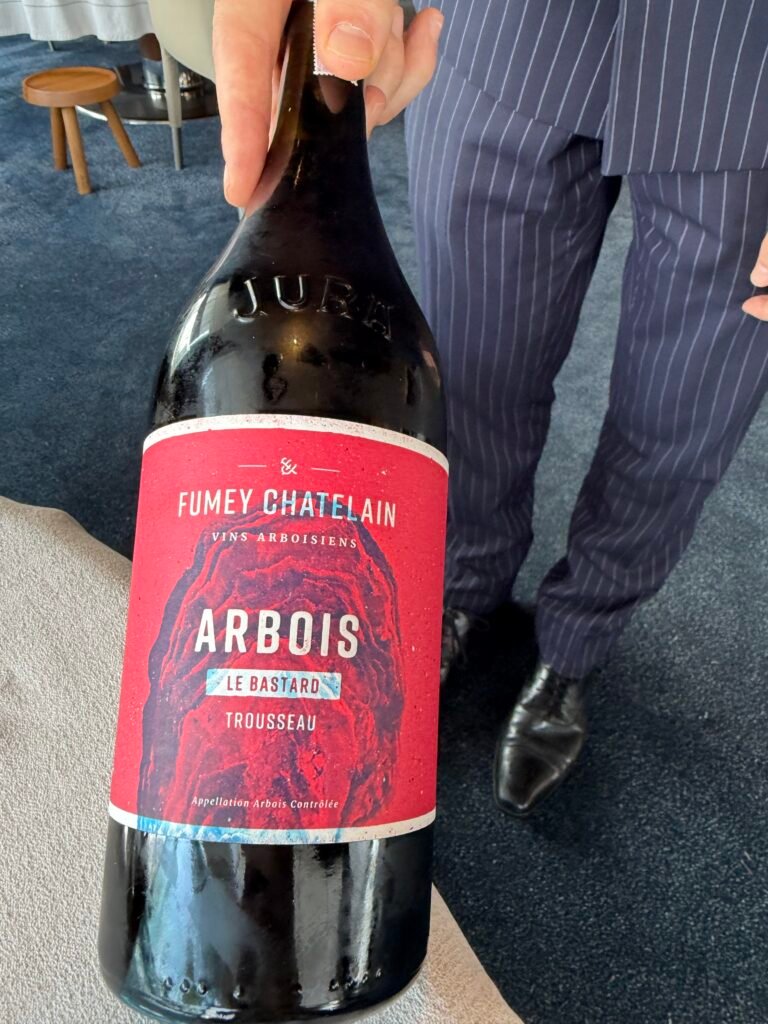
We opened with a German Riesling, and it did exactly what a good Riesling should do at a tasting menu of this length: reset the palate between richer courses and provide a consistent thread of acidity that Thai-influenced French cooking genuinely needs. Riesling’s ability to handle a wide spice and umami range made it the more versatile of the two wines across the full three hours, while the Trousseau gave the meal its more distinctive, memorable moment.
Alongside it, we worked our way through one of the restaurant’s Arbois Trousseau, specifically the cuvee Le Bastard, from the Jura. Trousseau is still a relatively under-the-radar grape outside serious wine circles, and it was a smart, slightly unexpected choice to pair against the earlier, lighter seafood courses. It has enough structure and a savory, almost smoky edge that kept up with the richer sauces, while its natural acidity meant it never fought with the more careful raw and lightly cooked preparations later in the menu. Jura wines rarely get serious real estate on fine dining lists outside France, so seeing a properly chosen Trousseau on a Bangkok wine list said a lot about the level of the buying here.
Together, the pairing captured something I appreciate in a serious wine list: a willingness to put lesser-known regions next to the expected classics, and trust the food and the guest to follow along. For a three-hour, multi-course lunch, it was close to a perfect pairing strategy: contrast where the menu needed it, and consistency where it needed that instead.
Service and Overall Impression
Service at Blue matched the level of the cooking, attentive without being intrusive, and confident enough to let the meal set its own pace. For a meal built around this many courses and this much wine, that pacing matters as much as any individual dish. Nothing felt rushed, nothing felt like it was dragging, and the three hours passed in a way that felt earned rather than long.
If you are planning any kind of milestone meal in Bangkok- an anniversary, a serious wine dinner, a lunch worth building a whole day around- Blue by Alain Ducasse deserves to be on the shortlist. Book the Menu Voyage, clear your afternoon, and treat the ICONSIAM mall itself as part of the experience rather than simply the building the restaurant happens to sit in.
Riverside Dining at Naam 1608
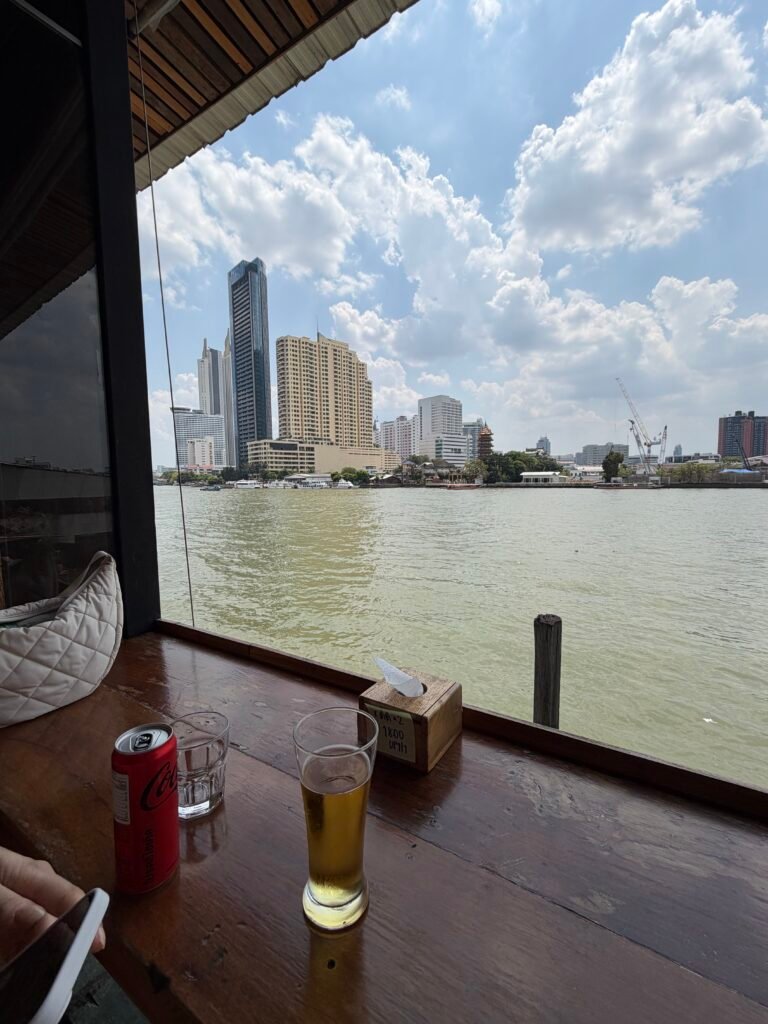
For a different kind of evening, Naam 1608 was one of the better discoveries of the trip. Set along the Chao Phraya with proper river views, it is the sort of restaurant that gets the basics right: a well-positioned terrace, good sightlines to the water, and food that does not try to overcomplicate what is already a strong setting.
The riverside location means sunset is the ideal time to arrive, when the light on the water and the passing river traffic, from long-tail boats to the larger dinner cruise vessels, gives the whole meal a sense of occasion without needing much else. It is a good contrast to a place like Blue: less formal, less structured, but every bit as enjoyable in its own register, and a reminder that some of Bangkok’s best dining experiences are built as much around setting as around technique.
A Day Trip Worth Taking: The Train Market and the Floating Market
If you have one day free outside the city, combining the Maeklong Railway Market with a floating market is the single best day trip available from Bangkok, and it works well as a half-day tour if you plan the timing correctly.
Maeklong Railway Market is exactly what it sounds like: a working market built directly along an active train line, with stalls of produce, fish and household goods pitched so close to the tracks that vendors retract their awnings and pull their goods back within seconds of a train’s arrival, several times a day. It sounds like a gimmick until you see it happen. The market simply folds itself out of the way, the train passes at walking pace through the middle of the stalls, and within a minute everything is back exactly where it was. It is one of those experiences that photographs well but is genuinely more impressive in person, because of how routine and unbothered the vendors are about the whole thing.
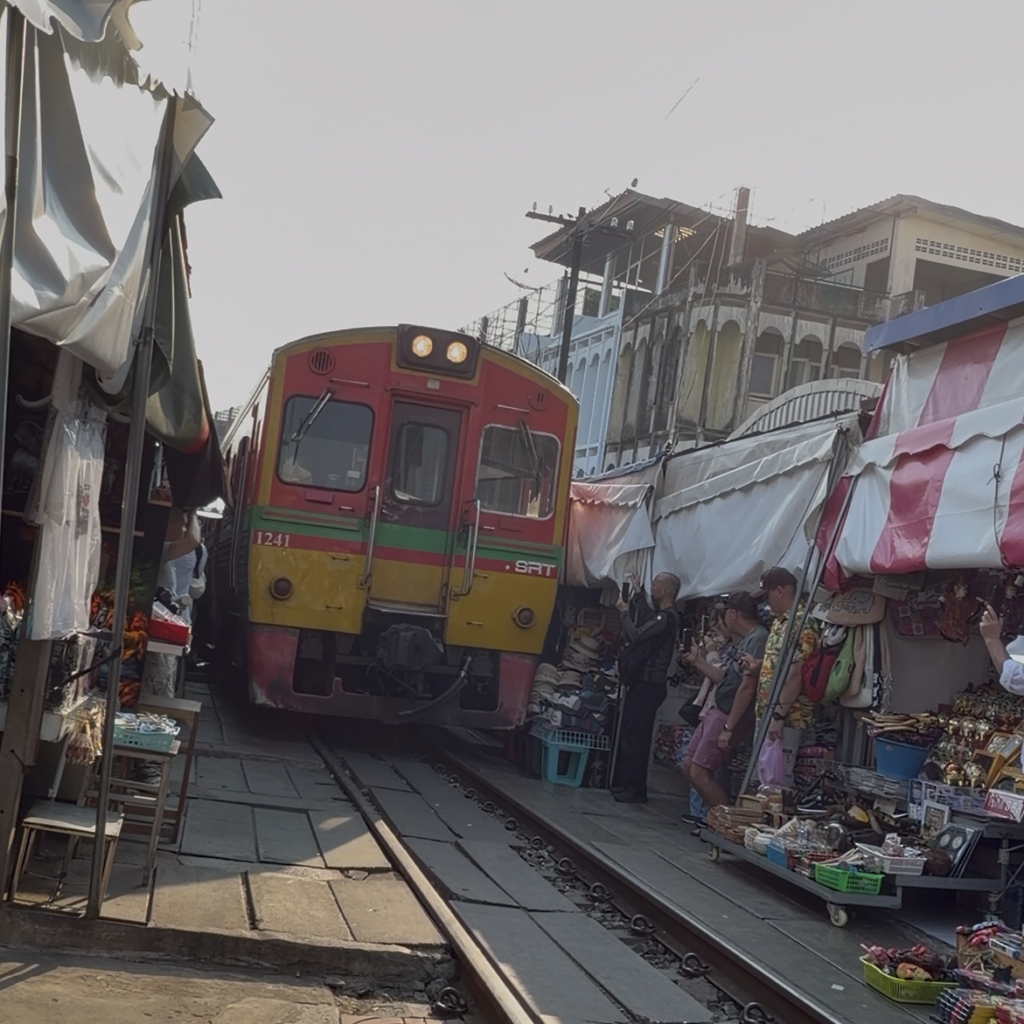
From Maeklong, most day trips continue on to a floating market, typically Damnoen Saduak or Amphawa depending on the tour and the time of day. Damnoen Saduak is the more famous of the two and the more touristic, with a dense concentration of boats selling fruit, noodles and souvenirs along narrow canals. Amphawa tends to feel a little more local, especially in the late afternoon and evening, when it becomes as much a food market as a boat market, with vendors grilling seafood along the canal edges as the light starts to fade.
Either version gives you the classic Thailand floating market image, boats piled with produce, vendors paddling between customers, but pairing it with the railway market on the same day turns it from a single tourist stop into a much richer, more varied day trip. Book through a driver or a small group tour rather than doing it entirely independently, since timing around the train arrivals and the market’s more active hours matters more than it first appears.
Practical Notes for Planning Your Own Trip
A few logistics worth knowing before you go:
- The Chao Phraya Express Boat and the various cross-river ferries are cheap, fast, and avoid Bangkok’s notorious traffic almost entirely for river-adjacent destinations, including ICONSIAM, which has its own dedicated pier.
- Grab, the regional ride-hailing app, is more reliable than hailing taxis on the street, particularly outside the main tourist areas.
- Reservations at Blue by Alain Ducasse should be made well in advance, particularly for lunch and particularly for the longer tasting menus. A three-hour lunch needs a kitchen that is properly staffed for the pace, and that means limited seatings.
- Chinatown is louder and busier than Bangkok’s more polished neighborhoods, and that is exactly the point of staying there. If you need total quiet, choose a hotel a block or two off the main Yaowarat strip rather than directly on it.
- Bangkok’s heat is real for most of the year. Plan market visits, including the train and floating market day trip, for early morning departures where possible, both for comfort and because markets are genuinely more active earlier in the day.
Final Thoughts
Two trips to Bangkok have taught me the same lesson twice: this is a city that punishes a rigid itinerary and rewards a flexible one. The best plan is a loose one, built around a handful of fixed points, a market, a river view, one serious meal, and left open enough to wander into whatever the city offers between them.
Blue by Alain Ducasse gave this trip its centerpiece, three unhurried hours of exceptional cooking and a wine list confident enough to put a Jura Trousseau next to a German Riesling and trust both to do their job. Nai Ek’s noodles and Lek Seafood’s crab gave it its counterweight. Chinatown gave it a base that felt like the real city rather than a version built for visitors. And a single day trip out to Maeklong and the floating markets gave it a change of pace that no amount of city dining can replicate.
That combination- fine dining, street food, a river, and a proper day trip out of town- is what makes Bangkok one of the more complete food and travel destinations in Asia, and exactly the kind of city worth returning to more than once.