The Mosel Wine Region: A Serious Riesling Lover’s Guide to Germany’s Slate Valley
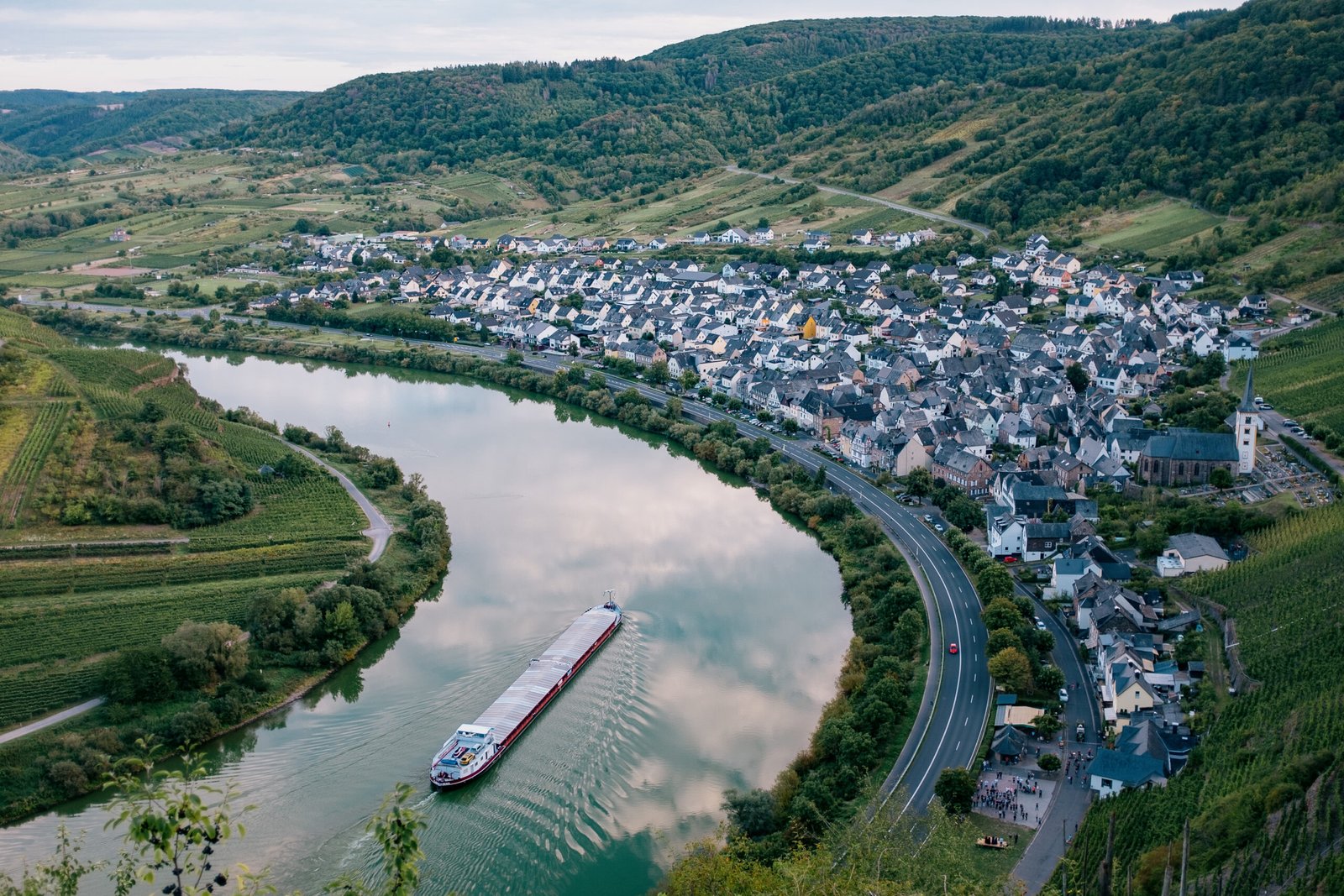
There are wine regions you visit for the scenery, and there are wine regions you visit for what’s in the glass. The Mosel wine region is one of the rare places where both reasons carry equal weight. The river carves a series of tight, looping bends through the Rhineland-Palatinate, and on nearly every outer bend, vineyards climb slopes so steep that mechanical harvesting is simply not possible. Workers still bring in the fruit by hand, often on cable-hauled monorails or with baskets strapped to their backs, because a tractor would tip over.
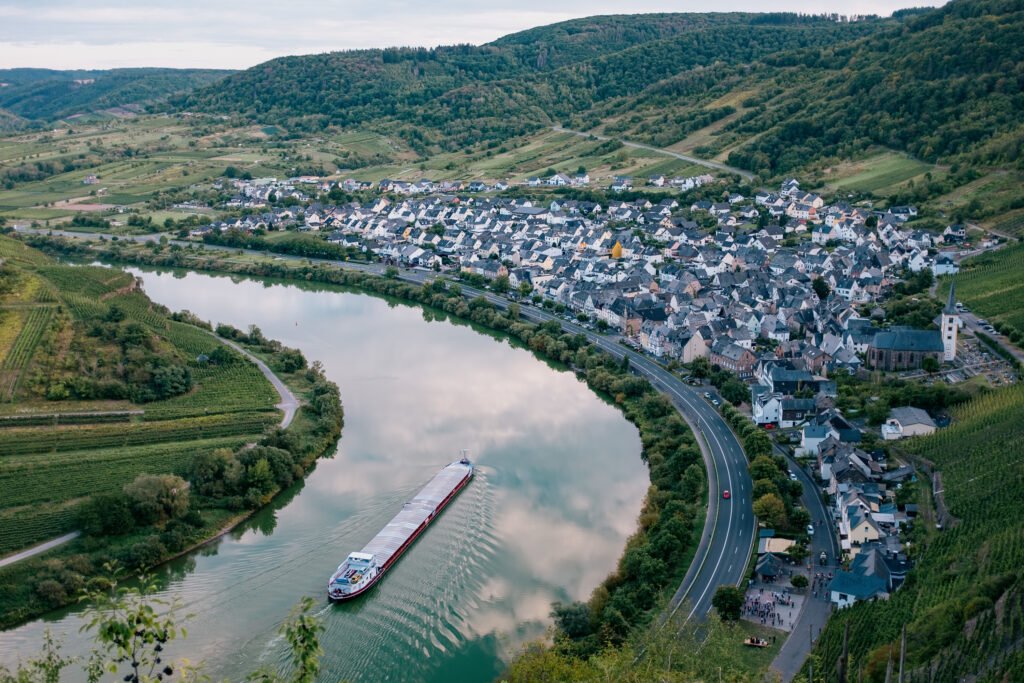
That physical extremity is not a curiosity. It’s the reason the wines taste the way they do. Steep, south-facing slate slopes hold heat during the day and radiate it back at the vines through the night, which is what allows Riesling, a grape that ripens late and needs every bit of warmth it can get, to reach full maturity this far north. Take away the incline and the Mosel’s wines would be thinner, less expressive, and far less interesting to anyone who has spent real time with German Riesling.
This guide is written for people who already know a Kabinett from a Spätlese and want more than a surface-level overview. It covers the region’s geology and classification system, four vineyards worth building a trip around, practical travel notes, and a short list of bottles worth ordering if a Mosel trip isn’t on the calendar this year.
Where the Mosel Sits, and Why the Geography Matters
The Mosel River begins in the Vosges mountains of France, but the wine region that carries its name runs through Germany, from just south of Trier down to where the river meets the Rhine at Koblenz. Growers and the regional wine authority divide the area into three stretches: the Upper Mosel (Obermosel), the Middle Mosel (Mittelmosel), and the Lower Mosel (Terrassenmosel). Two tributaries, the Saar and the Ruwer, join the river near Trier and are usually discussed as part of the same wine region even though their wines have a distinct character.
The Middle Mosel holds the majority of the region’s most celebrated vineyards and is where most visitors spend their time. Villages like Bernkastel, Wehlen, Graach, Zeltingen, Ürzig, Erden, Brauneberg, and Piesport sit along this stretch, each with its own well-known single vineyard sites, or Einzellagen. In total, the Mosel counts 524 registered single-vineyard designations across nineteen broader Grosslage districts, a level of granularity that rewards close attention once you start comparing bottles from neighboring slopes.
The Saar, joining south of Trier, runs cooler and steeper than the Middle Mosel, and its Rieslings tend to show a racier, more austere acidity. Egon Müller’s Scharzhofberg vineyard, arguably the most famous site in the Saar, sits here, and in warm vintages the Saar can produce some of the most age-worthy sweet wines in the country, since the extra acidity gives them a longer runway to develop without falling flat. In cooler years, that same acidity can make the wines feel almost severe in their youth, which is part of why Saar Riesling has a smaller but famously devoted following among collectors willing to wait a decade before opening a bottle.
The Ruwer is the smallest of the three tributaries, small enough that its entire planted area would fit inside a mid-sized Middle Mosel village, and it produces wines of notable delicacy, with Maximin Grünhaus and Karthäuserhof among its standard-bearers. Because the Ruwer sits in a narrower, more sheltered valley than the open Mosel or the wind-exposed Saar, its wines often show a softer, more floral profile even at comparable ripeness levels. Visitors who only have time for the Middle Mosel and the Saar sometimes skip the Ruwer entirely, which is understandable given how close it sits to Trier, but it does mean missing one of the more distinctive expressions of Mosel Riesling.
Soil is the other variable worth understanding before you taste your way through the region. Ernst Loosen of Weingut Dr. Loosen has described the split simply: blue slate, the more common soil type, tends to produce delicate wines with citrus and green apple character, while red slate, or Rotliegend, tends to push toward darker fruit and a more muscular structure. Growers and sommeliers can’t fully explain the mechanism, but the pattern shows up vintage after vintage, and it’s one of the more useful things to keep in mind when you’re comparing two Rieslings from villages a few kilometers apart.
A Short History Worth Knowing Before You Taste
Viticulture on the Mosel goes back to Roman times, when the river was already a trade route and Trier, then called Augusta Treverorum, was one of the empire’s major northern cities. Roman-era wine presses and cellar remains have been found throughout the region, and Trier’s Landesmuseum has artifacts documenting winemaking here for close to two thousand years.
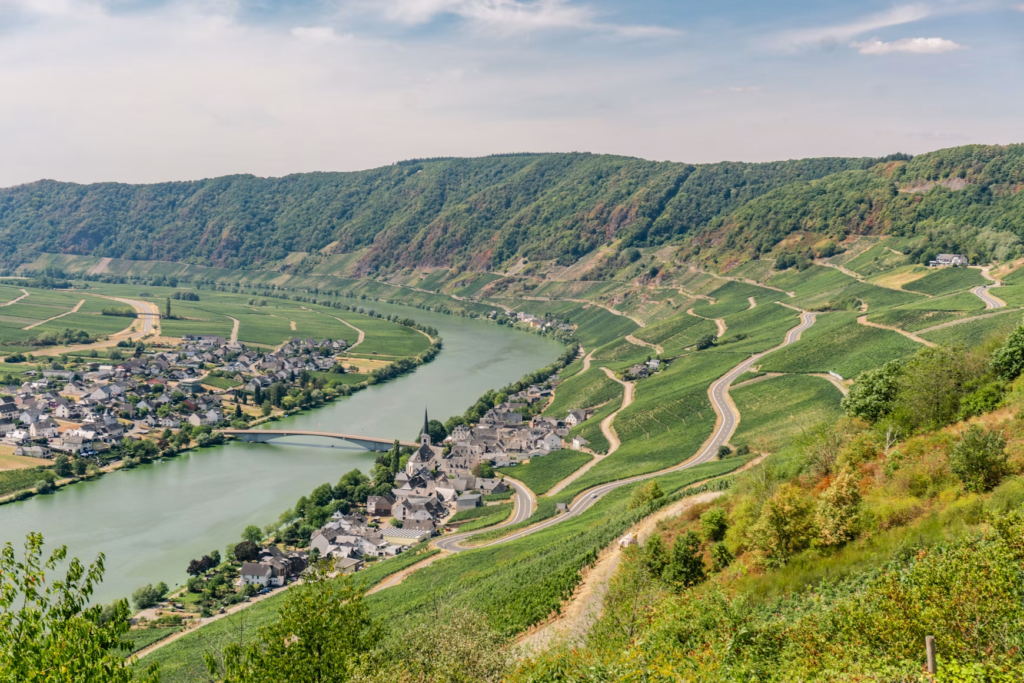
The modern reputation of the Mosel, though, was built more recently, in the late nineteenth and early twentieth centuries, when the region’s off-dry and sweet Rieslings were considered on par with, and in some auction rooms more expensive than, top Bordeaux. That reputation dipped through much of the mid-to-late twentieth century as mass-market Liebfraumilch and cheap, industrially produced Riesling flooded export markets and dragged the region’s image down with it. Much of that cheap wine wasn’t even genuine Mosel fruit; it carried the region’s name on the label while relying on high-yield vineyards and heavy sugar additions, and the damage to consumer perception outlasted the wines themselves by decades. Plenty of people who came of age drinking wine in the 1980s and 1990s still associate German Riesling with cloying sweetness, an association that has almost nothing to do with what a serious Mosel producer is making today.
The last three decades have been a genuine reversal, driven by growers such as Ernst Loosen, the Prüm family, and a newer generation working biodynamically, who reasserted site-specific, quality-first winemaking and rebuilt the Mosel’s standing among serious collectors. The VDP’s push toward vineyard classification and dry Grosses Gewächs bottlings gave export markets a new, more legible way to understand the region’s best sites, and a wave of younger winemakers taking over family estates in the 2000s and 2010s brought fresh energy to both farming practices and export relationships. The result is a region that, in the space of about a generation, went from a cautionary tale about diluted branding to one of the most respected fine wine categories among sommeliers and collectors who take the trouble to look past the label.
Understanding the Wines: Ripeness Levels and the Dry Turn
Mosel Riesling is traditionally classified by ripeness at harvest under the Prädikatswein system, and understanding this scale is close to essential if you’re buying or ordering with any precision.
Kabinett is the lightest style, made from the earliest-picked, least ripe grapes, typically low in alcohol (often 7.5 to 9 percent) with bright acidity and a delicate touch of sweetness. Spätlese means late harvest, picked riper, with more body and a more pronounced sweetness, though still balanced by the region’s characteristic acidity. Auslese comes from individually selected bunches, picked riper still, and produces concentrated, age-worthy wine that can develop for decades. Beerenauslese and Trockenbeerenauslese are made from individually selected, often botrytis-affected berries, and sit among the rarest and most expensive sweet wines made anywhere.
What’s changed over the last twenty years is the rise of dry Riesling alongside these traditional sweeter styles. The VDP, Germany’s association of top estates, uses the designation Grosses Gewächs (often shortened to GG) for dry wines from classified top vineyard sites, roughly analogous to a grand cru bottling in Burgundy. Many leading Mosel producers now make both a traditional off-dry Spätlese and a bone-dry GG from the same vineyard, and tasting the two side by side at a single estate- Dr. Loosen and Selbach-Oster both do this comparison well in their tasting rooms- is one of the clearest ways to figure out which style actually suits your palate rather than assuming you already know.
It’s worth noting that sweetness and quality are entirely separate axes in this system, a point that trips up plenty of newcomers who assume a Kabinett must be simpler than a GG. A well-made Kabinett from a top site can be every bit as serious and age-worthy as a dry wine from the same vineyard, just built around a different balance of sugar and acid. The residual sugar in a traditional Spätlese or Auslese is there to counterbalance the Mosel’s naturally high acidity, not to mask a lack of ripeness, and the best examples read as bright and precise rather than heavy or dessert-like. If you’re building a case to bring home, it’s worth including at least one bottle from each end of the spectrum rather than assuming a dry style is automatically the more serious choice.
On the table, Mosel Riesling’s combination of moderate alcohol and cutting acidity makes it one of the more flexible wines in food pairing generally. A dry GG works well with richer fish and shellfish preparations, while an off-dry Kabinett or Spätlese is a genuinely useful counterpoint to spicy Southeast Asian cooking, since the touch of sweetness and high acidity together cut through chili heat far better than most dry white wines manage. Local Mosel cuisine, trout, river fish generally, and the region’s onion tarts and Flammkuchen were essentially built around these wines over centuries, and eating in the region gives you the clearest possible sense of why the pairing works so well in practice rather than just in theory.
Four Vineyards Worth Building a Trip Around
The Mosel has dozens of estates capable of pouring a memorable glass, but if time is limited, these four give a visitor a genuinely representative cross-section of the region, from accessible and welcoming to historically important and harder to reach.
Weingut Dr. Loosen (Bernkastel)
Dr. Loosen is the most sensible starting point for most visitors, and not because it’s a compromise. Ernst Loosen took over his family’s estate in 1988 and spent the following decades rebuilding both the vineyards and the estate’s international reputation, work that saw Dr. Loosen inducted into the VDP in 1993 and, more recently, ranked among the World’s 50 Best Vineyards. The estate farms parcels in several of the Middle Mosel’s best-known sites, including Bernkasteler Lay, Wehlener Sonnenuhr, Erdener Prälat, and Ürziger Würzgarten, which means a single tasting here can walk you through several distinct slate profiles in one sitting. The estate’s Gutsschänke (estate tavern) welcomes visitors without the appointment friction some neighboring producers require, making it a practical first or last stop on a Mosel itinerary. The Bernkasteler Lay and Bernkasteler Johannisbrünnchen vineyards sit close enough to the estate to walk or cycle through, which is worth doing if the weather cooperates.
Weingut Fritz Haag (Brauneberg)
Across the river from the town of Brauneberg, Fritz Haag farms around 29 hectares spread across four vineyards, with the bulk of its most prized fruit coming from Brauneberger Juffer and the smaller, steeper Brauneberger Juffer-Sonnenuhr, widely regarded as the estate’s finest site. Both are steep, south-facing slopes of weathered blue slate marbled with veins of iron oxide, and the estate’s sweeter Prädikat wines in particular are considered some of the most collectible and long-lived in the entire region, capable of developing gracefully for twenty to thirty years. Visits typically run through a structured tasting guided by a member of the small team, and past visitors have described being walked through as many as fifteen or more wines spanning the full ripeness spectrum in a single sitting. This is a producer worth visiting specifically if your interest leans toward the traditional, sweeter end of the Mosel style rather than the drier, more recently fashionable GG bottlings.
Weingut Selbach-Oster (Zeltingen)
Selbach-Oster sits in Zeltingen, in the heart of the Middle Mosel, and has built a reputation for consistency across both dry and off-dry styles from top sites including Zeltinger Sonnenuhr, Zeltinger Schlossberg, and Wehlener Sonnenuhr. It’s a good choice for a visitor who wants to taste the dry-versus-off-dry contrast from identical fruit, since the estate bottles both styles from several of its top parcels and is generally open and communicative about the differences between them, which is not something every Mosel producer prioritizes with visitors. The estate also has a strong US and UK export presence, so bottles tasted here are usually easy to track down again afterward.
Weingut Clemens Busch (Pünderich)
For a genuinely different angle on the region, Clemens Busch farms biodynamically in Pünderich, in the section of the Mosel sometimes called the Terrassenmosel for its exceptionally steep, terraced vineyards. The estate’s Pündericher Marienburg vineyard is divided into distinct soil types (blue Devonian slate, red slate, and a grey slate variant), and the wines are bottled separately by soil type rather than blended, which turns a single vertical tasting into a genuine lesson in how geology shows up in the glass. This is the estate to visit if you’ve already done a few traditional Mosel tastings and want to see how organic and biodynamic farming is reshaping thinking in a region that, for most of its history, was dominated by conventional viticulture on impossibly steep ground.
A note on two names you’ll hear constantly but may struggle to visit: Joh. Jos. Prüm in Wehlen and Egon Müller’s Scharzhof in the Saar are both considered among the most historically important estates in German wine, and both are famously difficult to access without an existing trade relationship. If you have contacts who can arrange an introduction, it’s worth the effort. If not, their wines are still findable through specialist retailers, and are worth seeking out even without a cellar visit.
Planning the Trip: Logistics That Actually Matter
Getting there. Frankfurt is the most convenient international airport, roughly two hours by car from Bernkastel-Kues, which functions as the most practical home base for a Middle Mosel itinerary. Trier, with its own regional airport connections and excellent Roman-era sightseeing, works well as a base if you also want to spend time in the Saar and Ruwer. A car is close to essential; while there is regional train and bus service along the river, the estates themselves are often just outside town centers and the vineyard roads reward slow, flexible driving.
When to go. Late September through mid-October is harvest season and the most atmospheric time to visit, with regional wine festivals in most towns, but it’s also the busiest period and the time when appointment-based estates are hardest to book. Late spring and early summer offer quieter tasting rooms, blooming vineyards, and reliably good weather for walking the terraced paths above the river. Winter visits are possible and can be rewarding for serious cellar tastings, but many smaller producers reduce their visiting hours outside the main season.
Booking ahead. Most family estates along the Middle Mosel, including Zeltingen, Graach, Wehlen, and Bernkastel, accept email or phone requests for tastings, and a lead time of one to two weeks is usually sufficient outside of harvest. The very top estates, again Egon Müller and Joh. Jos. Prüm chief among them, are considerably harder, and some village Weinschenken (wine taverns) welcome walk-in visitors without any booking at all, which is a good fallback if your schedule is loose.
Where to stay and eat. Bernkastel-Kues, with its half-timbered market square, is the obvious hub for the Middle Mosel and has a good range of guesthouses and small hotels, many run by winemaking families who pour their own wine at breakfast. Traben-Trarbach, a little further downriver, has a striking Art Nouveau architectural character from its early twentieth-century wine-trade boom and makes a good alternative base with fewer crowds. Trier is worth at least a day on its own for the Roman ruins (the Porta Nigra and the ancient baths) regardless of your wine itinerary. For food, look for restaurants serving Federweißer (young, still-fermenting wine) in early autumn alongside Zwiebelkuchen (onion tart), and don’t skip a simple riverside Forelle (trout) with local Riesling, a pairing the region does better than almost anywhere else.
Recommended Mosel Wines to Buy Online
If a trip isn’t happening this year, or you want bottles in hand before you go, these are solid, findable entry points across price and style, sourced from producers discussed above.
Dr. Loosen Blue Slate Kabinett Riesling. An accessible, classically styled Kabinett from blue slate soils, with the citrus and green apple character typical of the soil type. A reliable everyday bottle and a good baseline for understanding the Kabinett style before moving up the ripeness scale. Widely available through Loosen Bros USA and major online retailers.
Dr. Loosen “Dr. L” Riesling. The estate’s entry-level bottling, off-dry, easy to find, and a fair representation of house style at a lower price point. A sensible bottle to order if you want to taste the estate’s fruit character before committing to single-vineyard bottlings.
Selbach-Oster Zeltinger Schlossberg Riesling, Kabinett or Auslese. Both levels are widely distributed and consistently well reviewed. The Auslese bottling in particular has drawn strong scores from Vinous and other critics and rewards cellaring if you have the patience.
Fritz Haag Estate Riesling Trocken. A dry expression from the estate’s home village of Brauneberg, built on the same steep, slate-and-iron-oxide slopes as the estate’s more famous sweet wines, and a good way to taste Fritz Haag’s site character without the price tag of the top Prädikat bottlings.
Weingut Clemens Busch Pündericher Marienburg (any of the soil-specific bottlings). Harder to find outside specialist retailers but worth the search if you want to taste the organic, terroir-focused side of the region discussed above.
Most of these are stocked, at least seasonally, by retailers such as Wine.com, Decantalo, and Loosen Bros USA’s own online shop, and prices range from roughly fifteen to fifty euro a bottle for the wines listed here, with the rarer Auslese and single-soil bottlings sitting toward the top of that range. Availability shifts quickly, especially for smaller-production wines, so it’s worth checking current stock directly with the retailer before planning around a specific bottle.
Final Thought
The Mosel rewards patience in more than one sense. The vines themselves take real physical effort to farm, the wines built on the traditional Prädikat scale take years to show their full character, and the region as a whole took decades to shake off a reputation it never fully deserved. None of that makes it a difficult region to enjoy. It makes it one where a little background knowledge changes the experience considerably, whether you’re standing on a terraced slope above Bernkastel or opening a bottle at home with a Mosel map spread out on the table.
Enjoyed reading about the Mosel wine region? Read about more German wine regions here.