Amphorae, Cork Oaks and Alicante Bouschet: Four Alentejo Estates to Plan a Trip Around
AT A GLANCE
Key Grapes & Style: Aragonez (Tempranillo), Alicante Bouschet, Trincadeira, and Antão Vaz, Portugal’s sprawling sun-drenched southern plains producing bold, structured red blends and rich, textured whites marked by dark berry fruit, savory spice, oak depth, and balanced acidity.
Ideal Visiting Months: May to June or September to October (experiencing golden rolling plains, historic cork oak forests, and pleasant shoulder-season warmth before the intense mid-summer heat).
Must-Try Pairing: A robust Alentejo red blend paired with slow-roasted black pork (Porco Alentejano) or traditional wild boar stew, or a textured white with local pan-seared river fish.
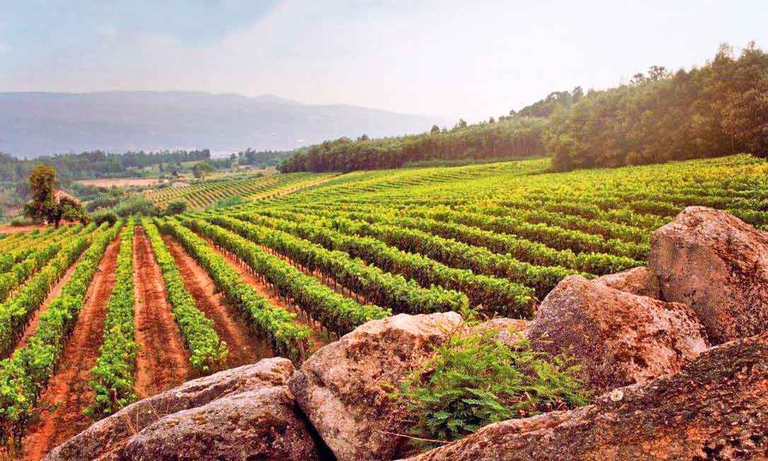
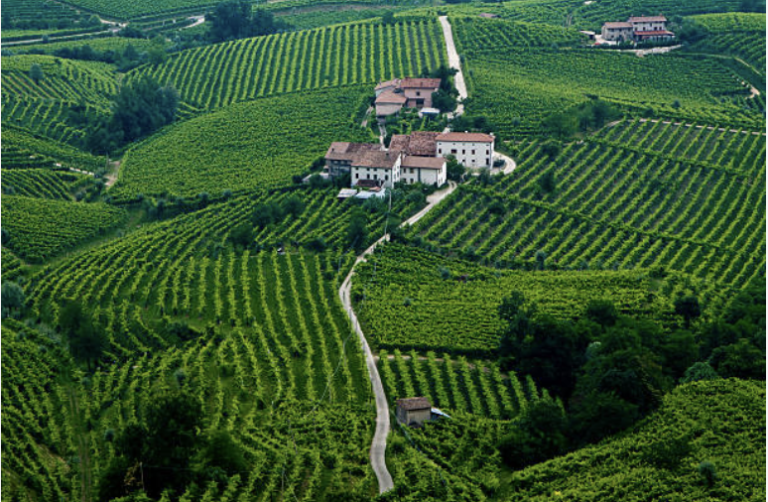
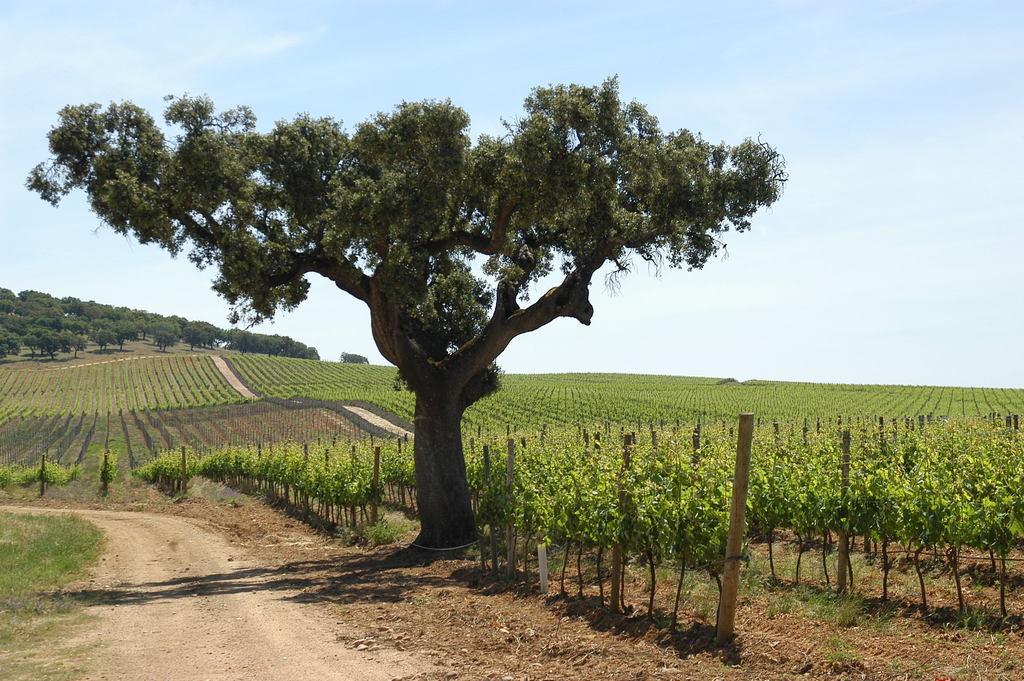
The Alentejo does not look like most wine regions. There are no steep terraces, no river gorges, no clipped rows running to the horizon. What you see instead is a wide, pale landscape of rolling plains, cork oaks spaced like trees in a park, olive groves, whitewashed villages and long stretches of nothing in particular. The light is hard and bright, the summer heat is serious, and the silence in the middle of the day is something you notice. Vines are part of this picture, but they share it with sheep, black pigs, and bark stripped from the trunks of cork oaks.
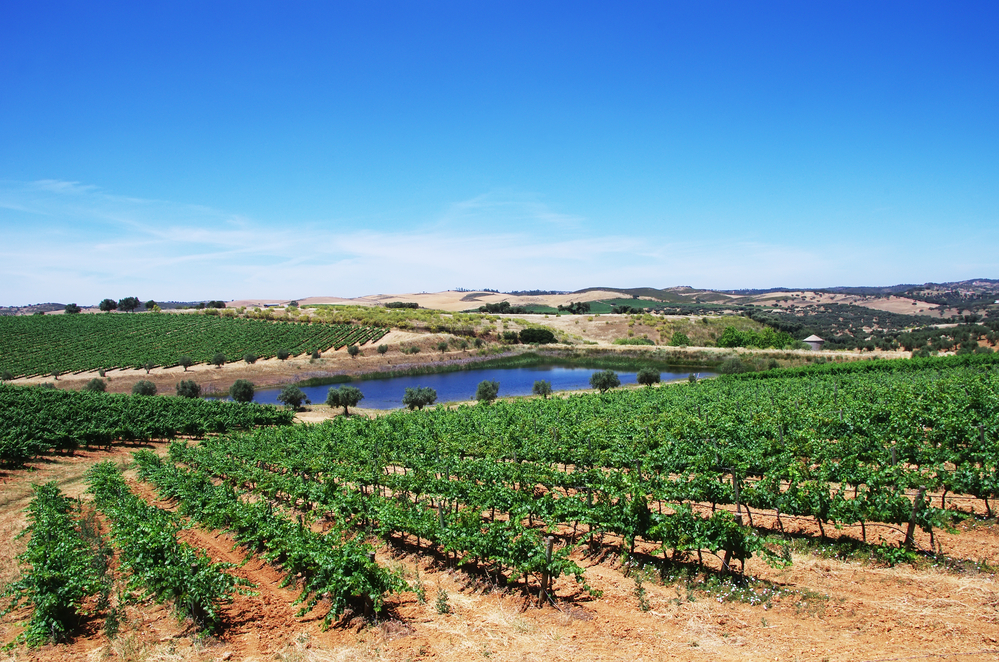
That scale is the reason the Alentejo matters. It covers about a third of Portugal, it is thinly populated, and it supplies a very large share of the country’s everyday red wine. A figure often repeated in travel writing is that roughly one in two bottles of still wine drunk in Portugal comes from here. For a long time that meant ripe, soft, generous reds made for easy drinking. The more interesting story of the past two decades is what happened next: producers began chasing freshness, working with old vines, reviving clay amphorae and treating the region’s native grapes as assets rather than a regional quirk.
This guide is written for readers who already know their way around a wine map. It covers the climate and soils, the eight sub-regions of the Alentejo DOC, the grapes that matter, the Roman-era tradition of vinho de talha, and how the labels work. It then profiles four estates that suit a trip from Lisbon: Herdade do Esporão, Monte da Ravasqueira, Adega Cartuxa and Adega José de Sousa. Contact details and opening arrangements were checked against estate, tourism board, and travel sources.
Geography and Terroir of the Alentejo
The Alentejo occupies the southern interior of Portugal, running from the Tagus basin south toward the Algarve and east to the Spanish border. Its name means beyond the Tagus. The terrain is mostly gentle, with low hills, broad valleys and a scattering of mountains, and nothing like the dramatic relief of the Douro or the green north.
Climate
The climate is continental with a strong Mediterranean accent. Summers are long, hot and dry, and temperatures regularly climb past 40 degrees Celsius in July and August. Winters are cool and wet, with some of the coldest conditions in the country in the interior. What helps the grapes is the swing between day and night. Esporão’s own description of the region points to hot summers in which night temperatures can drop sharply, which preserves acidity and aroma in grapes that would otherwise ripen too fast.
That climate is also what makes the region interesting from a long-term viewpoint. A 2005 analysis by climate scientist Gregory V. Jones identified the Alentejo as one of the most climate-challenged regions among those he assessed worldwide, and many local growers now talk about altitude, canopy shade, earlier harvests, and different varieties as practical responses rather than theoretical ones.
Soils
The Alentejo’s soils are diverse, and the variety is one of the most useful things to know when reading a label. Esporão describes the soils across the region as including schist, clay and loam, and tasting notes frequently reference granite in the north and in parts of the Reguengos area. Schist and granite tend to produce more mineral-focused wines, while deeper clay and loam give broader, softer ones. In practice, the best producers match varieties to soil with some care: Alicante Bouschet and Trincadeira on clay, white varieties on lighter soils, and more elegant reds on schist.
The Montado Landscape
Look at any photograph of the region, and you will see the montado, a managed woodland of cork and holm oaks that doubles as pasture. It supports cattle, sheep and the Alentejo black pig, and it is the source of much of the world’s cork. Monte da Ravasqueira, one of the estates below, is a good example of how a modern wine estate fits into this system. Its land runs to roughly 3,000 hectares, of which only about 45 are vines. The rest is cork, olives, cattle, pigs, and honey, according to a visitor directory listing. Understanding the Alentejo means understanding that wine is one part of a mixed agricultural landscape rather than a monoculture.
The Eight Sub-Regions of Alentejo DOC
The Alentejo DOC was formed in 2003, when several earlier separate denominations were merged. Eight sub-regions can appear on the label alongside the Alentejo name, and most serious producers now use them. They are Portalegre, Borba, Redondo, Évora, Reguengos, Granja-Amareleja, Vidigueira and Moura.
Portalegre
The northernmost and highest sub-region, in the foothills of the São Mamede mountains. Altitude and granite soils give it the coolest conditions in the Alentejo, and the wines are typically fresher and more structured. Herdade do Mouchão, one of the old Alicante Bouschet estates, is based here.
Borba and Redondo
In the centre of the region, these neighbouring sub-regions are known for solid, well-structured reds from schist and clay. Cooperative wineries have played a large part in their history, and some of the best-value wines in the Alentejo come from here.
Évora
Around the UNESCO-listed city, this sub-region is home to Adega Cartuxa, the Fundação Eugénio de Almeida’s winery. Évora is the natural base for most visitors, with its Roman temple, medieval walls and good restaurants.
Reguengos
The largest and arguably the most productive sub-region, with a strong concentration of quality-focused estates. Esporão, Adega José de Sousa and the Ervideira winery are all around the town of Reguengos de Monsaraz, within about 30 minutes of Évora. For a trip focused on wine, this is the core.
Granja-Amareleja and Moura
The hottest and driest sub-regions, in the south-east near the Spanish border. They are far less visited and produce riper, more alcoholic reds, though some producers are now exploring this heat with more careful viticulture.
Vidigueira
In the south, Vidigueira is best known for its white wines, especially those from Antão Vaz, and for its historic clay-pot tradition. Vidigueira is where much of the revival of talha winemaking has taken place, and its slightly cooler microclimate near the Serra do Mendro gives its whites a certain freshness that is unusual for the region.
A Short History of Alentejo Wine
Winemaking in the Alentejo is older than the country. The Romans planted vines and made wine in large clay vessels, a practice that survived in a few villages through two thousand years of political change. In the Middle Ages, the region’s best-known wine came from the area around Évora, and the name Pêra-Manca has been linked to the city for centuries as a symbol of its quality.
For most of the twentieth century, the region was better known for cork and wheat than wine. Large cooperative cellars processed grapes from small farmers and produced simple wines for the Portuguese market. The turning point came in the 1980s and 1990s, when investment, new technology, and a younger generation of winemakers began to change the quality ceiling. Herdade do Esporão, established as a wine producer in 1985 according to its retail descriptions, became the best-known example. Its estate history goes back to the Bronze Age, but its modern wine identity dates from this period, and it opened to visitors in 1997. The estate is also organic, which was an early and unusual commitment for a large Alentejo producer.
Cartuxa, run by the Fundação Eugénio de Almeida in Évora, followed a different path. The foundation, established in 1963 by Vasco Maria Eugénio de Almeida, had wine in its portfolio since the late nineteenth century and used its resources to restore the reputation of Pêra-Manca, now one of the most sought-after Portuguese reds. Its winery sits in a former Jesuit building, and its work shows how an institution with a cultural mission can sustain a long-term wine project.
The most recent chapter concerns the revival of old methods. Producers such as José de Sousa, with its cellar of 114 clay amphorae in Reguengos de Monsaraz, have kept the Roman talha tradition alive, and others like Herdade do Rocim have built whole ranges around amphora winemaking. The results tend toward the fresh and mineral, and they have changed how many wine writers think about the region.
Grape Varieties of the Alentejo
The Alentejo grows a mix of Portuguese and international grapes, and the blend of the two is part of what gives the region its style.
Red Varieties
- Alicante Bouschet: The most distinctive red of the Alentejo. It is a teinturier, meaning its juice is red as well as its skin, and it gives wines of deep colour, dark fruit and firm tannin. In the right hands, it produces long-lived, structured reds that stand comfortably alongside better-known grapes. Herdade do Mouchão built its reputation on it.
- Aragonez: The local name for Tempranillo. It adds red fruit, spice, and body, and it is the backbone of many Alentejo blends.
- Trincadeira: A late-ripening variety with a peppery, herbal character. It is sensitive to rot but, when handled carefully, adds aromatic lift.
- Touriga Nacional: Better known from the Douro and Dão, but increasingly planted in the Alentejo, where it brings floral notes and structure.
- Syrah and Cabernet Sauvignon: The most successful international varieties here, often blended with local grapes. Monte da Ravasqueira replaced a block of pomegranate trees with Syrah and Touriga Nacional in 2002, according to a Portuguese wine magazine profile.
White Varieties
- Antão Vaz: The best-known white grape of the Alentejo, particularly in Vidigueira. It gives full-bodied wines with stone fruit and a certain waxy richness, and it handles oak well.
- Arinto: Prized across Portugal for its acidity. In the Alentejo, it adds lift and a citrus edge to blends.
- Roupeiro: A traditional blending grape that contributes freshness and floral notes.
- Viognier and Verdelho: Smaller plantings, but increasingly used for aromatic whites.
The Esporão Reserva Branco, built on Antão Vaz, Arinto and Roupeiro, is a clear demonstration of how a modern Alentejo white is assembled.
How the Alentejo Is Classified
Portuguese wine law uses a pyramid, and the Alentejo sits at two levels of it. Wines may be labelled Vinho Regional Alentejano, which is the wider geographical indication covering the whole region and permitting greater flexibility in grapes and techniques. The tighter tier is the Alentejo DOC, which sets rules on permitted varieties, yields, and minimum alcohol, and which can be extended with one of the eight sub-region names.
Reading an Alentejo Label
Alentejano or Alentejo. Alentejano indicates the broader regional tier, and Alentejo indicates the DOC. A producer who chooses the regional tier is not necessarily making simpler wine. Many ambitious producers use it for blends that fall outside the DOC rules.
Sub-region. Names such as Reguengos, Vidigueira, or Portalegre on the label tell you about climate and soil, and they are a better guide to style than the region name alone.
Reserva and Grande Reserva. These terms signal higher alcohol minimums and a requirement for ageing before release.
Vinho de Talha. A designation for wines made in clay vessels using the traditional method. It is worth looking for if you want to understand what the Romans’ technique tastes like today.
Garrafeira. A term indicating extended ageing in barrel and bottle, usually for more serious reds.
The regional wine board, the Comissão Vitivinícola Regional Alentejana, publishes producer listings and wine tourism details at vinhosdoalentejo.pt, and we used it as a cross-check for several of the contacts below.
Four Estates for an Alentejo Trip
We chose these four because they suit a route from Lisbon; they all offer a structured visit, and between them they show the range of the region: a pioneering organic estate, a family property with a carriage museum, a foundation winery in a historic city, and a working amphora cellar.
Herdade do Esporão, Reguengos de Monsaraz
Esporão is the obvious starting point and the most polished visit in the Alentejo. The estate lies near Reguengos de Monsaraz, on the plains about 30 minutes from Évora. It is organically managed; it has a restaurant that holds a Michelin star and a Green Star, and it has been receiving visitors since 1997. In the Netherlands, it was among the first Portuguese producers to reach a wide audience, and a retailer’s profile notes that Esporão wines were the first introduction to Portugal for many Dutch drinkers.
The wines are a good primer on the region. The Reserva Tinto, made from Alicante Bouschet, Aragonez, Cabernet Sauvignon, Touriga Nacional and Trincadeira, spends twelve months in American and French oak, only 20 percent of it new, and then at least six months in bottle. It is a rich, structured red with wild berry and sweet spice. The Reserva Branco, from Antão Vaz, Arinto and Roupeiro, is full-bodied but lively, and the Monte Velho range offers an easy everyday red. The estate also makes amphora wines, including a Moreto, and a range of olive oils from its own mill.
A visit typically combines a walk through the grounds, a tour of the winery and cellar, and a tasting of four wines, usually two white and two red, subject to availability. A mill tour with olive oil tasting is available year-round, and during harvest the estate offers programmes with vineyard walks and grape picking. The restaurant and wine bar are well suited to a long lunch.
Visit details
- Address: Herdade do Esporão, Apartado 31, 7200-999 Reguengos de Monsaraz, Portugal
- Phone: +351 266 509 280, answered between about 10:00 and 18:30 or 19:00
- Email: reservas@esporao.com
- Hours: the UK importer Hatch Mansfield lists 10:00 to 18:30, and a wine travel directory gives 10:00 to 19:00 from March to October and 10:00 to 18:00 from November to February. All visits should be pre-booked.
- Prices: one regional directory quotes guided visits with tasting from 30 euros for the Classic to 45 euros for the Premium. Harvest programmes and lunches cost more.
- Cancellation: the estate asks for 48 hours’ notice.
Monte da Ravasqueira, Arraiolos
Ravasqueira is a family estate that has been connected to the José de Mello family for generations, and it sits near Arraiolos, about an hour from Lisbon. It is the easiest estate on this list to reach from the capital, and it combines wine with riding, carriages, and a landscape that feels more like a country estate than a commercial winery. A Carriage Driving Museum holds a private collection of harnesses and carriages from different periods, the estate raises Lusitano horses, and the property includes a lodging unit for overnight stays. The estate was runner-up for Best Visitor Centre at the Wine Tourism Awards in 2014, according to the Wines of Portugal listing.
The wines show the modern side of the region. In 2002, five hectares of pomegranate trees were removed to plant Syrah and Touriga Nacional, and the estate now works with about 45 hectares of vines across the wider 3,000-hectare property. When José Manuel de Mello died in 2009, a retailer’s profile notes, his children committed to making the wines a recognised name within the Alentejo. The Touriga Franca, from a small plot, is a good example of the house style: intense, fruity and structured, with sweet fruit and a chocolate note that suits grilled red meat. It earned 90 points from Wine Enthusiast.
The visit programme includes a tasting room, a vineyard and winery tour, wine courses, picnics and meals. The restaurant works by advance booking and asks for a minimum of six people.
Visit details
- Address: Monte da Ravasqueira, Santana do Campo, 7040-121 Arraiolos, Portugal
- Phone: +351 266 490 200
- Email: enoturismo@ravasqueira.com
- Hours: The regional wine board lists the tasting room as open daily, with advance booking advised.
- Meals: the restaurant is subject to advance booking, with a minimum of six people.
Adega Cartuxa, Évora
Cartuxa is the foundation winery of Évora and the house of Pêra-Manca, one of the most talked-about Portuguese reds. It belongs to the Fundação Eugénio de Almeida, a private foundation established in the city in 1963, and its winery sits at Quinta de Valbom, about two kilometres from Évora’s historic centre. The setting is a former Jesuit house, and the property was acquired by the Eugénio de Almeida family in the nineteenth century. The foundation’s vineyards now cover more than 300 hectares across four estates: Pinheiros, Casito, Álamo da Horta and Quinta de Valbom.
The visit is the most historical of the four. It includes a tour of the original cellar and a tasting of three wines chosen by the foundation, usually in a session of around ninety minutes. A longer version pairs a visit to the original winery with six premium wines. The rare Pêra-Manca red is only available to visitors who take the guided tour first, according to a travel feature in the Biscayne Times, which is worth knowing if that wine is the reason you are going. For something less formal, the foundation also runs an enoteca in the city centre, on Rua Cinco de Outubro, which was offering tastings at five euros without reservation in a 2024 regional wine tourism roundup.
Évora itself is part of the appeal. The city’s historic centre has been a UNESCO World Heritage Site since 1986, and Cartuxa pairs easily with a half day of walking its streets.
Visit details
- Address: Quinta de Valbom, Estrada da Soeira, 7000-769 Évora, Portugal
- Phone: +351 266 748 383
- Email: enoturismo.cartuxa@fea.pt
- Hours: The regional wine board lists the tasting room as open Tuesday to Sunday, with tours at 10:30, 11:30, 15:00, and 16:30. Advance booking is advised.
Adega José de Sousa, Reguengos de Monsaraz
José de Sousa is where the Roman method still has a working cellar. The adega in the village of Reguengos de Monsaraz holds 114 clay amphorae, according to a wine travel directory, and it is part of the José Maria da Fonseca group. The talha tradition involves fermenting grapes with their skins in large clay vessels, traditionally lined with pine resin, and in this cellar the process is still carried out much as it has been for centuries. Foot treading remains part of the picture.
What you taste here differs from the modern, oak-aged style at Esporão. Talha wines are often more savoury and structured, with earthy, herbal and mineral notes, and they pair well with the richer food of the region. A regional wine tourism roundup lists the visit at 28 euros per person without lunch and 60 euros with lunch. It is a smaller operation than Esporão, and it rewards a slower pace.
Visit details
- Address: Rua de Mourão 1, 7200-291 Reguengos de Monsaraz, Portugal
- Phone: +351 918 269 569
- Prices: 28 euros per person without lunch, 60 euros with lunch, according to the 2024 regional roundup
- Hours and email: We could not confirm current opening hours or a booking email. Reserve by phone and confirm the format before you travel.
Tasting Alentejo Wines Before You Go
The easiest way to understand the region’s range is to taste across it. Buy a modern Reserva red, a Vidigueira or Reguengos white and a talha wine, and put them side by side. The contrast between the oaked reds and the amphora wines shows how much stylistic variety hides behind the Alentejo name. Specialist importers such as Decántalo list a range of Alentejo producers, which makes it easy to build a mixed case before you travel. Also, Wijnbeurs usually has a selection of Alentejo wines available.
A few tips help. Serve the reds at around 16 to 18 degrees Celsius, as Esporão’s own guidance suggests, so that the warm fruit does not turn heavy. Chill whites more gently than you would a Vinho Verde, to about 10 to 12 degrees, so the texture of an Antão Vaz comes through. And decant a young Alicante Bouschet for an hour or two, because its tannins need air.
Pairing Alentejo Wines With Food
The Alentejo’s cooking is rustic, generous and built around a few strong ingredients: pork, lamb, olive oil, bread, coriander and cheese. The wines were made to go with it.
Reserva reds with roast and braised meats. The Esporão Reserva or Ravasqueira’s Touriga Franca suits ensopado de borrego, the region’s lamb stew, and slow-roasted pork. The structure in these reds meets fat and salt without being overwhelmed.
Alentejo black pig. Carne de porco preto, grilled or roasted, is one of the great regional dishes, and Alicante Bouschet reds with a bit of age are the natural match. Ravasqueira itself fattens the Alentejo black pig, which says something about how closely the food and wine cultures are linked.
Pork with clams. Carne de porco à alentejana, pork cooked with clams, coriander and potatoes, works with an Antão Vaz-led white or a lighter red. The salinity of the clams calls for something with acidity.
Talha wines with bread-based dishes. Açorda, the bread soup flavoured with garlic, coriander and egg, and migas, fried bread with pork, are good partners for amphora whites and light reds. The savoury, herbal quality of talha wines matches the earthy flavours.
Cheese and cured meats. Sheep’s milk cheeses from Serpa and Évora go well with both whites and reds, and a plate of presunto and olives is a standard starter in any Alentejo restaurant.
Fortified and sweet wines with regional desserts. Sericaia, a cinnamon-scented egg pudding served with Elvas plums, calls for a glass of something sweet.
Planning an Alentejo Trip
Getting There
Lisbon is the main gateway, and from there the Alentejo is easy to reach by car. Monte da Ravasqueira in Arraiolos is about an hour from the capital, and Évora and Reguengos de Monsaraz are a short drive beyond. A car is essential, because estates are scattered on rural roads and public transport is limited. Distances look short on a map, but roads can be slow and signposting thin, so allow extra time and use a GPS rather than relying on street names.
Where to Stay
Évora is the best base for a first trip. It has good restaurants, a walkable historic centre, and easy access to Cartuxa, and Esporão is around 30 minutes away. For a quieter stay, Monsaraz, the hilltop village near Reguengos, offers views over the Alqueva reservoir. Ravasqueira has a lodging unit on the estate, and the estate’s own wine tourism manager recommends staying overnight rather than trying to see everything in a few hours.
When to Go
Spring and autumn are the best seasons, with comfortable temperatures and landscapes that are green in April and gold by October. Harvest in the Alentejo starts early, often in August for whites and continuing into September and October for reds, which means that visits in late summer can overlap with picking. July and August are very hot, and the middle of the day is best spent indoors. Winter is quiet and mild, but some visitor programmes run on reduced schedules, so confirm in advance.
A Three-Day Route
- Day 1, Arraiolos and Évora: Drive from Lisbon to Monte da Ravasqueira for a morning tasting and tour, then continue to Évora for a late lunch and an afternoon visit to Adega Cartuxa, followed by an evening in the city.
- Day 2, Reguengos de Monsaraz: Spend the morning at Herdade do Esporão for a tour, a tasting, and lunch at the restaurant. In the afternoon, visit Adega José de Sousa for a look at the amphora cellar.
- Day 3, Monsaraz and the lake: Walk the hilltop village of Monsaraz, look out over the Alqueva reservoir and, if time allows, add a stop at Ervideira or another Reguengos estate before the drive back.
Book each visit ahead. Esporão asks for pre-booking and 48 hours’ notice for cancellations, Cartuxa advises advance booking, and Ravasqueira recommends it for the tasting room.
Frequently Asked Questions
What is Alicante Bouschet and why does it matter in the Alentejo?
It is a dark-fleshed grape that produces deeply coloured, tannic wines. It is widely planted in the Alentejo and gives the best examples a structure and ageing potential that surprise people expecting simple, fruity reds. Herdade do Mouchão is the classic reference.
What is vinho de talha?
It is wine made in large clay vessels, called talhas, using a method that dates back to Roman times. Grapes are fermented with their skins in the vessel, often lined with pine resin. It survives in a few villages in the Alentejo, and producers such as José de Sousa maintain working amphora cellars.
Which Alentejo sub-region should I visit first?
Reguengos is the best starting point for most wine travellers. It has the most visitor-ready estates, it is close to Évora, and it offers both modern wineries and traditional amphora cellars.
Is the Alentejo too hot for wine tourism in summer?
July and August are very hot, with temperatures that can exceed 40 degrees Celsius. Visits are possible, but they are more comfortable in spring and autumn, and the harvest from late August onward is an interesting time to go if you can handle the heat.
Do I need to book winery visits in the Alentejo?
Yes. Esporão requires pre-booking, Cartuxa advises it, and Ravasqueira recommends it for the tasting room and requires it for the restaurant. Smaller cellars such as José de Sousa work by reservation, so contact them ahead of time.