An Unforgettable Venice to Dolomites Food Itinerary
Few travel experiences across the European continent offer as dramatic a physical and sensory transformation as the drive from the historic water-bound alleys of Venice to the jagged, snow-capped peaks of the Dolomites. This journey is far more than a simple geographical shift; it is a profound exploration of Northern Italian culture told through the evolution of its regional kitchens. Within the span of a single afternoon, your environment completely resets. You transition from the gentle, humid, salt-kissed breezes of the Venetian lagoon to the sharp, bracing, pine-scented air of the high Alps.
To experience this region through a dedicated Venice to Dolomites food itinerary is to witness how history, geography, and climate shape what lands on your plate. You begin your morning with your feet practically touching the Adriatic Sea, sampling delicate lagoon seafood and sipping sparkling Prosecco in crowded, centuries-old wine bars. Within a few hours of climbing winding mountain switchbacks, you find yourself tucked safely inside a wood-beamed alpine chalet. There, as the mountain mist rolls past the windows, you warm up next to a crackling stone fireplace with a steaming bowl of hand-rolled pasta tossed in rich, cultured mountain butter. This culinary contrast forms the heartbeat of a truly magnificent road trip.
Why This Journey is Deeply Rewarding
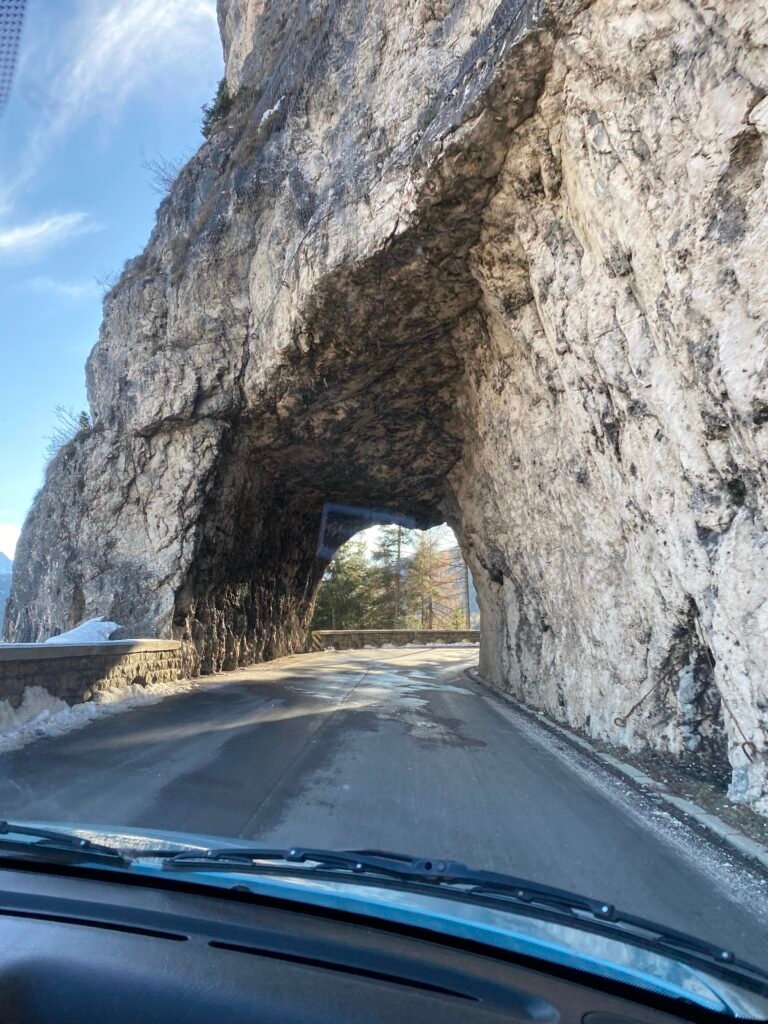
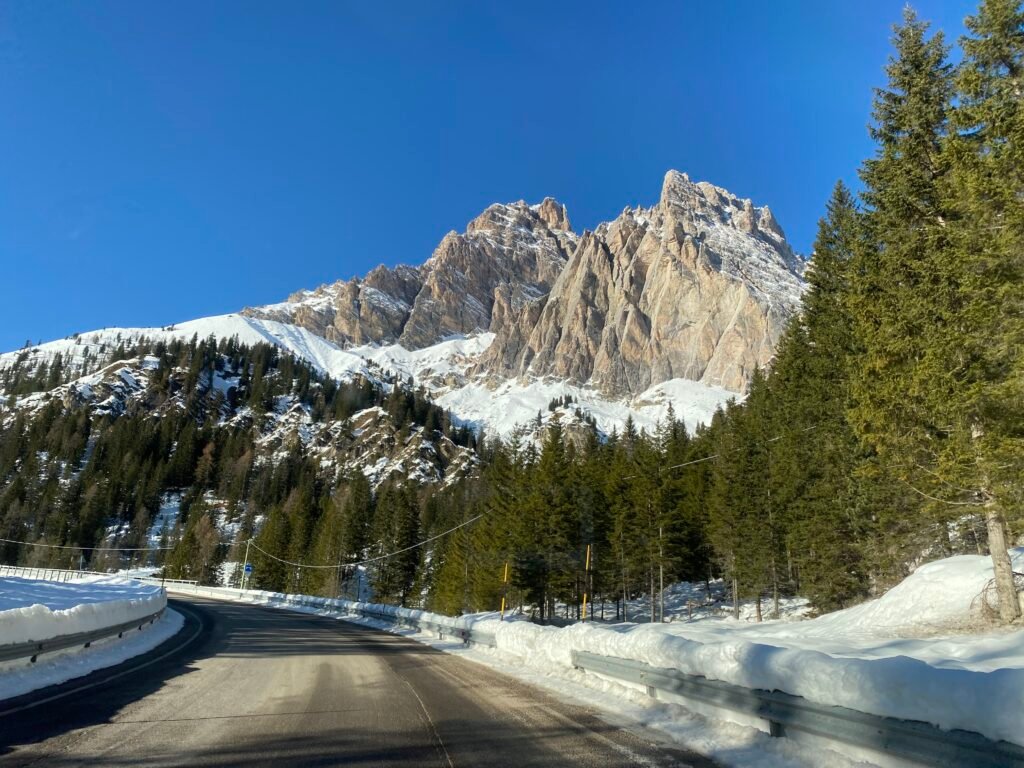
The true magic of this route lies in the stark, beautiful contrast that unfolds with every single mile. Unlike traditional vacations, where the landscape remains uniform, this road trip offers a front-row seat to an evolving world. As the flat plains of the Veneto region give way to rolling vineyard hills, and those hills eventually fracture into massive, vertical limestone walls, the local culture transforms right alongside the topography. The architecture shifts from elegant, pastel-hued Venetian palazzos to sturdy, dark-wood alpine chalets designed to withstand heavy winter snows.
Naturally, the food mirrors this environmental shift. The culinary landscape transitions entirely from light, olive-oil-focused Venetian bites to deep, comforting alpine soul food built to sustain mountain life. For travelers who find joy in breathtaking mountain vistas, dramatic scenic drives, and exploring the soul of a destination through its traditional, family-run kitchens, this comprehensive itinerary provides a spectacular, multi-layered travel experience that satisfies both the adventurous driver and the curious foodie.
Navigating the Route from Venice
To fully capture the untamed spirit of the mountains, and to possess the freedom to stop at isolated, family-run mountain huts, hidden viewpoints, and roadside farm stands, having your own vehicle is absolutely paramount. Group tours and rigid train schedules cannot match the sheer joy of pulling over whenever a snow-dusted peak catches your eye or a rustic mountain sign promises fresh, artisanal cheese.
The most seamless way to execute this grand northern loop is to pick up a rental car directly from Venice Marco Polo Airport (VCE). Booking a rental car from Venice via Easyterra is highly recommended for this specific route. The platform acts as a comprehensive aggregator, scanning both major international agencies and trusted local Italian fleets to ensure you lock in the best possible value and vehicle class for mountain driving.
Road Trip Pro Tip: When finalizing your vehicle choice through Easyterra, prioritize booking a car equipped with all-wheel drive (AWD) or four-wheel drive. Even if you are embarking on this journey in late spring or early summer, high-altitude mountain passes can experience sudden weather shifts, frequently blanketing the highest switchbacks in unexpected, crisp mountain snow. Having a sturdier drivetrain ensures peace of mind as you navigate the steep gradients.
Upon collecting your vehicle at Marco Polo Airport, you can bypass the dense, stressful congestion of mainland Venice and Mestre entirely. The airport is positioned perfectly to feed you right onto the A27 highway heading north. Within less than forty minutes of smooth highway cruising, the flat lagoon plains begin to wrinkle, and the massive, jagged profiles of the Dolomites emerge on the northern horizon like a wall of pale gray stone.
The Complete Itinerary: Stops, Views, Hotels & Restaurants
Venice: The Venetian Lagoon Baseline
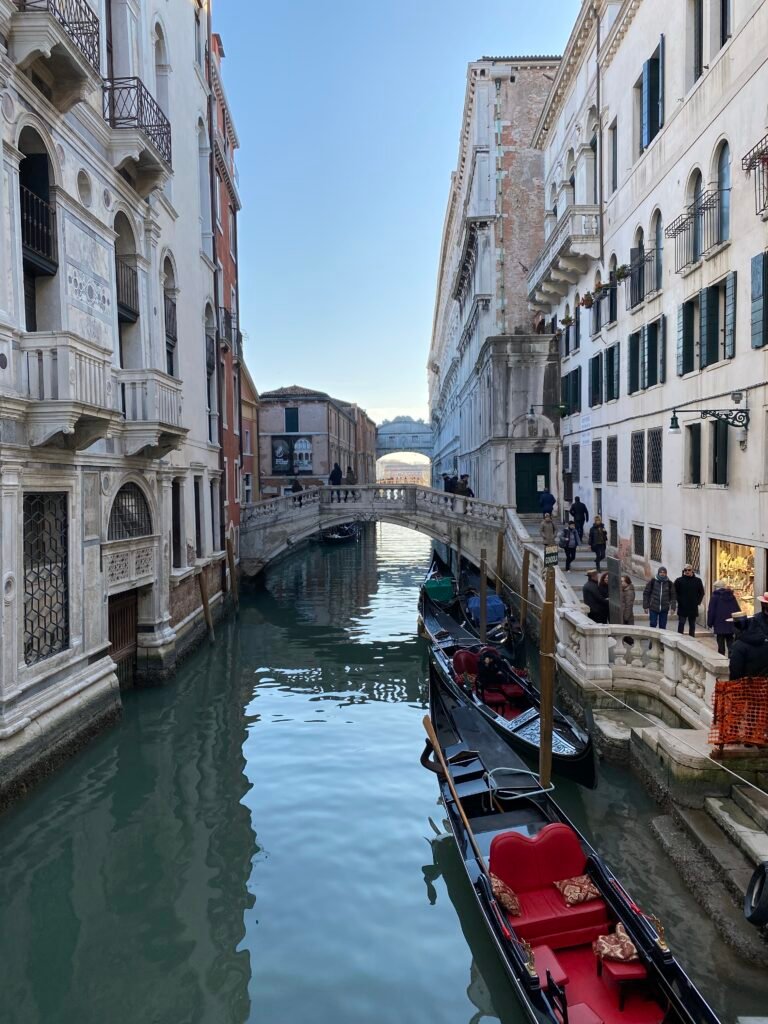
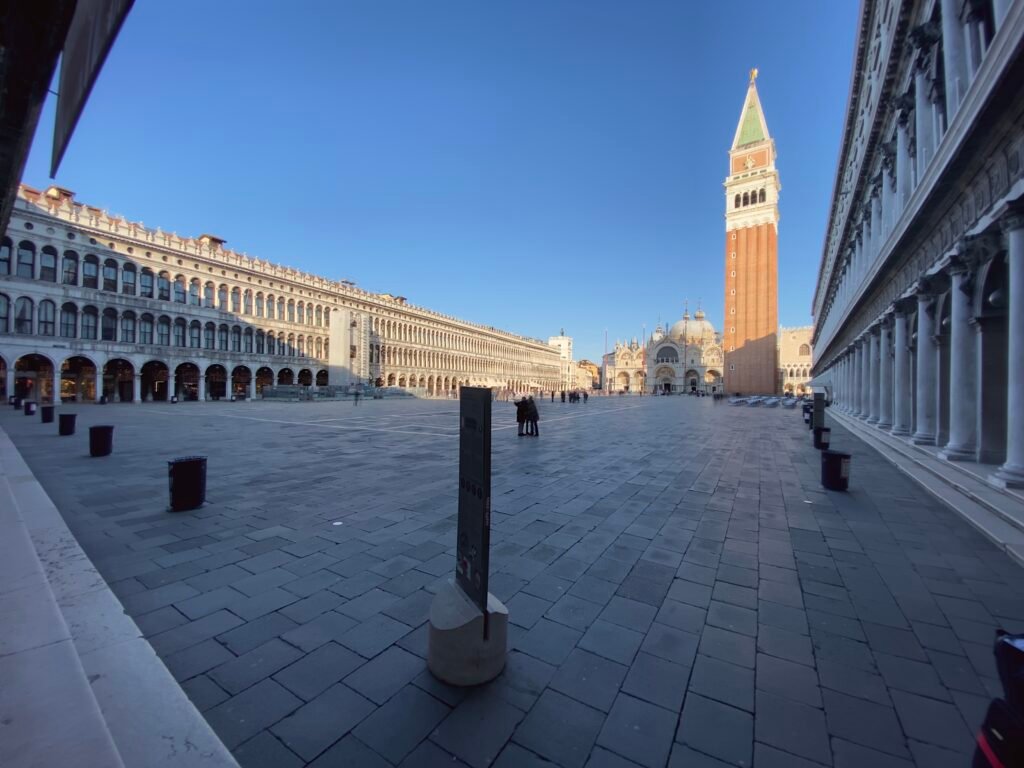
Before you begin your physical ascent into the clouds, it is vital to ground your palate in the traditional culinary world of the Venetian lagoon. Venice’s food scene is deeply misunderstood by travelers who stick strictly to the main tourist thoroughfares, where overpriced, uninspired menus dominate. The real culinary soul of Venice thrives in the quiet, residential alleys of districts like Dorsoduro and Cannaregio, hidden away inside historic bacari, small, atmospheric wine bars where locals gather to socialize over small plates.
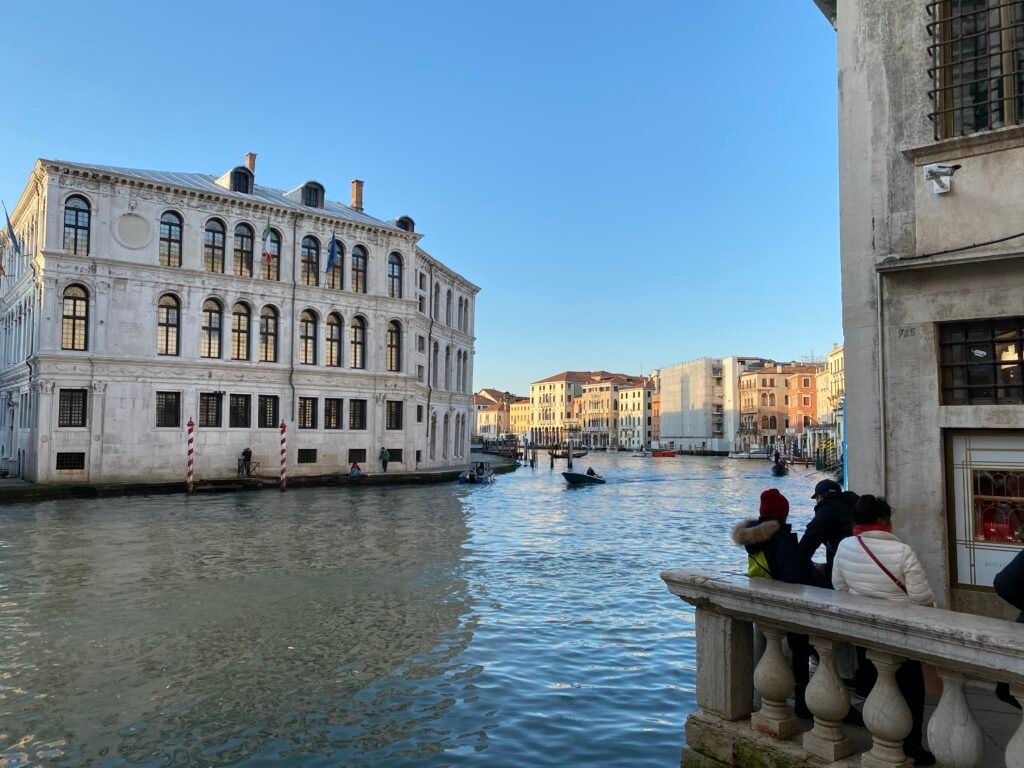
The entire Venetian social fabric revolves around the ritual of andare a cicheti (going for small bites). These bite-sized culinary creations are designed to showcase the absolute freshest ingredients sourced each morning from the historic Rialto market. Seafood reigns supreme here, heavily reliant on the unique ecosystem of the brackish lagoon waters and the nearby northern Adriatic coast.
- The Food to Try: Your culinary baseline must include baccalà mantecato. This iconic Venetian specialty consists of dried Atlantic salt cod that has been slow-simmered, painstakingly deboned, and then vigorously whipped with high-quality olive oil until it emulsifies into a cloud-like, incredibly creamy spread. It is served cold over squares of warm, grilled white polenta. You should also sample sarde in saor, a dish dating back to the Middle Ages when Venetian sailors needed to preserve fish for long sea voyages. It features fried sardines marinated in a sweet-and-sour mixture of gently cooked onions, white wine vinegar, sweet raisins, and pine nuts. Pairs beautifully with an ombra, a small, traditional glass of crisp, local white wine.
- Top Attraction: Dedicate your morning to a slow, deliberate stroll through the quiet canals of the Dorsoduro district. This artistic neighborhood is home to local squeri (historic boatyards where gondolas are still crafted by hand) and offers a peaceful look at Venetian daily life, far removed from the bustling crowds of St. Mark’s Square.
- Where to Eat: Cantine del Vino già Schiavi (Fondamenta Nani, Dorsoduro). This legendary, family-run wine shop is widely considered a holy site for traditional cicchetti. There are no tables inside; instead, join the locals by ordering a handful of freshly prepared crostini from the glass case, such as their famous version topped with whipped cod, edible flowers, and local fig jam, and step out onto the sun-warmed stone canal path outside to enjoy your food overlooking the water.
Auronzo di Cadore: The Valley Comforts
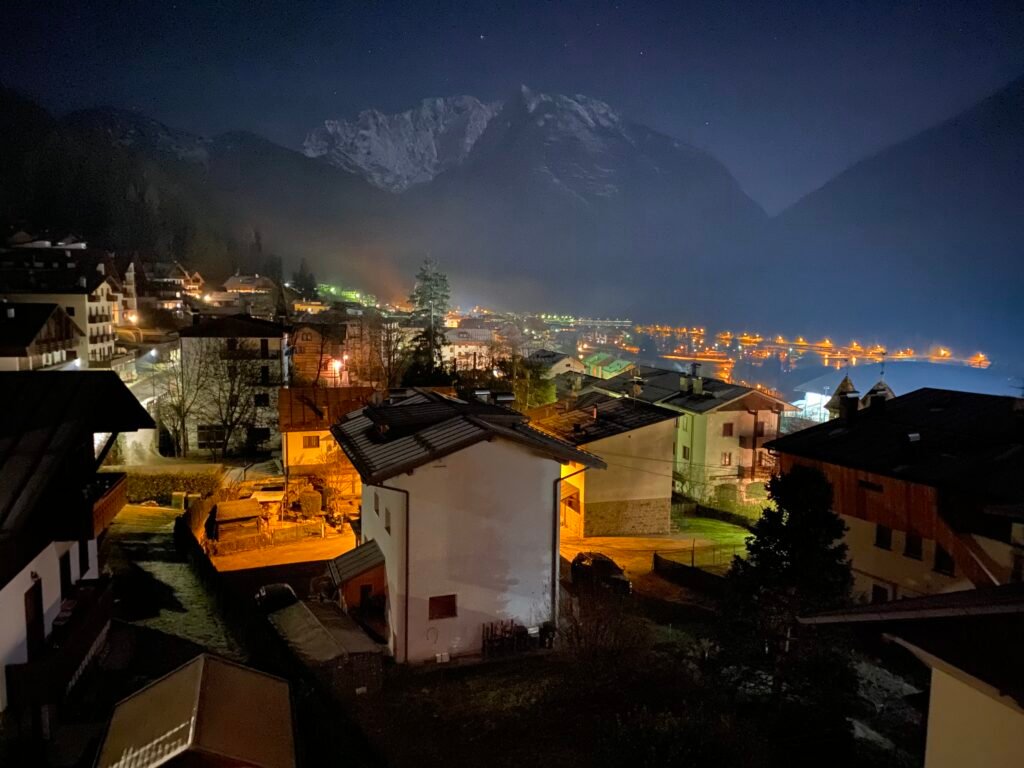
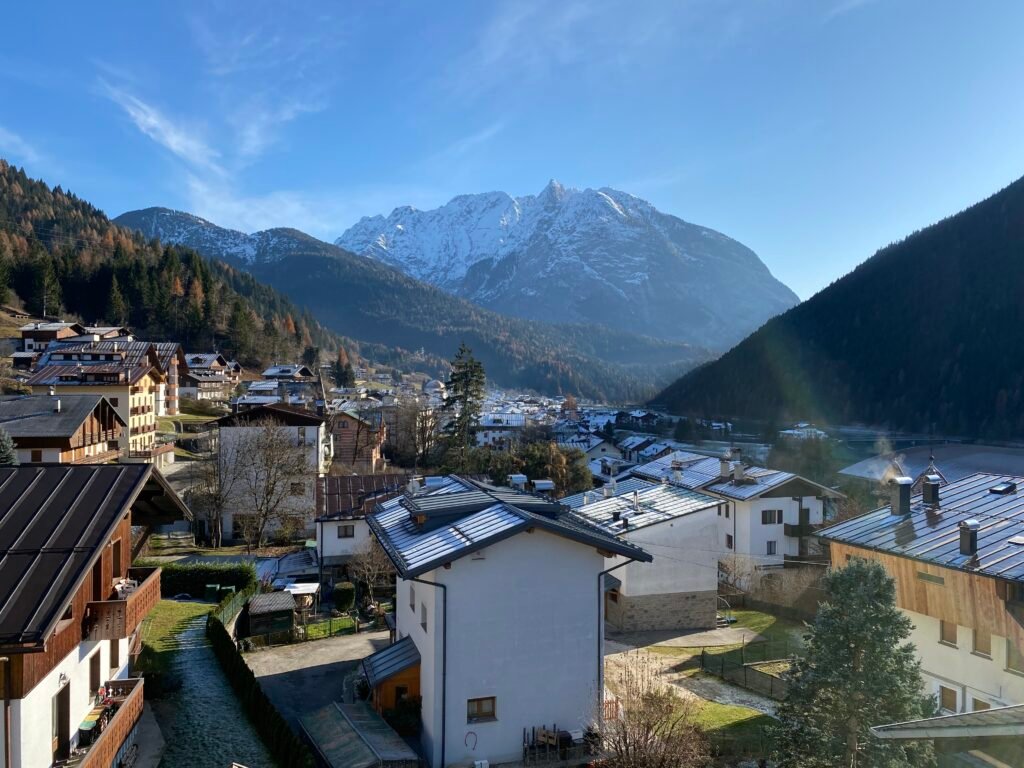
Leaving the humid air of Venice behind, you will drive north on the A27, transitioning onto the scenic SS51 road as you enter the dramatic Belluno province. As the road snakes upward along the path of the turquoise Piave River, the flat terrain vanishes entirely. You are welcomed into the Cadore region, a historic mountain valley defined by dense pine forests and steep valleys. Your first major mountain stop is Auronzo di Cadore, a serene alpine town that stretches elegantly along the shores of Lago di Santa Caterina.
At an elevation of nearly 2,800 feet, Auronzo represents the first true boundary line of the alpine food world. Here, seafood disappears from local menus, replaced entirely by ingredients born of the forest, the mountain pasture, and the heavy winter pantry. The air here feels distinctly sharper, and the culinary focus turns toward deep, comforting mountain starches designed to provide lasting energy for valley life.
- The Food to Try: This region of Northern Italy is deeply proud of its potato gnocchi with smoked ricotta (gnocchi di patate affumicati). Unlike the light, pillow-soft gnocchi found in the south, these mountain gnocchi are slightly denser and rolled in a generous mountain of local ricotta cheese that has been slowly smoked over mountain juniper and beech wood, giving the dish an incredibly deep, rustic aroma. This is also where you must introduce your palate to Schiz. Named after the stray milk droplets that “squirted” out of traditional wooden cheese presses, Schiz is a fresh, unripened mountain cow’s milk curd. Local cooks sear thick slabs of it in hot pans with fresh mountain butter and a splash of cream until the exterior develops a golden crust and the interior turns wonderfully gooey. It is traditionally served alongside a massive, steaming mound of coarse yellow polenta and sautéed wild chanterelle mushrooms.
- Top Attraction: Auronzo Lake (Lago di Santa Caterina) anchors the town with its vibrant, emerald-colored water and serene shoreline. A flat, well-maintained walking path loops entirely around the water, providing magnificent photography opportunities where you can frame the reflection of the historic stone town and the towering peaks of the Marmarole range in the glassy surface of the lake.
- Where to Eat: Ristorante La Zopa. Perched high on the slopes of Mount Agudo just outside the main town center, this restaurant can be reached via a thrilling scenic drive up a mountain road or via a local chairlift. The rustic wooden dining room features wide panoramic windows overlooking the entire valley, providing a breathtaking backdrop for their specialized menu of hyper-local Cadore game meats and hand-cut egg pastas.
Misurina: High-Altitude Alpine Fuel
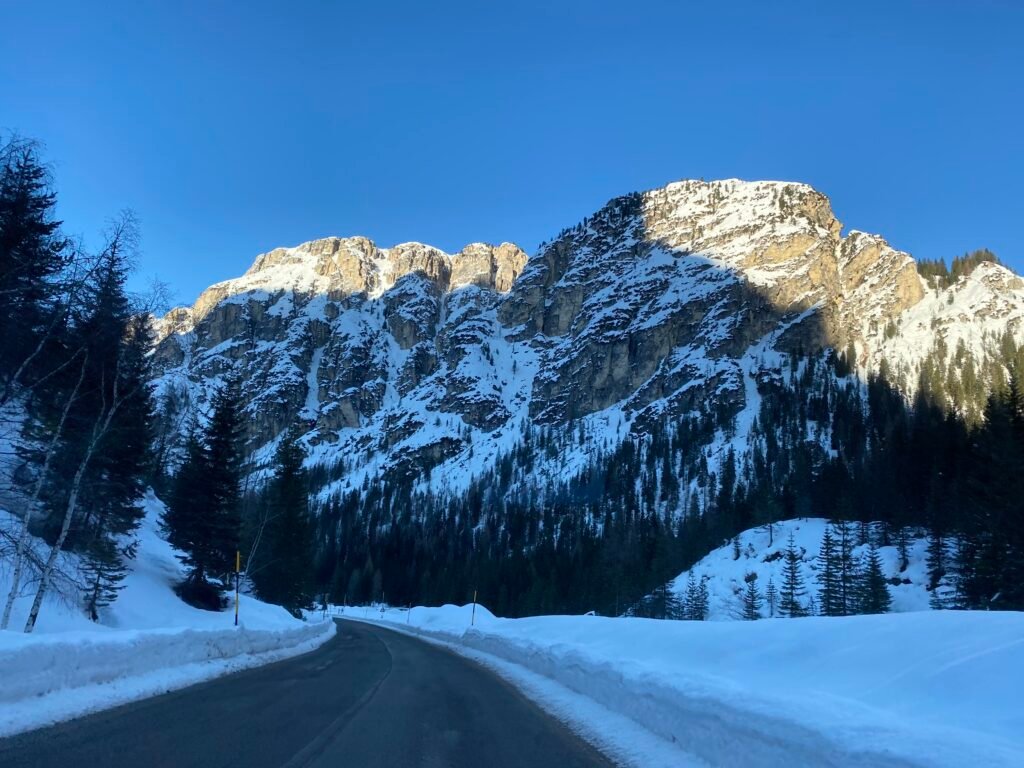
From Auronzo, the road climbs significantly higher, tackling a series of dramatic, sweeping switchbacks as you ascend toward Lake Misurina. Situated at an elevation of over 5,700 feet, Misurina is a true high-altitude sanctuary. The landscape here shifts from lush green valley forests to a rugged, sub-alpine environment where grand, historic hotels sit at the edge of a pristine glacial lake. The air at this height is shockingly pure, and the surrounding mountainsides are frequently flanked by massive, lingering snow banks well into the late spring months.
At this altitude, the culinary landscape leaves the valley behind and embraces heavy, warming mountain fare. The food here is unapologetically rich, leaning heavily on slow-simmered stews, rich dairy products, and wild ingredients gathered from the surrounding alpine terrain. It is designed to completely refuel hikers and travelers who have spent their day exploring the high-altitude trails.
- The Food to Try: Seek out a traditional plate of capriolo in umido (slow-braised venison ragù). The wild game meat is marinated for days in robust, local red wine, juniper berries, cloves, and bay leaves before being slow-simmered for hours until it is incredibly tender. It is ladled generously over a bed of hot, stone-ground yellow cornmeal polenta. To warm up after a chilly walk along the water, order a bowl of zuppa di orzo (traditional alpine barley soup). This thick, comforting broth is packed with pearled barley, finely diced root vegetables, and chunks of smoked speck ham, slow-cooked until it achieves a wonderfully rich texture.
- Top Attraction & Viewpoint: Lake Misurina itself is a massive attraction, legendary for its unique microclimate and crisp air. Just a short drive or a rewarding hike from the lakeside leads you to the Punto Panoramico Dolomiti, the famous Cadini di Misurina viewpoint. This trail leads to a narrow, dramatic stone ridge that points directly toward a breathtaking, theatrical amphitheater of razor-sharp, needle-like limestone spires that cut violently into the alpine sky, offering one of the wildest and most memorable vistas in all of Europe.
- Where to Stay: Chalet Alpenrose offers a beautiful, intimate lake-view refuge perfectly situated for travelers who want immediate access to the high alpine roads. This cozy, family-run chalet blends classic mountain hospitality with rustic wood furnishings, allowing you to fall asleep surrounded by alpine silence and wake up to see the morning mist rising gracefully off the glassy surface of the lake.
- Where to Eat: Malga Misurina. Located just a few minutes north of the lake, this is an authentic, active working mountain dairy farm and restaurant. In the summer, you can hear the cowbells ringing in the surrounding pastures. In their rustic dining room, you can taste the immediate difference of hyper-fresh dairy; the yellow butter, rich cream, and aged alpine cheeses served on your platter are produced right on the property using traditional, time-honored methods.
Tre Cime di Lavaredo: The Hiker’s Reward
From Lake Misurina, you will navigate the steep, dramatic toll road that climbs directly into the high alpine zone of Tre Cime di Lavaredo. Arriving at the upper parking area feels like entering an entirely different world. At over 7,600 feet of elevation, you are surrounded by a stark, moon-like alpine landscape where massive scree fields stretch out beneath towering rock faces. The loop trail around the iconic three chimneys of Tre Cime is universally celebrated as one of the premier hiking routes in the world.
What makes hiking in this specific corner of Northern Italy so uniquely joyful is the spectacular rifugio culture. You never need to pack a squashed, uninspired sandwich in your backpack. Instead, the trail is punctuated by fully staffed, historic mountain huts featuring heavy-duty professional kitchens. This region marks the historic and cultural overlap where Italian traditions blend seamlessly with Austrian-Germanic heritage. The local dialect shifts, and the menus adopt a distinct South Tyrolean influence, showcasing the beautiful duality of this border region.
- The Food to Try: The absolutely mandatory reward after tackling the mountain trails is a steaming plate of Canederli (known as Knödel across the northern border). These are dense, incredibly comforting, round dumplings made from a base of stale white bread cubes, bound together with fresh eggs, milk, and flour. They are deeply flavored with generous ribbons of smoky speck (the dry-cured, light-smoked alpine ham characteristic of the region) and local mountain herbs. They are traditionally served either swimming in a deep, intensely savory beef broth or served dry, blanketed in a rich lake of sizzling, melted brown artisan butter and a shower of aged alpine cheese. Follow your savory meal with a massive slice of fresh, warm Apfelstrudel, packed with tart mountain apples, raisins, pine nuts, and a delicate dusting of cinnamon, wrapped in a flaky, hand-stretched pastry dough.
- Top Attraction: Beyond the incredible physical challenge of the hiking trails, experiencing Tre Cime di Lavaredo in person is a profoundly moving encounter with nature’s grand architecture. As the sun moves across the sky, the sheer limestone walls shift in color from a pale, ghostly grey to a warm, glowing pink during the famous alpine enrosadira (alpenglow). Standing at the base of these three monumental monoliths, surrounded by crisp mountain air and sweeping vistas of the surrounding peaks, gives travelers an unforgettable sense of wonder. It serves as a spectacular, awe-inspiring crescendo to your Northern Italian road trip that beautifully balances the peaceful lakeside valleys you explore along the way.
- Where to Eat: Rifugio Lavaredo or Rifugio Auronzo. Positioned strategically right along the main hiking loop, these stone outposts feature wide outdoor terraces overlooking dizzying drop-offs and vertical rock faces. There is no greater sensory pleasure than sitting outside in the crisp air, wrapped in a warm blanket, spooning up a rich, hot broth while staring directly at some of the most famous rock formations on earth.
Cortina d’Ampezzo: Refined Mountain Elegance
After descending from the high peaks of Tre Cime, your road trip takes a westward turn, guiding you through dramatic mountain cuts along the SS51 towards the elegant valley of Cortina d’Ampezzo. Known globally as the “Queen of the Dolomites,” Cortina is nestled beautifully within a wide, sunny basin completely surrounded by an amphitheater of pink-hued Dolomite peaks. The town itself represents a beautiful marriage of rugged, centuries-old Ladin mountain heritage and sophisticated, upscale Italian elegance. The central pedestrian avenue, the Corso Italia, is lined with historic stone buildings housing upscale fashion boutiques, artisan woodcraft shops, and refined cafes.
The food culture in Cortina matches this unique civic identity perfectly. It is a place where rugged mountain recipes are treated with absolute reverence and elevated through meticulous culinary technique. Here, old-world family recipes that have been passed down through generations are executed with artistic precision, blending rustic mountain ingredients with high-end culinary presentation.
- The Food to Try: The absolute culinary symbol of Cortina is Casunziei all’Ampezzana. These are incredibly delicate, hand-folded, half-moon egg pasta pockets that contain a vibrant, finely grated filling of sweet red beetroot and roasted potatoes. The execution is remarkably simple yet completely genius: the stuffed pasta is tossed gently in a pan of sizzling Alpine butter and served beneath a heavy shower of nutty, dark poppy seeds and a grating of salty, aged cheese. The flavor profile is an unforgettable contrast of earthy sweetness from the beetroot, rich creaminess from the butter, and a distinct textural crunch from the poppy seeds.
- Top Attraction & Viewpoint: To experience the true raw scale of the Ampezzo valley, take a drive up the sweeping switchbacks of the nearby Giau Pass. Connecting Cortina to the southern valleys, this high alpine pass offers a breathtaking 360-degree view of rolling alpine pastures framed by the colossal, jagged peak of Mount Ra Gusela. It is a legendary stretch of road for driving enthusiasts, offering magnificent vistas around every single curve.
- Where to Stay: HOTEL de LËN. This boutique property delivers a stunning masterclass in refined, modern alpine luxury right in the historic center of Cortina. The hotel’s name means “Hotel of Wood” in the local Ladin language, and the entire structure is designed around a concept of sustainable luxury, utilizing regional raw pine and oak to create a contemporary, minimalist environment that feels deeply warm and comforting. The rooftop features a world-class wellness spa where you can soak in an outdoor hot tub while looking out over the historic church steeple and the glowing mountain peaks.
- Where to Eat: El Brite de Larieto. Located a few minutes outside the town center within a serene, old-growth larch forest, this Michelin-starred farm-to-table restaurant reinvents traditional mountain dining. Run by chef Riccardo Gaspari, the restaurant utilizes ingredients sourced almost entirely from their family’s active dairy farm and pasture next door. Their home-churned butter, slow-aged meats, and artistic interpretations of classic dishes like Casunziei make it an absolute must-visit destination for anyone looking to experience the absolute peak of modern alpine gastronomy.
Travel At A Glance: The Menu & Landscape Transition
| Destination | Elevation & Landscape | Key Ingredient Shift | Top Restaurant Pick |
| Venice | Sea level, historic canals | Sea salt, olive oil, fresh seafood | Cantine del Vino già Schiavi |
| Auronzo | 2,800 feet, calm alpine lake | Cornmeal polenta, smoked ricotta | Ristorante La Zopa |
| Misurina | 5,700 feet, dramatic glacial lake | Fresh cream, wild game, stews | Malga Misurina |
| Tre Cime | 7,600 feet, snowy, jagged peaks | Speck ham, dense bread dumplings | Rifugio Lavaredo |
| Cortina | 4,000 feet, an elegant mountain valley | Beetroot, poppy seeds, cultured butter | El Brite de Larieto |
From the very first savory bite of whipped salt cod enjoyed alongside a historic Venetian canal to the final, unforgettable forkful of sweet beetroot ravioli in the shadow of Cortina’s glowing peaks, this road trip stands out as one of the most rewarding ways to experience Northern Italy. By pairing spectacular mountain viewpoints and scenic alpine drives with an immersive dive into hyper-local food traditions, you create a seamless travel narrative. It is a slow-food pilgrimage through the changing terrain of Italy, offering an adventure that will stay vivid in your memory long after the snow-capped spires disappear from your rearview mirror.
Did you enjoy reading this Venice to Dolomites food itinerary? Have a look at our other Italian regions. Did you miss more in-depth content about wine in particular? Read more about the Piedmont region.
3 Comments
Comments are closed.